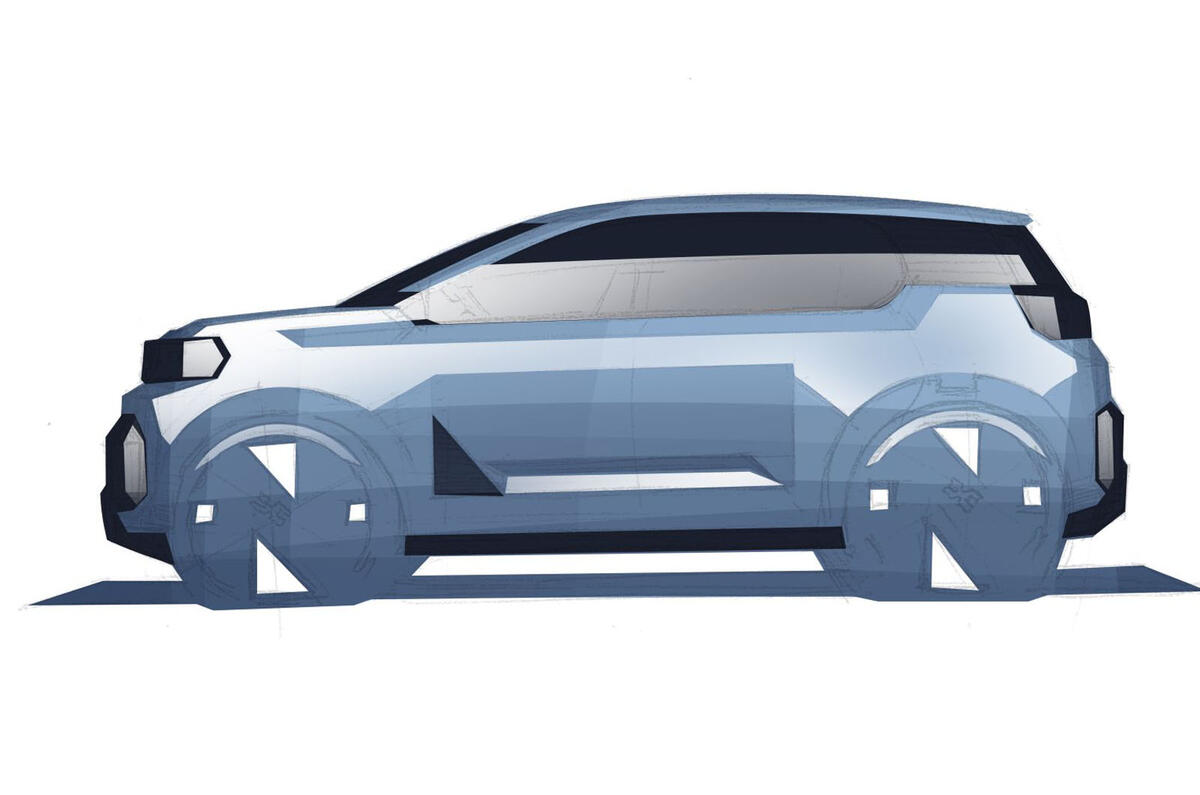

Dacia has begun development of a new electric city car for Europe, Renault Group CEO Luca de Meo has confirmed.
Closely related to the upcoming Renault Twingo, it is being designed as a successor to the Dacia Spring, but unlike that car – which is imported from China – it will be built in Europe.
"We're preparing to go one step further in terms of EV affordability," said de Meo, revealing that the new model is planned to be priced from less than €18,000 (£15,000). Building the car in a European factory will mean it avoids the import tariffs imposed on today's Chinese model, thus boosting profitability.
He also said it will be ready for market in just 16 months' time. "I defy any competitor in the world to do that," he added.
While the new car is set to match the current Spring on pricing, however, it is likely to make substantial gains in performance, technology and capability.
The current Spring is based on the China-market Renault City K-ZE, which was launched in 2019 on the Renault Group's CMF-A platform for emerging markets. The new car, meanwhile, is being developed in parallel with the Twingo and is set to share that car's Ampr Small platform - a version of the architecture that also underpins the larger Renault 4 and 5.
Its rapid 16-month gestation process will make it the fastest-developed Renault Group model yet - a product of the company's new Leap 100 initiative, which targets a 100-week development window for all new cars.
"We've moved to China speed," said de Meo, hailing the success of the company's partnership with a Chinese R&D consultancy on the Twingo programme.
It will also benefit from a dramatic reduction in production costs across the Renault Group; de Meo said the Twingo will cost 40% less to build than the Renault 5, in part because it uses some 30% fewer components - the entire car being formed of just 750 parts.
Dacia's smallest car yet will form part of a significant broadening of the Romanian marque's portfolio, following soon after the launch of its largest model – the Bigster SUV – and a pair of other C-segment models due in the next two years.
According to de Meo's target timeframes, it should be launched around the middle of 2026, roughly a year before Dacia is set to introduce the new third-generation Sandero - which will be offered as an EV for the first time.
Dacia CEO Denis Le Vot haș previously hinted at the prospect of a new city car, recently telling Autocar that the brand's C-segment expansion does "not mean that we're not looking at a smaller thing". He added that it would have to be electric, because "the equation of a classic A-segment [car] doesn't really fly with ICE solutions", given their thin profit margins.
Dacia uses Renault platforms for each of its models and has a rigid focus on minimising development costs to ensure it can offer them at a competitive price while maintaining profitability.