


In the 1920s, the Western world became a chaotic confluence of economic strife, poverty, political upheaval and bitterness on one side; and economic prosperity, liberation from social traditions, artistic innovation and scientific discovery on the other.
If not a fantastic time to be alive, it was certainly a fascinating one. And to many – including Autocar – the light at the end of the dark tunnel that was the Great War looked like an entrance into a vibrant future.
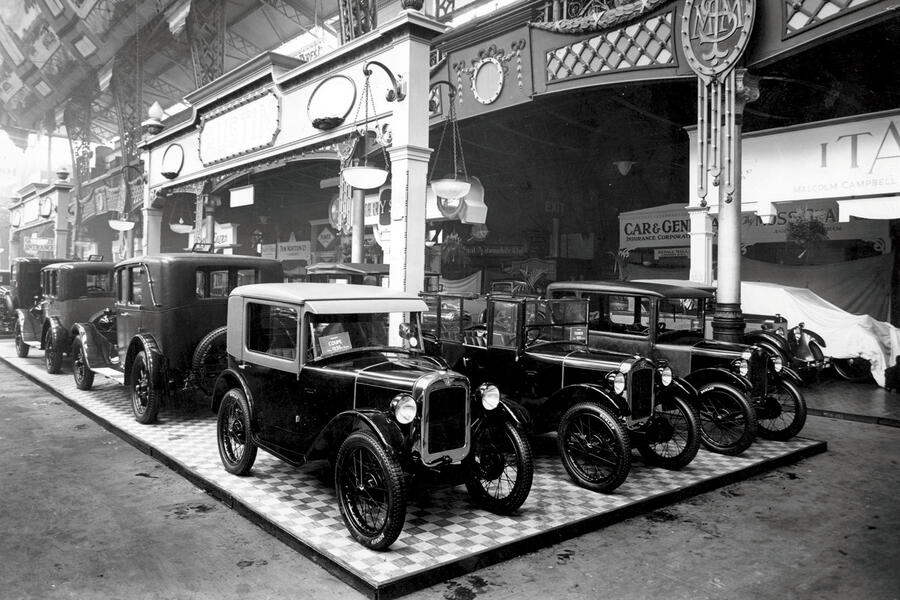
Cars were part of a massive advance in all matters mechanical, becoming democratised and ever better. “How rapidly and regularly the breed improves!” we marvelled at the opening of the 1928 British motor show at London’s Olympia.
“Stagnation point, when people will buy their cars with the same soulless lack of consideration as they give to a pair of boots, is still a long way off.” (When did it come, we now wonder?)
“Safe-feeling stability, road-careless springing, quicker work from town to town, speed stolen in silence, brakes that breed unwavering confidence, automatic lubrication and easy gear changing: all these things are coming slowly but with certainty.
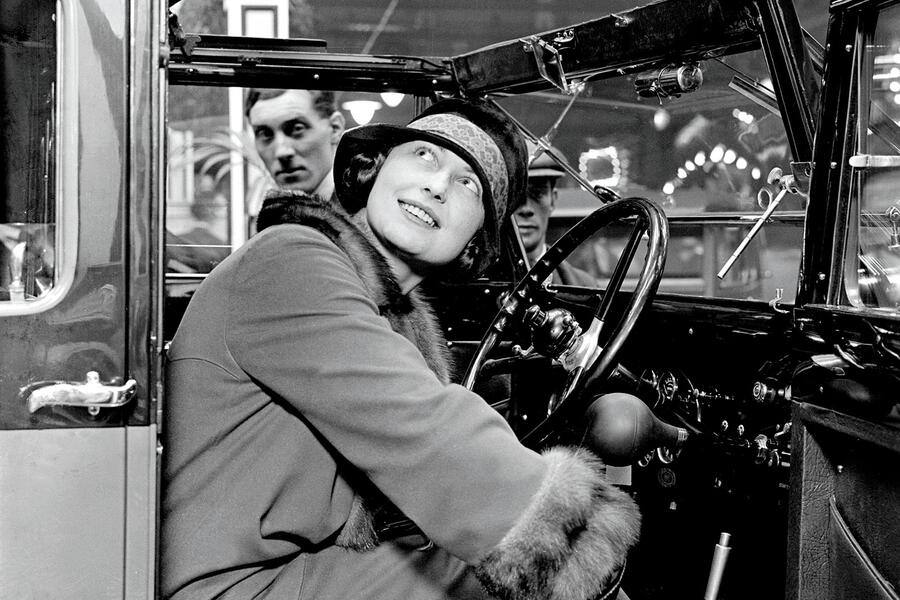
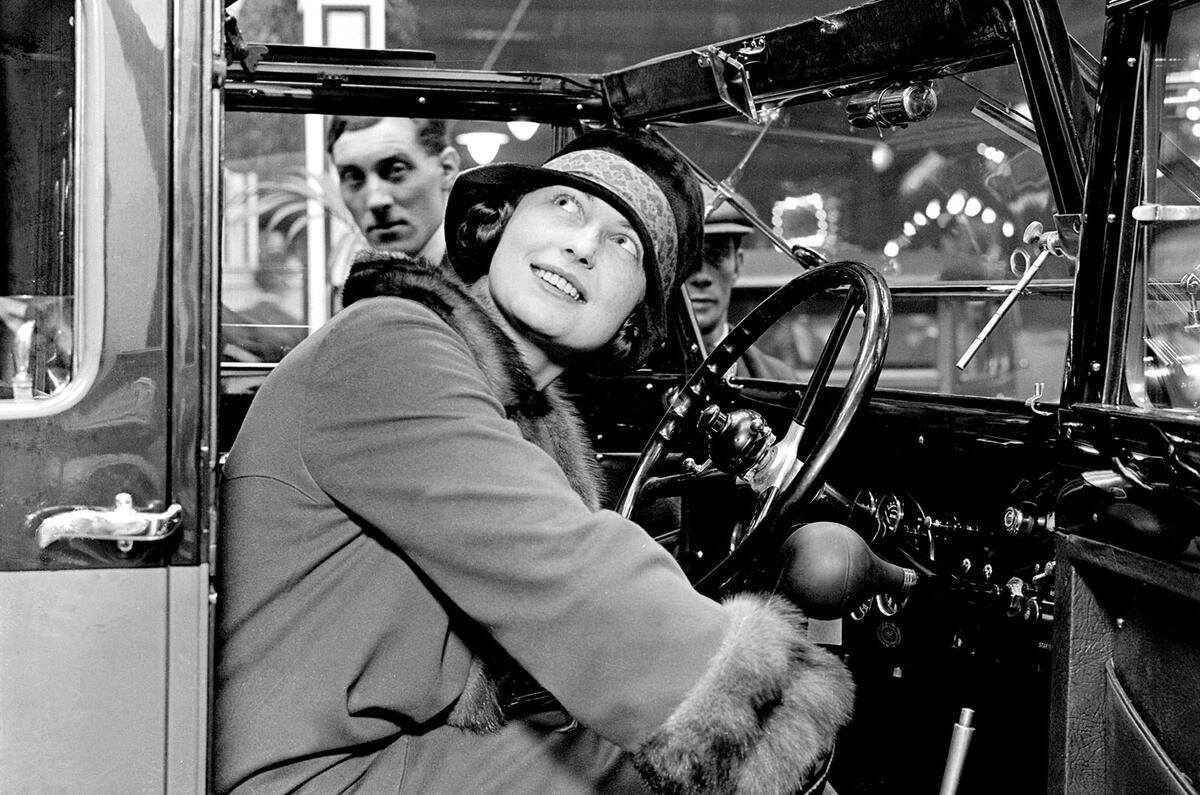
“It used to be necessary to be an engineer before one could be a successful owner-driver. Now the veriest slip of a girl can cover 200 miles a day on a large and fast car with ease.
“When all these things are taken into account, then surely the speed of progress in automobile design may well be deemed marvellous.”
To be specific, one fascinating graph showed that in 1926, 55% of all cars on sale had a four-cylinder engine but in 1928 just 35% did, as makers mastered sixes and eights; the coil had overtaken the magneto as the ignition source of choice; the gearbox was moving from the side to the centre of the car; the disc had outsmarted the plate and the cone in the clutch; half-elliptic suspension was taking over from the cantilever; and wire wheels were superseding heavier steelies.
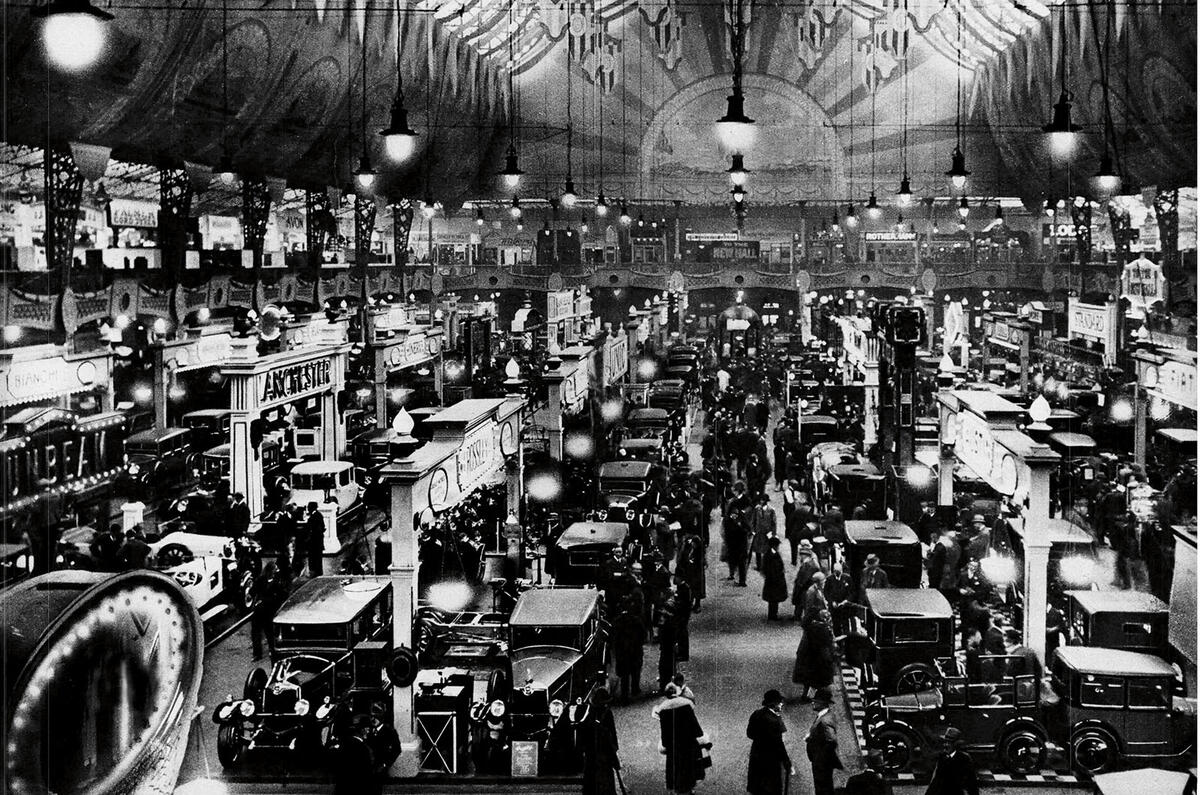
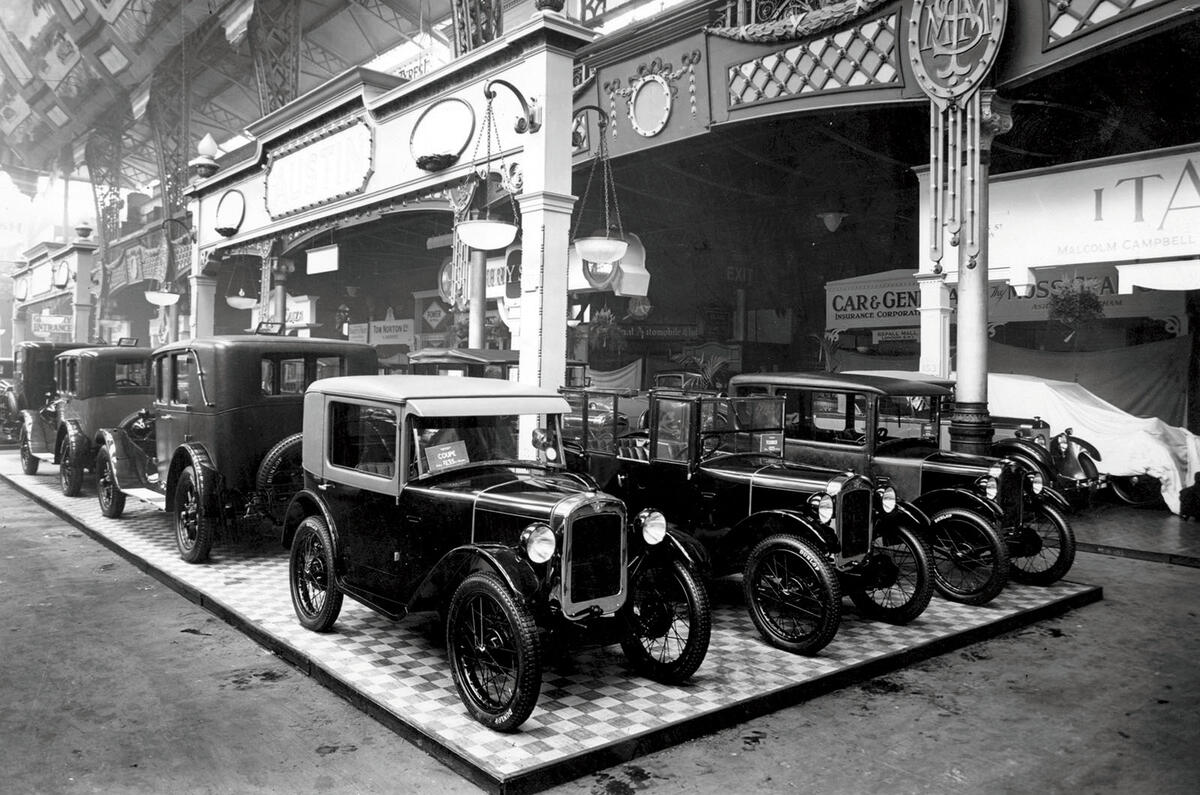
Relative to today, designing cars was very simple and inexpensive, and consequently the variety of car makers and coachbuilders and car types and prices seen at Olympia proved “almost embarrassing”.
We ran a stand-by-stand guide for readers heading to the venue, detailing all 157 brands. Yes, 157! Today, excluding specialists, there are only around 60 on our market.
(It’s interesting that only about 20 of those 157 still exist; and fun to consider how we could have ended up bemused by Bugatti, Chevrolet, Fiat and Renault, having grown up with Delaunay-Belleville, Moon, Schneider and Whippet.)