Currently reading: Aston Martin reveals huge £653m investment plan

Saudi Public Investment Fund (PIF), Mercedes-Benz and current owners to inject £335m, rest to come from share issue

Back to top

British firm Aston Martin has announced plans to raise £653m in equity capital as it seeks to lower its debt and secure its long-term future.

First revealed by Autocar, the funding is set to include a £78m deal with the Saudi Public Investment Fund (PIF) in exchange for a 16.7% shareholding and up to two non-executive director seats on its board. PIF is already a shareholder in McLaren and Lucid. A further £575m will be raised through a rights issue, which is expected to be undertaken this autumn.

“Today’s announcement marks the latest success in the evolution of Aston Martin, the restoration of the business and balance sheet we inherited, and the acceleration of our long-term growth potential.," said Aston Martin executive chairman Lawrence Stroll.

"Overall, this is a game-changing event for Aston Martin, supporting the delivery of our strategic plans and accelerating our long-term growth potential. It transforms our balance sheet, liquidity and cashflow profile and provides greater clarity on our pathway to become sustainably free cash flow positive and create significant shareholder value.”

In total, executive chairman Stroll's Yew Tree investment group, Mercedes-Benz and the new Saudi consortium are said to be investing around £335m in the firm, with a further £318m being raised through the public share issue.

As a result of the rights issue diluting its stake, majority owner Yew Tree's 22% holding in Aston Martin will fall to 18.3%. However, it has pledged to buy a further £105.3m stake in the firm as part of the new rights issue to increase its holding again.

Likewise, Mercedes's 11.7% holding will fall to 9.7%. However, it will invest a further £56m in the stock issue to increase its share again. The trading statement issued by Aston Martin this morning also confirms that the first fully electric Aston Martin, due to launch in 2025, is likely to utilise a Mercedes platform and technology, and that the partnership is likely to yield further EVs as the firm moves towards an all-electric future for its mainstream vehicles by 2030.

Aston Martin also revealed that it rejected a proposed investment package from a group called Atlas Consortium, led by car maker Geely and InvestIndustrial Group Holdings – which owns British sports car firm Morgan – totalling up to £1.3bn via £203m of investment and £1105m in an underwritten rights issue. The offer was unanimously rejected by Aston Martin's board stating it "markedly overestimated the company's new equity capital requirements, would have been heavily dilutive for existing shareholders and comprised a number of execution obstacles".

Aston Martin says it hopes to use the money raised to hit goals of 10,000 wholesales, £2 billion of revenue and £500m adjusted EBITDA by 2024/25. Its wholesale volumes for the first half of 2022 were 2676 vehicles, down from 2901 last year. It indicated it expects to hit more than 6600 wholesale units this year.

"Since I became executive chairman in 2020,we have made significant progress on our journey to become the world’s most desirable, ultra-luxury British performance brand," said Stroll. 

99 Lawrence stroll interview lead image credit getty images 0

"We started by fixing the core fundamentals of the company, successfully de-stocking the dealer network to rebalance supply to demand, optimising inventory levels aligned for an ultra-luxury business, and now benefit from the strongest order book we have seen in many years. We also signed a strategic co-operation agreement with Mercedes-Benz and have developed a breathtaking pipeline of products, starting with the DBX707 and V12 Vantage, all of which are aligned with our 40%+ contribution margin targets – a significant increase from the past.

"Aston Martin’s return to the pinnacle of motorsport with the Aston Martin Aramco Cognizant Formula One team, has also ushered in a new era for our iconic British brand. Our focus on building brand equity and unleashing the potential of Aston Martin is already delivering growing demand from a new generation of customers, with more than 60% new to the brand in 2021."

The money is said to be earmarked for paying down Aston's net debt, which was listed at £957m in March, with interest payments set at around £130m annually - and for investment in new models and powertrain technology. In its statement revealing the investment, Aston Martin noted the ongoing "challenging operating environment" including the war in Ukraine, Covid lockdowns and disruption to the supply chain and logistics operations.

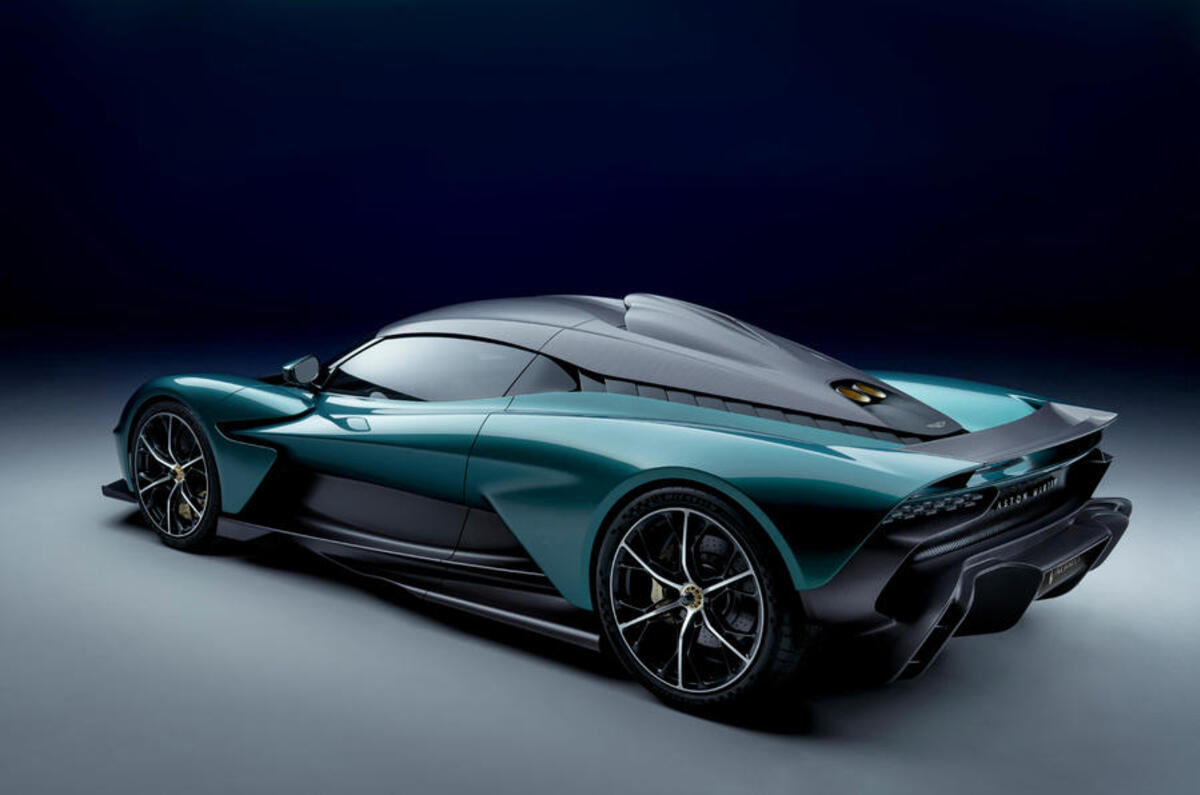
The company also talked up its future model launches and the expected positive impact on its finances as a result of them launching. These include the next-generation front-engined sports cars and an expansion of DBX sales, development of new, "high margin" mid-engined vehcles including the Valhalla and an electric platform for future sports cars, GTs and SUVs. The first all-electric Aston Martin is scheduled to launch in 2025, with every mainstream Aston Martin set to be fully electrified by 2030.

Earlier this year Aston Martin replaced its CEO Tobias Moers with former Ferrari boss Amedeo Felisa after the German's tenure coincided with significant staff turnover within the senior leadership team. Felisa is the firm's third CEO since Lawrence Stroll led a group of investors under the Yew Tree name to take over the firm in January 2020.

Aston Martin, which has survived seven bankruptcies, was founded in 1913.