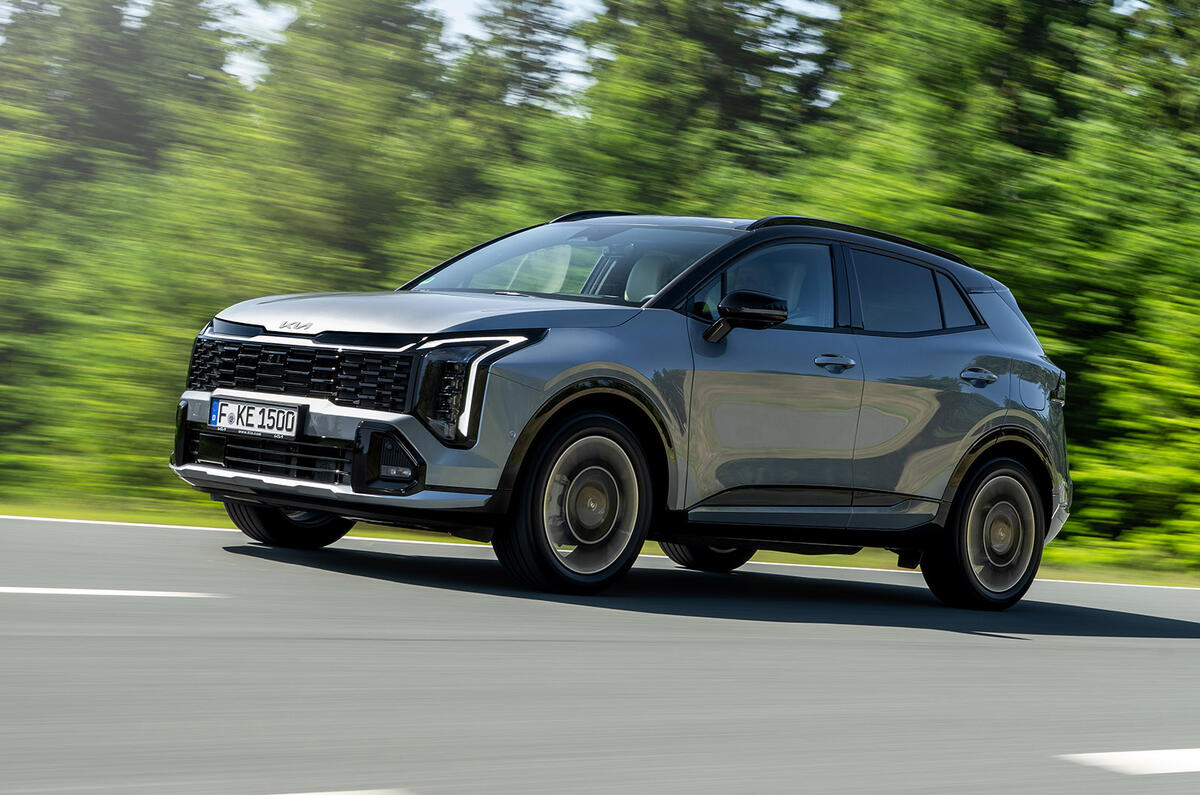
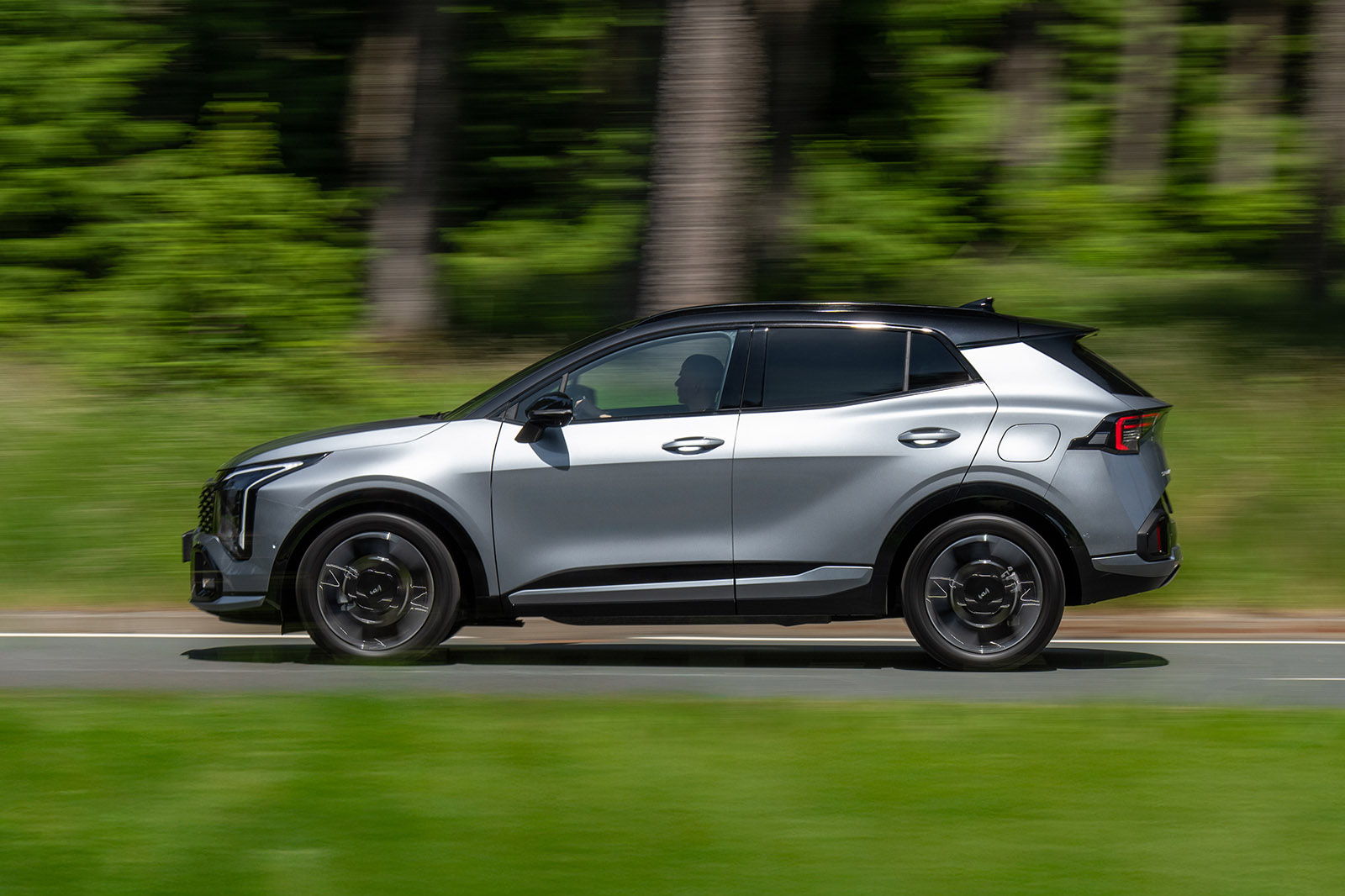
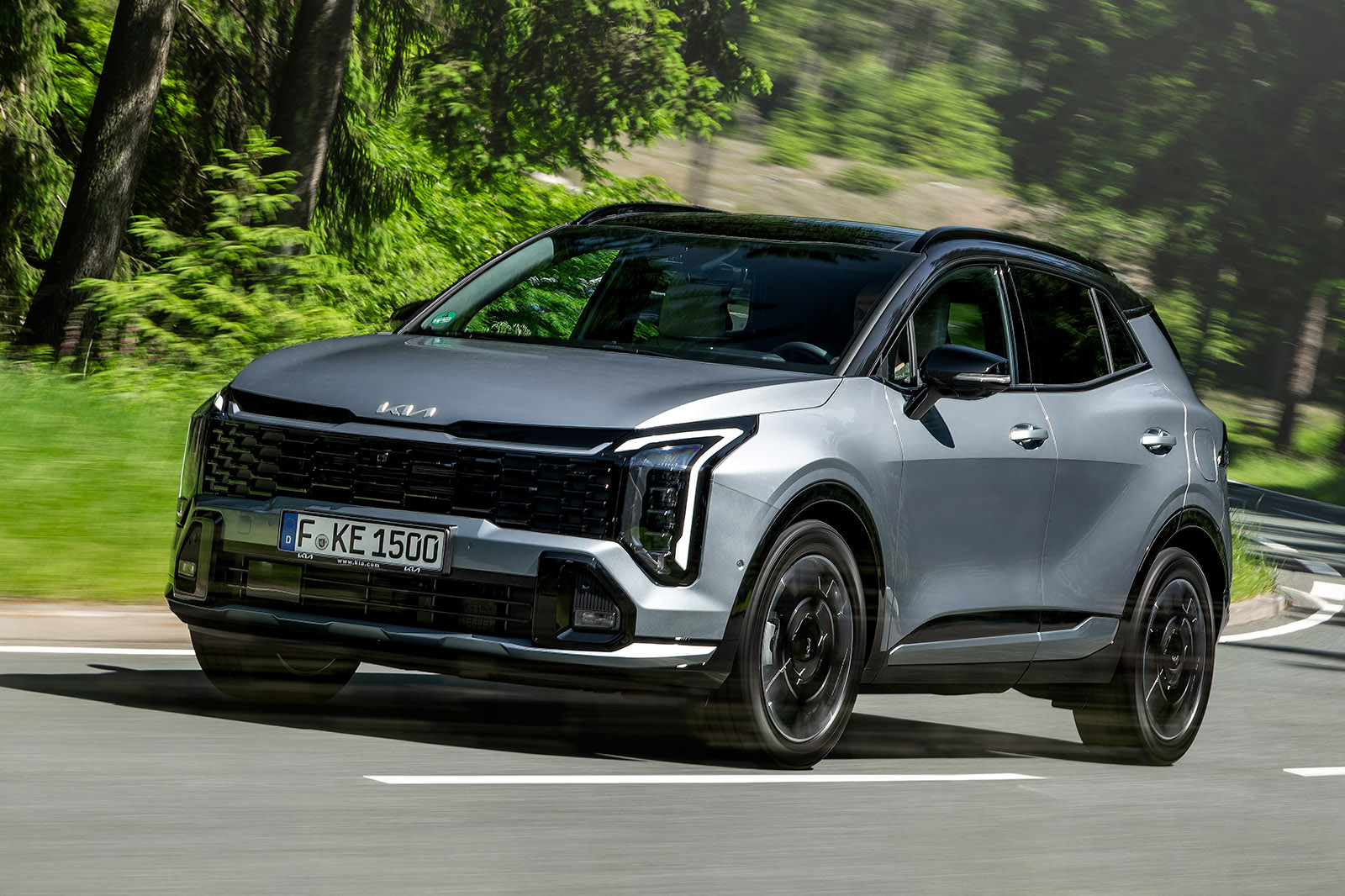
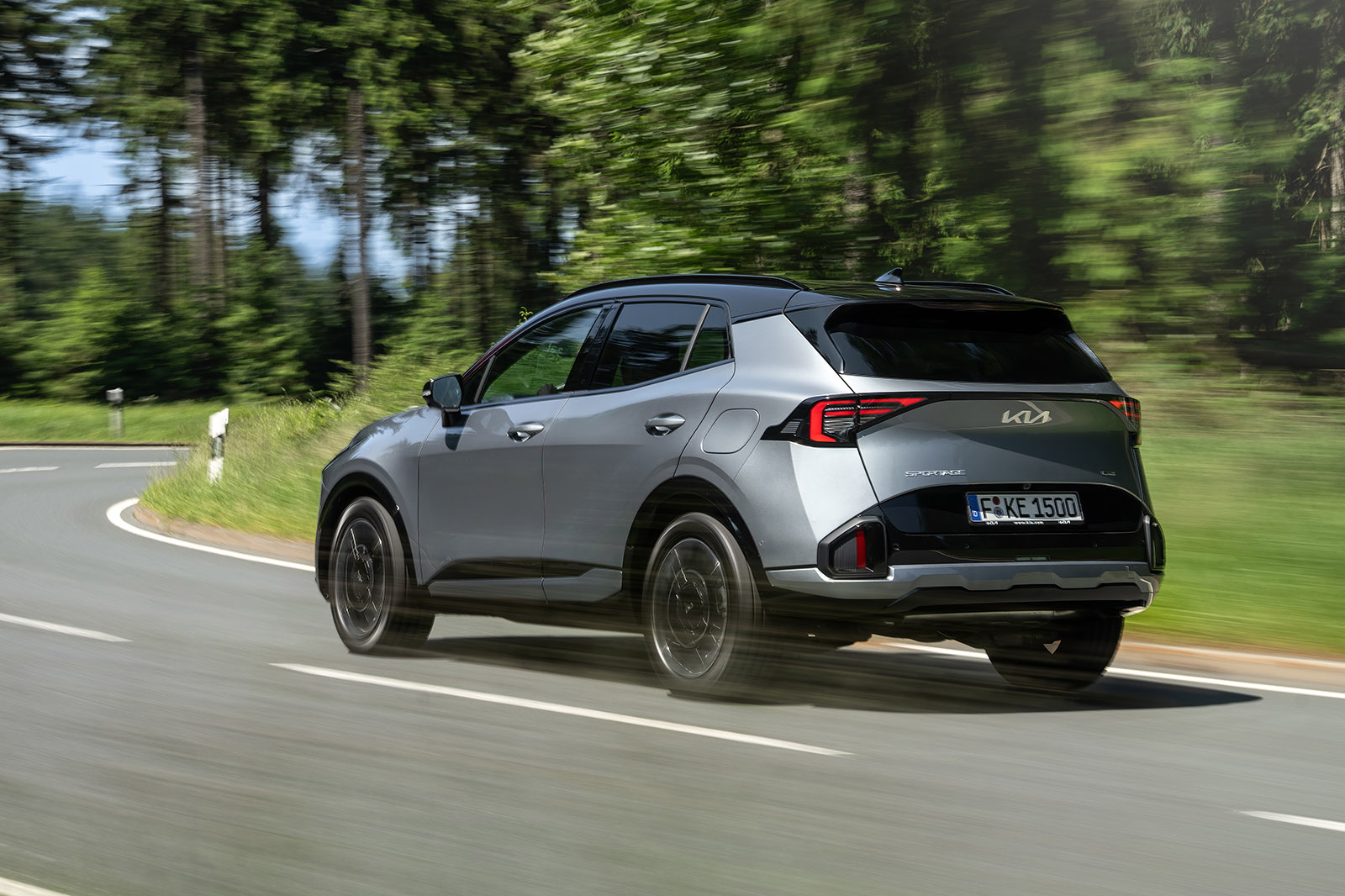
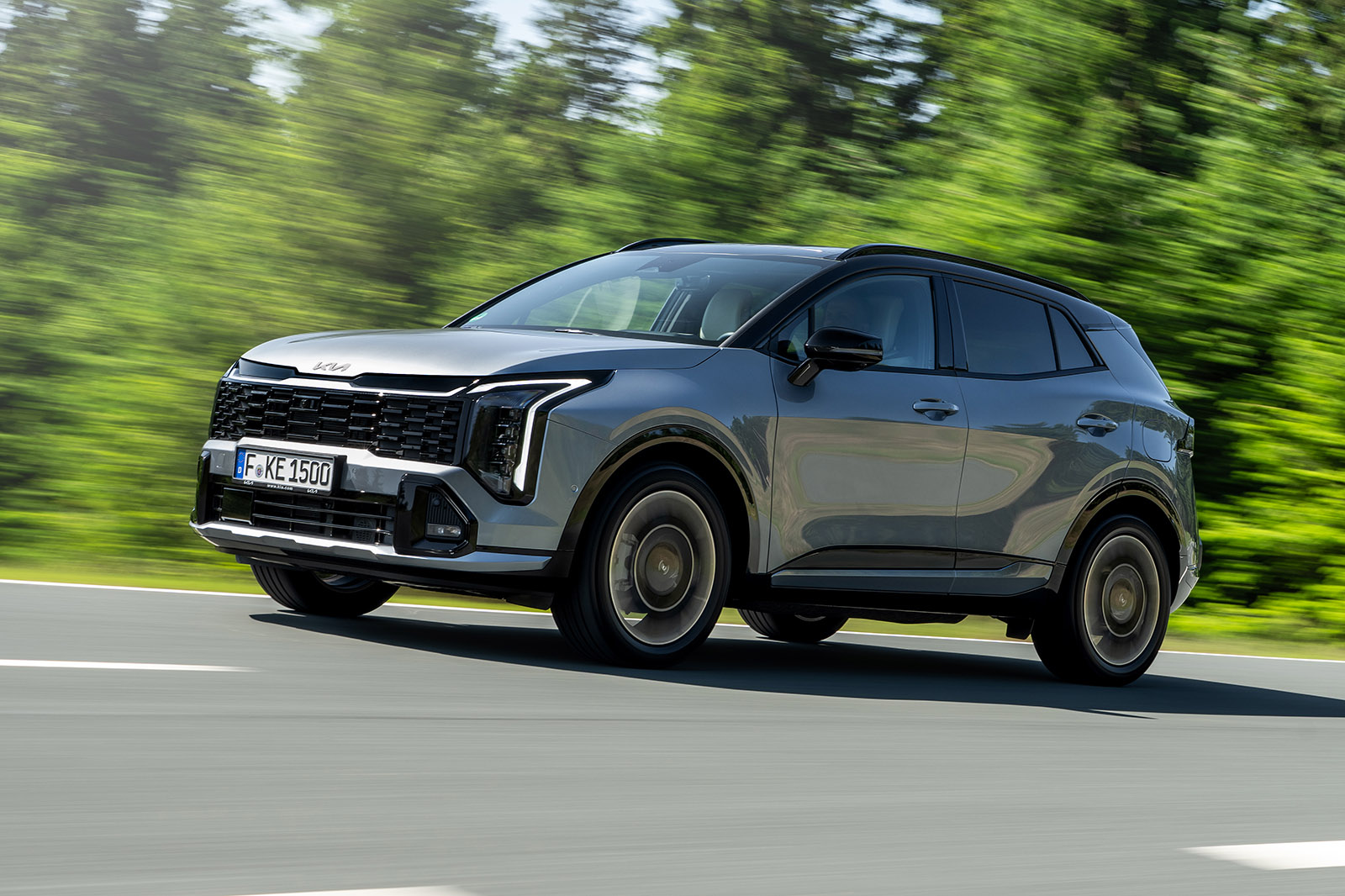
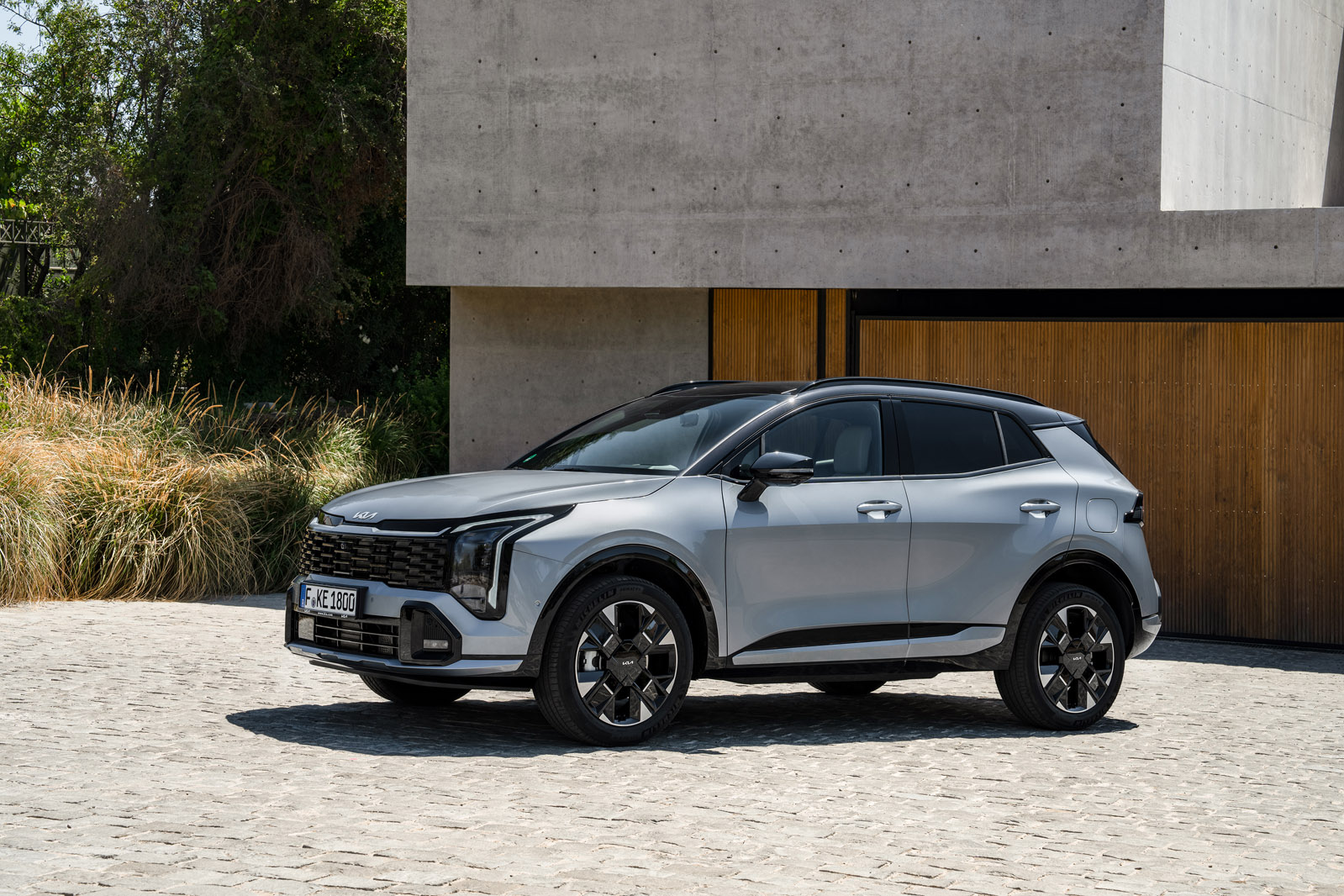
Kia recognised an emerging appetite for slightly more rakish SUV-coupés with the third-generation Kia Sportage in 2010. While the latest version was never officially defined in those terms, it is more of the same: a design-led product that doesn’t offer quite as much passenger space as boxier mid-sized rivals such as the Toyota RAV4.
Take a tape measure to the new car’s interior and you will quickly find evidence of that. One of our road test subjects, the range-topping GT-Line S fitted with Kia’s panoramic glass sunroof, offered just 920mm from rear seat cushion to roofline, which is really only as much head room as a mid-sized hatchback typically affords. (A RAV4 offers fully 80mm more.) Leg room is more generous of course but, even so, this is probably not a family car you would seek out with grown-up children to transport.
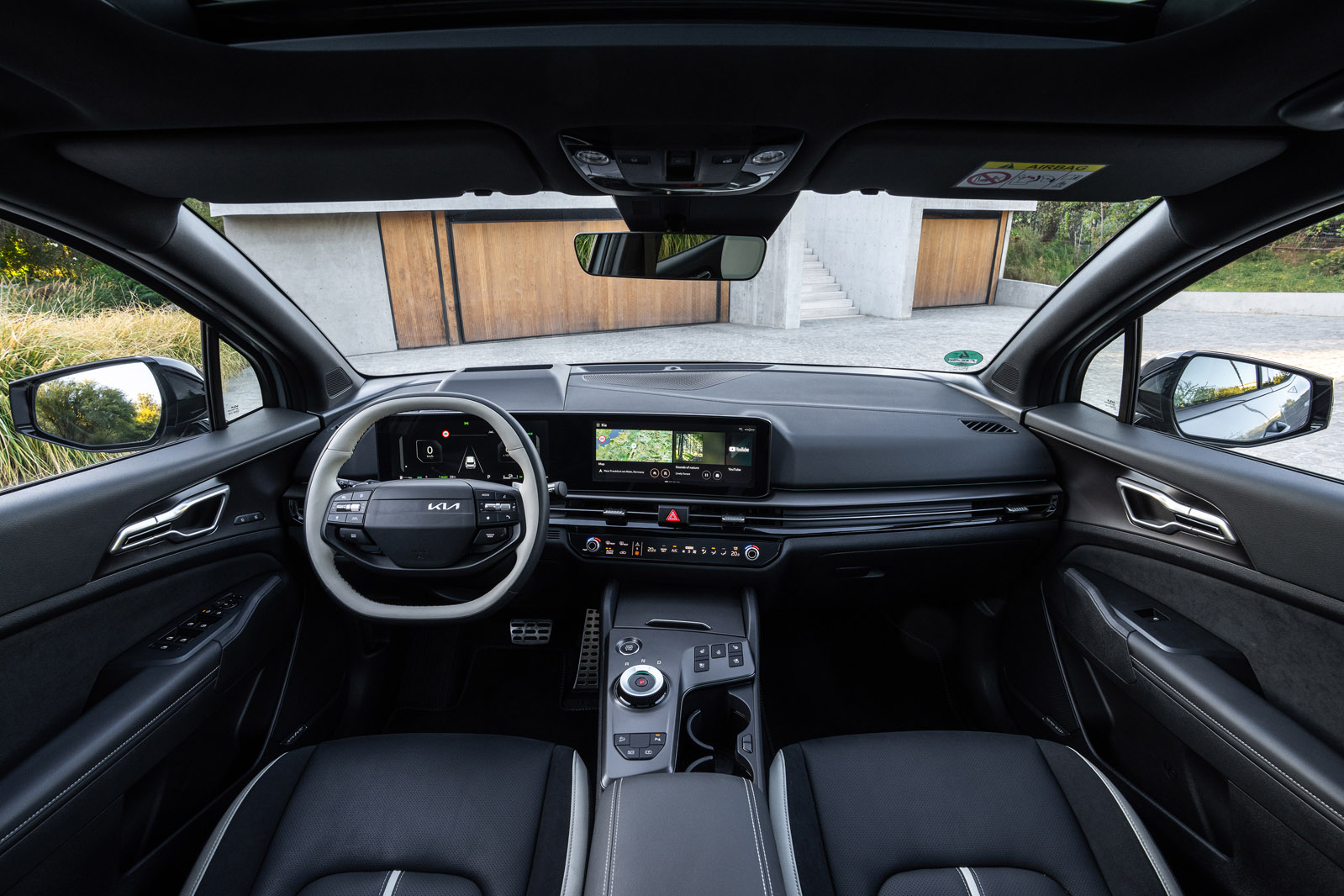
Limited adult-appropriate second-row practicality aside, however, this is certainly an interior with some visual interest and ambition about it. Striking design features, such as the tomahawk-shaped air vents and the widescreen instrumentation-cum-infotainment ‘flight panel’, catch your eye, and although some cheaper, harder-feeling mouldings are easy to find, the rest of the cabin does just enough to deliver a good all-round impression.
The driver’s seat is comfortable, with a cushion angled well to support your thighs and decent lateral bolstering. The control layout is one of sound ergonomics and grants a clear view of the digital instrument screen behind the wheel, which renders graphics very crisply and clearly.
The infotainment system to the left of that is fairly easy to navigate: it’s touchscreen-operated mostly, but a line of shortcut keys (whose function can be switched to become heating and ventilation controls) does play a part in making it easy to get on with.
In the second row, Kia offers useful and accessible bag storage hooks and USB-C charging ports on the front seatbacks, which is a neat touch. Further aft, boot space is generally good, although its 850mm loading length to the second-row seatbacks is 110mm down on that of a RAV4.
Some useful carrying space is available under the boot floor and there’s a stowage space for the roller load-bay cover when it's removed, as well as more bag hooks and a 12V power supply.
For outright carrying space, it’s slightly disappointing that the rear seats don’t fold completely flat, providing further evidence that this isn’t the most practical car in its class.
Multimedia system
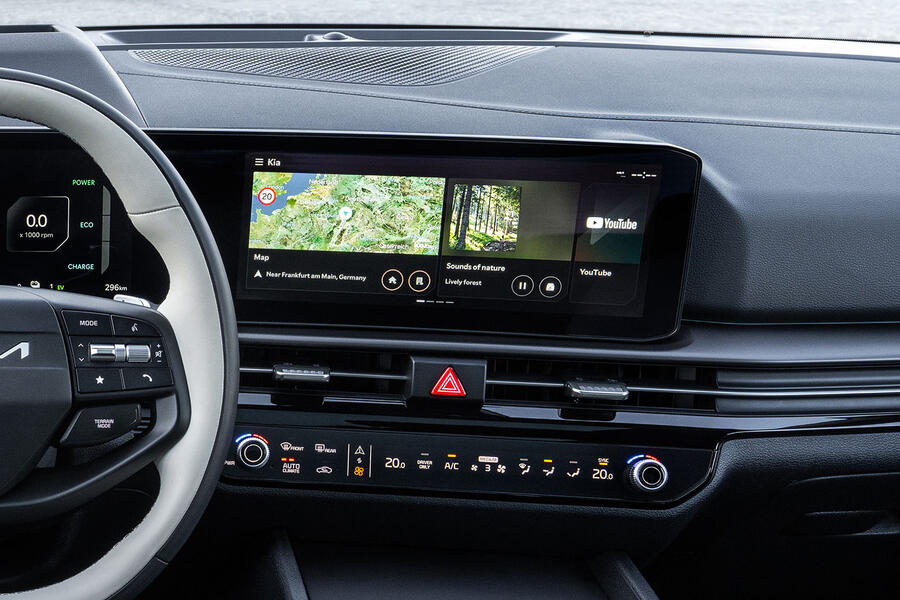
As of the 2025 update, every Kia Sportage gets the dual 12.3in screen, with the central touchscreen infotainment system with over-the-air software updates, ChatGPT AI assistant, and wireless Apple CarPlay and Android Auto. There's also a new head-up display on top-spec GT-Line S cars, which will integrate the nav or media info that you may be streaming via phone mirroring.
The system is laid out clearly and quite easy to navigate for an all-touchscreen interface. It’s always easy to get back to the home screen, and from there to find the menu you need without too much distracting scrolling or swiping.
Kia’s factory navigation system is easy to program, user-friendly in its layout and controls, and easy to follow.
The siting of the touchscreen doesn't provide a convenient ledge on which to anchor an outstretched arm, but generally this is one of the more user-friendly touchscreen systems.