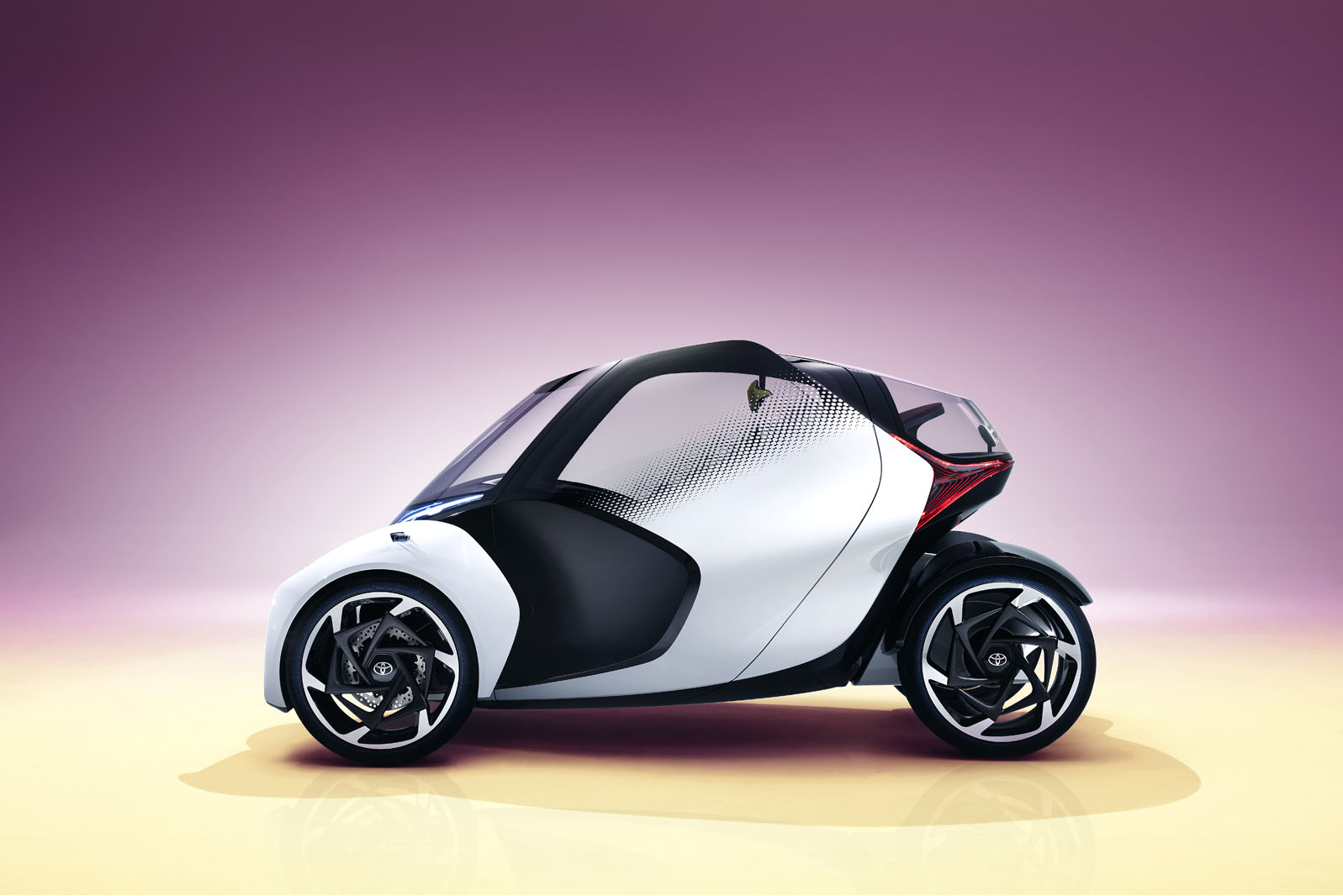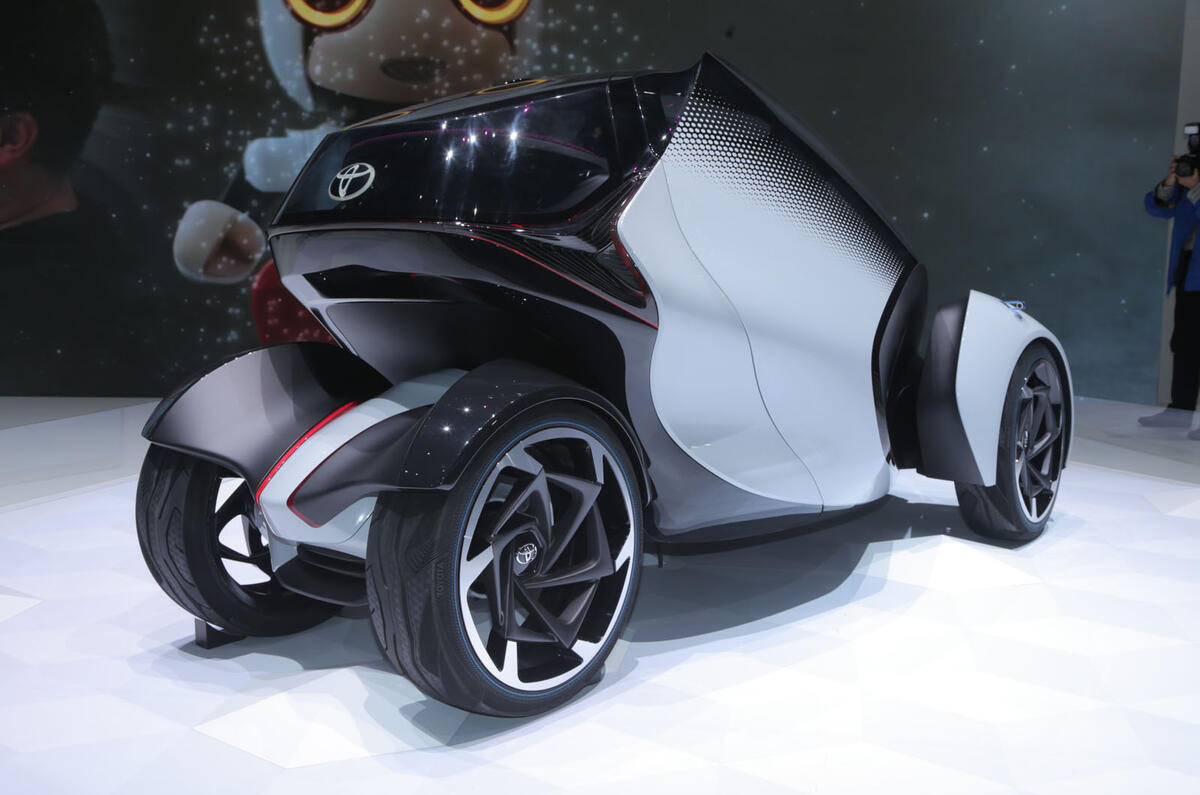
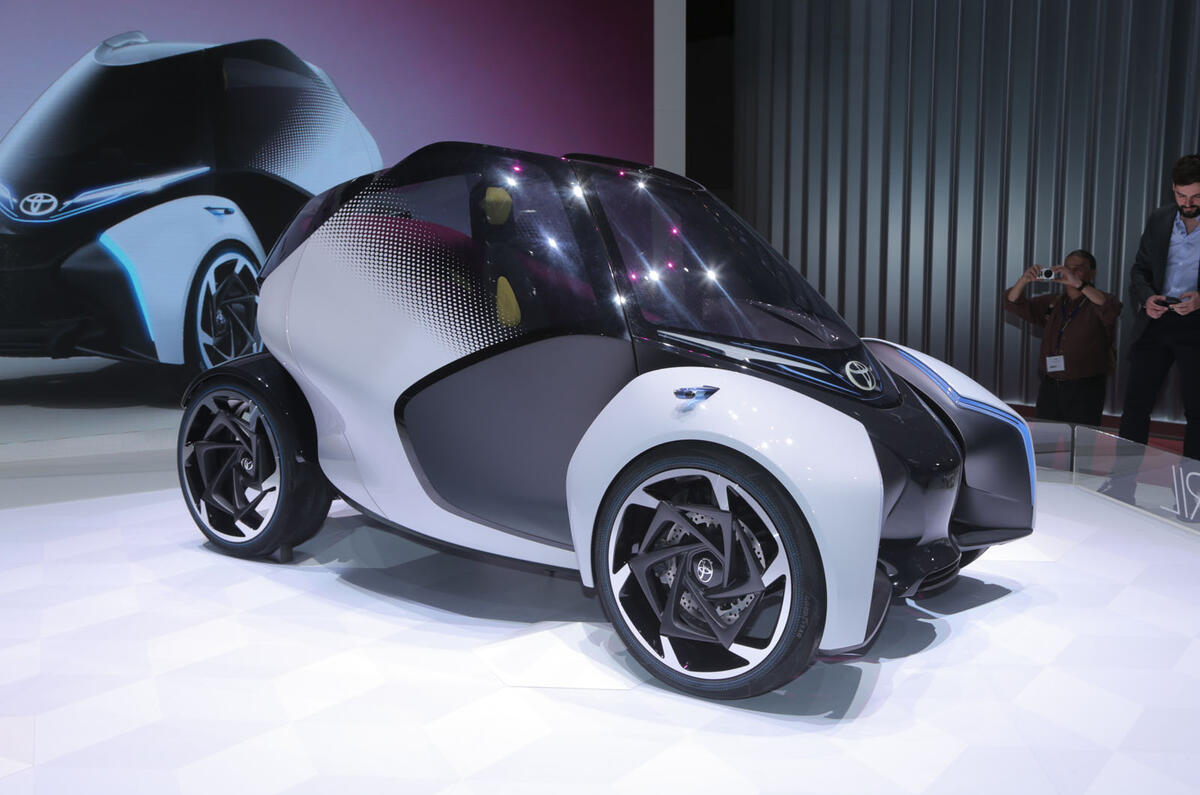
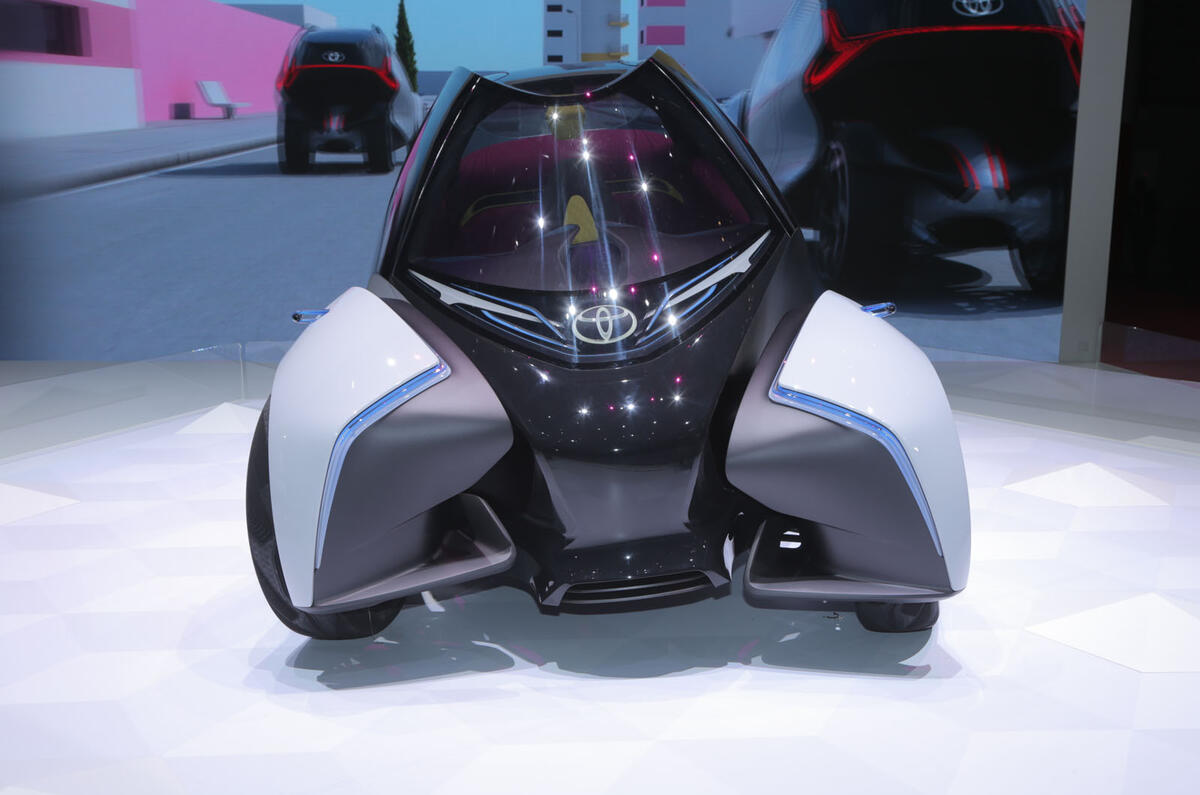
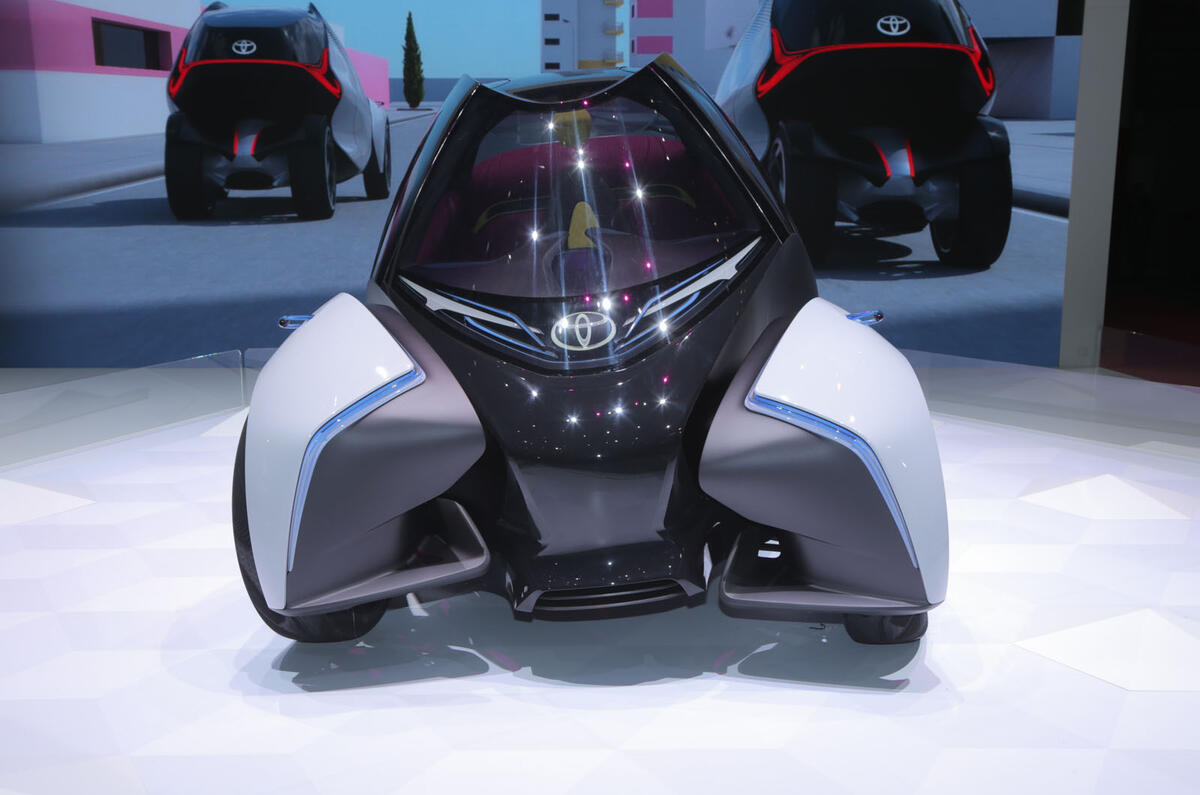
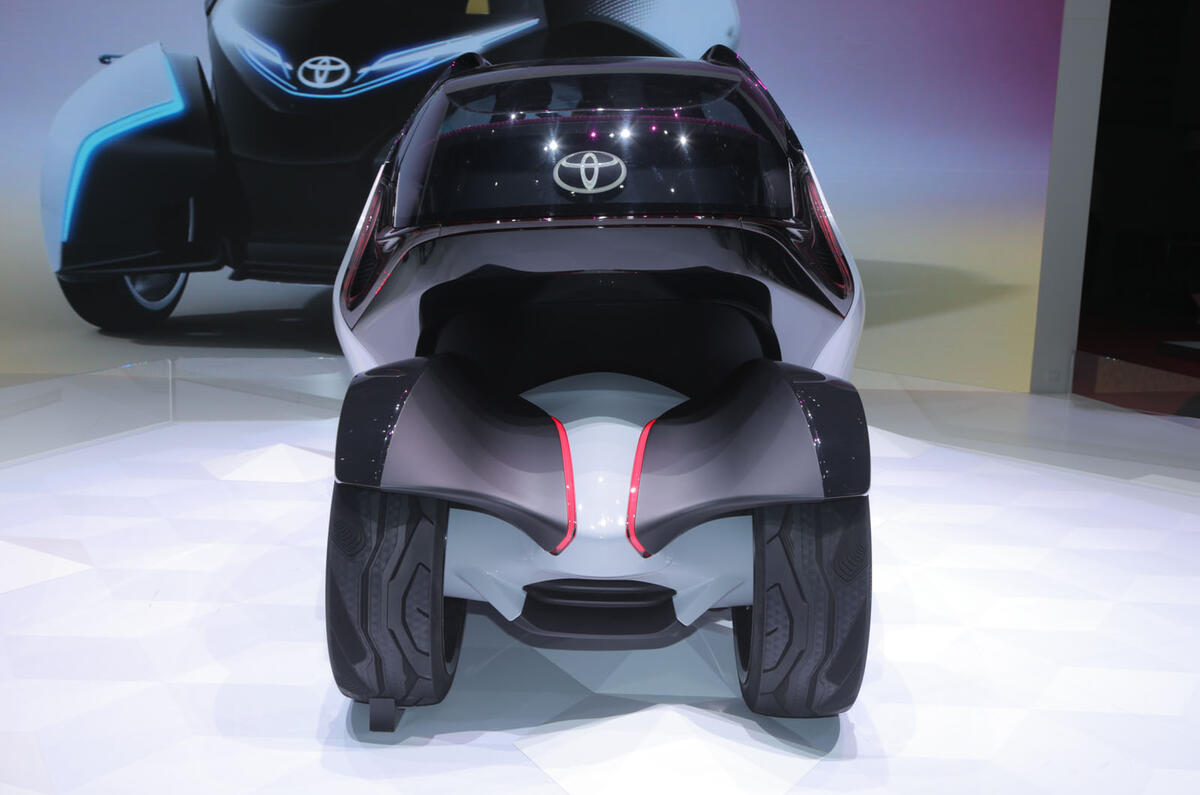
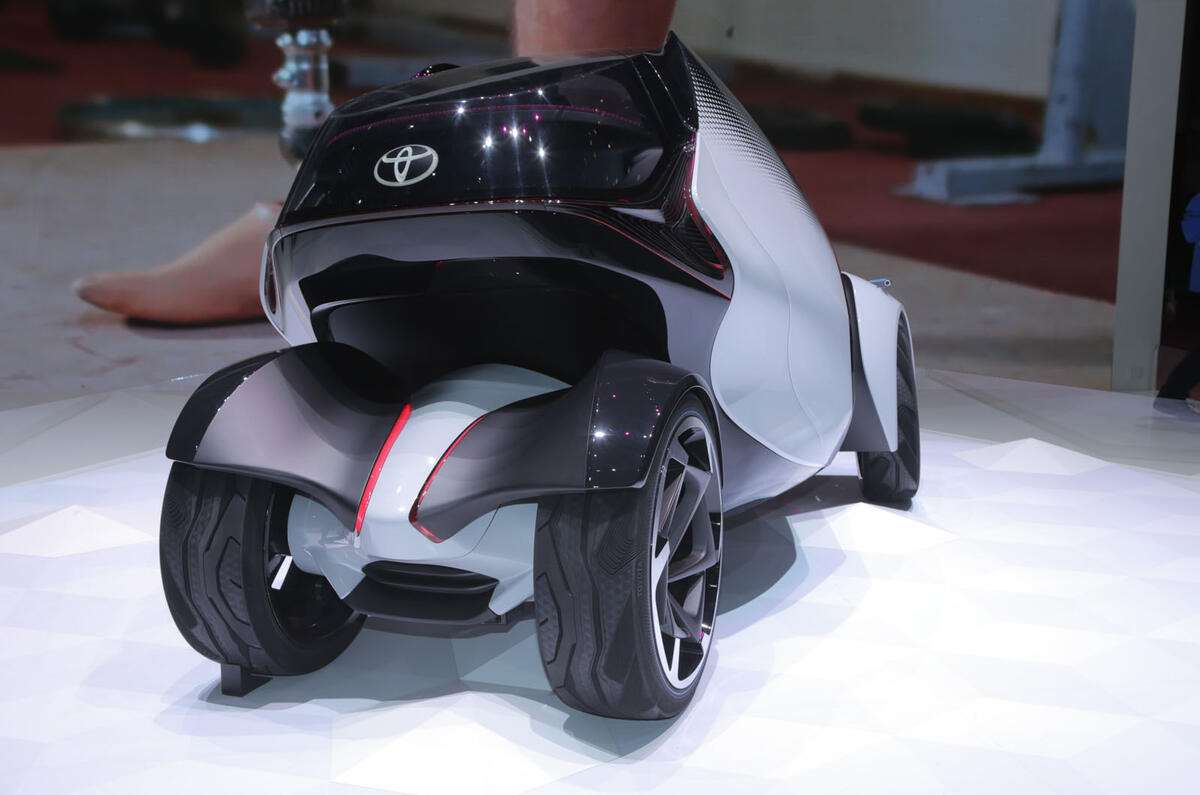
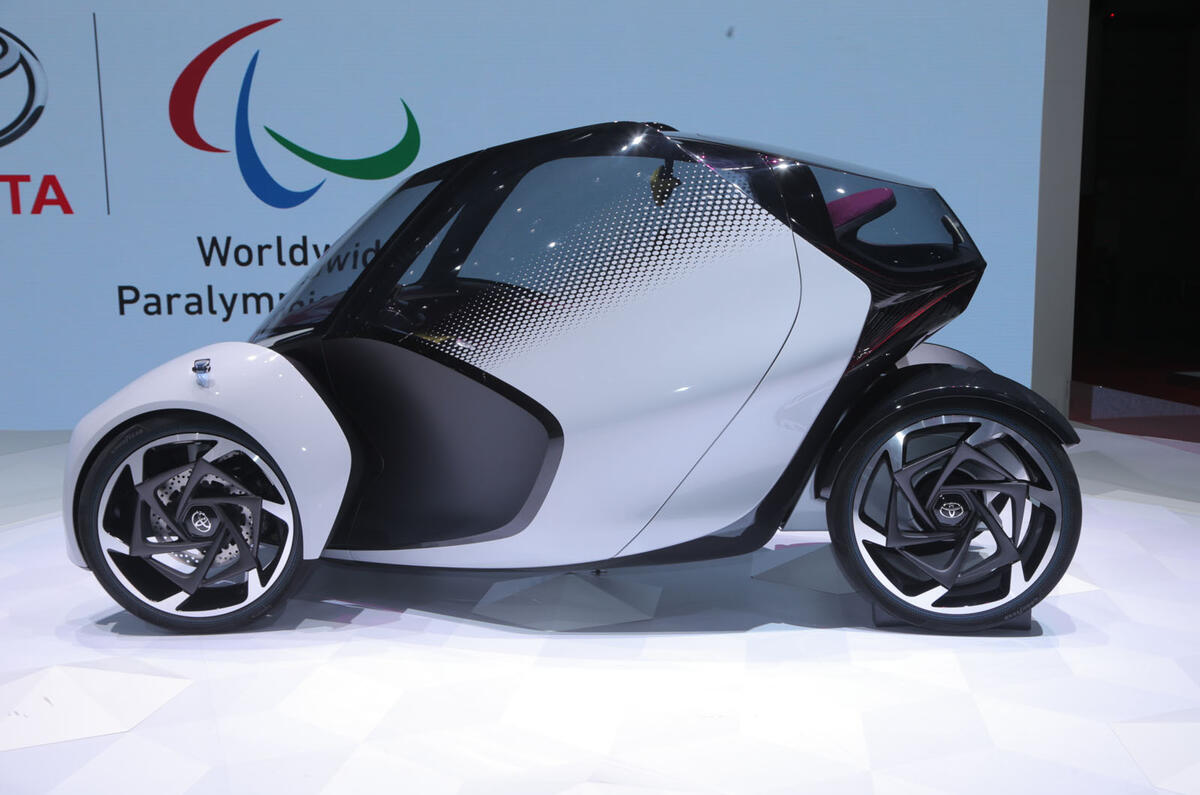
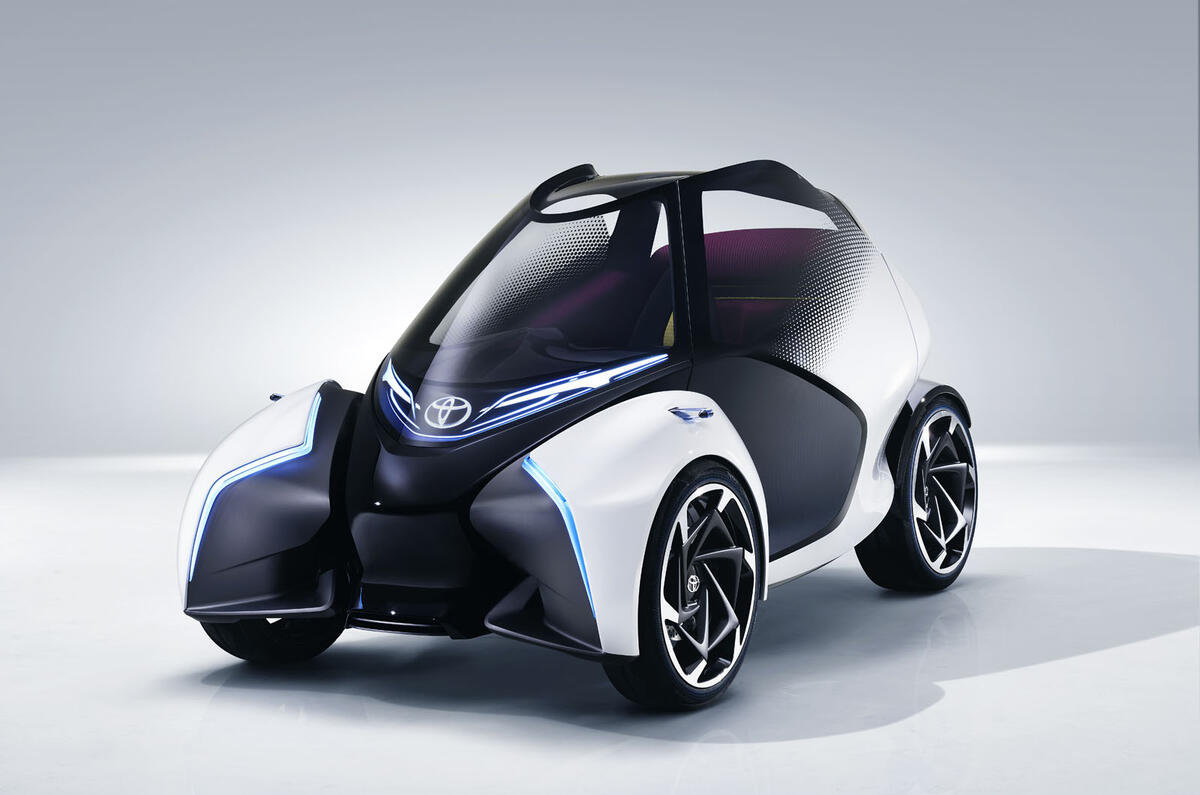
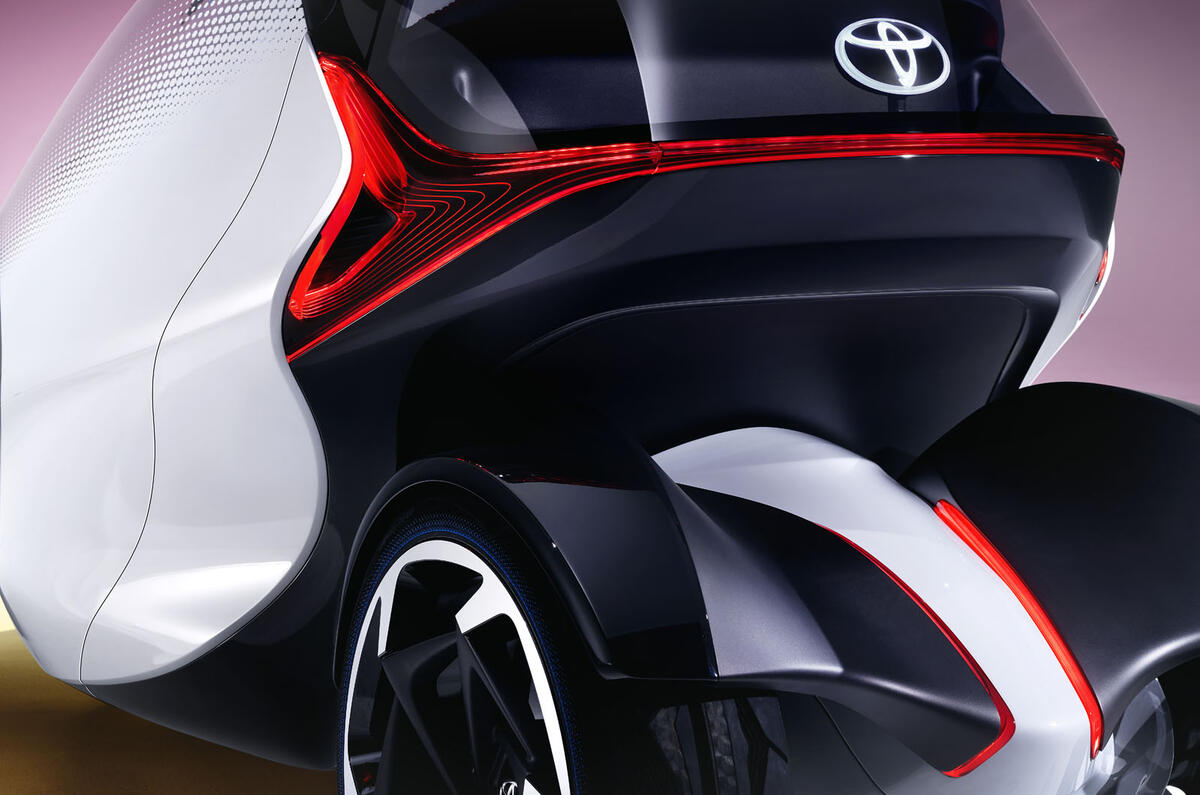
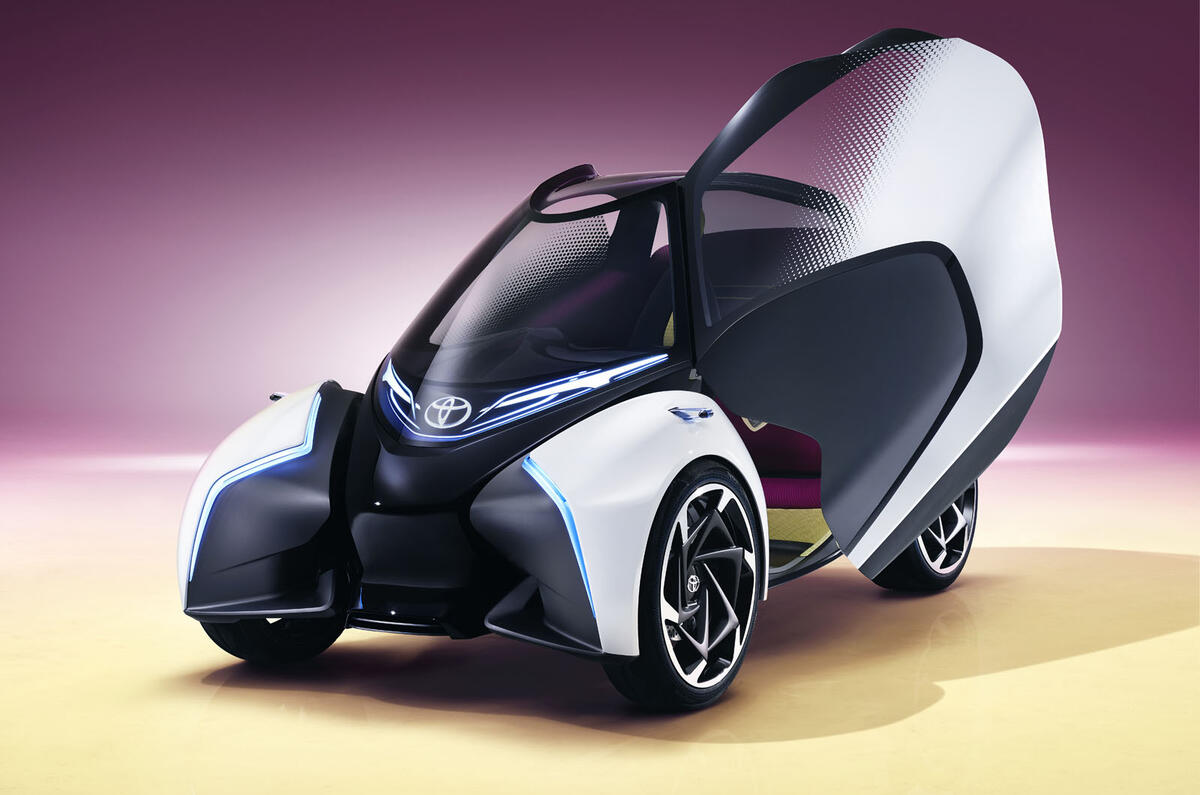
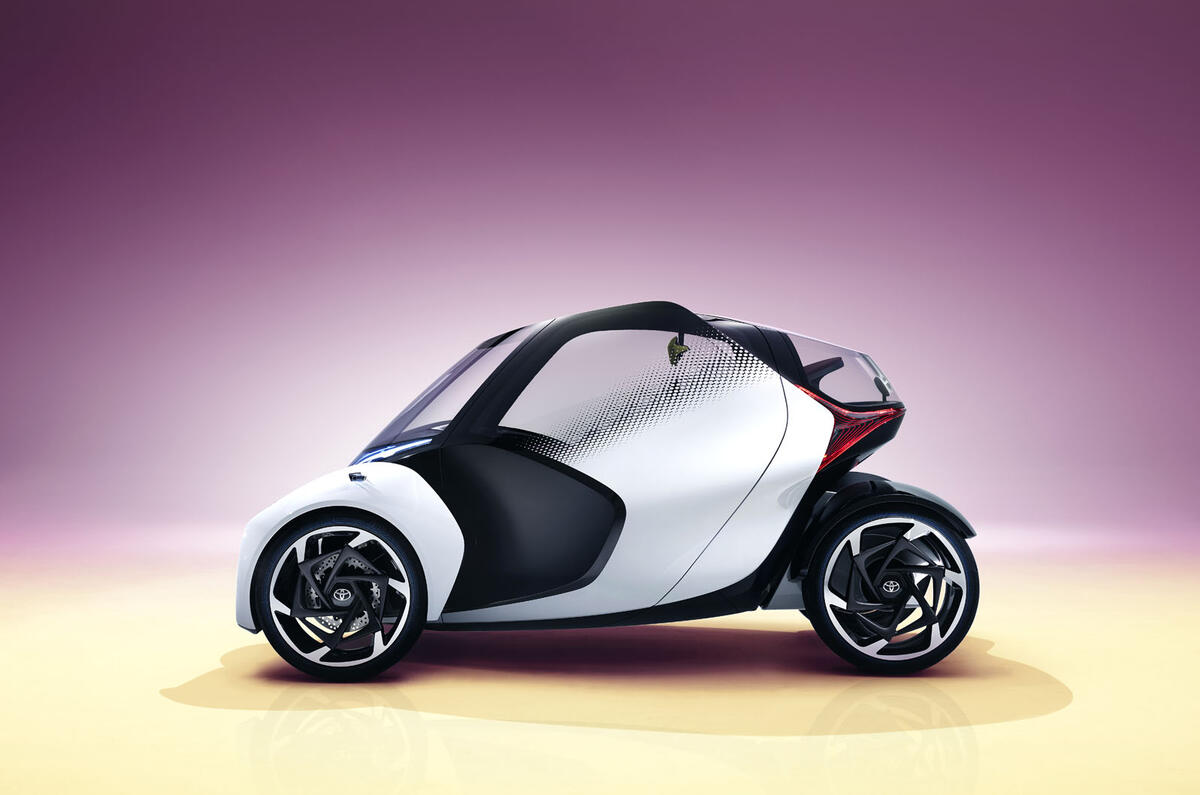
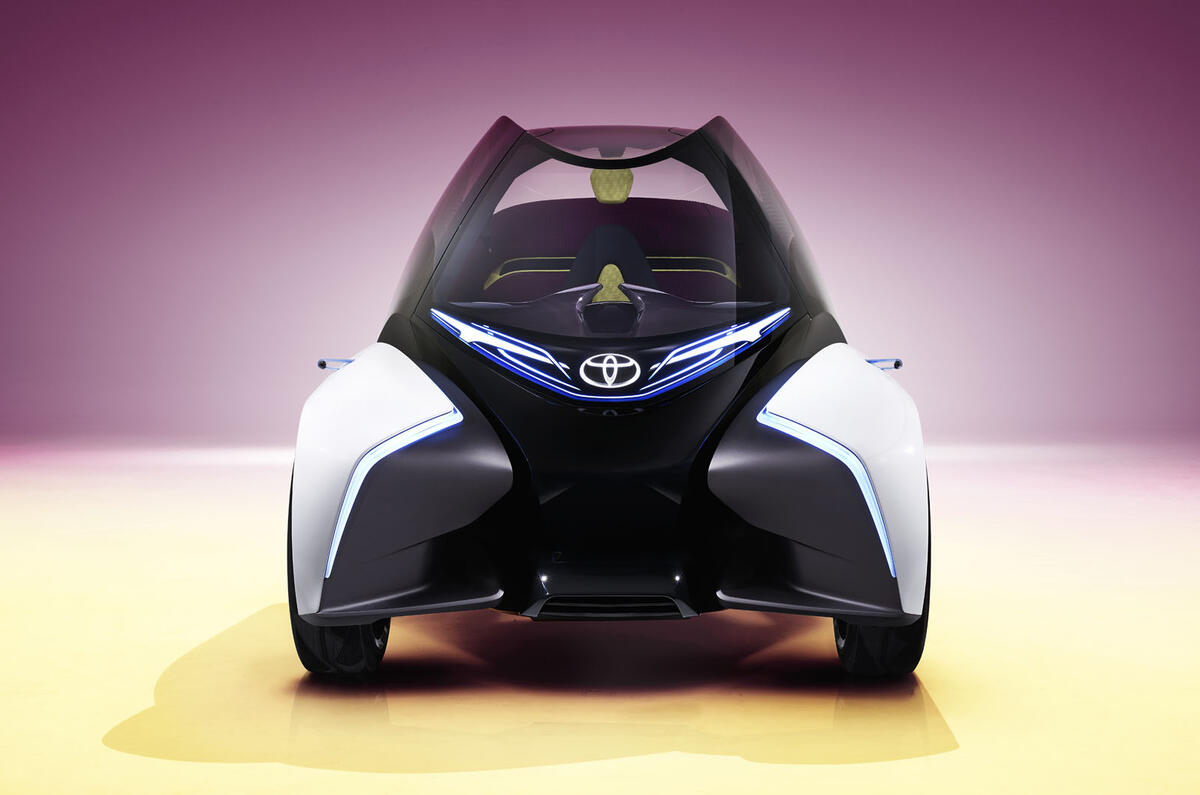

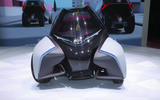
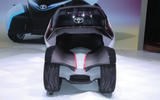
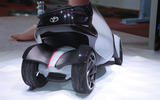
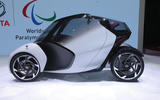
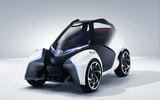

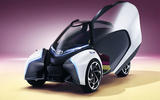
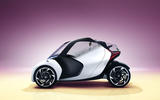

The Toyota i-TRIL electric city car concept has been revealed at the Geneva motor show, showcasing the manufacturer’s vision of urban mobility in 2030.
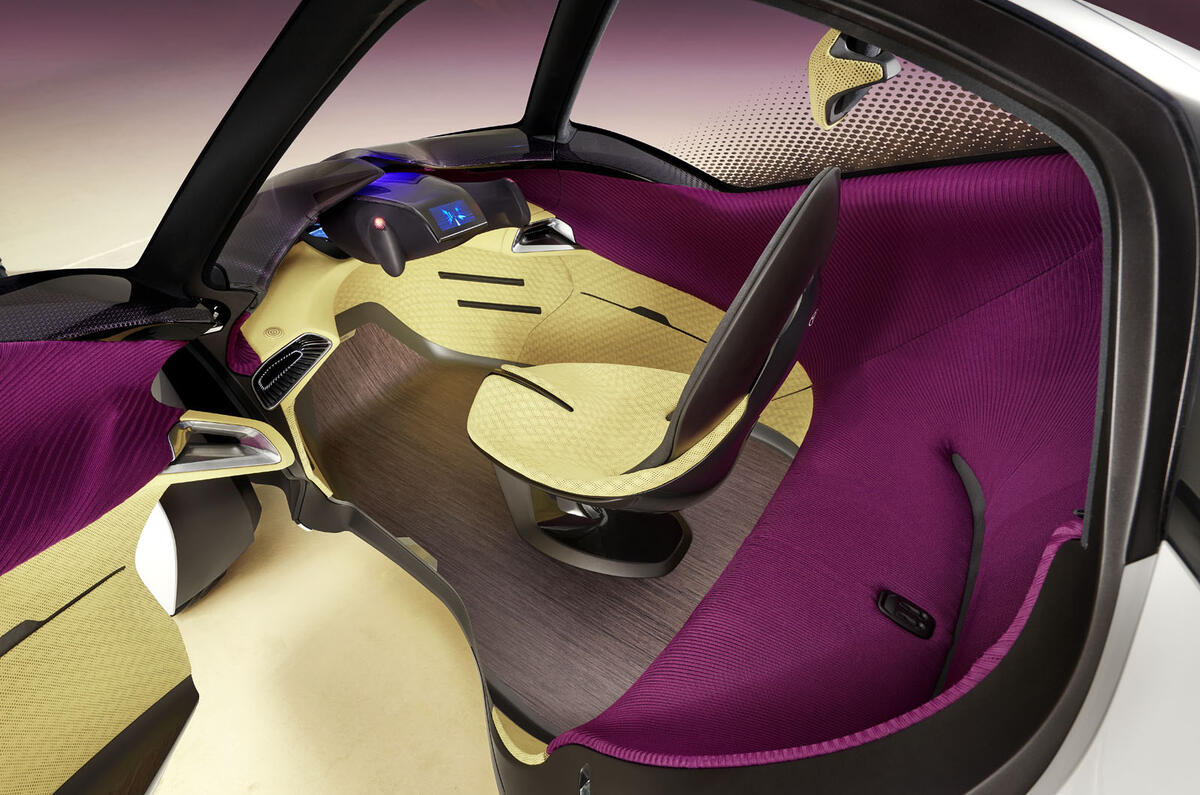
It has been developed as an electric alternative to small city cars, and features a one-plus-two seating layout as well as ‘Active Lean’ and autonomous technology.
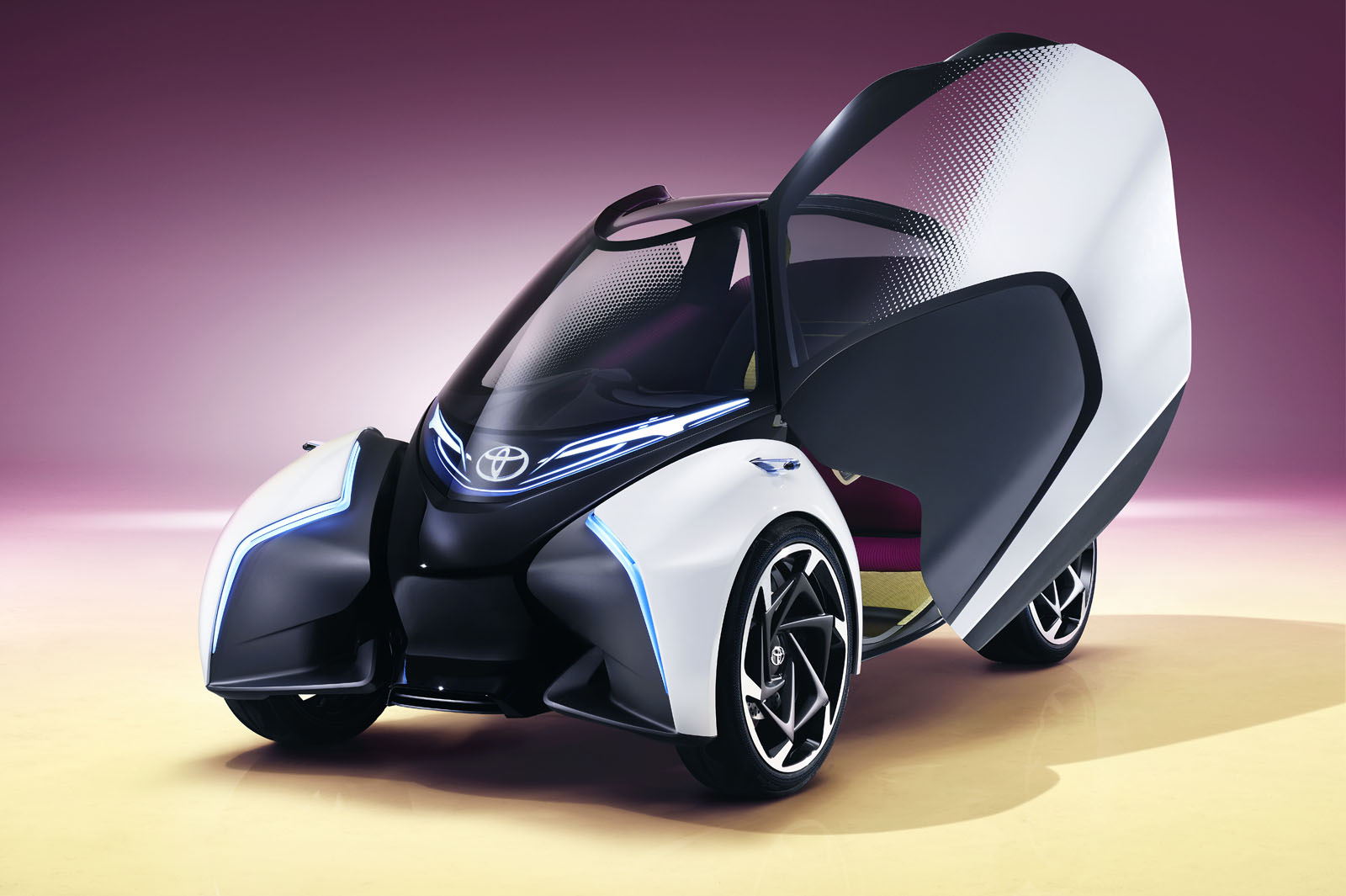
The rear-wheel drive concept has a driving range of “more than 185 miles” between charges and has no pedals.
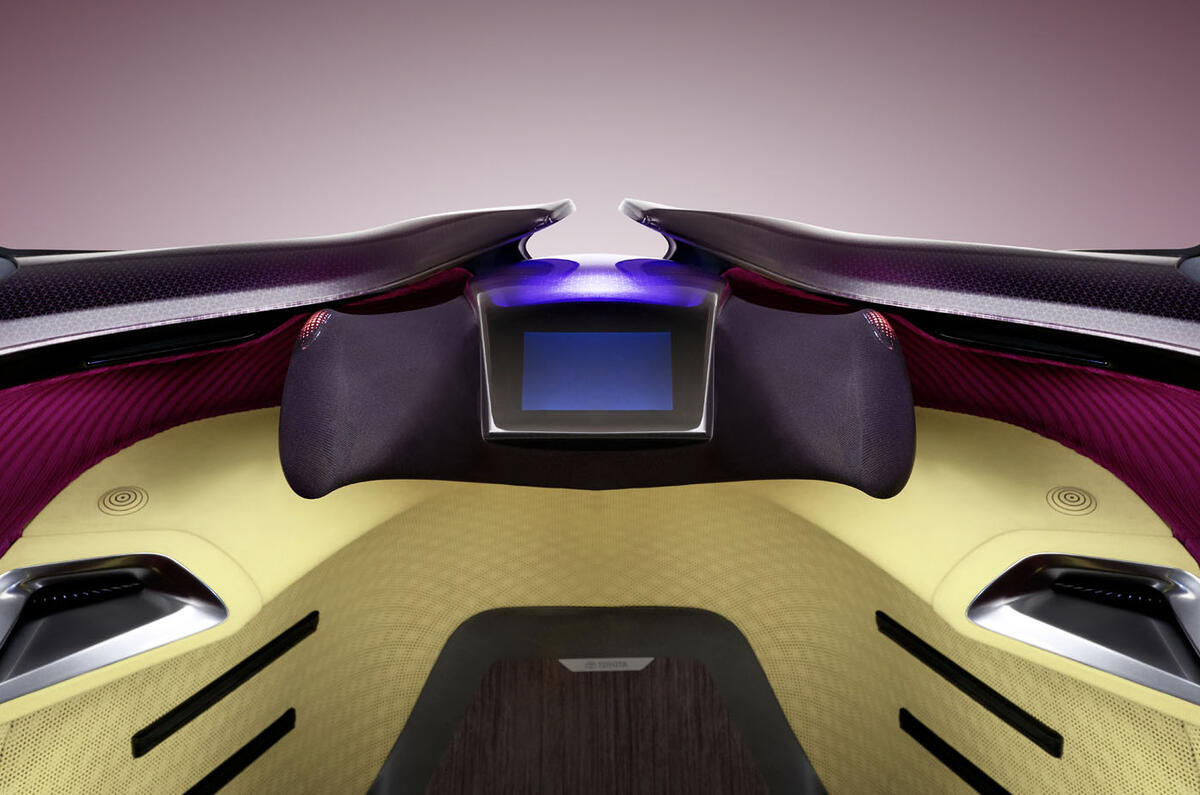
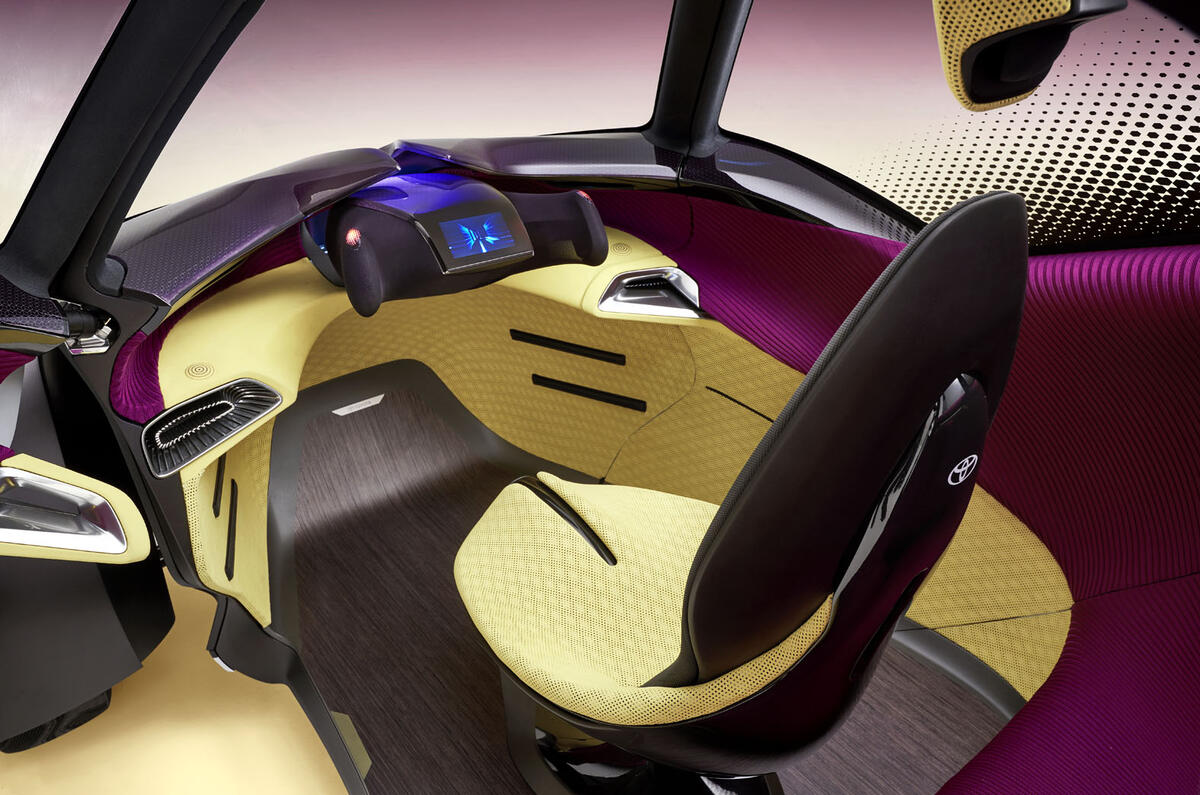
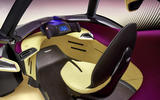
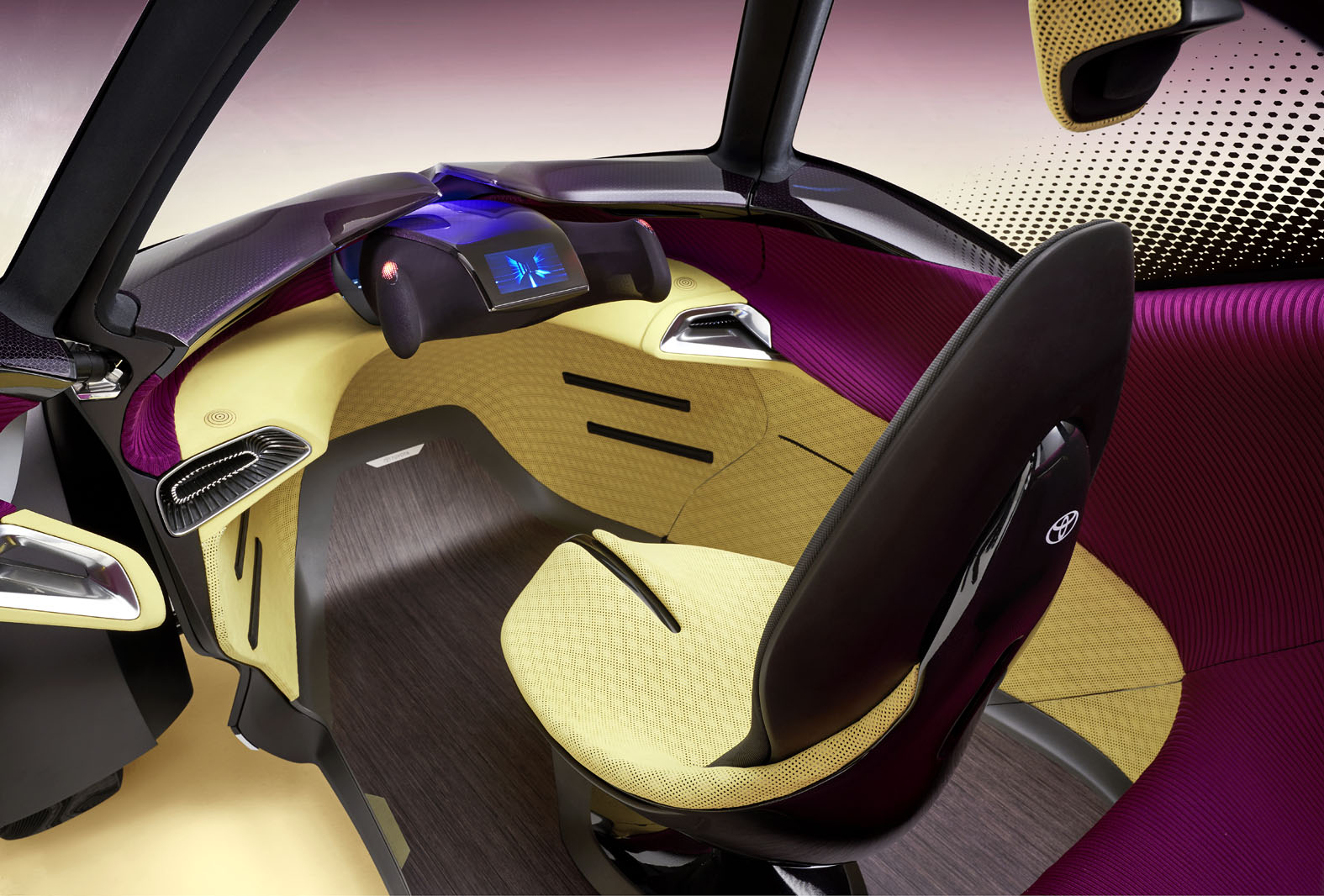
It is instead controlled through drive-by-wire technology which is operated through left and right-hand control nodes that are said to work like “computer mice or game controllers”.
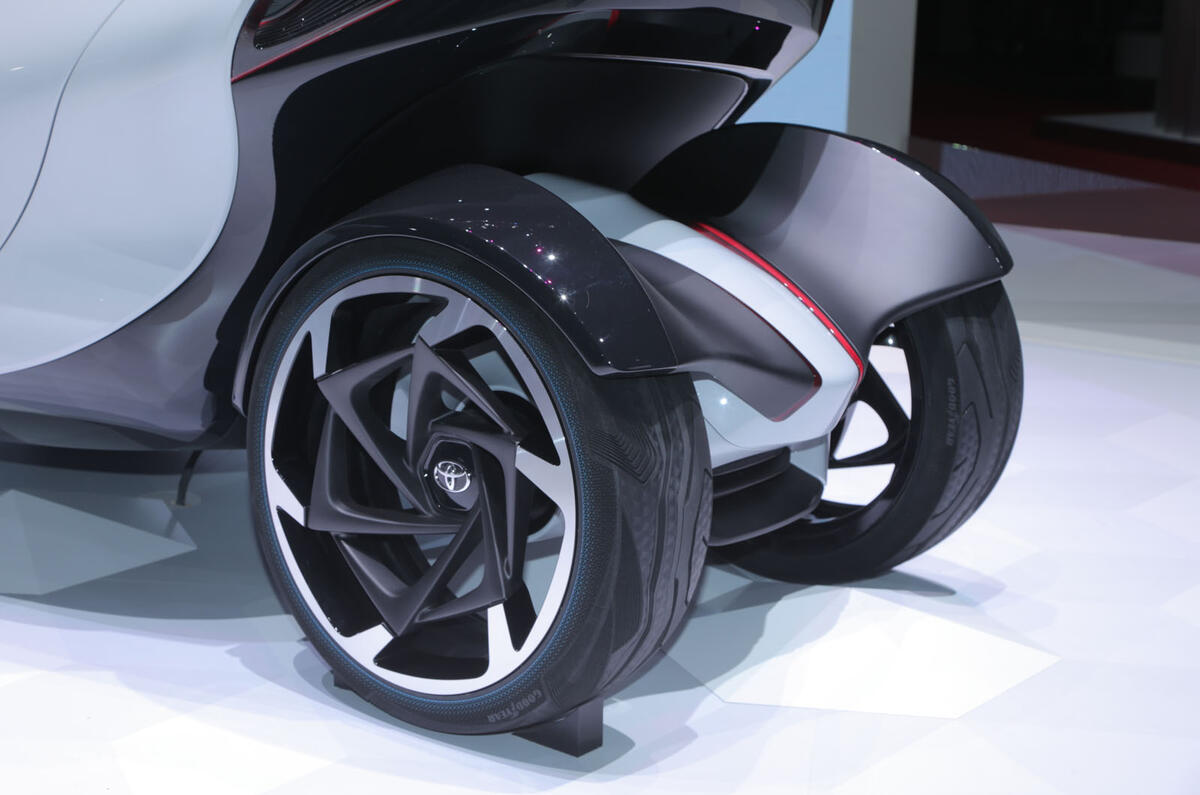
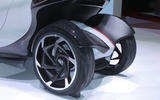
It features a hinge between the rear axle and cabin that allows the body and front tyres to lean into corners because the front wheels and wings are separate from the main body.
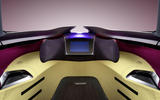
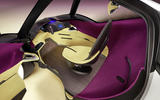
When the car is in autonomous mode, the left or right side of the instrument panel lights up when it is about to corner to show which way the cabin is about to lean.
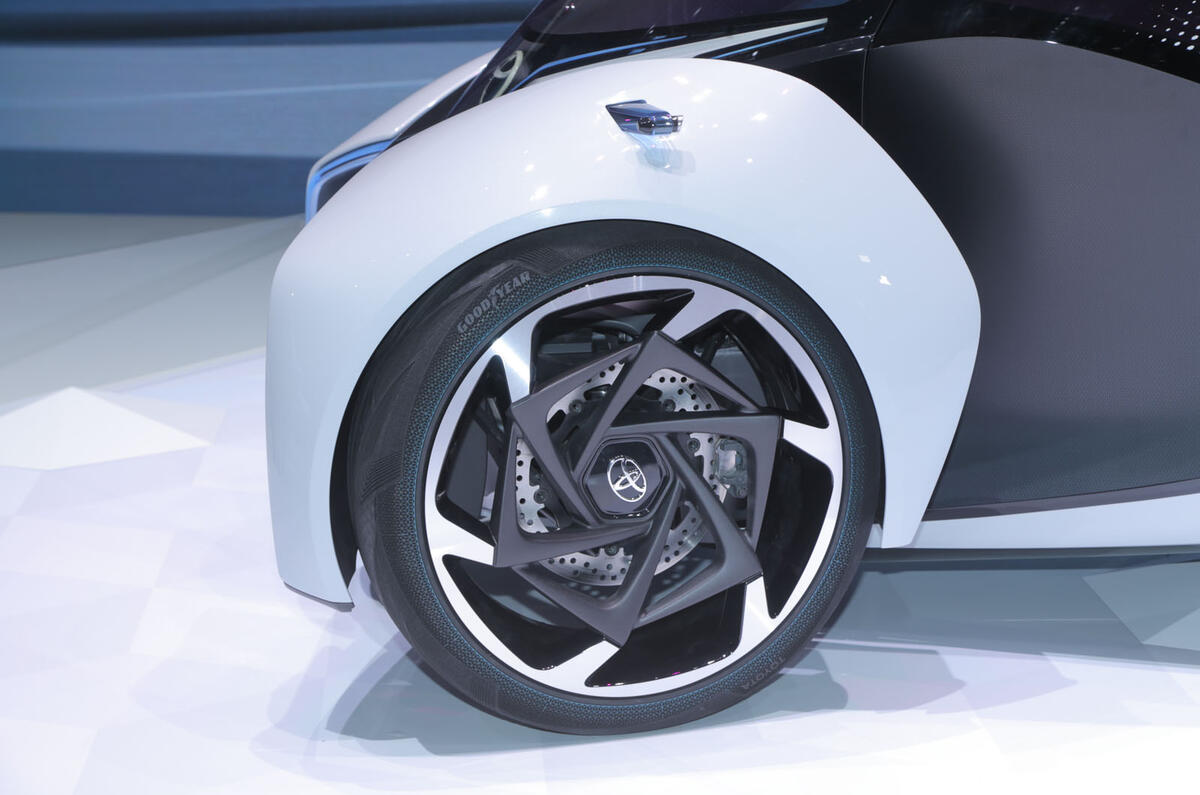
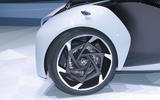
Toyota says an angle of 10 degrees of lean allows better stability and grip. It gets 19in wheels at the front and 20in wheels at the back, and there’s 25 degrees of front wheel steering which gives the i-TRIL a four-metre turning circle.
The butterfly opening doors are hinged on sloping front pillars, but Toyota says they can be opened within a regular parking space, and when they do open a section of the flooring is removed to allow easier access in and out of the car.