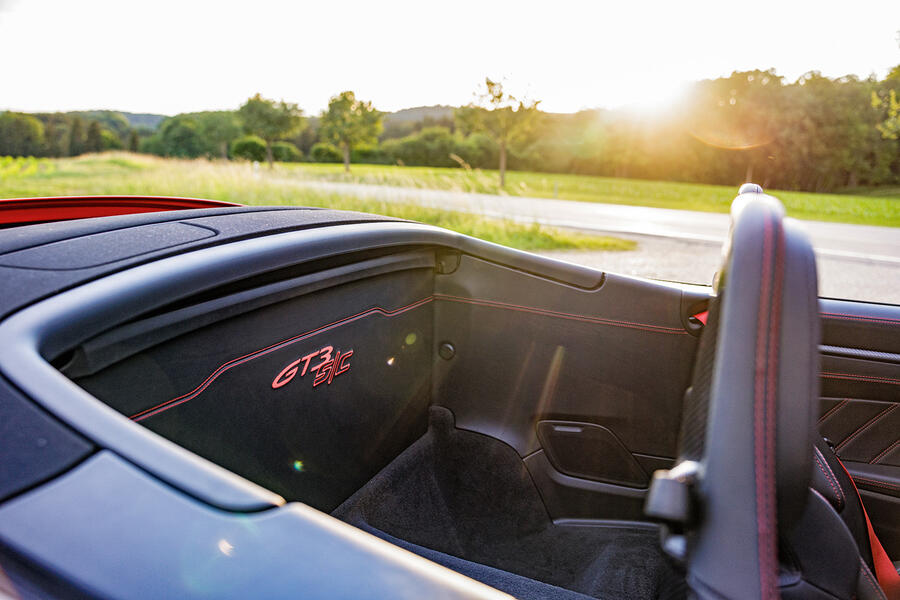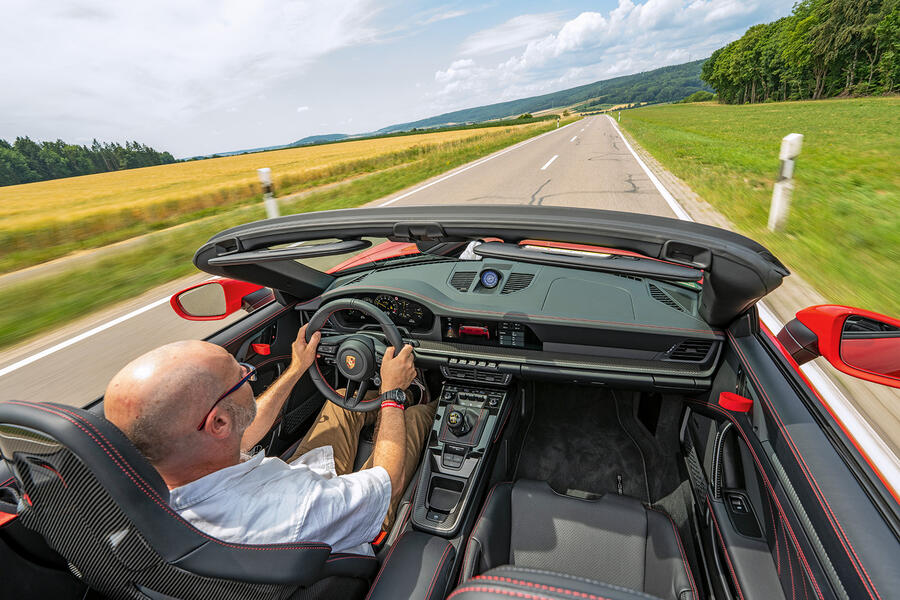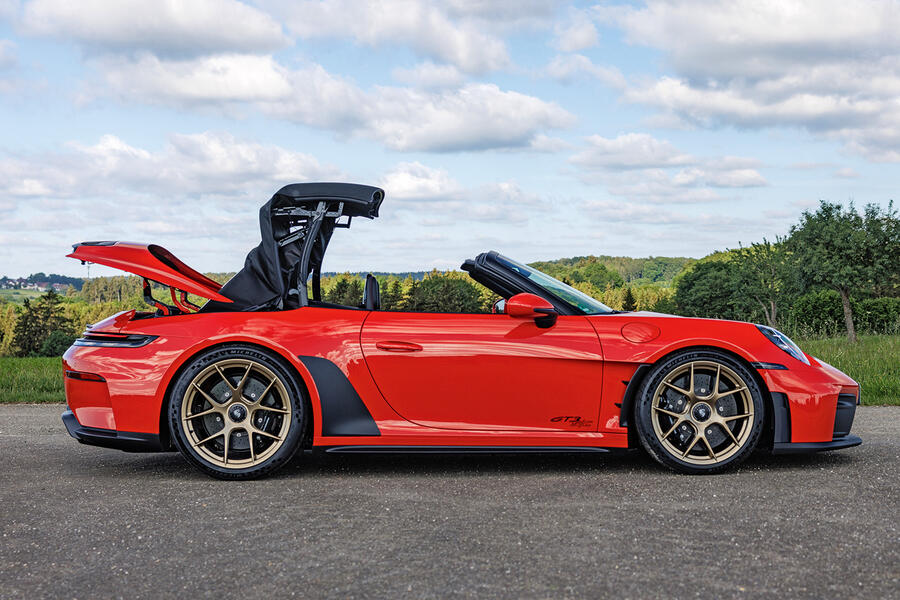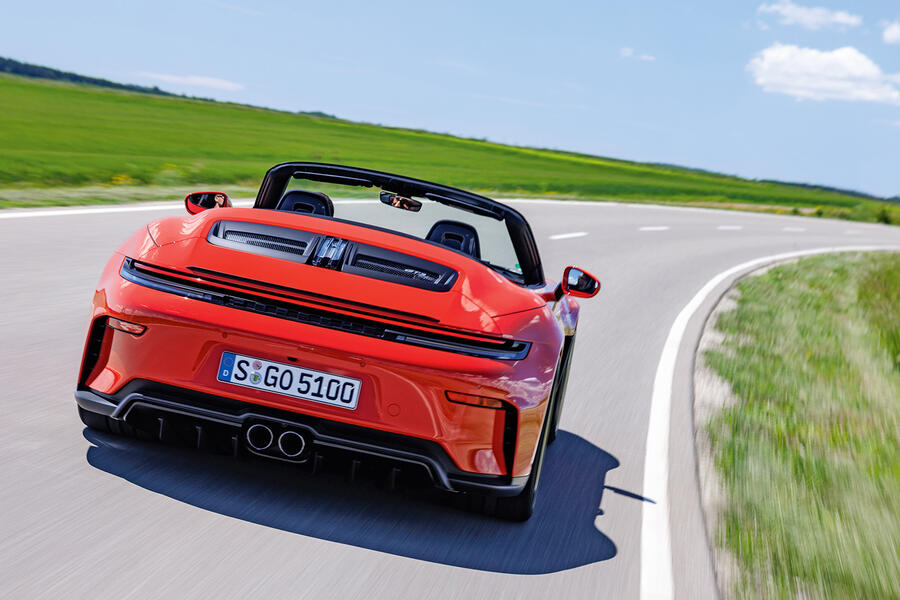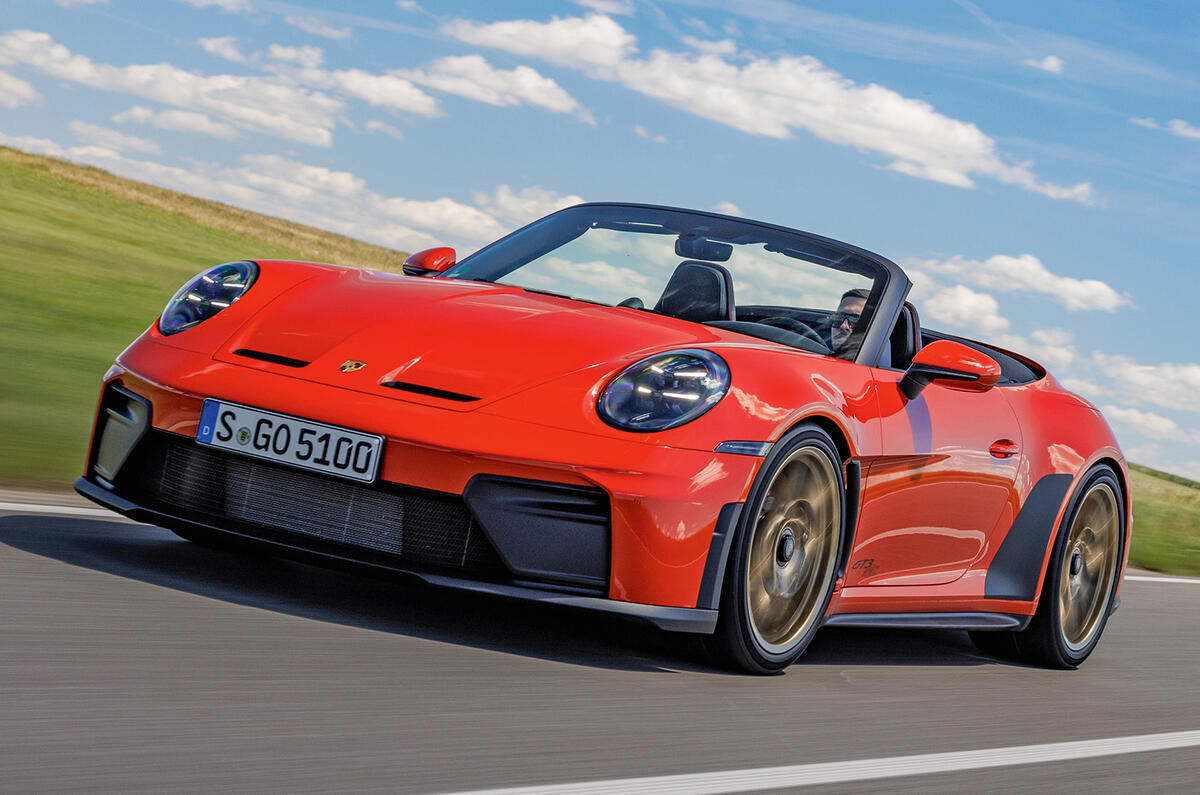

This might seem like a niche within a niche, but here is the Porsche 911 GT3 S/C, in short a 911 GT3 cabriolet, so an open version of one of Porsche's keenest driver's cars. If you think that's an odd thing, what with cabrios typically being floppier and therefore less good than coupés, you're not alone.
"The number one talking point is 'why?'," admits the boss of Porsche's GT division, Andreas Preuninger. Yet the S/C (Sports Convertible) is actually the answer to a simple question: what would the nicest 911 be like if you were going to use it only on the road?
Not a track-focused GT, then, but one optimised for use on your favourite empty roads of a balmy summer's evening; a car containing all of the goodness of a GT3 Touring and the same mechanical interaction but with added soundtrack, given that noise is "one of the top three reasons people say they buy [a Porsche GT]", says Preuninger.
Previous owners of Speedsters and Spyders with their fiddly manual hoods have loved that but told Porsche they would accept 10kg of added weight for the convenience of an electric folding roof. Here, they've got it. And the initial order bank suggests "we should have done it earlier".
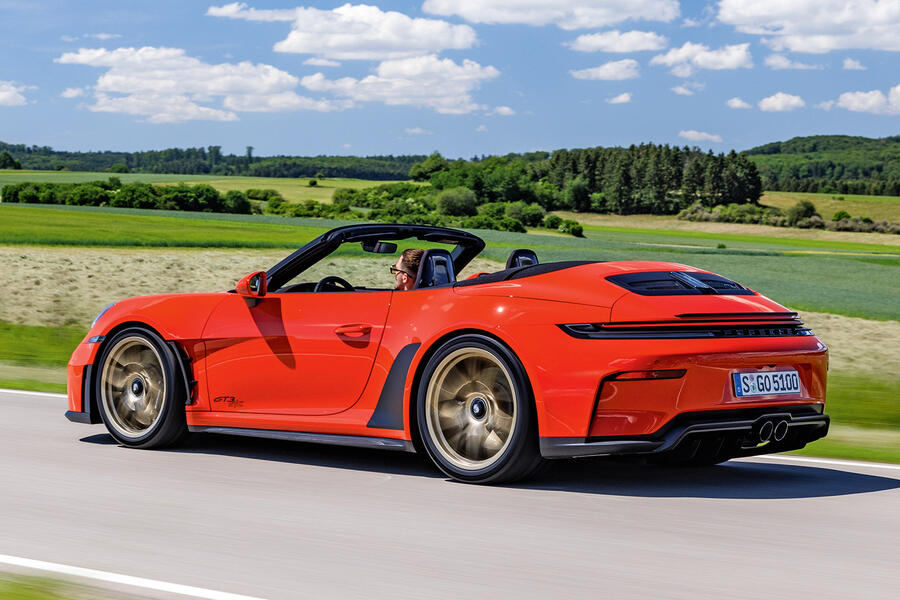
A typical convertible is, of course, heavier and more flexible (in the bad way) than the average coupé. In the 911's case, it's about 74kg heavier, only around 30kg of which is in the hood, because this roof, coming from the Turbo S, has a large degree of magnesium in its mechanism.
The GT division is a bit surprised that Porsche didn't shout more about it when it was launched, given how light that is. The remainder of the weight is in the body-in-white, which is strengthened to retain as much torsional rigidity as possible (around 27kN/deg). The task was, then, to find 75kg to take out elsewhere, with the aim of having the S/C no heavier than a GT3 coupé could be.
To that end, it gets as standard the coupé's Lightweight Package, comprising magnesium rather than aluminium centre-lock wheels, which save 9.1kg, plus carbon-ceramic brakes, which save another 20.3kg. Carbonfibre front wings and doors, which came on the brilliant 911 S/T but which aren't offered on the GT3 Touring, come in too. You can tell them by their different sculpting. And the cabriolet gets the GT3's carbonfibre bonnet, plus some carbonfibre suspension components out of the coupe's Weissach Package.
Then the rear seats are deleted, and it's available with a manual gearbox only, so the S/C comes in, fully fuelled and with washer fluid topped up, we're told, at 1497kg. That's a wee bit heavier than a manual GT3 (1462kg), but if we're talking a car with PDK dual-clutch auto or a couple of options or a tuba left on the back seats, we're in the realms of no discernible difference.