Long-running SUV is electrified with Neue Klasse design and tech – plus a truly enormous battery

Find BMW iX5 deals
Other Services
Sell your car
84% get more money with

BMW is going to have to start work on a jet turbine and a flux capacitor at this rate.

It seems that with the new BMW X5, it’s going for the record for most power sources available in one car. It will at some point be available with mild-hybrid petrol, mild-hybrid diesel, plug-in hybrid, battery-electric and hydrogen fuel cell drivetrains.

At a time when EV mandates and subsidies come and go and consumers can’t make up their minds whether diesel really is the devil’s work, BMW is not taking any chances and is just giving us everything. But can it do everything well?

The G65-generation X5 isn’t due in the UK until March 2027, but I’ve already had substantial seat time in late-stage prototypes of the petrol, PHEV and EV (badged iX5) to get an early glimpse.

Advertisement

DESIGN & STYLING

BMW iX5 reveiw 2026 61

With the smaller iX3 and mechanically unrelated X3, it seemed as if BMW was done sharing platforms between EVs and ICE cars. The benefits are obvious: batteries and motors are a very different shape from engines and gearboxes, so not having to compromise one for the other seems sensible. But with the new X5, BMW is firmly choosing flexibility again. All versions can come down the same production line in Spartanburg, South Carolina, with largely the same dashboards, bodies, trim etc. If EV demand falters, BMW won’t be stuck with an idle factory and imperilled suppliers; and if EV demand picks up, it can just send a few more down the line.

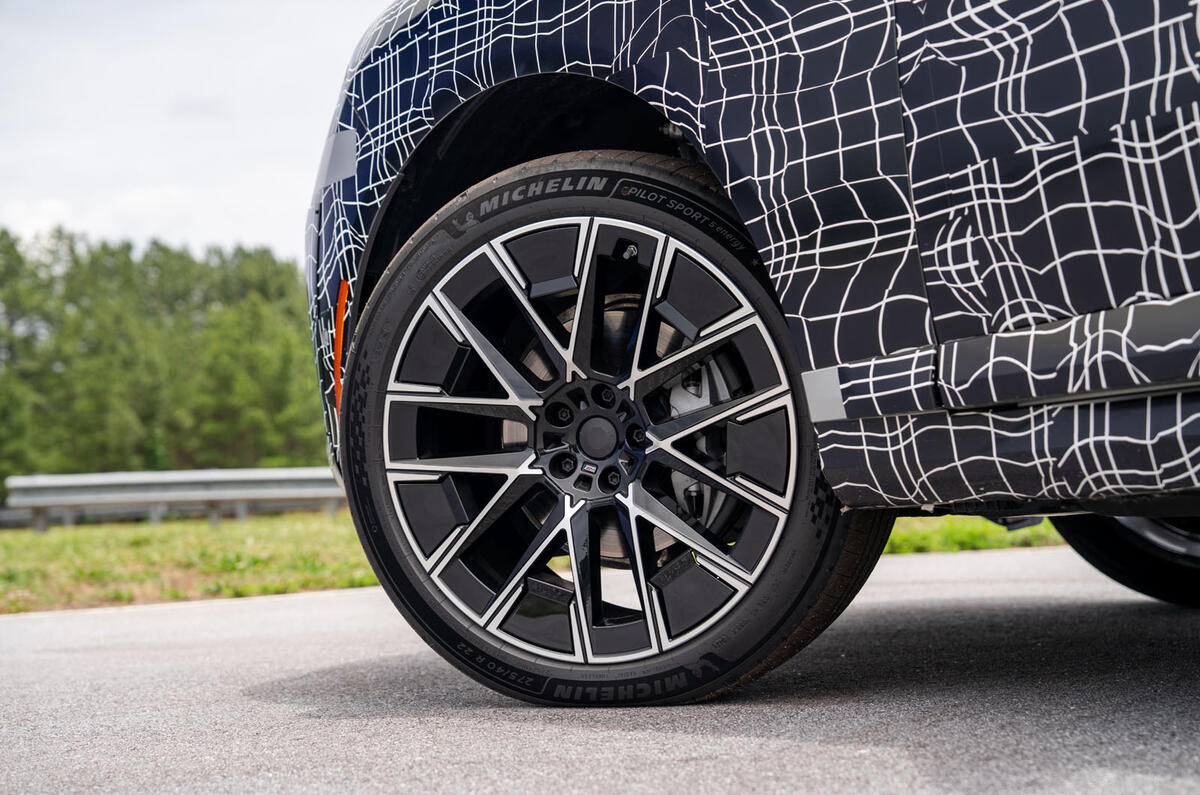
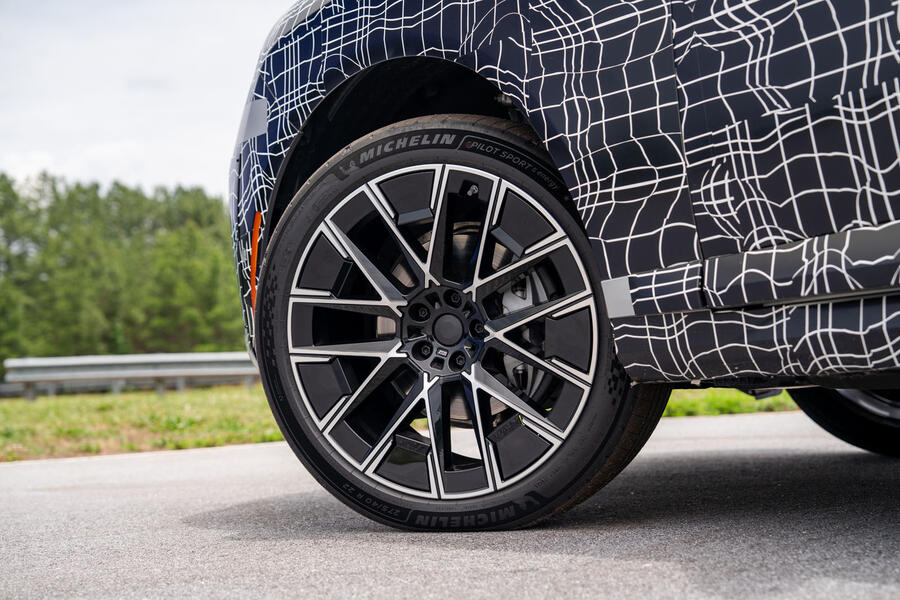
The iX5 uses a brand-new tyre from Michelin: the Pilot Sport 5 Efficiency. The engineers are very happy with its blend of handling and rolling resistance, which is extremely important for range.

The idea that sharing with the ICE versions (reviewed on p29) would create an inferior EV would seem to be quickly dispelled by a look at the preliminary spec sheet. The CLAR platform that underpins the current X5 was designed for both ICE and EV power, as seen in cars like the 5 Series and 7 Series, and that’s now being taken to new heights, courtesy of some new bits and pieces that were introduced with the Neue Klasse iX3.

The headline figure here is the battery’s 141kWh usable capacity. That’s the biggest of any car offered in Europe by a distance and makes the Porsche Cayenne Electric, the iX5’s chief rival, look like a Mitsubishi i-MiEV with its 121kWh – if you’ll pardon a bit of exaggeration.

For the iX5, the CLAR platform’s electricals have been upgraded to 800V, as is expected in this segment, with batteries and motors coming from BMW’s sixth-generation eDrive toolkit. That means it switches to cylindrical cells like the iX3, albeit ones that are both taller and bigger in diameter in order to achieve that mammoth capacity.

They get assembled straight into a pack rather than sub-divided into modules, which then lives in the floor of the car, with the power electronics put in a compartment on top for easier access.

The engineers say it was a big challenge to keep the overall height of the pack (and therefore the cabin floor) low in order to avoid that awkward double-decker feeling of some EVs. This wasn’t a goal accomplished by one quotable technology, instead a process of finding a millimetre here and a millimetre there.
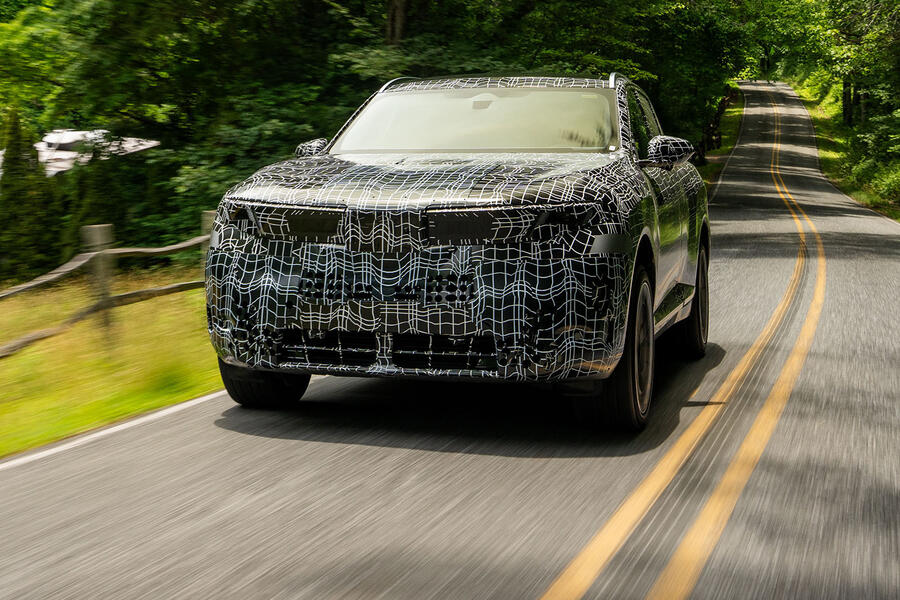
The other big thing was keeping the weight down, but don’t get too excited. We’re talking about a special kind of gravitational pull here: a 141kWh battery could have made the iX5 flirt with the 3.5-tonne threshold that would require an HGV licence. Instead it will be something around the 3.0-tonne mark. Small victories…

To keep all that weight under control, the EV always gets air suspension on both axles. The engineers seem pretty happy with the advances they have made here. The big improvement is on the rear axle, where the air spring and damper have been divorced. Don’t worry, it’s amicable. This has two big benefits: the first is spring rate. Previously, the damper would effectively take up space inside the airbag. Now that they’re separate, the airbag’s internal volume is bigger, so it can be softer if necessary. After all, a larger volume of air can compress more. The control can come from the adaptive damper, which is mounted further outboard, where it gets to use more lever effect on the suspension arms and therefore work better, thus giving a better balance of ride and handling.

The front suspension (double-wishbone, albeit with a split lower wishbone) is more or less the same as before, but then most of the hard work is done by the rear suspension. Another improvement is that the rear anti-roll bar has been relocated to where it can have the ideal lever effect, making it more effective.

If you want to go even further with chassis technology, you can optionally specify active anti-roll bars and four-wheel steering. The latter does ‘only’ about 3.5deg, rather than the 10deg you see on some Mercedes-Benz models, because the engineers want the X5 to feel like a BMW, not a forklift.

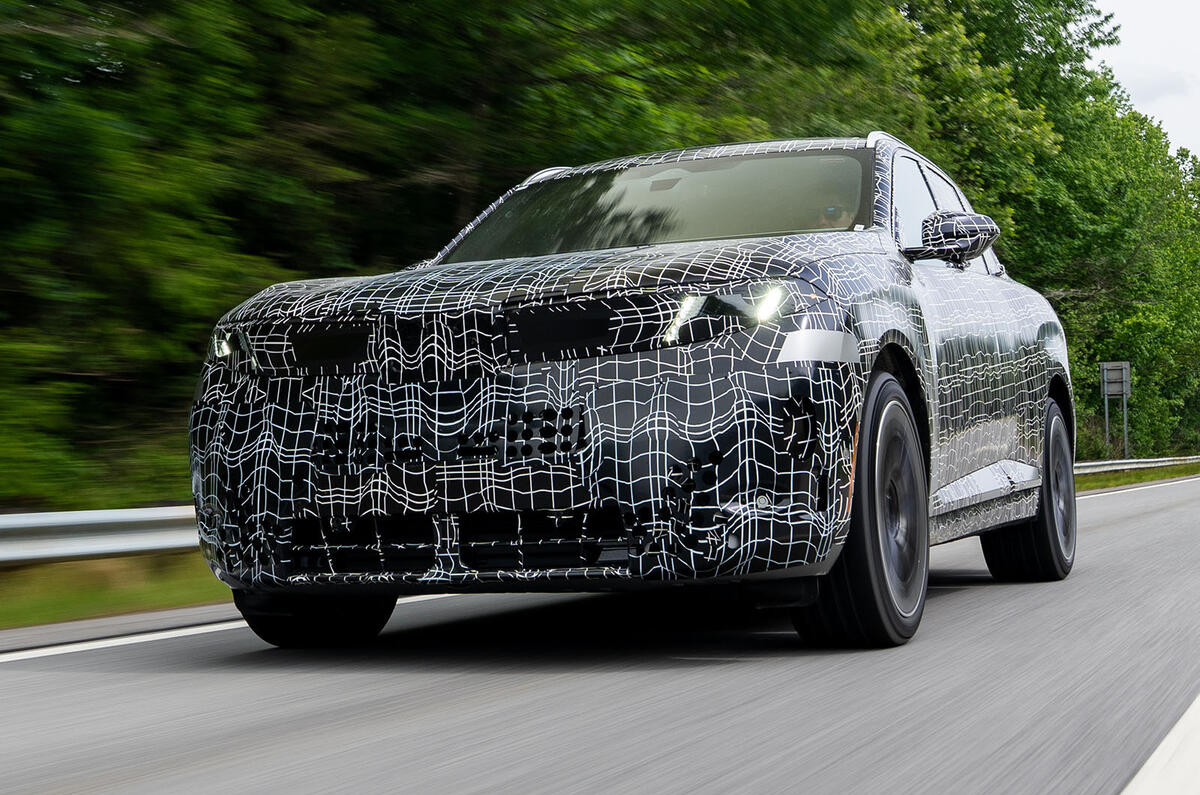
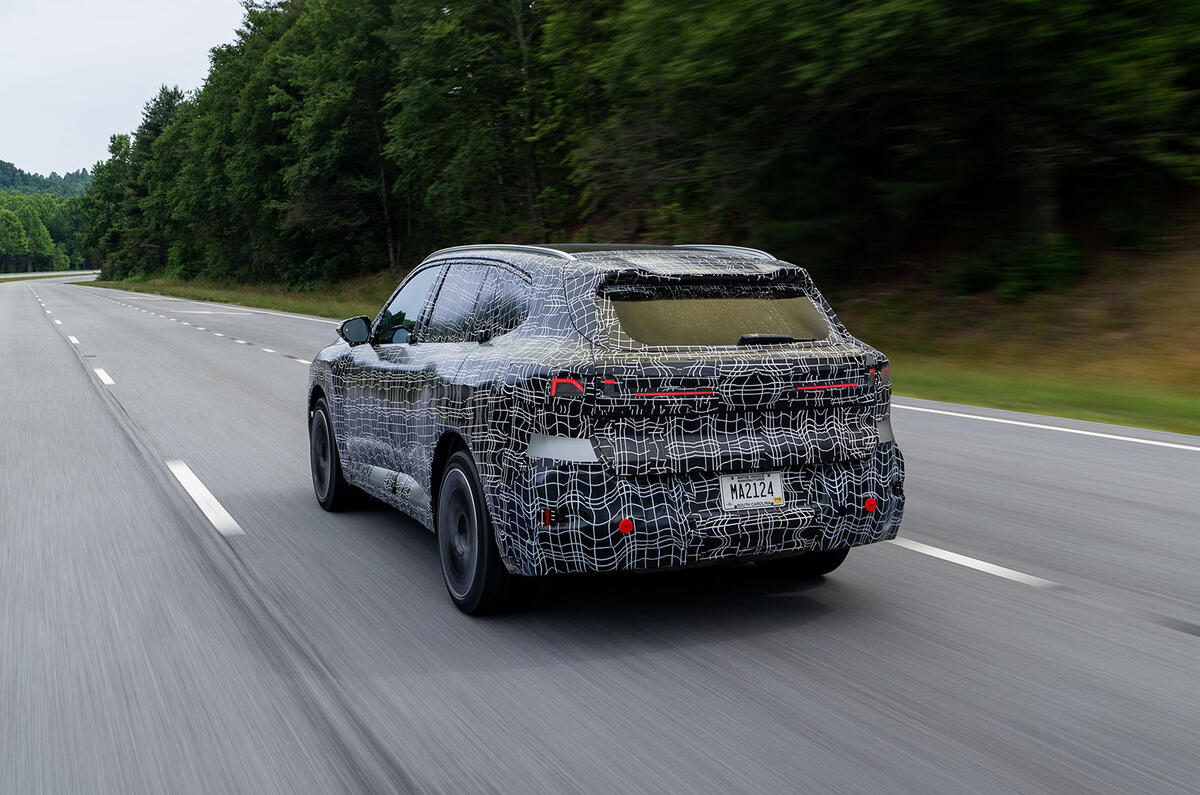
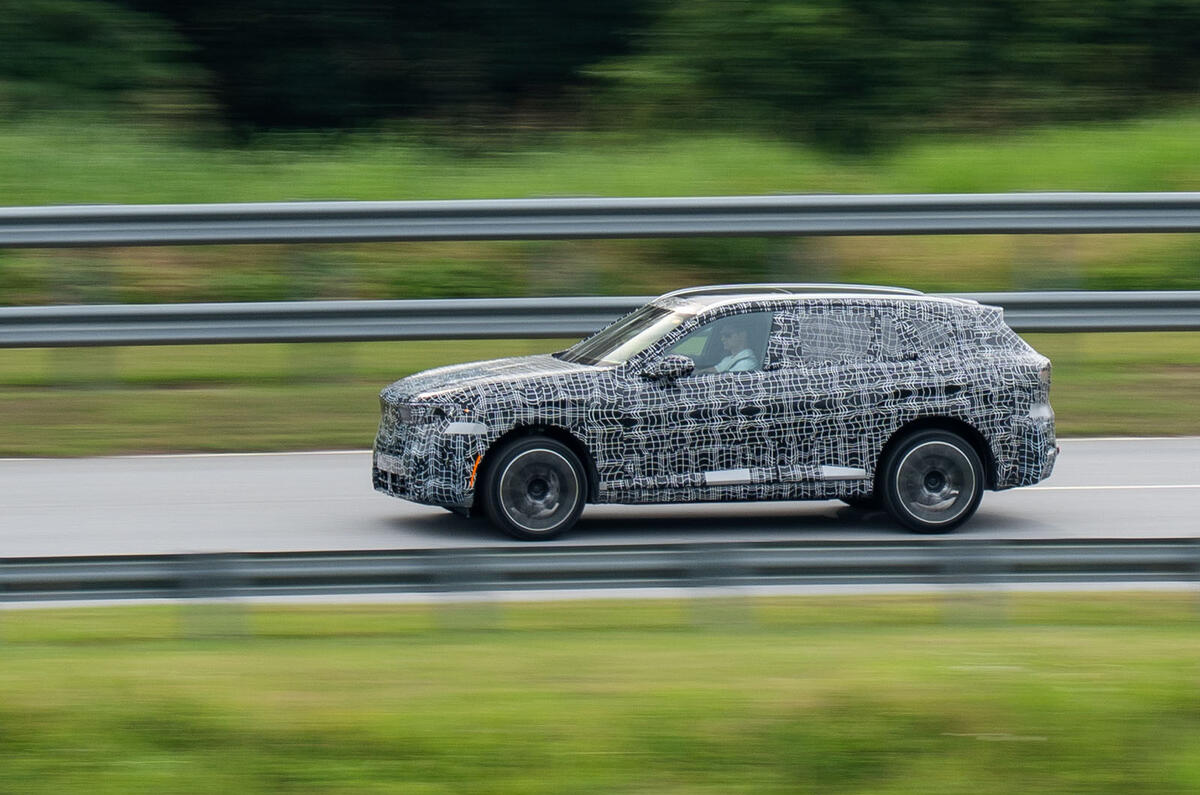
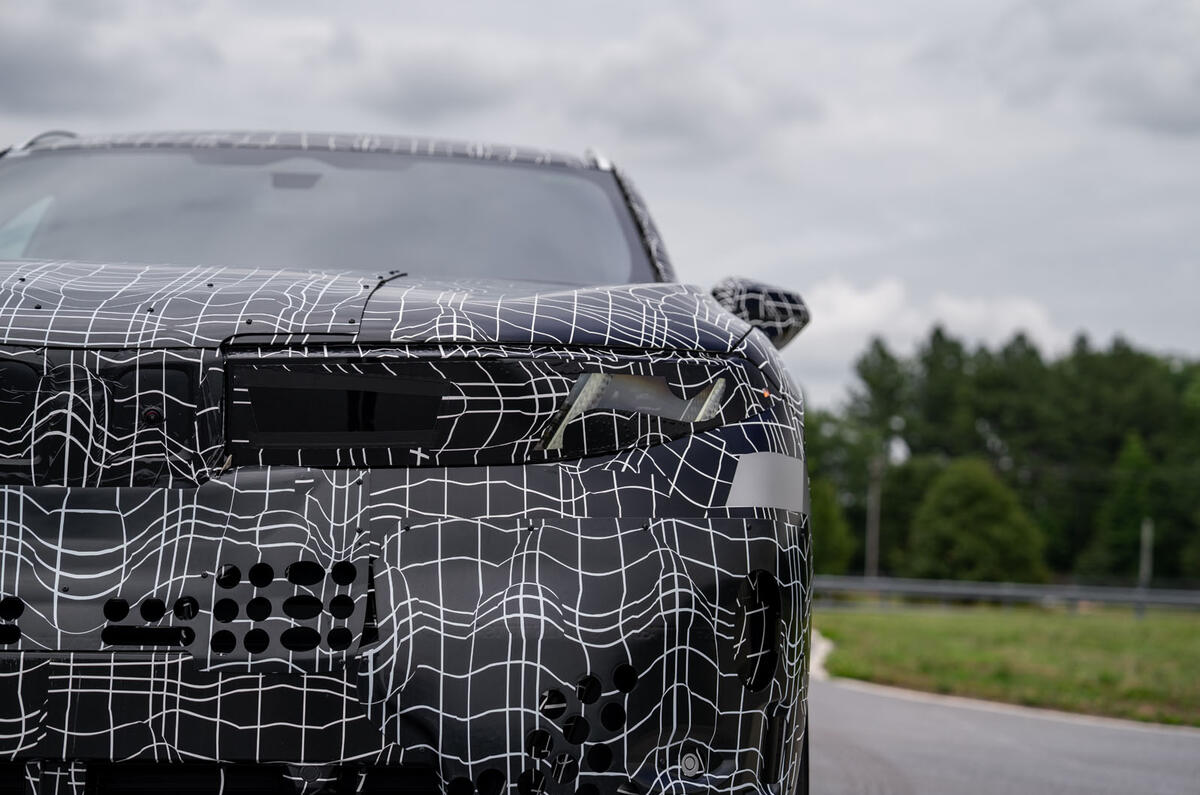
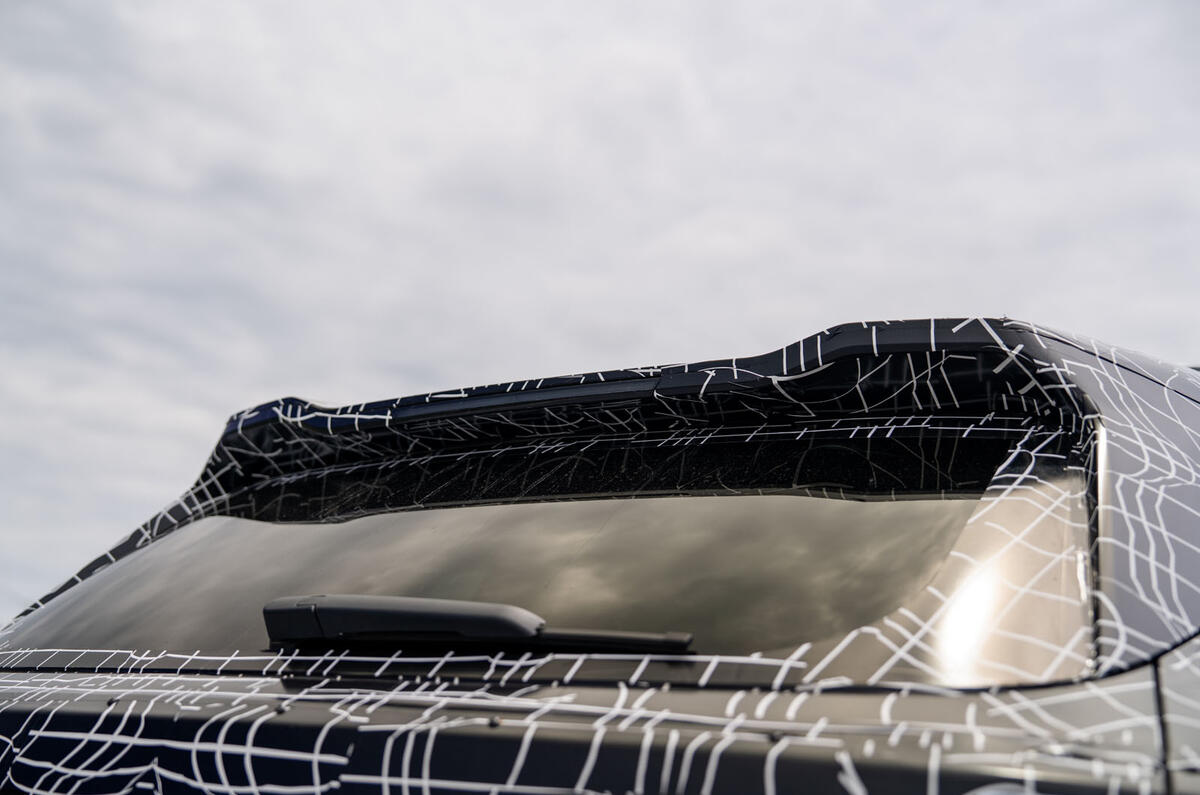
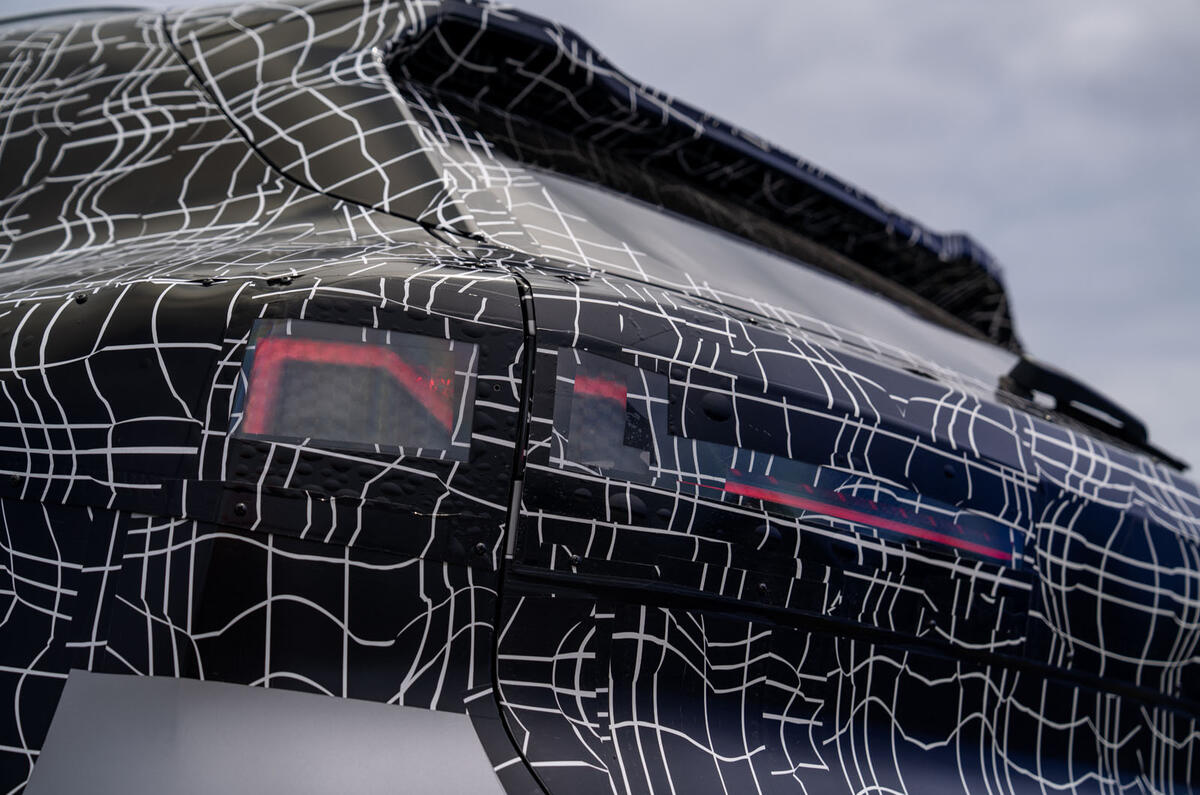
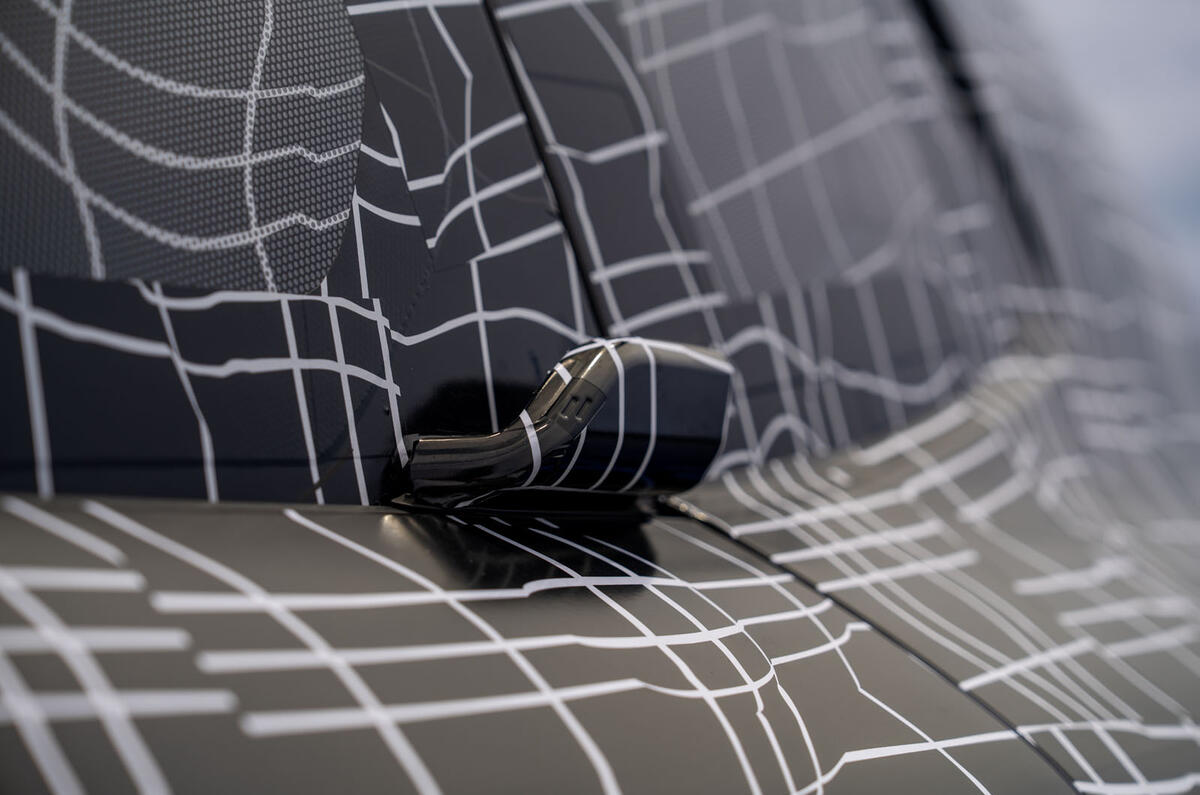
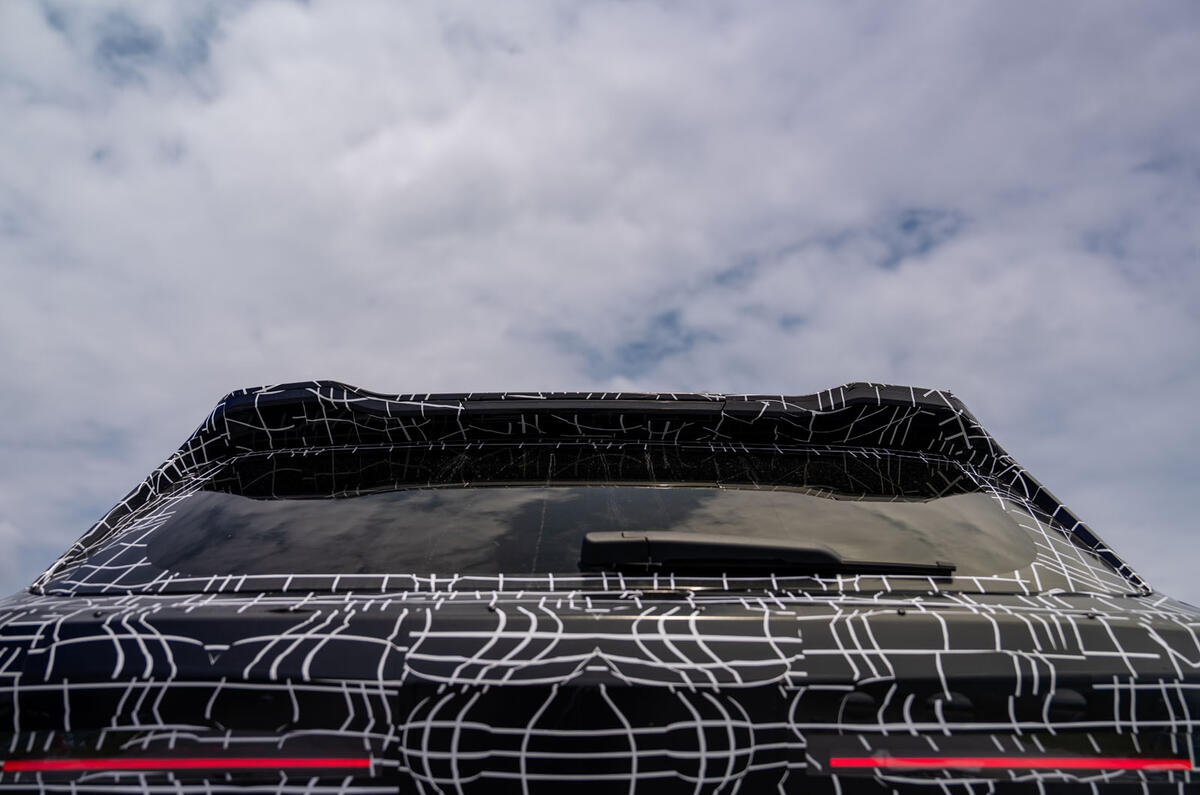
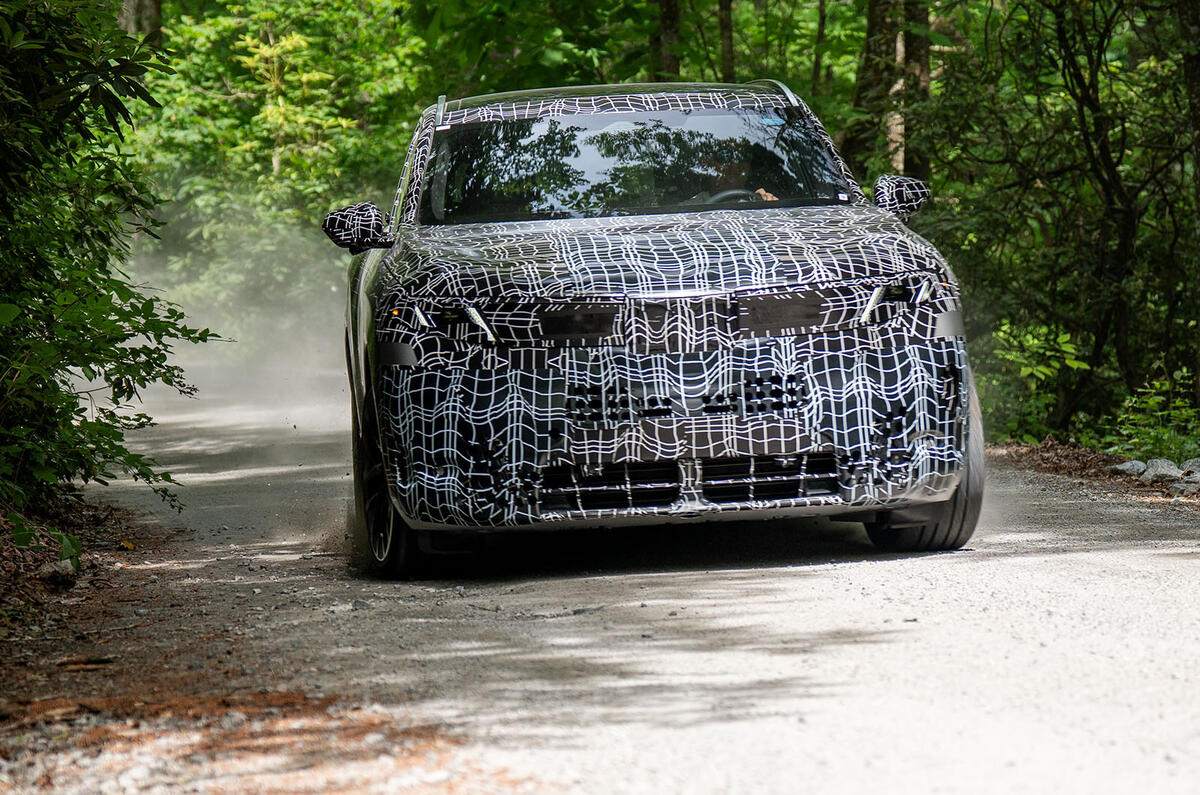
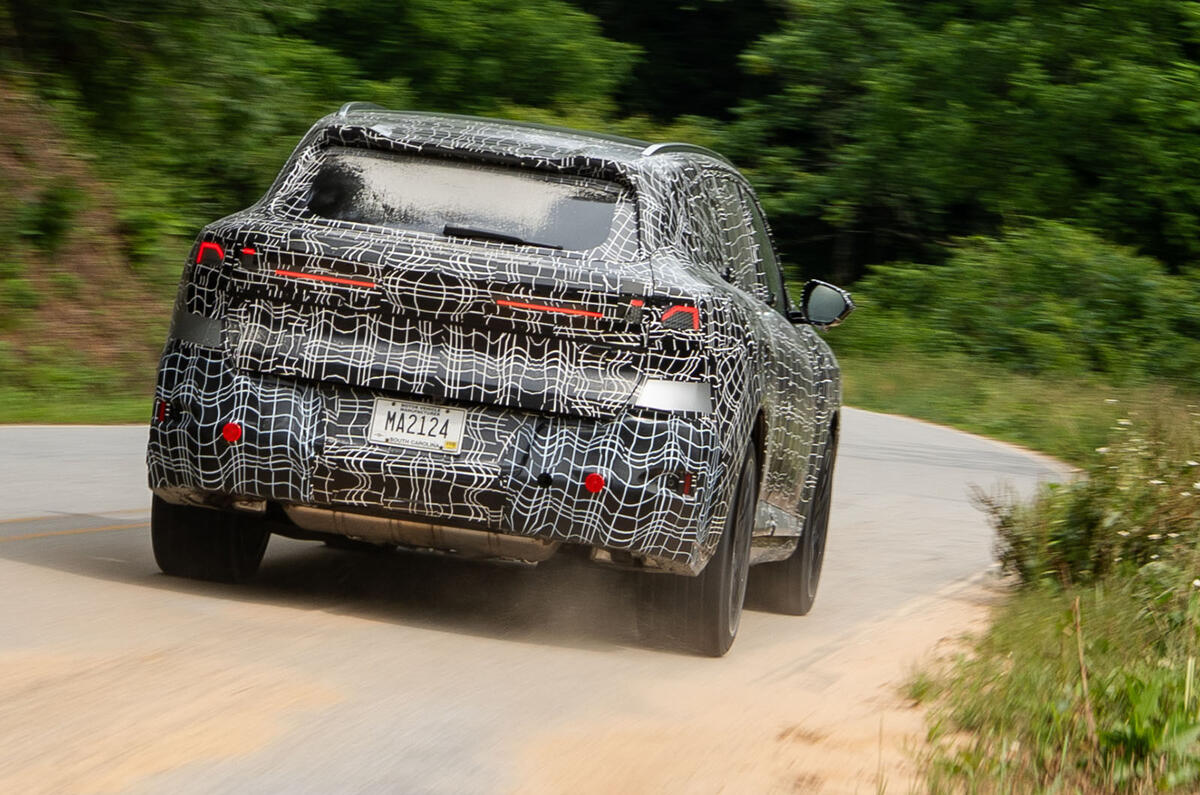
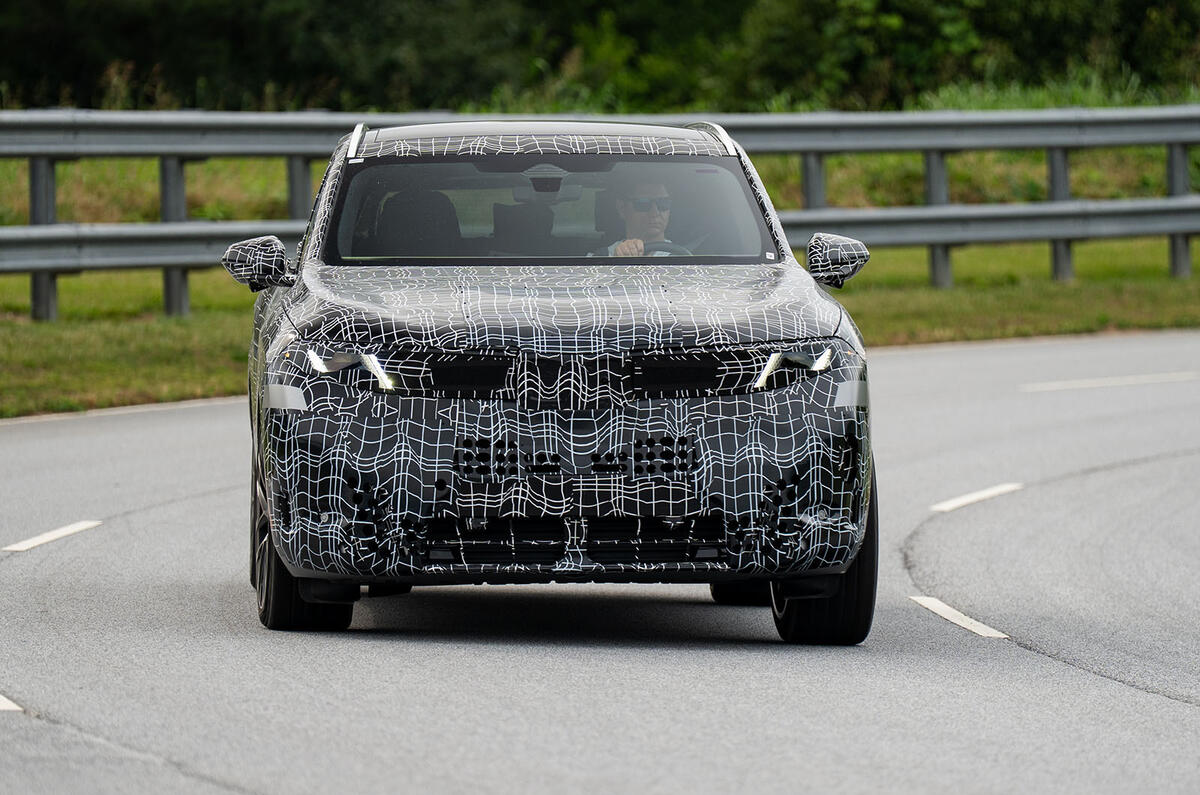
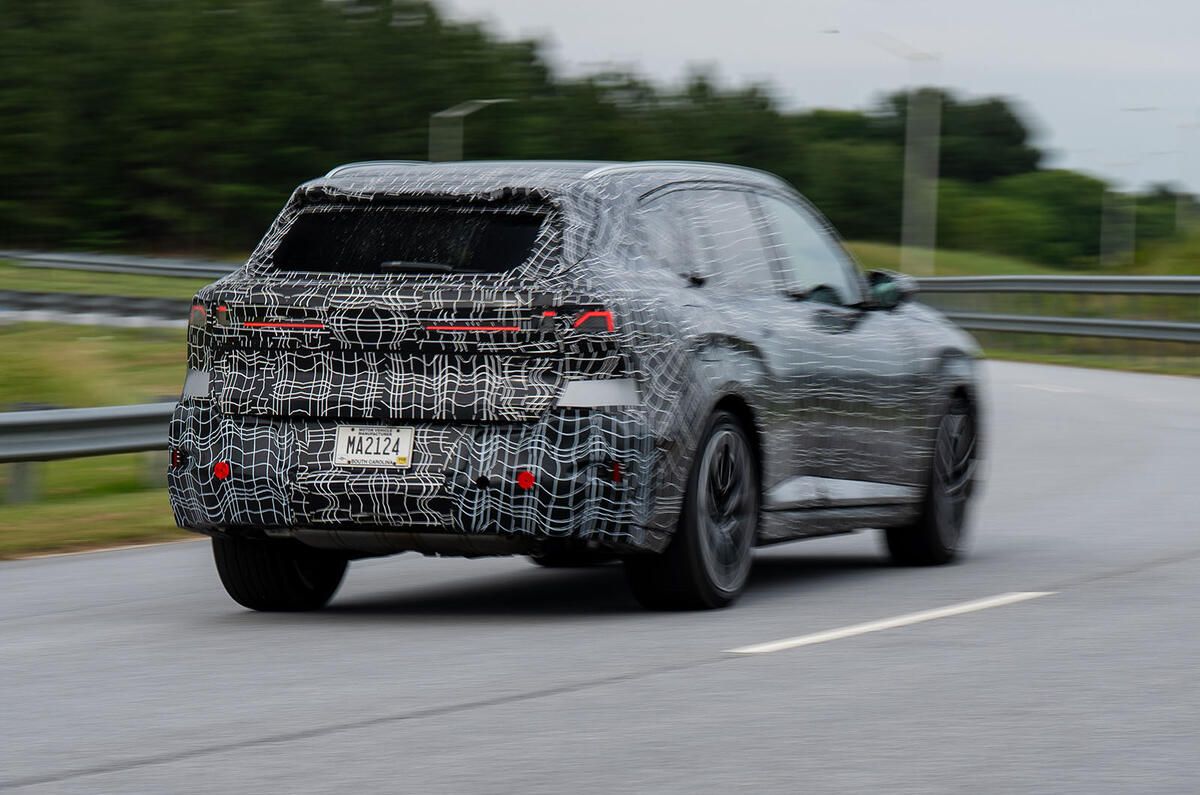
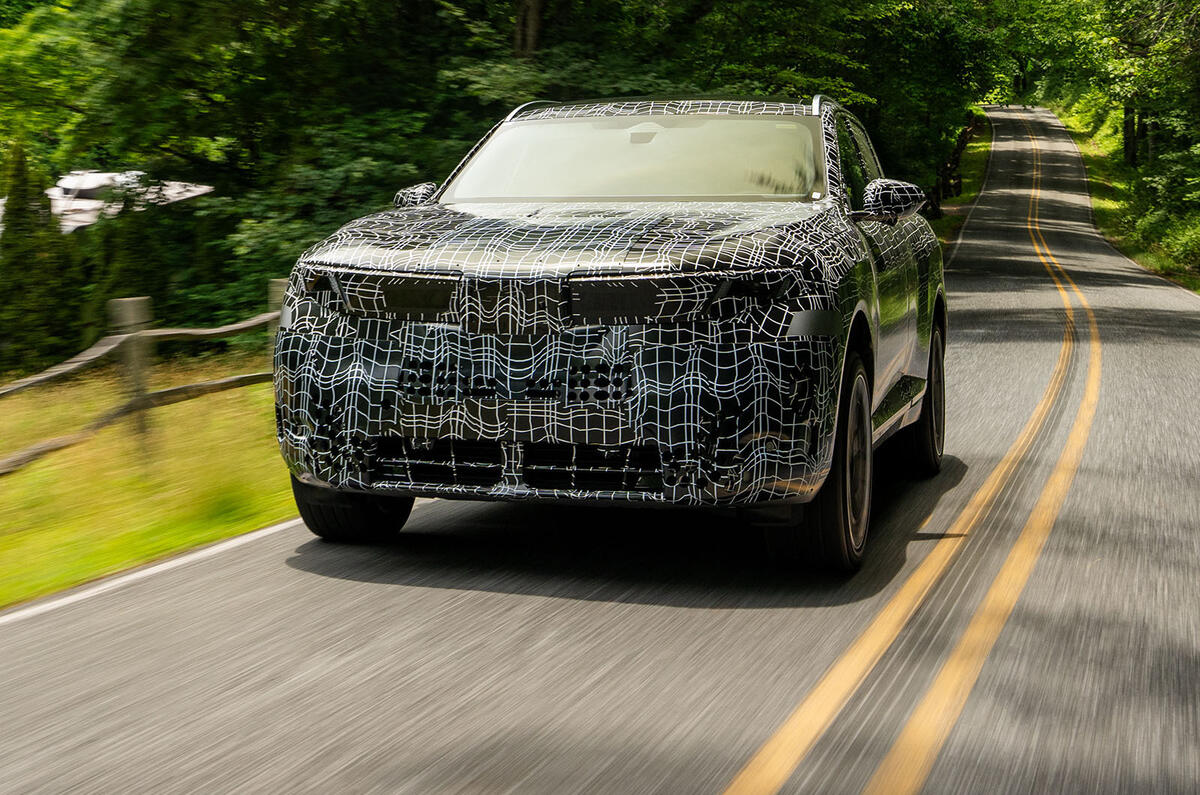
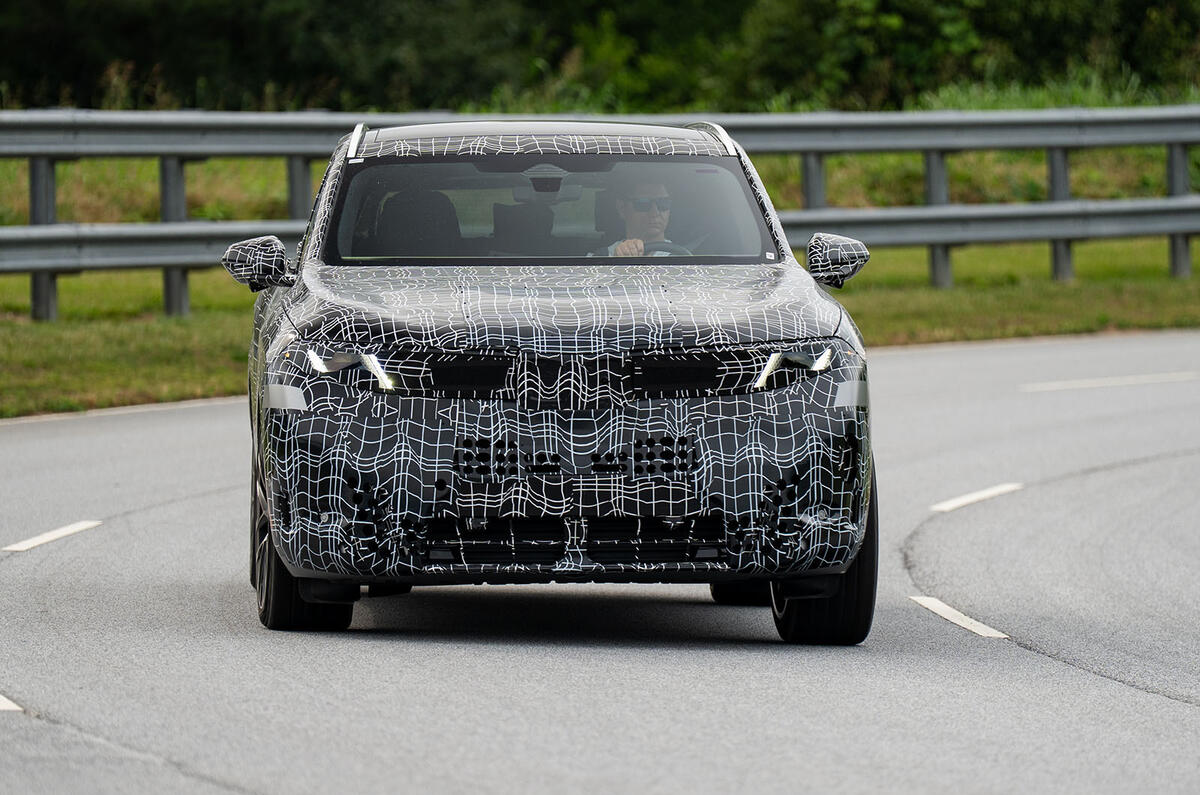
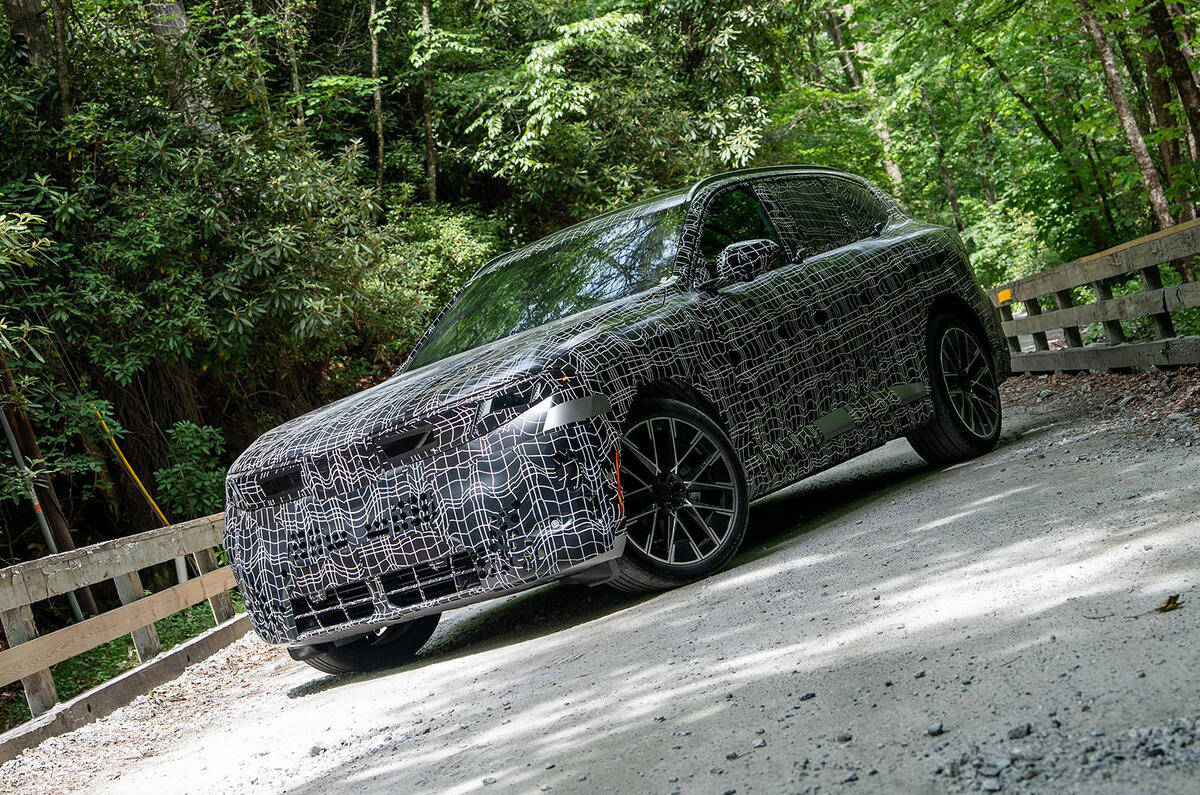
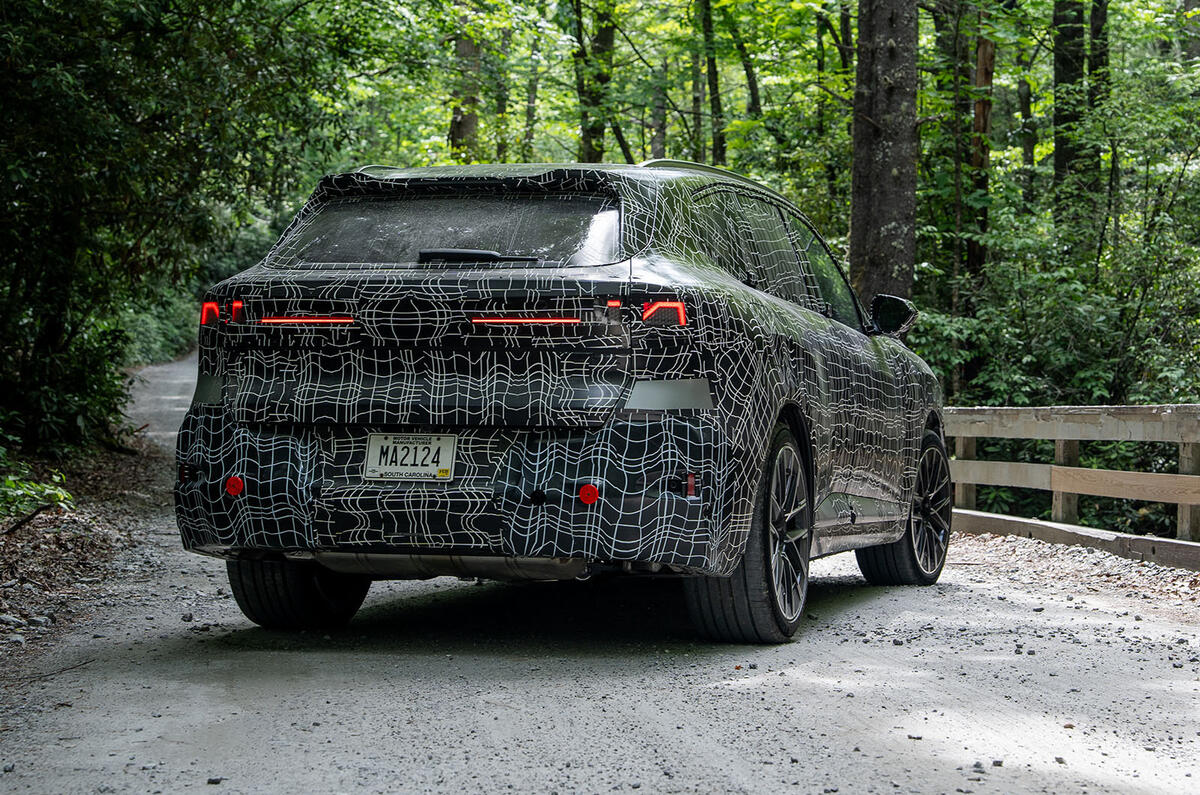
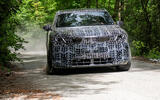
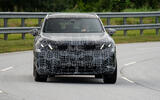
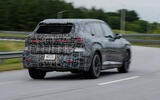
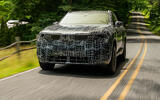
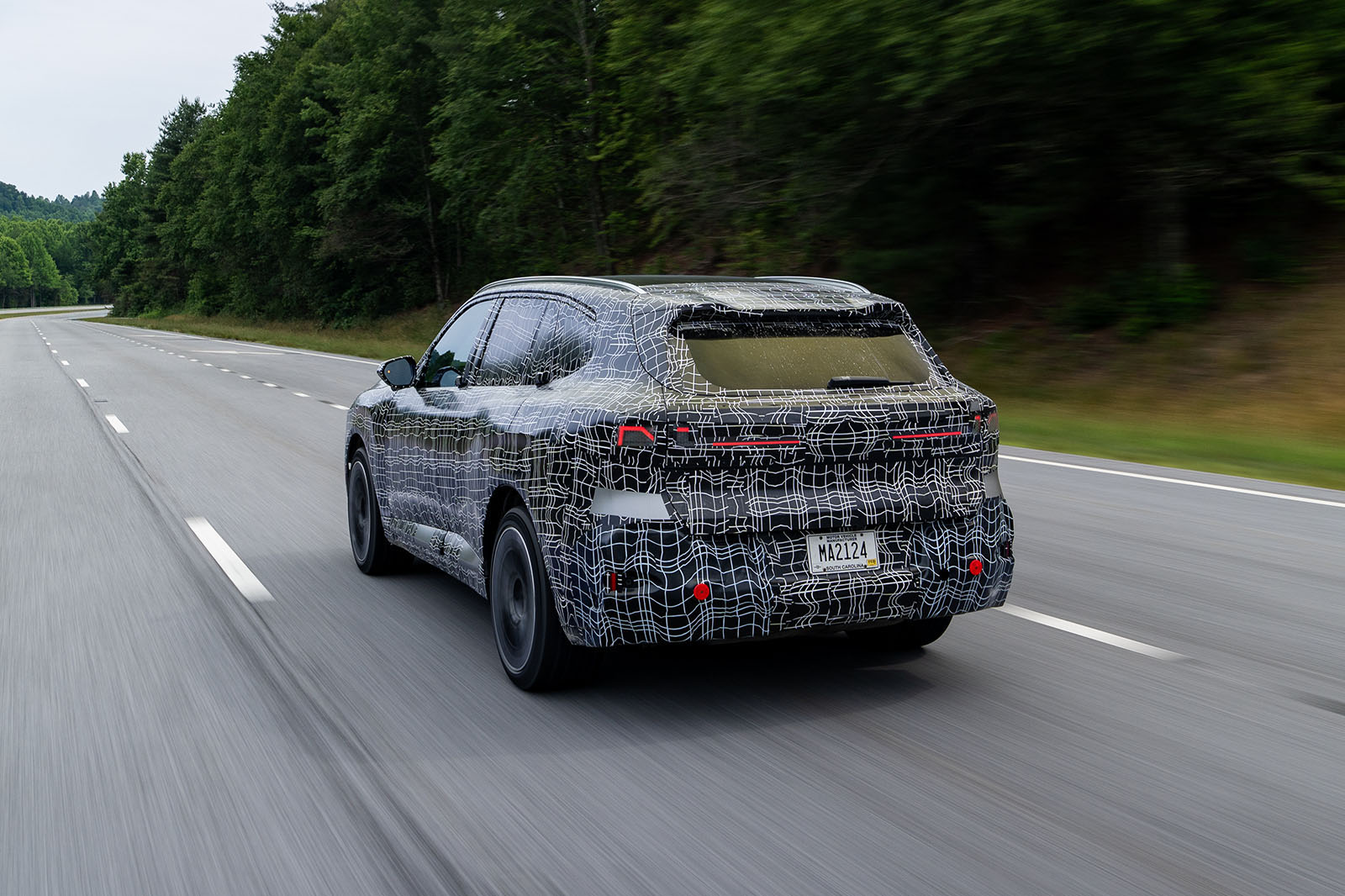
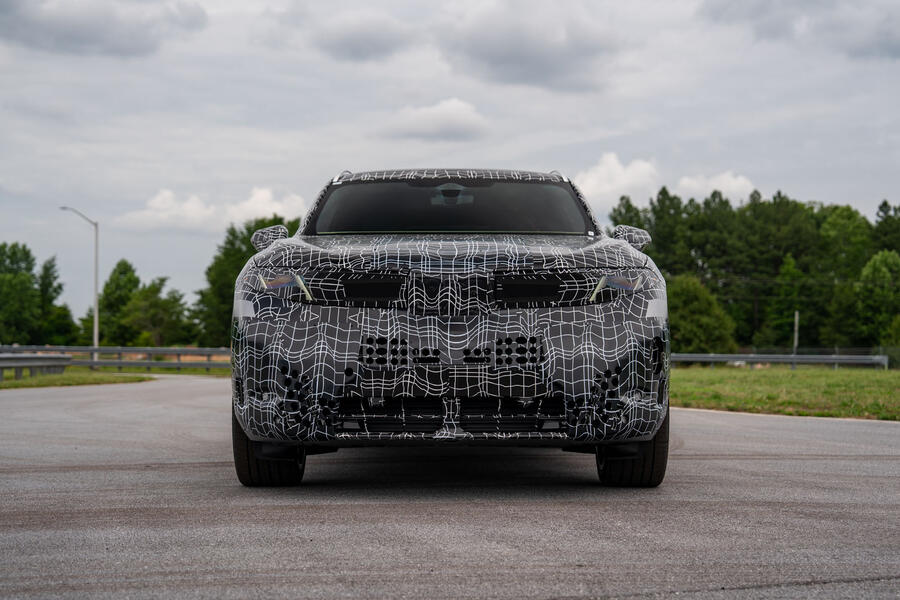
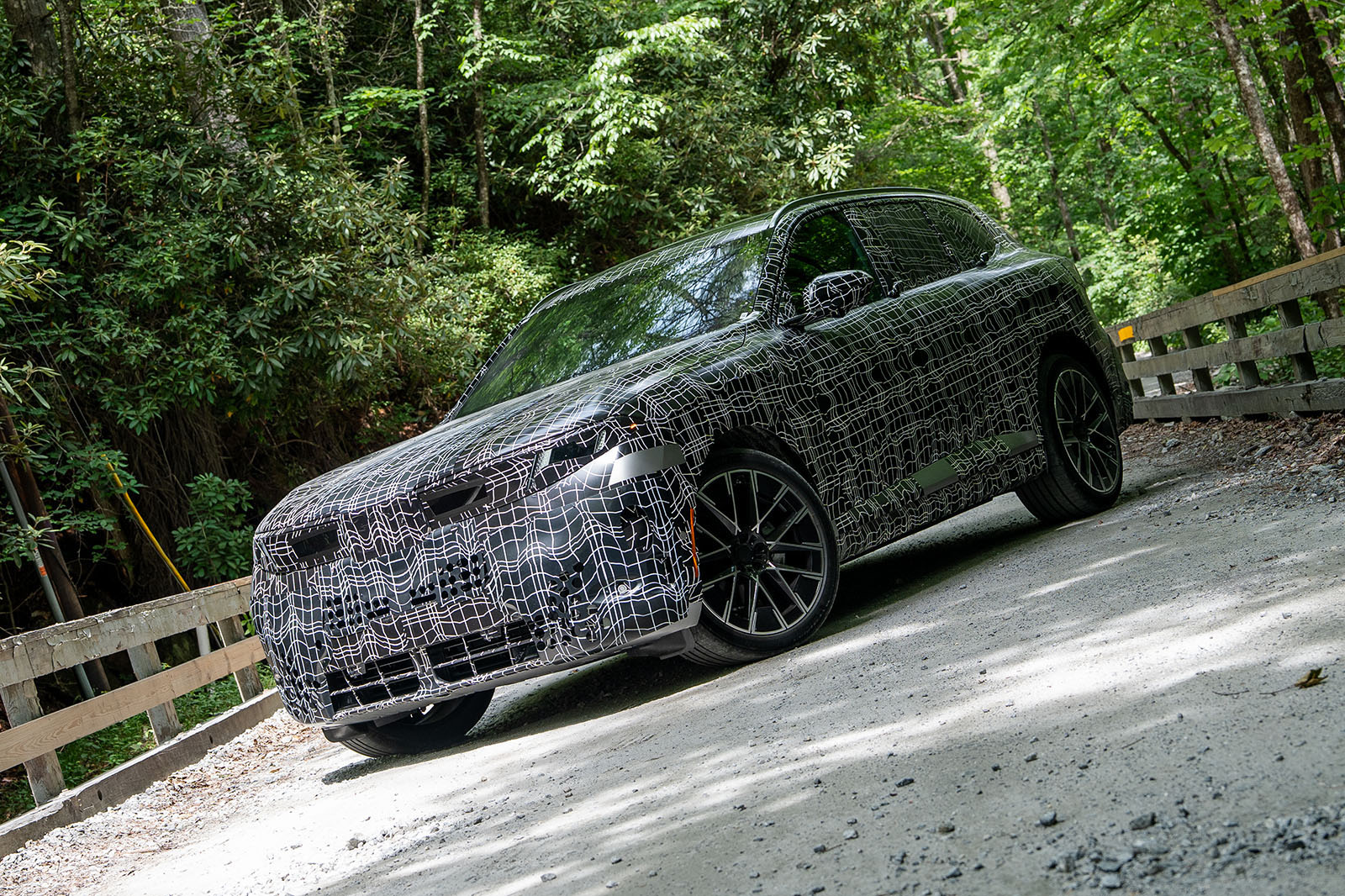
On the design front, there isn’t a huge amount to say yet, for obvious reasons, except that the EV and ICE versions will look all but identical and adopt the smooth Neue Klasse design language that was introduced by the iX3. The full unveiling is set for later this month.

INTERIOR

BMW iX5 reveiw 2026 43

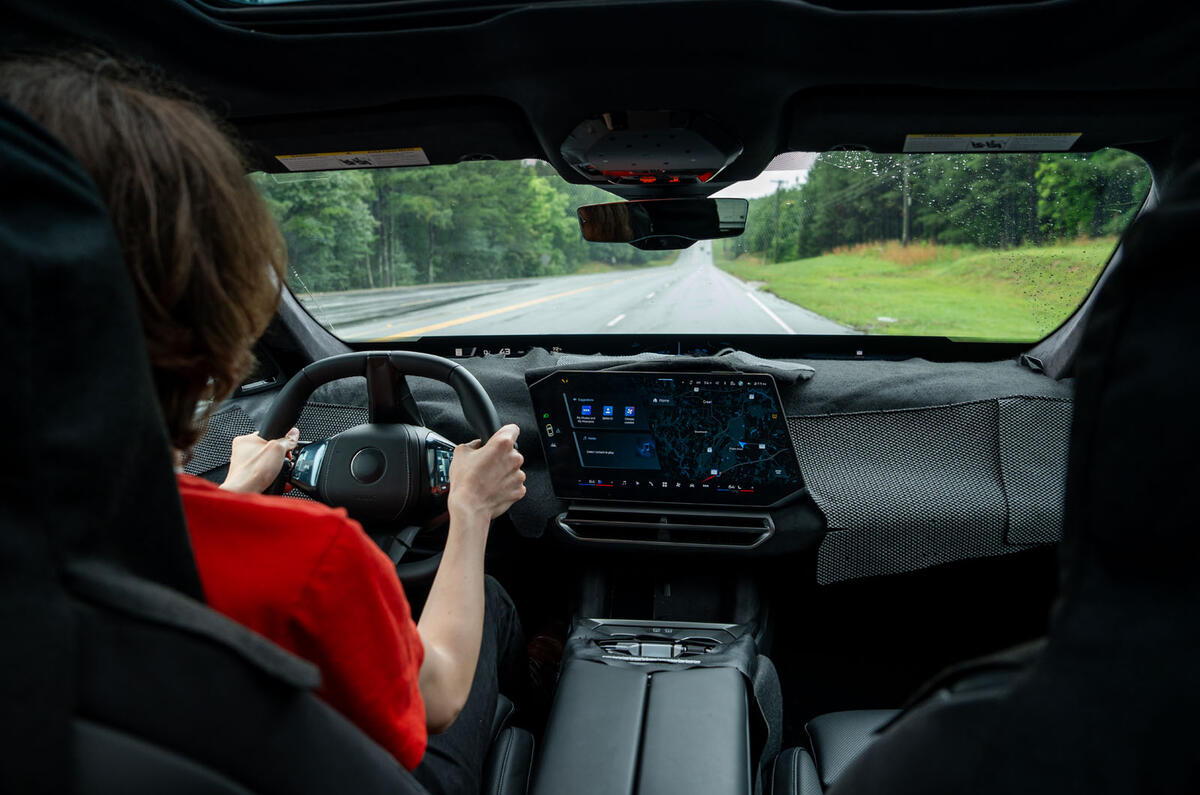
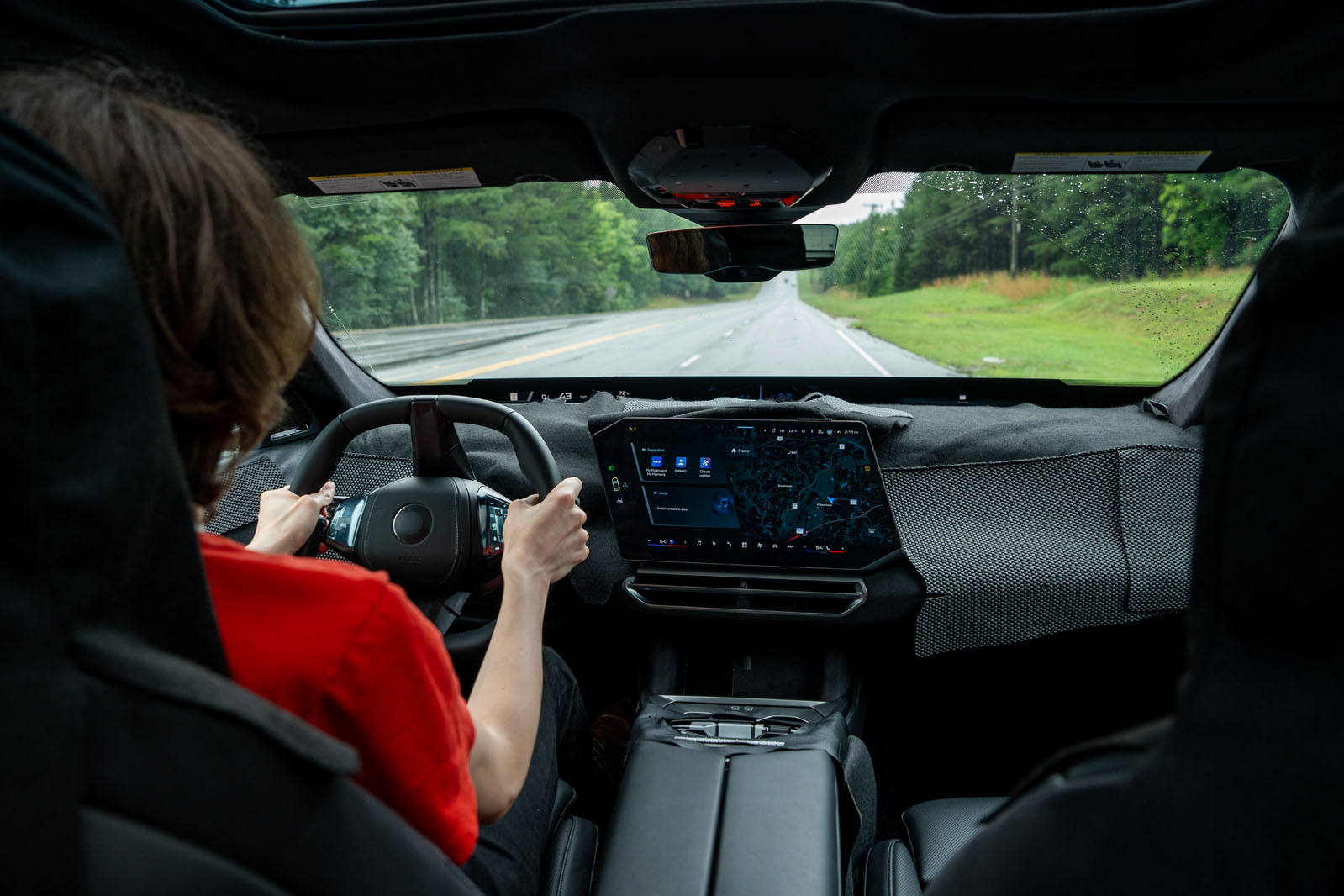
It’s much the same deal inside, where most of it is still covered up, but you don’t need X-ray vision to see a lot of iX3 in the minimalist architecture, Panoramic iDrive display, weird steering wheel and skew-whiff central touchscreen.

From what I’ve experienced, the main touchscreen interface remains rather convoluted and requires some learning, but the steering wheel is surprisingly nice to hold and the digital instruments projected under the windscreen are clear and easy on the eyes.

One of the cars I drove had very nice cigar brown leather that looked as if it had patina, like a vintage couch. I saw a couple of other interesting colours too. Well done to BMW for offering them, even if most buyers will just choose black.

On first impression, the seats are outstandingly comfortable and supportive, and they will go surprisingly low if you want them to. Rear leg room is good – no more, no less – and the floor doesn’t seem excessively high. I didn’t get to see in the boot, and when I asked about a frunk, the answer was “we don’t want to talk about that”, so until there’s evidence to the contrary I’ll assume there isn’t one, which would be pretty disappointing.

ENGINES & PERFORMANCE

BMW iX5 reveiw 2026 60

To the drive and, despite the different platform, the general feel is familiar from the iX3. The iX5 has more grunt, as you would expect for a heavier car.

Power comes from a separately excited synchronous motor at the rear making 325bhp and 369lb ft of torque and an asynchronous one at the front making 245bhp and 225lb ft for totals of 570bhp and 594lb ft.

Pulling the gear selector to B engages the one-pedal drive mode, which is smooth and easy to modulate.

In our crazy world of overpowered EVs, that doesn’t even sound particularly generous, and nor does a 0-62mph time of 4.6sec. Still, I think it’s perfectly appropriate for this sort of car. I drove it on a variety of roads and found it nicely, effortlessly brisk, as you would want from a sporting luxury SUV, without being neck-snapping for the sake of it. There will be an M-flavoured version with even more poke in due course if you’re after that sort of thing.

The drivability is familiar from the iX3: there’s nothing weird going on like wonky power curves or two-speed gearboxes; both pedals are progressive; and there’s a choice of adaptive, low, medium, high and one-pedal regenerative braking but sadly no true freewheeling mode.

RIDE & HANDLING

BMW iX5 reveiw 2026 58

I’ll just mention the weight figure again in case you have somehow forgotten: three tonnes. That’s two Volkswagen Golfs, which is a bit mad, but you wouldn’t know from behind the wheel. My test car didn’t even have the active anti-roll bars or rear-wheel steering.

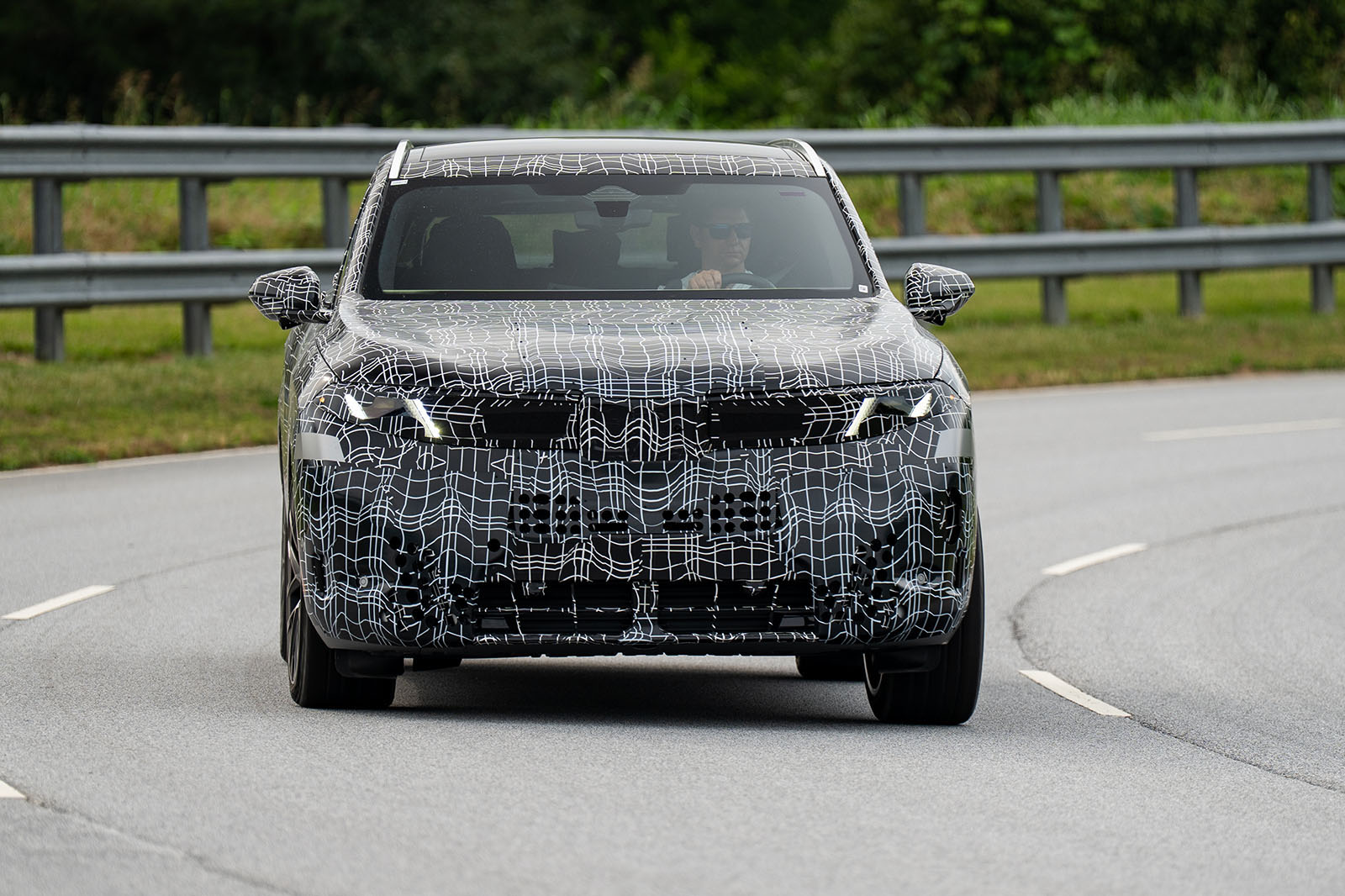
The steering is progressive, well weighted and sufficiently precise to make this very big car easy to place, even if you’re going quickly. It’s not bursting with feel and feedback, but if you pour the car into a corner, you can feel the body adopting a bit of roll and staying there; the steering weighting up gradually as it does.

Get on the power hard and the rear bias to the drivetrain is obvious in the poised way that it drives out of a corner. Even in the wet, the traction control system operates imperceptibly except for how effortlessly the car stays composed. I haven’t driven a Porsche Cayenne Electric, but this is certainly a world away from the slightly numb Volvo EX90 and ponderous Mercedes EQS SUV.

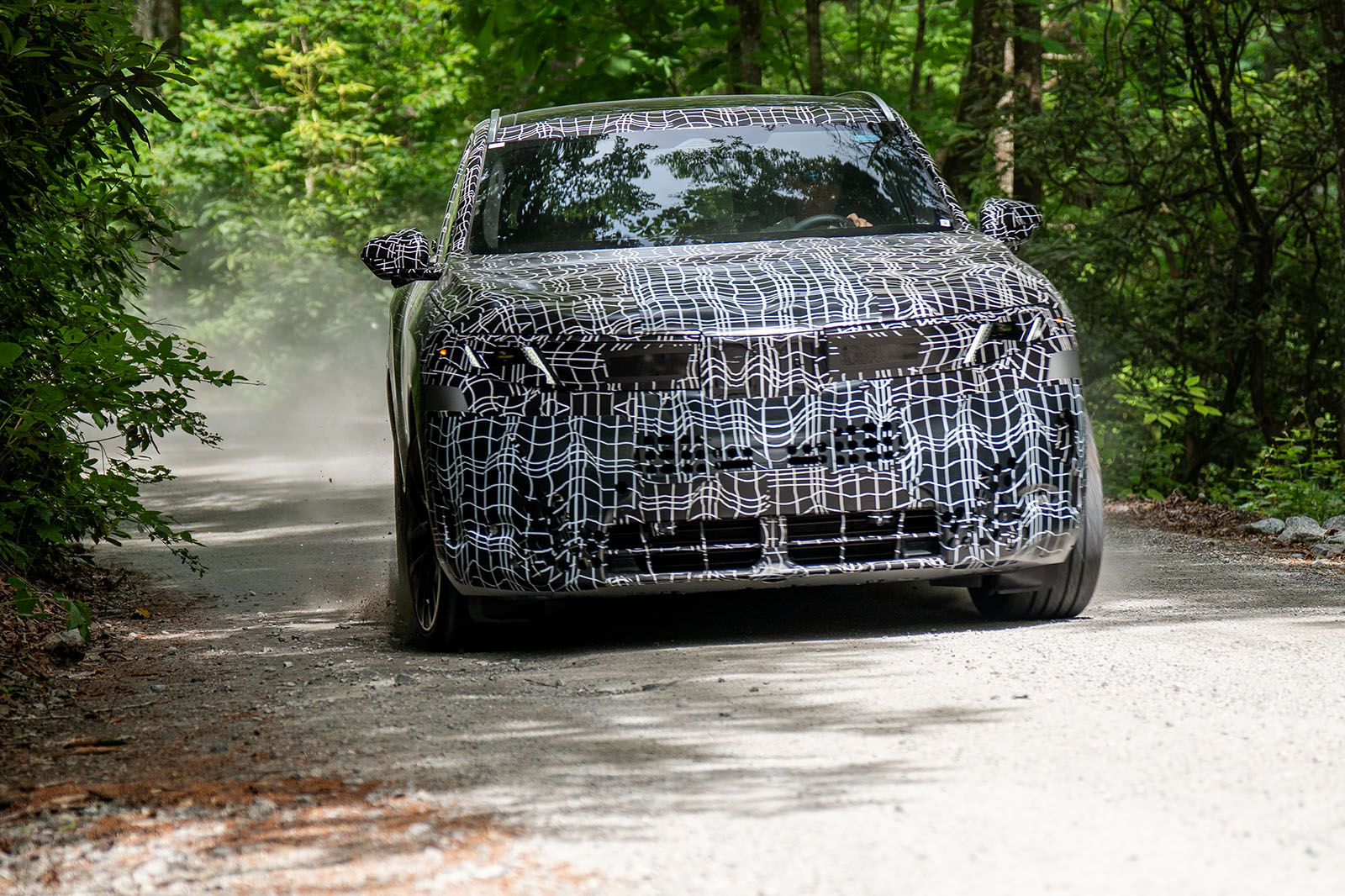
South Carolina is blessed with some usefully terrible road surfaces, and on 22in wheels the iX5 couldn’t help labouring the potholes a bit, although it’s nothing egregious. The only times you really feel the weight is over big crests, where there’s a bit of heave. The vast majority of the time, the iX5 is quiet and settled – a car you would be very happy to do big distances in.

VERDICT

BMW iX5 reveiw 2026 45

How big those distances can be has yet to be announced but, with that 141kWh battery, I would expect to see a WLTP figure starting with a five and a rapid-charging speed beyond 400kW.

Production will start in October, but we won’t see right-hookers until next March, when the EV and the diesel will be launched in the UK.

This is the first iX5 that BMW has made, and it will indirectly replace the iX. They will briefly be sold alongside each other for continuity, but unless the iX5 turns out to be much more expensive (unlikely), there won’t be much reason to still buy the iX instead.

That says less about the iX, which is a car that we still like a lot for its range and comfort, and more about the iX5, which just takes those things to another level and adds a dose of handling talent on top.

Illya Verpraet

Illya Verpraet Road Tester Autocar
Title: Road Tester

As a road tester, Illya drives everything from superminis to supercars, and writes reviews and comparison tests, while also managing the magazine’s Drives section. Much of his time is spent wrangling the data logger and wielding the tape measure to gather the data for Autocar’s in-depth instrumented road tests.

He loves cars that are fun and usable on the road – whether piston-powered or electric – or just cars that are very fit for purpose. When not in test cars, he drives an R53-generation Mini Cooper S or a 1990 BMW 325i Touring.