From £37,705

BYD’s has given its family EV a major overhaul. Is it enough to rival the Skoda Elroq?

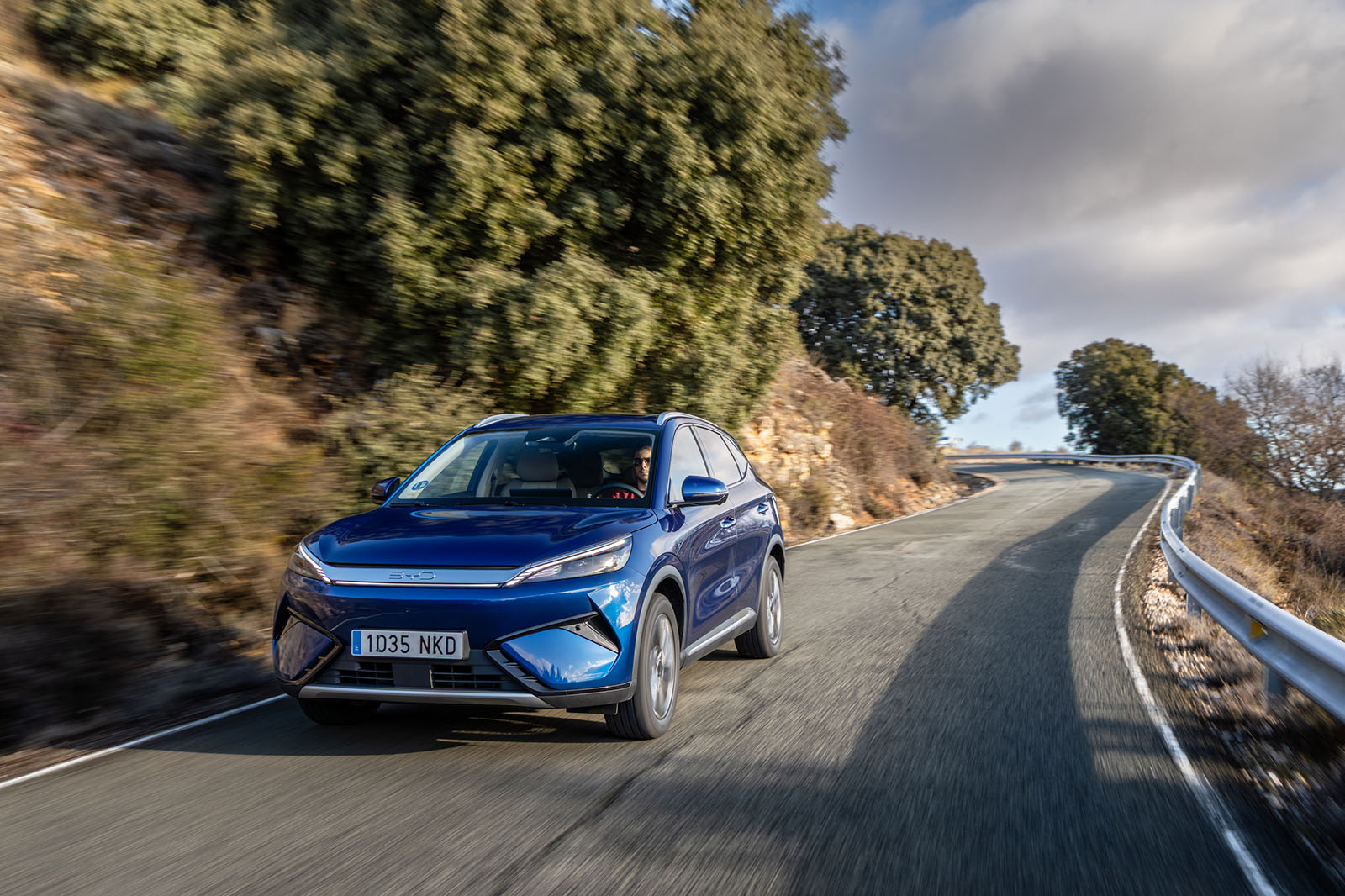
Don't worry: the new BYD Atto 3 Evo isn't another unfamiliar, unusually named entrant into the Chinese brand's burgeoning line-up but instead simply an overhauled version of the first car it brought to the UK. 

In the three years since the Atto 3 first landed on our shores, the electric car market has moved on significantly. No longer is a 260-mile range quite so competitive in a near-£40,000 family SUV and no longer does its rounded design gel with its newer, sharper-looking stablemates.

Although it appears to be a mid-life nip-and-tuck, the Atto 3 Evo is effectively a brand new car under the skin.

Hence this significant redevelopment for 2026, which goes so far as to basically make this a second-generation car rather than a typical facelift. Headline changes include edgier looks, a shift from front-wheel drive to rear-wheel drive and various practicality-boosting tweaks, aimed at keeping the Atto 3 on a par with a swathe of newer rivals including the Ford Explorer, MG S5 EV and Skoda Elroq

Range at a glance

The Atto 3 Evo will be offered with two trims in the UK, each corresponding with a different drivetrain.

Design gets a single rear-mounted motor with 308bhp, giving a 0-62mph sprint time of 5.5sec and a range of 316 miles. 

Excellence adds a second motor on the front axle, giving four-wheel drive, 443bhp and a sports car-baiting 0-62mph time of 3.9sec. It does suffer a significant penalty in range, however, with a maximum of 292 miles on offer. 

Advertisement
Back to top

Both versions use the same 74.8kWh lithium-iron-phosphate battery, which can be rapid-charged at up to 220kW, enabling a 10-80% refill in 25 minutes.

As for kit, Design gets front and rear parking sensors, a 360deg parking camera, a heat pump and electric front seats, among other features. Stepping up to Excellence nets a panoramic sunroof, a head-up display and heated rear seats.

Pricing for each has yet to be confirmed, but Design will cost less than £40,000 while Excellence will just tip over that mark.

DESIGN & STYLING

BYD Atto 3 review 2026 002

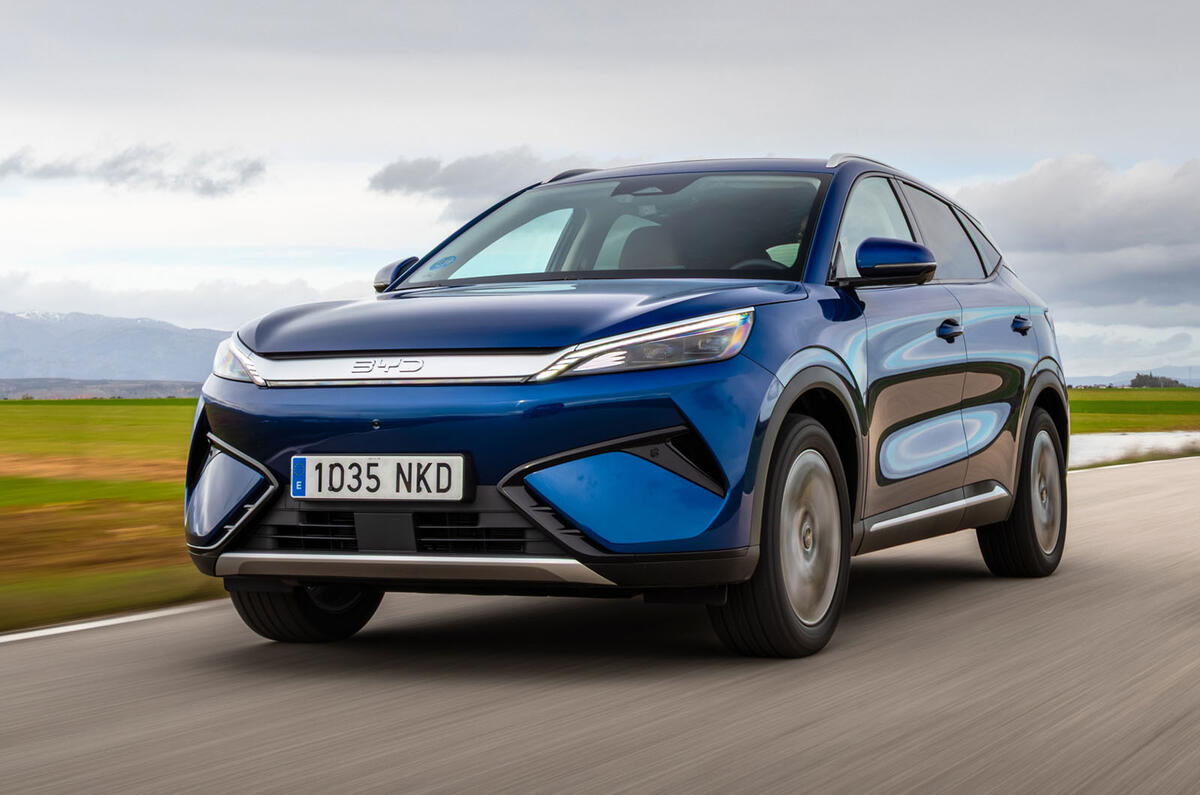
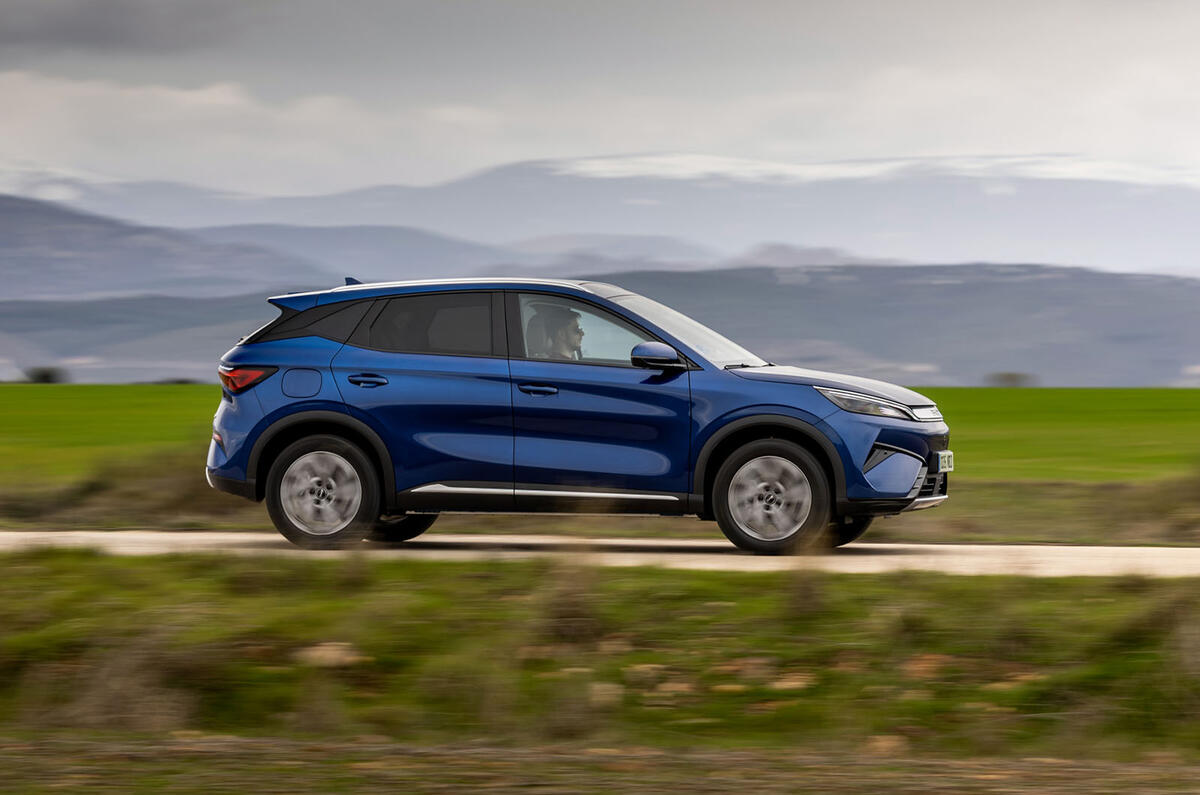
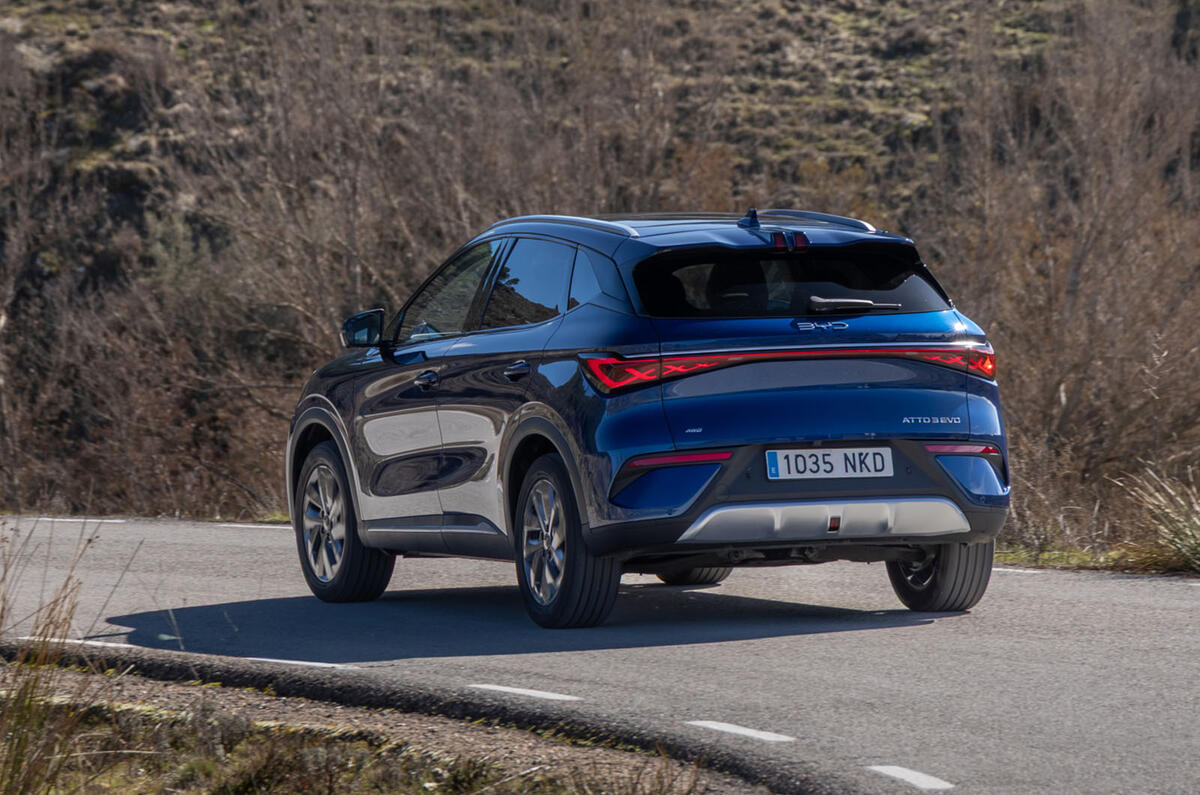
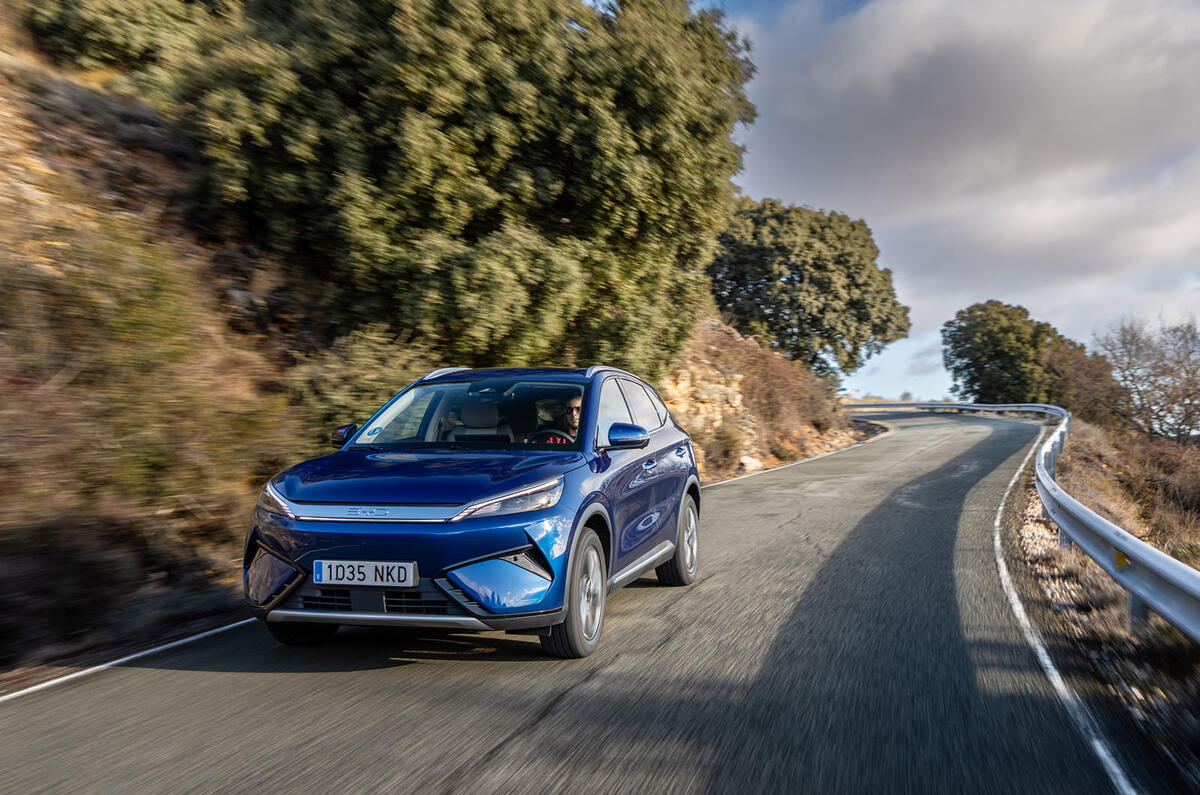
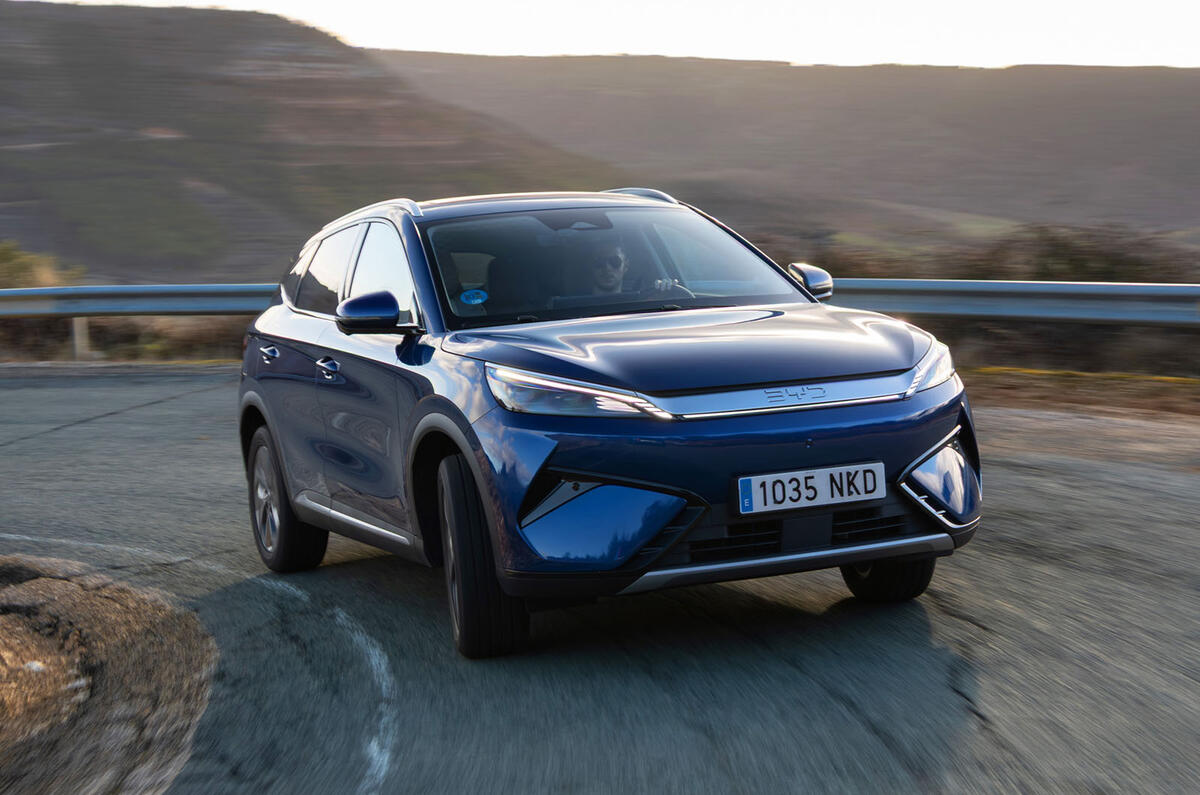
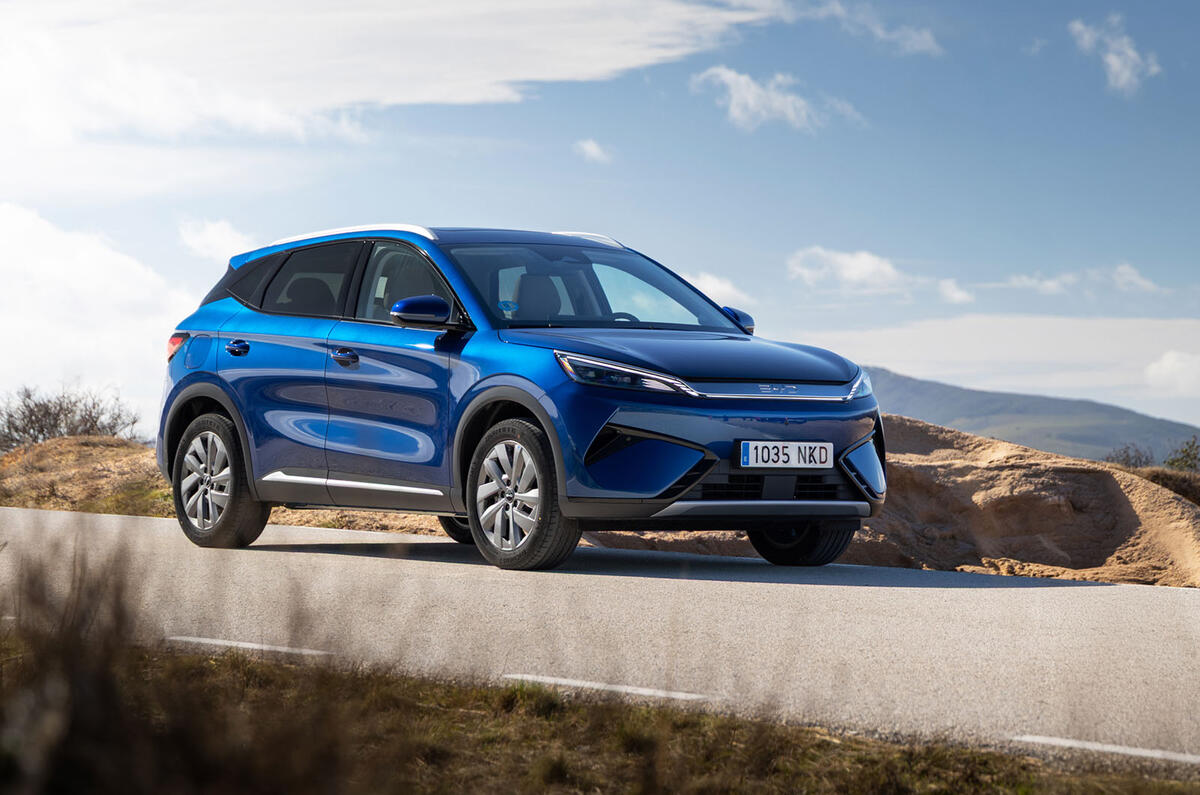
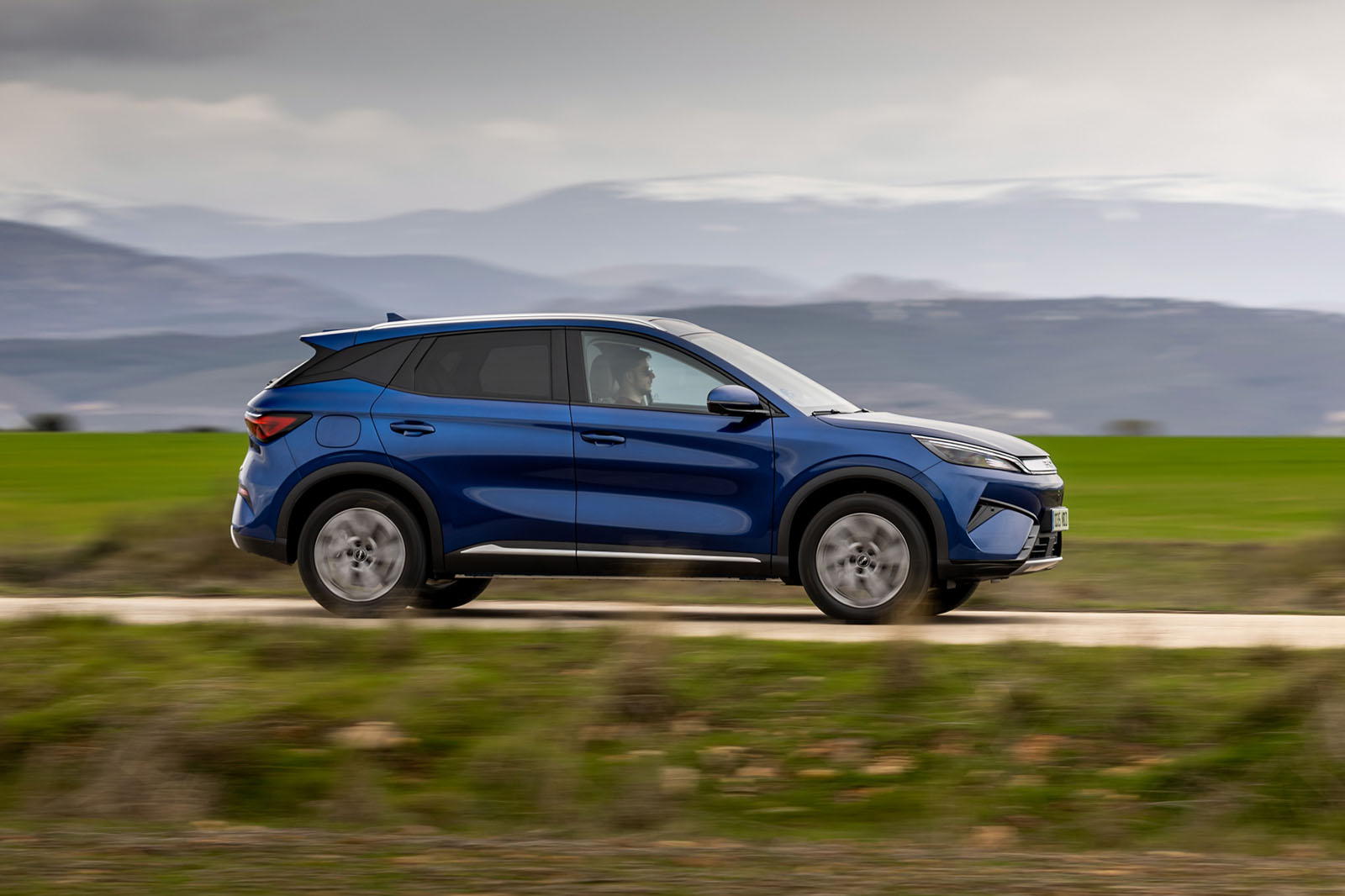
The Atto 3 Evo bears a strong resemblance to its predecessor superficially but is effectively a brand new car underneath.

It's based on a new iteration of BYD’s e-Platform 3.0 architecture, and the move from a 400V electrical system to an 800V one has more than doubled the maximum charging speed to 220kW.

The Atto 3 is one of only a handful of cars to have swapped from front-wheel-drive to rear-wheel drive, the others including the Polestar 2 and Volvo EX40.

The main drive motor, meanwhile, has moved from the front axle to the rear, freeing up room under the bonnet for a decently capacious 101-litre frunk. 

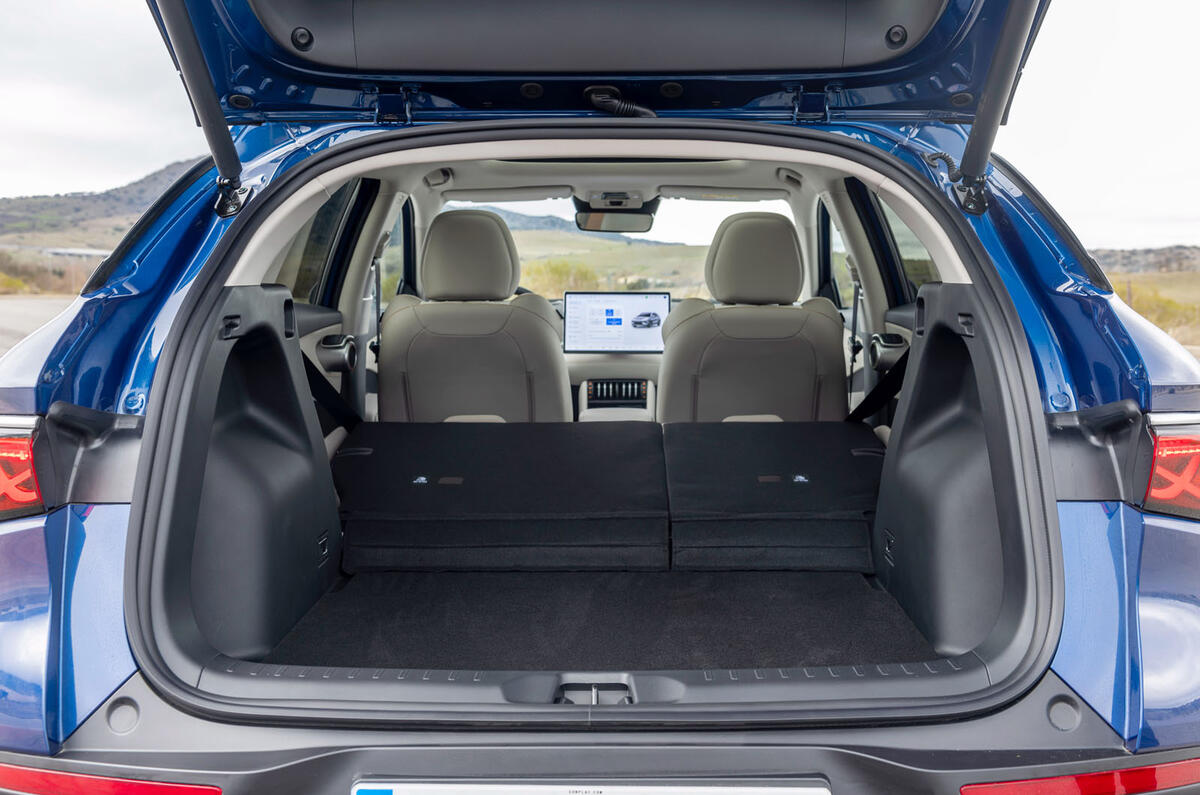
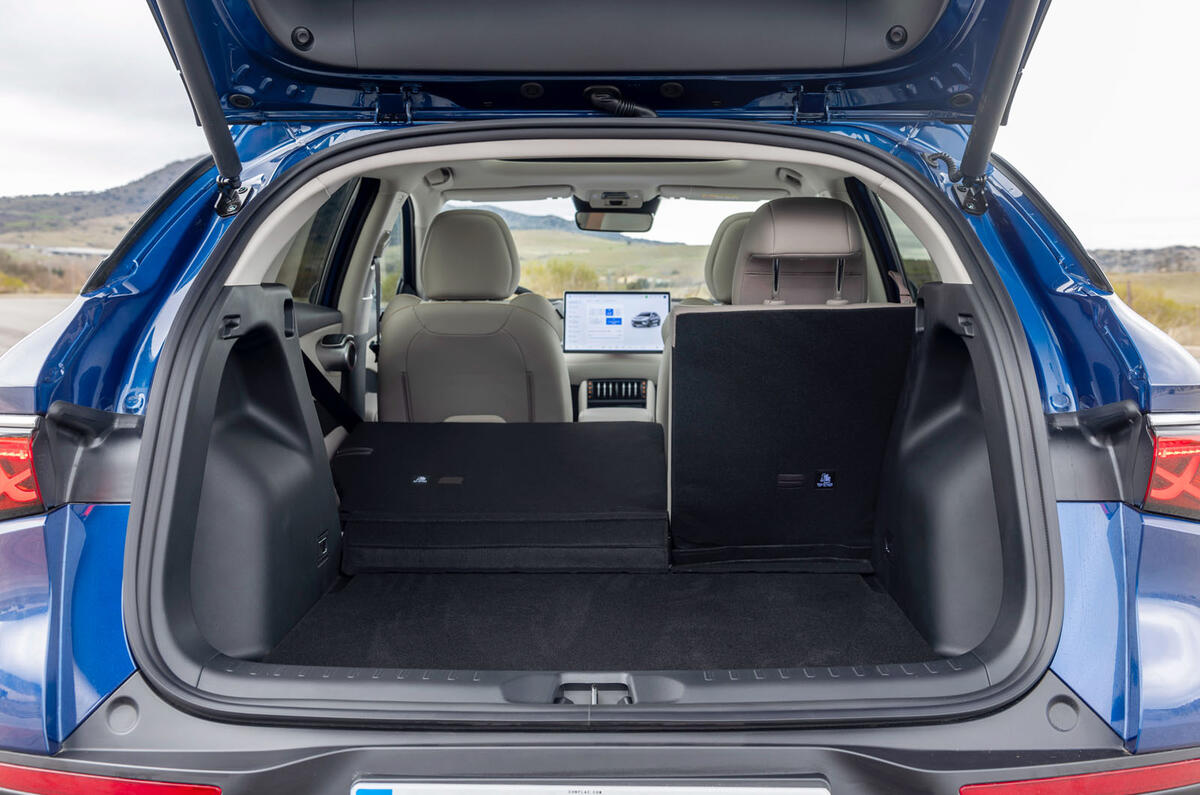
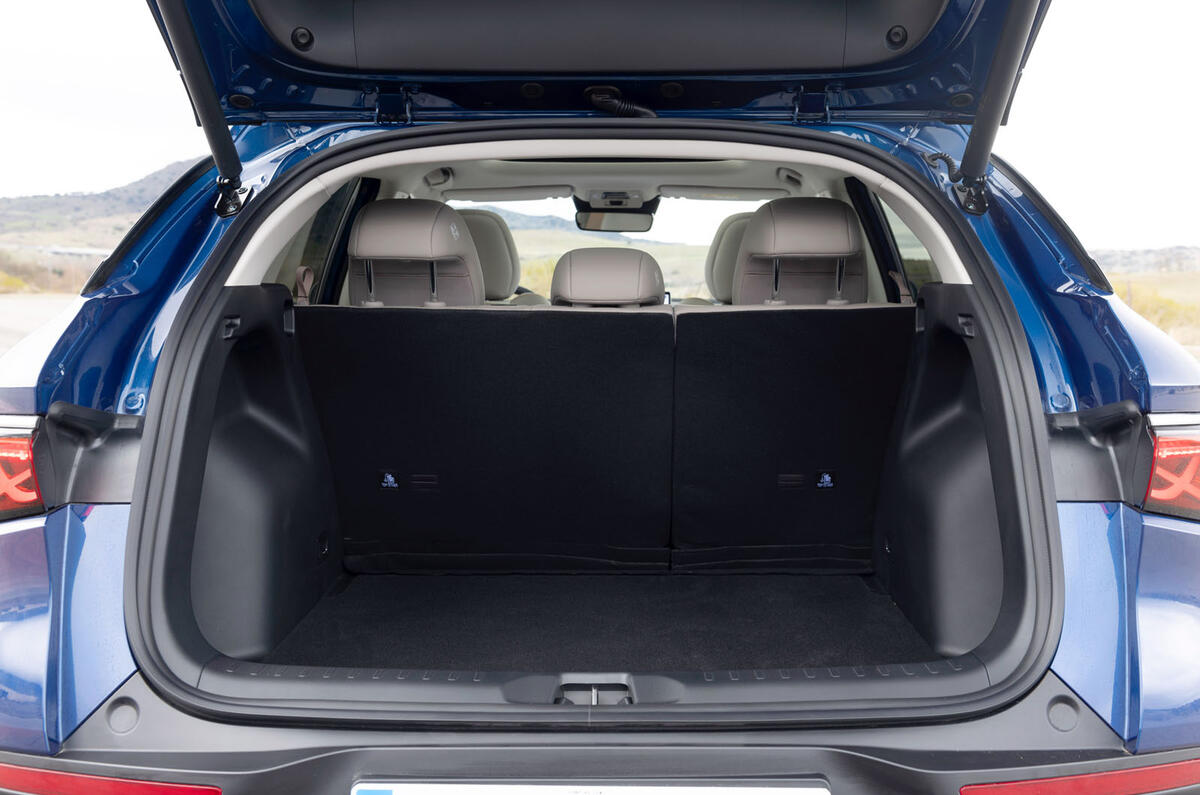
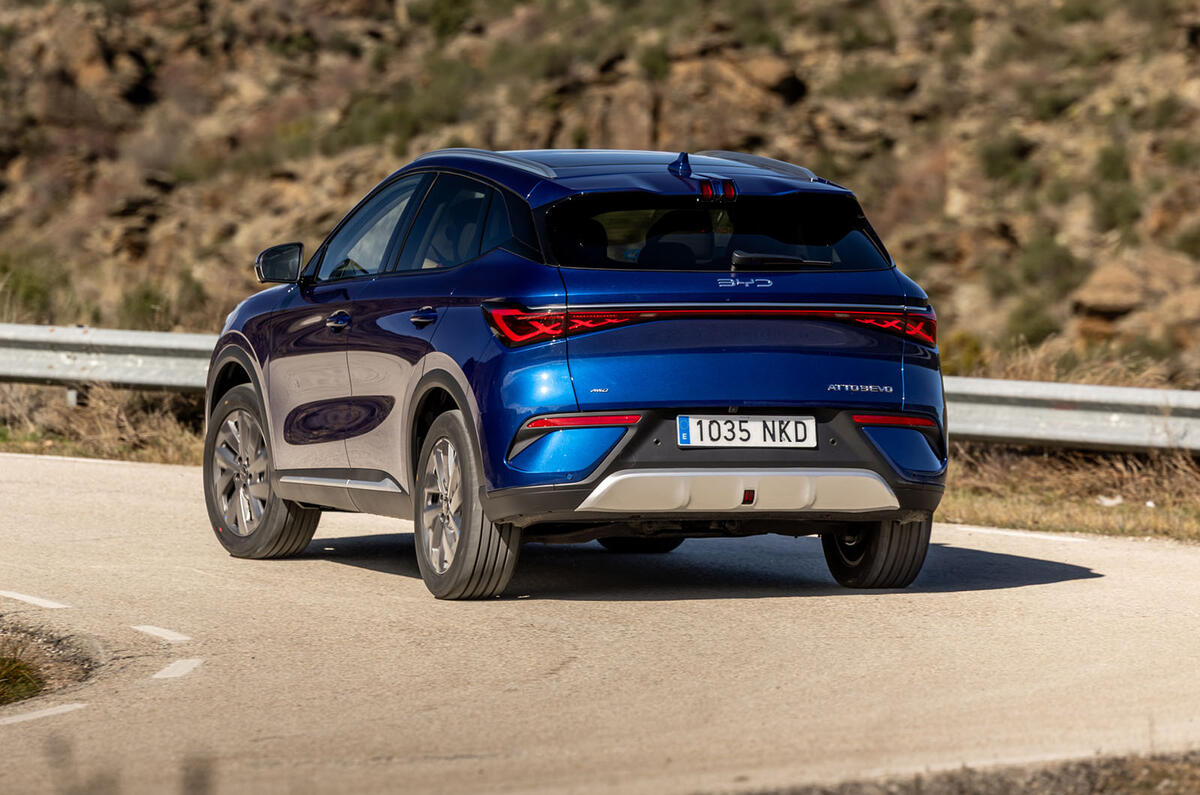
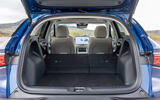
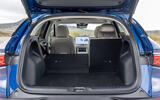
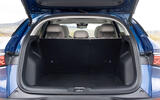
Moving the motor to the rear would typically incur a penalty to rear passenger space or in boot capacity, but here the boot has actually grown slightly, to 490 litres.

Meanwhile, the rear suspension has moved from a four-link design to a five-link one, which is claimed to improve ride and handling.

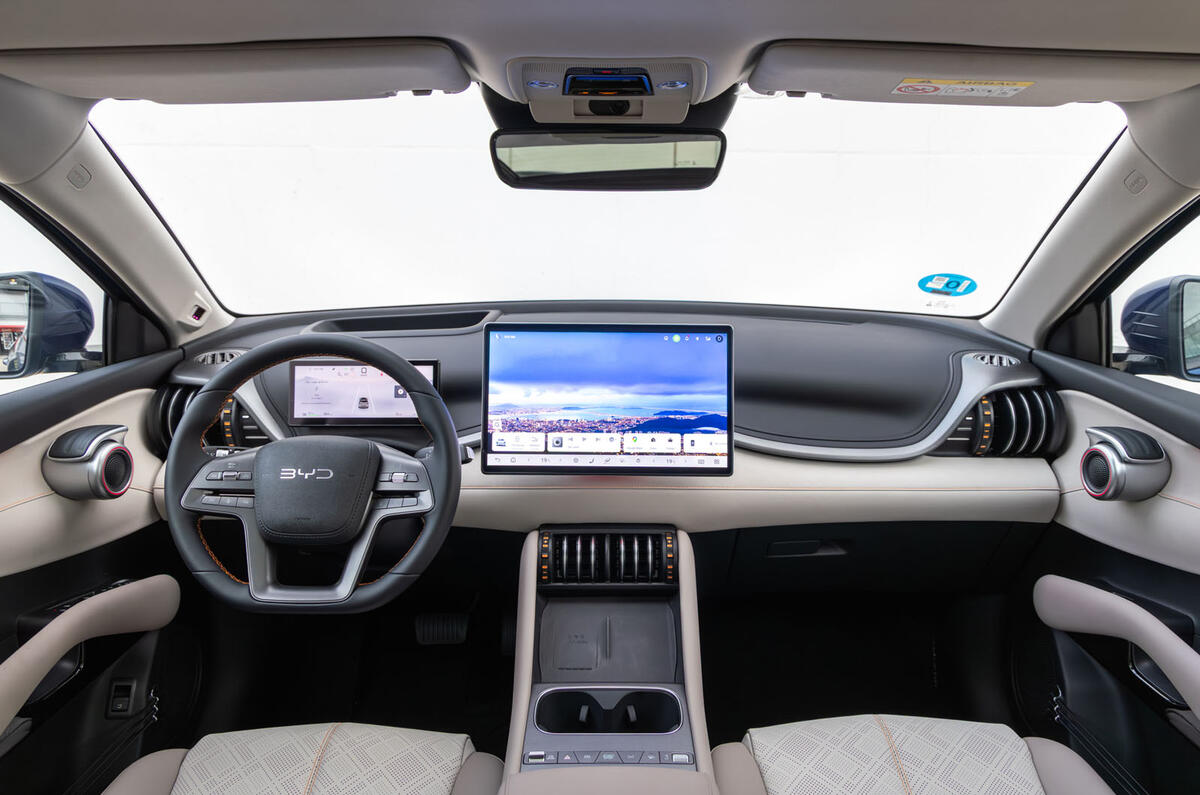
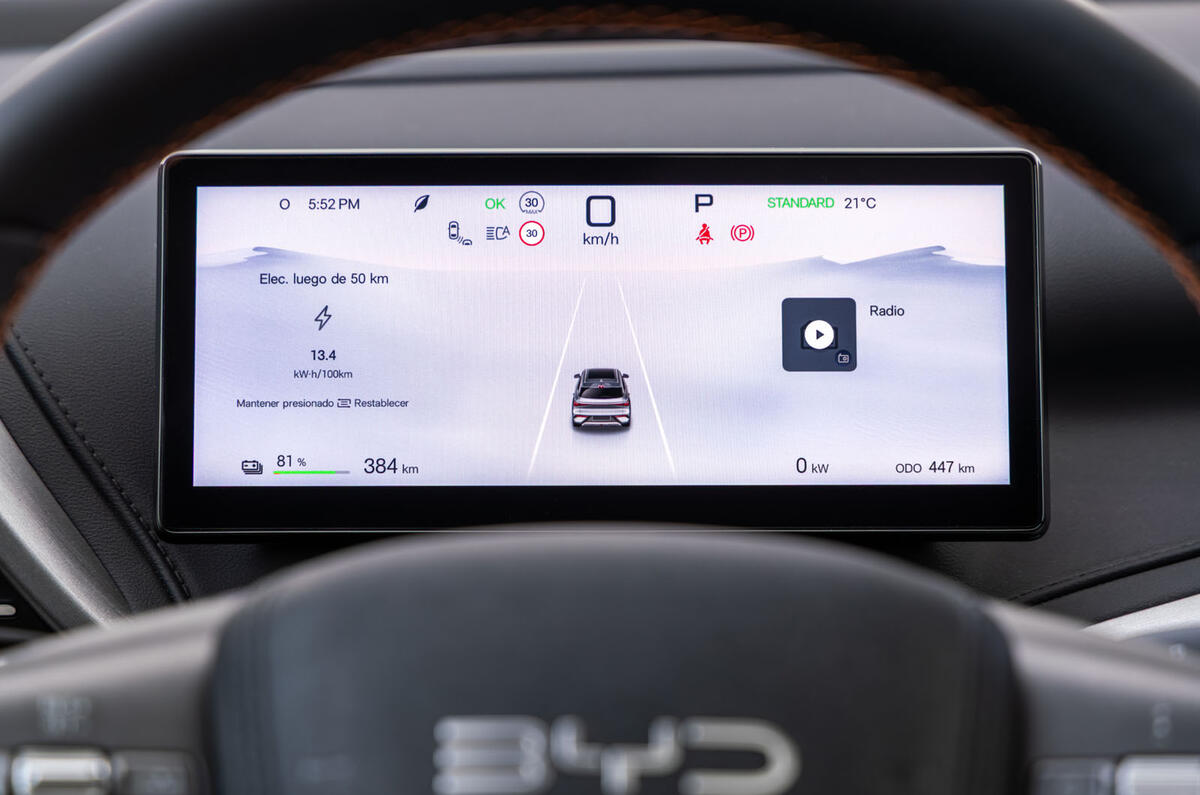
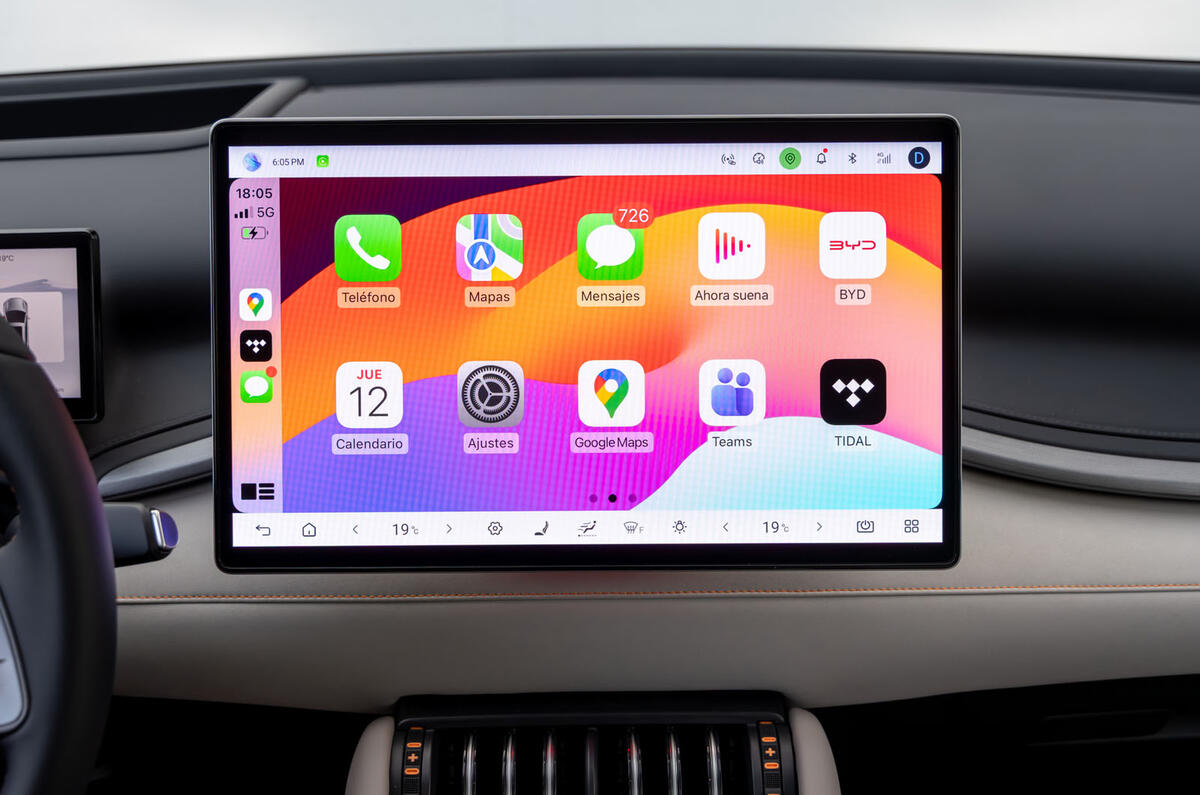
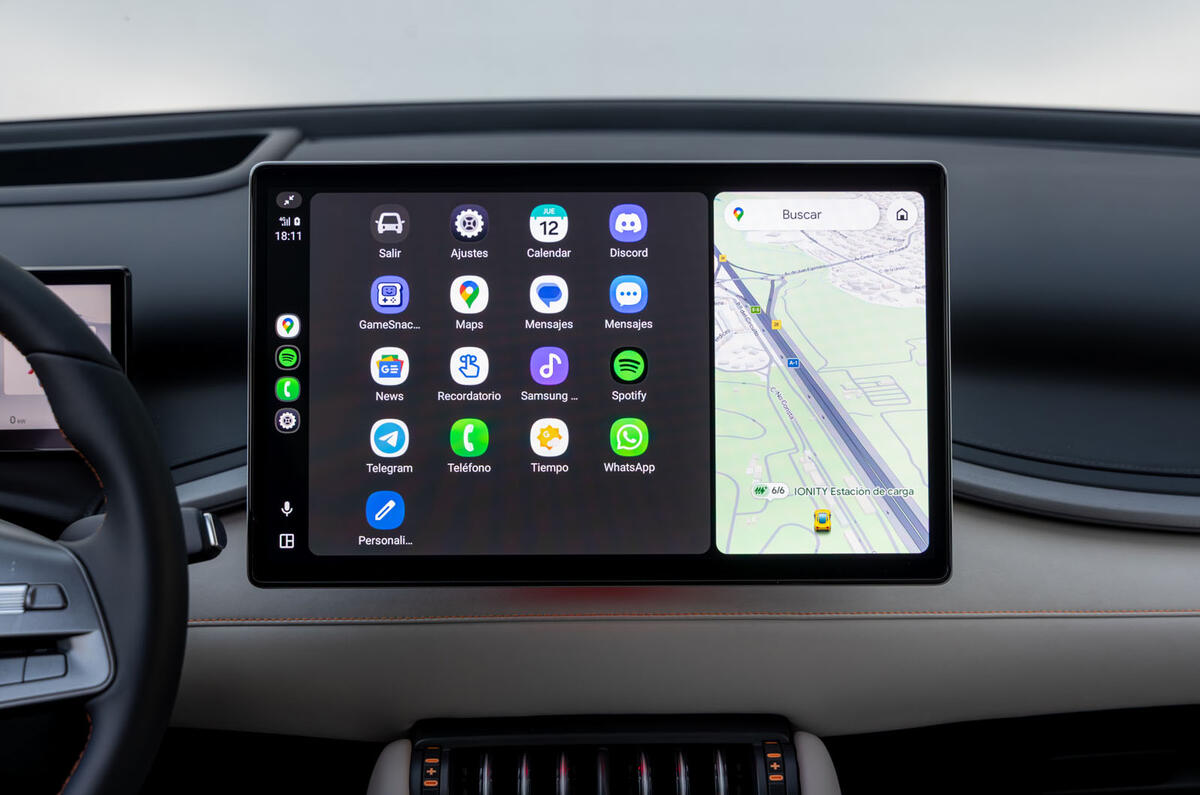
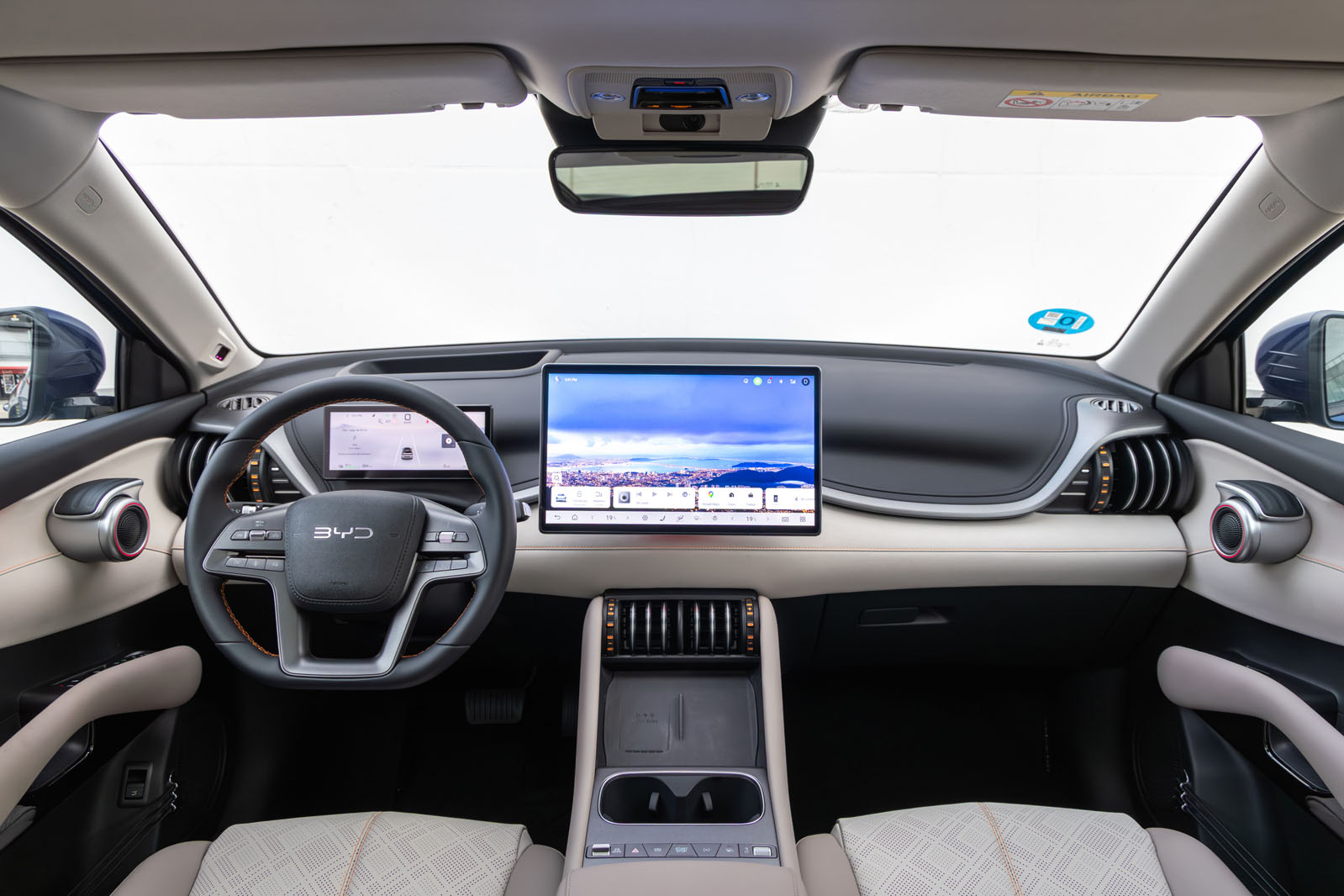
Inside, the 8.8in digital instrument panel and 15.6in infotainment touchscreen have been updated with new software, and the latter is now locked in landscape mode, having ditched the gimmicky rotating function that was fitted to earlier BYD models.

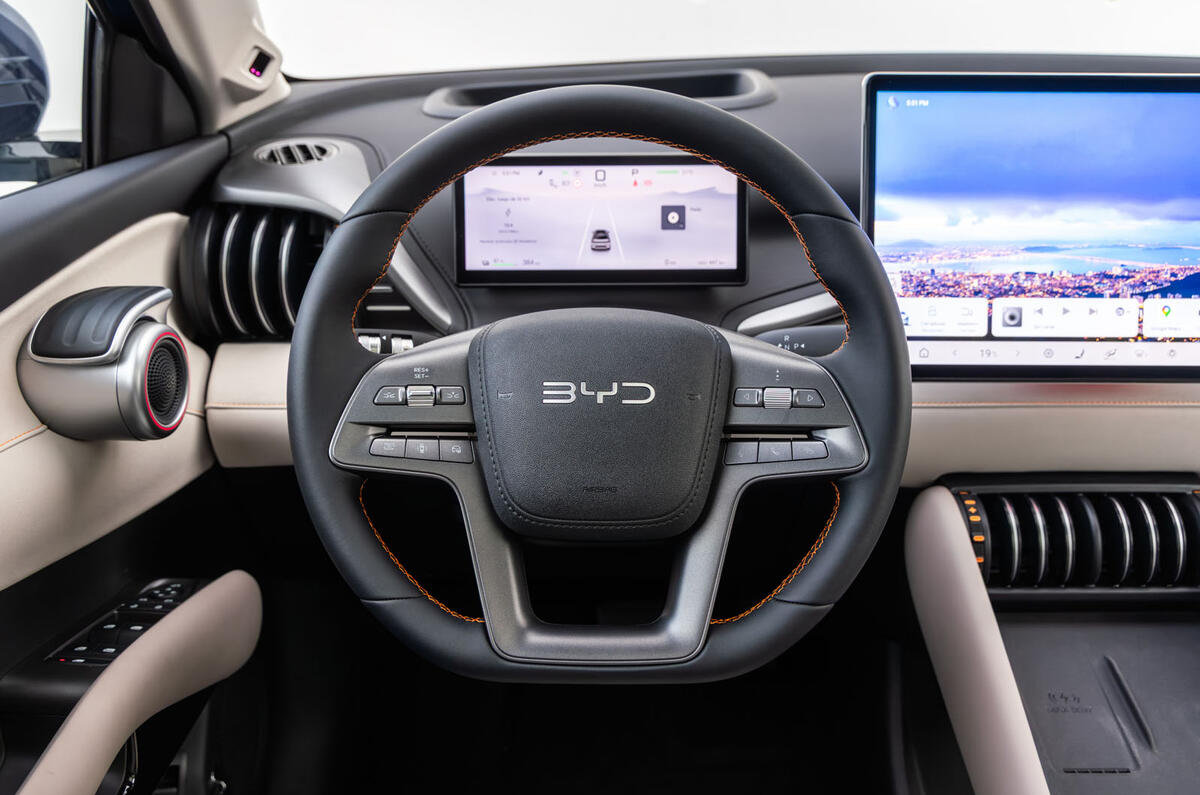
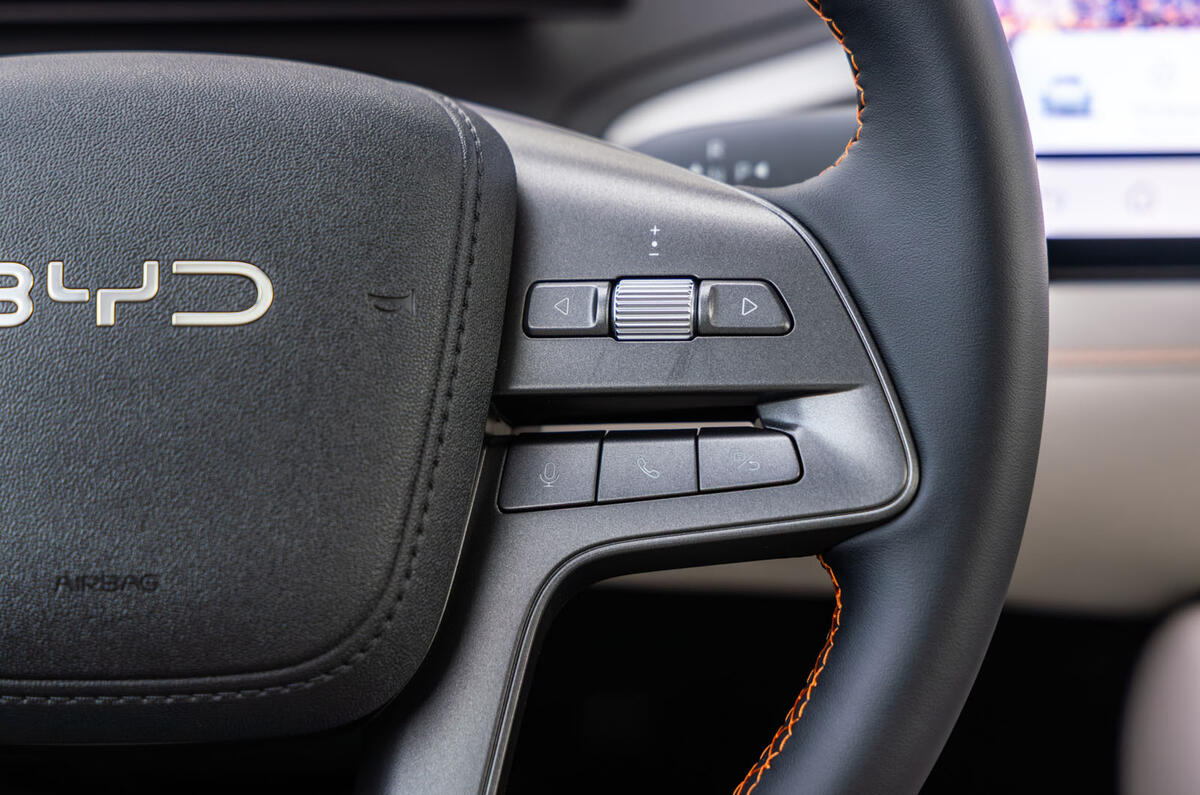
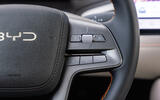
There’s also a new, more conventional steering wheel design and the gear selector has been moved to a stalk on the steering column.

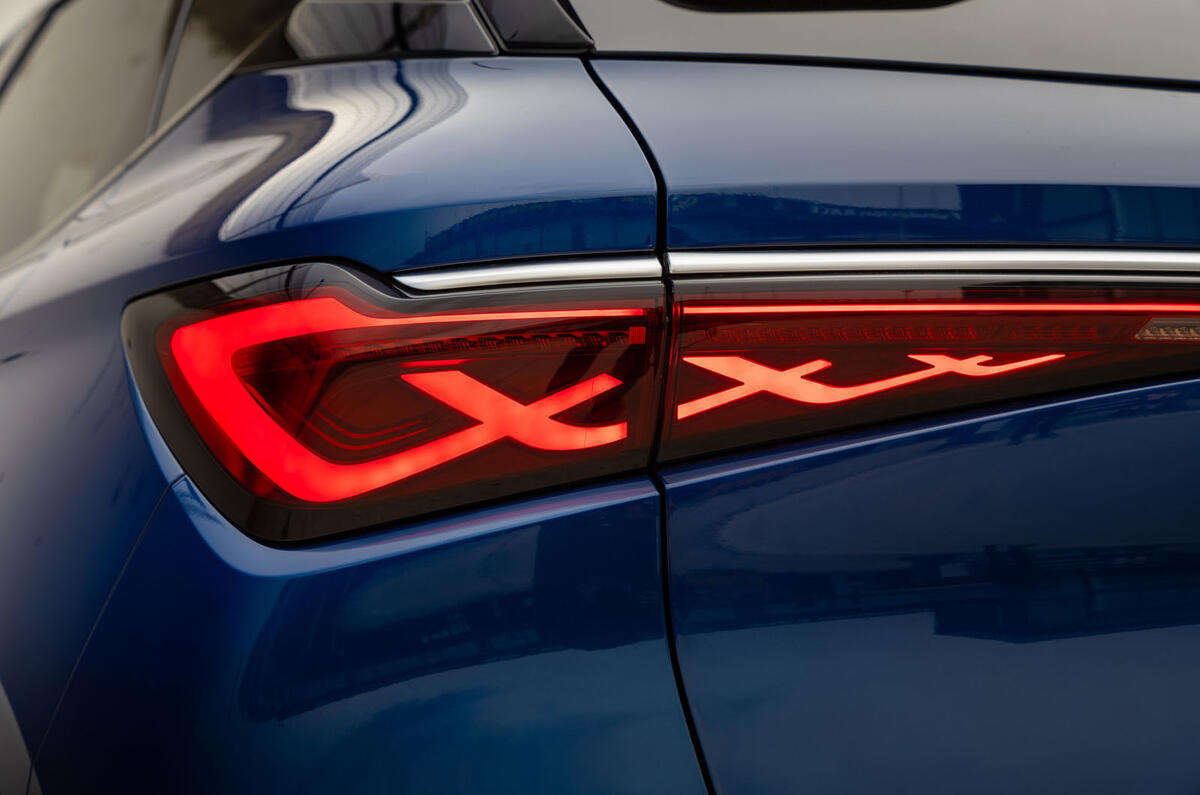
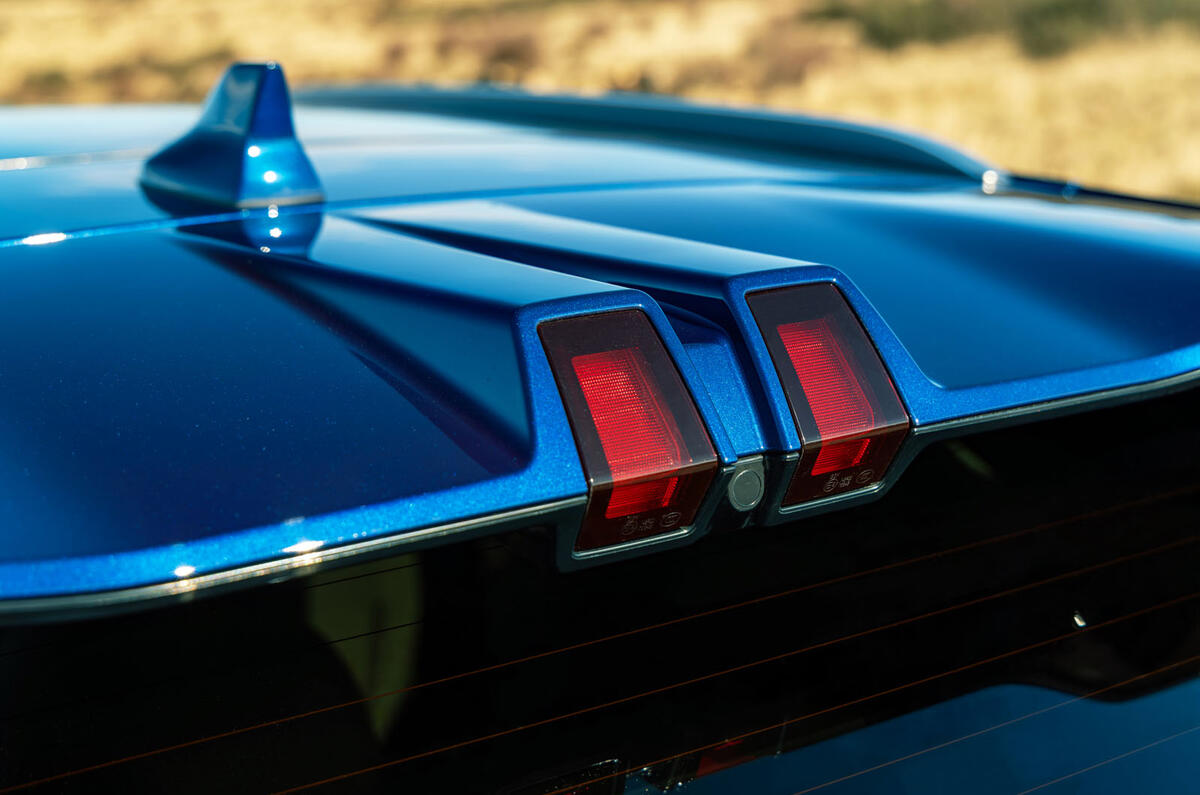
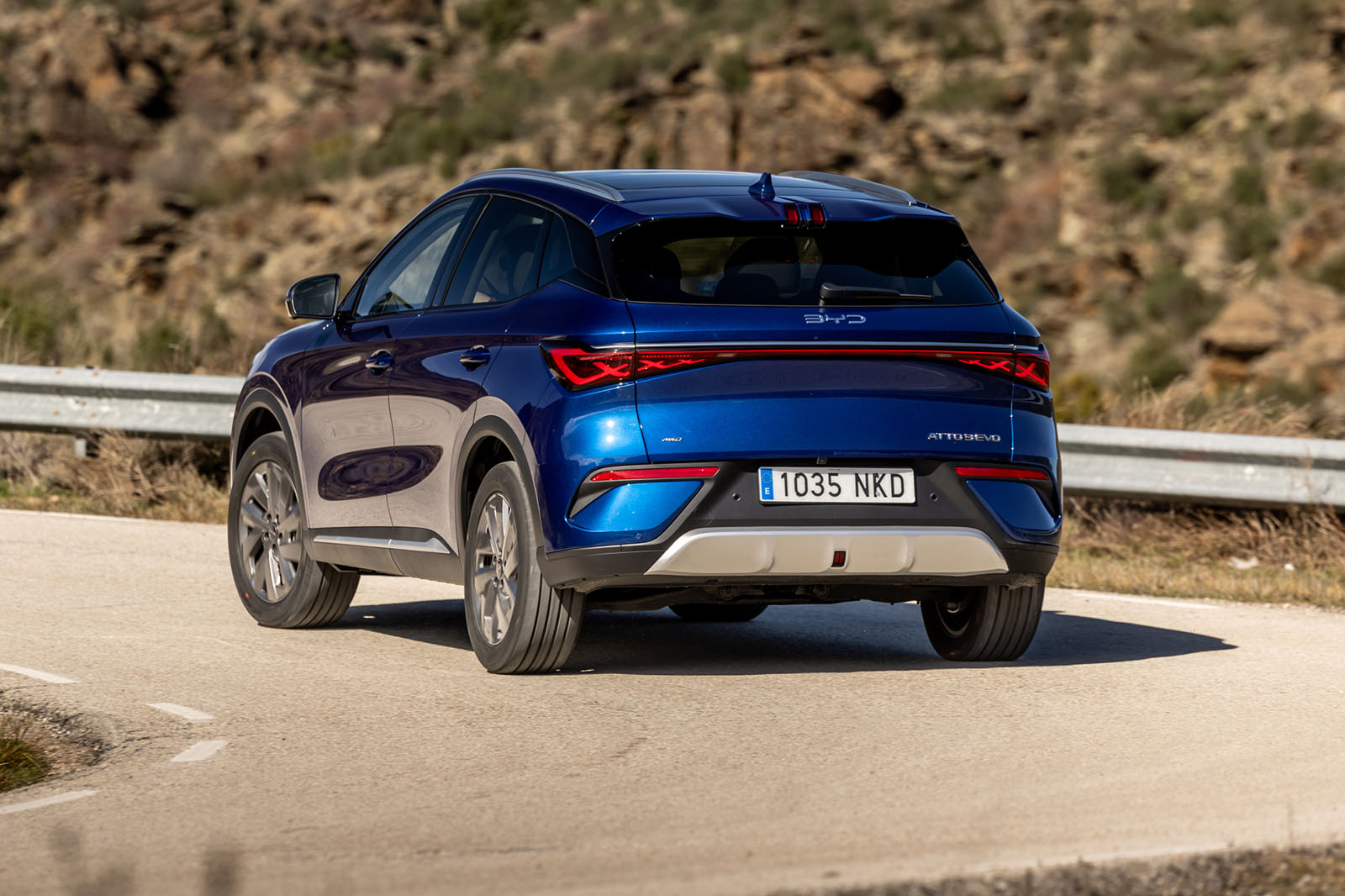
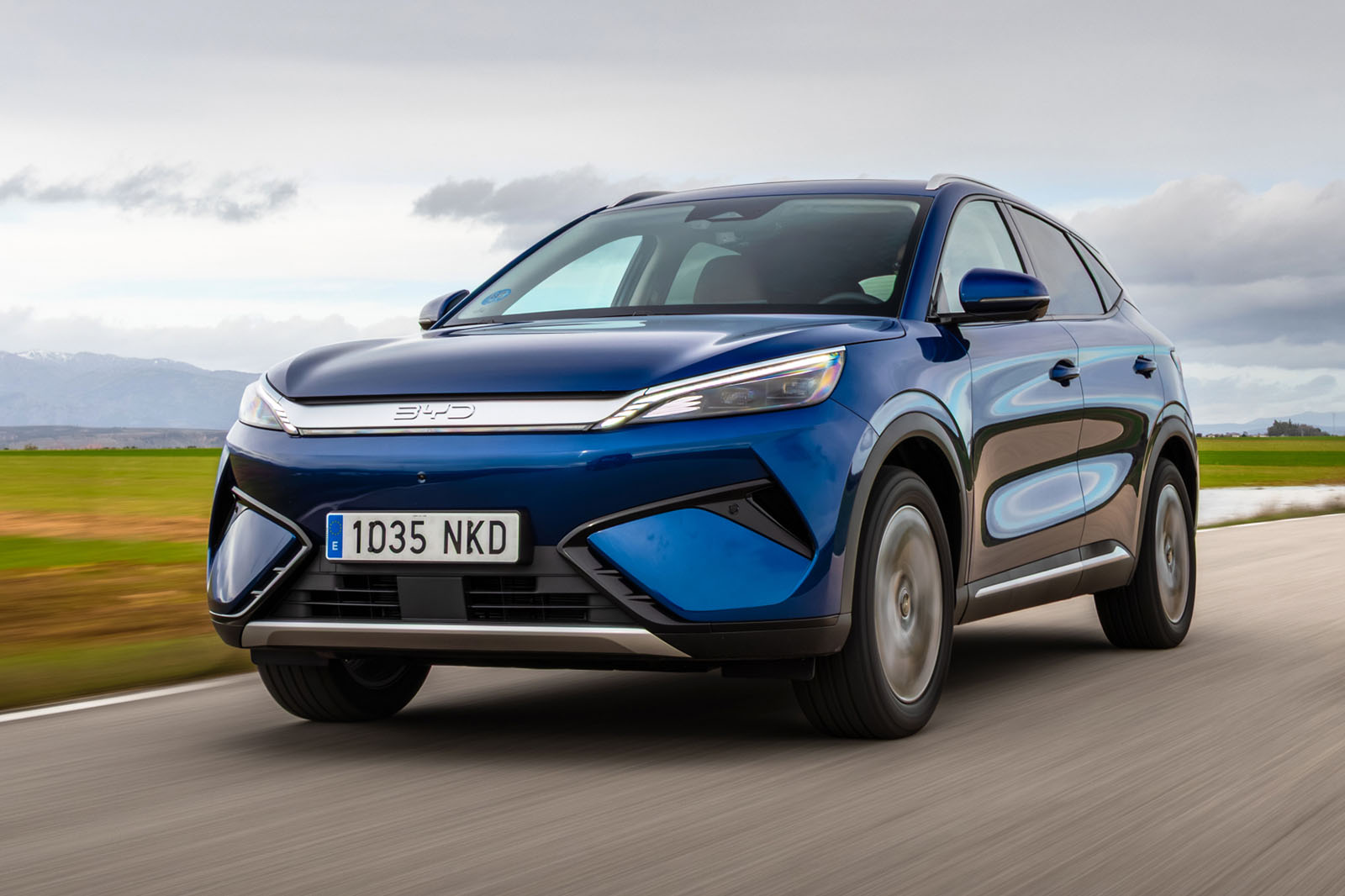
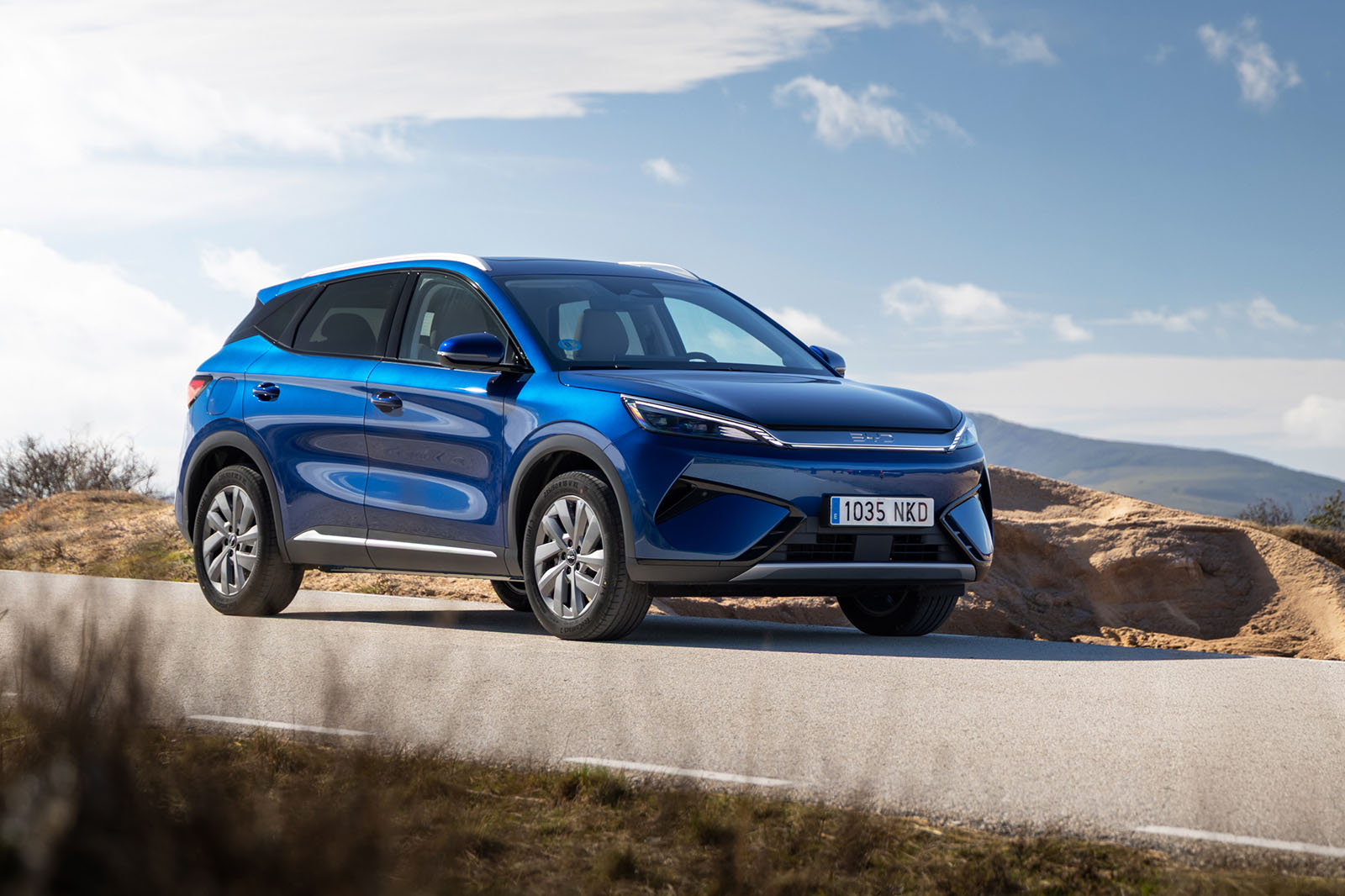
That’s all wrapped in a sharper-looking design that does away with some of the frumpiness of the old Atto 3. Thankfully, the ‘Build Your Dreams’ badge that adorned the old Atto 3’s rear end is gone, and the cleaner surfaces help it to look a little more up-to-date.

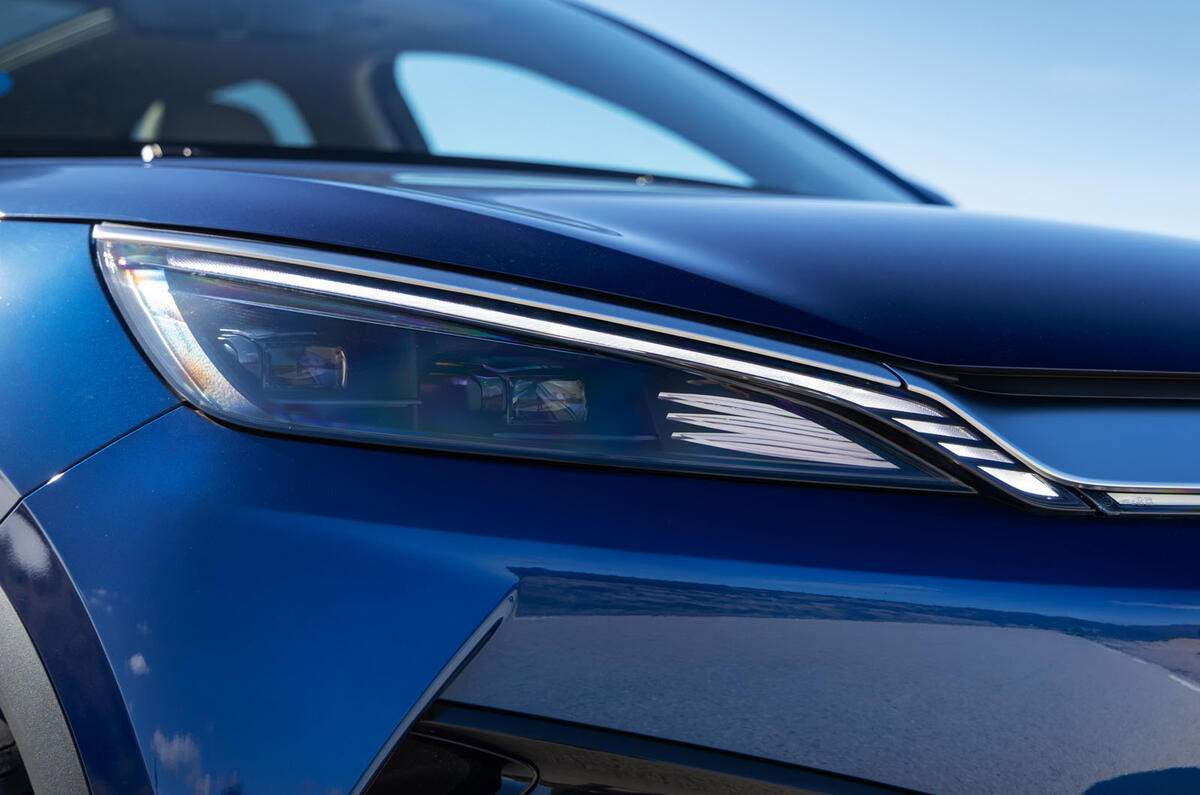
It’s no less anonymous – you would struggle to identify this car from 100 yards away, and its daytime running lights seem to mimic those on Mercedes’ saloons of a decade ago – but it’s on the money for a current family SUV.

Although the suite of tweaks doesn’t make this an immediate class-leader, they give the Atto 3 a fairer fight against that wave of competitors that have arrived since 2023.

INTERIOR

BYD Atto 3 review 2026 008

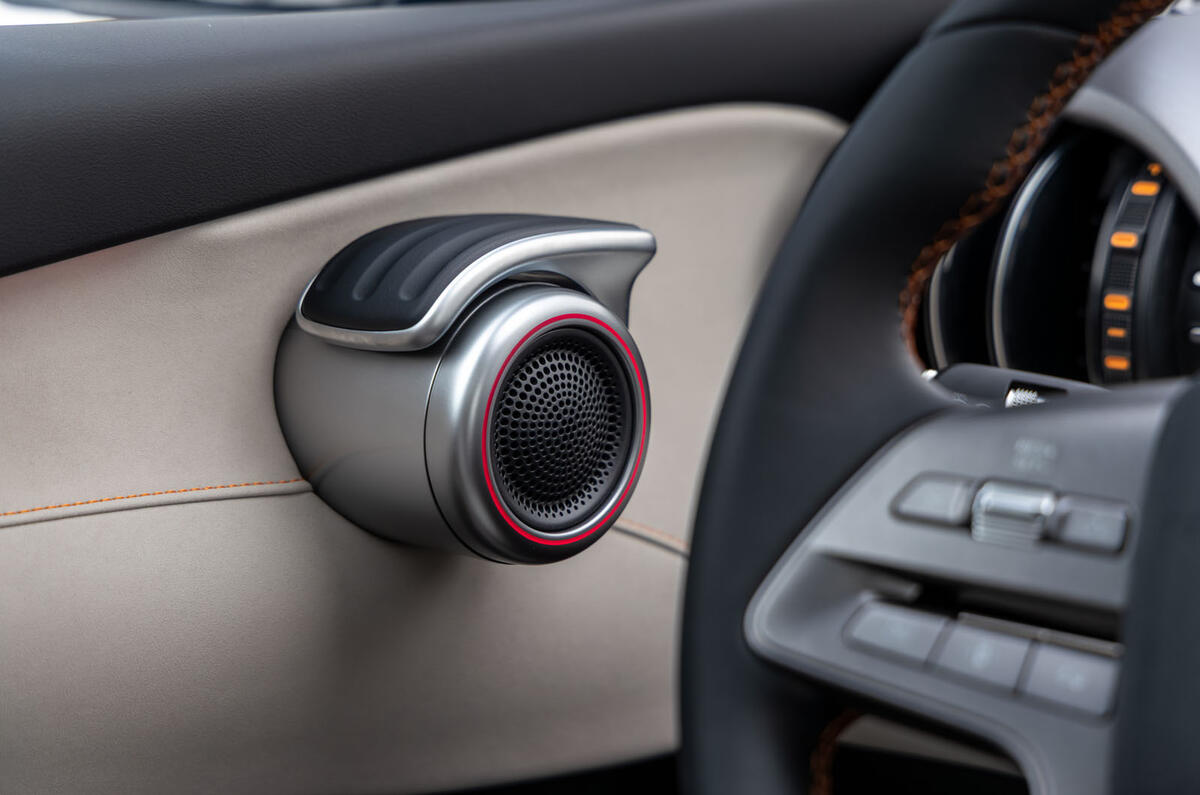
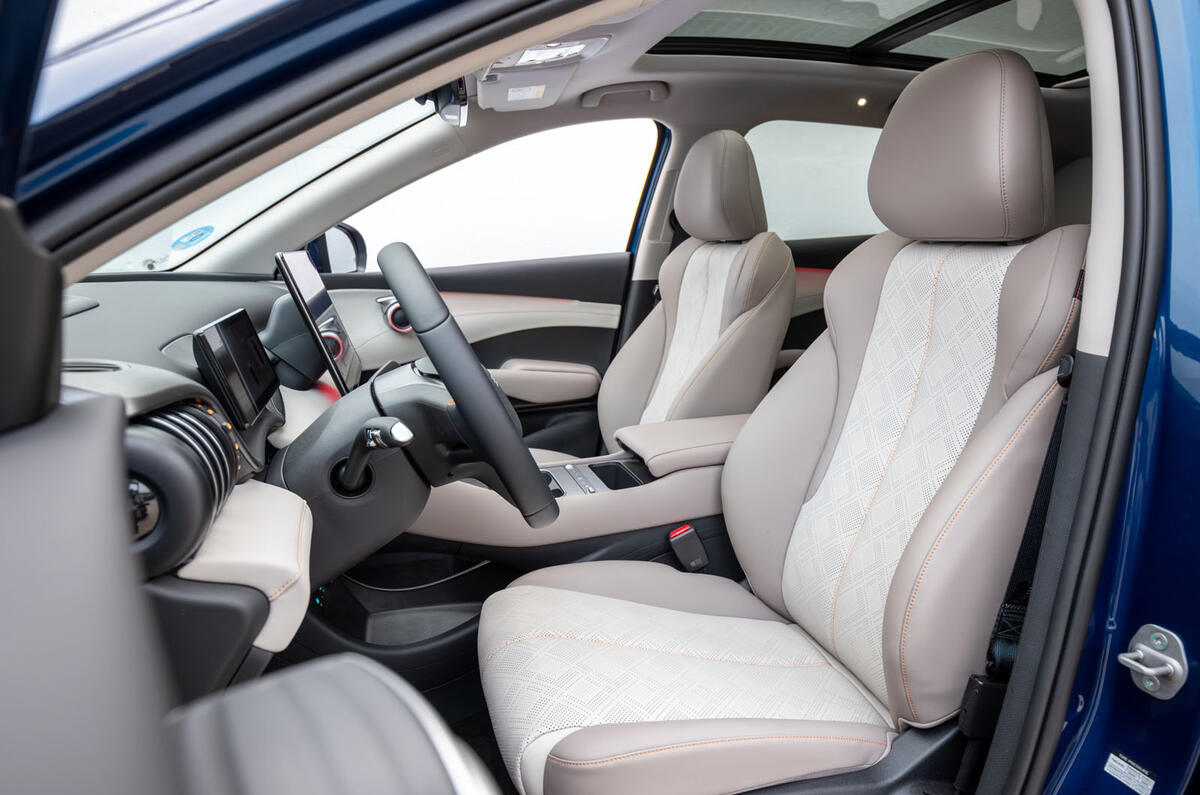
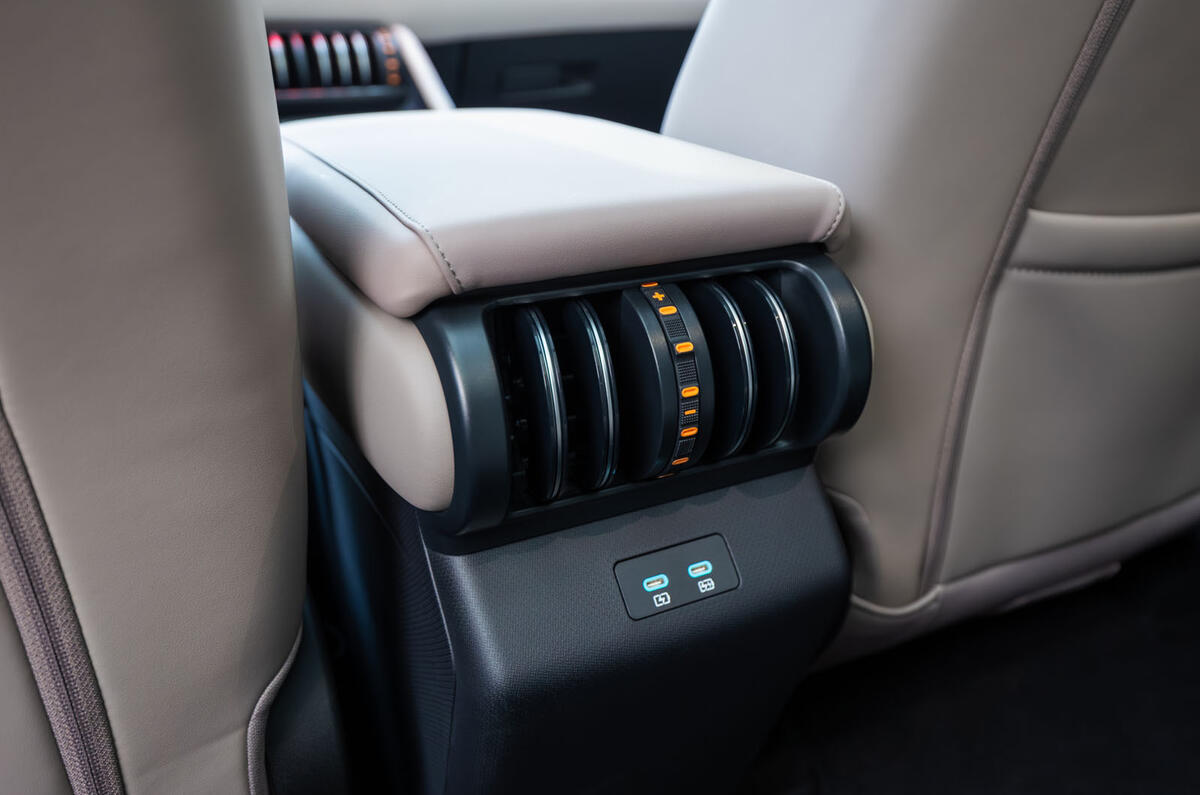
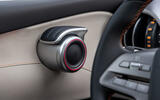
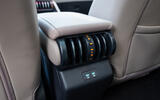
While the exterior is rather anonymous, the interior of the Atto 3 remains a key talking point, retaining its zany design with rounded door handles, CD-rack-alike air vents and guitar strings on the doorcards.

Almost every surface is lined in soft–touch leather or suede, making it feel a cut above rivals that leave scratchy plastics on show, such as the Elroq or Explorer. It’s mostly quite pleasant to touch, with the air vents being a particular highlight: opening them brings a nice clink noise and closing them comes with a reassuring thump. It feels like a detail from a car in several classes above. 

The new frunk is a great size: deep and wide enough for a mid-week shop or simply as a separate space for the charging cables.

Unfortunately, the main touchpoint, the steering wheel, is nowhere near as pleasant. Its upholstery is particularly plasticky, letting the side down compared with an otherwise good interior for this class. 

The strange chemical smell that was present in the previous Atto 3 has been banished: we couldn’t detect anything particularly abnormal for a new car on a 20deg day in beaming sunshine. 

Moving the gear selector onto the steering column has usefully freed up space on the centre console for a wireless phone charger. Unfortunately, the rubber surface of the charging pad lacks traction, so drive with any vigour – or just brake too hard – and your phone goes flying around the console, losing contact with the charging element of the surface.

The placement of some buttons is questionable too. The selectors for the drive mode and brake regeneration strength (standard or high) are placed on the centre console, by your arm, in a row of several other buttons. They aren’t notably distinguished in tactile feel, so you’ve got to take your eyes off the road and physically check to see what you’re prodding. It would make more sense for these to be placed on the steering wheel, whose new design surely has the room to accommodate them. 

The driving position is decent for shorter drivers, although those longer of arm or leg might struggle with relatively limited adjustability in the steering wheel. It can be repositioned vertically and towards or away from you, but these ranges of motion are limited, thus slightly moot. The driver’s seat offers a broader range of positions, at least, and it has gained an electrically adjustable lumbar support. That is particularly useful on longer drives, resolving a significant shortcoming of the old Atto 3.

The touchscreen has crisp graphics, responds quickly to inputs and is easy to pair up to a smartphone through Apple CarPlay or Android Auto. Not that you will necessarily need to, because the system now has Google apps built-in, including Maps, which is handy in a pinch.

There remains a dearth of physical buttons for the climate controls, relegating them to a permanent toolbar on the touchscreen. It works fine on the rare occasion that you might set it and forget it, but in changing conditions – or if you simply feel uncomfortable and want to change it on the move – it's a distraction, necessitating several seconds of distraction from driving.

Indeed, every time we adjusted the climate controls the Atto 3’s driver attention monitor pinged, warning us to pay attention to the road - the car basically admitting to us that its own control stack isn't as logically arranged as it should be.

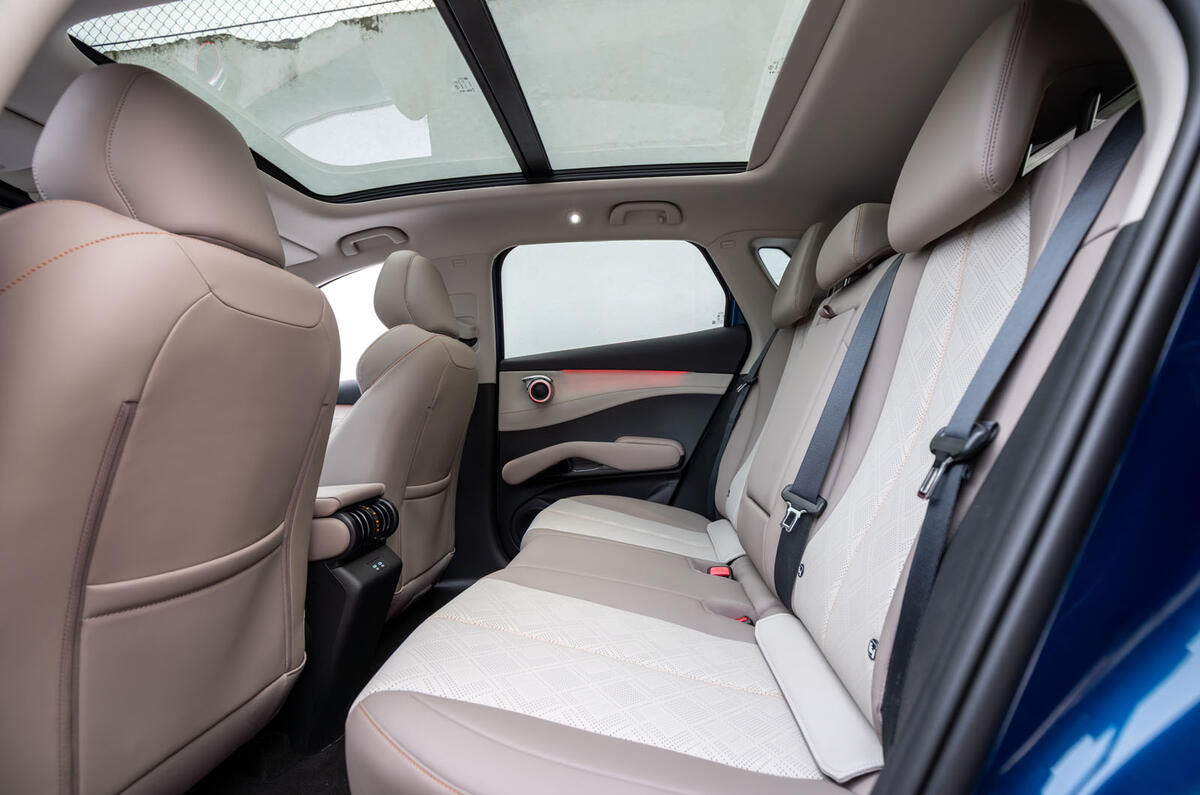
In the back, there’s plenty of room for passengers of all shapes and sizes – something reflected in the previous Atto 3’s popularity with minicab drivers. The extra boot space hasn’t come at the expense of comfort back here either, which is a welcome development, as is the option of storing the charging cables in the frunk under the bonnet.

ENGINES & PERFORMANCE

BYD Atto 3 review 2026 021

Even in its less powerful rear-driven guise, the Atto 3 Evo feels hilariously over-endowed. There’s enough grunt here for a flash overtake on the motorway and even mild acceleration off a roundabout or away from a junction is enough to prime the stability control system to whip you back into line.

Thanks to those systems, there’s no shortage of stability, but we would question whether such power is at all necessary in an everyday family SUV. The excess of thrust doesn’t make it any more fun to drive and will mostly serve to make any passengers in the back feel ill. 

With a 0-62mph time of 3.9sec, the four-wheel-drive Excellence model is even quicker than the Volkswagen Golf R.

We’ve yet to test the 443bhp four-wheel-drive model, which will almost certainly be quicker on paper than some of the most formidable sports cars, but first impressions with the 308bhp car suggests it’s unlikely to serve much of a purpose in the real world, apart from being an unassuming sleeper car. 

RIDE & HANDLING

BYD Atto 3 review 2026 022

The most significant problem created by this car’s great reserves of thrust is that the suspension simply can’t keep up. It has been tuned to ride very softly, which is agreeable most of the time, but put your foot down and it pitches and rolls hard. The rear end squirms as the stability control system nips away at the brakes to keep it all in a straight line while the front end is so delayed in its reactions it feels a bit like watching a football game on a dicky stream.

Meanwhile, the steering feels remarkably heavy, is geared slowly and is much too keen to return to centre, requiring significant effort to navigate simple obstacles such as mini roundabouts. Steering this car feels a bit like playing a game of Pong: you’re constantly fighting against its desire to return to the straightahead, pinging between actual input and nothing at all, and it's utterly one-dimensional in the feedback you receive. It proves especially frustrating around town or when parking, where it feels as if you’ve no power steering at all.

It's especially hard to shuffle the Atto 3 Evo's steering wheel between your hands, due to its heaviness and desperation to self-centre, making parking a real pain.

Counterintuitively, activating the Sport drive mode actually lightens the steering, making it easier to use in most day-to-day scenarios. But it also makes the throttle much more sensitive – which, with this much power, makes it difficult to meter it out smoothly.

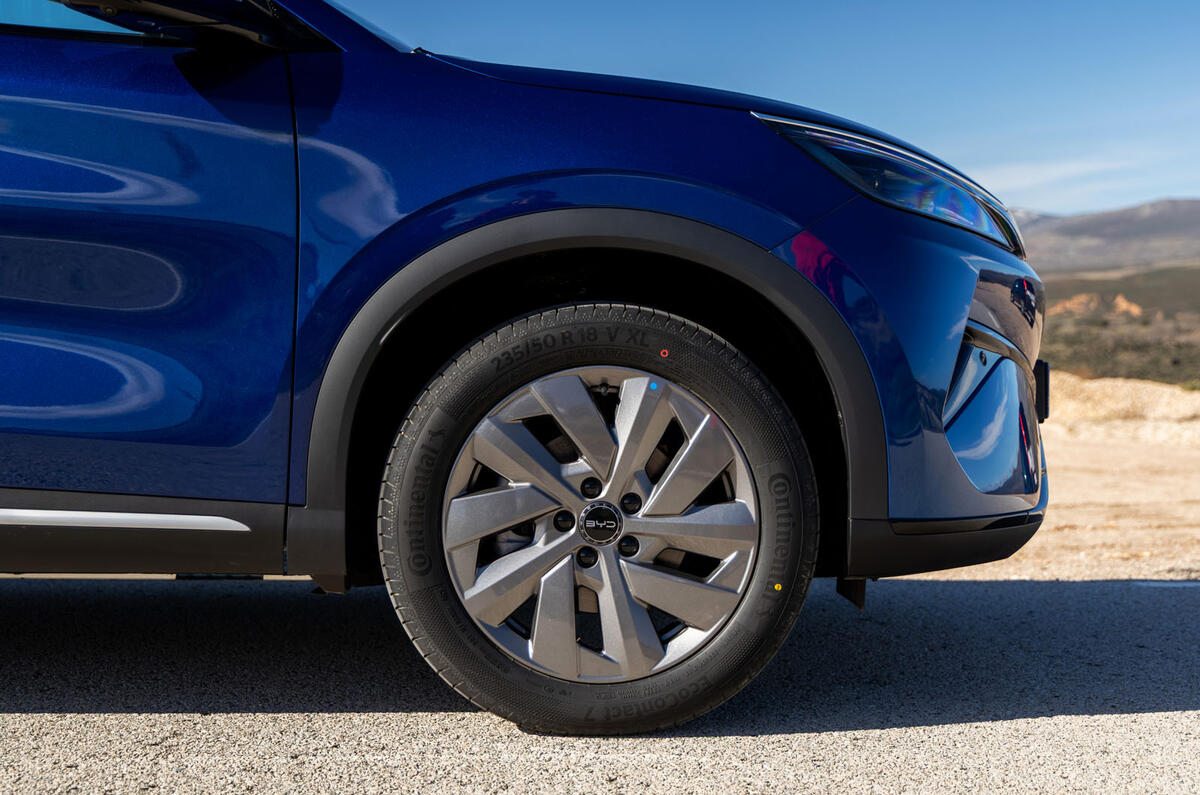
Making progress in the Atto 3 Evo is a harder job than it needs to be, due primarily to the strange steering, spongey suspension and abundance of power. It can be hustled if you absolutely need to do it, with plenty of grip from its Goodyear tyres and strong brakes, but there’s no reward from doing this and it's best avoided.

The payoff of the Atto 3 Evo’s soft suspension is that it does a stellar job of soaking up big impacts, all but flattening big potholes.

However, like in a great many other EVs, higher-frequency abrasions such as poorly surfaced roads induce a pitter-patter underfoot, which detracts from the broader sense of isolation.

Indeed, overall refinement is good. Road roar and wind noise inside the Atto 3 Evo are par for the course for the class, so you can talk to a passenger at motorway speeds without raising your voice too much. 

It’s undermined somewhat by the hyperactive ADAS, which bings and bongs at you nearly constantly to notify you that you’re drifting outside of your lane when you’re simply not, or that the speed limit has changed, or that it’s having a barney because it can’t read what the speed limit is. It’s downright annoying, and turning it all off requires you to navigate through several layers of the infotainment system’s menus, and you will have to do this every time you start the car.

MPG & RUNNING COSTS

BYD Atto 3 review 2026 001

Given we tested the rear-driven Atto 3 Evo on a sunny 20deg day in Spain, we were hoping for better efficiency than 3.61mpkWh over a mix of urban routes, motorways and country lanes. That should translate to a real-world range of around 270 miles, which is bang average among electric family SUVs.

Its pricing, too, should be bang average: although it’s yet to be confirmed, the Design car is expected to start from around £37,000, matching the Skoda Elroq. 

Chinese cars have a reputation for low prices but not so with BYD: look instead for good finance deals and lots of standard kit.

Although we’ve yet to test the four-wheel-drive Excellence model, it’s likely to offer poor value for money in comparison: it's less efficient, has a worse range and is unlikely to compensate for those penalties with any real dynamic pizzazz. It’s set to cost from around £41,000 to boot.

VERDICT

BYD Atto 3 review 2026 024

The Atto 3 was an underwhelming first effort from BYD. In Evo guise it has stepped its game up significantly, but so have its competitors. 

If interior quality and practicality are your main concerns and you’re not all that fussed about how it drives, the Atto 3 Evo could be a decent fit for your driveway. Particularly so if leasing or finance deals become as abundant as they were for the old Atto 3, significantly improving its appeal as a value option.

If you want a premium-feeling interior, the Atto 3 Evo is a solid choice. If BYD can resolve some of its other shortcomings, this could be a great family EV.

Otherwise, this car does little to set itself apart from the competition. Some alternatives – particularly the Skoda Elroq – offer better efficiency, almost as much practicality and a much better drive.

Charlie Martin

Charlie Martin Autocar
Title: Staff Writer

As part of Autocar’s news desk, Charlie plays a key role in the title’s coverage of new car launches and industry events. He’s also a regular contributor to its social media channels, creating content for Instagram, Tiktok, Facebook and Twitter.

Charlie joined Autocar in July 2022 after a nine-month stint as an apprentice with sister publication What Car?, during which he acquired his gold-standard NCTJ diploma with the Press Association.

He is the proud owner of a Mk4 Mazda MX-5 but still feels pangs of guilt over selling his first car, a Fiat Panda 100HP.