
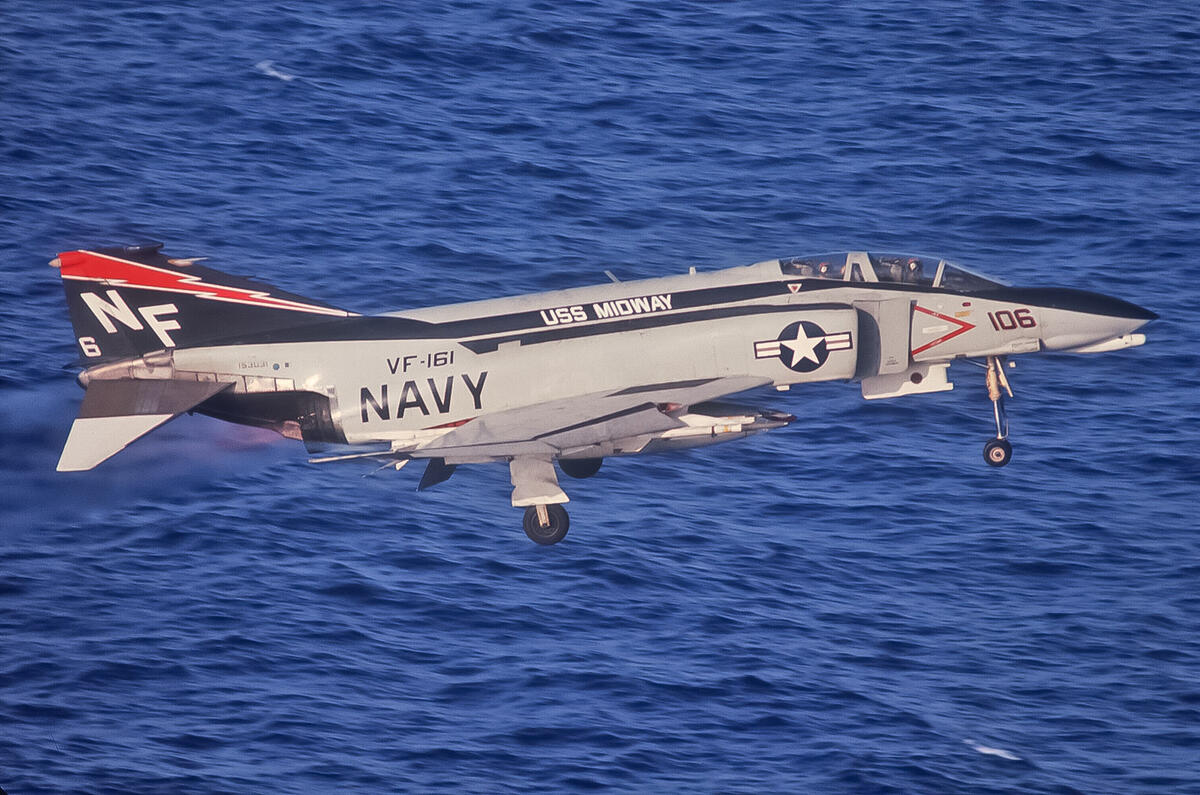

An aircraft carrier is a floating airbase capable of deploying air power wherever it is needed.
During the Cold War (1947-1991), a variety of exciting (and often very dangerous) combat aircraft took to the seas. Many of these oozed charisma, and combined high performance with the toughness to survive deck life. Here are 11 of them…
11: Hawker Sea Fury
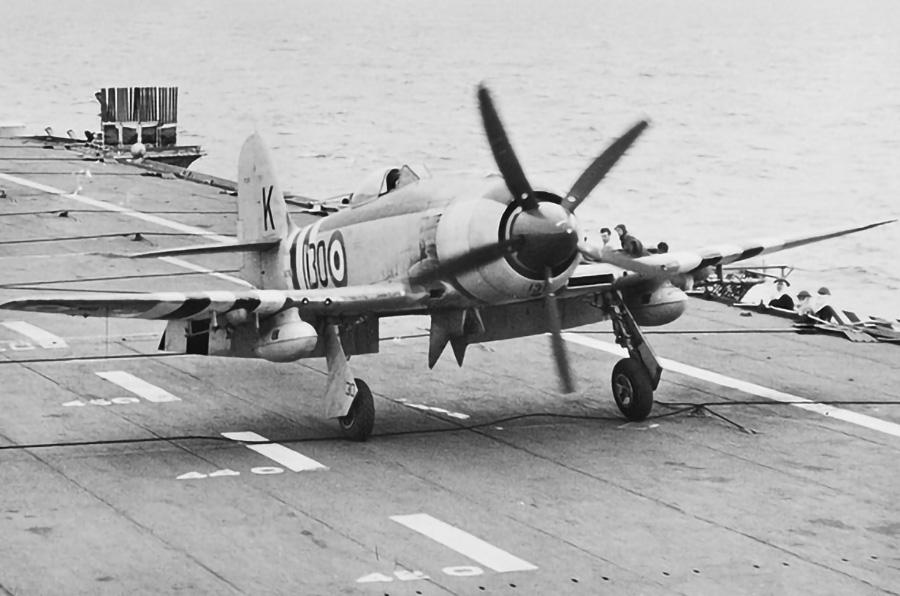
With a max speed of 465 mph (748 km/h) the Sea Fury was among the fastest piston-engine fighters to enter series production. It shot down at least one MiG-15 jet fighter, a Consolidated PB4Y, and two B-26s. It was possible to take the basic airframe even faster – a single Napier Sabre-powered example with around 3500 hp achieved 485 mph (781 km/h).
We spoke to former Sea Fury pilot Dave Eagles who noted “I flew the Sea Fury in 1956 after having had six months or so on a Firefly Squadron and my impressions therefore were inevitably based on a comparison of the two. The Sea Fury was much more lively than the clunky old Firefly.”
11: Hawker Sea Fury
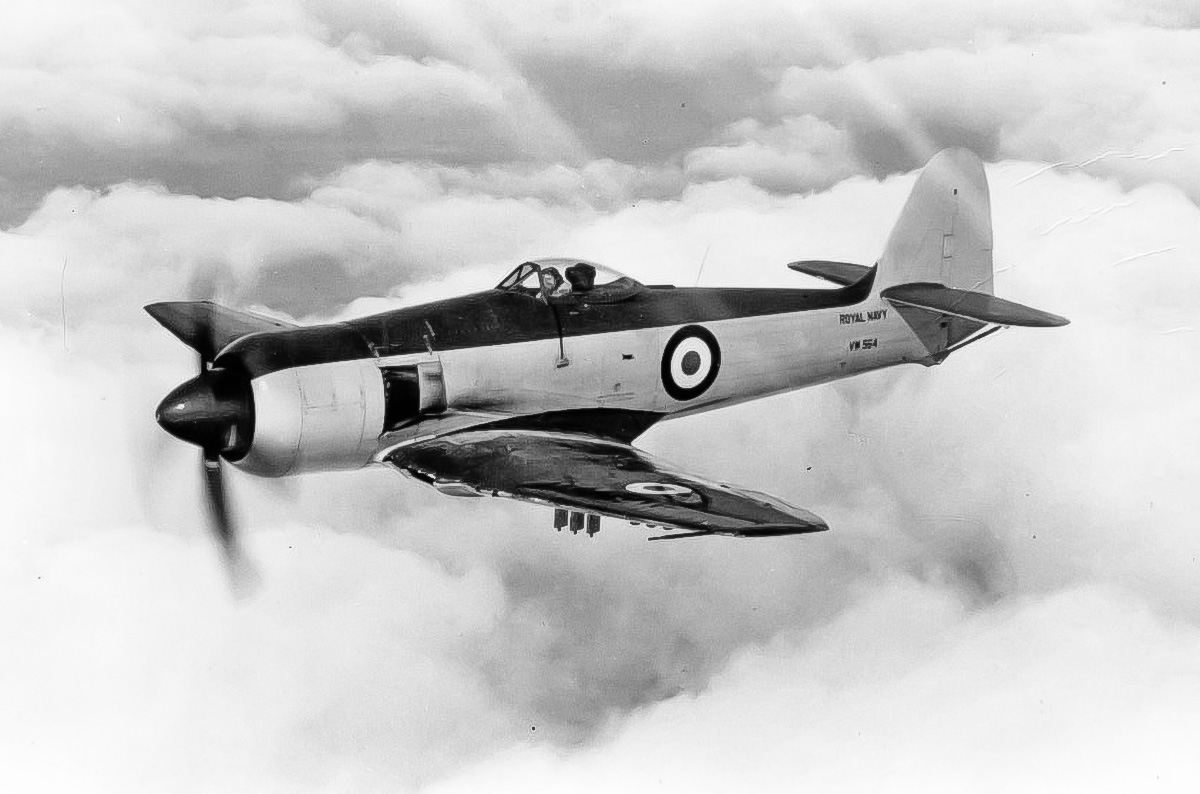
“It was lighter in pitch and roll and more responsive to power changes. It had spring-tab ailerons so as speed built up its roll stick forces remained reasonably light up to close to its limiting indicated air speed (400 – 450 knots Indicated Air Speed). It got top marks for agility.”
“It was certainly quite forgiving. It was very spin resistant–you could throw it about at low speed as in one-to-one fighting without fear of departing. We had a formation aerobatic team and found it very well behaved in close formation. And unlike the Spitfire, which I flew several years later, it was very easy to control on the ground.”
10: Douglas A-1 Skyraider
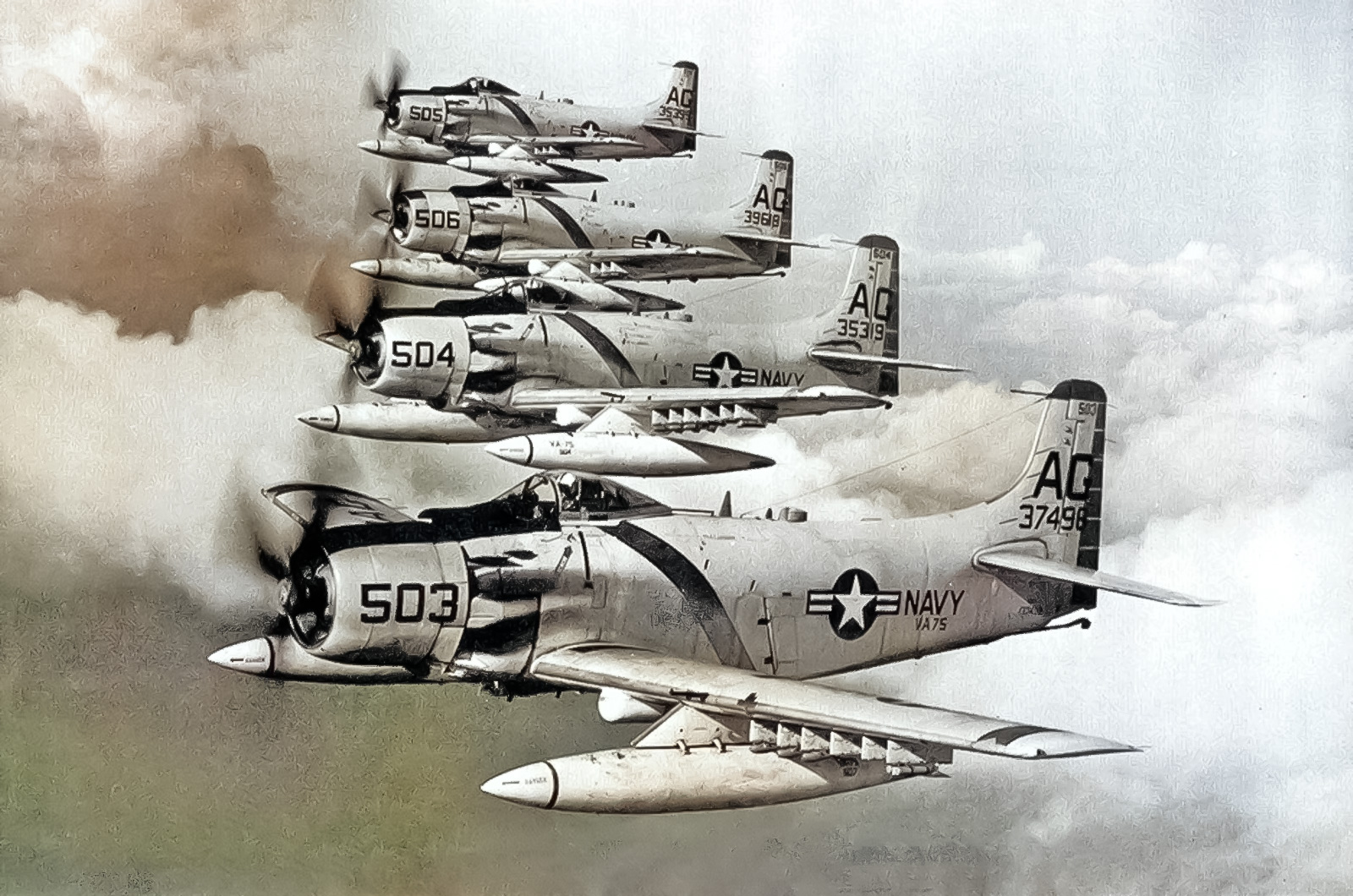
Another design that entered service too late for the war it was intended for, the Douglas Skyraider was a single-seat piston-engined aircraft that shot down MiGs. There, the similarity with the Sea Fury ends, as the A-1 was designed as a dive/torpedo bomber rather than a fighter.
Intended to replace the Avenger and the Dauntless, the XBT2D-1 Destroyer II first flew in March of 1945. By April, the US Navy had placed an order for 548 and changed the name to the AD-1 Skyraider. The success was partly due to Ed Heinemann’s design team’s obsession with weight reduction and simplicity.
10: Douglas A-1 Skyraider
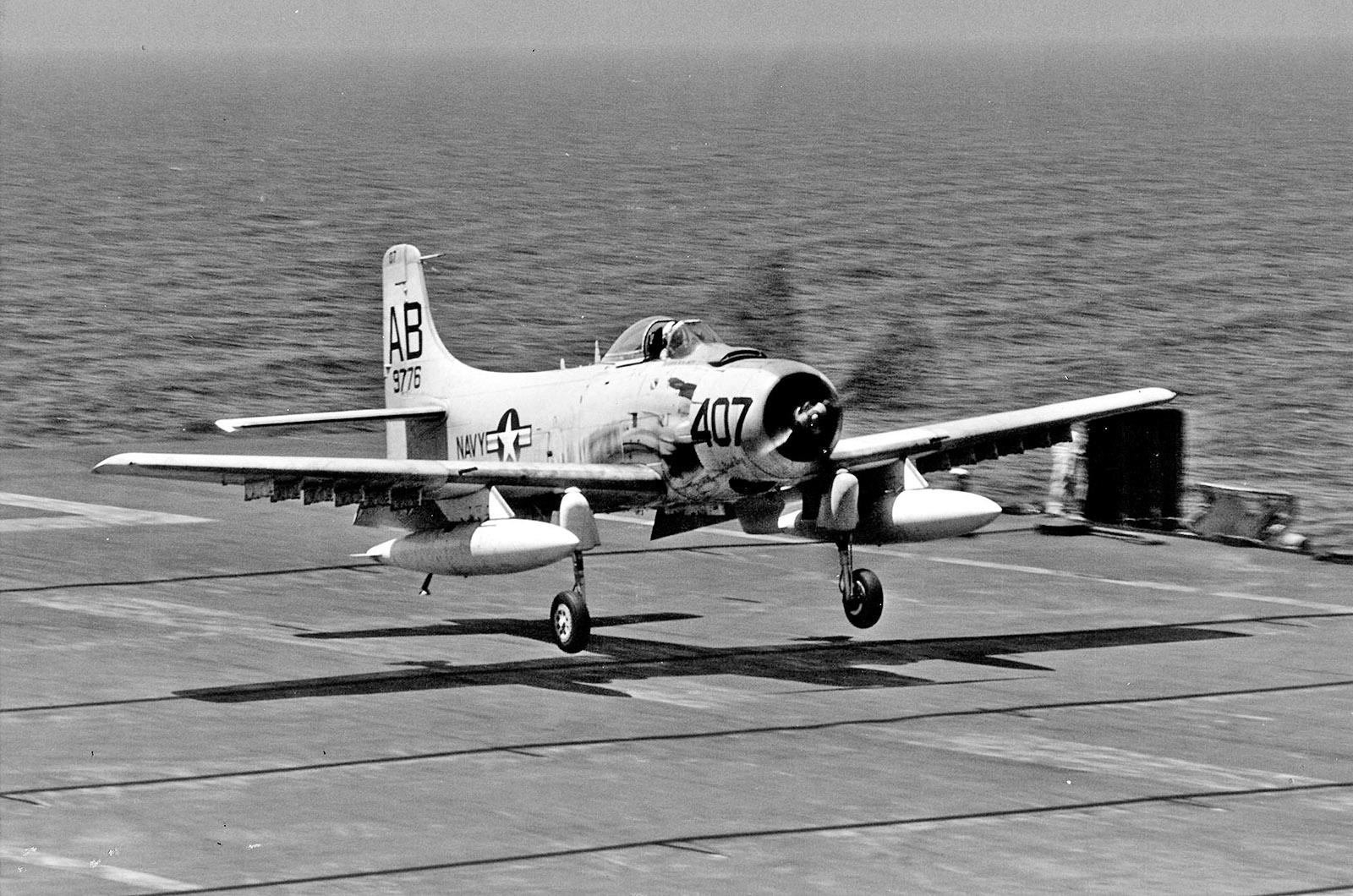
In total, the team saved 1800 lb (818kg) enabling the Skyraider to carry 8000 lb (3636kg) of weaponry, and in something of a worrying trend for the US Navy this included plans for one way trips with a nuclear weapon. Thanks to its promise and relatively low-cost, orders for the AD-1 were not cut back at the end of the Second World War and the first squadron was formed in December 1946.
With the invasion of South Korea Skyraiders were soon in action, conducting ground attack and minelaying operations. Remaining in service until 1968 AD-1s were also active in Vietnam, where, as well as attack, close air support, and rescue missions they shot down two MiG-17 jets. The Skyraider’s only other naval user was Britain’s Royal Navy, which operated it in the Airborne Early Warning role.
9: Douglas A-4 Skyhawk




Add your comment