Currently reading: Top 10: Totally bizarre engines fitted to aircraft

Top 10: Totally bizarre engines fitted to aircraft

There have been many strange ways to power an aeroplane.

In this story we’re going to look at 10 of the strangest methods. There wasn’t room to get into several other fascinating engines, fuels or methods of propulsion, including diesel (used on some German and Soviet bombers), steam (used in various high and low-tech ways) and mind-boggling things like ion-propelled aircraft, so maybe we will have to return to this rather wild subject. Here are 10 aircraft with totally bizarre engines…


10: Wankel

 Wankel

Perhaps the Wankel is not really a ‘rotary engine’, though it is often described as one. In a true rotary, the entire engine rotates around a fixed camshaft, but the Wankel uses a rotor in a stationary combustion chamber. With no oscillating pistons, Wankels are incredibly smooth and, therefore quiet, a compelling feature for any aircraft that doesn’t want to be heard.

The first aeronautical application of the Wankel was the 1970 Wright Aeronautical RC-2-60 fitted in the late Lockheed Q-Star, the prototype of an ultra-quiet surveillance aircraft for the Vietnam war, intended to be inaudible at 1500 feet and therefore able to snoop on Vietcong activities at night without being noticed.


10: Wankel

 Wankel

The Wankel-powered Q-Star did not progress to production, and neither did one of the most unlikely aircraft of the 1970s: the Citroën RE-2 helicopter (pictured). Citroen had invested hugely and unsuccessfully in Wankel-powered car development, so seeking to recoup some of the costs, Citroën bizarrely decided to develop a Wankel-powered helicopter.

The lightweight Citroën helicopter demonstrated potential in testing, but sadly, it decided to ditch the project. The Wankel finally found its niche, though; today, several products (mostly drones) use Wankel engines, primarily due to their quietness but also because they can be impressively compact and minimise the vibration of sensitive sensors.


9: Lift jets
 Lift jets

The dependency on long runways makes land-based military aircraft vulnerable to airfield attacks, and carrier aircraft dependent on dangerous landings and take-offs from massive ships. For these reasons, the ability to perform vertical take-offs and landings (VTOL) has long been desirable.

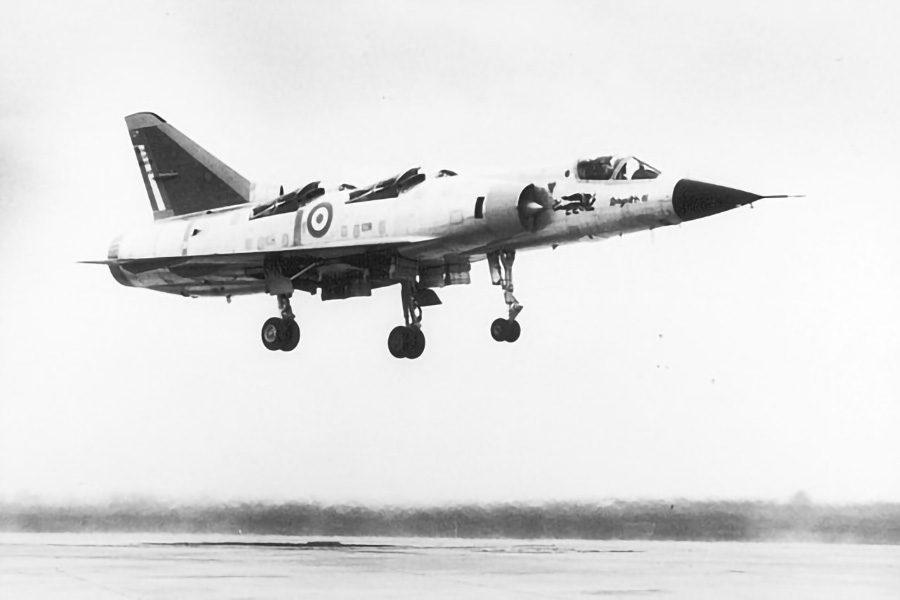
One solution that was repeatedly tried was small, dedicated ‘lift fans’. A lift jet is a small engine mounted vertically and used exclusively for take-off and landing. There are several advantages of this approach, one being it is relatively easy to create a VTOL aircraft that is supersonic, such as the Mirage IIIV (pictured).


9: Lift jets
 Lift jets

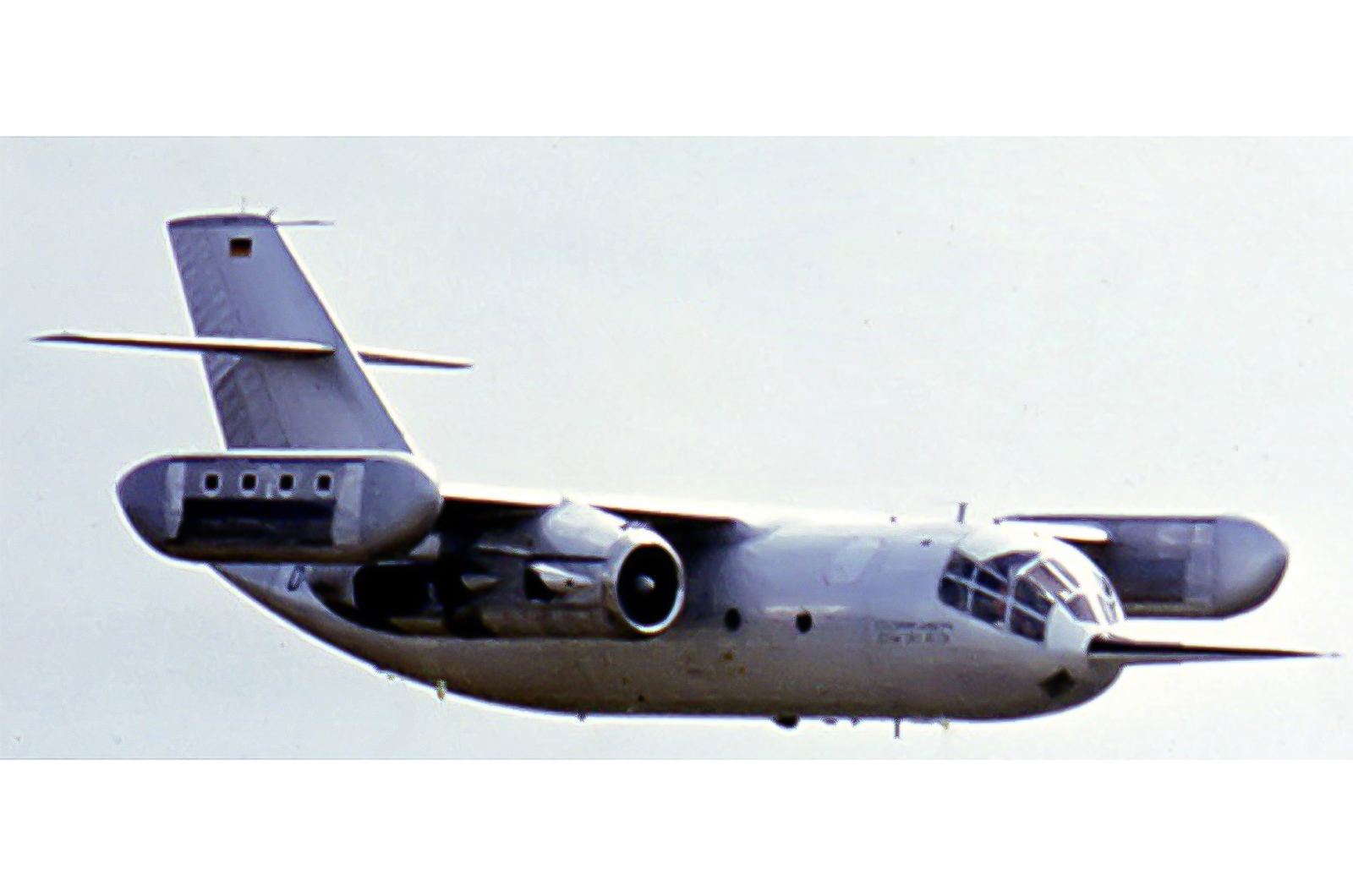
Lift jets were fitted to several experimental prototypes, but only the Soviet Yakovlev Yak-38 ‘Forger’ (essentially a rather inferior Sea Harrier) used them operationally. The most ambitious to fly was the Dornier Do 31 tactical transport (pictured), which combined two Harrier-type Pegasus-style engines with no fewer than eight lift jets!

The chief disadvantage of lift jets is the enormous deadweight and loss of internal volume to a part that is only used for take-off and landing, as well as increased maintenance and parts needs. The US Lockheed Martin F-35B Lightning II uses a ‘lift-fan’ driven by the main engine (combined with a rear three-bearing swivel nozzle).

Back to top

8: Ramjets, scramjets and tip jets

 Ramjets, scramjets and tip jets

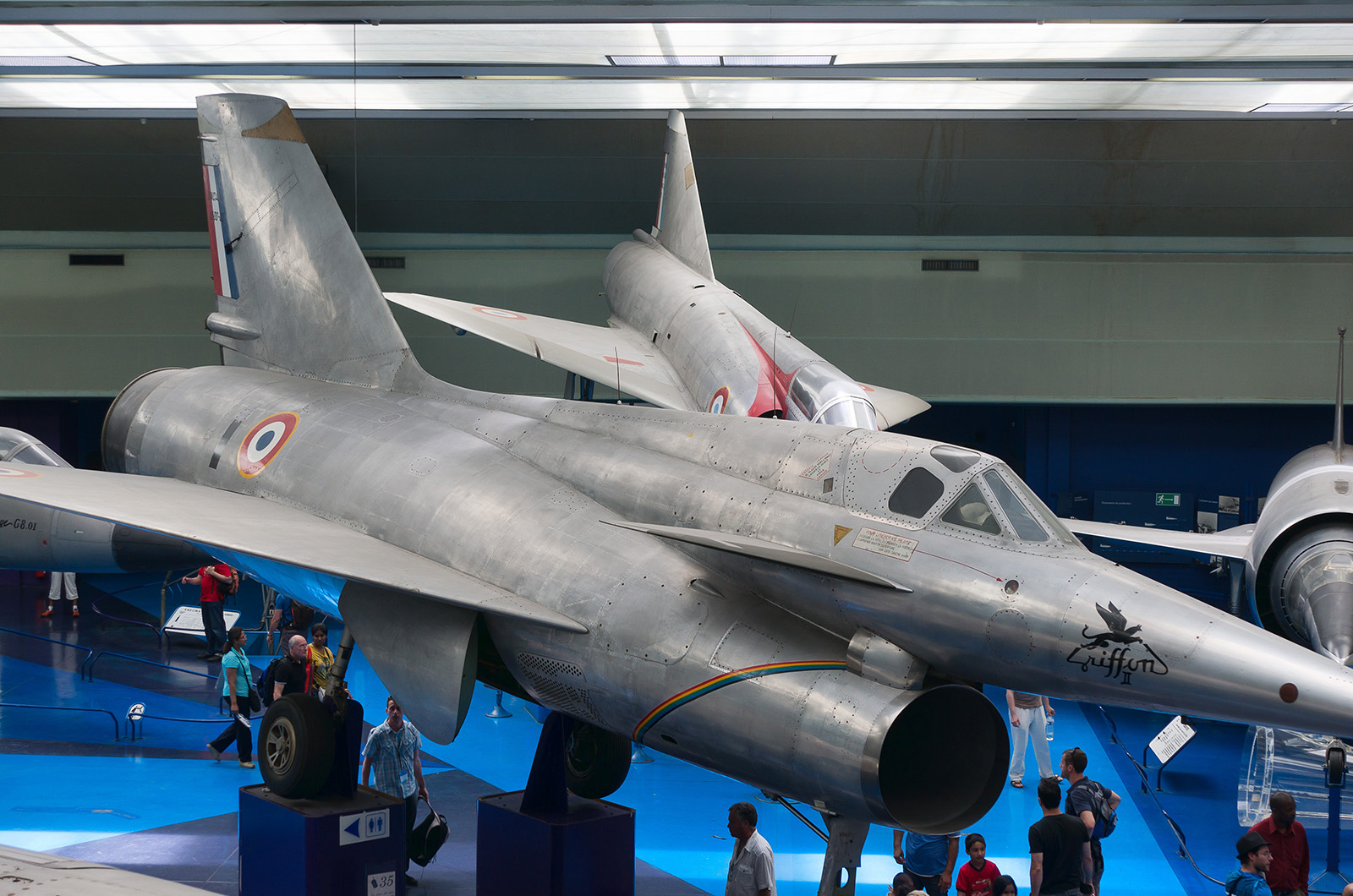
The ramjet is a simple form of a jet that requires the intake of fast air to function. It is ideal for fast aircraft launched from a mothership or missiles launched from a fast aircraft. Though simple and efficient for high-speed flight, its chief disadvantage is the inability to start with static air. The spectacular Nord 1500 Griffon (pictured) had a ramjet and a turbojet.

Unlike a ramjet, a scramjet does not slow the air down before combustion. A scramjet has no shock cone (a body that slows the air), and is very efficient at very high speeds. The Boeing X-51 Waverider was an unmanned research scramjet experimental aircraft for flight at extreme speeds.


8: Ramjets, scramjets and tip jets

 Ramjets, scramjets and tip jets

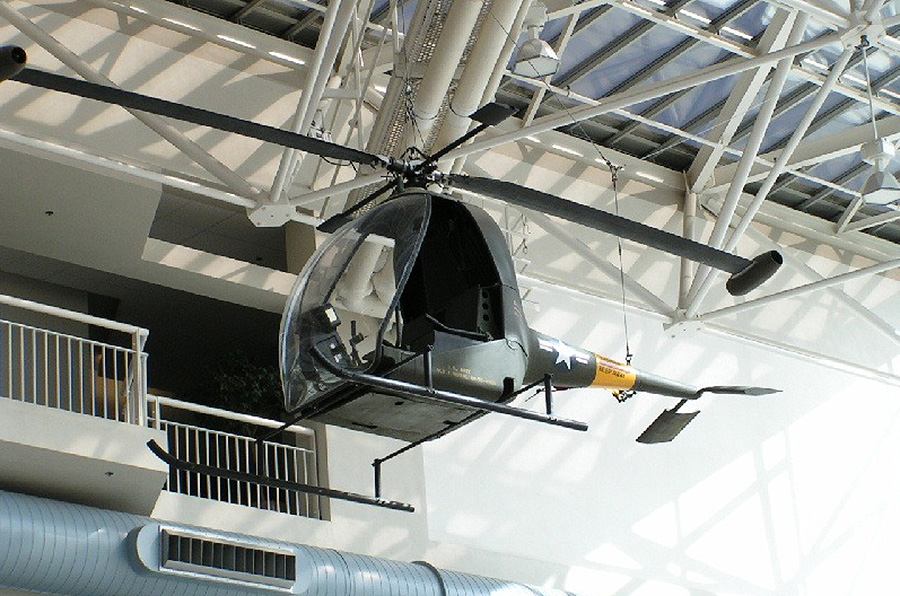
Helicopters are complex machines, but replacing the transmission system and piston (and later turbine) engines with tip ramjets created a far lighter, more straightforward solution. Indeed, the YH-32 Hornet (pictured) enjoyed 90 horsepower (68kW) from two ramjets mounted on the rotor tips, weighing only 13 pounds (5.9kg).

Though the ramjet is among the simplest form of jet propulsion as it doesn’t require fans, it is also incredibly noisy and thirsty. Though its terrible range made the H-32 an impractical vehicle for military operations, it did much to pioneer US helicopter gunships.


7: Riout 102T Alérion

 Riout 102T Alérion

French engineer René Louis Riout built his first flapping wing aircraft in 1913, the DuBois-Riout. He managed to get the machine off the ground in 1916, but it crashed almost immediately. Undeterred, Riout continued to develop concepts for flapping-wing aircraft (ornithopters).

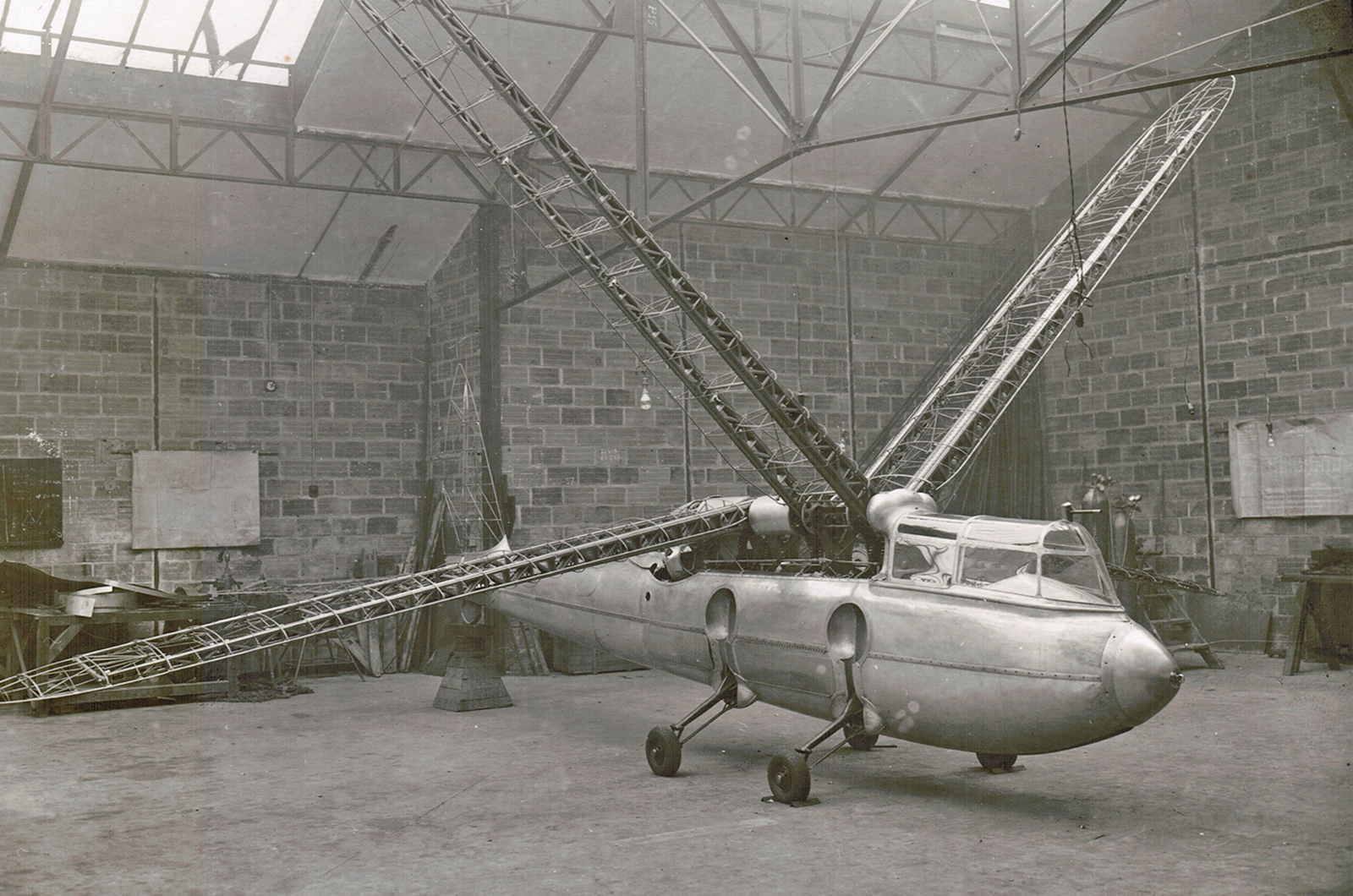
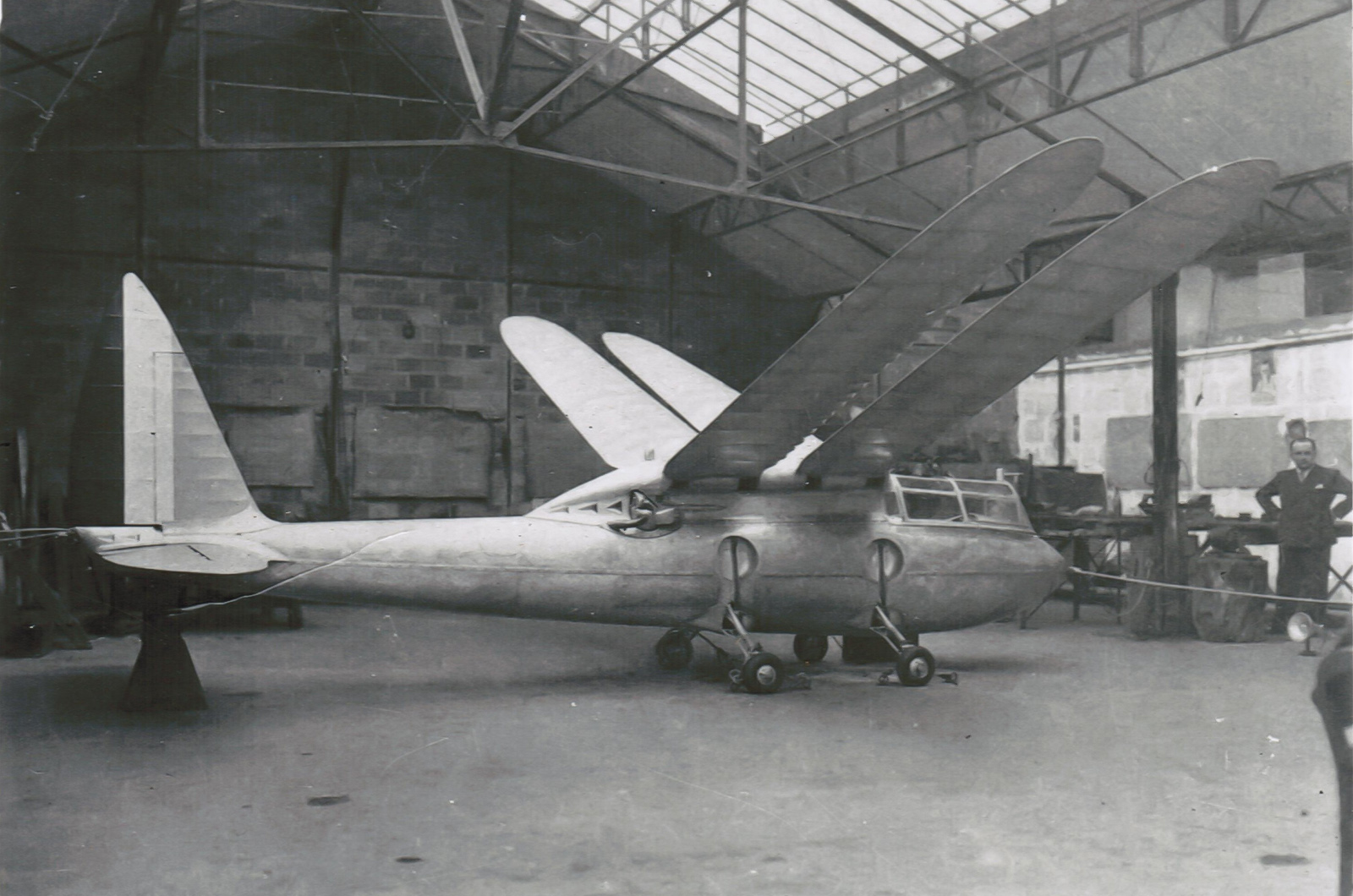
And so, the Riout 102T Alerion was born (or hatched). Its fuselage was made of tubular steel and covered with aluminium. The closed cockpit was located at the very front of the machine, in the nose and the engine, a small V-twin engine was installed behind the pilot and the attachment point of the four flapping wings.


7: Riout 102T Alérion

 Riout 102T Alérion

Back to top

The aircraft was equipped with four small retractable wheels and four wings operating in pairs. By early 1938, construction of the Alerion was completed and it was moved to Chalais-Meudon (an aeronautical research and development centre to the southwest of Paris).

Wind tunnel testing began with the wings stationary, then later flapping, before the final stage of deformation was tested (this deformation produces thrust to propel the aircraft). The wings gave way under the wind tunnel's rigours combined with the flapping's violence. The machine was not repaired – and it never flew.


6: Rockets

 Rockets

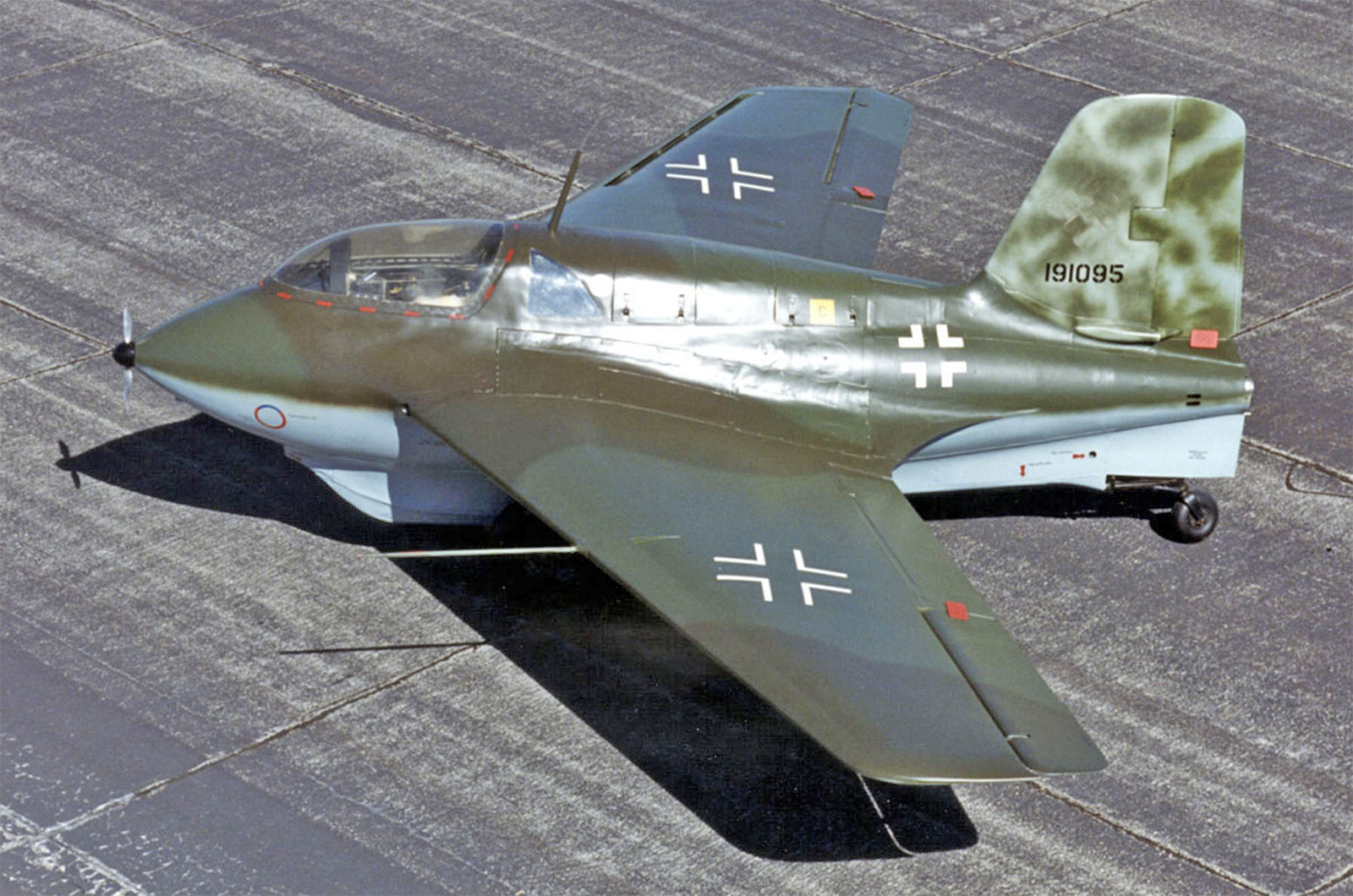
Rockets can offer tremendous thrust and speeds at any altitude you like, but they come with some severe limitations and, often, safety concerns. The Opel RAK.1, the first purpose-designed rocket plane flew on September 30, 1929. It reached a top speed of 150 km/h (93 mph).

The first operational military rocket-powered aircraft was the Messerschmitt 163 Komet interceptor, the fastest aircraft of World War 2, with a top speed of around 659 miles per hour (1054 km/h), around 200mph (322km/h) faster than the swiftest piston-engined fighters. It had an endurance of minutes and landed on skids.


6: Rocket

 Rocket

Whereas most fighters of the time had a climb rate of around 3000 feet per minute, the rocket-powered Me 163 clawed upwards at an astonishing 16,000 feet per minute. Pilots of the time were ill-equipped to understand what was happening at such extreme climb rates and speeds.

The Bachem Ba 349 Natter was essentially a manned surface-to-air rocket-powered missile, developed in 1943 to counter the mounting Allied bombing of Germany. It first flew with a human on board in March 1945, but crashed after a minute or so, killing the pilot.

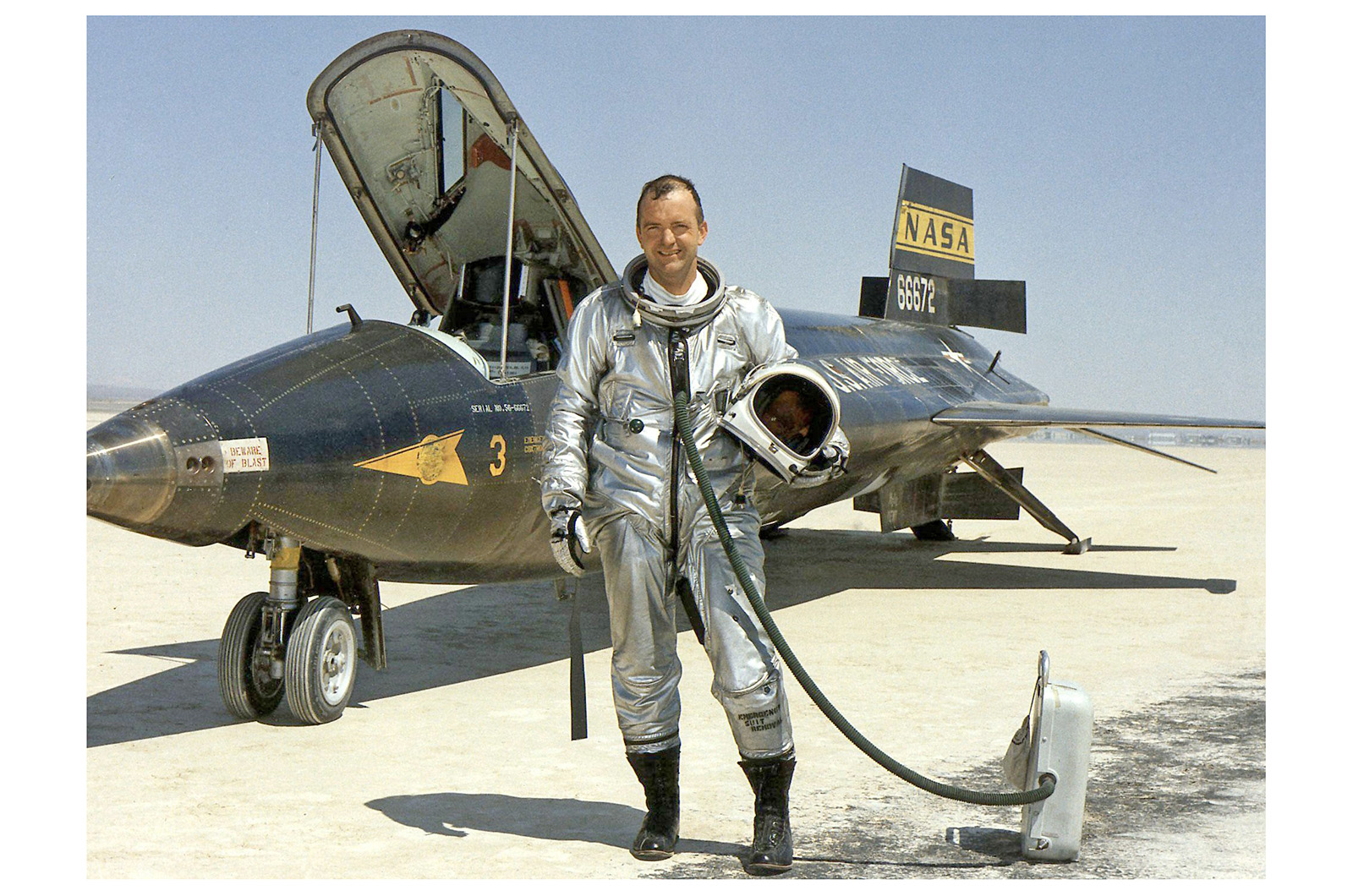
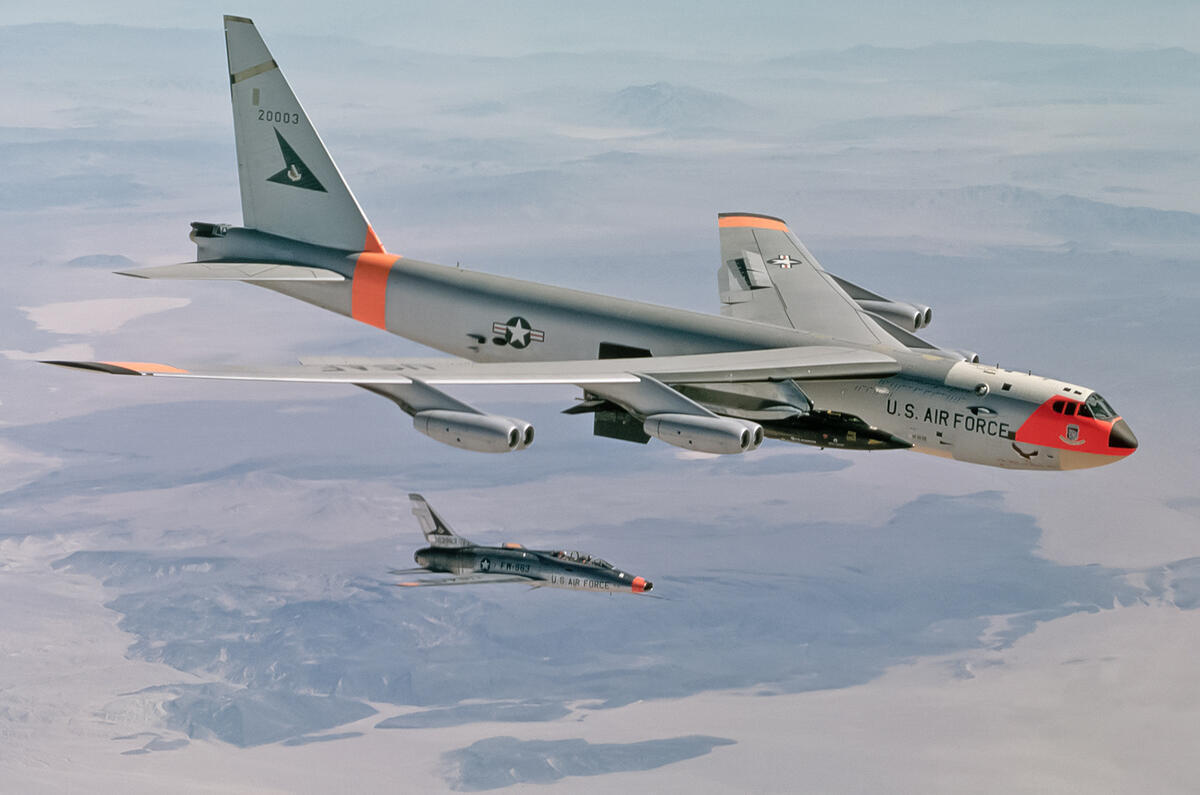
In the early days of jet aircraft, some jet aircraft were designed with an auxiliary rocket, often to increase the climb rate . The logistical and safety concerns of rocket fuel meant designers were very happy to rely on pure jet propulsion once engines had sufficient power. Rockets continued to be used for ultra-performance test aircraft like the North American X-15 (pictured).

Back to top

5: Pulse jets

 Pulse jets

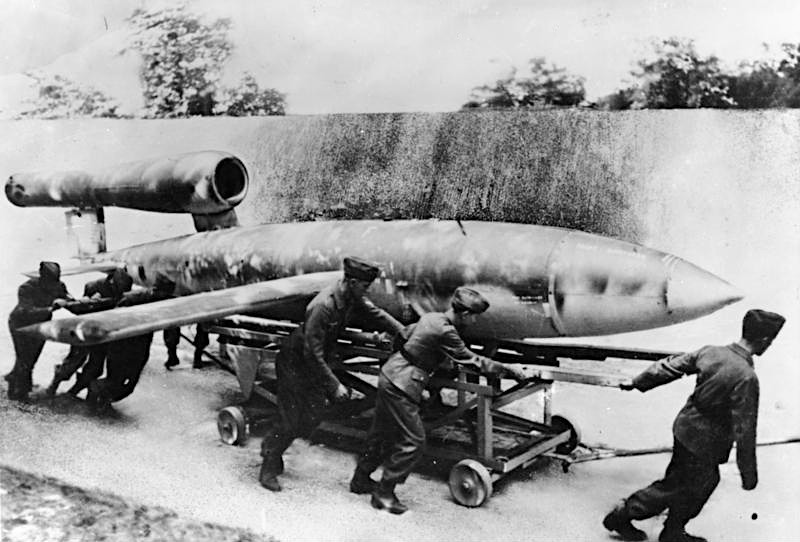
Pulse jets are one of the simplest types of jet propulsion. Air coming through a one-way valve is combusted in pulses and then released through a nozzle; the low pressure created by the expulsion is used to draw more air in. The pulsing nature of the device results in a distinctive buzzing sound.

Though simple and capable of high speeds, the pulsejet is loud and creates a great deal of vibration. The American engineer Robert Goddard (1882-1945) created a pulsejet engine in 1931 and rather spectacularly demonstrated it with a jet-propelled bicycle. The best-known example is the Argus As 109-014, used to propel Nazi Germany's Fiesler Fi 103 cruise missile, better known as the V-1.


5: Pulse jets

 Pulse jets

The Fieseler Fi 103R Reichenberg, was a crewed version of the V-1. It was intended to be used as a human-guided cruise missile for attacks against the advancing Allies. On 15 March 1945, it was decreed that such missions were not part of the German warrior tradition, and the Reichenberg unit was disbanded.

Germany also tried to develop several other pulsejet fighters, but the engine proved unsuitable.  Pulsejets were also used to propel target drones, boost a piston-engined fighter’s performance (the Soviet Lavochkin La-9RD), and an experimental helicopter (the XH-26 Jet Jeep), among other aircraft. With today’s growing interest in low-cost engines for decoys and one-way attack drones, the pulsejet may reappear.


4: Humans and pedals

 Humans and pedals

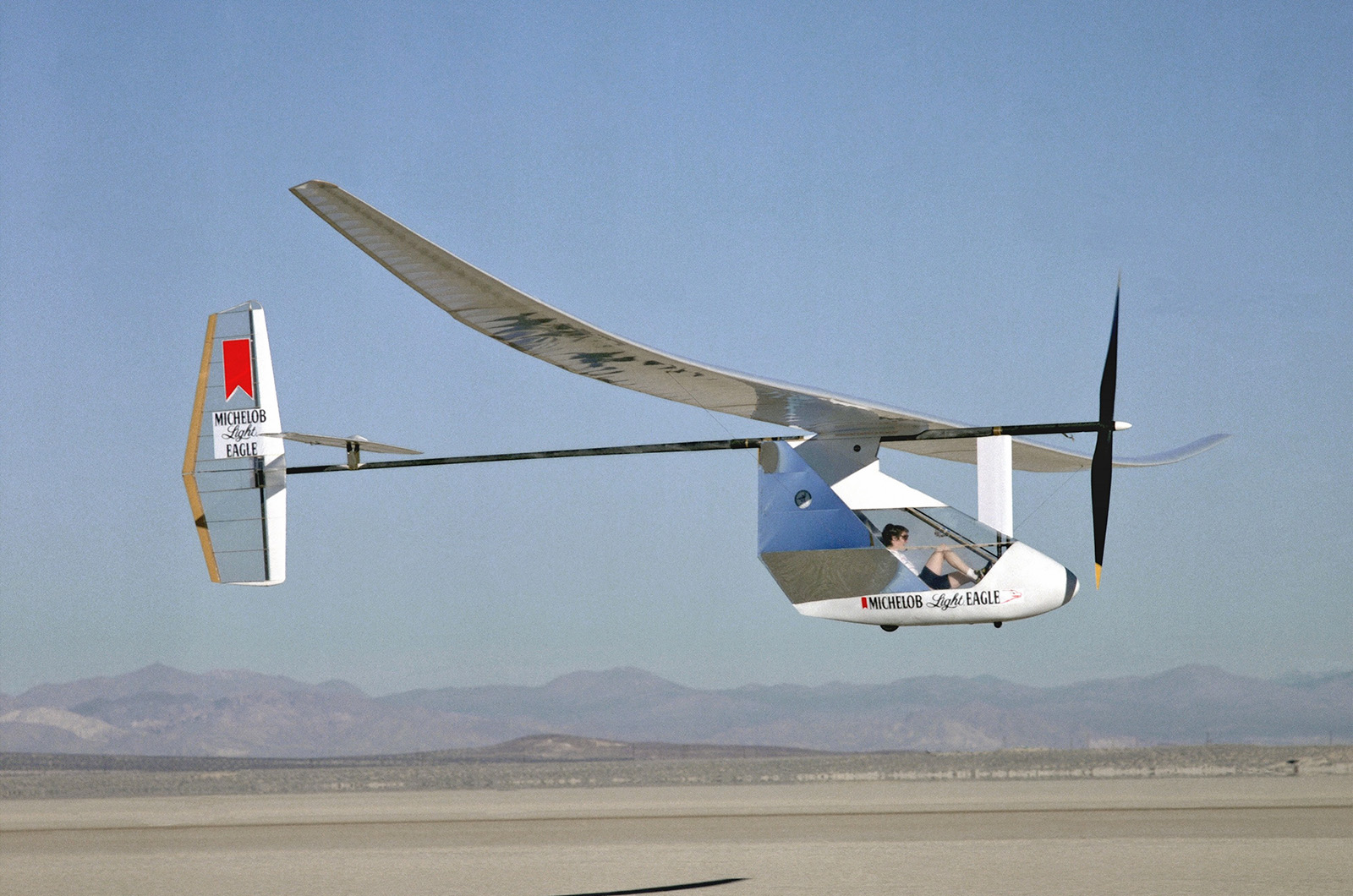
The earliest efforts at human flights involved overconfident attempts at leaping out of towers or off cliffs, with frantically flapping arms, often with feathers attached. These inevitably ended badly, but that does not mean that human-powered flight is impossible, but peddling was better than flapping.

Several hardy souls have decided that the generally earthbound state of “the most civilised conveyance known to man”, the bicycle, is a ludicrous hindrance and have pedalled their way to the heavens with hugely differing levels of success: usually briefly and invariably slowly.

Back to top

PICTURE: MIT Daedalus, from 1988


4: Humans and pedals

 Humans and pedals

The first human-powered flight to be officially witnessed and accredited (and filmed for a Pathé news reel just to really hammer the point home) was achieved by SUMPAC (Southampton University Man Powered Aircraft) in England, which had been built by students between 1960 and 1961 to make a bid for the Kremer prize.

To pilot the craft, a professional cyclist was to be trained how to fly a glider by the exceptionally talented pilot Derek Piggott (1922-2019). As it turned out, the cyclist turned out to be untrainable and Piggott ended up gamely pedalling SUMPAC into the air, and the history books, himself.


3: Stipa-Caproni

 Stipa-Caproni

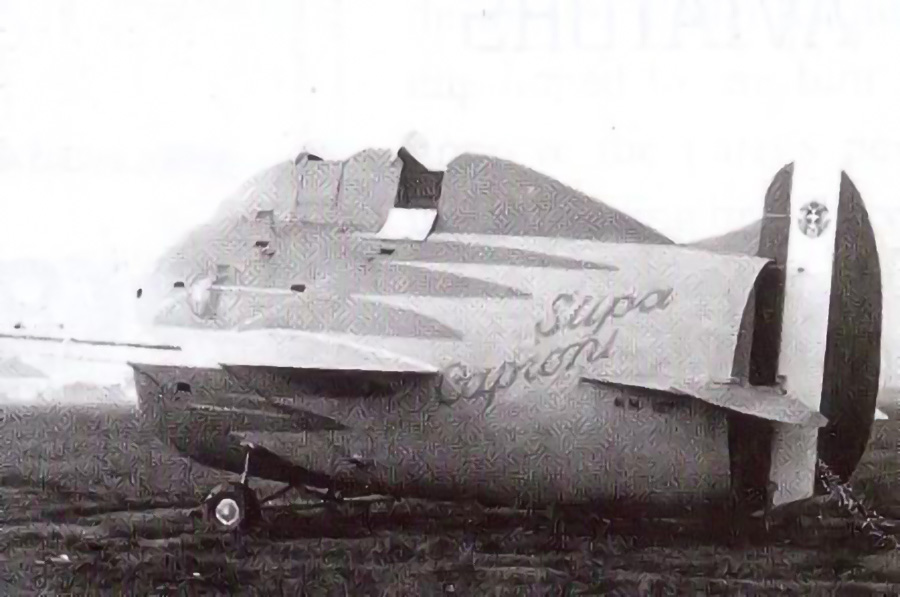
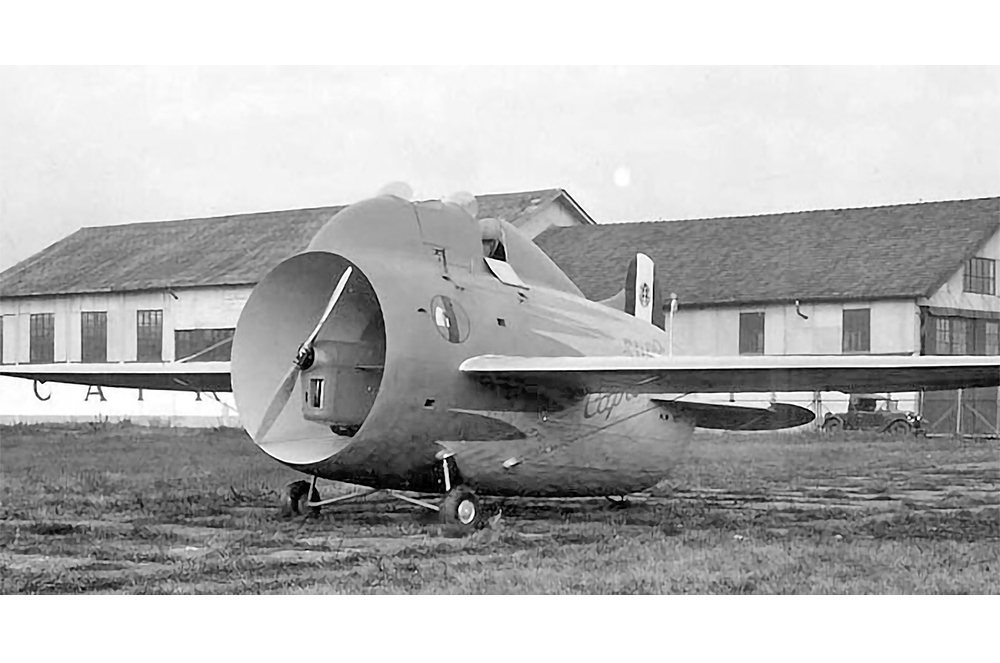
A moving fluid, such as air, speeds up as it flows through a constricted section of a pipe. Italian engineer and aircraft designer Luigi Stipa (1900-1992) believed he could harness this effect to create a more efficient aeroplane. For his new design he ‘intubed’ the propeller in a duct, creating an aircraft of grotesque barrel-like appearance.

Though the aircraft, which flew in 1932, had fine low-speed handling, was quiet and had a high rate of climb for an aircraft of similar power and wing loading, most of the benefits were cancelled out by the increased drag of the overall shape, and so the concept was not pursued further.


3: Stipa-Caproni

 Stipa-Caproni

Though not successful, the work informed the ‘motor-jet’-powered Caproni Campini N.1, an early jet aircraft that first flew in 1940. A motorjet is a type of proto jet engine which uses a piston engine to drive its compressor stage.

The Stipa-Caproni looked comical, with an extremely stubby shape more redolent of a cartoon image of an aeroplane than an actual experimental design. Ducted fans did not disappear, later appearing on airships, drones, hovercraft, and other experimental aircraft.


2: Nuclear

 Nuclear

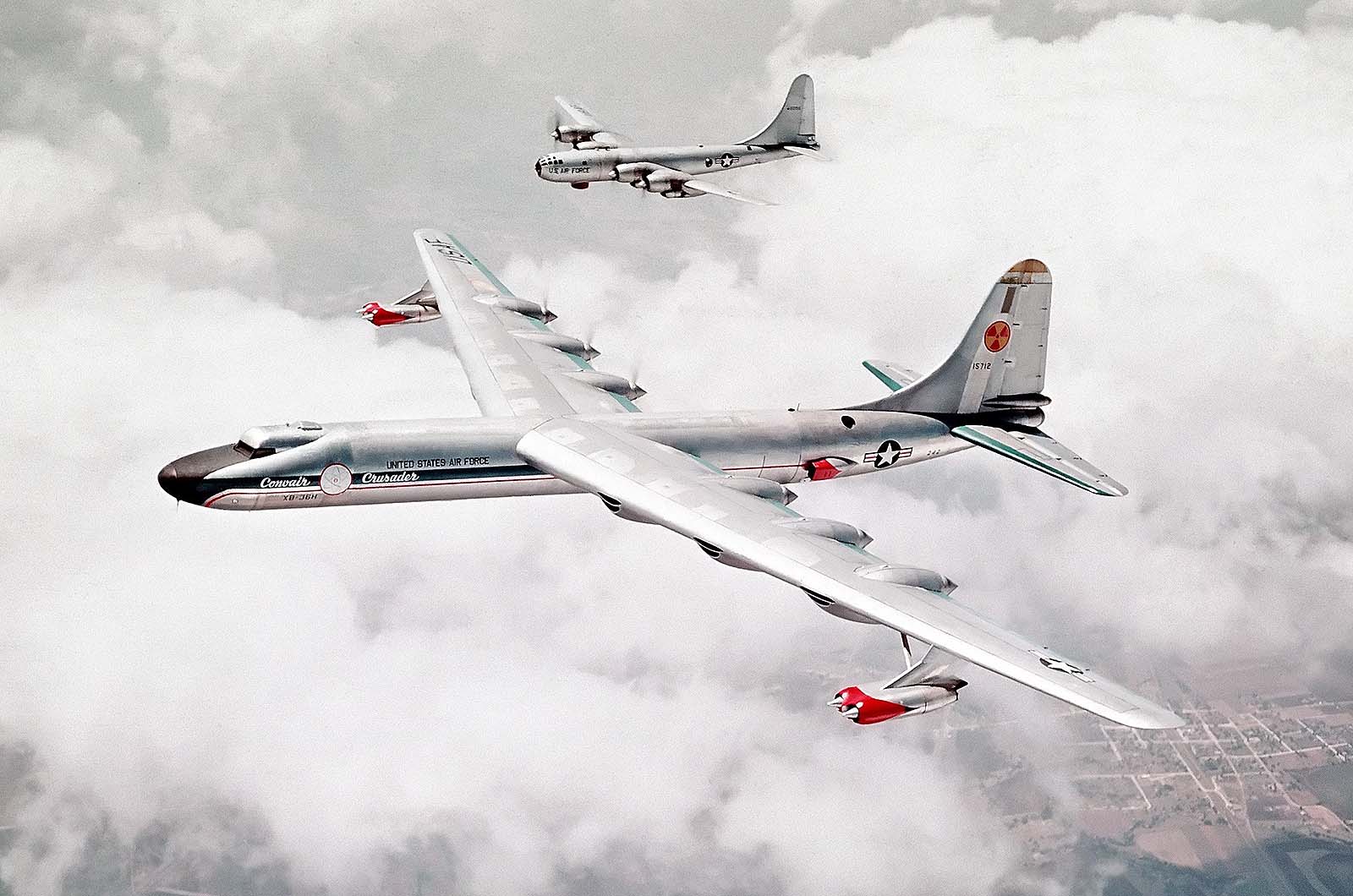
The most alarming form of aircraft propulsion is nuclear. Nuclear power offers almost unlimited range, so it was a tempting technology for building a nuclear-armed bomber in the air for a prolonged period to act in the deterrent role. The US and USSR studied the technology producing a variety of technology testbed aircraft.

Back to top

The NB-36H flew with an active nuclear reactor but it was not used for propulsive purposes, but to test crew shielding from radiation. The standard B-36 aircrew, plus two nuclear technicians were housed  in an 11-ton section lined with lead and rubber. A monitoring system dubbed "Project Halitosis" measured the emission of radioactive gases from the reactor.


2: Nuclear

 Nuclear

A major issue, never solved, was how to shield the crew to prevent radiation sickness effectively as well as the very worrying implications of a crash. With the arrival of intercontinental ballistic missile (ICBM), the desire for bombers of limitless range was reduced. Just counting US research efforts alone, a staggering $1 billion was spent, equivalent to around $10.6 billion today.

Project Pluto was a US plan to stick a nuclear ramjet in a cruise missile. A nuclear ramjet is a type of engine that uses a nuclear reactor to heat air and create thrust. To be known as SLAM (Supersonic Low-Altitude Missile). This terrible idea was cancelled but, unfortunately is possibly alive today in Russia as the 9M730 Burevestnik (NATO reporting name: SSC-X-9 Skyfall).


1: Coal powered ramjet

 Coal powered ramjet

Alexander Lippisch (1894-1976) was a German aeronautical engineer who designed the world's first rocket-powered glider. He was also a pioneer in supersonic aerodynamics and designed the Messerschmitt Me 163 rocket-powered interceptor.

Despite the Me 163s astonishing speed and flesh-disintegrating fuel it was not his most outlandish suggestion. With Germany facing defeat in the Second World War, in desperation German aircraft designers seemingly went out of their way to conceive the barmiest possible flying machines. A contender for one of the most unlikely was the Lippisch P.13, a design intended to create a supersonic fighter.


1: Coal powered ramjet

 Coal powered ramjet

There was a need to create an aircraft that could fight on despite increasingly chronic fuel shortages by avoiding the use of conventional fuels. Lippisch suggested a coal-powered ramjet and combined it with a startling futuristic design.

Back to top

The Kronach Lorin was a small ramjet, tested on the ground in Vienna. It was intended to be used in the German interceptor planes Lippisch P.13a, and Lippisch P.13b.  Small granules of coal were to produce an even burn, carried in a basket revolving on a vertical axis at 60 rpm. The P.13 had not flown by the time Soviet forces arrived in Vienna.

Follow Joe Coles on Substack, Twitter X  or Blue Sky. His superb Hush-Kit Book of Warplanes is available here.

If you enjoyed this story, please click the Follow button above to see more like it from Autocar

Photo Licence: https://creativecommons.org/licenses/by/4.0/deed.en


Join our WhatsApp community and be the first to read about the latest news and reviews wowing the car world. Our community is the best, easiest and most direct place to tap into the minds of Autocar, and if you join you’ll also be treated to unique WhatsApp content. You can leave at any time after joining - check our full privacy policy here.

Add a comment…