Currently reading: Top 10: The Strangest Aircraft Flying Today

Top 10: The Strangest Aircraft Flying Today

Aircraft are fundamentally a weird thing, and only a commonplace sight to (some of) those born in the last hundred years.

But overexposure to the Boeing and Airbus aircraft we see flying over every day makes us forget just how odd some aircraft are. Thankfully, there are aircraft flying today so weird that we are reminded to look skyward and refresh our wonder. Here are the 10 Weirdest Aircraft Flying Today:


10: Lockheed Martin X-59 QueSST
 Lockheed Martin X-59 QueSST

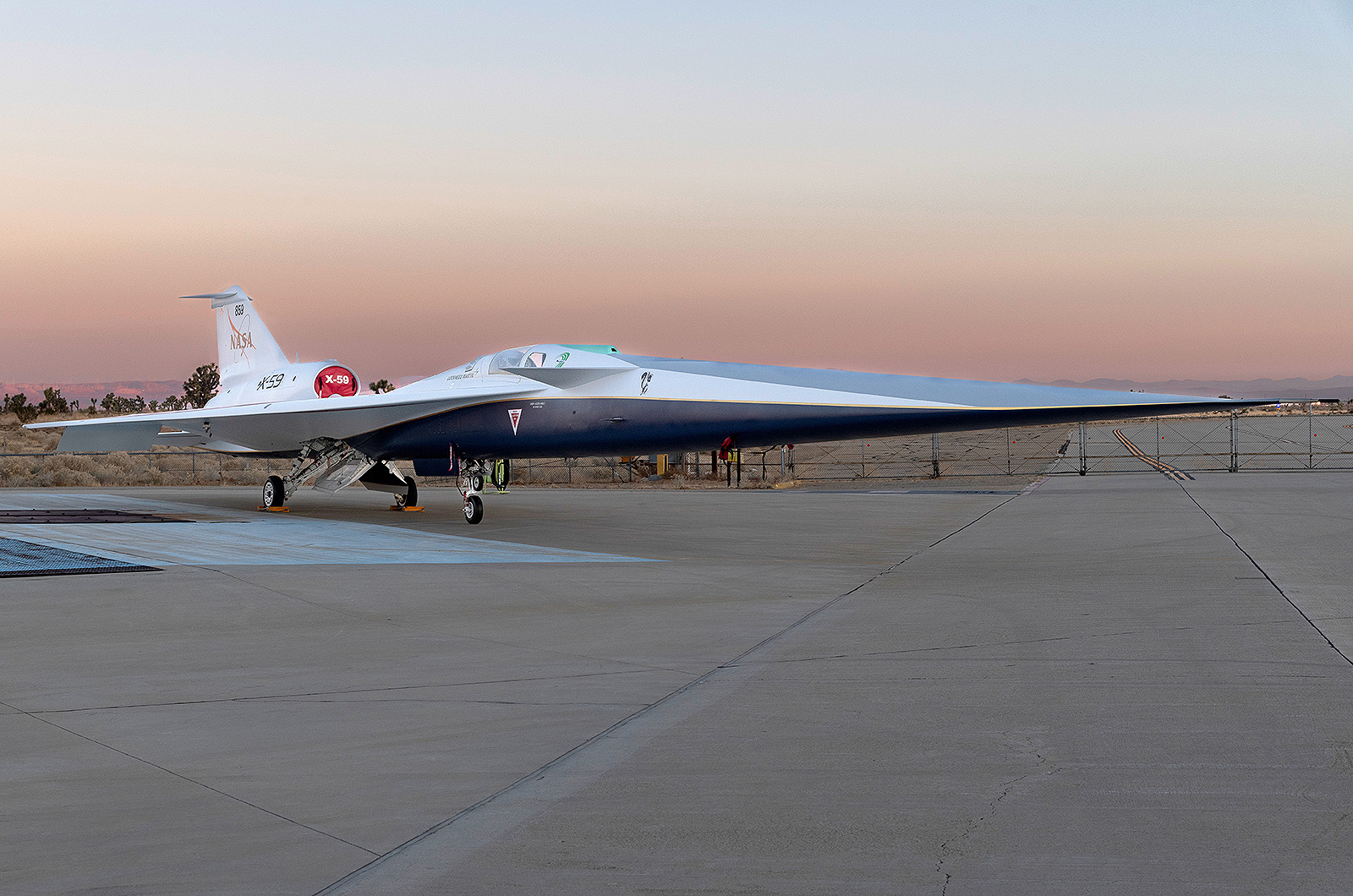
A strange, spindly aircraft developed in Lockheed Martin’s secretive Skunk Works, flew for the first time in October 2025. But why? It’s all about the double boom. Other than a tiny number of Concordes (and Tu-144s), airliners have not increased in speed since the 1960s. A major obstacle to the supersonic airliner is noise.

An aircraft travelling at the speed of sound (around 760 mph at sea level) produces a loud sonic boom. This intrusive boom is banned overland. When a plane exceeds Mach 1, it compresses the air ahead of it and generates shock waves. Our ears perceive this as a loud boom. Instead of dissipating, these waves merge into the characteristic double boom of supersonic aircraft.


10: Lockheed Martin X-59 QueSST
 Lockheed Martin X-59 QueSST

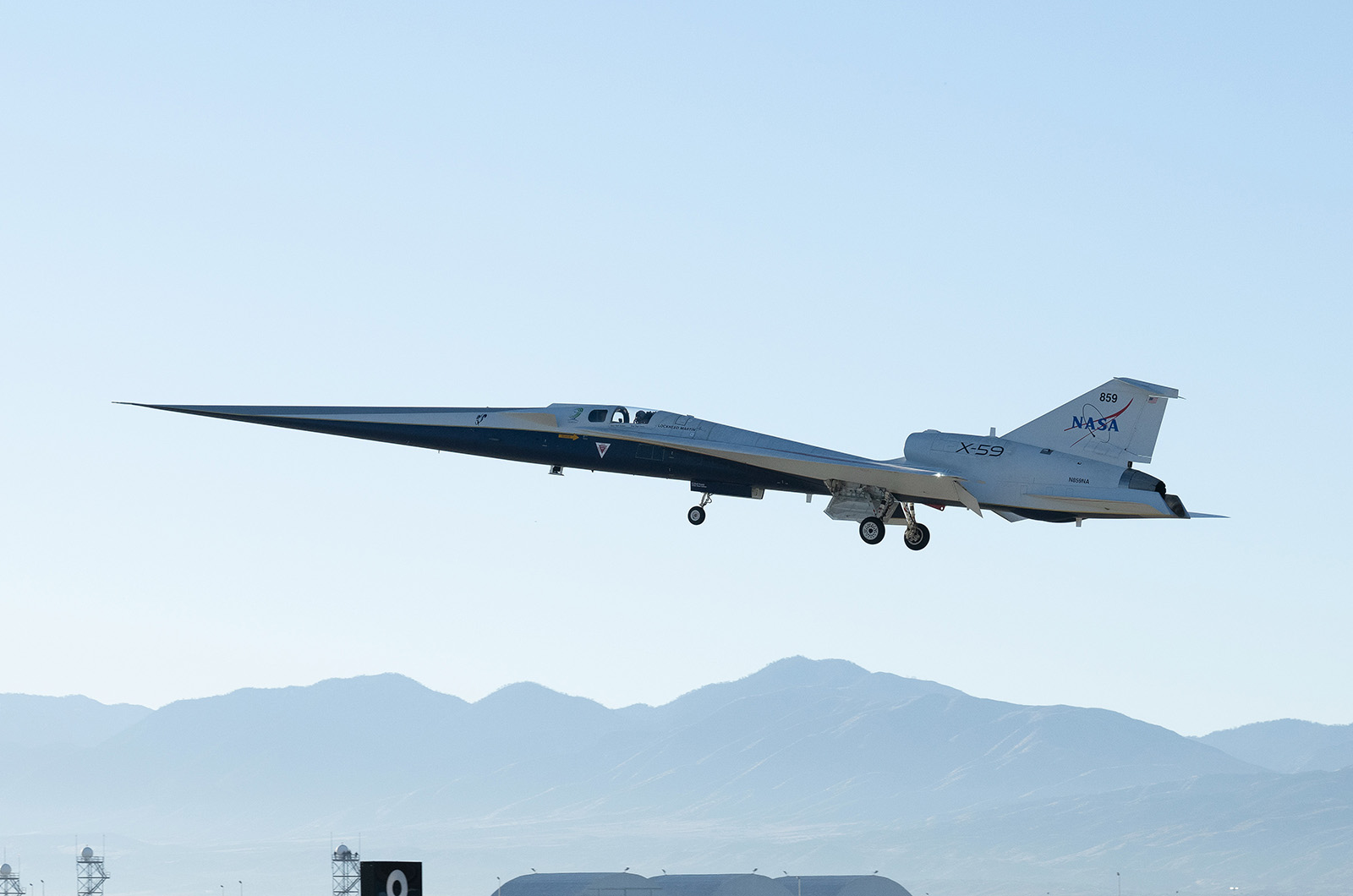
This overland ban severely limits the commercial potential of supersonic airliners—but what if this boom could be drastically reduced? The X-59’s bizarrely elongated nose, slender fuselage, engine placement, and carefully sculpted shape spread the shockwaves more evenly (by minimising and redirecting them).

NASA’s X-59 QueSST (a low-boom demonstrator) made its first flight on October 28, 2025. It is hoped that when it flies supersonically, it will produce a single “thump” rather than a loud double boom. It is not an airliner but a technology demonstrator that could one day lead to a new generation of slender, narrow-body supersonic aircraft.


9: Hybrid Air Vehicles Airlander 10
 Hybrid Air Vehicles Airlander 10

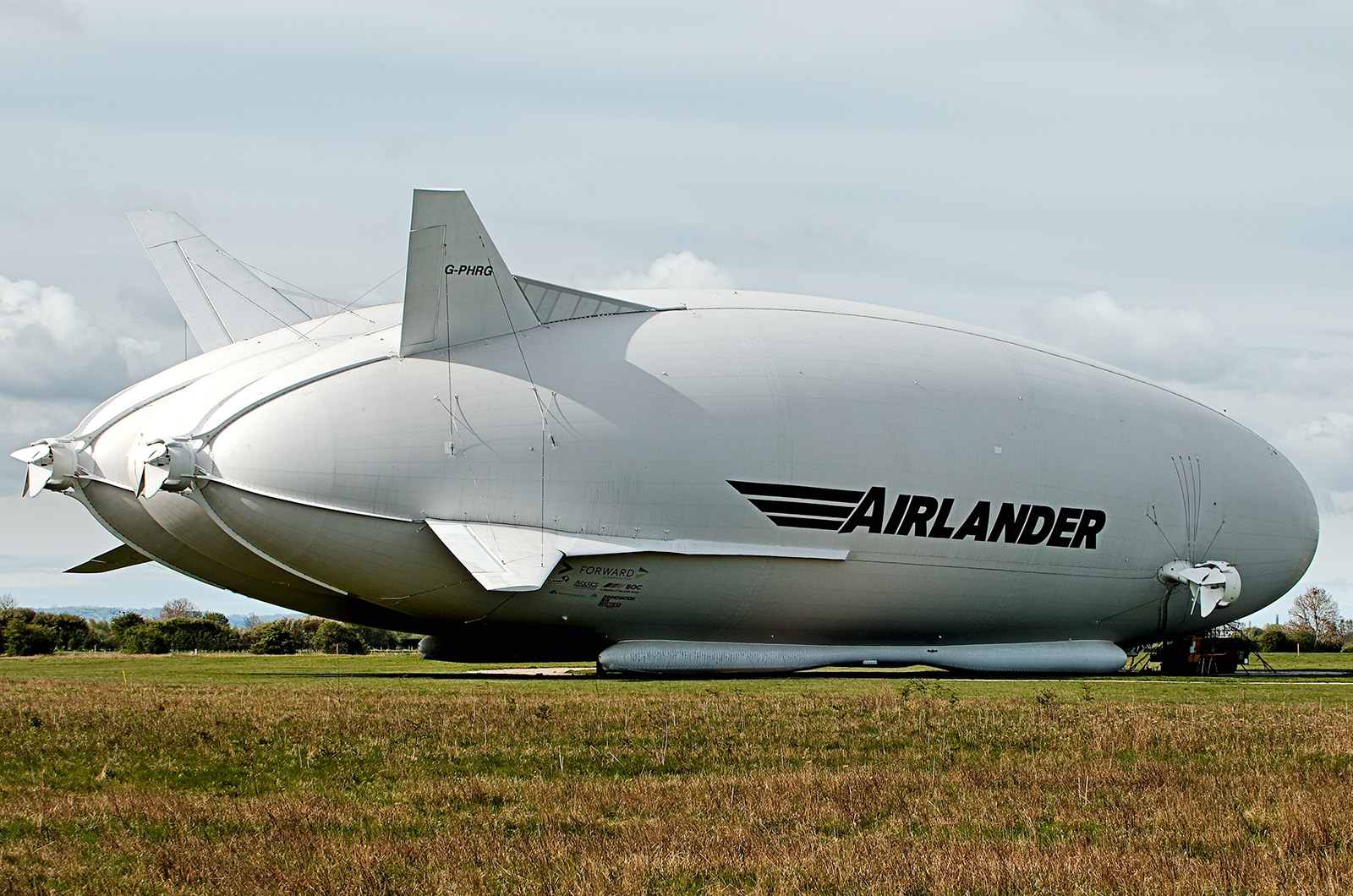
The Hybrid Air Vehicles Airlander 10 is unlike anything else in the sky. At almost 100 metres long, this immense and rather curious aircraft inevitably attracts attention for both its size and its eccentric silhouette.

In reality, the Airlander 10 is a hybrid airship, combining characteristics of lighter-than-air craft with features more commonly associated with fixed-wing aviation. Its helium-filled hull provides buoyant lift, while its broad, flattened body generates additional aerodynamic lift as it moves forward. Four propellers driven by diesel engines give it the ability to cruise steadily while carrying substantial loads.


9: Hybrid Air Vehicles Airlander 10
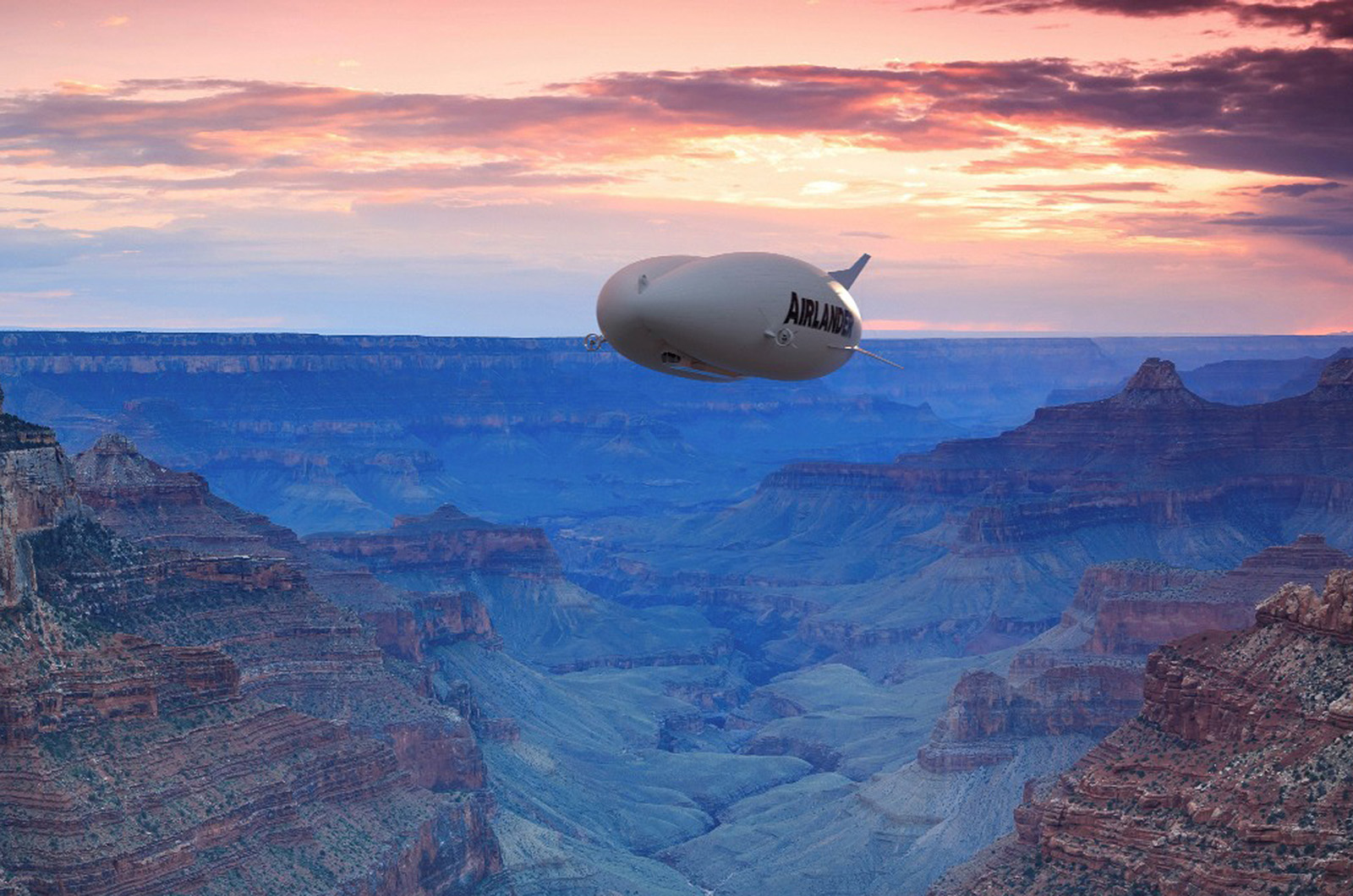
 Hybrid Air Vehicles Airlander 10

By blending aerostatic and aerodynamic lift, the aircraft can operate far more efficiently than most conventional aeroplanes. Its design also enables it to remain airborne for extended periods, making it suitable for passenger travel, cargo transport, surveillance roles, and even scientific research. Flexible landing skids allow it to operate from grass, water, ice, or unimproved terrain.

The Airlander’s origins lie in the HAV 304 prototype, which first flew in 2012 for the US Army’s LEMV programme. After that project ended, Hybrid Air Vehicles brought the craft back to the UK, re-engineered it as the Airlander 10, and conducted test flights in 2016–17. Certification work has advanced steadily, with the company aiming for commercial operations later this decade.

Back to top

8: Transavia PL-12 Airtruk

 Transavia PL-12 Airtruk

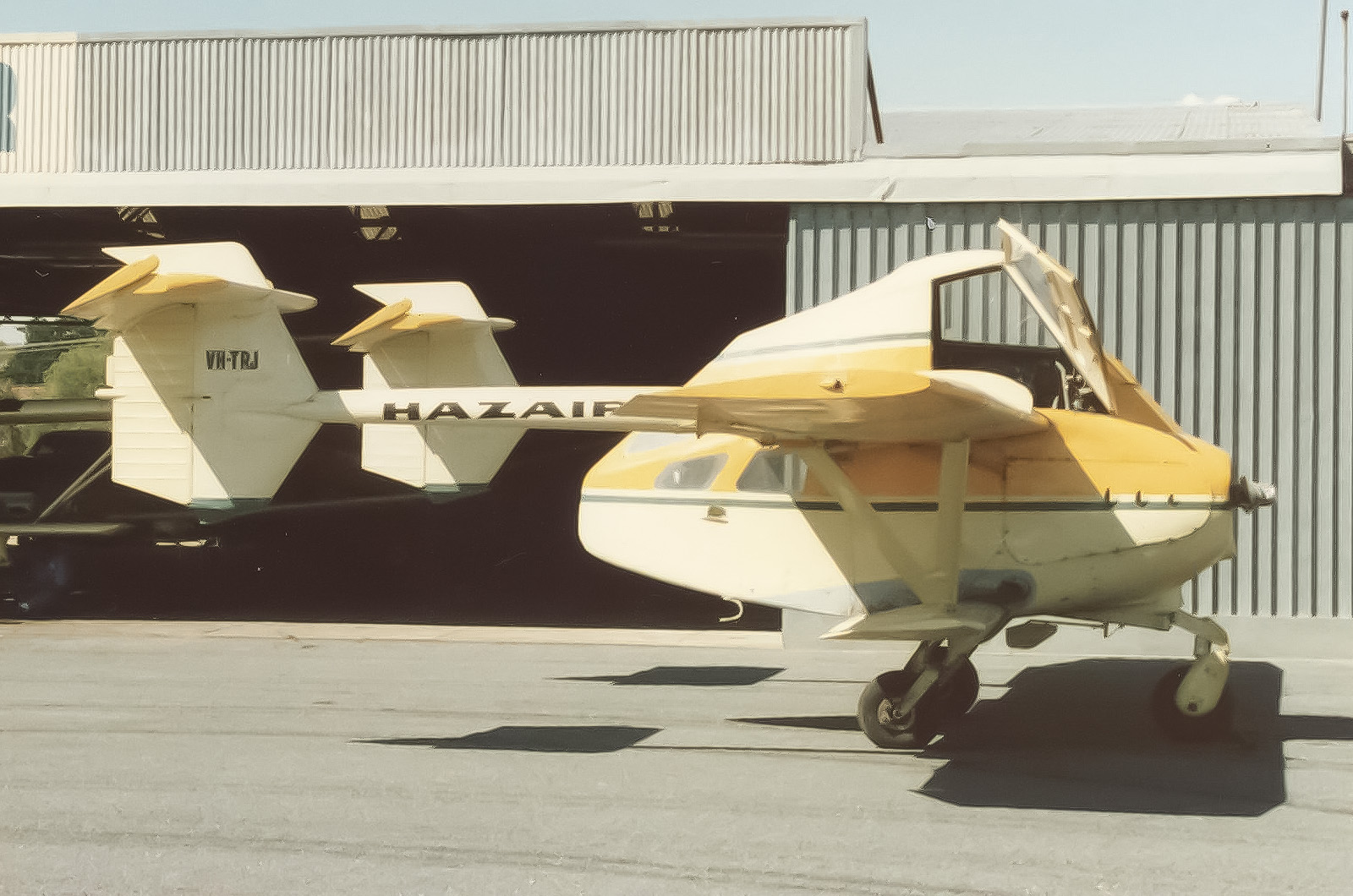
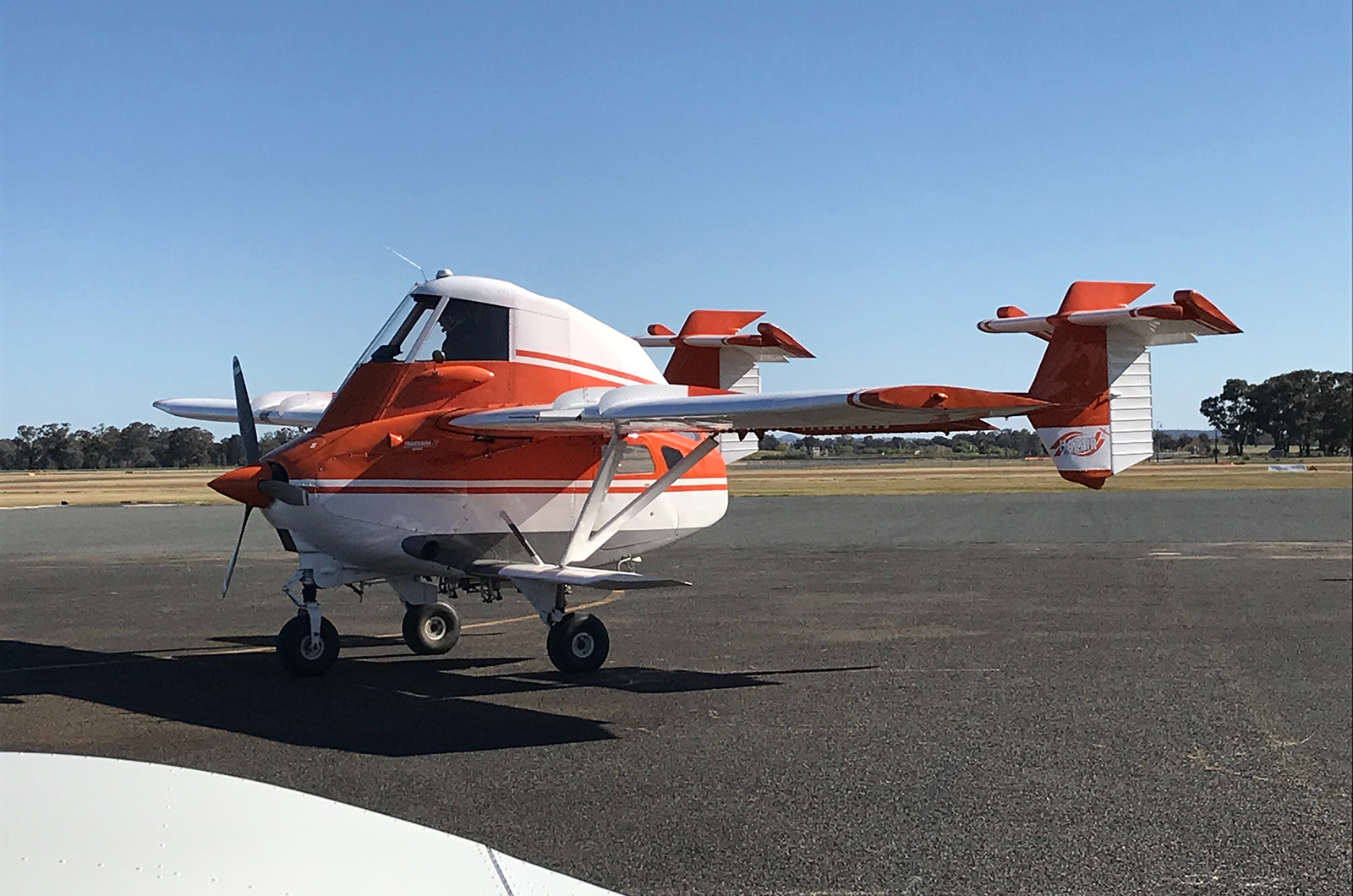
The Transavia PL-12 Airtruk remains one of the most bizarre-looking aircraft ever to take to the skies, its squat fuselage, twin-boom tail and stilt-like undercarriage giving it an eccentric, almost cartoonish profile. It is odd-looking to the point that if you post an image online, you can be sure to see accusations that are AI-generated in the comments section.

The Airtruk was an Australian agricultural aircraft developed in the 1960s, designed for crop-dusting and aerial topdressing. Its compact forward fuselage was a clever solution, shaped to maximise downward visibility for pilots working low over fields, while the elevated tail booms kept control surfaces clear of dust and debris.


8: Transavia PL-12 Airtruk

 Transavia PL-12 Airtruk

Every quirk of the Airtruk’s design served a specific agricultural need. The wide-open nose eased loading of fertiliser, the single-seat cockpit improved pilot focus, and the tricycle undercarriage provided stability on rough rural strips. Even the ungainly silhouette helped maintain predictable airflow during low-speed operations, crucial for safe precision flying.

The Airtruk first flew in 1965, entering production shortly afterwards. It served throughout Australia, New Zealand and parts of Asia, gradually building a quiet but loyal following. Though production ceased in the 1980s, surviving examples still fly today, a testament to a radically unorthodox design.


7: Airbus BelugaXL

 Airbus BelugaXL

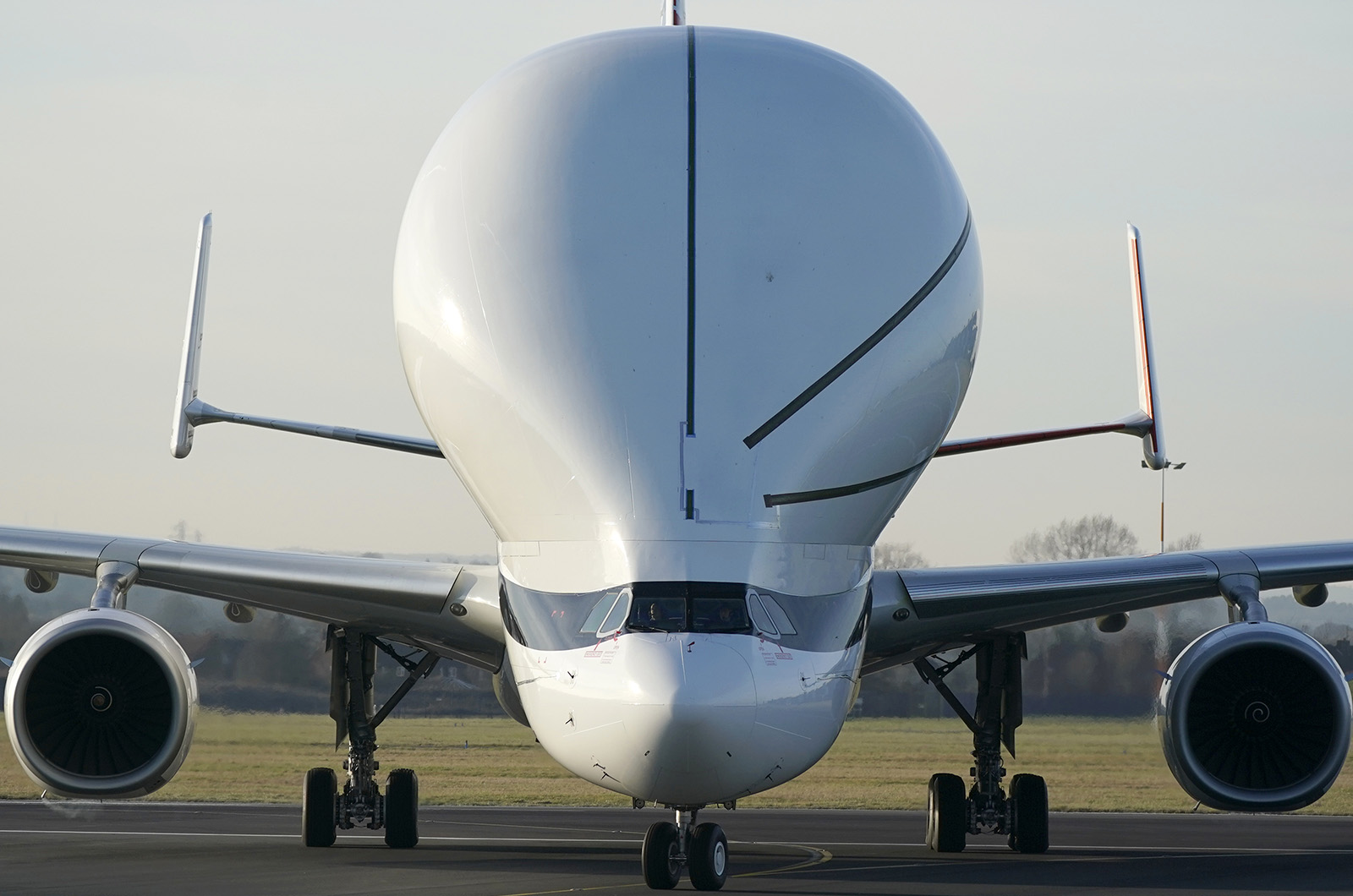
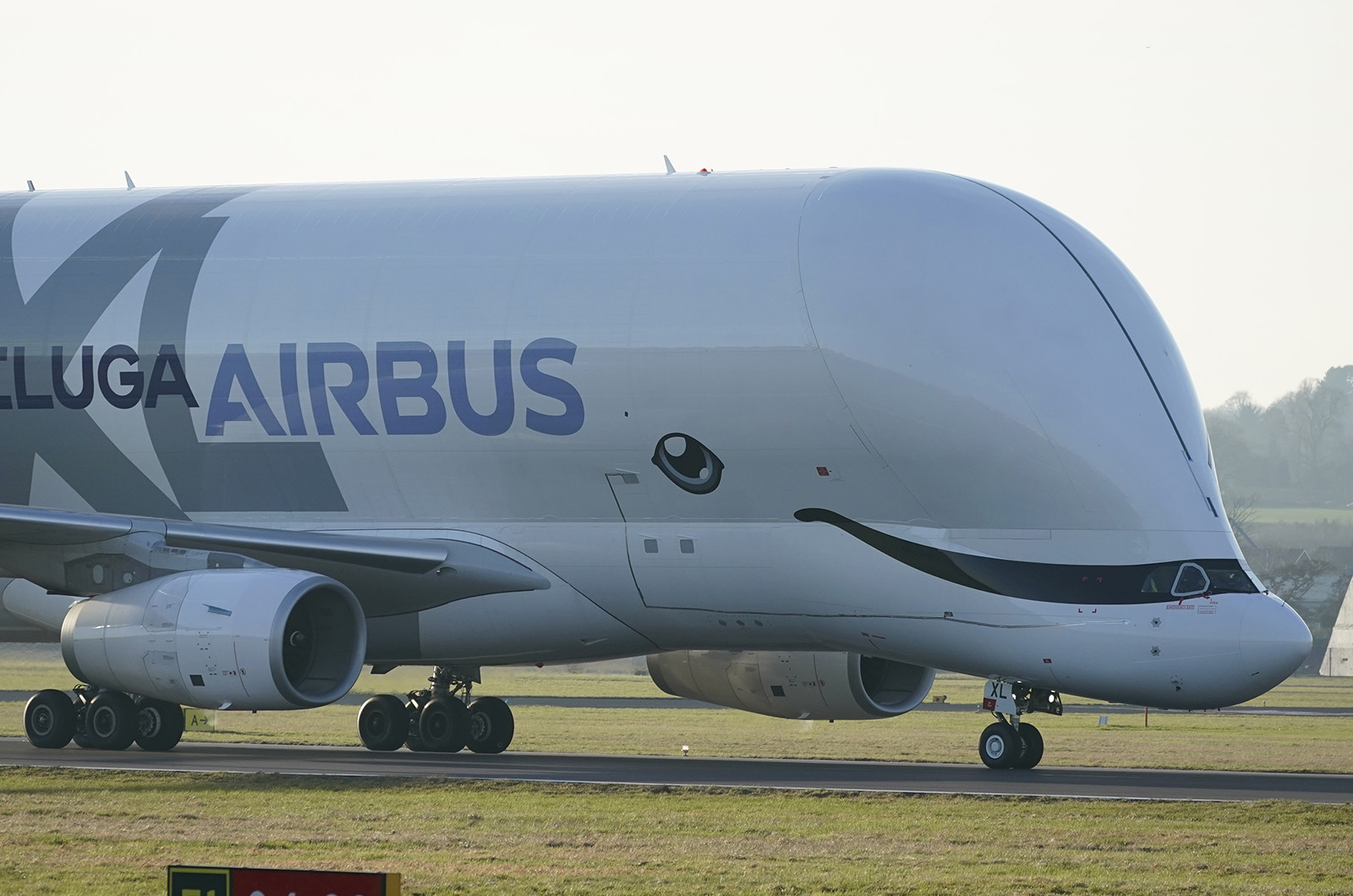
The Airbus BelugaXL looks wonderfully bizarre thanks to an enormously capacious fuselage. Its name is perfectly appropriate; its bulbous ‘forehead’ and wide, ‘grinning’ fuselage give it the appearance of a flying cartoon whale. It is a sight that has aroused the curiosity of many, especially passengers at Toulouse–Blagnac Airport in France, the home of the Beluga.

The BelugaXL emerged from Airbus’s need to expand its internal transport capability as aircraft production rates grew. Development began in the mid-2010s, based on the A330-200 platform but heavily modified. Its first flight in 2018 marked a significant milestone, proving the design’s ability to handle oversized components efficiently across Europe.

Back to top

7: Airbus BelugaXL

 Airbus BelugaXL

The aircraft’s purpose is to carry large Airbus subassemblies between production sites, ensuring timely final assembly. Its cavernous cargo hold accommodates wings, fuselage sections, and other bulky structures that would challenge conventional freighters. By providing predictable, high-capacity logistics, the BelugaXL helps maintain Airbus’s tightly synchronised manufacturing rhythm across multiple nations.

It replaced the earlier A300-600ST Beluga fleet, which had served faithfully since the 1990s but lacked the volume required for modern production demands. The BelugaXL offers thirty percent more capacity, allowing Airbus to move larger modules in fewer flights. Its arrival has streamlined operations, and unintentionally given plane-spotters a rather exotic treat. Six BelugaXLs are in operation.


6: KJ-600

 KJ-600

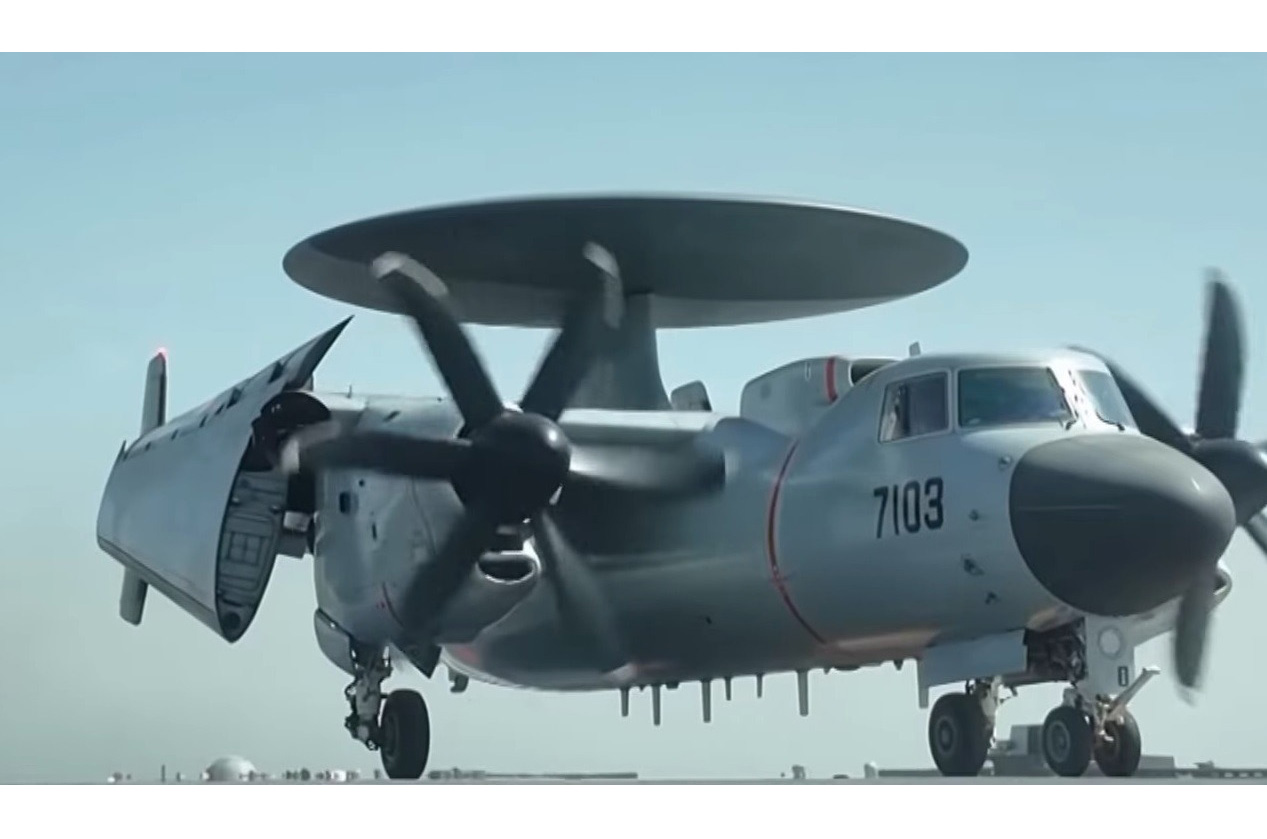
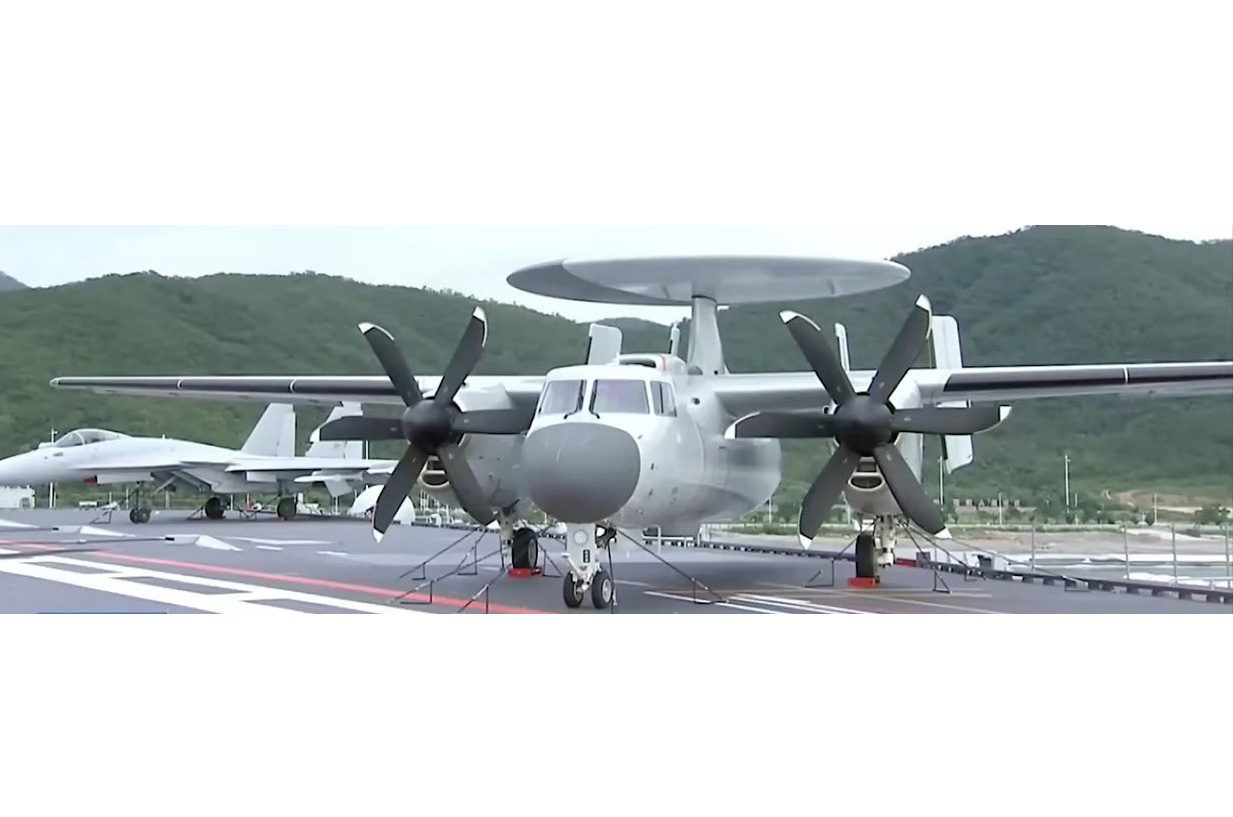
The appearance of KJ-600 is undeniably odd: a compact, twin-turboprop aircraft topped with a great spinning disc, perched on spindly landing gear, its fuselage looking slightly too small for the job. The proportions seem eccentric, almost experimental, as though engineers stitched together components from different decades.

That big dome, of course, is the rotodome housing the radar array. It provides 360-degree scanning to track aircraft and ships far beyond the horizon. Similar domes crown other airborne early-warning aircraft such as the American E-2 Hawkeye and the larger E-3 Sentry, the principle being the same: height plus rotation equals reach.


6: KJ-600

 KJ-600

The KJ-600’s history is rooted in China’s drive to equip its growing carrier fleet with independent airborne surveillance and control. Early carrier operations relied on ship-based radar and land-based support, but these imposed limits. Development of a dedicated carrier-borne early-warning aircraft became a strategic priority, leading to the KJ-600 programme during the 2010s.

Its role is to act as the carrier group’s distant eyes and ears. From high altitude it is intended to detect threats, direct fighters, and manage the aerial picture. In essence, it extends the fleet’s awareness far beyond its own sensors, providing the coordination essential for modern naval operations.

Back to top

5: Edgley Optica

 Edgley Optica

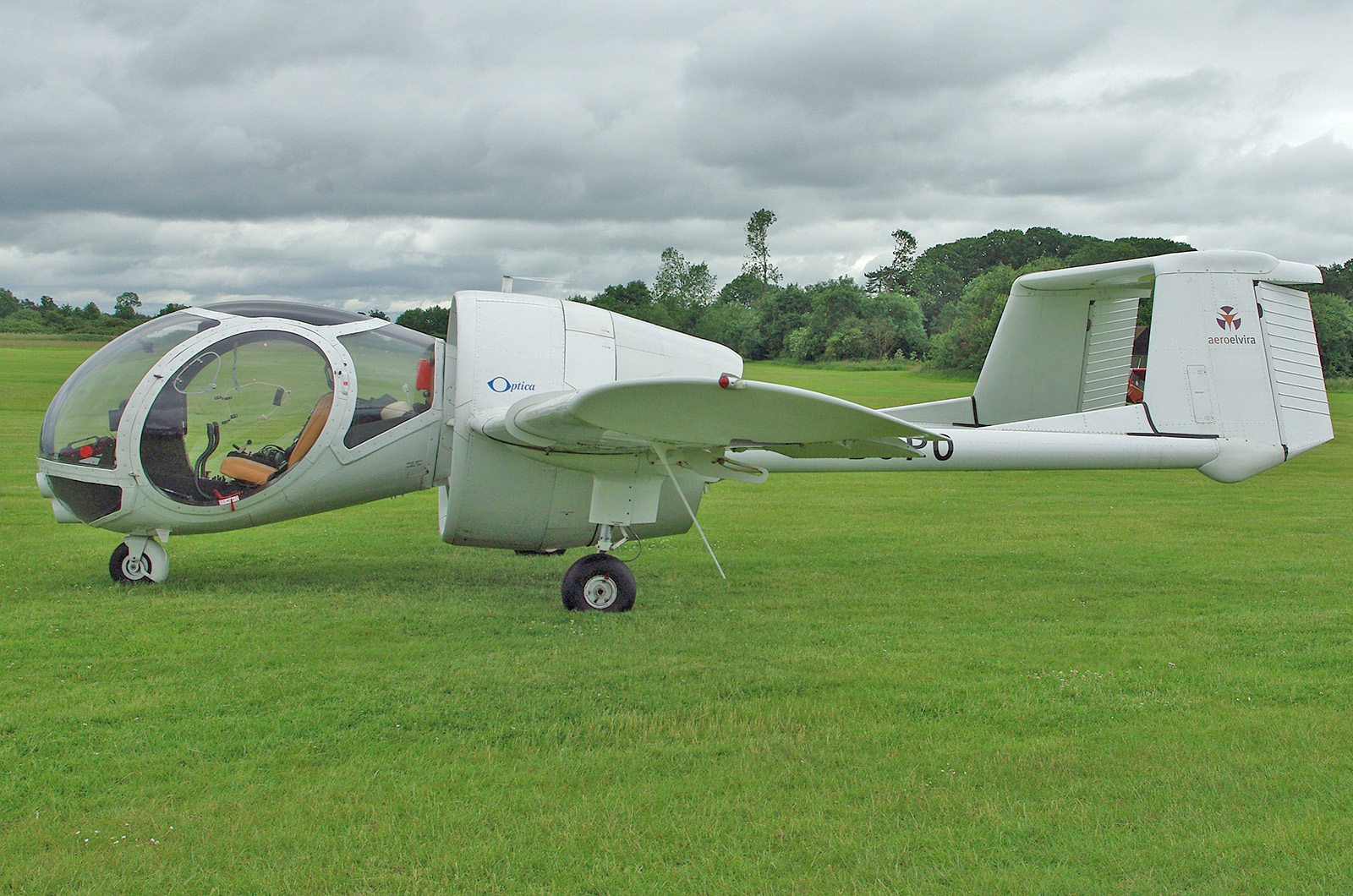
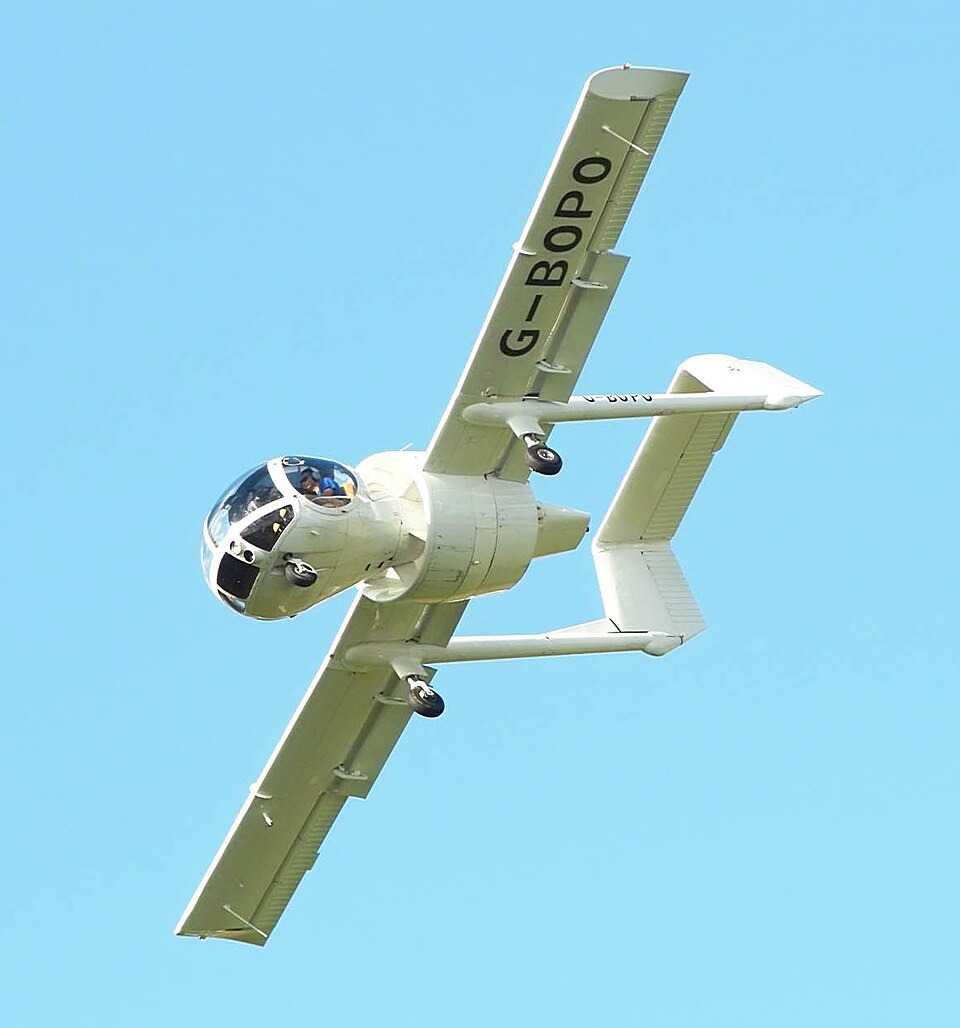
The Edgley Optica looks undeniably strange. Its bulbous nose and wrap-around glazing seem almost alien. In the 1989 film Slipstream it stood out instantly, earning a small cult following. The aircraft doesn’t look like it should fly, yet it does—with an eerie, hovering quality that makes it resemble a flying observation bubble more than a plane.

Its story begins in the 1970s. Designer John Edgley wanted something quiet, economical, and stable at low speeds. The Optica first flew in 1979. It promised helicopter-like visibility without helicopter costs. Progress stalled, though. Financial trouble, shifting ownership, and a tragic 1985 accident slowed what had looked like a promising future.


5: Edgley Optica

 Edgley Optica

The timeline that followed was uneven. Production restarted, stopped, and restarted again. A few aircraft reached police, survey, and environmental agencies. Operators liked its predictable handling and huge field of view. It excelled at traffic monitoring, pipeline inspection, and wildlife work. Still, orders stayed small and momentum never truly returned.

Its odd shape existed for sensible reasons: visibility first, noise reduction second, efficiency third. Shortcomings came later. The design proved too specialised, and support costs stayed high. Even so, the idea was sound. Today, its duties fall mostly to rather less eccentric, light helicopters, gyrocopters, and fixed-wing patrol aircraft like the Vulcanair P68.


4: Northrop B-2 Spirit

 Northrop B-2 Spirit

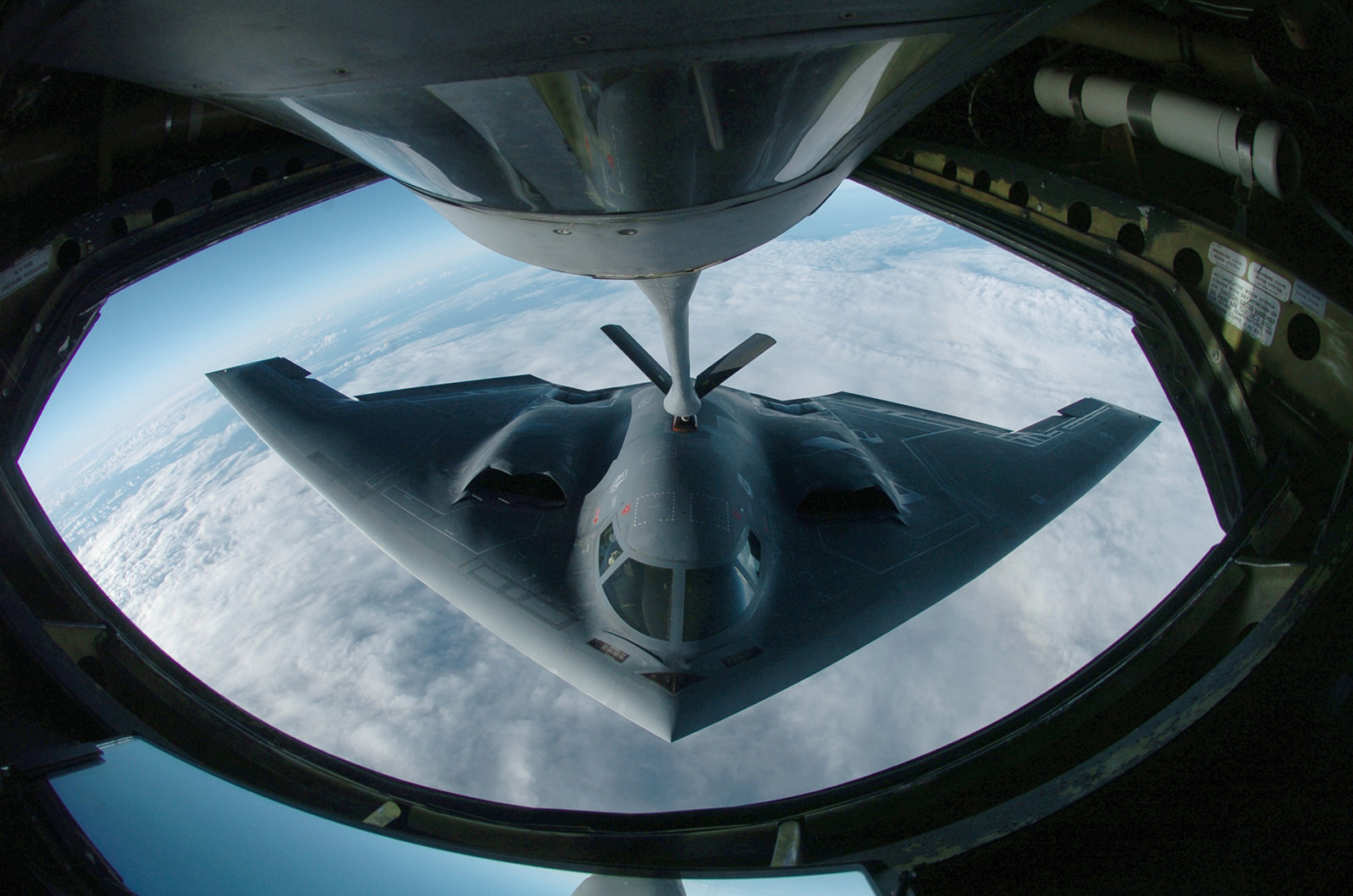
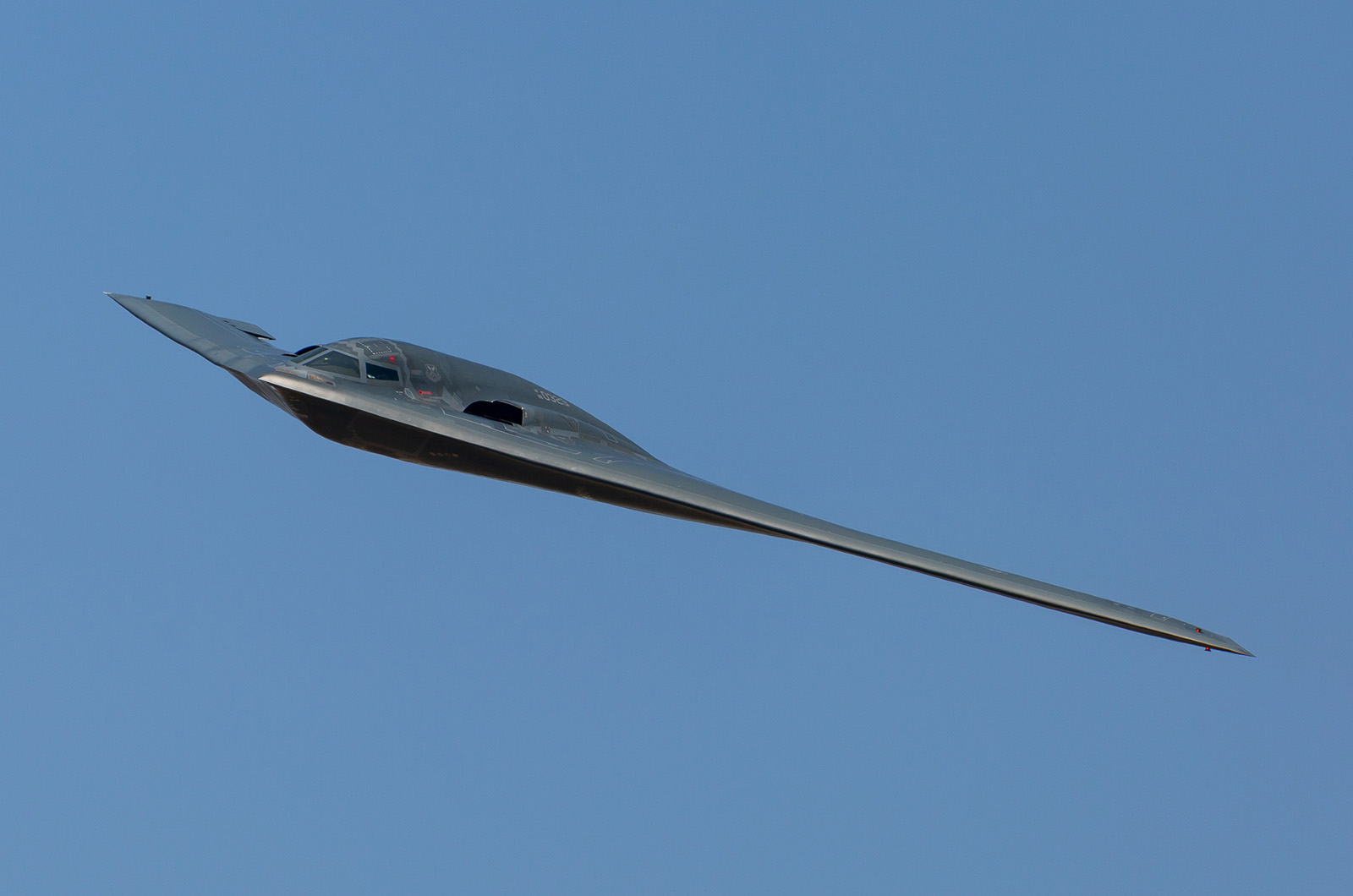
The Northrop B-2 Spirit has a profoundly strange, spectral form: a dark, seamless flying wing that seems almost supernatural. Its appearance is part boomerang, part slug, with a saw-tooth trailing edge (the back of the aircraft). It isn’t typical—no tail, no conventional fuselage—but a stealthy ghost of an aircraft. Its appearance results from a design that is as focused on steering radio waves as on controlling airflow.

Born in the Cold War, the B-2 was the product of America’s drive for survivable strategic bombing. It first flew in 1989 and entered service in 1997, proving its worth in conflicts in Kosovo, Iraq, and Afghanistan. It reshaped what precision stealthy strike missions could be. It is astonishingly expensive - each is estimated to have cost $2.1 billion to build - costing several times its weight in gold. There are only 19 examples flying, and no more will be built.

Back to top

4: Northrop B-2 Spirit

 Northrop B-2 Spirit

The Northrop company persisted unsuccessfully for over 40 years with the concept of an all-wing bomber before the B-2 was commissioned. The B-2’s flying-wing design minimises radar cross-section by eliminating vertical surfaces and flat fuselage sides. The use of composite materials, radar-absorbent materials and structures, blended edges, and shielded engines further reduces its signature, making it hard to detect.

Its role is strategic: delivering nuclear or conventional ordnance over very long ranges, with aerial refuelling. It offers precise, discreet options for coercion or conflict, and its ghost-like looks matches its mission: to strike unseen, from afar. The B-2 was last used in combat in June 2025, during Operation Midnight Hammer, when seven B-2 Spirits struck three Iranian nuclear sites (Fordow, Natanz, and Isfahan) with GBU-57 bunker-buster bombs.


3: ShinMaywa US-2

 ShinMaywa US-2

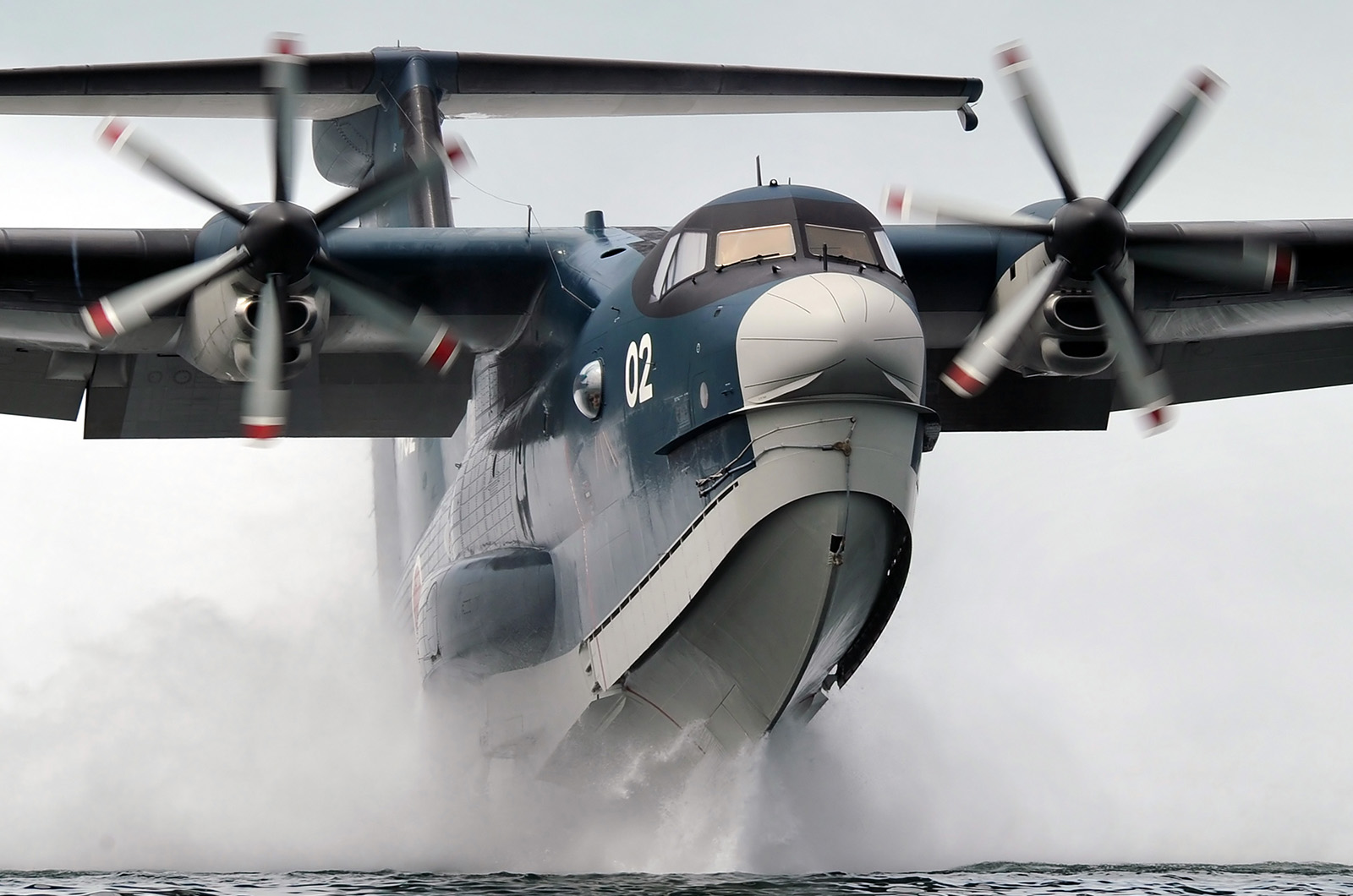
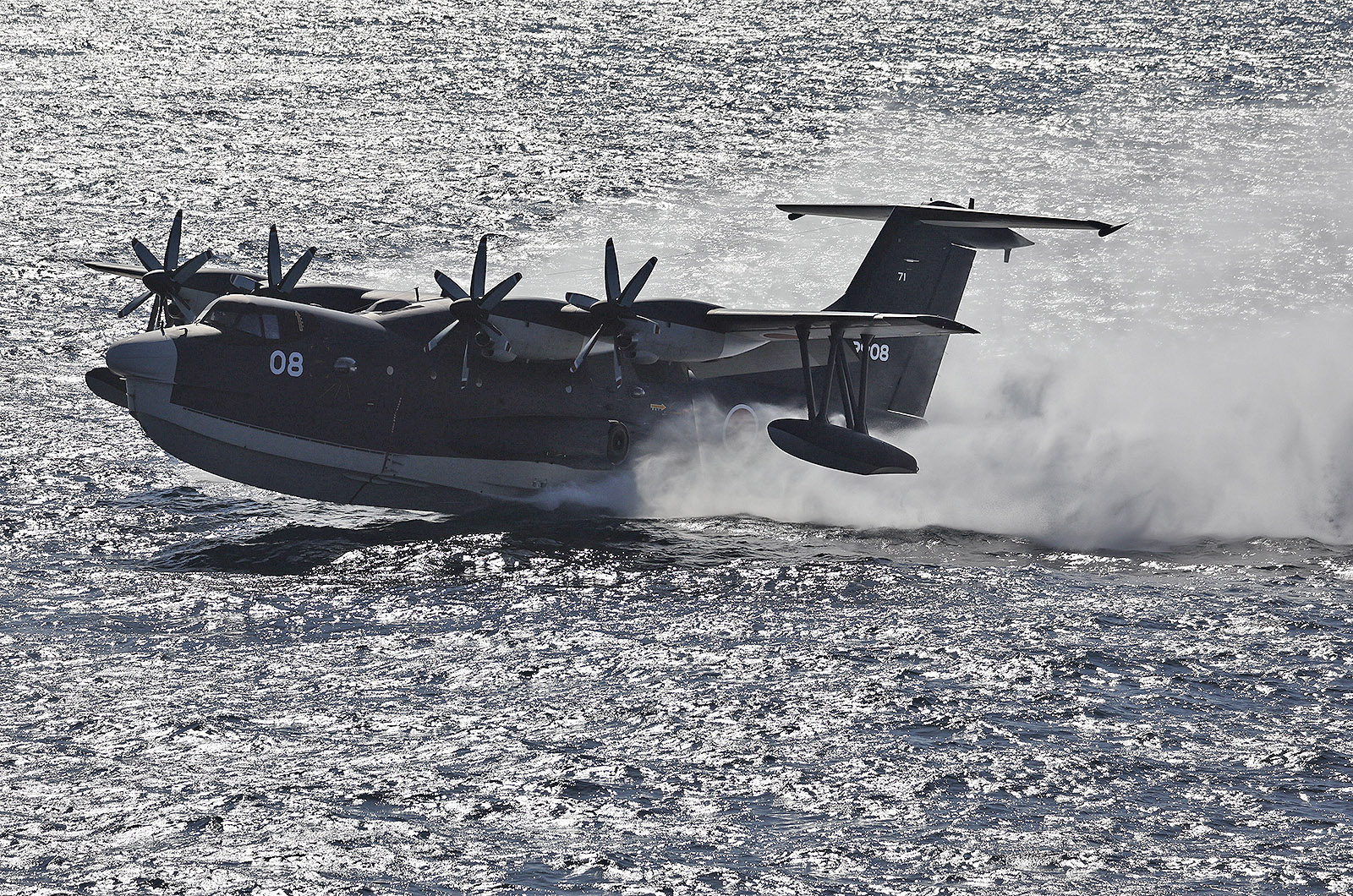
Weird is perhaps the wrong way to describe the magnificent US-2, but it is certainly unusual, and we can’t resist any opportunity to talk about it. It is rather lovely that today we still have a big, flying boat like the US-2 — not a relic, but a sophisticated modern aircraft that saves lives. It is powered by four Rolls-Royce AE 2100J turboprops, each delivering about 3424 kW (4592 hp), plus a fifth LHTEC T800 turboshaft (originally developed for the cancelled Comanche stealth attack helicopter) for boundary layer control.

The extra engine blows air over the wings and tail to help reduce the stall speed, allowing very slow takeoffs and landings on water. It can operate from rough seas, cruise fast (around 480 km/h, 300 mph) and reach up to 350 mph (560km/h). Its weight is around 47,600 kg (105,000 lb).


3: ShinMaywa US-2

 ShinMaywa US-2

Born out of Japan’s rich flying boat heritage — evolving from the US 1A and earlier Shin Meiwa designs — the US-2 continues a national tradition of maritime aviation. Japan is surrounded by vast bodies of ocean, making such aircraft invaluable. Its story began when the JMSDF needed a long-range, high-performance air-sea rescue amphibian to replace ageing predecessors, so ShinMaywa revived and modernised decades of flying boat expertise.

Back to top

The ShinMaywa US-series flying boats have flown over 1000 rescue missions, rescuing more than a thousand people, including a US family 480 miles (770 km) off Okinawa. The US-2 can land safely on waves up to 10 ft (3 m) high and requires less than 1,000 ft (300 m) of water to take off. It routinely reaches Japan’s most remote islands.


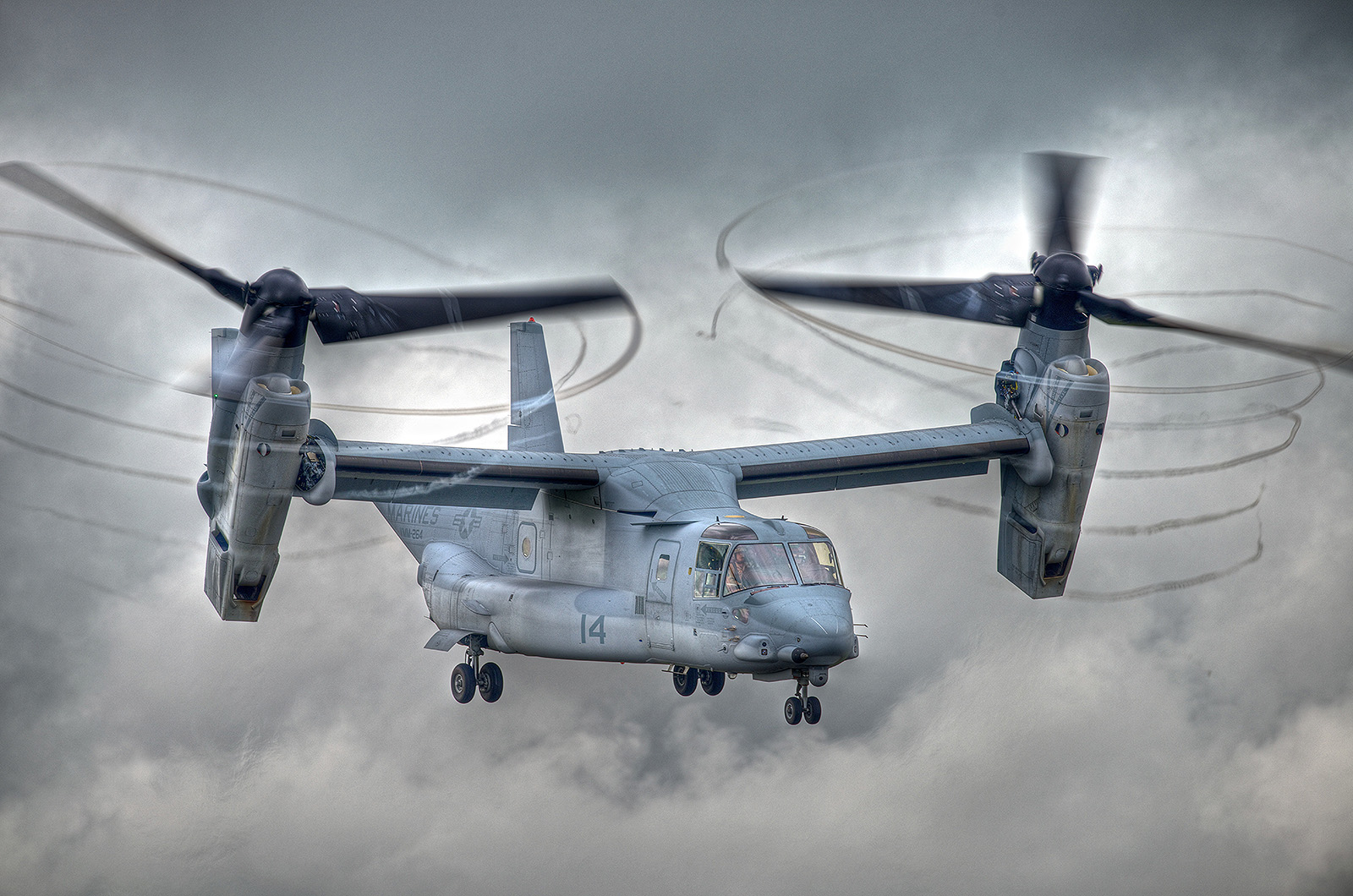
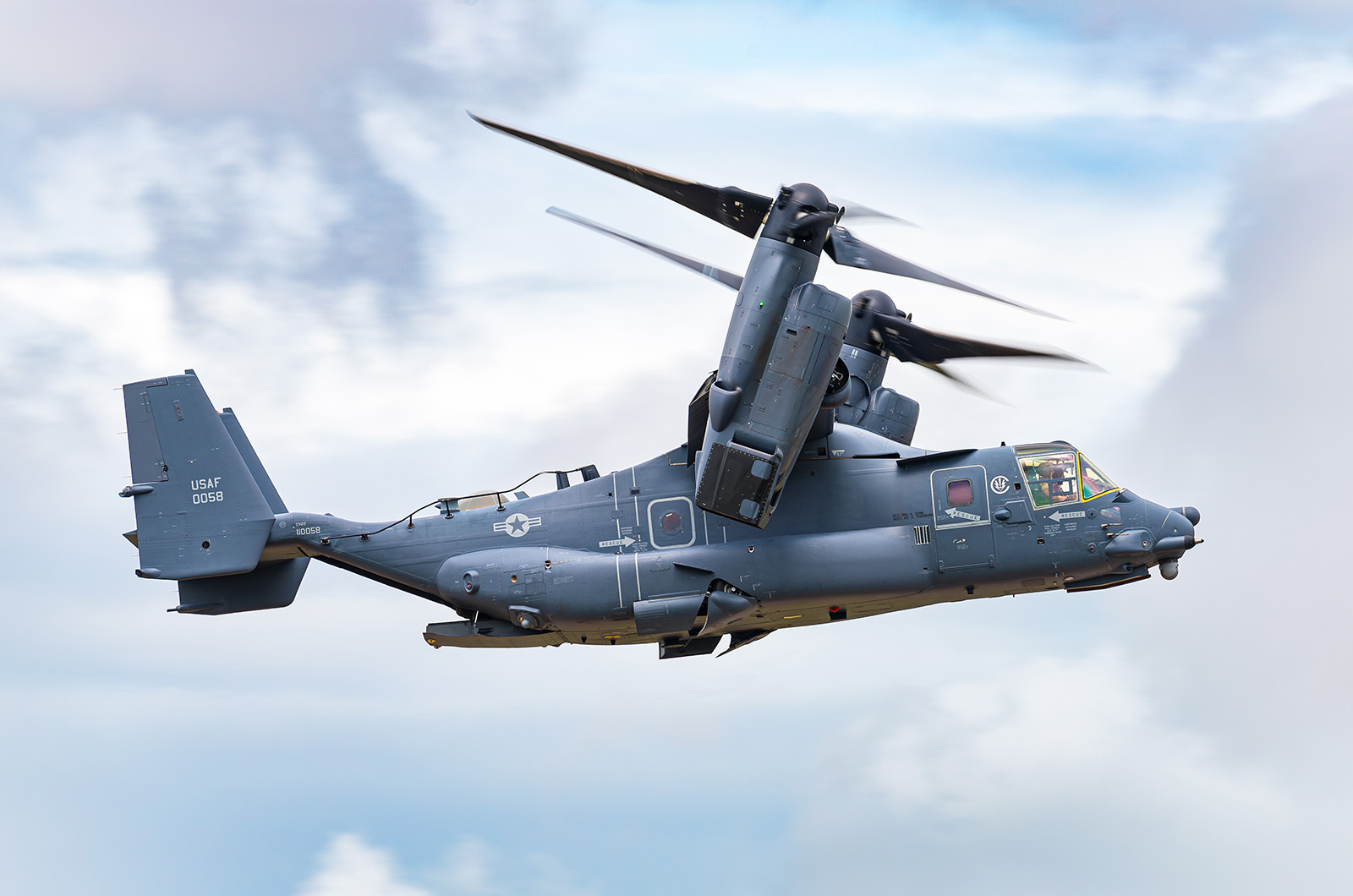
2: Bell Boeing V-22 Osprey

 Bell Boeing V-22 Osprey

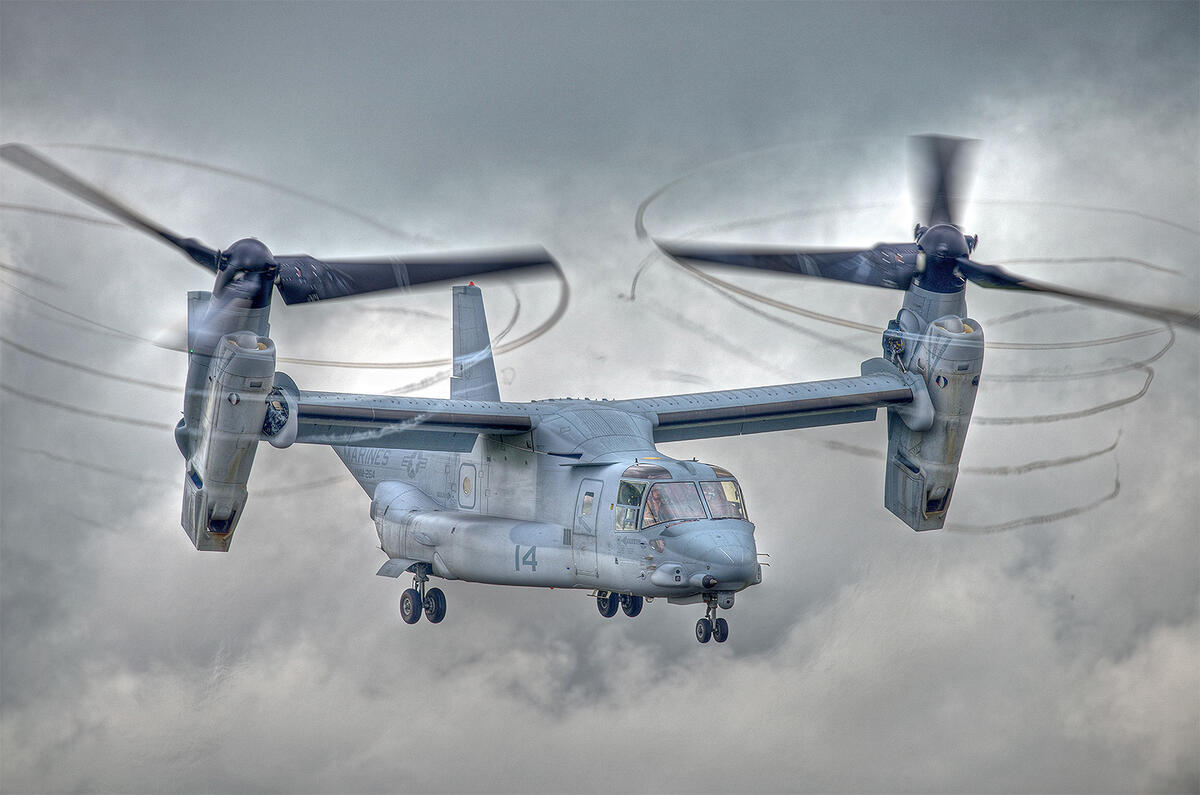
The V-22 Osprey is weirdly brilliant: a tilt-rotor aircraft that takes off vertically like a helicopter but flies forward like a plane. Its twin proprotors pivot, giving both vertical lift and high-speed forward flight, an awkward-looking but ingenious hybrid. Night take-offs from a carrier deck are particularly spectacular.

Introduced in the 2000s, its versatility is unmatched: troop transport, special operations, cargo, and medical evacuation, combining helicopter flexibility with fixed-wing speed. Though somewhat controversial, with some questioning its cost and safety record, it is generally liked by its pilots.


2: Bell Boeing V-22 Osprey

 Bell Boeing V-22 Osprey

The V-22 Osprey uses a driveshaft system that links both engines so either one can power both rotors through the interconnecting wing gearbox. This setup is mechanically complex, but it’s essential for safety because it lets the aircraft stay airborne and controllable even if one engine fails.

Its tilt-rotor design is essential for the mission: vertical lift, high-speed travel, and multi-role functionality. It can land where helicopters can, but cruise faster and farther: it has a top speed of 316mph, twice that of helicopters; it has a range of around 575 miles (925 km). The Osprey is striking to see, looking part helicopter, part aeroplane. Its quirky design enables unique capabilities, making it one of the most distinctive aircraft flying today. 400 V-22s have been built.


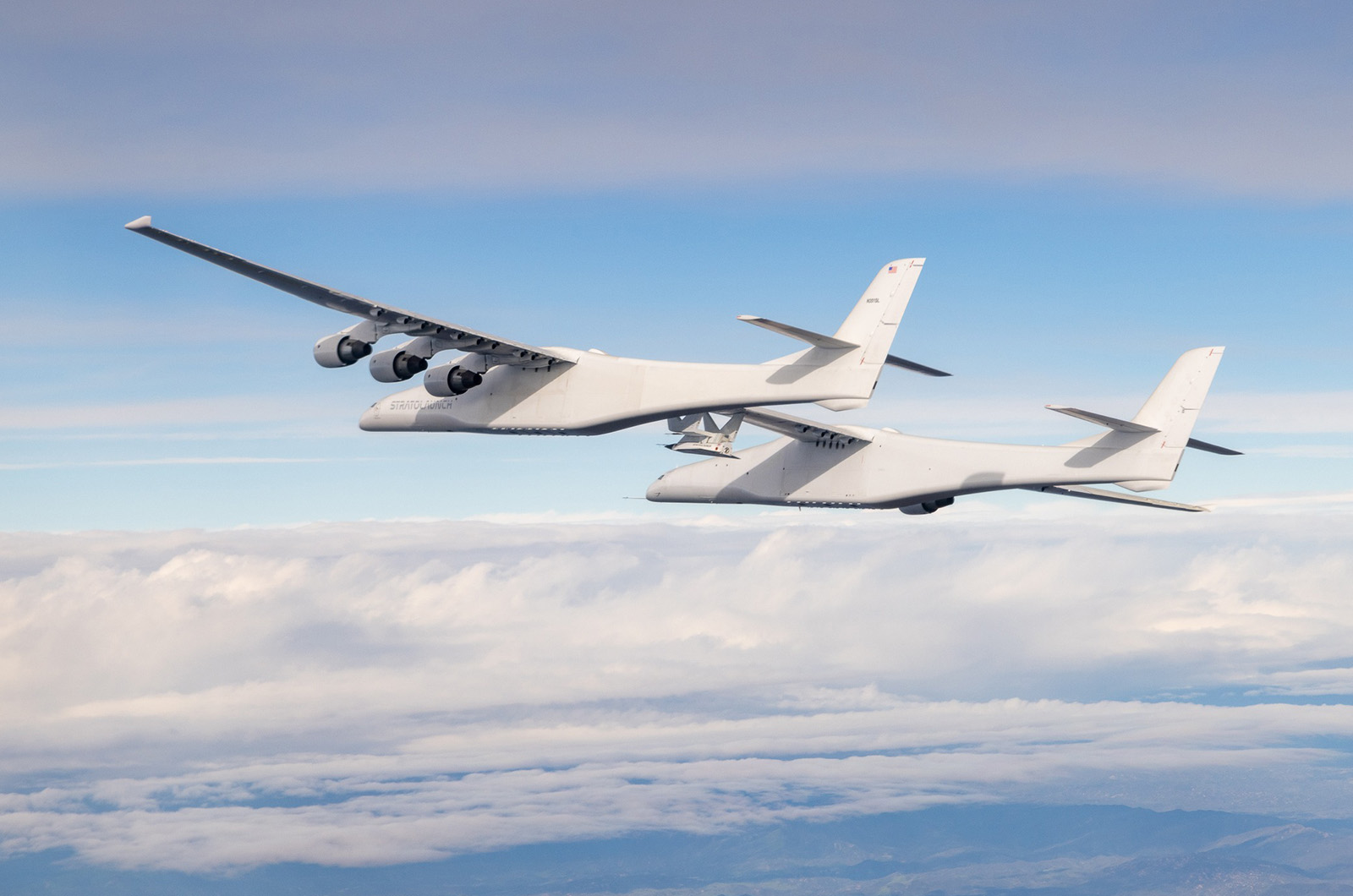
1: Scaled Composites Stratolaunch ‘Roc’

 Scaled Composites Stratolaunch ‘Roc’

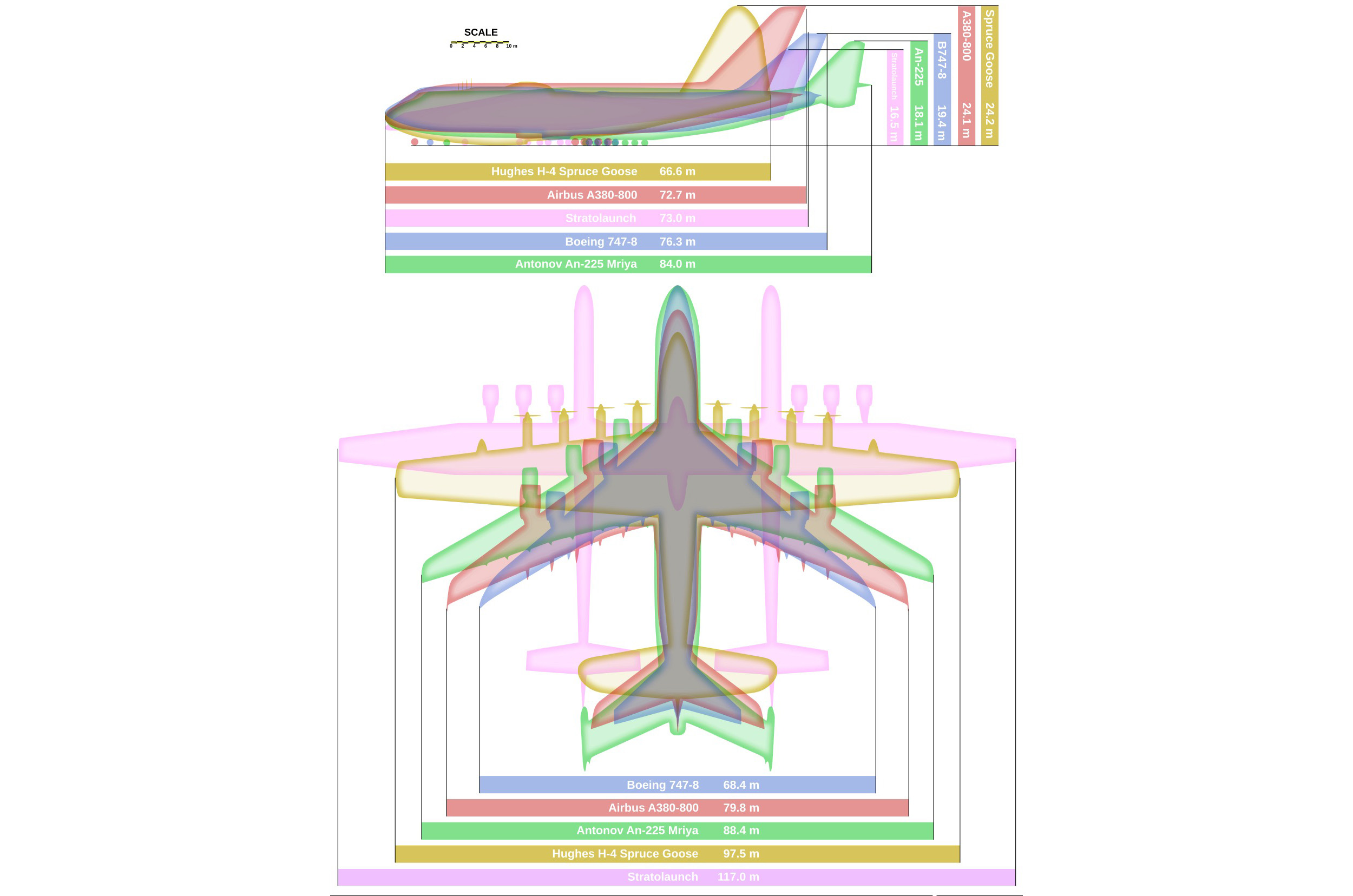
In mythology, the roc was an enormous bird of prey said to be powerful enough to lift elephants into the air. Naming Stratolaunch’s aircraft “Roc” is fitting because it, too, is a colossal airborne carrier. The Roc “mothership” is a genuinely extraordinary machine. Built by Scaled Composites — a company well-known for its wonderfully odd, maverick aircraft designs — it sports twin fuselages, six jet engines and the world’s largest wingspan at 385 ft (117 m). The result is a silhouette quite unlike anything else in aviation. Designed specifically for airborne launch, it looks almost as if two aeroplanes have been joined together.

Back to top

Its role is straightforward in theory yet ambitious in practice: carrying test vehicles to high altitude, avoiding many of the complications of launching from the ground. “Mothership” aircraft have supported research and space-related projects since the late 1950s, beginning with B-52s lifting the X-15 for its suborbital, space-reaching flights. The tradition continued with Pegasus rockets dropped from a B-52 in 1990 and later from an L-1011. More recently, Virgin Orbit’s LauncherOne flew from Cosmic Girl. Stratolaunch developed its own dedicated high-altitude launch systems.


1: Stratolaunch Roc

 Stratolaunch Roc

The Roc’s main task remains that of a flying launch platform, carrying hypersonic test vehicles beneath its immense wing and releasing them in carefully controlled conditions. This method lets engineers trial unusual or experimental designs that would be awkward, costly or risky to launch from the ground.

Its appearance is bizarre — the twin hulls, the vast span, the six engines — but every unconventional feature serves a practical purpose. The wide spacing between the fuselages provides clearance for large payloads, the huge wing delivers the lift required, and the multiple engines ensure both performance and redundancy. As of 2025, Roc stands alone as a unique, purpose-built airborne test and launch system and is now primarily focused on the exciting technology of reusable hypersonic vehicles.

Follow Joe Coles on Substack, Twitter X  or Blue Sky. His superb Hush-Kit Book of Warplanes is available here.

If you enjoyed this story, please click the Follow button above to see more like it from Autocar

Photo Licence: https://creativecommons.org/licenses/by/4.0/deed.en

Join our WhatsApp community and be the first to read about the latest news and reviews wowing the car world. Our community is the best, easiest and most direct place to tap into the minds of Autocar, and if you join you’ll also be treated to unique WhatsApp content. You can leave at any time after joining - check our full privacy policy here.

Add a comment…