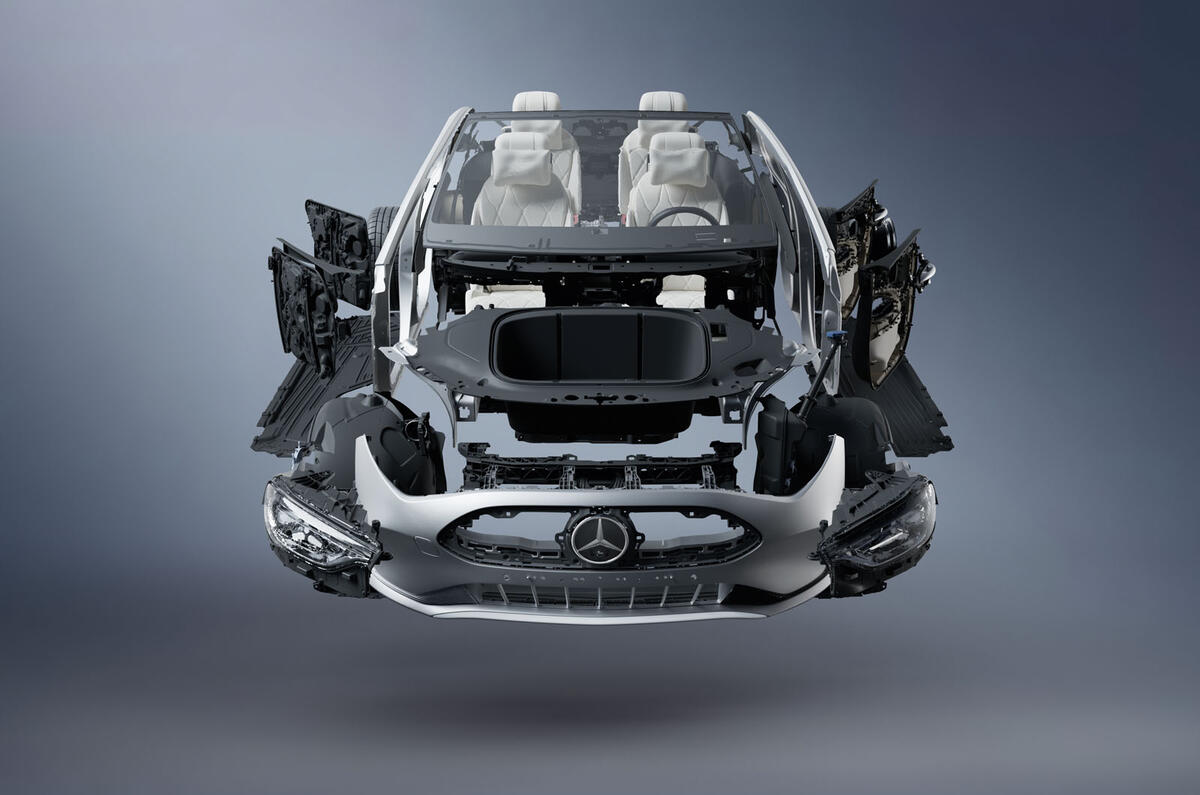

Mercedes-Benz has revealed details of a new engineering programme aimed at reducing the embedded carbon footprint of its future cars by rethinking how components are designed, manufactured and recycled.
Called Tomorrow XX, the initiative sets out what the German company describes as a “technical pathway to lower upstream CO2 output” – although most elements remain in early-stage development and Mercedes hasn't committed to production timelines or which models might be among the first to to benefit from the program.
Chief technology officer Jörg Burzer said Mercedes is currently evaluating “more than 40 different components to reduce emissions and to make materials easier to repair, separate and recycle”, in what he called a shift “beyond tailpipe emissions to those created before a new model even reaches the road”.
A main driver in the programme is the sheer volume of plastics used in modern cars. The average Mercedes model contains around 250kg of plastic parts, many of which are made from multiple bonded materials that are difficult or uneconomical to recycle. Tomorrow XX aims to redesign such components so they can be taken apart, repaired and reused rather than discarded.
One of the most advanced examples is a re-engineered headlight expressly conceived for disassembly. Instead of today’s sealed, glued-together units, the Tomorrow XX prototype uses screws to attach the lens, housing and internal modules. This makes each part replaceable without damage; a cracked lens, for instance, could be swapped without buying an entire new headlight.
Mercedes said this approach could extend component life and improve recycling rates, although it hasn't yet detailed any potential trade-offs, such as sealing durability or manufacturing complexity.
A similar rethink is under way for interior door panels, where engineers have replaced ultrasonic welds with a modified thermoplastic rivet that can be undone cleanly. The change allows pockets, trims and reinforcement plates to be separated for repair or recycling. If validated, the new door panels could replace those used in existing Mercedes models.
Other projects within the Tomorrow XX programme seek to repurpose materials from end-of-life vehicles. Engineers are developing underbody panels made from mixed plastic waste, engine mounts from reclaimed airbag fabric and brake pads incorporating material recovered from worn pads.
Early tests also explore low-temperature moulding for recycled polymers, mineral-based trim coatings intended to avoid petrochemical lacquers and reduced-binder fibres for carpets and insulation to simplify end-of-life separation.
Structural development forms another strand. Mercedes is studying bolt-in modular crash structures that replace multi-layer welded assemblies, as well as net-shape aluminium casting techniques aimed at reducing machining steps and the associated energy waste.
Alongside this, Burzer revealed that it's developing new dry-coating processes for battery electrodes and electrical components and a material passport system intended to track origin, carbon intensity and recycling routes of individual parts.
Battery recycling also features in the plan. Mercedes already operates a pilot recycling plant in Germany, although it concedes that commercial viability is dependent on consistent material supply, scale and evolving EU regulatory requirements.