Currently reading: The road to self-driving cars that think and behave like humans

Bosch and VW Group's software arm have partnered to develop autonomous tech with "cognitive" ability

It’s hard to read anything these days without coming across the term ‘artificial intelligence’ or ‘AI’, and there’s certainly plenty of noise being made about it in the automotive industry.

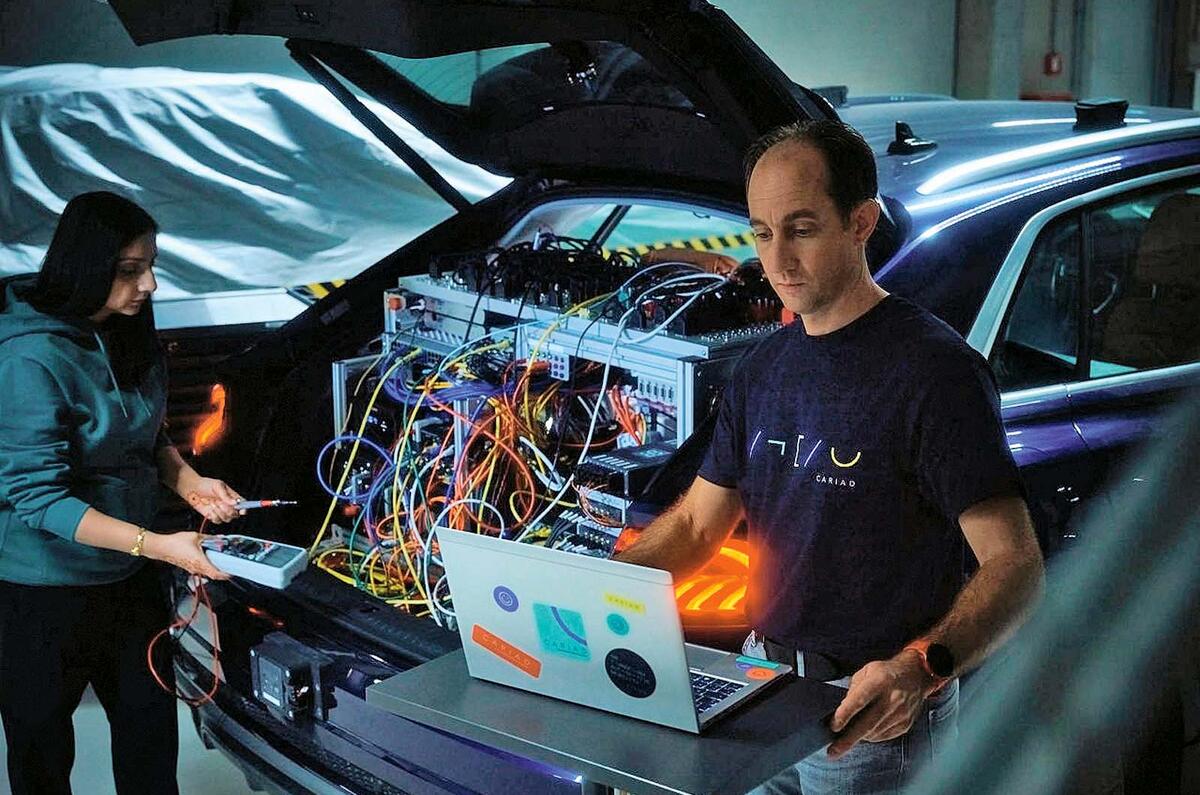
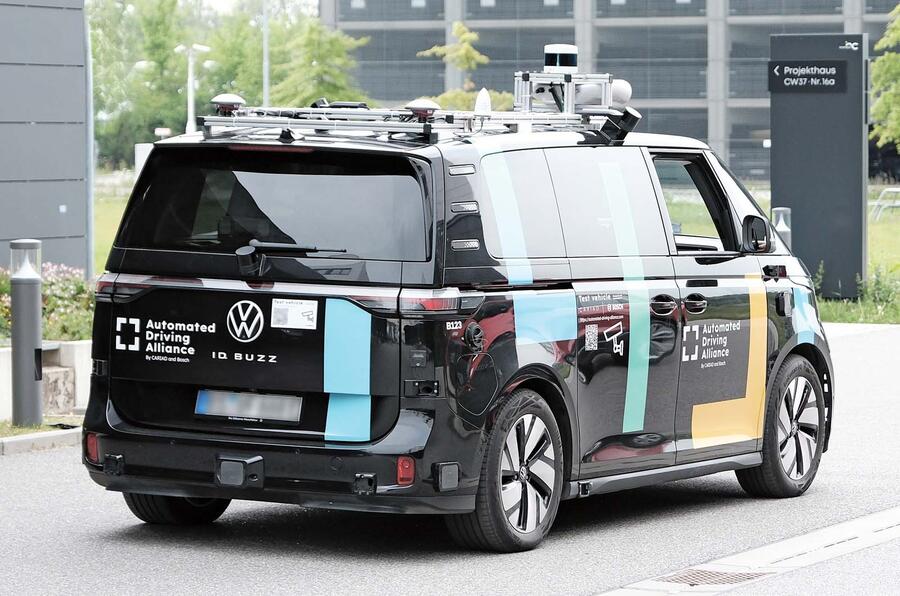
One huge investment in AI is being made by supplier Bosch and the Volkswagen Group’s software arm, Cariad. These partners formed the Automated Driving Alliance in 2022 to develop autonomous systems at level two (hands-free driving on urban roads, highways and rural roads) and level three (total control on highways).

But is AI just one thing, or are there different types of it? It’s widely known that AI can be used for generating content such as text, images and videos, but on a deeper level it can be used to analyse vast amounts of technical data more accurately and effectively than conventional methods. For example, engineers can use it to vastly speed up the analysis of test data collected on proving grounds during the development of a new car.

Bosch and Cariad are working to develop autonomous systems that will eventually be capable of acting “as naturally as the human driver”.

They are using an “AI-based software stack” that is currently being tested on vehicle fleets and should be ready for production by the middle of 2026.

To replace a human driver in all circumstances, a system will need to be able to analyse situations, reason and make critical decisions as well as perform basic tasks, such as knowing its precise location and which side of the road to drive on. Bosch says its software stack will handle “all the essential cognitive tasks of perception, interpretation, decision-making and action”.
The key word there is ‘cognitive’, meaning to learn and understand through experience and the senses – in other words, a car that can think and make its own decisions. Ultimately, for any being or machine piloting a car, that’s essential.

The current level of software lays a basis for that, with the possibility of integrating ‘vision-language-action’ approaches that can imitate human logical thinking and action. That step would allow a machine to understand more complex traffic situations, such as assessing hidden risks in the same way a human driver might do.

Before that, in the near term, Bosch says its AI software stack will make automated driving at levels two and three more robust. Its performance will be improved by continuously feeding in enormous amounts of data that AI is so good at consuming.

Back to top

The software architecture is being designed in such a way that the AI’s decisions and actions remain safe, traceable and explainable, so that means it must also be accountable.

Join our WhatsApp community and be the first to read about the latest news and reviews wowing the car world. Our community is the best, easiest and most direct place to tap into the minds of Autocar, and if you join you’ll also be treated to unique WhatsApp content. You can leave at any time after joining - check our full privacy policy here.

Join the debate

Comments
6
Add a comment…
HereWeGoAgain 26 December 2025

Love the heading "that think and behave like humans", so they'll be middle lane hogging, unable to use lights correctly, position themselves on roads correctly e.g. at roundabouts, drive and park on pavements, park illegally and inconsideately etc.  I would say who'll police this, but know that answer.Can't wait to see how it'll cope with bad conditions, heavy rain, snow, fog, ice, falling trees, drunken jaywalkers etc, or will ithey just say no, no driving today.Assuming they mean drive correctly, unlike as many humanoids do, what will the government do for all the lost revenue, licencing fees, 'justice' systems around RTA etc? Oeer more well considered development. Or inter country driving, varying rules regulations etc, going araound roundabout anticlockwise, worn out road markings, not getting confused by all the worlds road signage (that migh be fun in the middle of africa, australia, etc.And how much is the resulting vehicle/mobile computer box going to cost to buy and maintain...And when it goes wrong who is to accountable and provide the restitution; the owner, the driver, the manufacturer, as its never the government and its approvals and stardards practices?And isnt this all just avoiding fixing the delinquences of certain drivers and the ineffictive enforcement of basic standandards, a 'protective' dumbing down, the devolution of human driving skills and abilities rather than evolveing, elevating driving standard and ability?

Or just moving the affordabiliry out of the reach of the the average joe/joan to have their own individual transportation. Put the proles in their place.

Arthur Sleep 23 December 2025

B3006 where it meets the A3...

This vehicle would never get out onto the roundabout until the dead of night.  I don't care whatever they say, you have to suddenly floor it, or stay there all day.

405line 23 December 2025

There seems to be a lot of money being put into AI which is something nobody asked for, unlike publicly owned EV charging points which are non-existent despite being required.

HereWeGoAgain 26 December 2025

Yep, just more corporate manipulation, for the benefits of the corporations, after all if the powers that be were really concerned about safety and health, rather than the 3,500 deaths or so that may be reduced, one would think they'd be more concerned by the 200,000 deaths related to heart and smoking related deaths? But hey, why concentrate on the 200000:3500, when you can make more money concentrating on the 3500, just tough luck on the 200,000, because we corp's really care (about)...

On a plus point countries will be able to save a few £'s by not employing chauffeurs/drivers for 'important' people/politicians etc, as they'll happily lead the revolution by using these autonomous vehicles. !