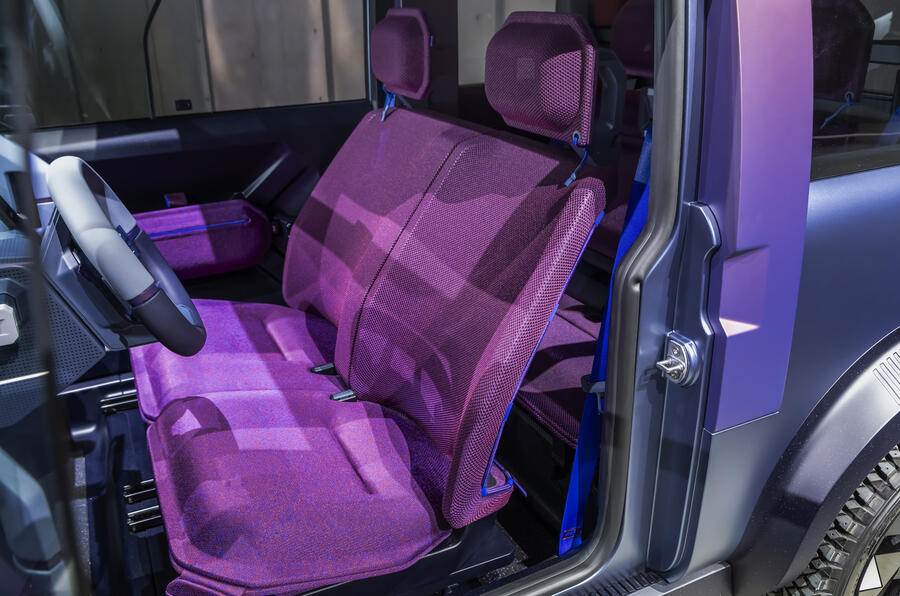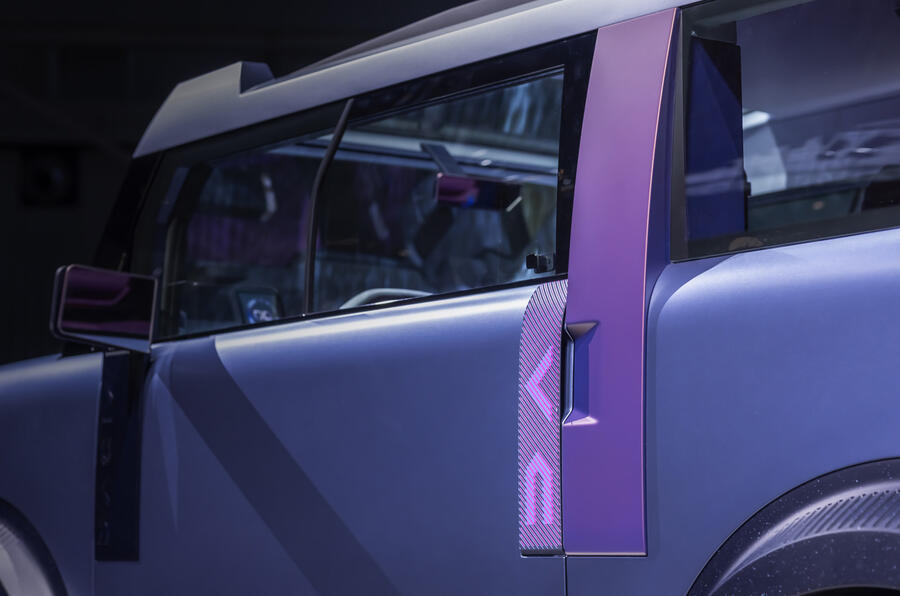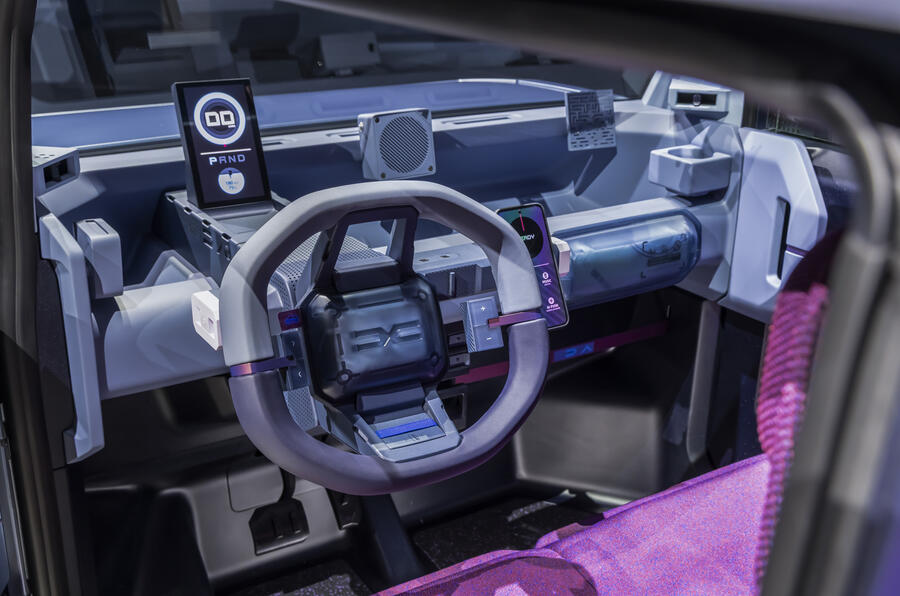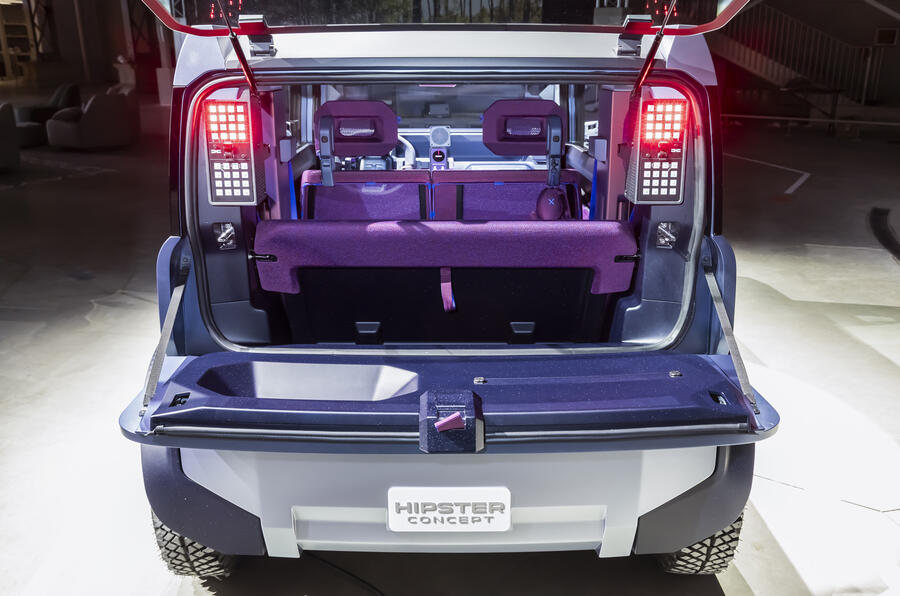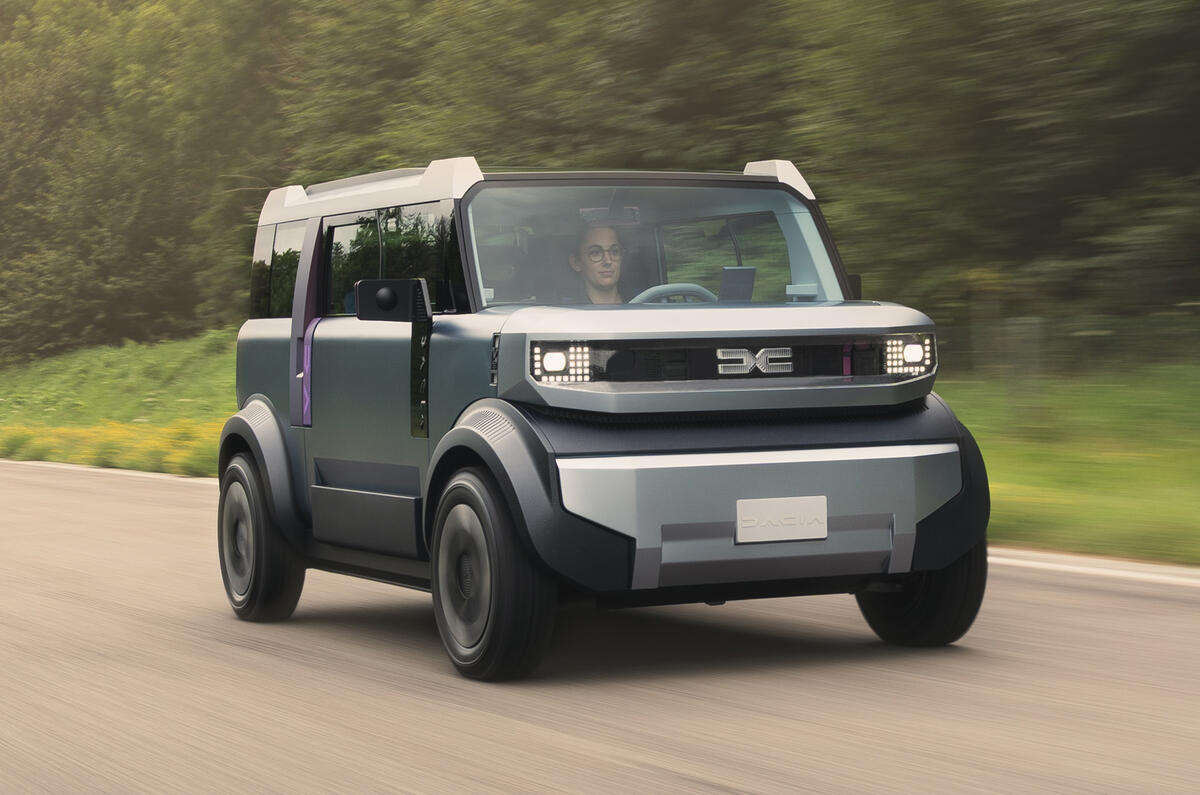
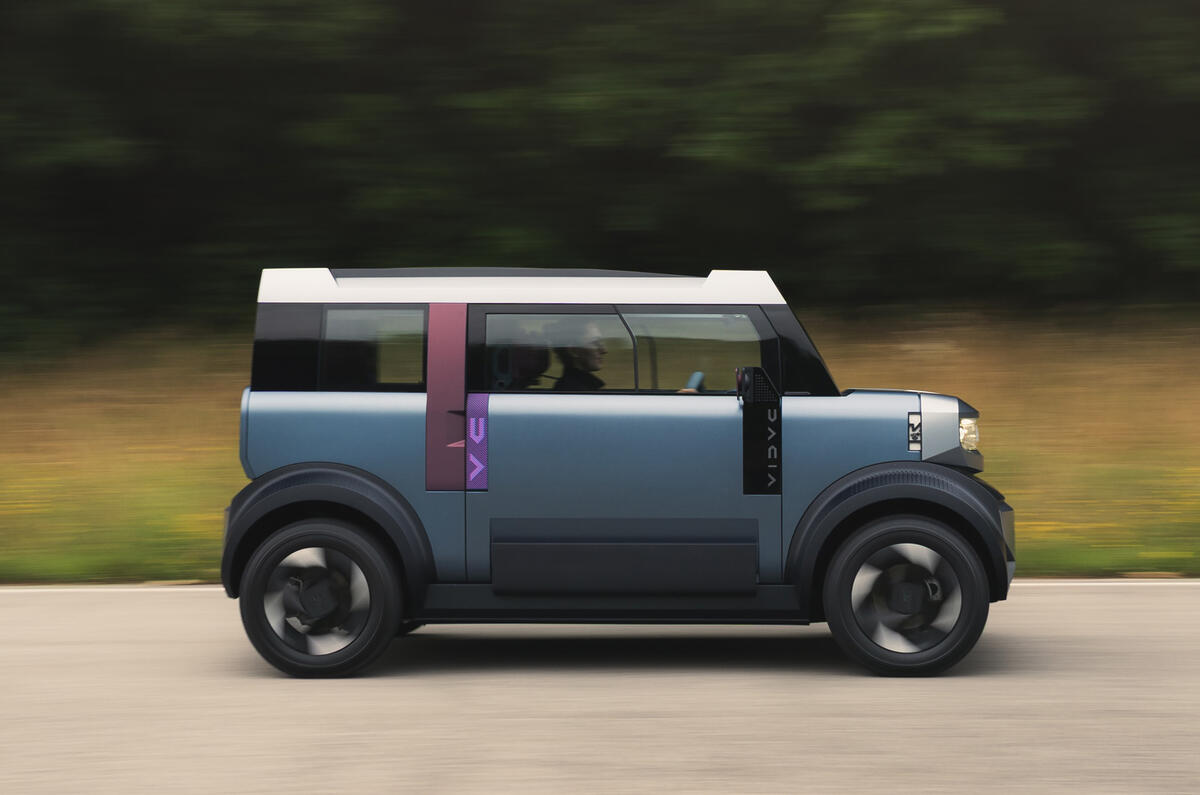
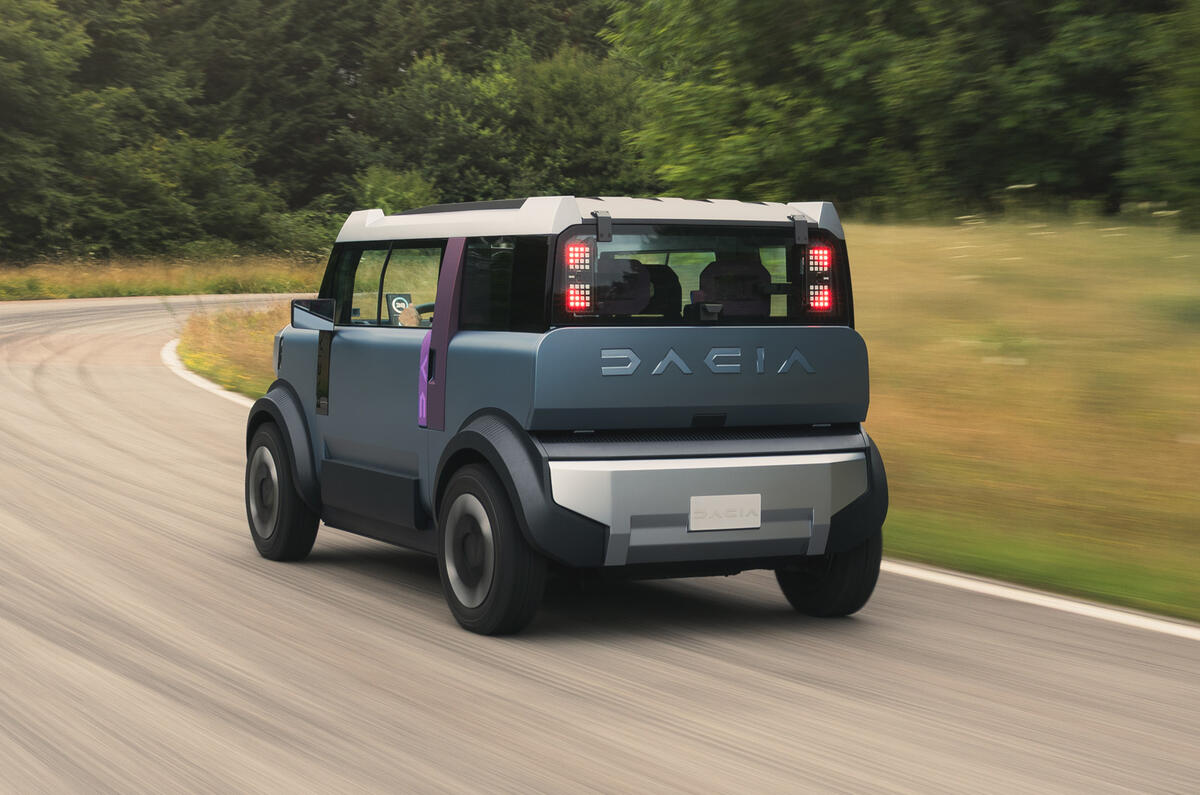
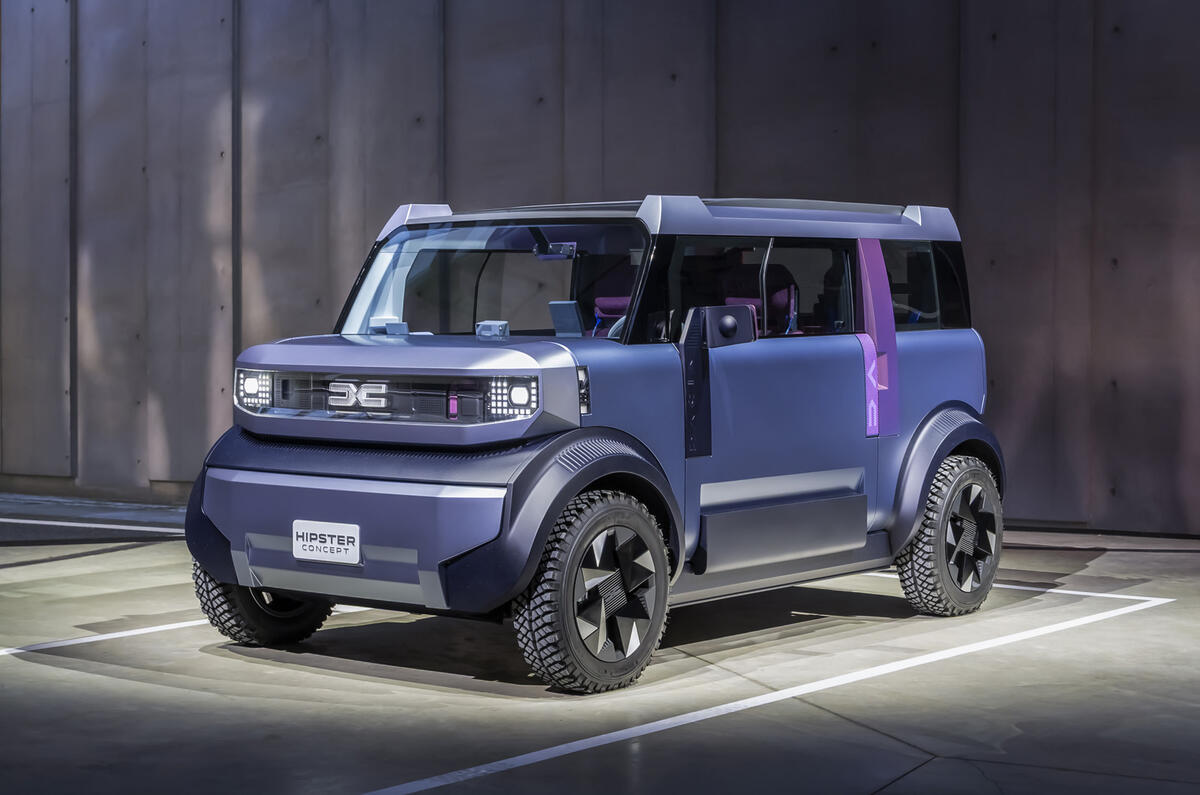
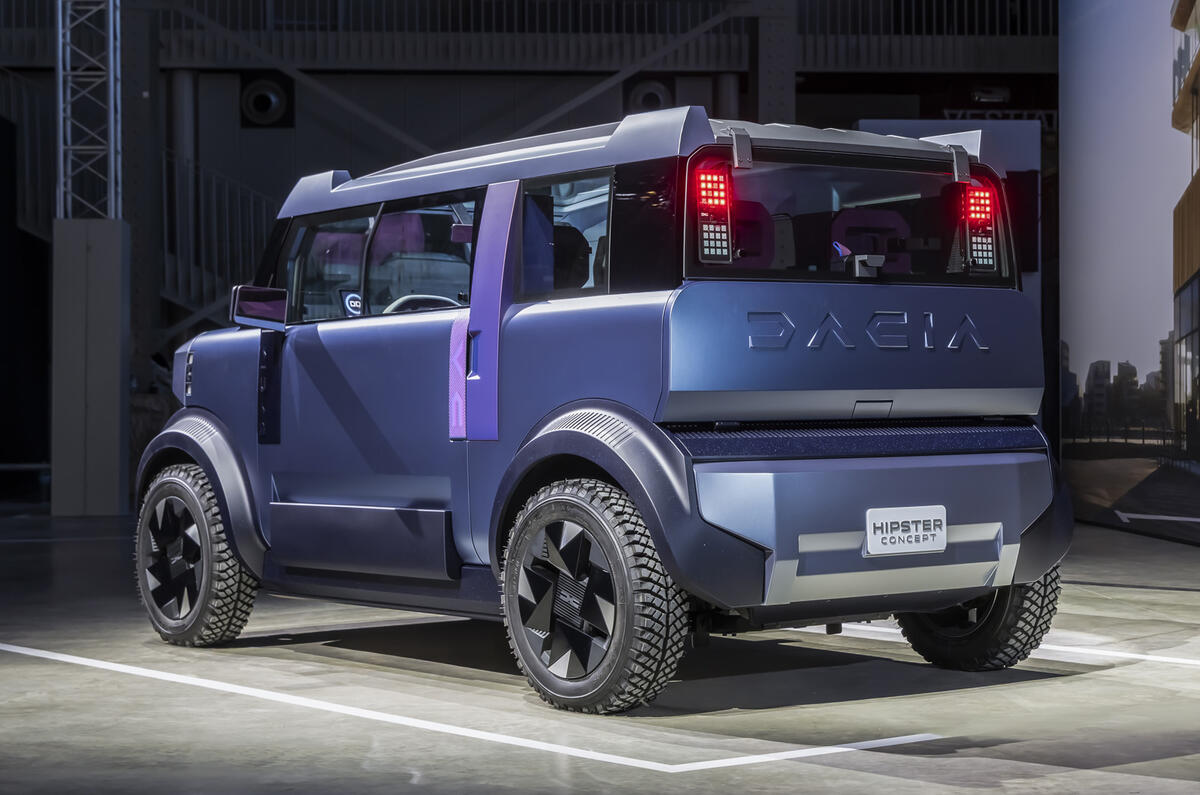
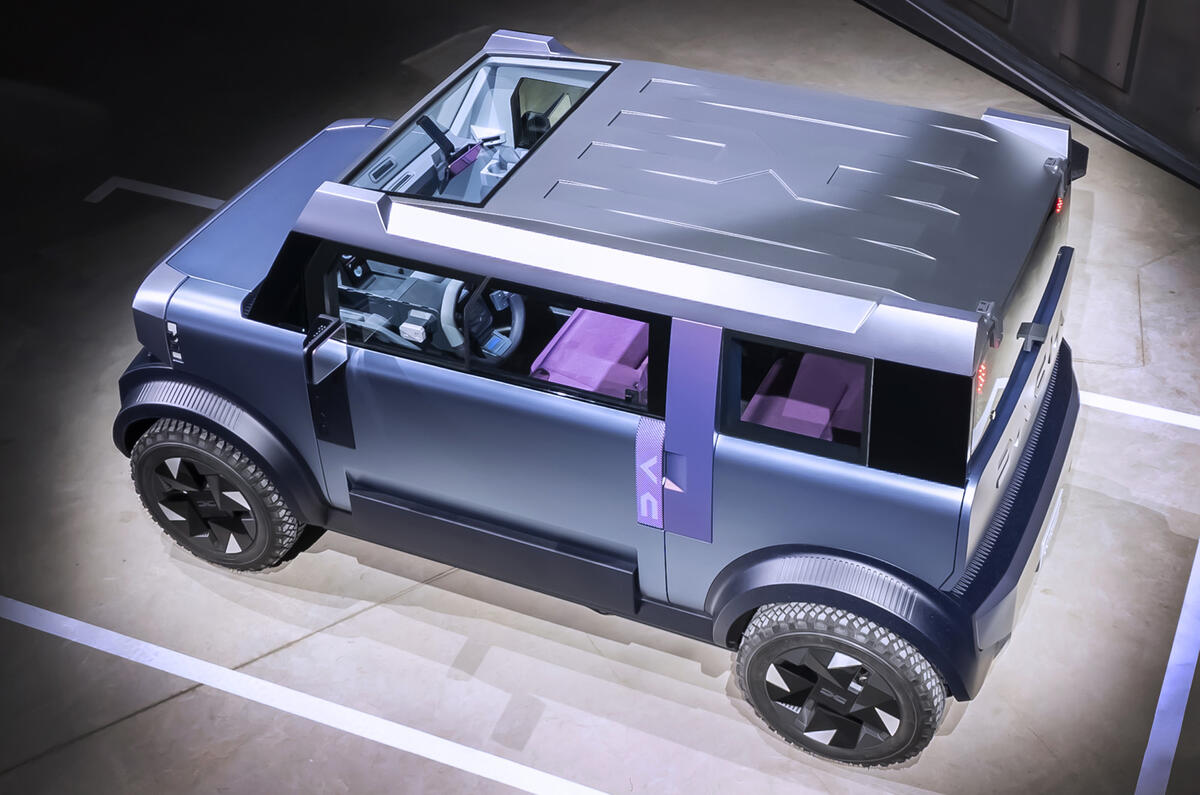
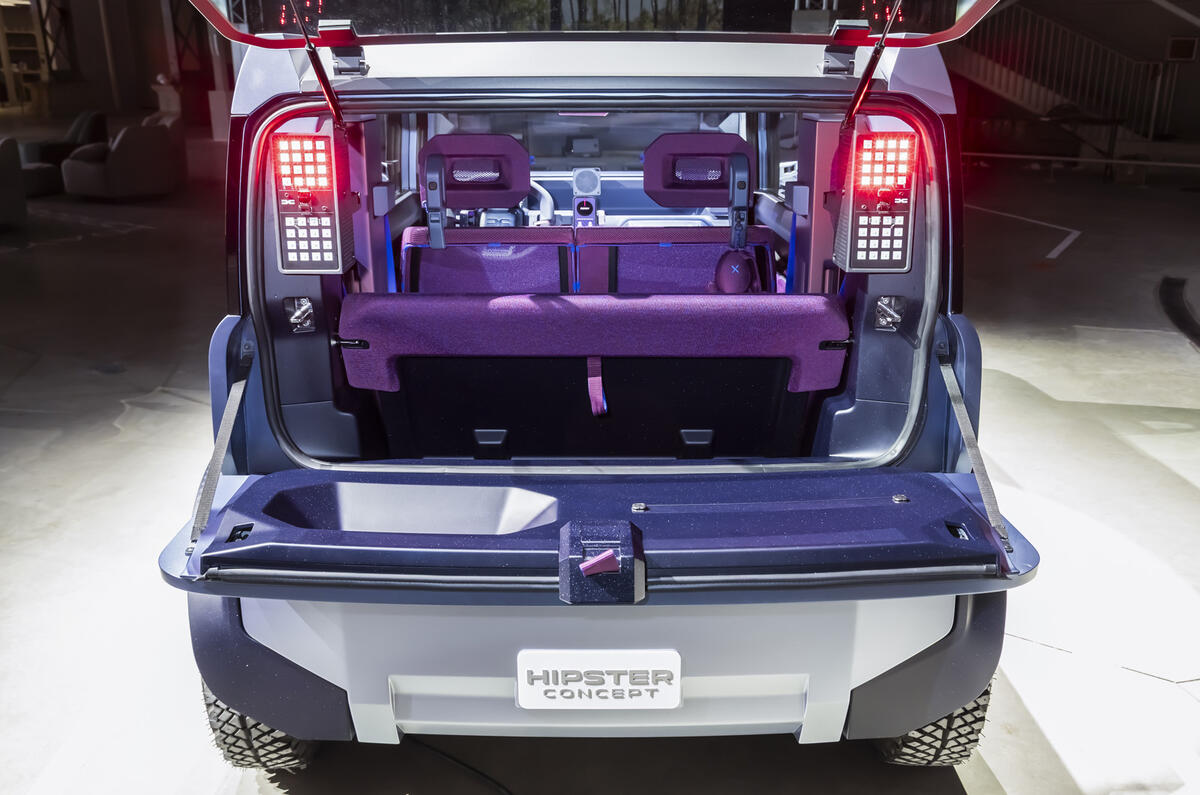
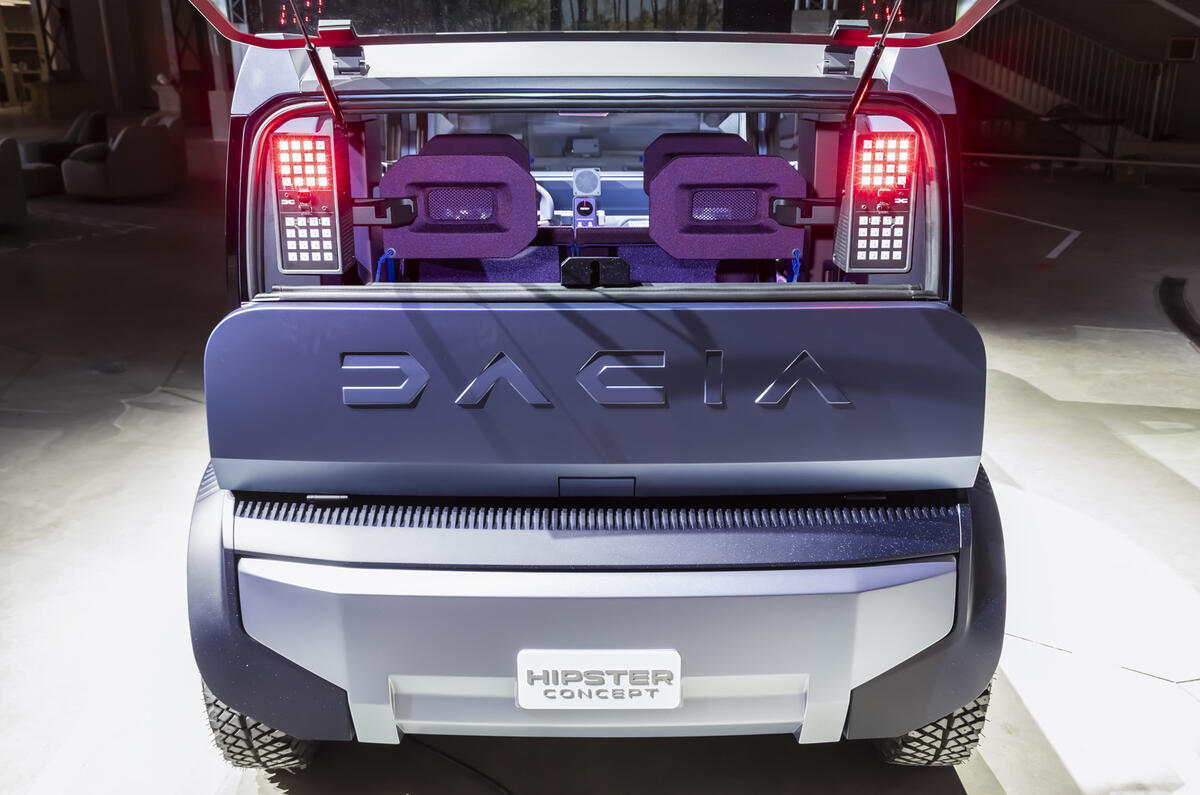
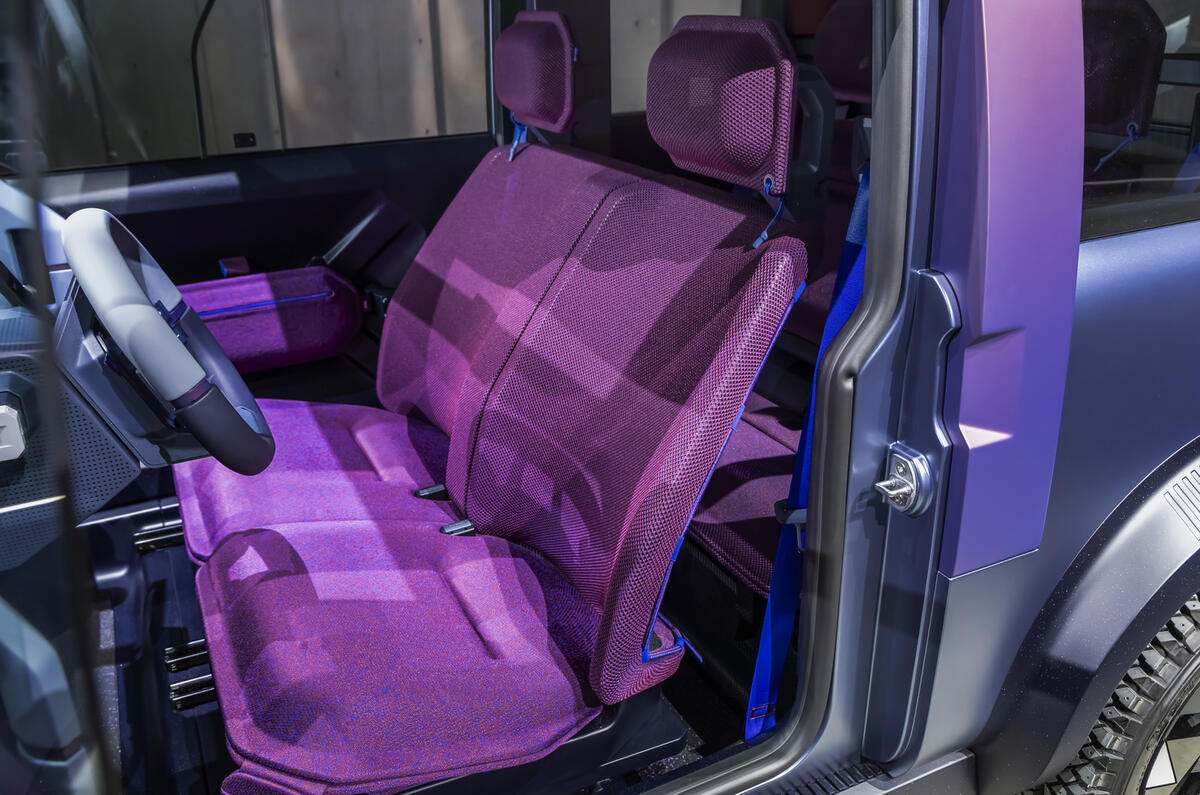
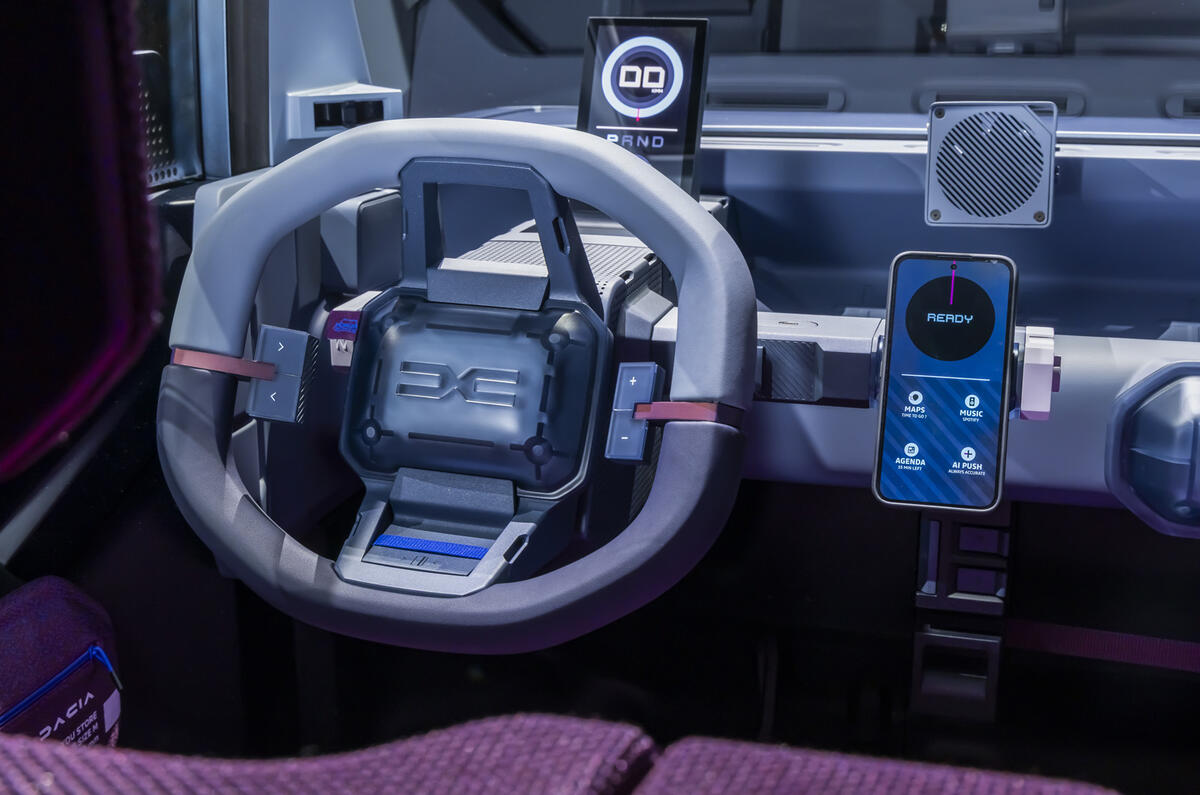
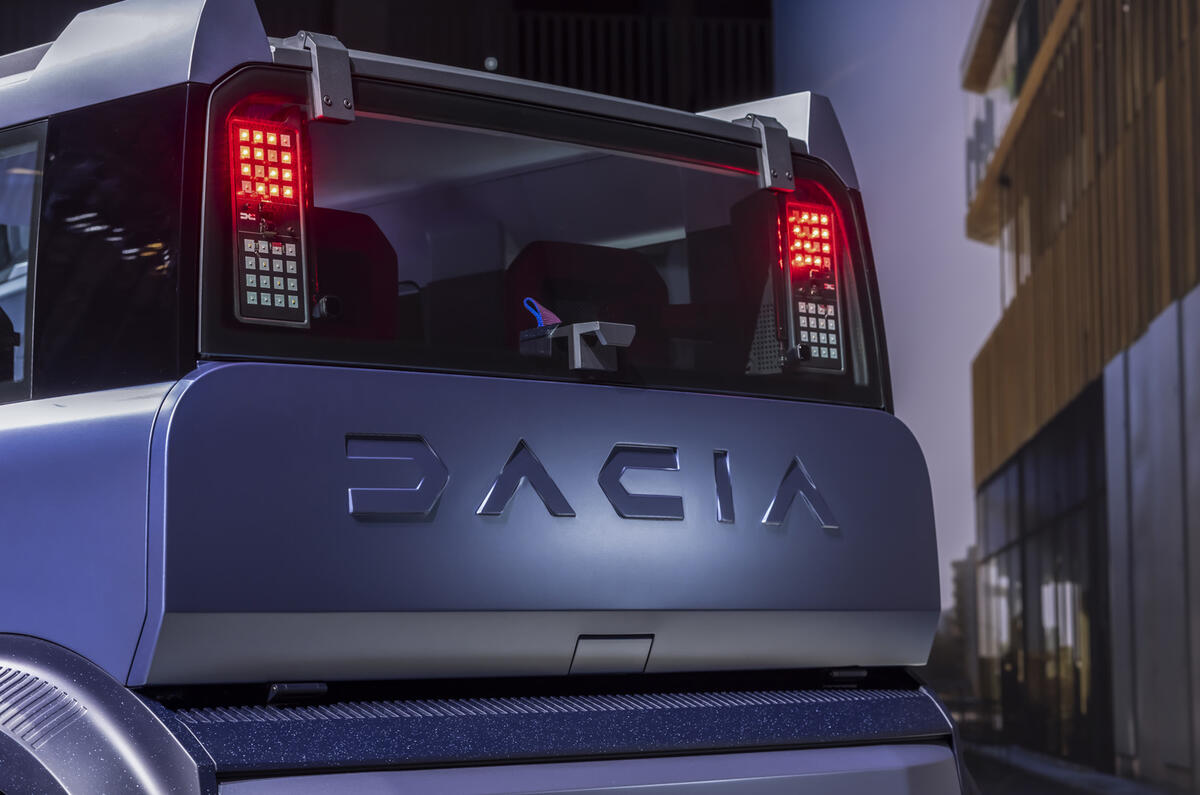
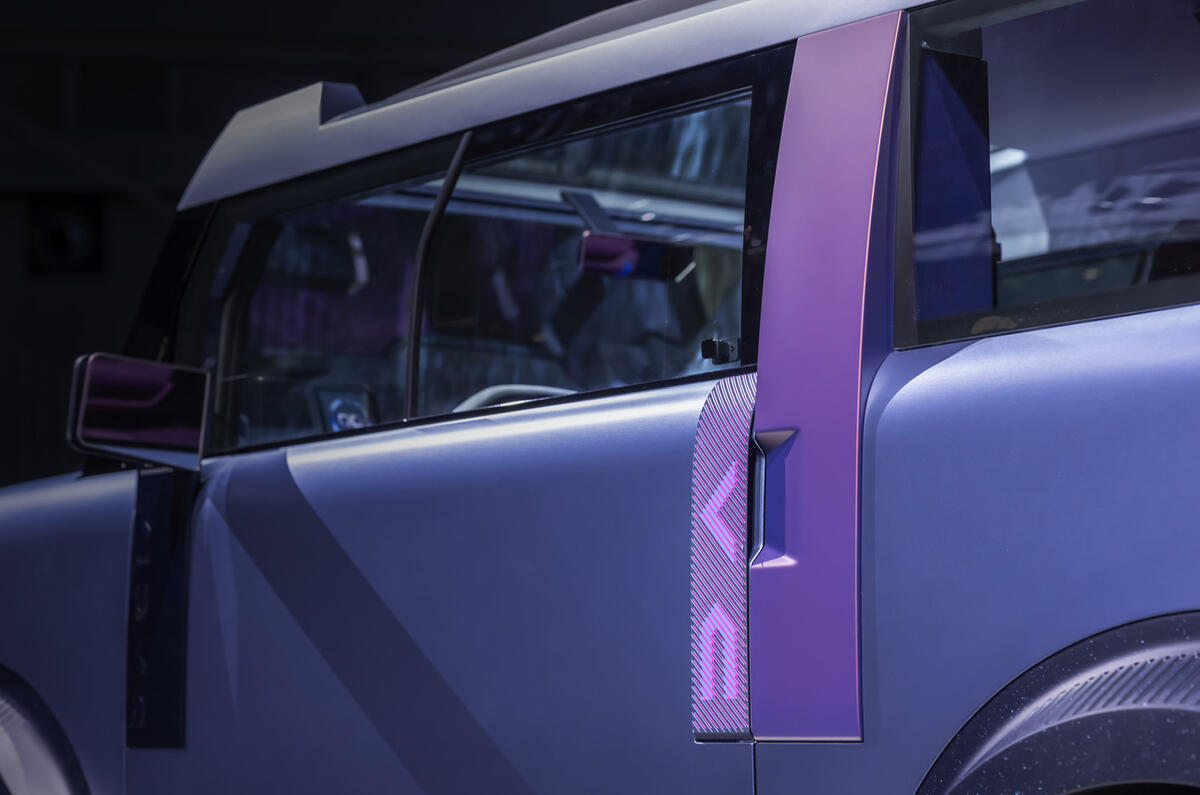
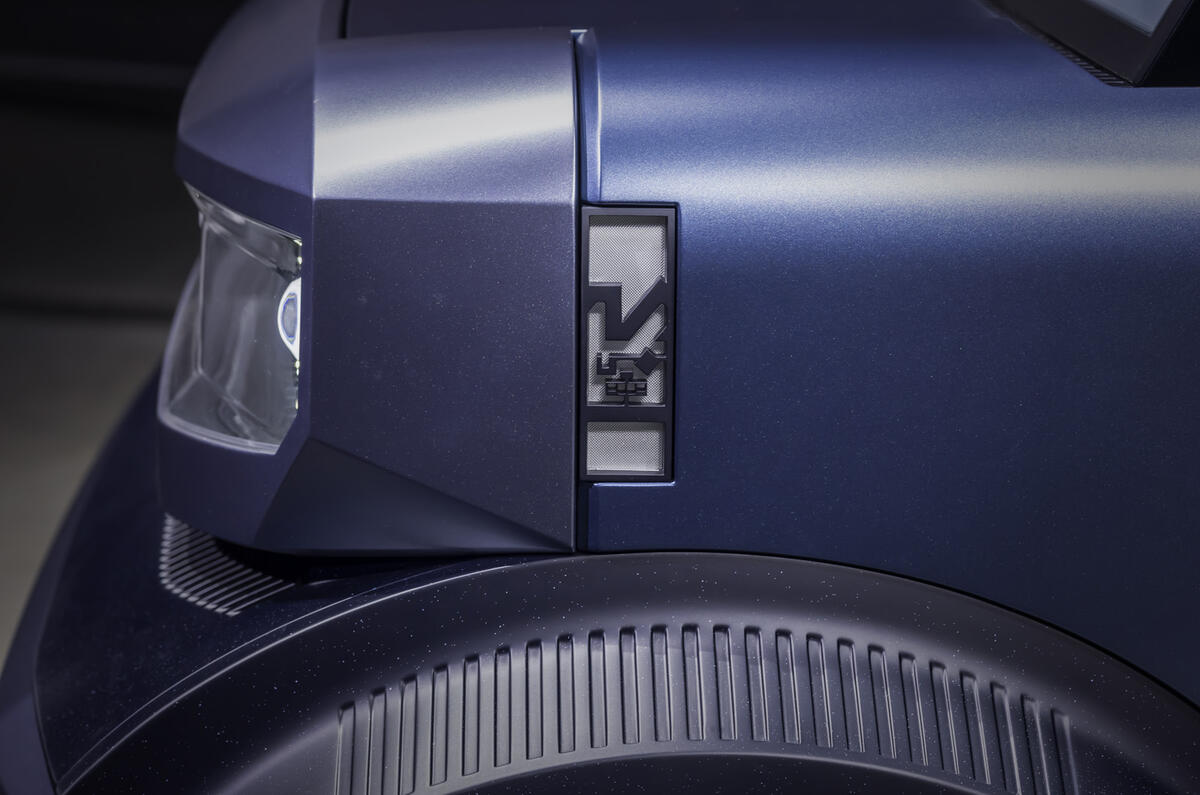
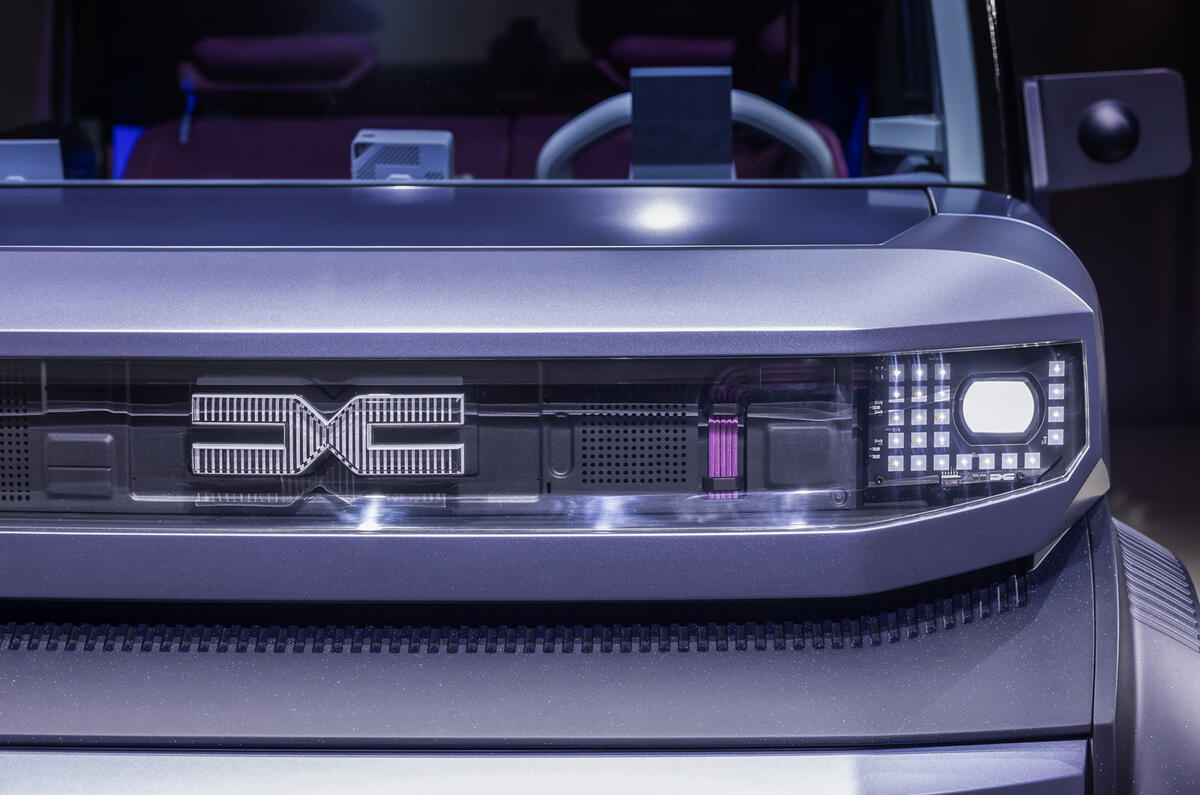
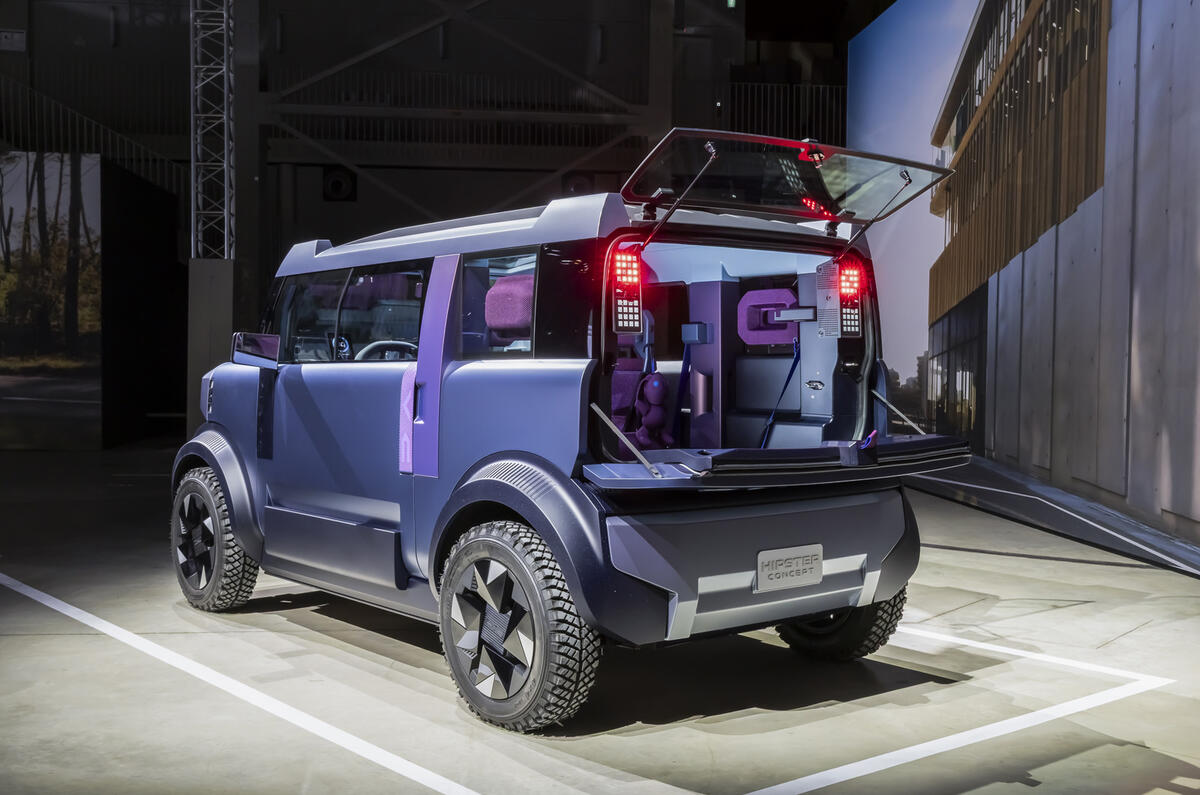
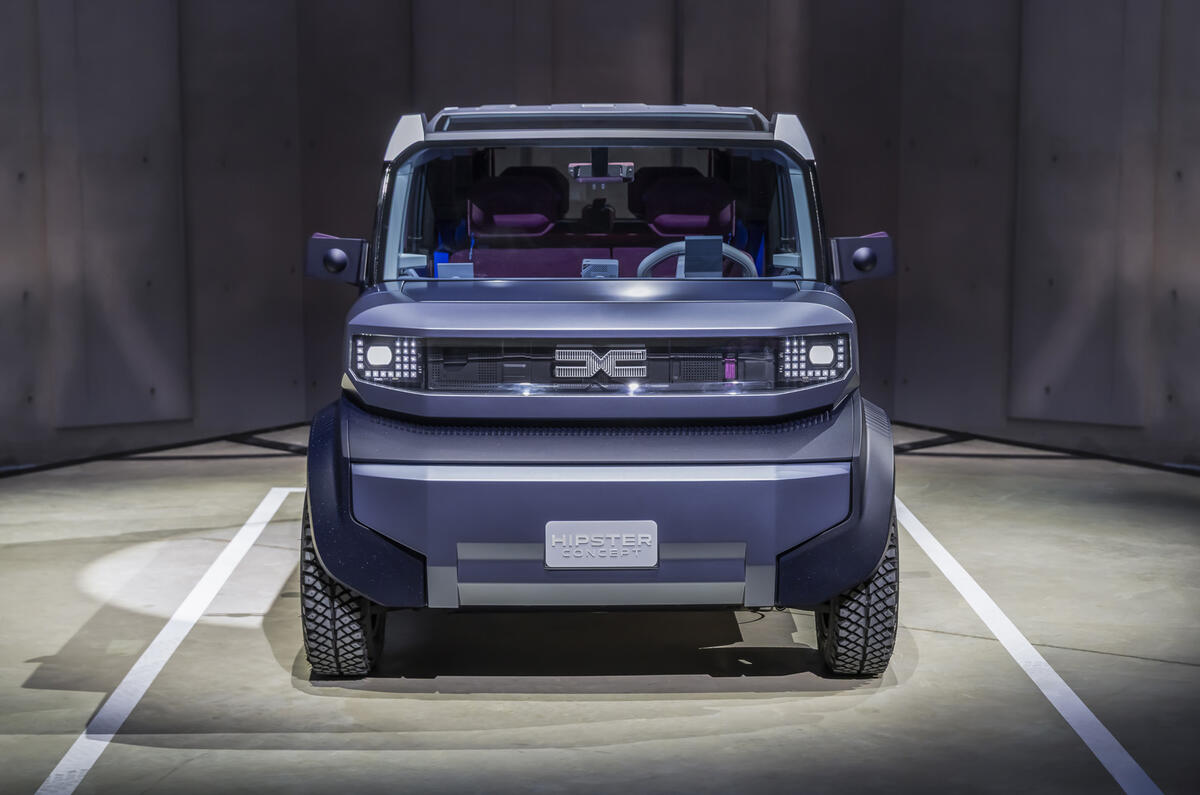
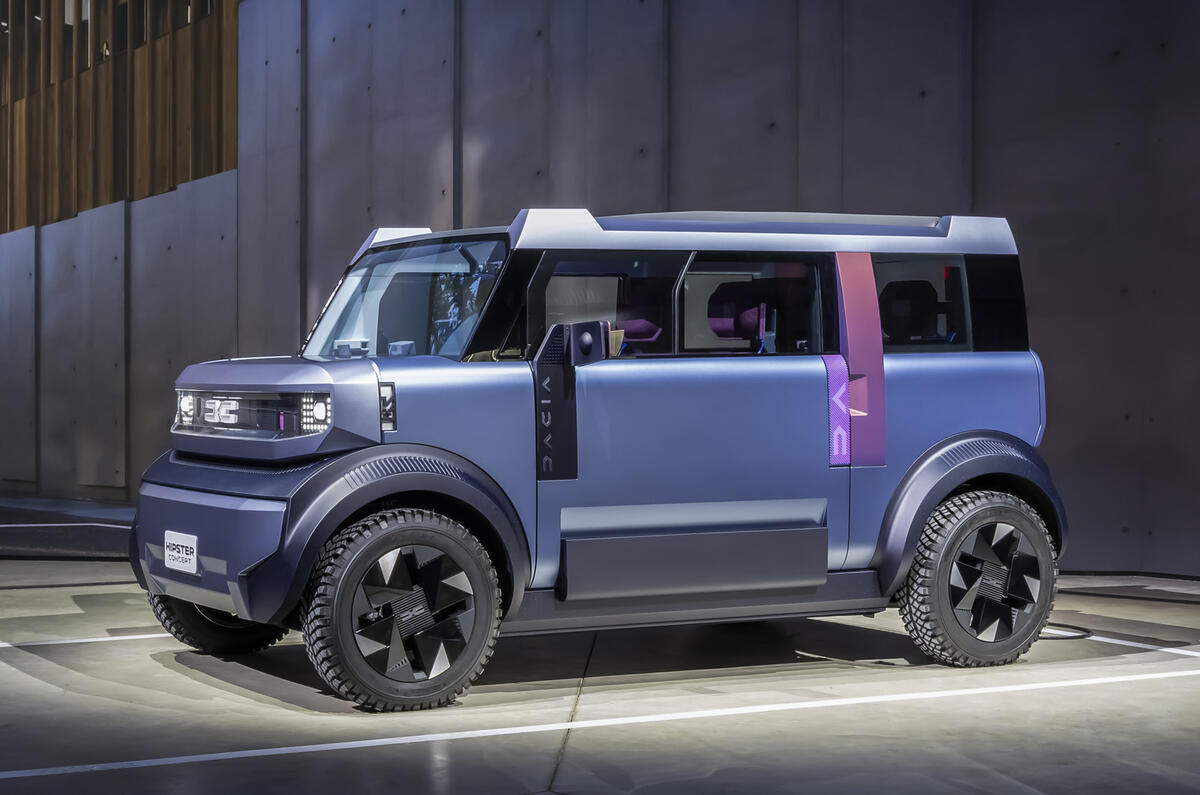




















Dacia has channeled the spirit of the original Mini, Fiat 500 and Volkswagen Beetle for a new sub-800kg, four-seat city car concept designed to dramatically reduce the price of EVs.
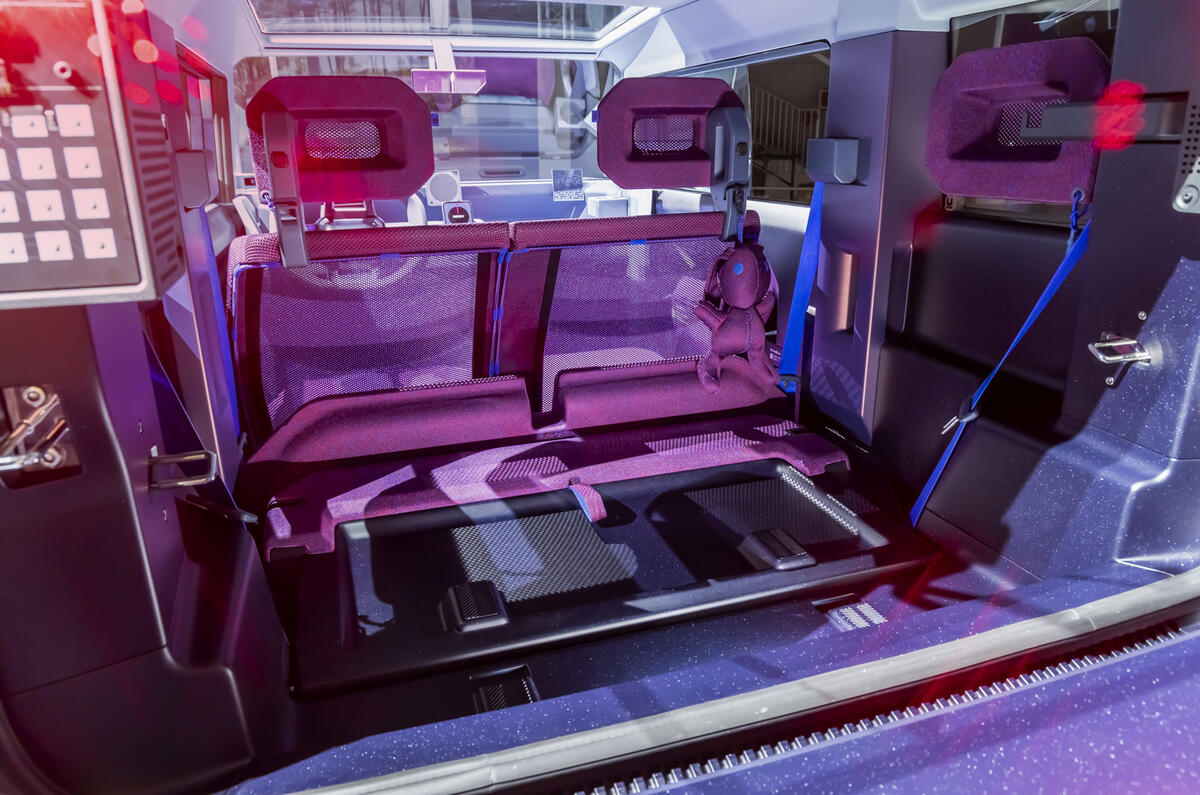
Called the Hipster, it measures just 1.55m wide, 1.53m high and 3m long – shorter than any car currently on sale – yet still has four full-sized seats and up to 500 litres of load space with the rears folded - enough to accommodate a washing machine.
Dacia’s aim is to “enable as many people as possible to access essential mobility” in the face of rising costs brought about by regulation and electrification, with the Hipster envisaging a model that undercuts even the £15k Spring EV - one of Europe’s cheapest full-sized cars.
Hipster previews a new era of people's cars
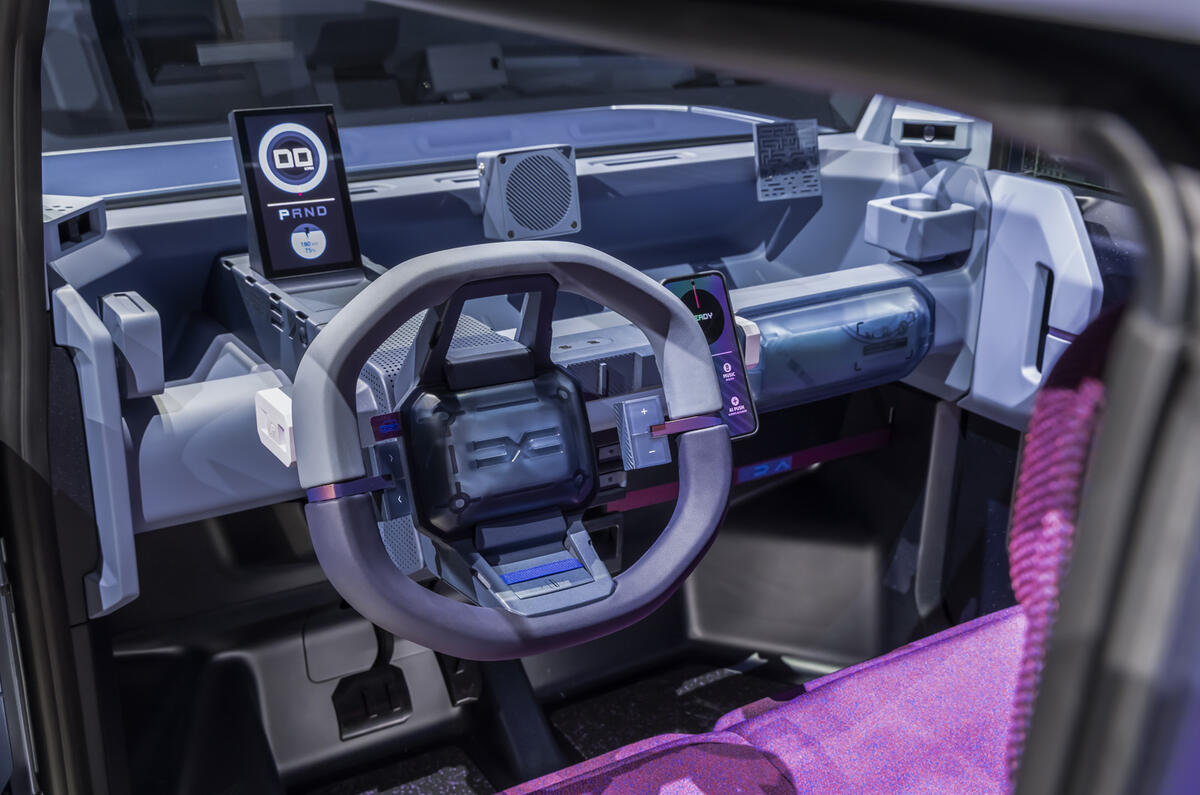
Tightly packaged and as minimally specified as possible, the Hipster showcases the sort of EV that manufacturers could produce for the new ‘E-car' category of affordable small cars that’s set to be introduced in Europe – although it had been designed before the first details of this new class emerged.
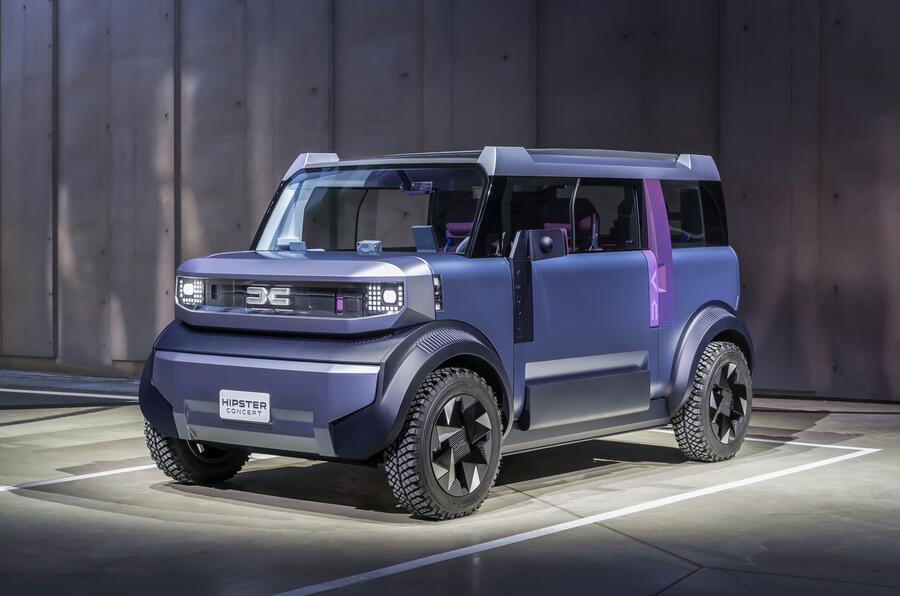
The exact framework of this new category – which is yet to be officially greenlit – remains to be determined, but Dacia’s sales and marketing boss Frank Marotte said the Hipster shows what could be possible if manufacturers were given more regulatory freedom to build small, affordable cars profitably.
"Fundamentally, I think that the European Commission and all the stakeholders and most of the OEMs are starting to recognise that, especially for small cars, we've [gone] too far in terms of certain types of regulations - and the actual usage by customers is completely disconnected from from the latest active safety regulation that has been put in place,” he told Autocar.
He said that EU legislators have added around 100 new regulations for cars since 2010 and estimated that there will be another 100-plus added between now and 2030.
Partly as a result of this increasing legislation and all the extra equipment and materials it necessitates, the average weight of a new car is said to have risen 15% over the past decade, its power has increased by 43% to compensate and it has increased in cost by 63%.
The used car market, Marotte added, provides little refuge from these increased costs, with prices having risen 45% between 2010 and 2024.
"So our expectation is that, whether it's about safety, whether it's about technologies, we need to be more pragmatic, because we need to bring back affordable cars on the road. We need to bring back into the market customers who [have gone] away from it because they simply cannot afford new vehicles or even used cars.”