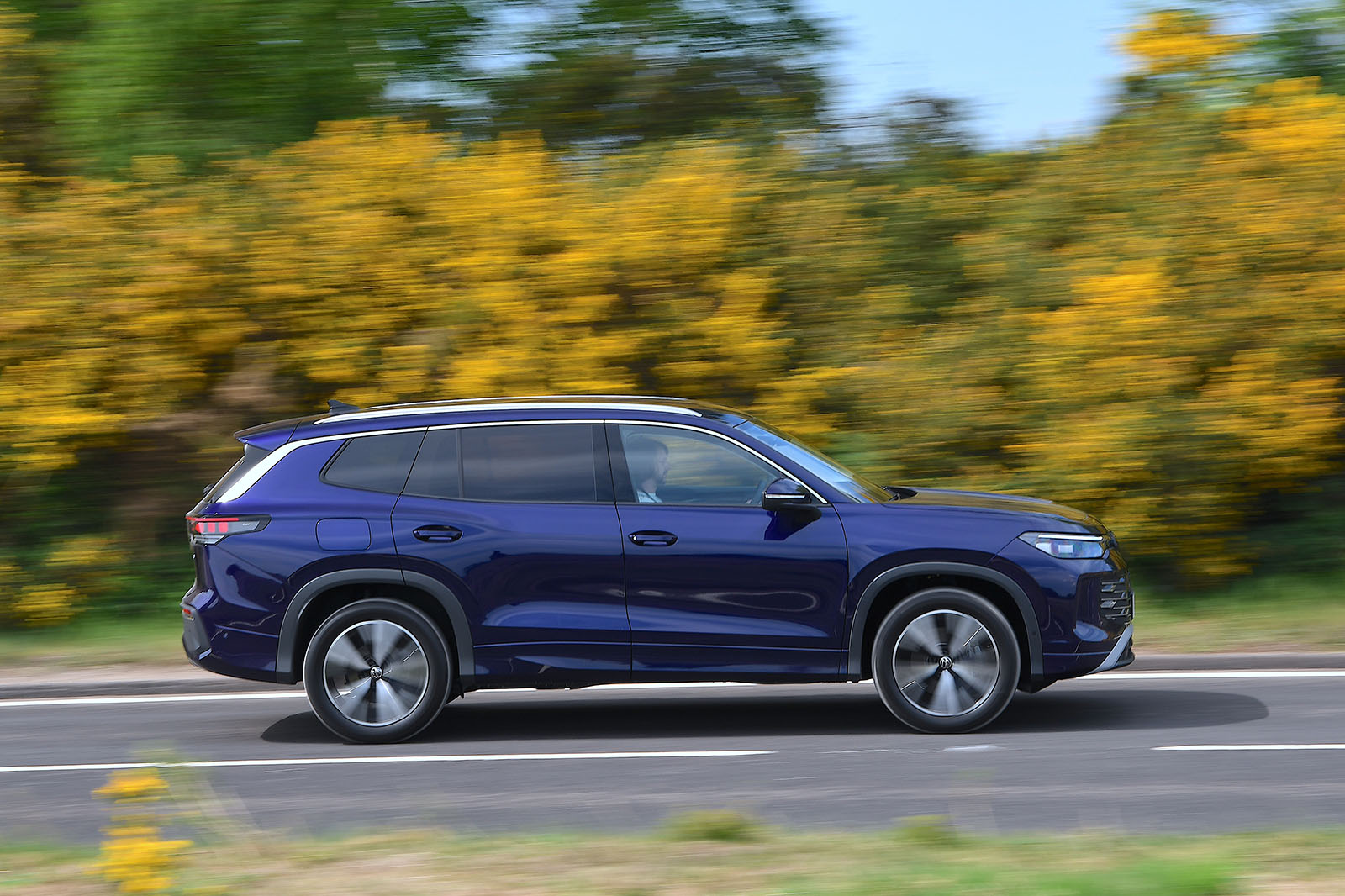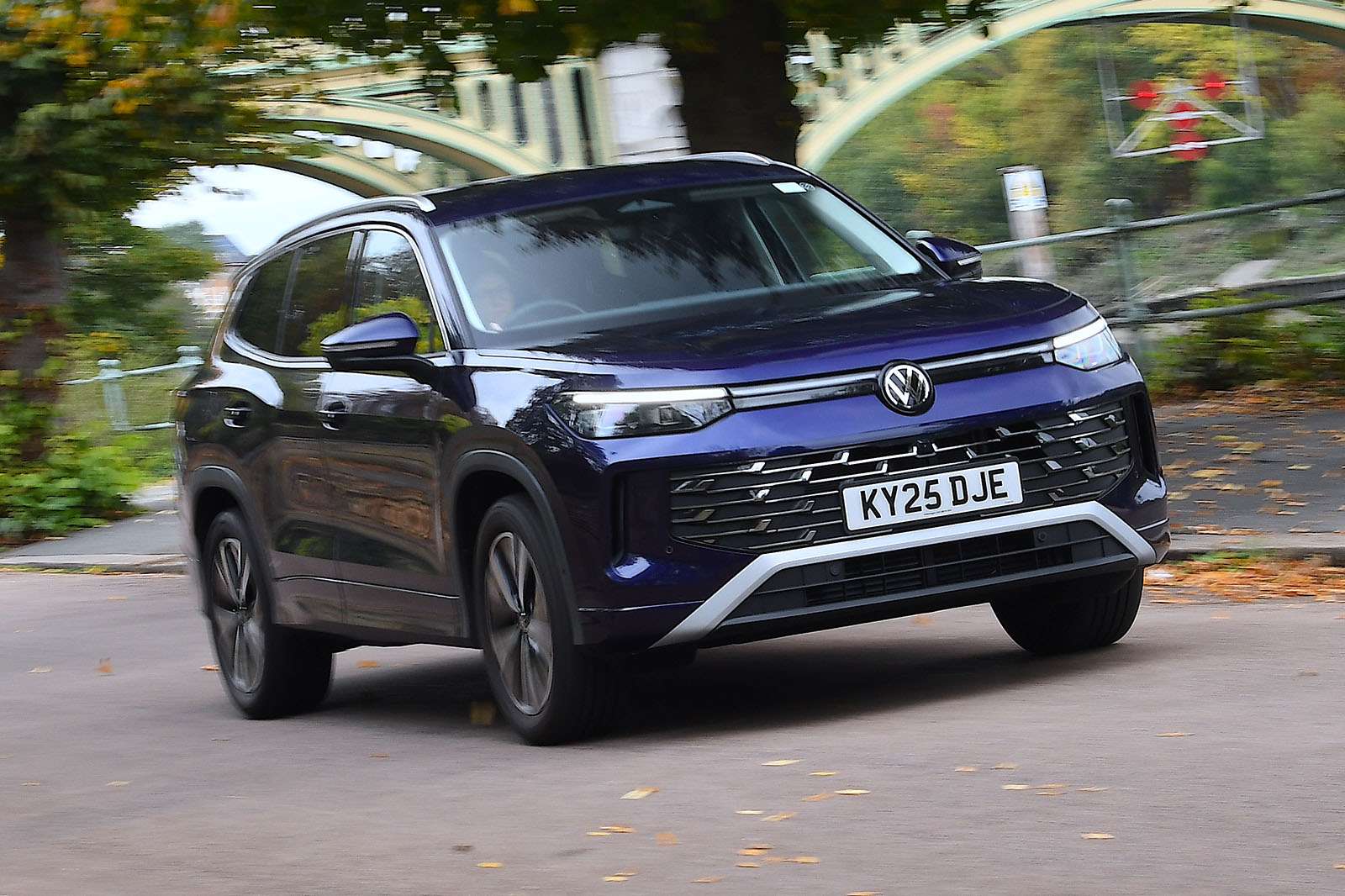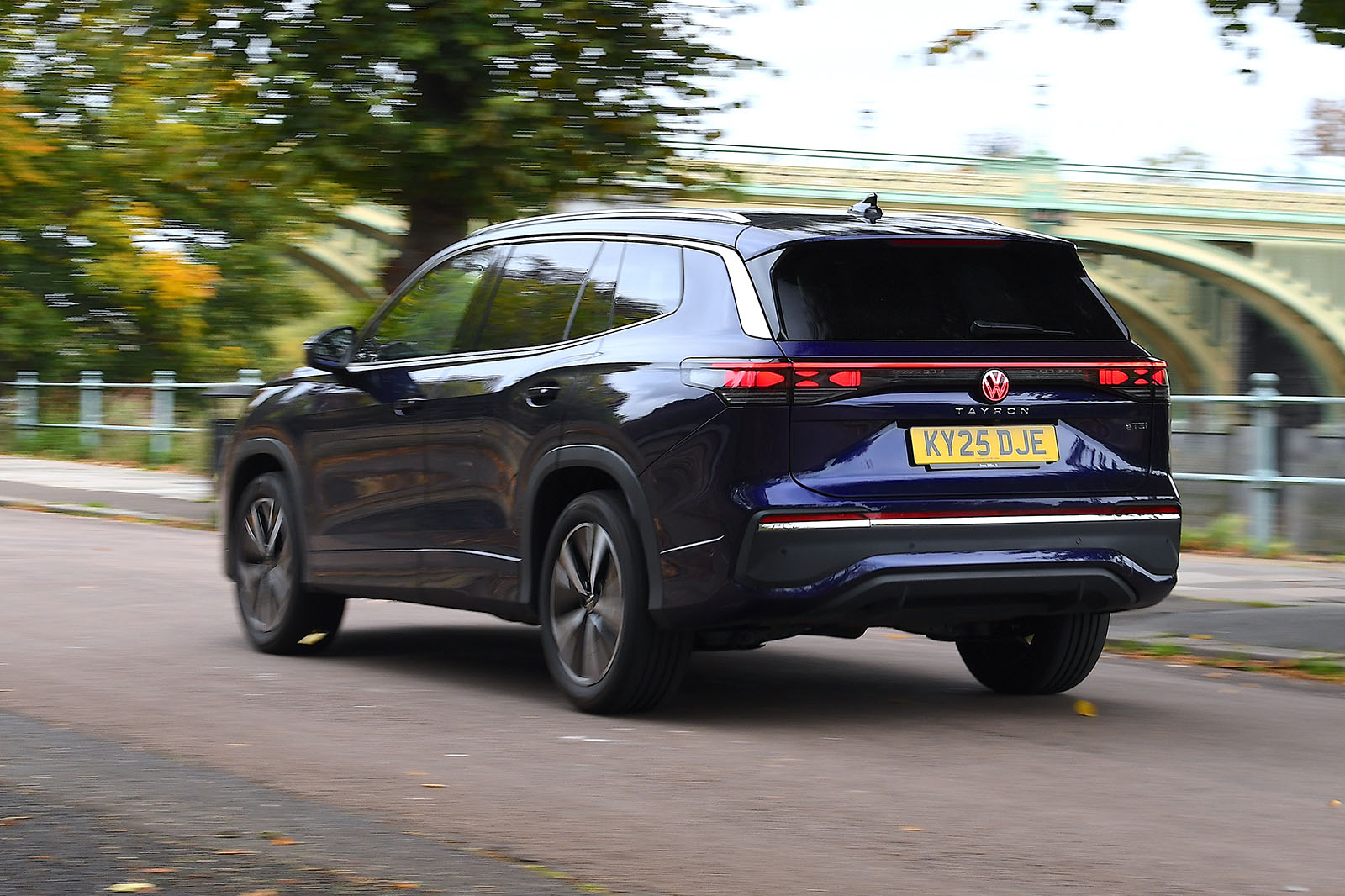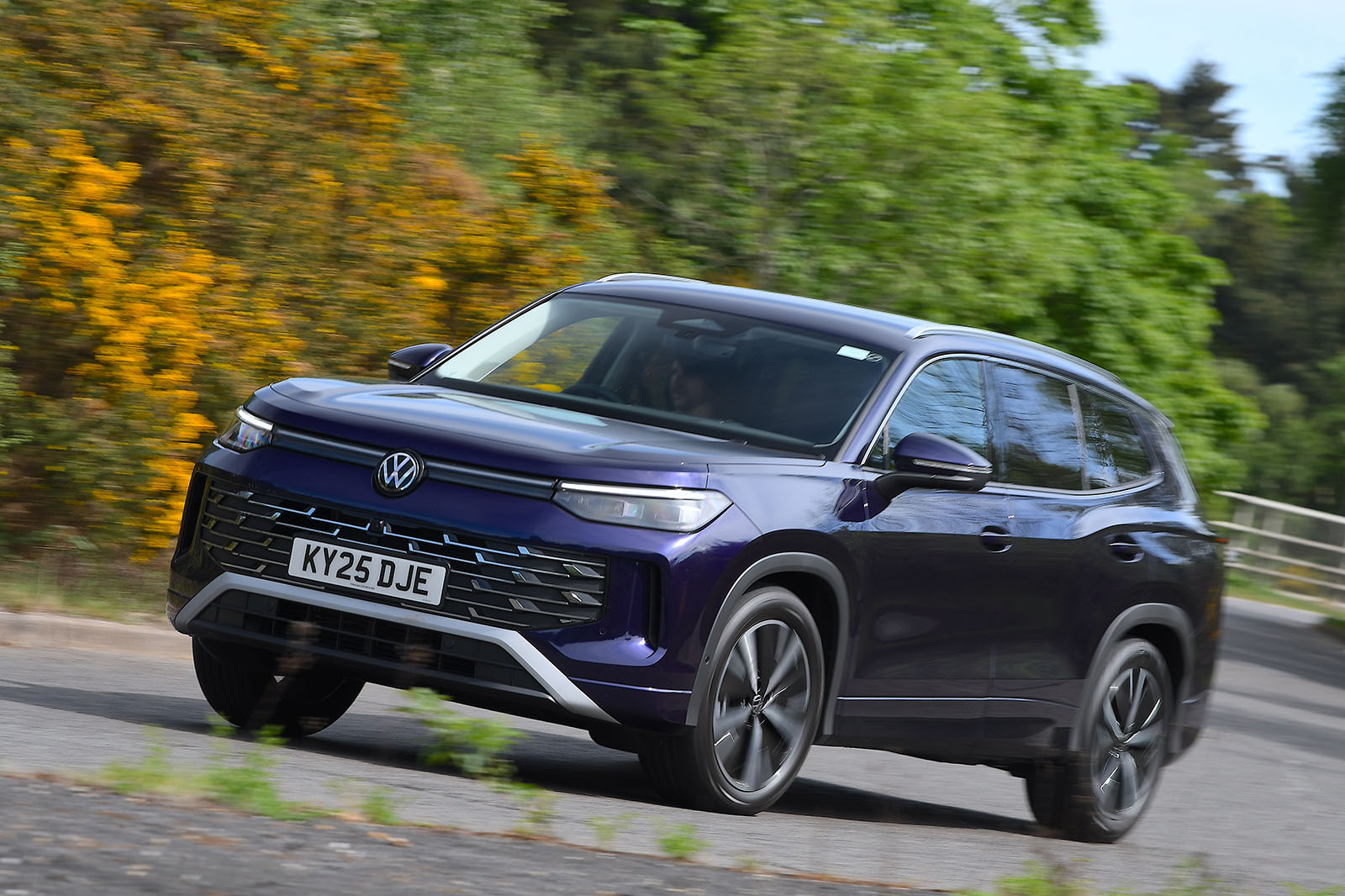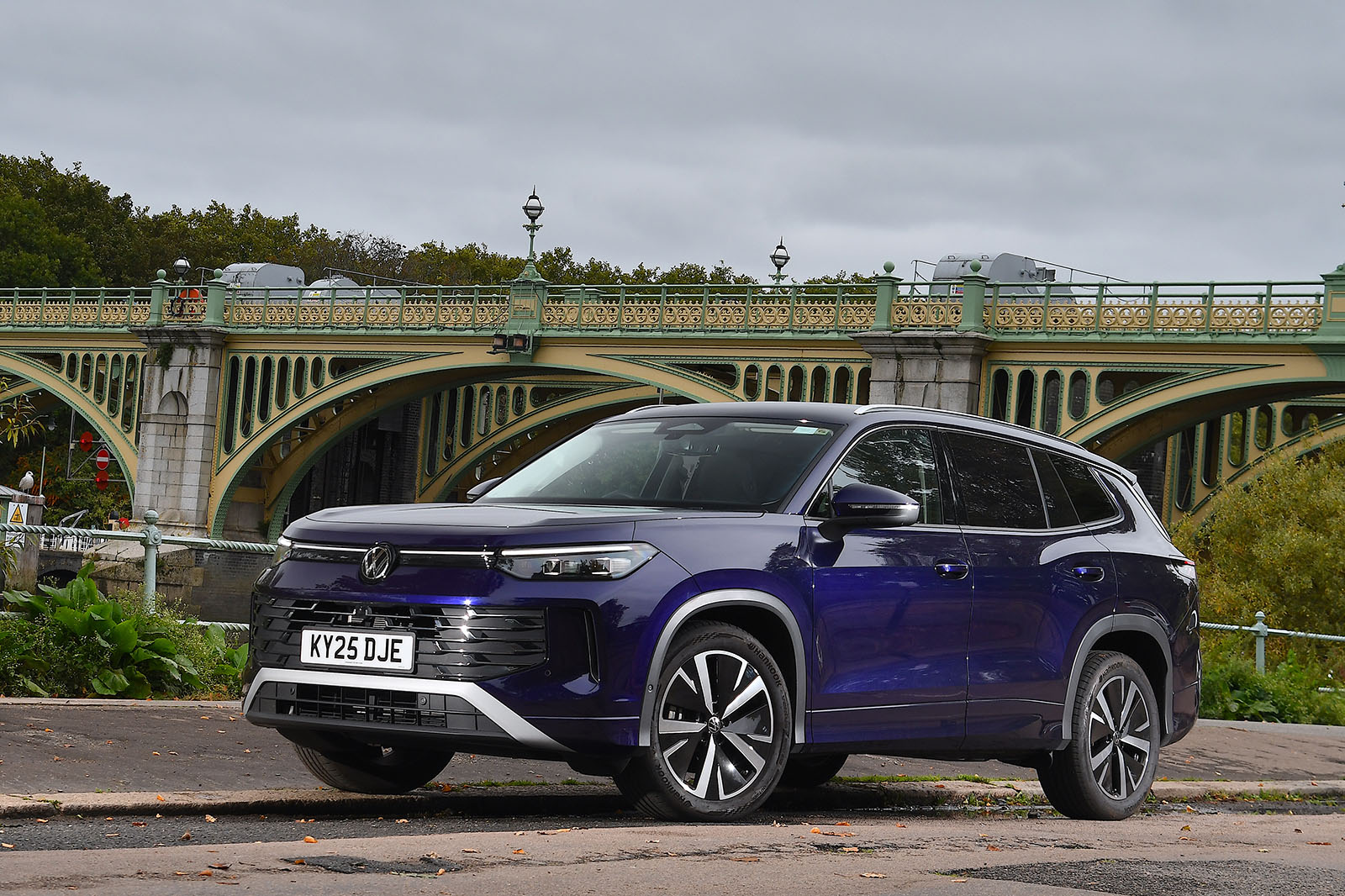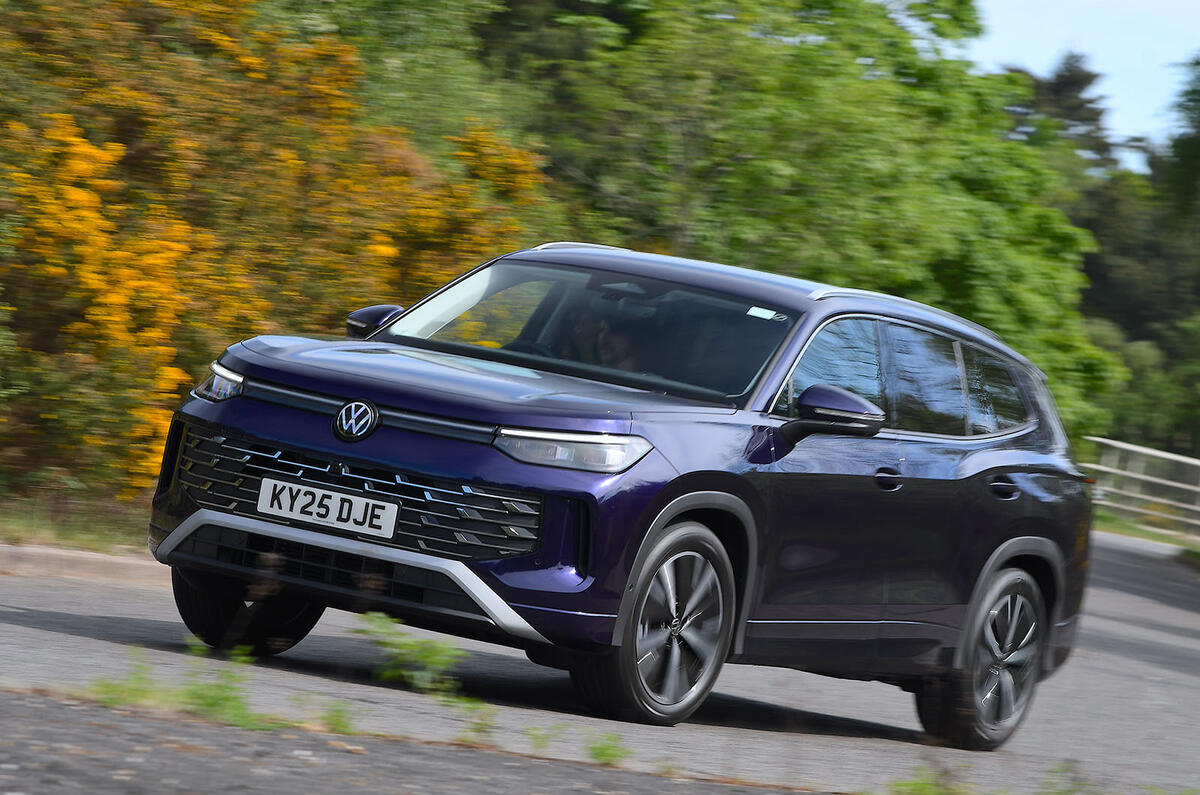
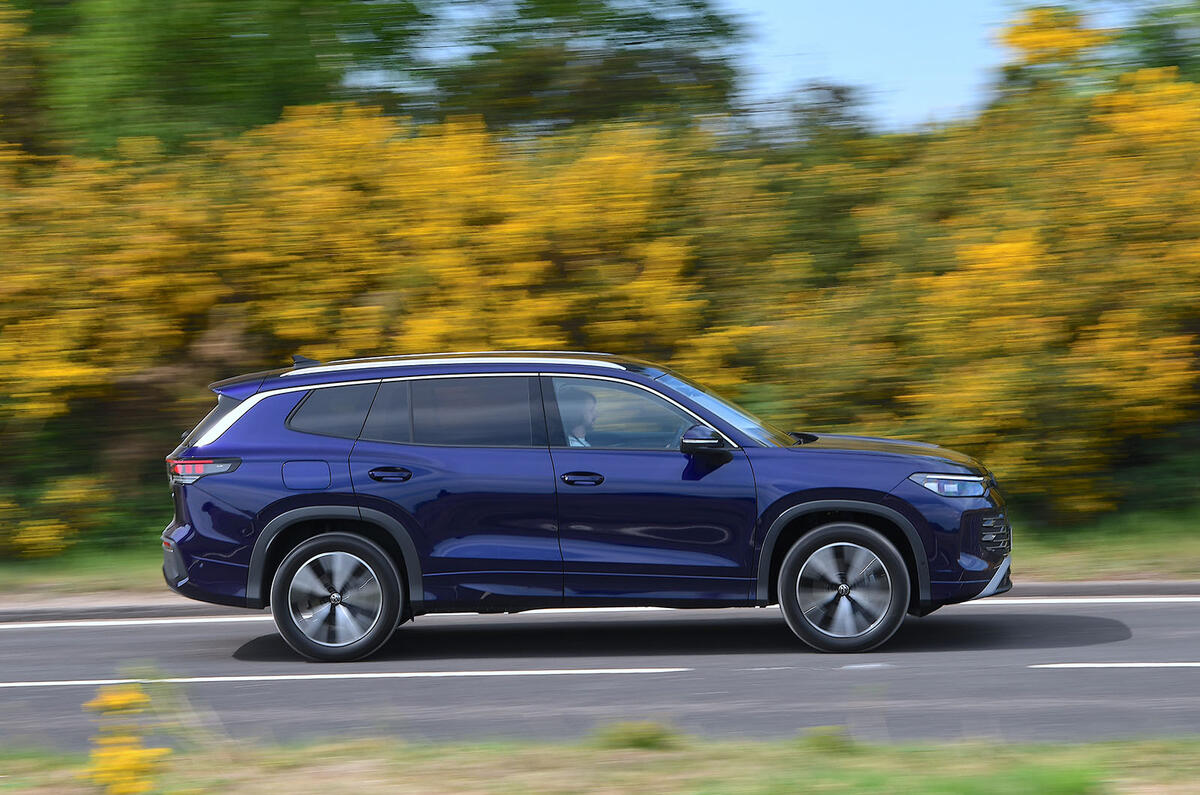
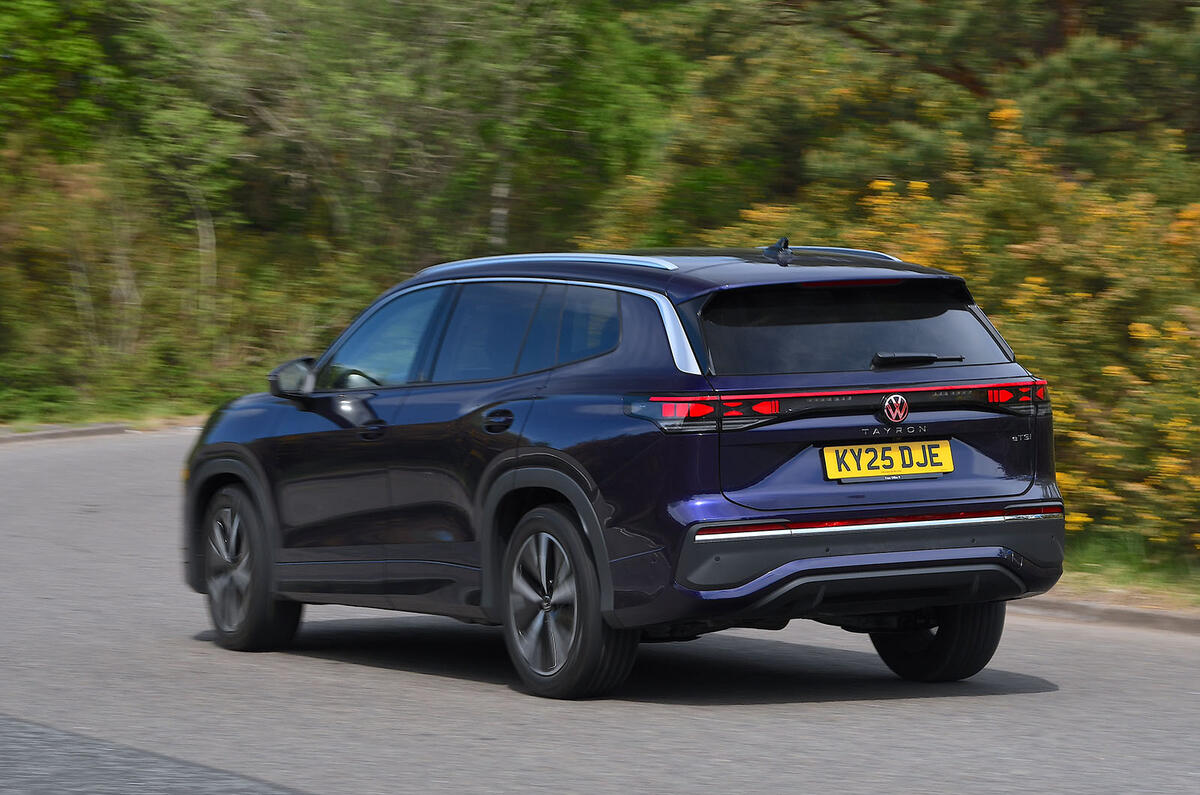



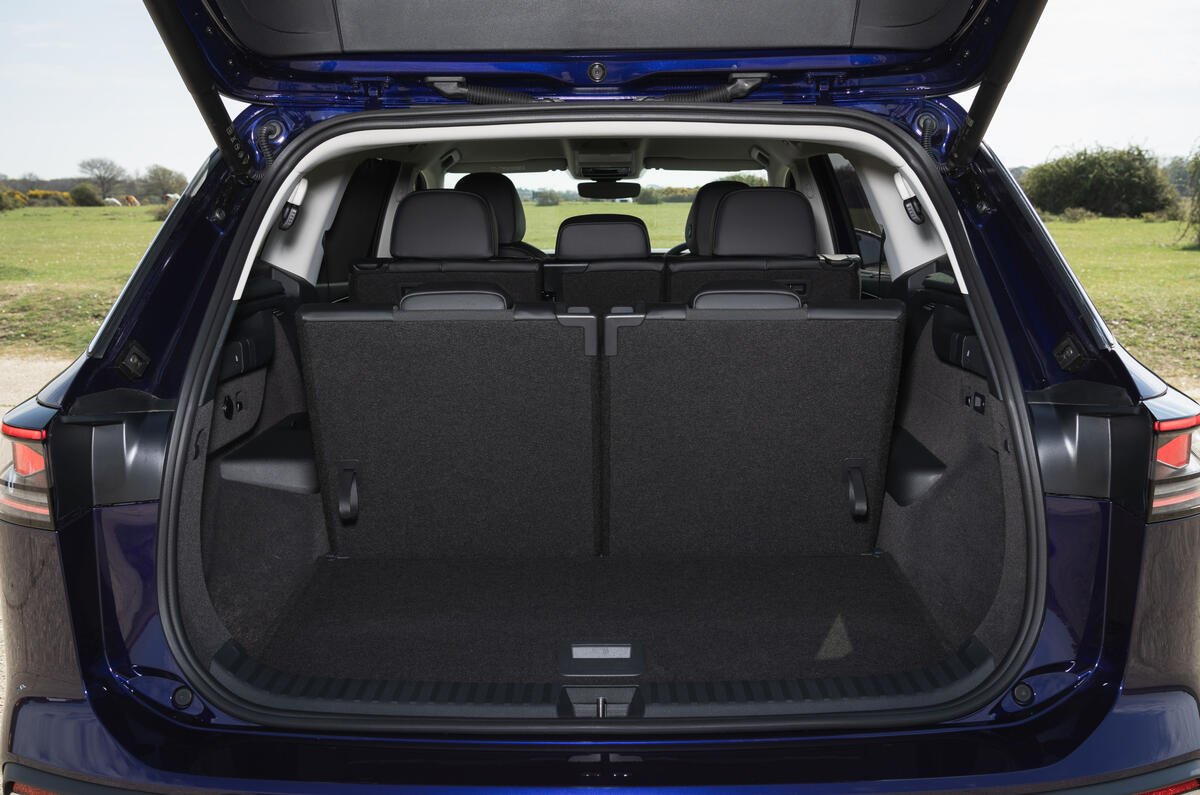
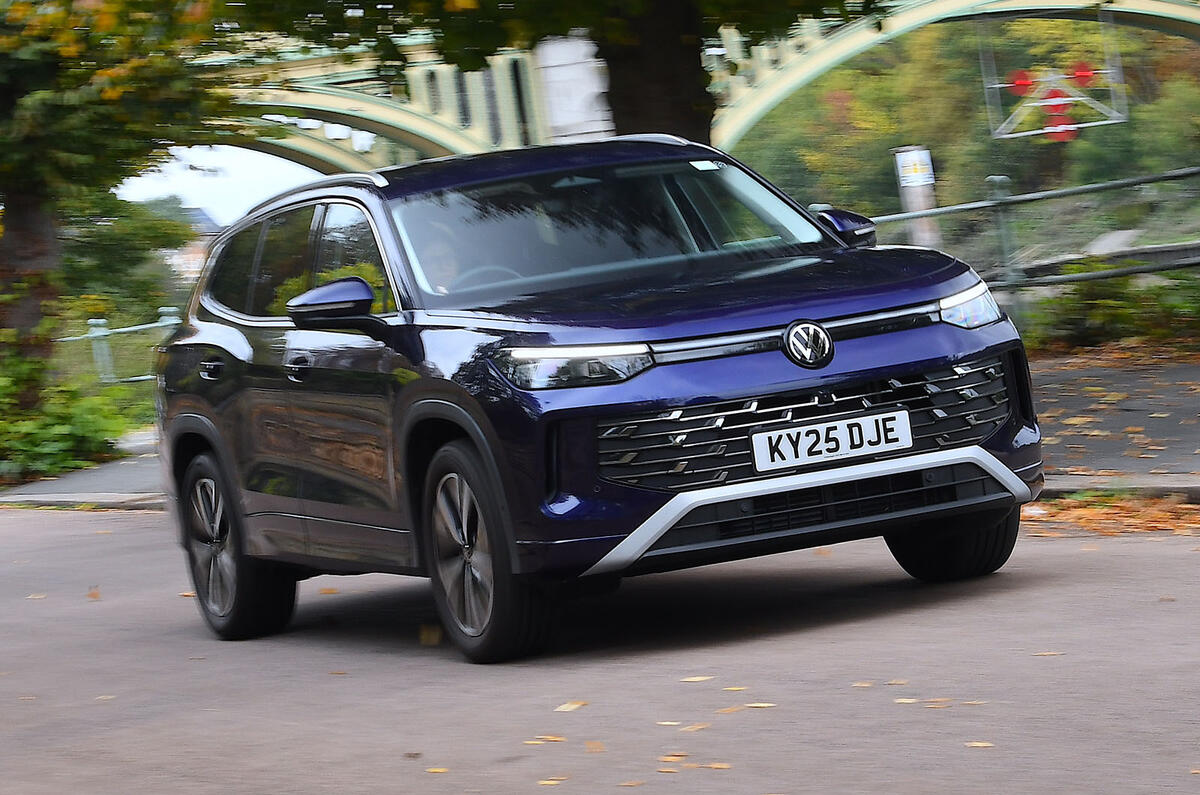
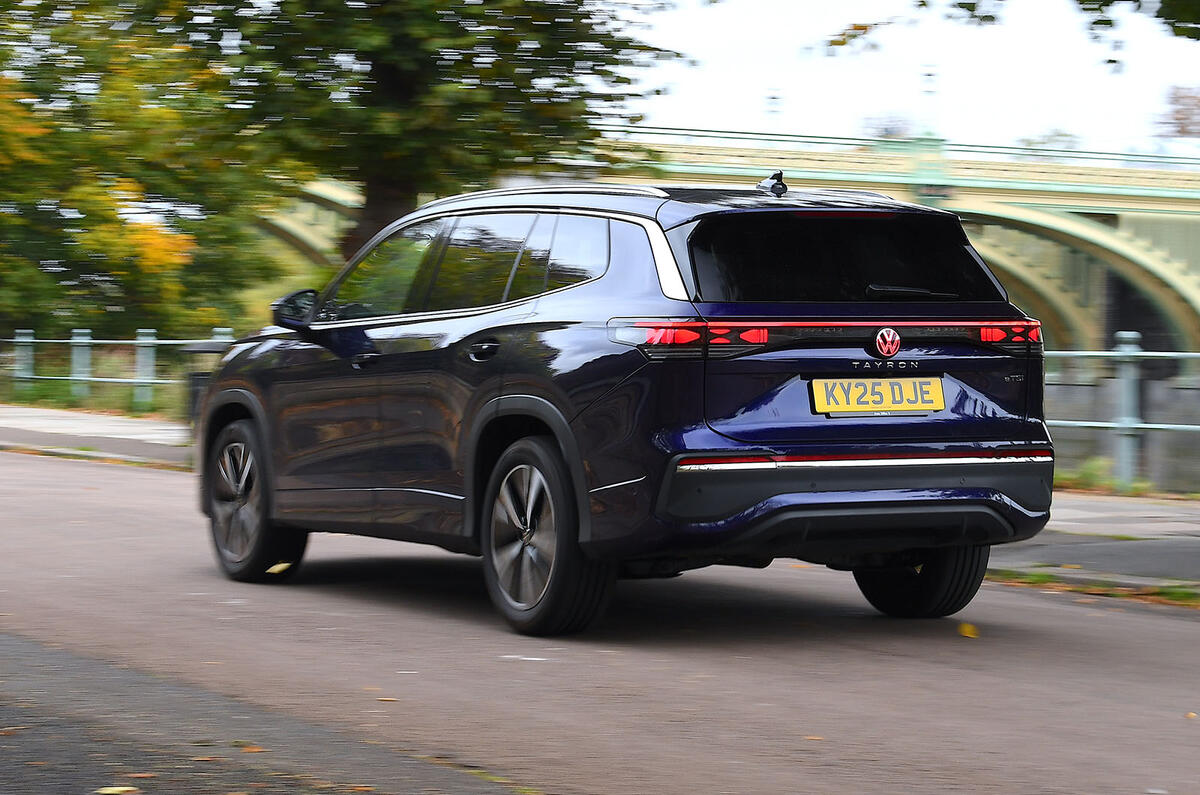
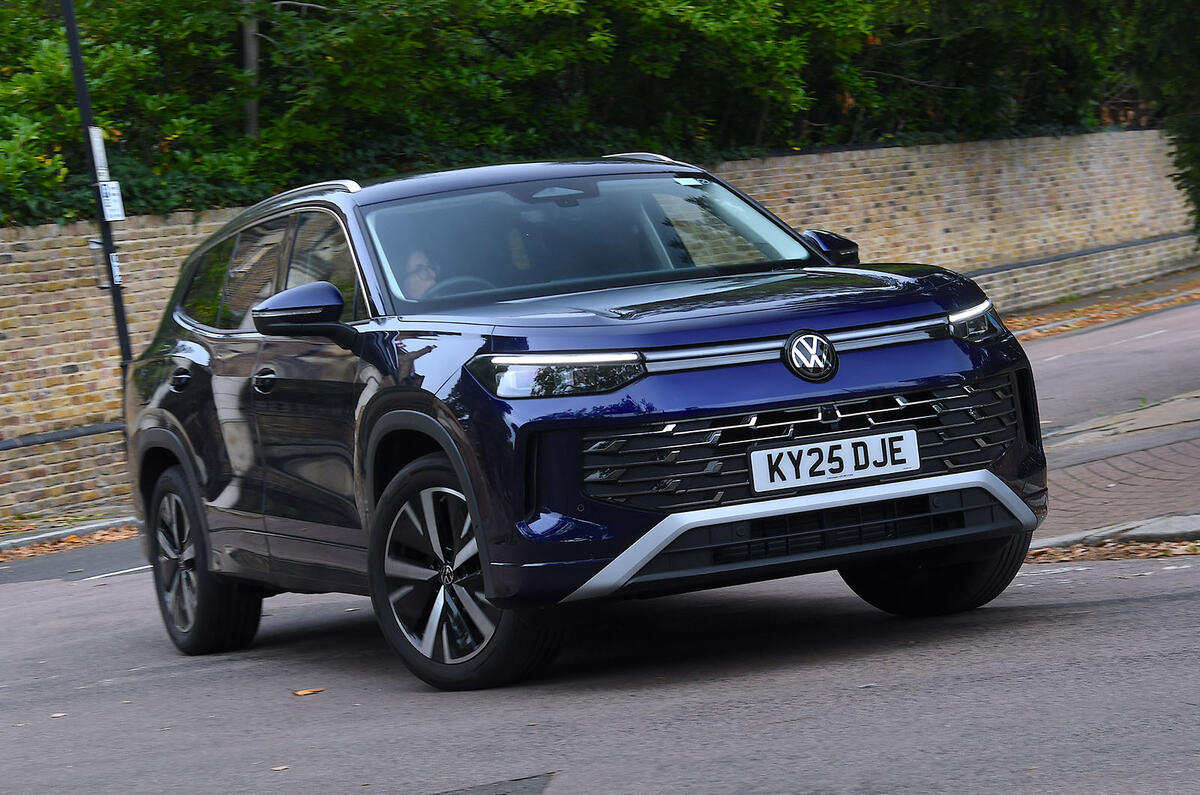
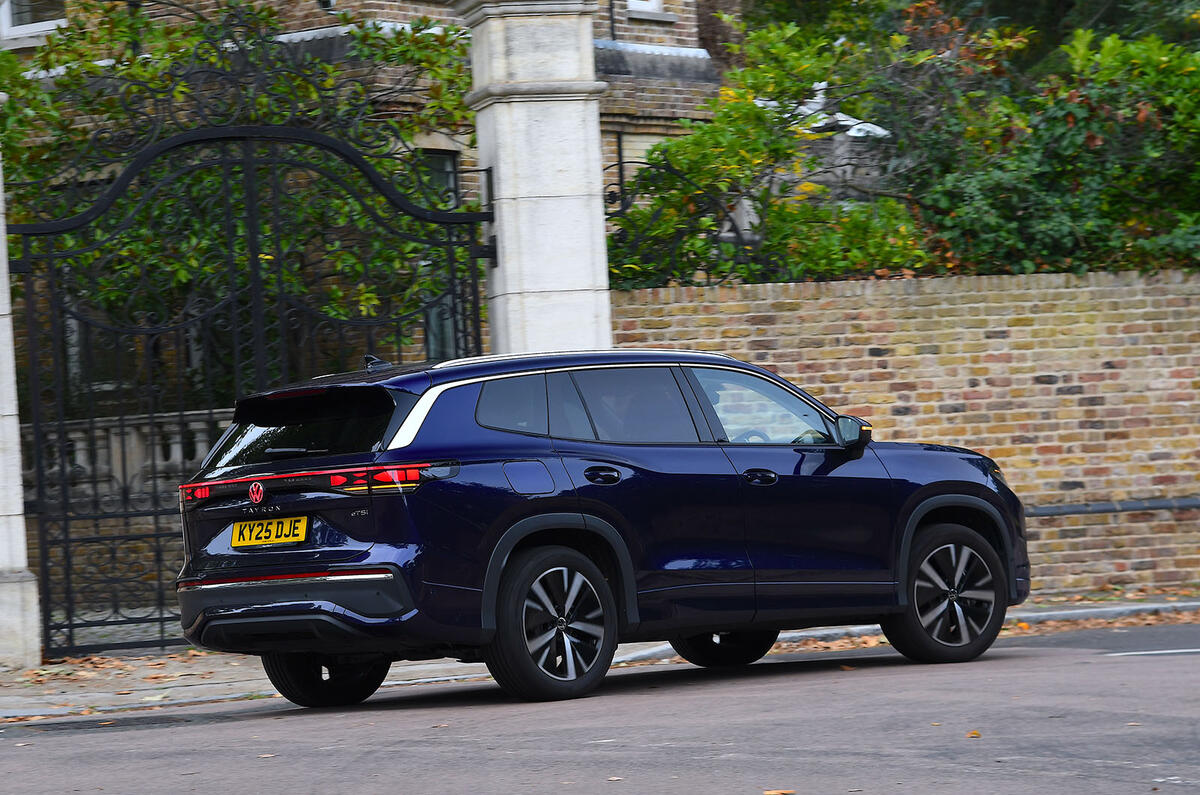
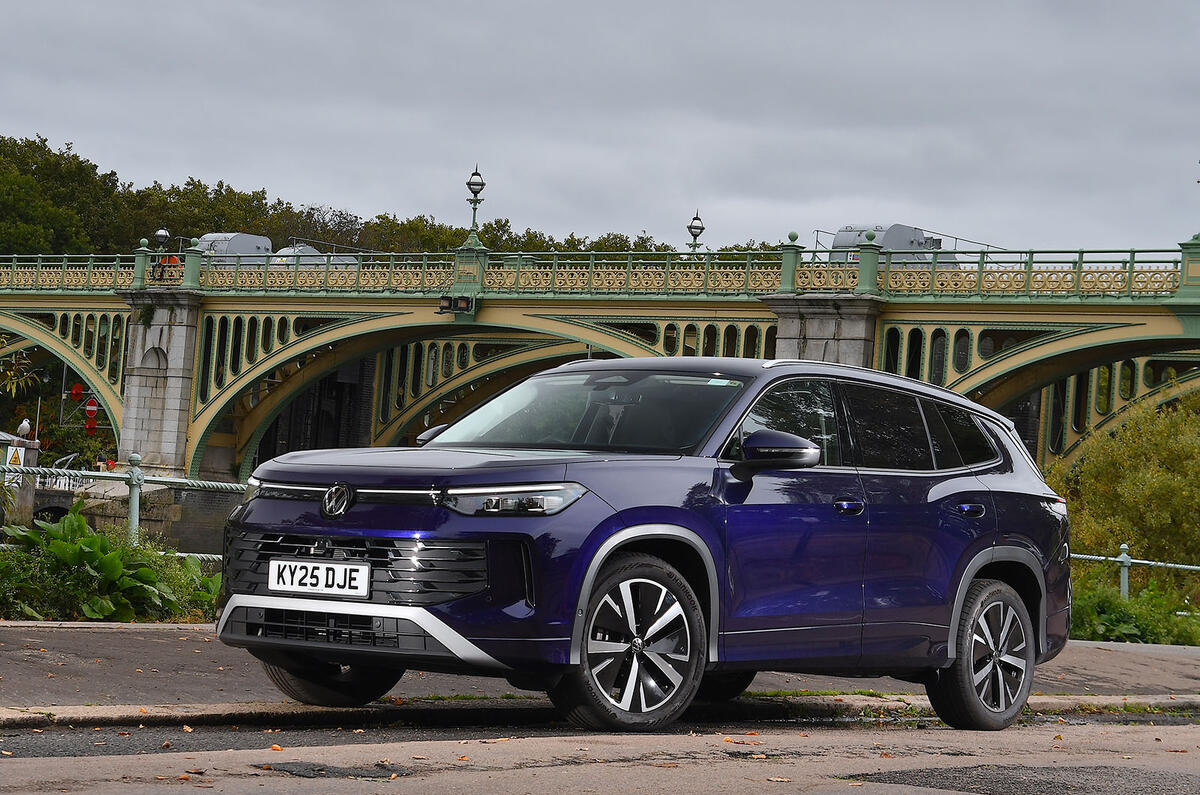
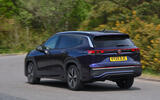
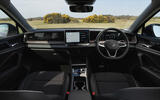
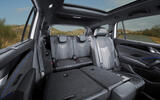
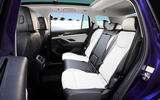
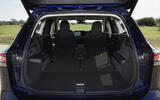
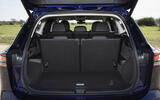
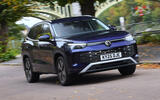
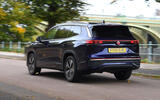
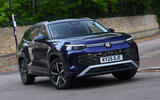
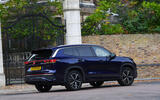
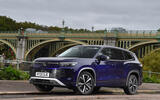

For as long as family SUVs occupy such prime commerical importance for European car-makers, few can afford to omit any from their showroom ranges, or to leave any market territory unplundered. Much as it's unlike the company, that's precisely what Volkswagen had been doing before the arrival of the Volkswagen Tayron: ignoring the untapped space between the popular five-seat Tiguan and the full-sized, premium-positioned Touareg.
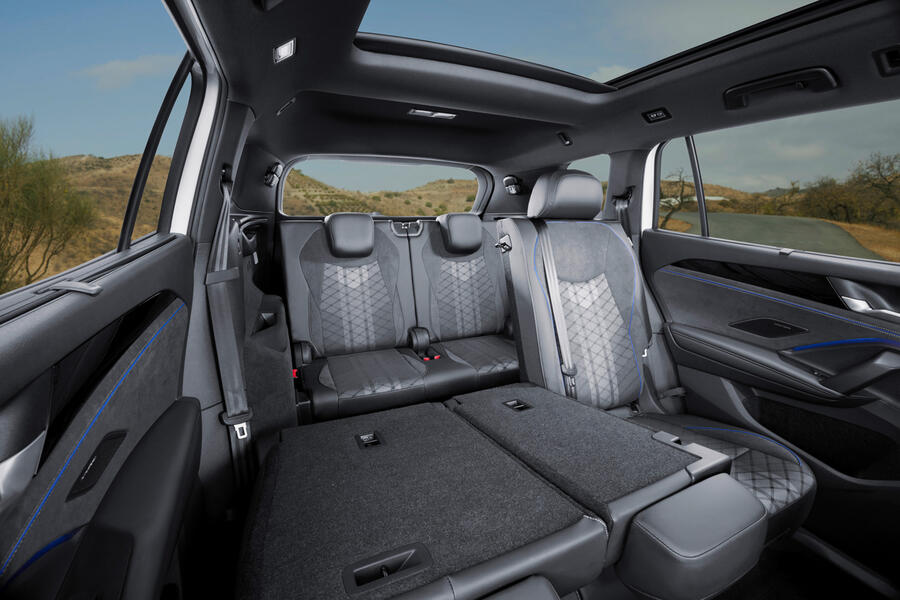
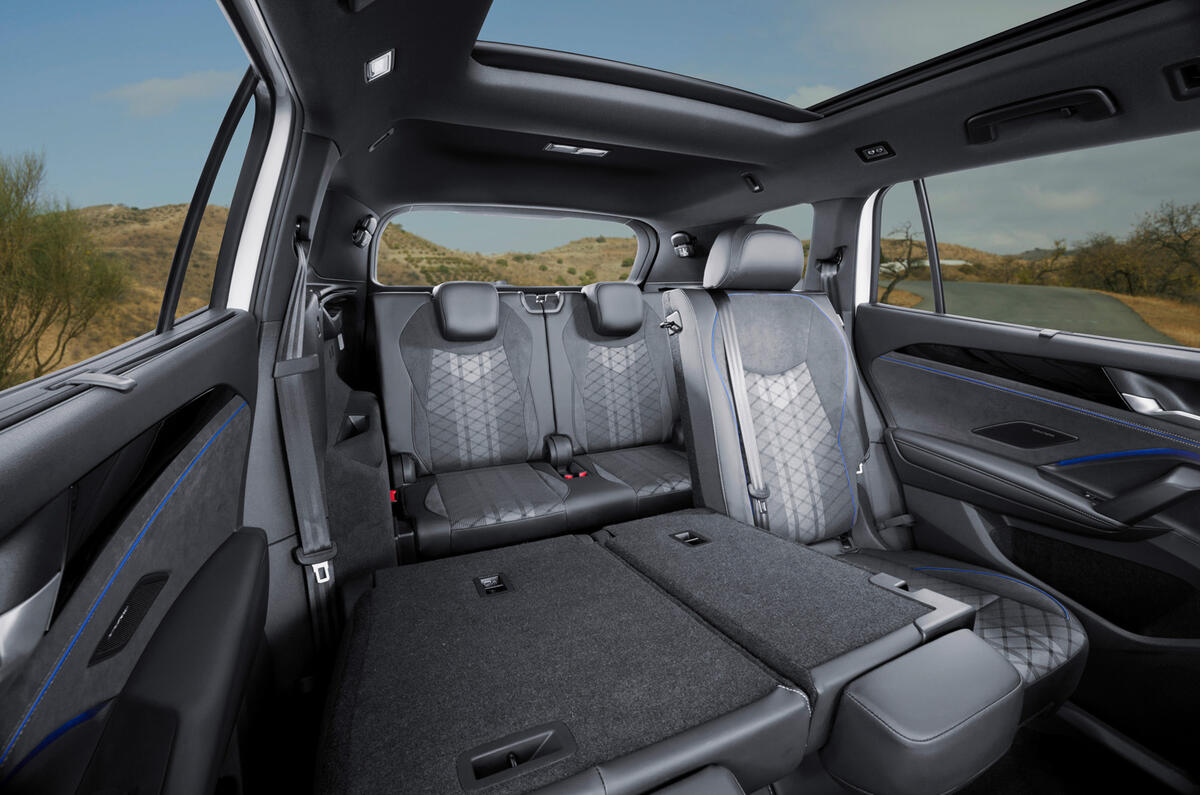
Wolfsburg had a preliminary tilt at addressing the problem with the Allspace version of the last-generation Tiguan of 2018, you may remember: which was a slightly stretched, seven-seat version of the smaller model. But now it has committed more fully to the idea of a proper, stand-alone, seven-seater rival for the likes of the Hyundai Santa Fe, Kia Sorento, Skoda Kodiaq and Peugeot 5008.
Those of you who know your Chinese cars will be aware of the Tayron name from a crossover produced collaboratively by Volkswagen and FAW for the Chinese domestic market from 2018; but now the car's gone global. Production has moved to VW's Wolfsburg factory - itself the point of manufacture of nearly 50 million cars since 1938, and therefore a car factory of greater fecundity than any other in the world, by VW's own estimation - and the car's commercial potential has expanded significantly.
Volkswagen Tayron range at a glance
The Tayron offers one of the widest powertrain selections of the Volkswagen range, with petrols, diesels, mild hybrids and plug-in hybrids all on offer.