
The 37 years between the demise of the E-Type in 1975 and the launch of the F-Type in 2012 were packed with ‘what if’ and ‘nearly’ moments as Jaguar explored how to replace the most famous and beautiful car of all time.
The XJS may have immediately followed the E-Type out of Browns Lane, remaining in production until 1996, but, fine as it was, it would never be seen as a true successor. Nor was it trying to be.
The ‘F-Type’ nearly arrived in the mid-1980s, with the XJ-41 convertible and XJ-42 coupé designed to replace the XJS with a model much more akin to the E-Type, until new owner Ford arrived and killed a project that, in truth, had spent too long in development by that point and had gotten too heavy anyway.
Read our history of the iconic Jaguar E-Type
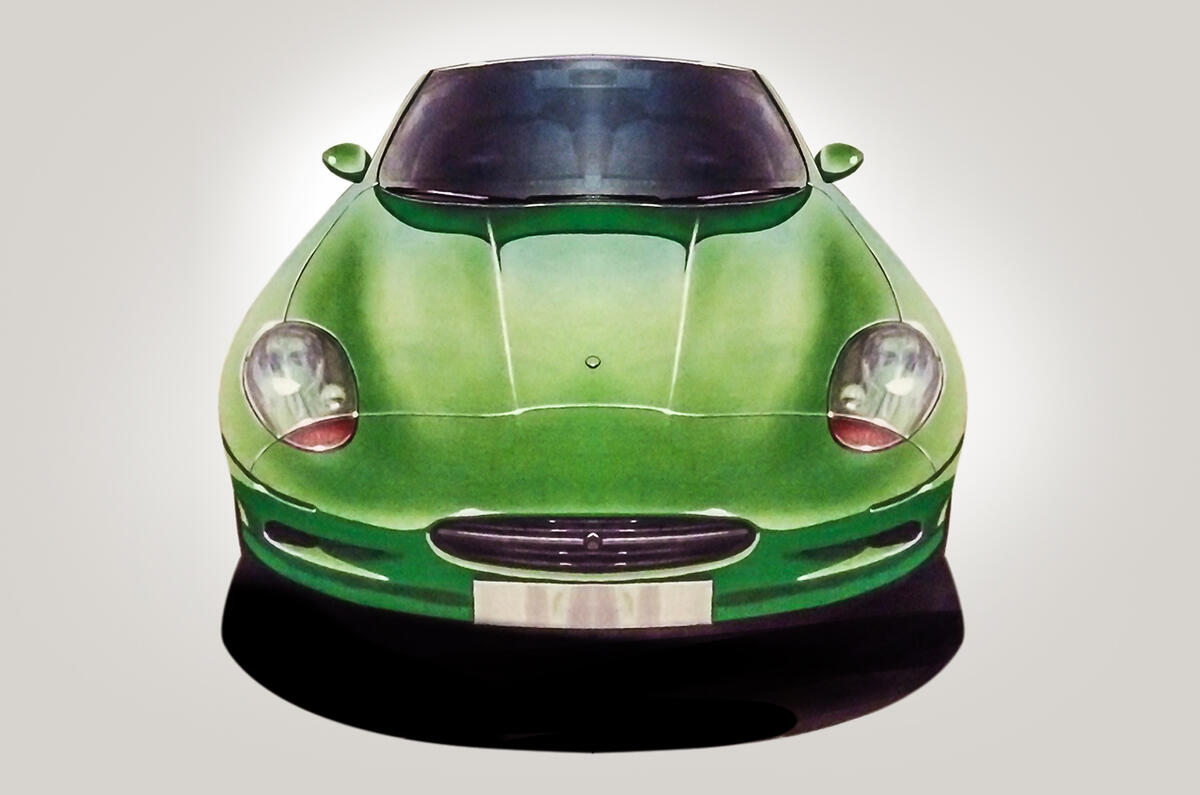
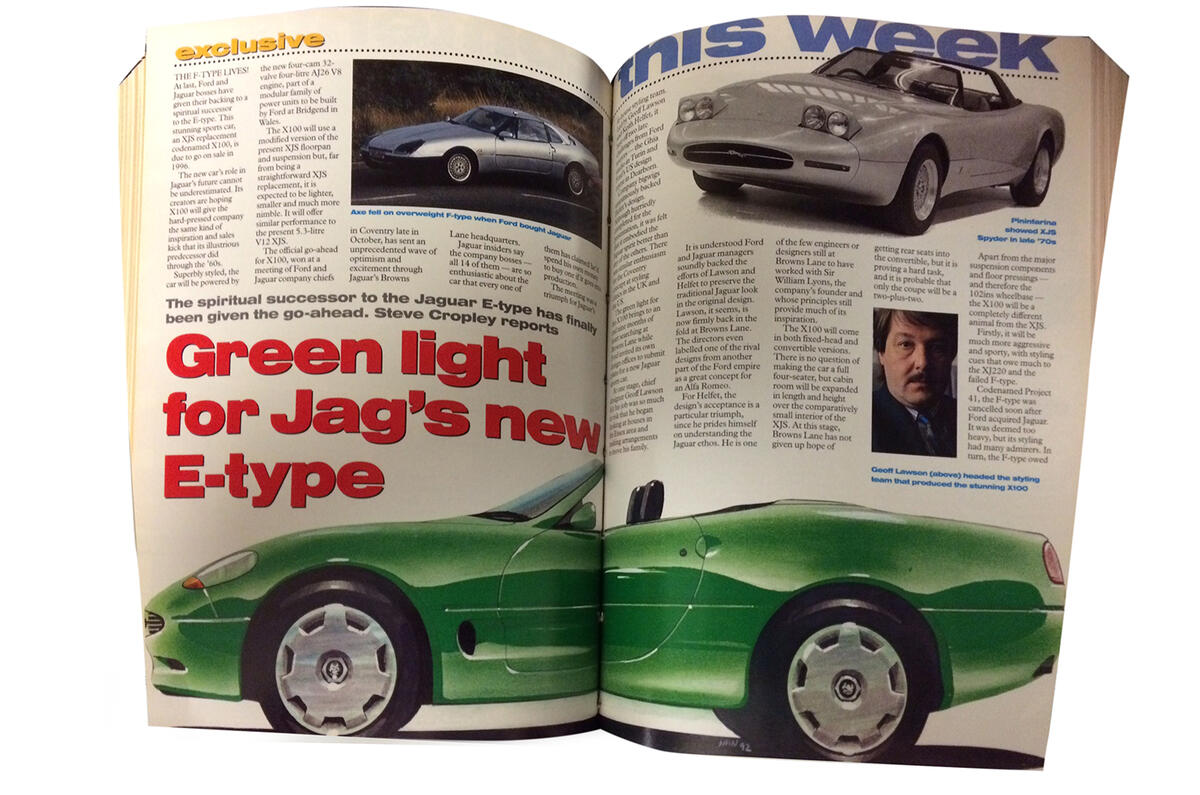
Then came the X100 in 1996, a car we know now as the XK, but in Autocar’s scoop story of 11 November 1992, all signs pointed to the fact that the E-Type’s true successor, the Jaguar F-Type, was coming.
An intrepid news reporter by the name of Steve Cropley got the scoop. “At last, Ford and Jaguar bosses have given their backing to a spiritual successor to the E-Type,” Cropley reported. “This stunning sports car, an XJS replacement codenamed X100, is due on sale in 1996.”
Cropley continued: “The X100 will use a modified version of the present XJS floorpan and suspension, but far from being a straightforward XJS replacement, it is expected to be lighter, smaller and much more nimble.”
The X100 was to be “superbly styled” and be powered by a new four-cam, 32-valve, 4.0-litre AJ26 V8 from a modular family of engines to come from Ford’s Bridgend factory. Performance was tipped to match the 5.3-litre V12-powered XJS of the day, with a 140mph top speed and a 0-60mph time of less than seven seconds.
As for the handling, Cropley reported that “the efforts of some of the UK’s finest suspension engineers will make the X100 the sports car the XJS never was. This will be a car to be driven”.
Cropley’s sources had told him that the car was signed off in October 1992 at a meeting in Coventry between Ford and Jaguar bosses, a decision that “sent an unprecedented wave of optimism and excitement through Jaguar’s Browns Lane headquarters”. Indeed, so enthused were Jaguar’s 14 bosses with the car that “every one of them has claimed he’d spend his own money to buy one”.
On those looks, the X100 was the work of Jaguar’s in-house design team, headed by Geoff Lawson and Keith Helfet. The design saw off challenges from Ford HQ’s design studio in Dearborn and the Ghia studio in Turin, something Cropley noted as significant, with Lawson and Helfet being able to “preserve the traditional Jaguar look”.
Before the X100 could be launched four years after Cropley’s scoop, Jaguar had to overcome sagging sales in its key US and UK markets and also get the X300 into production as a replacement for the XJ6. The XJS also had to be kept fresh in the intervening years.
“Lingering problems or not,” Cropley started his sign-off, “this is a great moment in Jaguar’s history. Concrete plans are now afoot for the beleaguered company to produce its most keenly awaited car, its most radical design in 30 years and a probable lifesaver.”