
It’s hard to read anything these days without coming across the term ‘artificial intelligence’ or ‘AI’, and there’s certainly plenty of noise being made about it in the automotive industry.
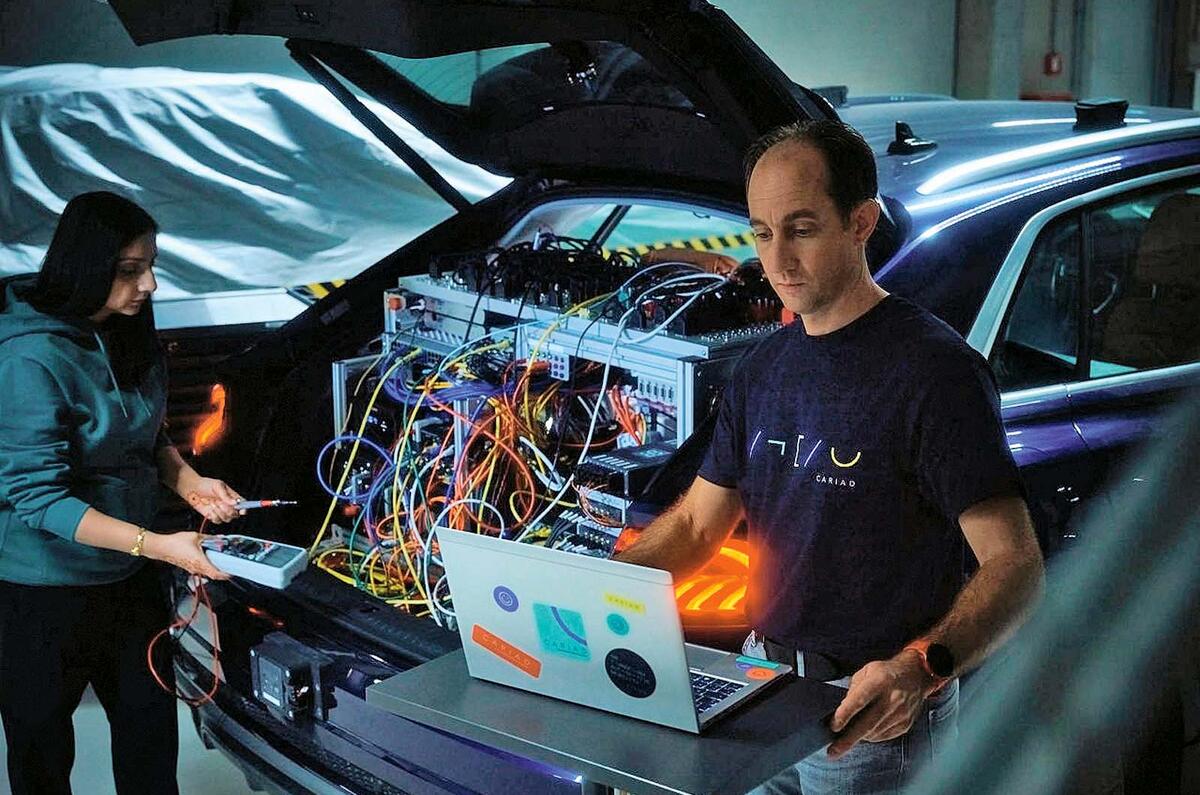
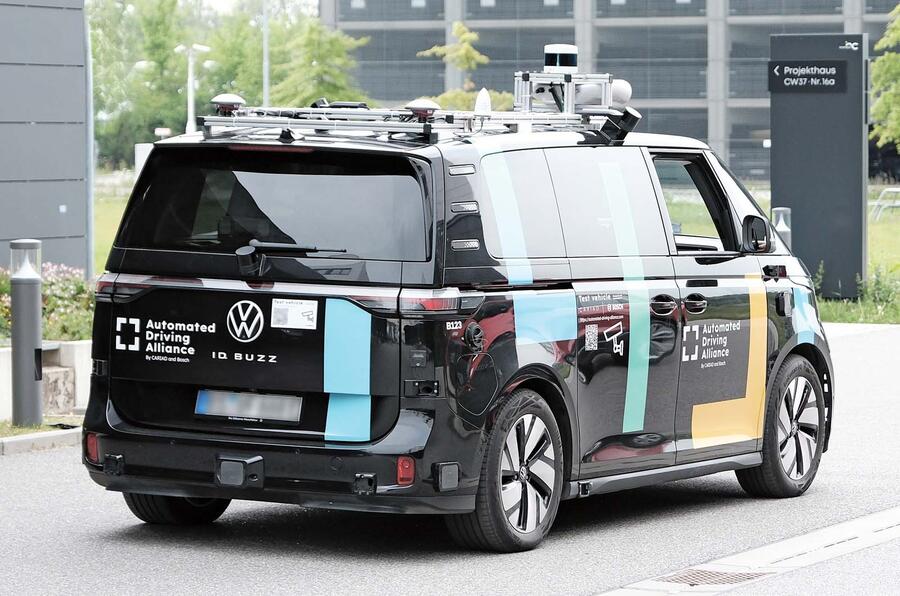
One huge investment in AI is being made by supplier Bosch and the Volkswagen Group’s software arm, Cariad. These partners formed the Automated Driving Alliance in 2022 to develop autonomous systems at level two (hands-free driving on urban roads, highways and rural roads) and level three (total control on highways).
But is AI just one thing, or are there different types of it? It’s widely known that AI can be used for generating content such as text, images and videos, but on a deeper level it can be used to analyse vast amounts of technical data more accurately and effectively than conventional methods. For example, engineers can use it to vastly speed up the analysis of test data collected on proving grounds during the development of a new car.
Bosch and Cariad are working to develop autonomous systems that will eventually be capable of acting “as naturally as the human driver”.
They are using an “AI-based software stack” that is currently being tested on vehicle fleets and should be ready for production by the middle of 2026.
To replace a human driver in all circumstances, a system will need to be able to analyse situations, reason and make critical decisions as well as perform basic tasks, such as knowing its precise location and which side of the road to drive on. Bosch says its software stack will handle “all the essential cognitive tasks of perception, interpretation, decision-making and action”.
The key word there is ‘cognitive’, meaning to learn and understand through experience and the senses – in other words, a car that can think and make its own decisions. Ultimately, for any being or machine piloting a car, that’s essential.
The current level of software lays a basis for that, with the possibility of integrating ‘vision-language-action’ approaches that can imitate human logical thinking and action. That step would allow a machine to understand more complex traffic situations, such as assessing hidden risks in the same way a human driver might do.
Before that, in the near term, Bosch says its AI software stack will make automated driving at levels two and three more robust. Its performance will be improved by continuously feeding in enormous amounts of data that AI is so good at consuming.