Germany has been producing engines from the dawn of motoring until the present day.
In nearly 140 years, the country's portfolio of engines has developed into something quite remarkable. It includes simple but effective motors for everyday transport, as well as gigantic units of awesome power, and almost everything in between.
Restricting this list to just 20 engines inevitably means that many worthy contenders have had to be left out, so our apologies in advance:
Audi R10 TDI
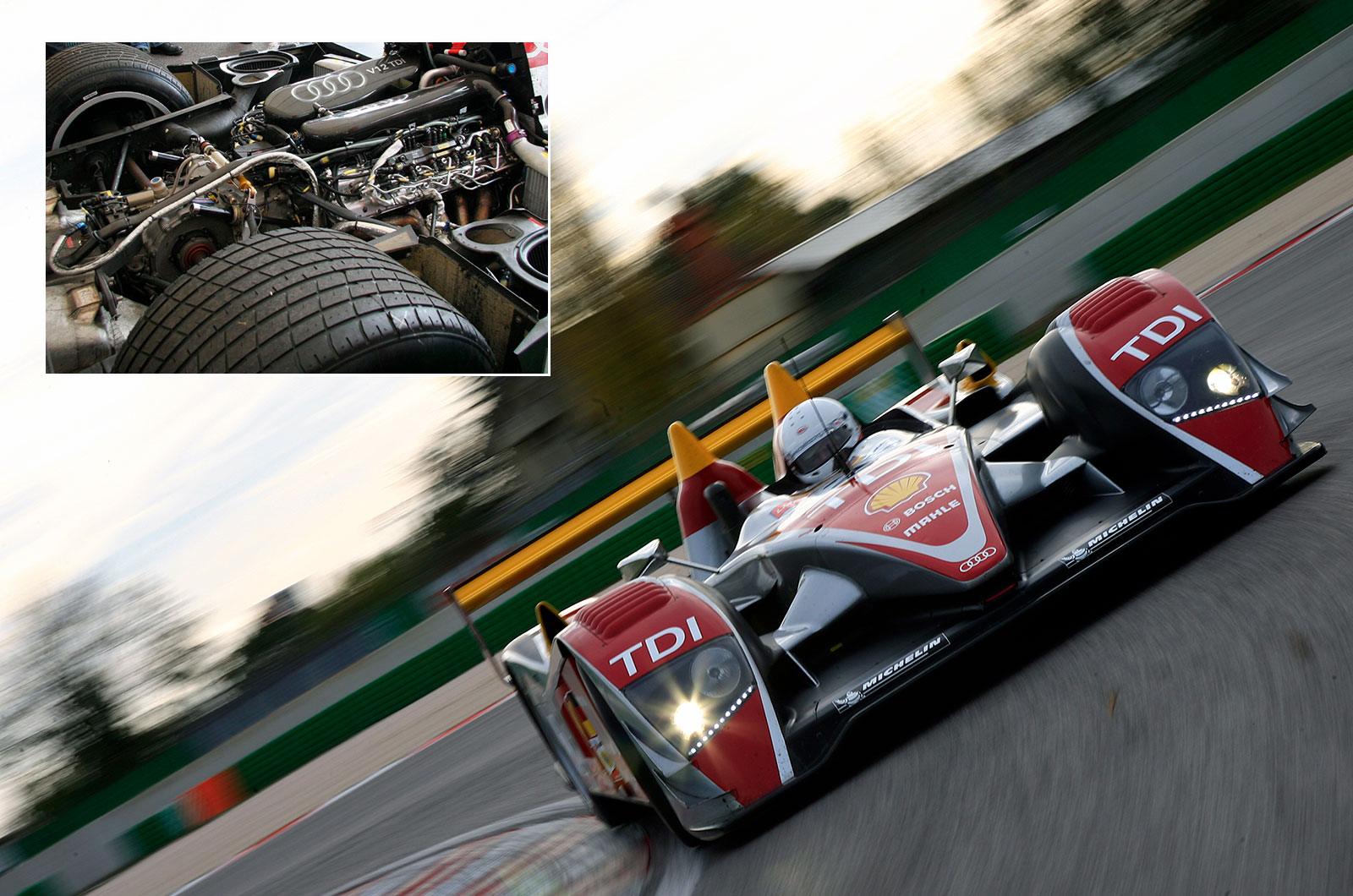
Audi developed a twin-turbocharged, 5.5-litre V12 diesel engine which made its debut in the R10 TDI sports racing car in 2006. The R10 was wildly successful, winning the Le Mans 24 Hours, the Sebring 12 Hours and the LMP1 class in the American Le Mans Series that year. No diesel-powered car had ever done any of these things before.
Audi repeated its Le Mans and ALMS victories in 2007 and 2008 before the R10 was replaced by another diesel racer, the 5.5-litre V10 R15 TDI. This engine did much to demonstrate the prowess of the Volkswagen Group in producing diesel engines, but it proved to be a somewhat problematic legacy… It’s fair to say you’re unlikely to see the letters TDI emblazoned on any race cars ever again.
Audi R5
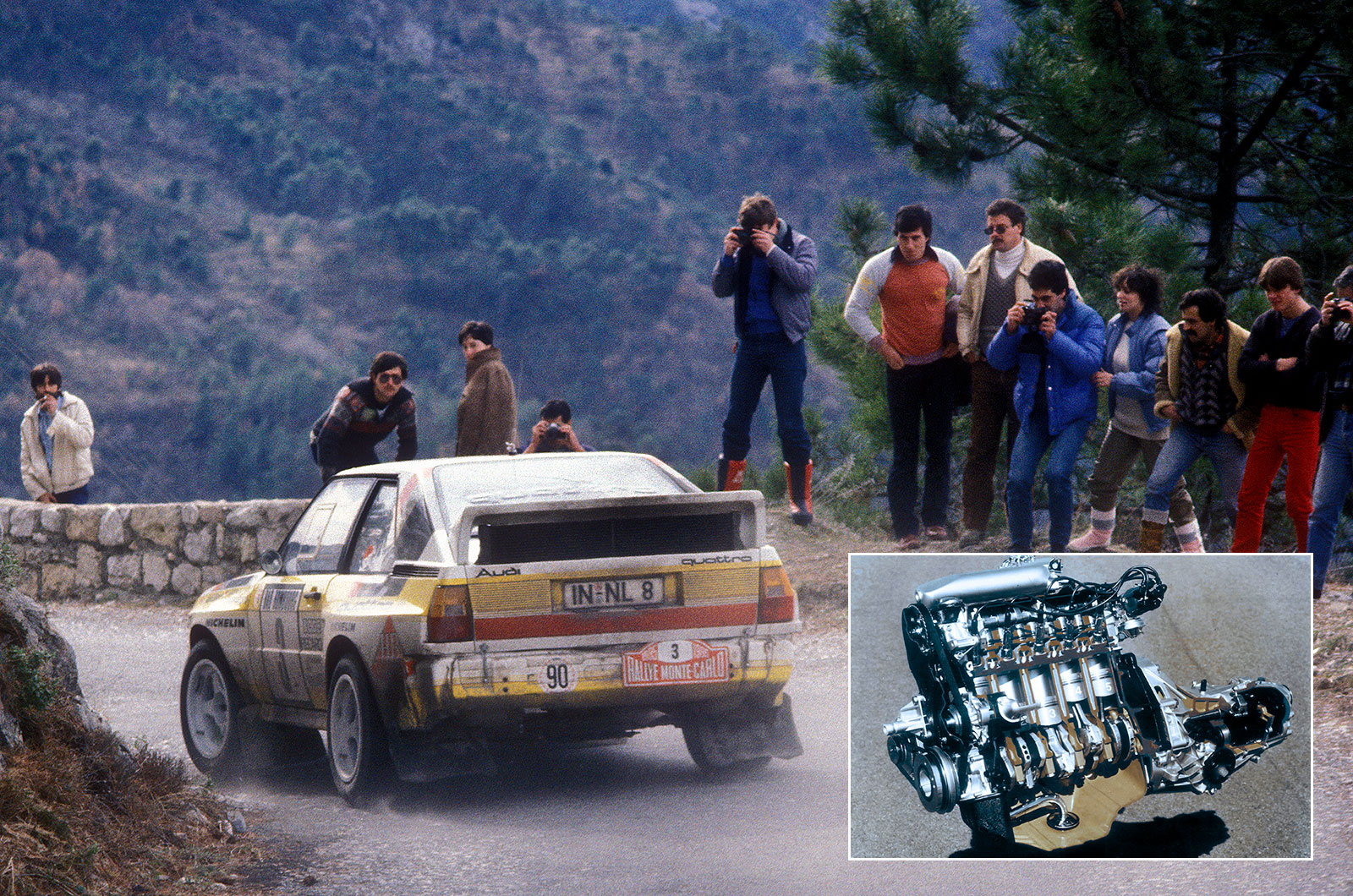
R5 was a family of five-cylinder engines used in many Audis and some Volkswagens. The most famous member was the 2.1-litre turbocharged unit fitted to the Audi Quattro from 1980 onwards, first with two valves per cylinder and later with four.
The engine helped Audi to dominate international rallying in the early 1980s, partly because it was very powerful. This did not cause traction problems on gravel roads because Audi was also the first manufacturer in the sport to take the idea of four-wheel drive seriously.
Auto Union V16
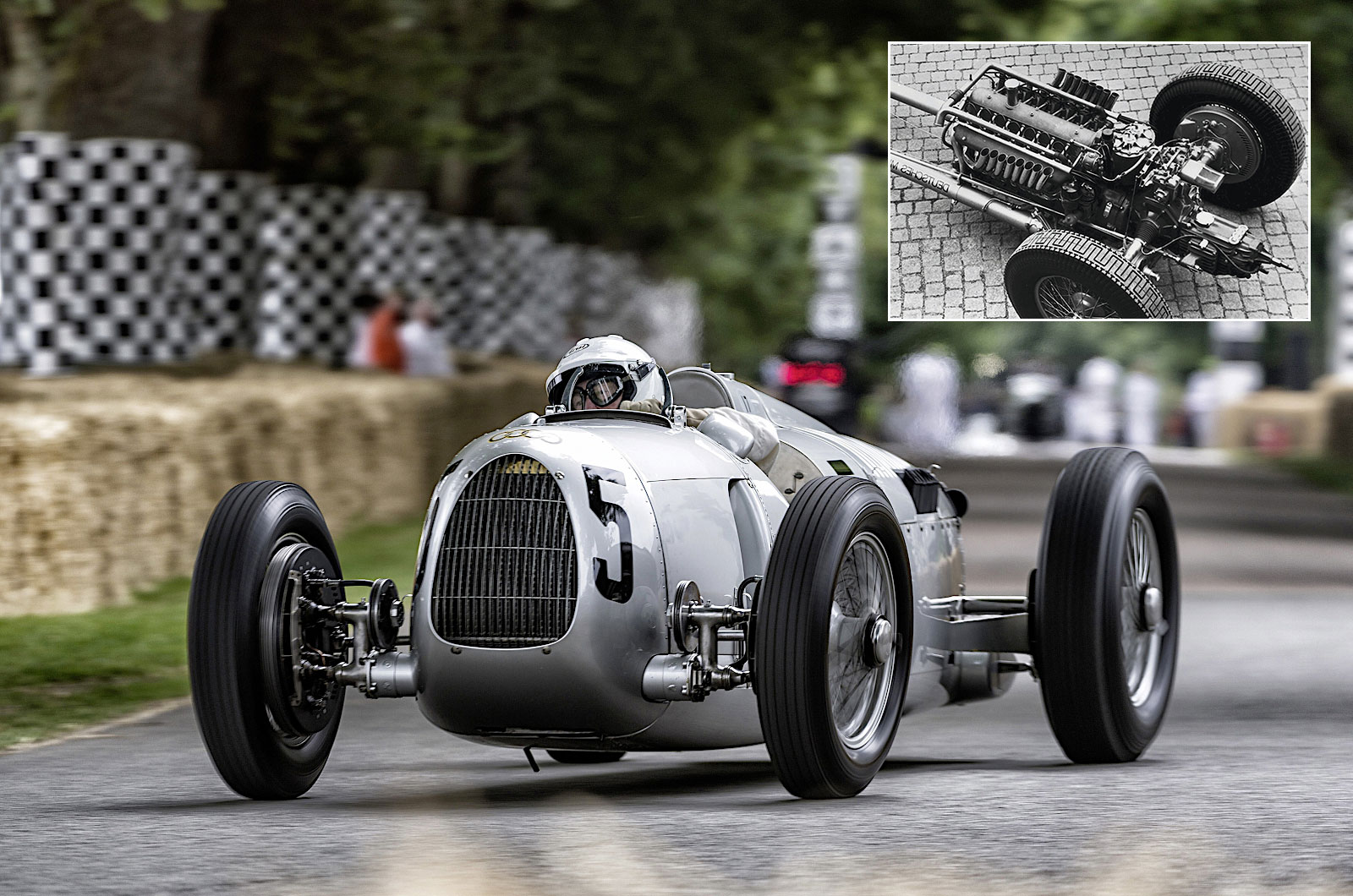
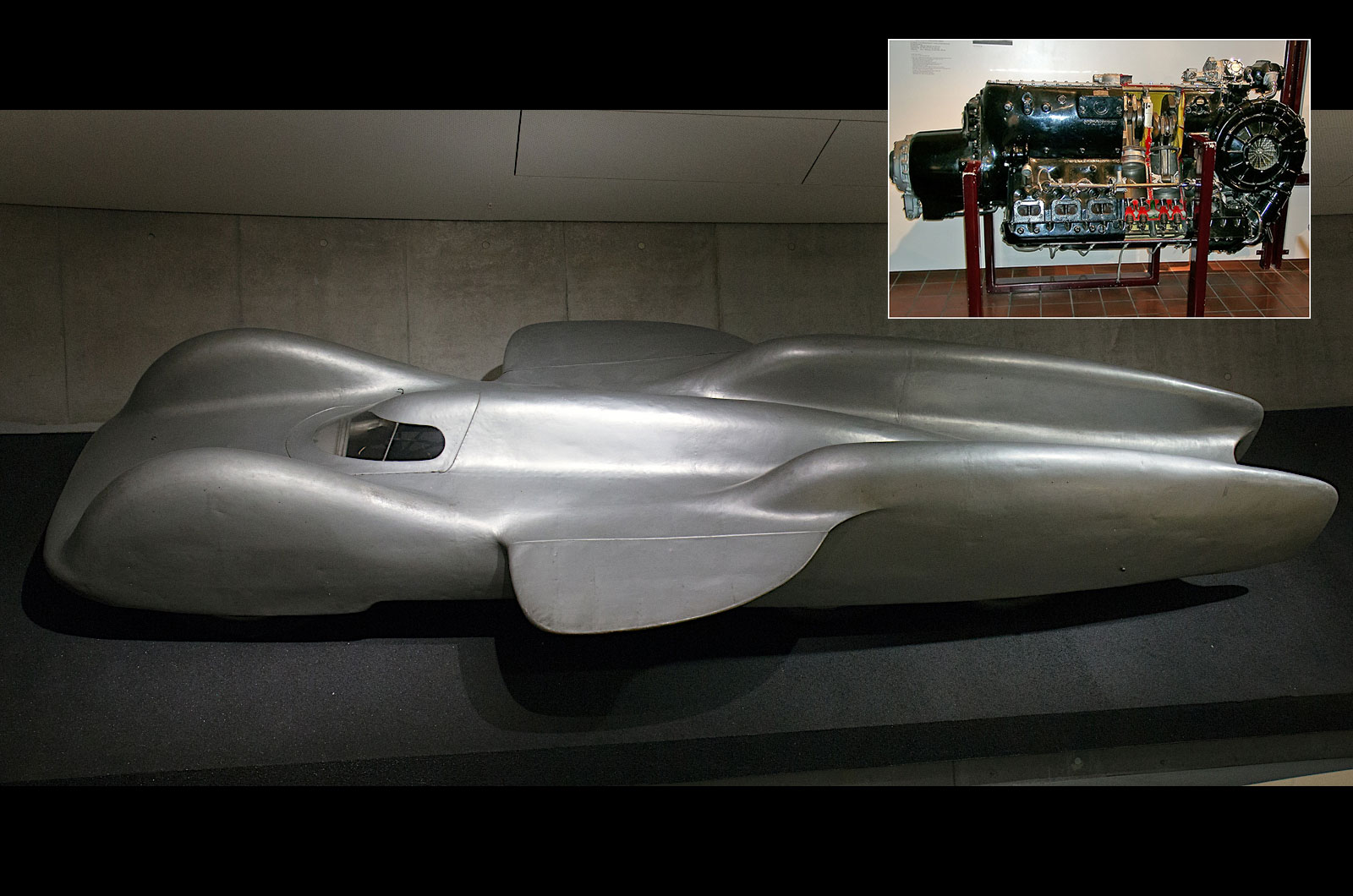
All of the frighteningly fast Grand Prix and record cars built by Mercedes and Auto Union from 1934 to 1939 had formidable engines, but the Auto Union V16 was perhaps the most glorious of them all. Designed by Porsche, it was not a high revver (no version was ever taken as far as 6000rpm), but it produced thundering torque and correspondingly enormous power.
The ultimate version, built only for record-breaking, measured 6.3 litres and had a peak output of 545bhp. In 1938, a rule change obliged Auto Union to develop a 3.0-litre V12 for Grand Prix racing.
Benz Patent Motorwagen
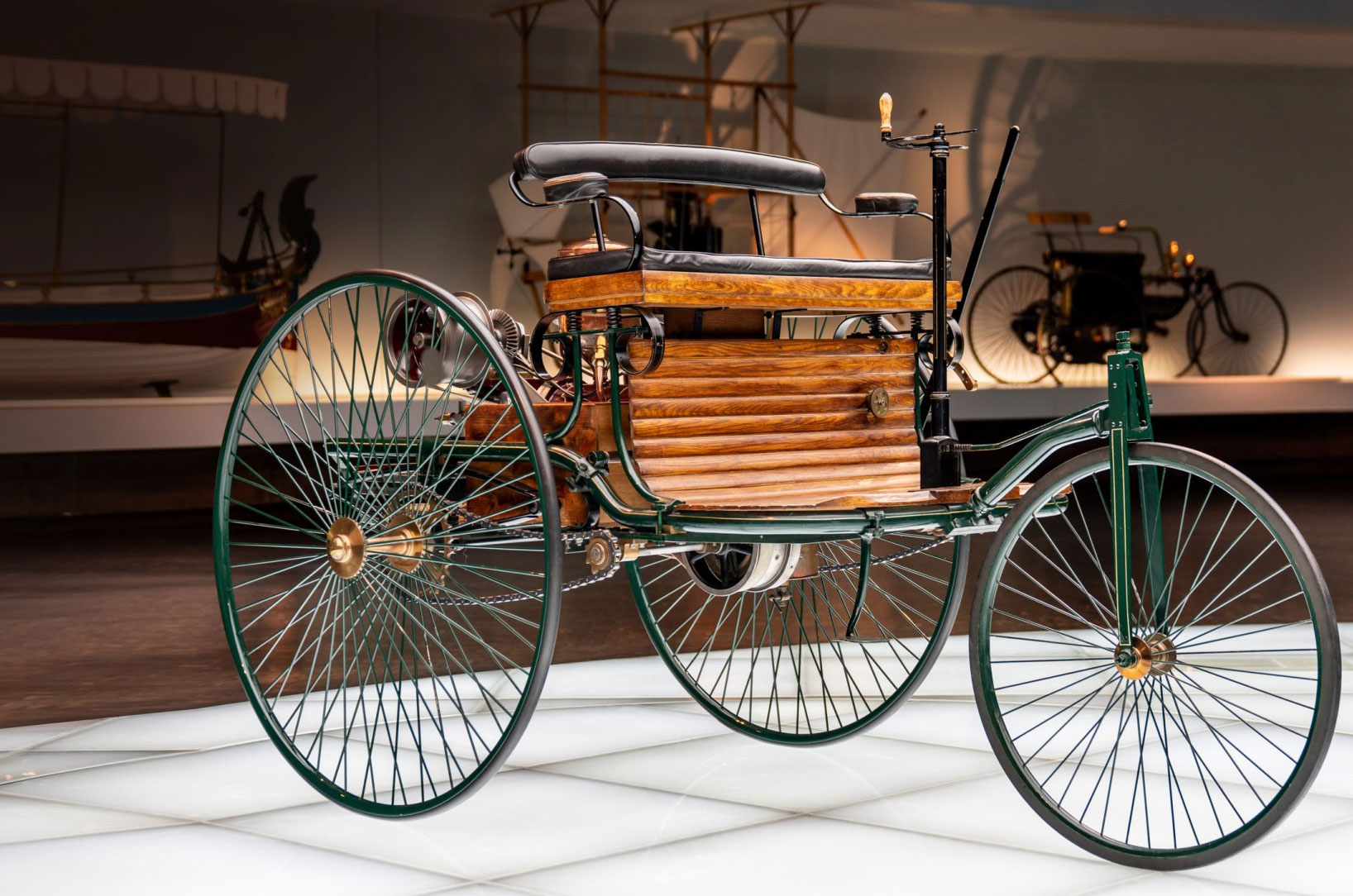
On paper, the single-cylinder engine built by Karl Benz (1844-1929) in 1885 does not seem impressive from a 21st-century standpoint. Although it had a capacity of 954cc, similar to that of many small units found today, it was unable to produce as much as 1bhp.
However, it is one of the most significant engines ever made in Germany, or anywhere else, because it was fitted to Benz's Patent Motorwagen, widely regarded as the world's first car. For later versions, Benz designed and built stronger engines with power outputs of up to 2bhp – the power of two horses, with a heck of a lot less ‘maintenance’.
Blitzen Benz
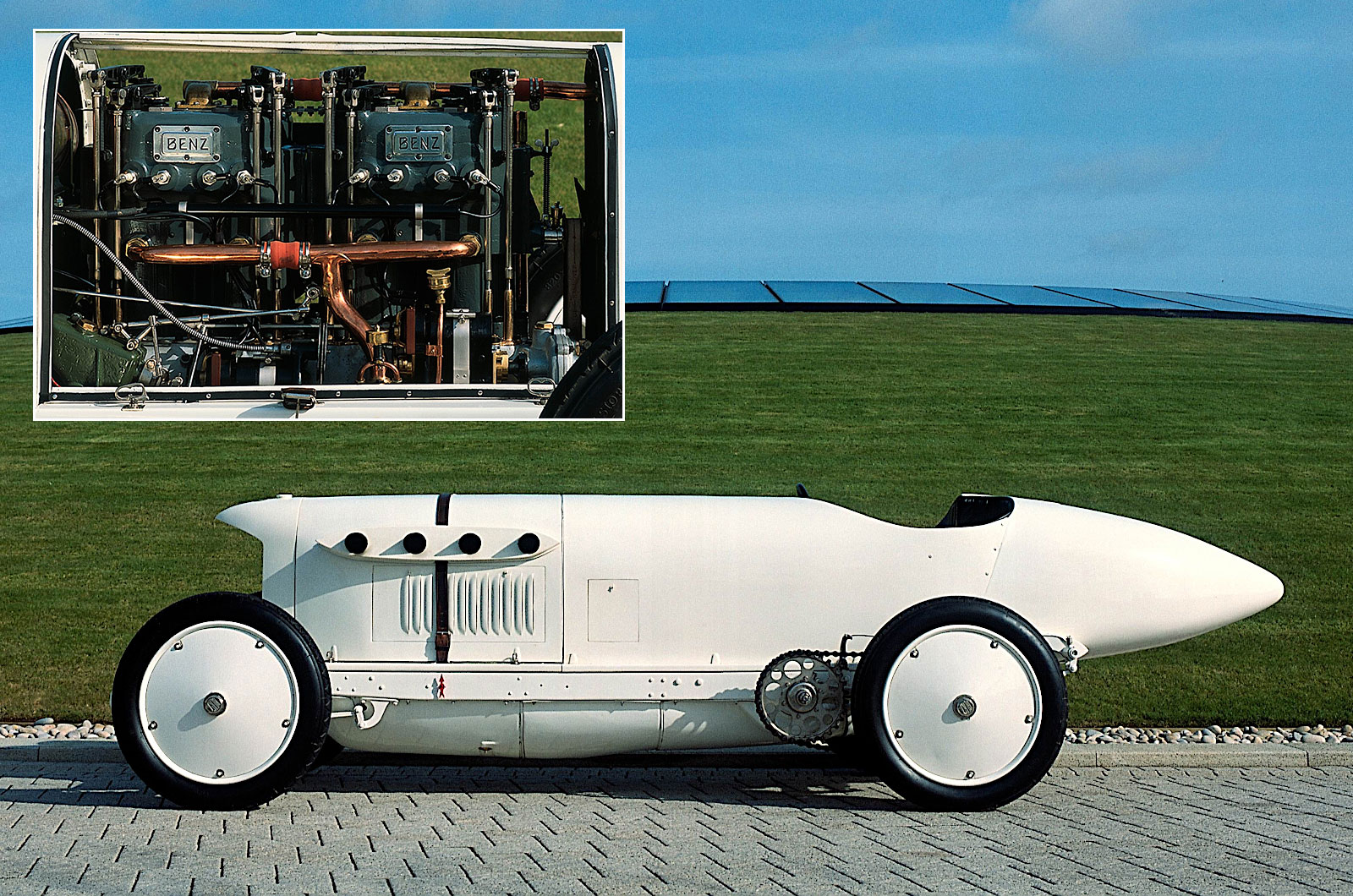
The Benz cars which finished second and third in the 1908 French Grand Prix were both fitted with four-cylinder engines of at least 12 litres. Free from the restrictions of Grand Prix rules, Benz then developed a monstrous 21.5-litre version for a car nicknamed the Blitzen ('thunder') Benz, of which six examples were built.