From £22,1008

Hyundai turns on the style – just a little – for its third-generation Polo chaser

The previous generation of the Hyundai i20 proved that a meat-and-potatoes kind of supermini could sell well even in style-savvy Europe.

But that was 10 years ago and this is now, and in that time Hyundai has become quite a different company. It has long moved away from bargain-basement cars, and that’s paying dividends. Its sales are flying at the moment, the firm posting year-on-year growth in sales and market share.

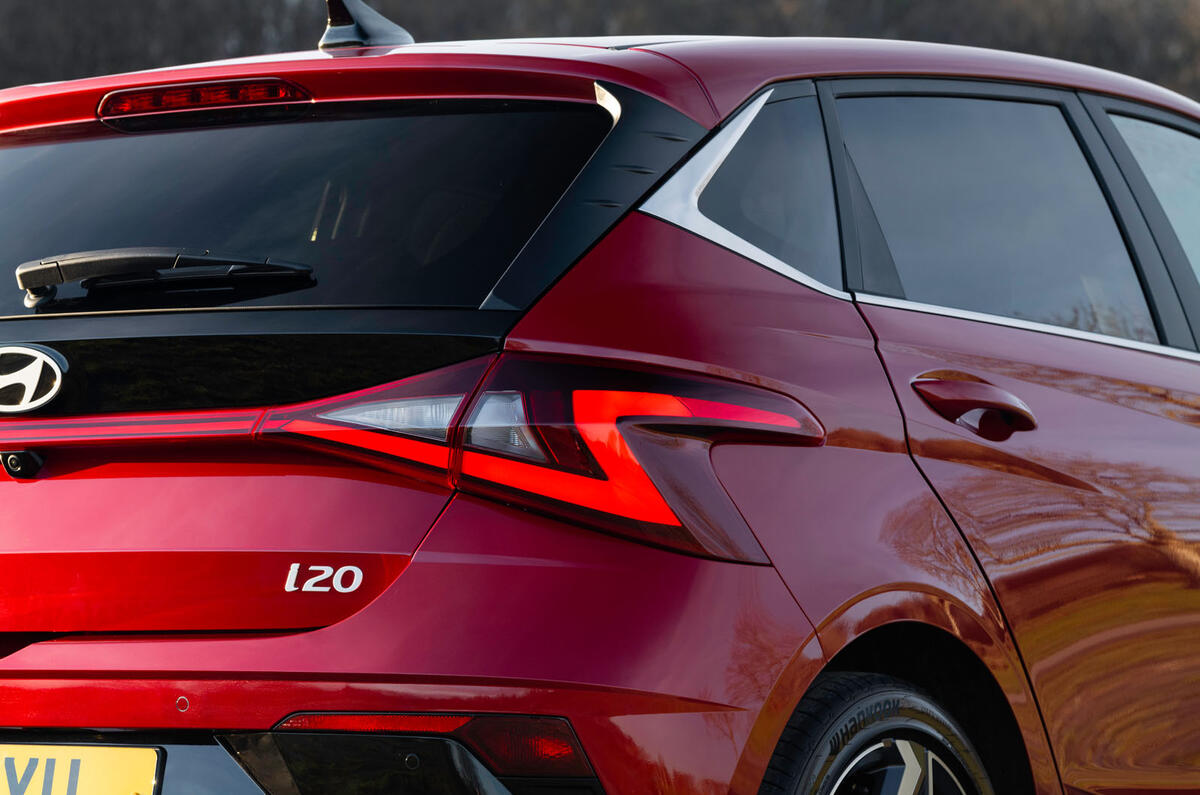
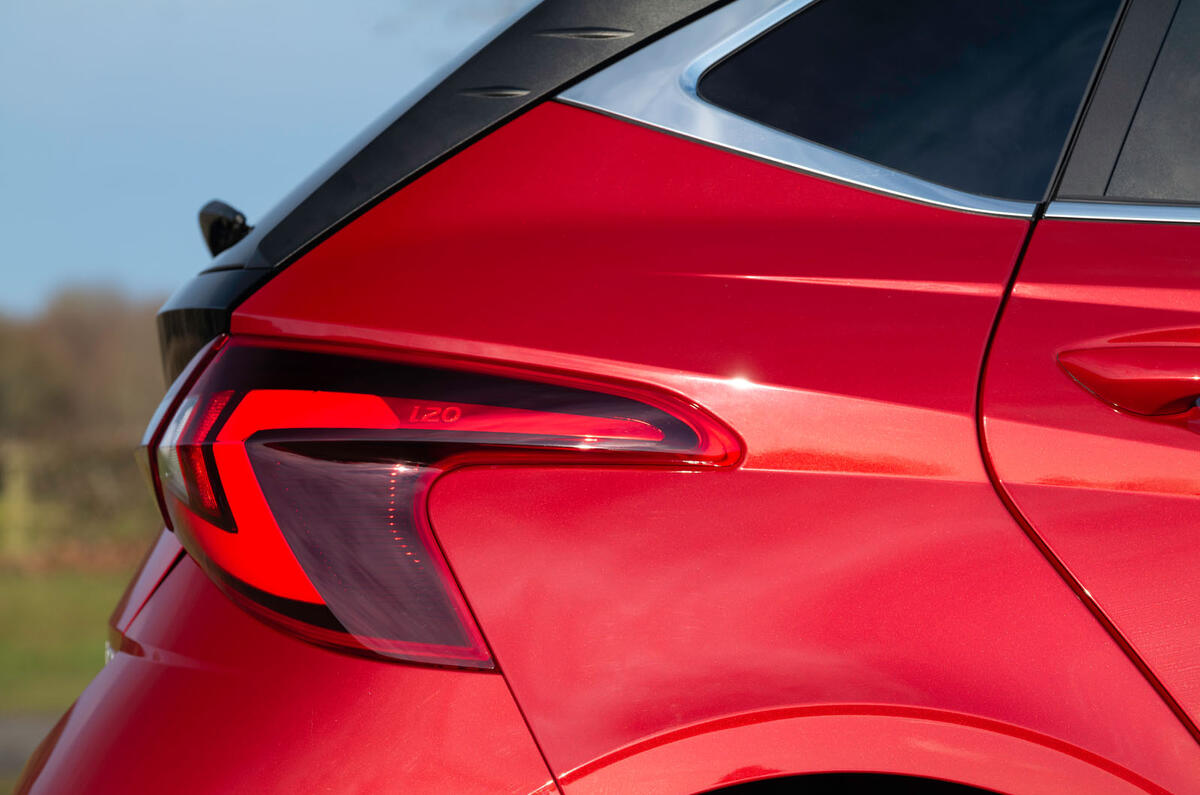
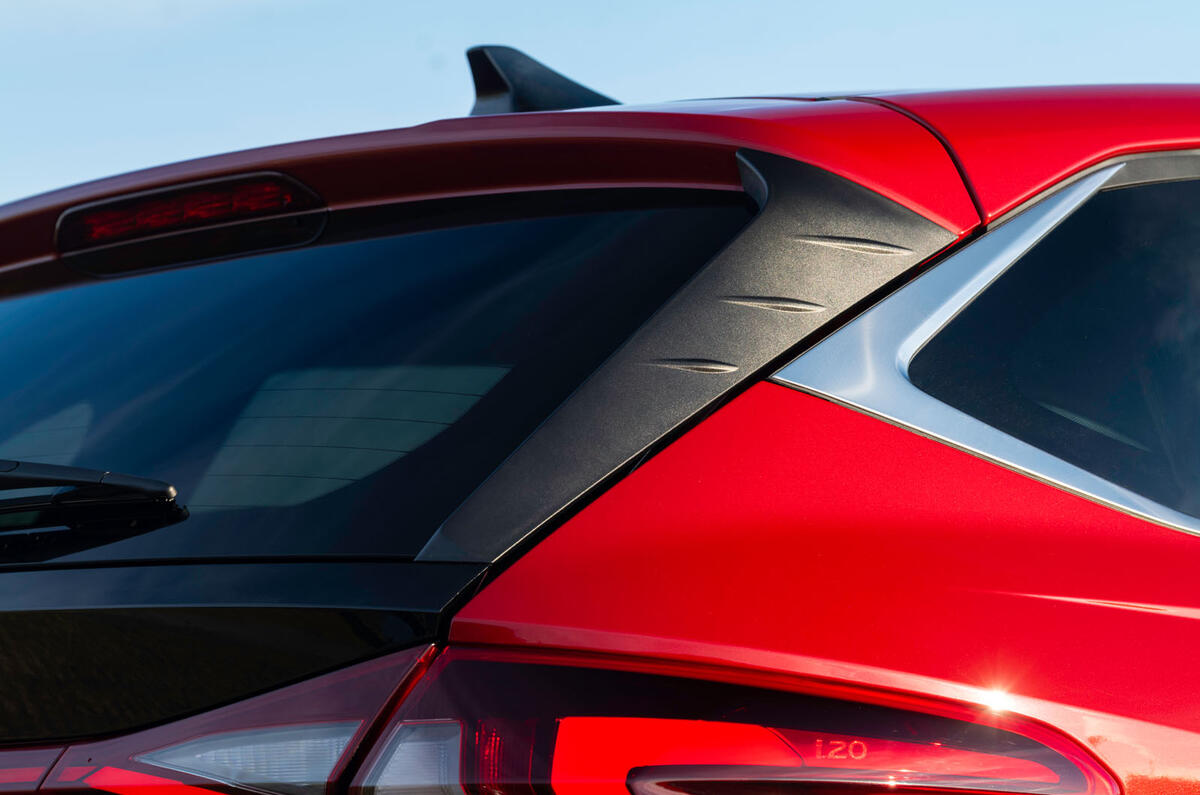
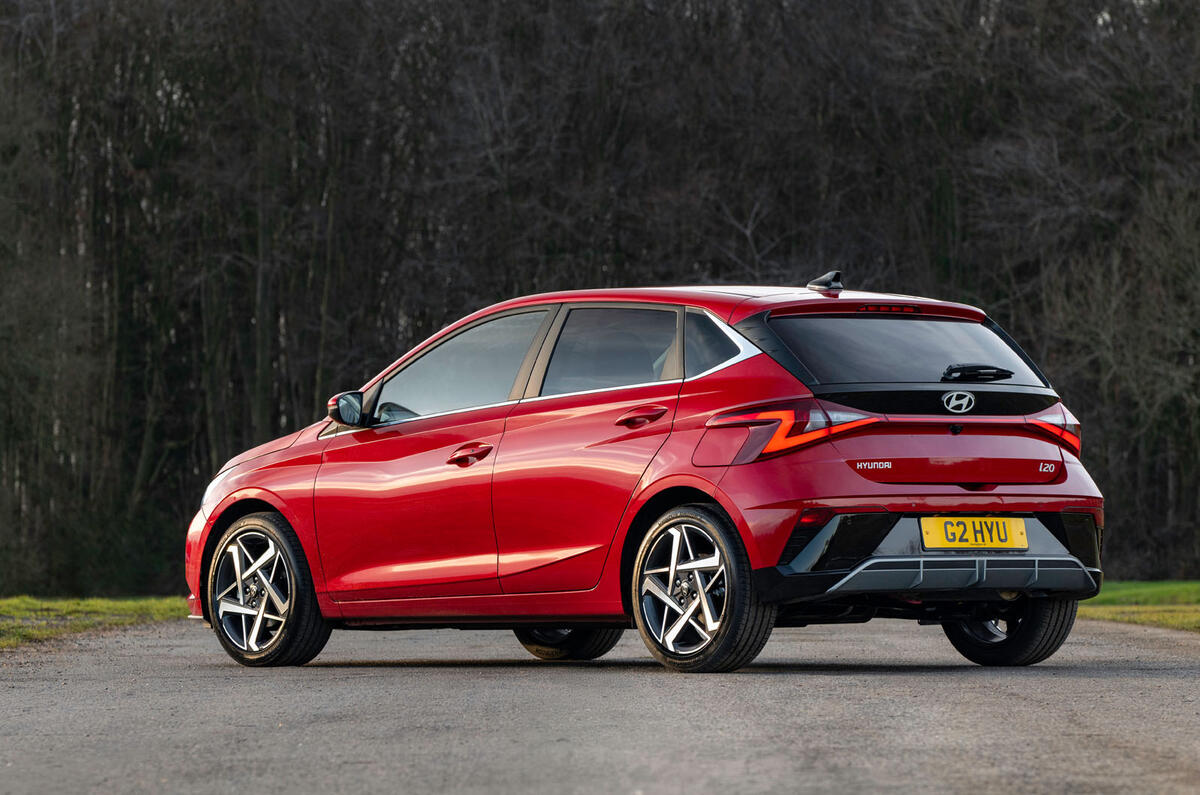
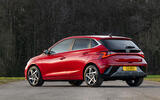
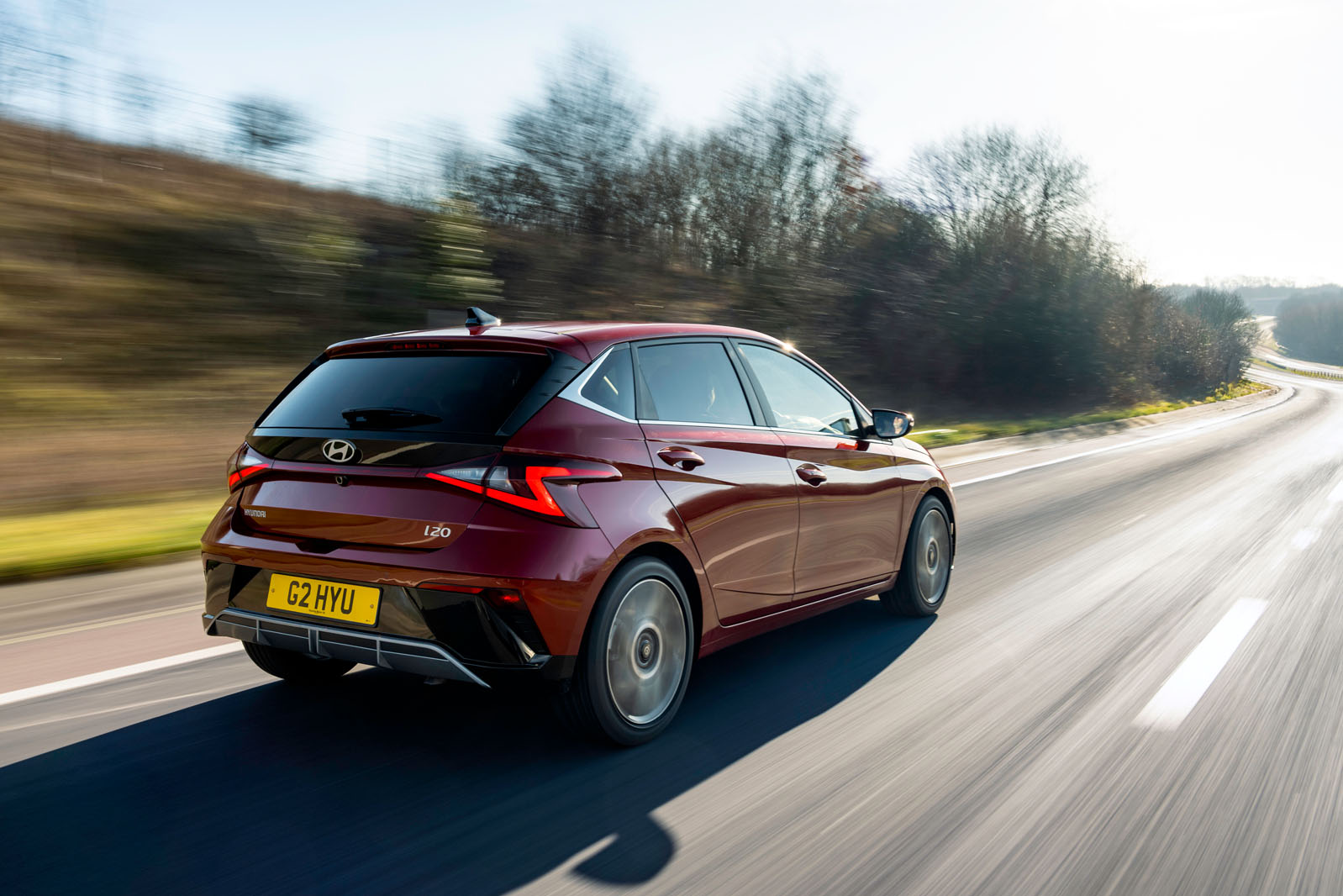
A kink in the i20’s C-pillar styling is more impactful on higher-grade cars, where it’s picked out in chrome. It aligns nicely with the rear window and cleverly mirrors the shape of the tail-light.

As part of that evolution, the kinds of cars Hyundai sells has also changed: 75% of Hyundai Motor UK’s 2023 sales were SUVs. In other words, that means that the i10, i20, i30 and Ioniq 6 put together accounted for just 25%.

So where does that leave the i20 hatchback? In Europe, at least, it’s no longer the important model that it once was. And to an extent, that’s reflected in how limited this update is, with some mild visual changes and a rationalised engine line-up.

The i20 may no longer be the driver of sales that it once was, but superminis still have an important role to play in keeping people mobile and building brand loyalty. And with the Ford Fiesta consigned to history, there will surely be plenty of people looking for an alternative. And anyway, there’s often something joyful about a small, simple and relatively light car.

Advertisement
Back to top

The i20 line-up at a glance

Over the years, the i20 range has shifted and quite simply thinned out.

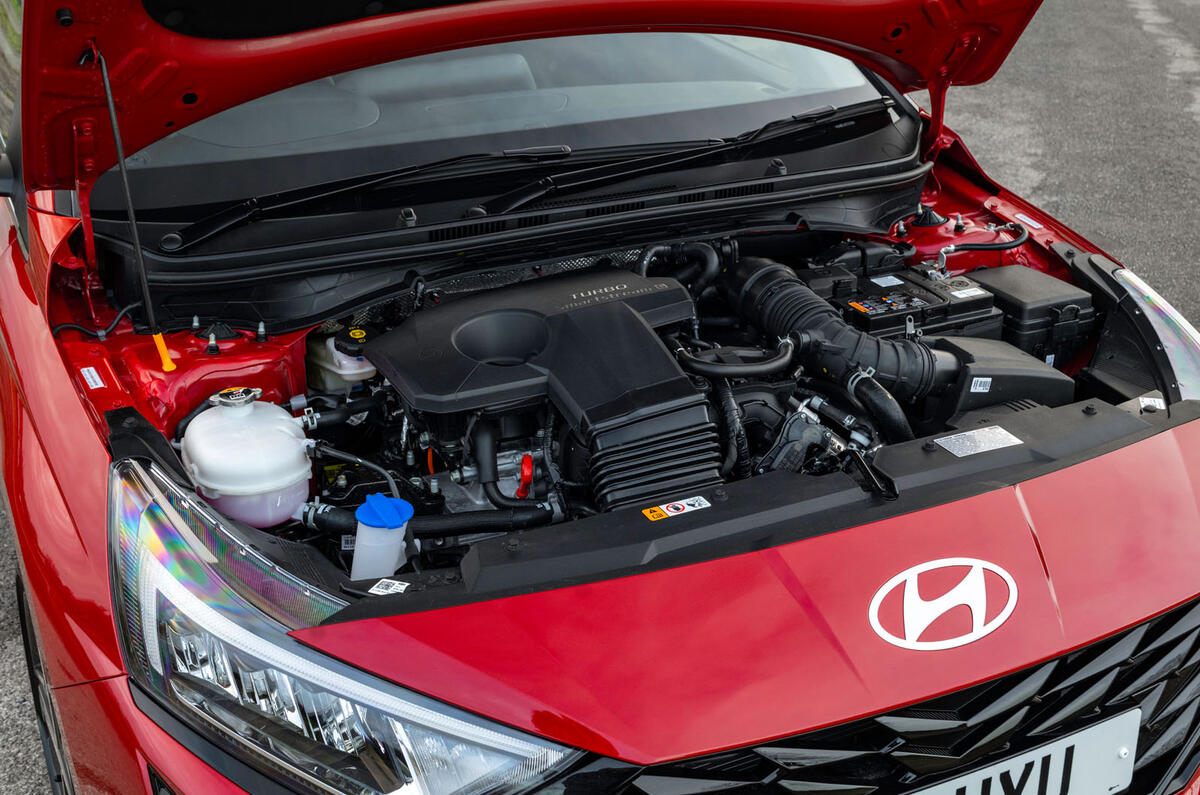
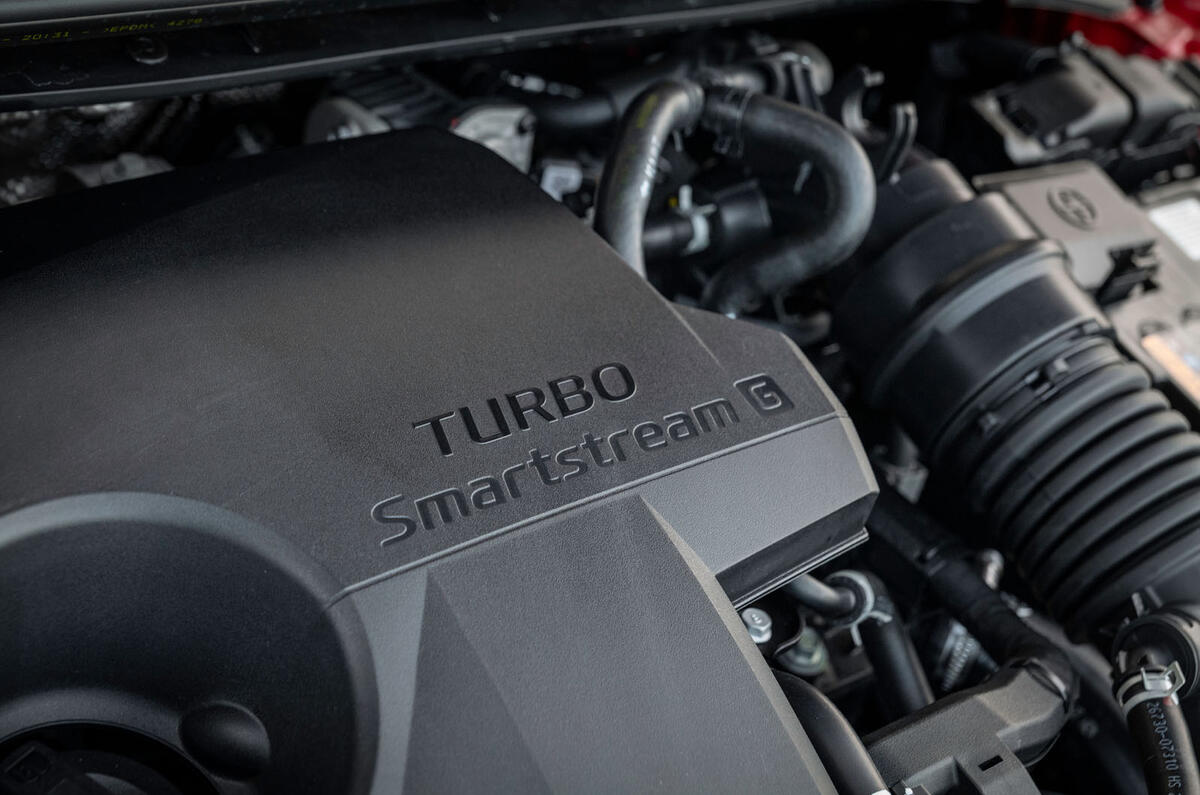
For 2026, every i20 comes with a 1.0-litre turbo triple. On three of the four trim levels, it has 89bhp and comes with a choice of a six-speed manual or a seven-speed dual-clutch auto. Go for N Line S trim and you get an extra 10bhp, but that version is manual-only.

The excellent i20 N hot hatch was dropped when the regular i20 was facelifted in 2024.

DESIGN & STYLING

8
Hyundai i20 review 2026 002

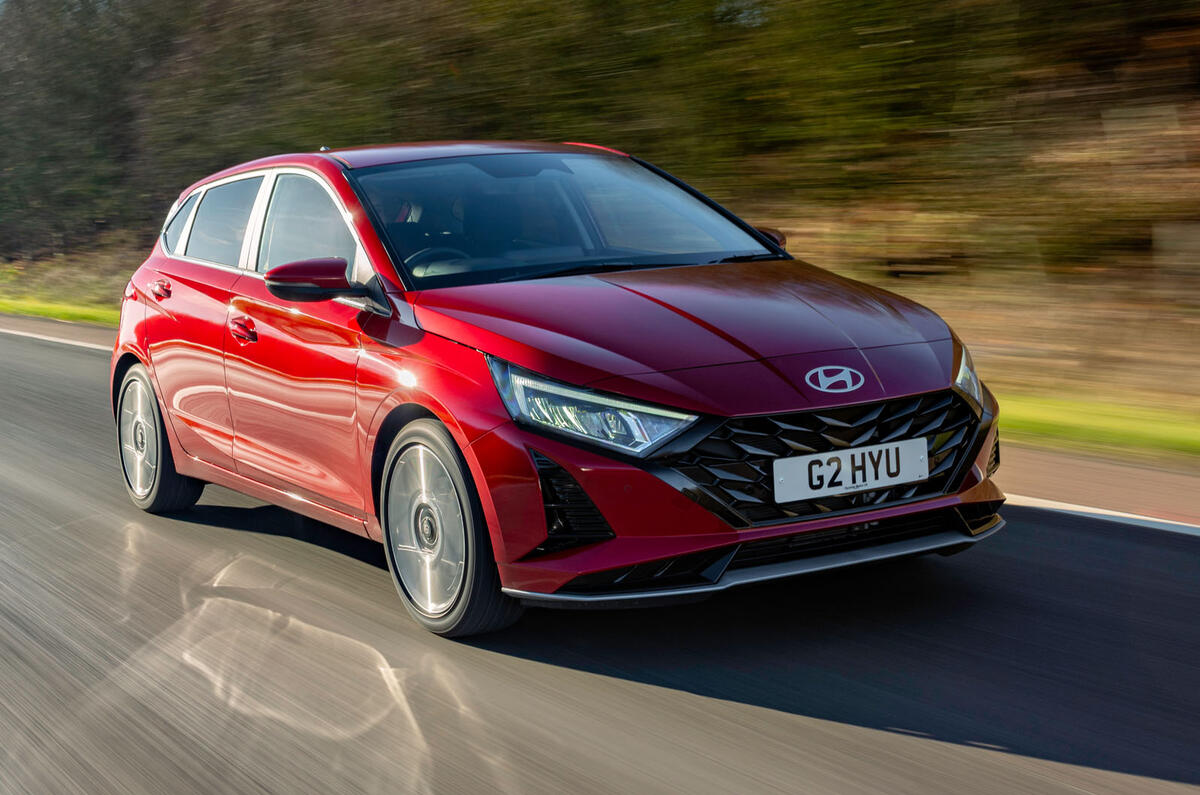
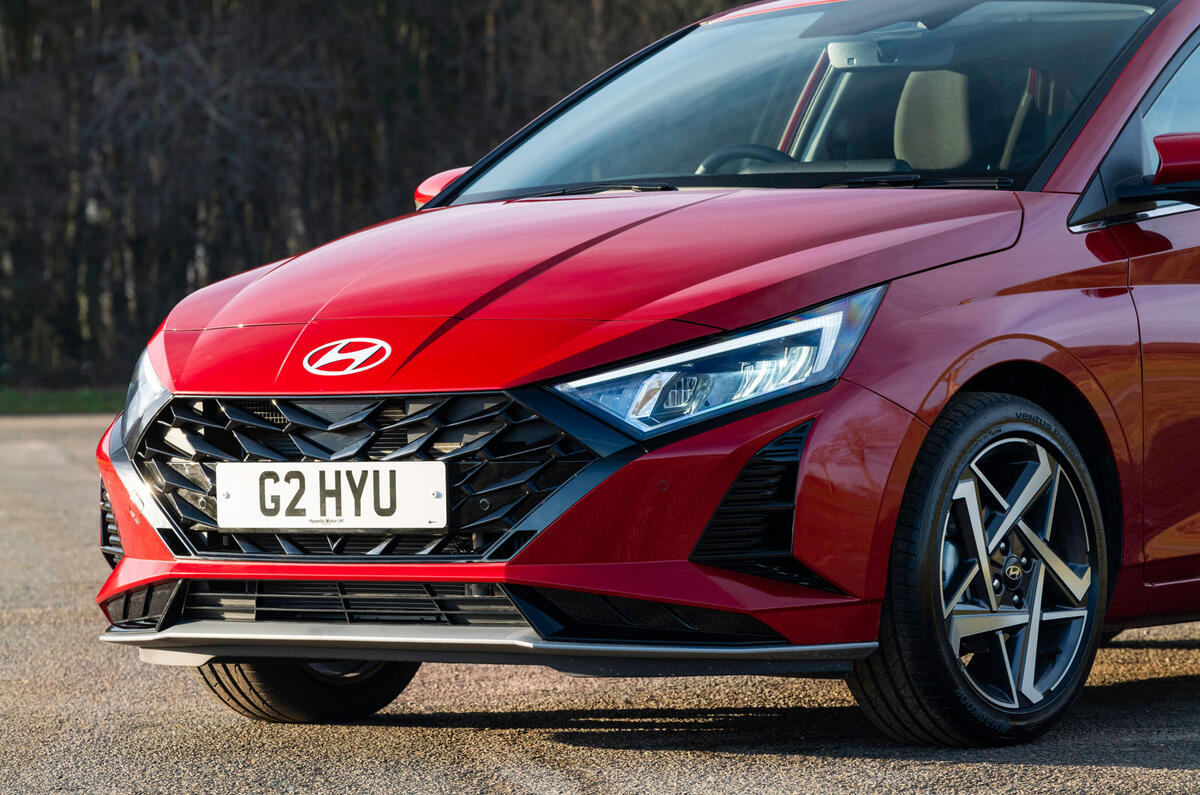
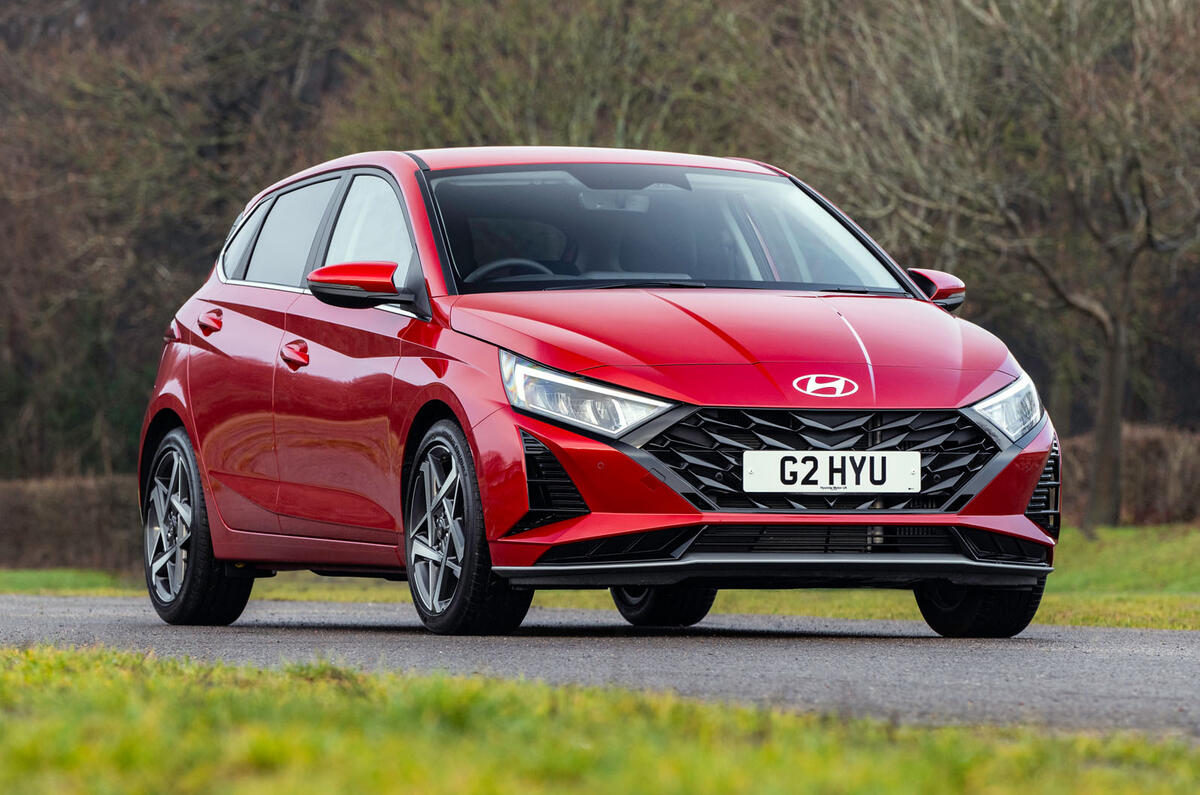
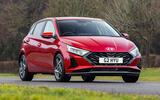
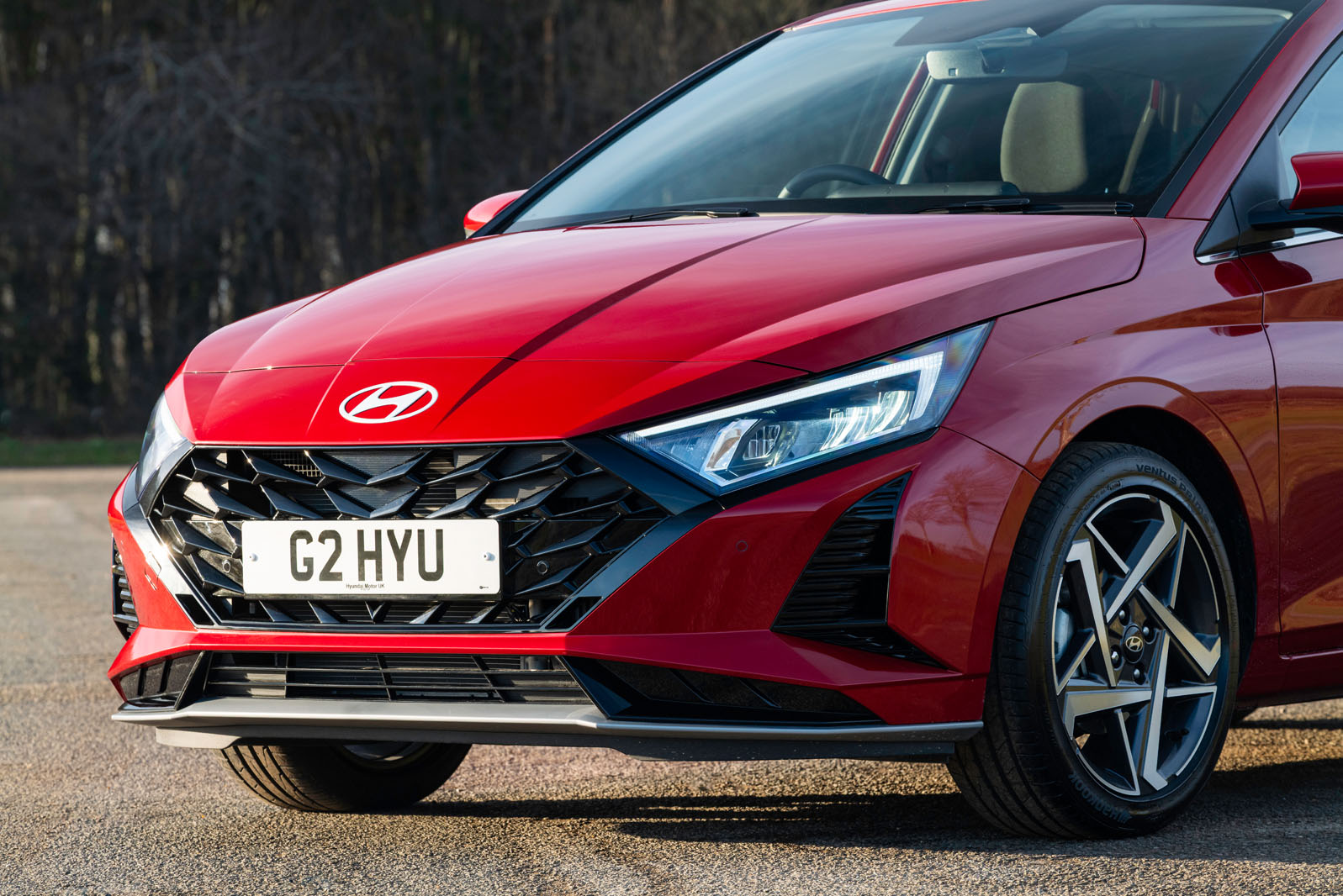
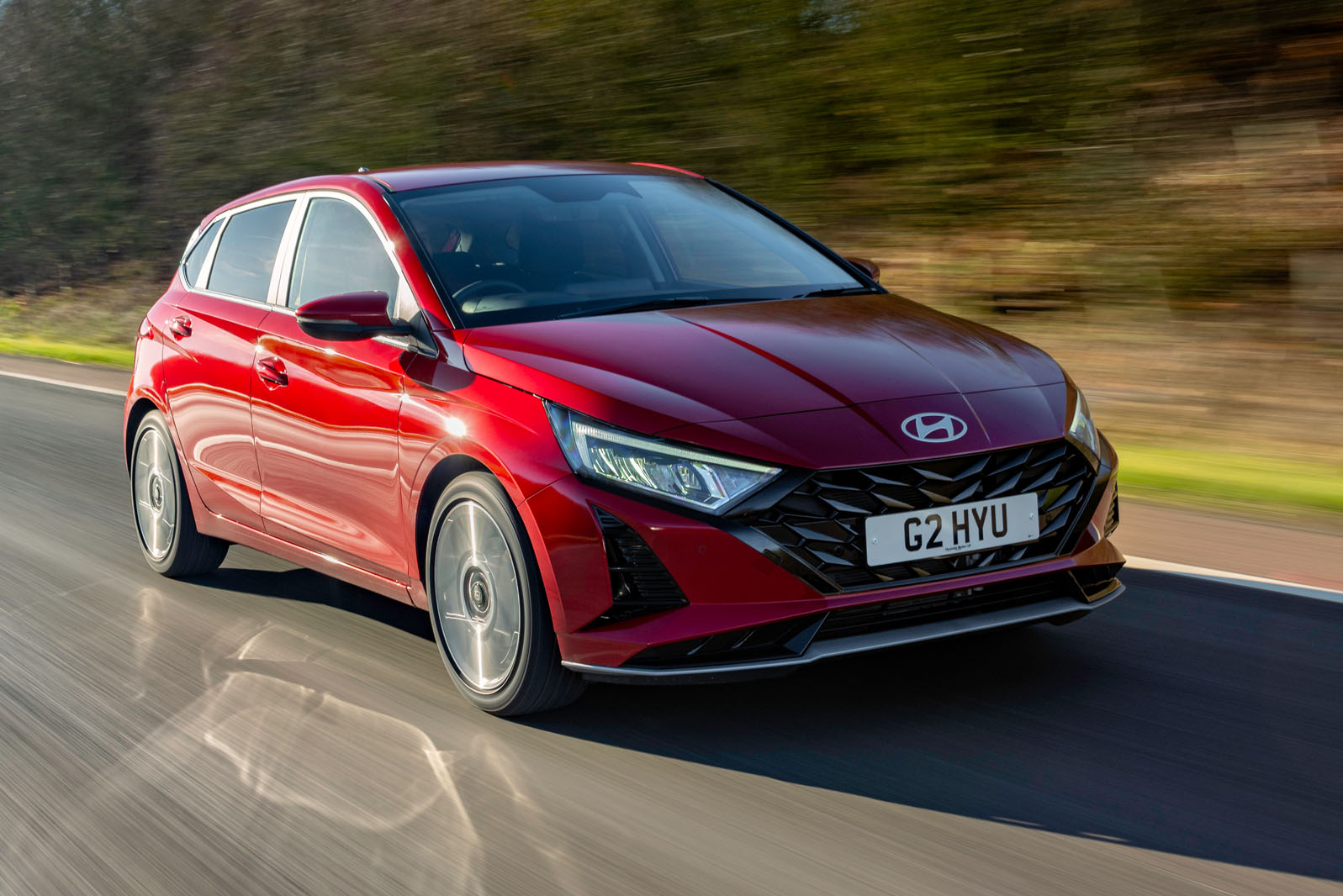
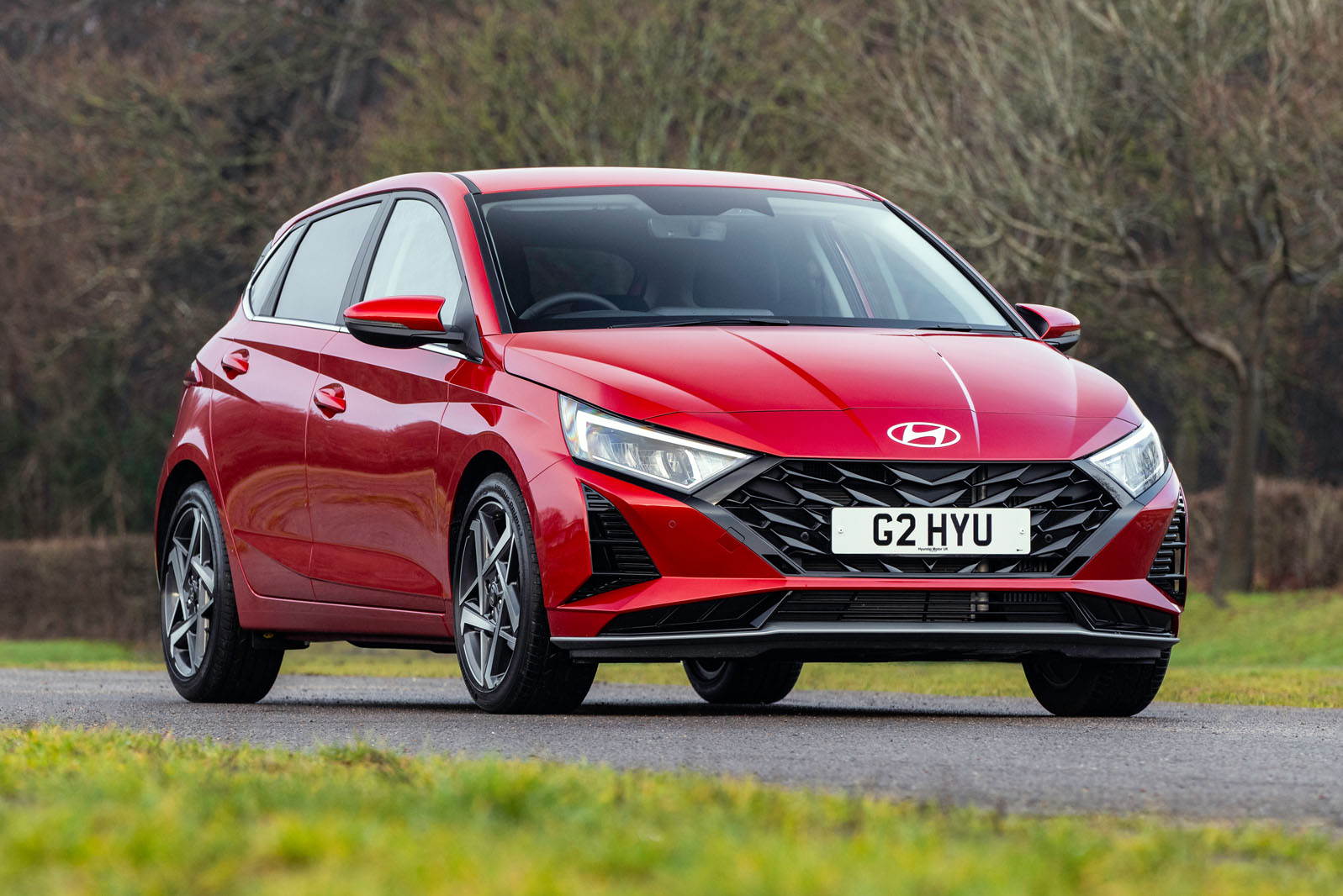
The current, third-generation i20 is a product of a transitional period in Hyundai design. It’s more style-forward than its very conservative predecessor but relatively tame compared with the much more out-there looks of the Kona and Ioniq EVs.

At 4040mm in length and 2040mm across the mirrors, the i20 is a typical size for a modern supermini, if fairly wide. Its mechanical layout is similarly conventional, with front-wheel drive, transverse-mounted engines, strut-type front suspension and a torsion beam at the rear.

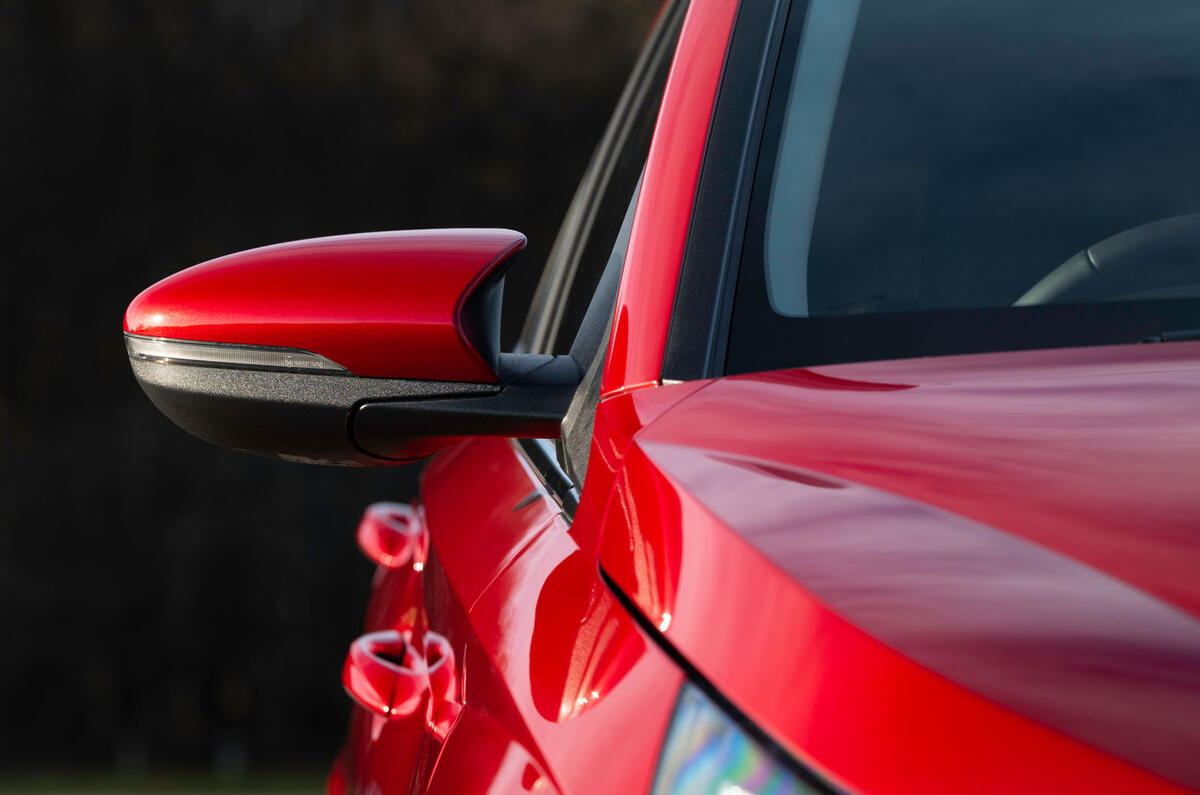
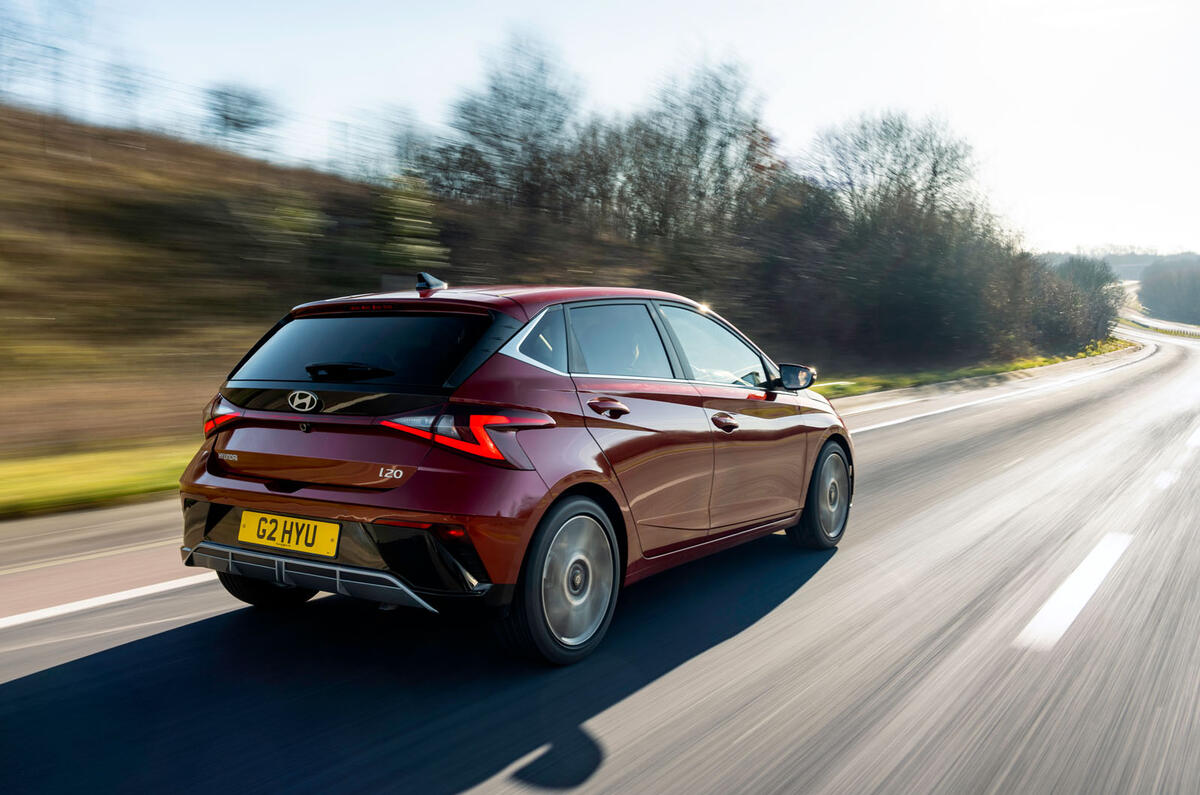
Twin ‘character lines’ in the bodyside create a bit of depth of surface in the front door and visual interest in the rear one, where they overlap. They also add ‘wedge’ (a sense of inclination) to the car’s profile, which designers love.

When this generation of i20 was launched, the big news was that it would be available with a mild-hybrid system. This consisted of a 48V lithium ion battery and inverter (which forms a roughly briefcase-sized unit carried under the boot floor, where the spare wheel well might otherwise be), plus a belt-driven starter-generator hung off the engine. It also came with an electronic clutch, where the pedal has no physical connection to the clutch mechanism; instead a sensor sends signals to an actuator, which does the work.

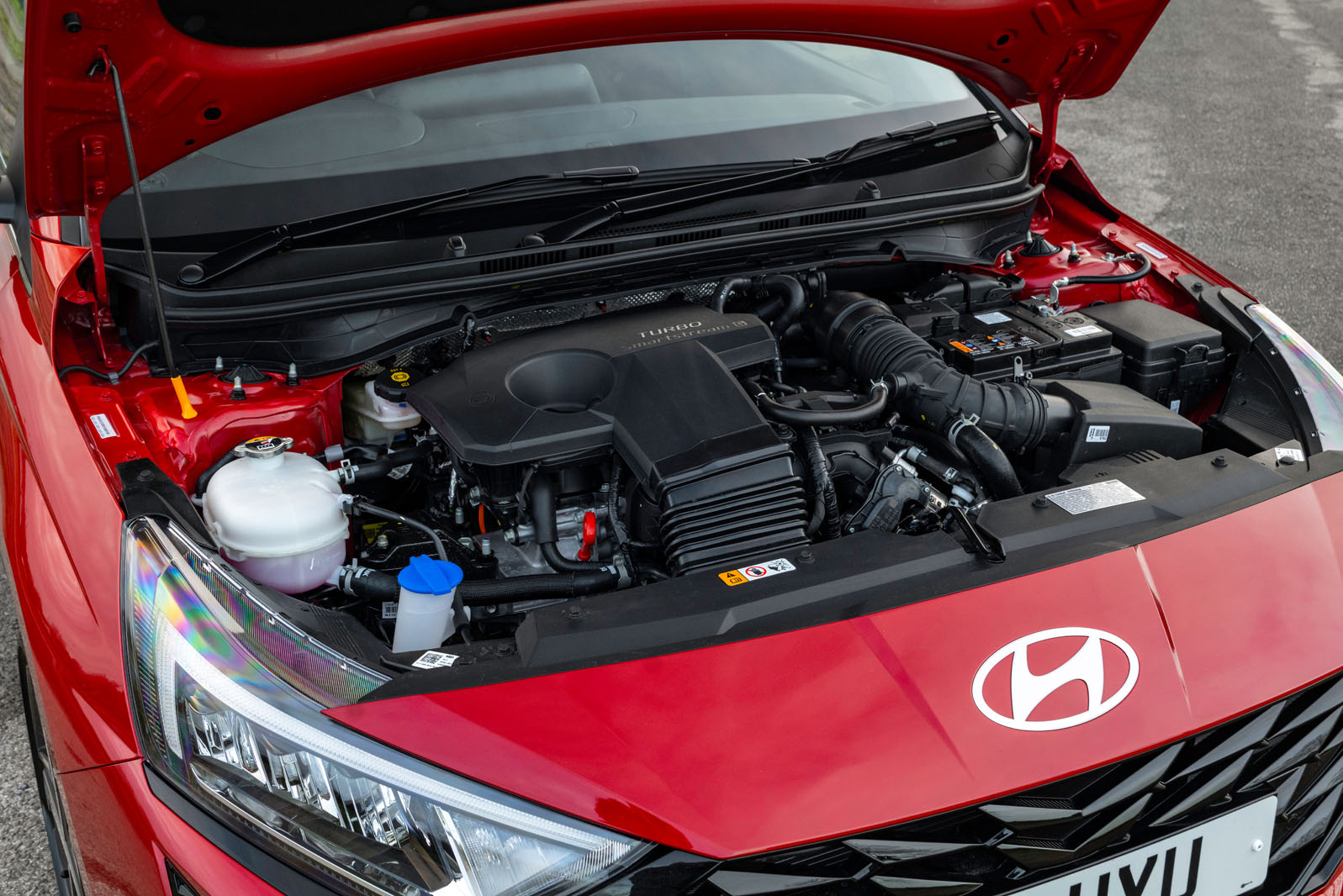
When the i20 was facelifted for 2024, the mild-hybrid engines were removed from sale in the UK (they remain in other markets), leaving just a conventional 1.0-litre triple that can be combined with either a normal six-speed manual or seven-speed dual-clutch automatic. Initially it put out 99bhp, but in 2026 most versions were downgraded to 89bhp, with a slightly narrower powerband.

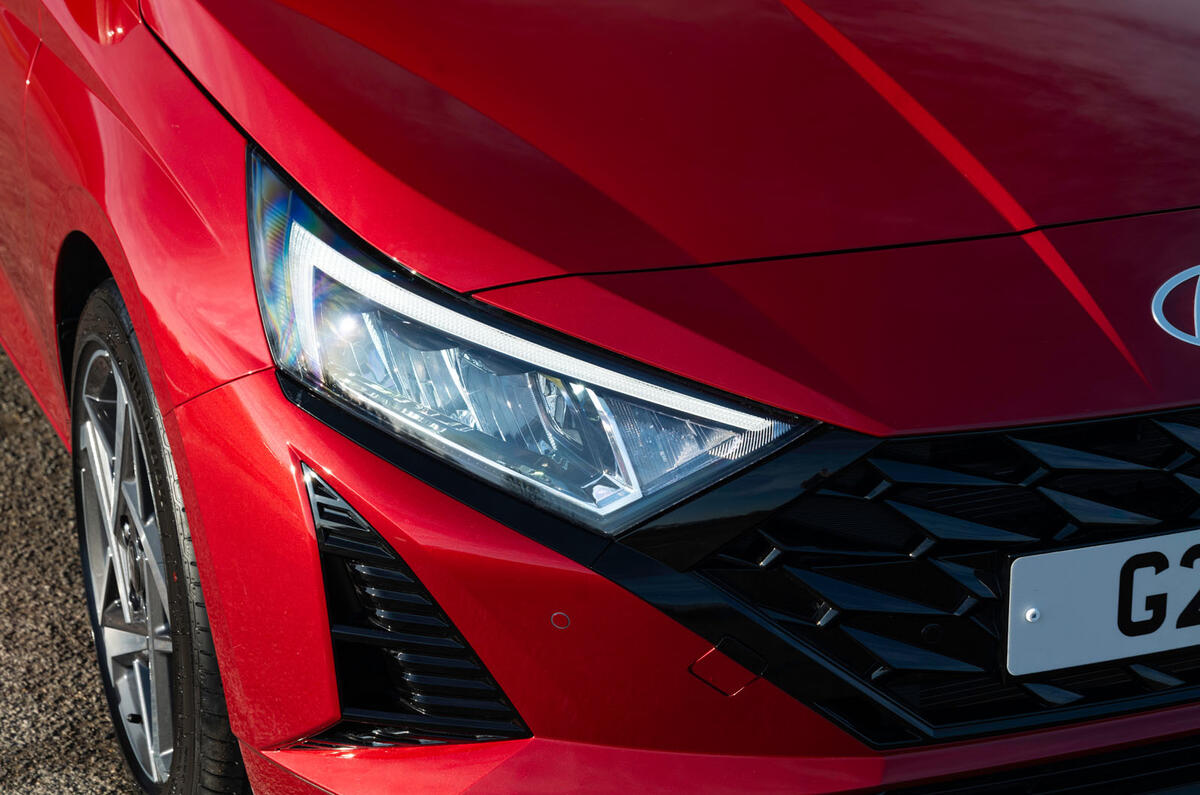
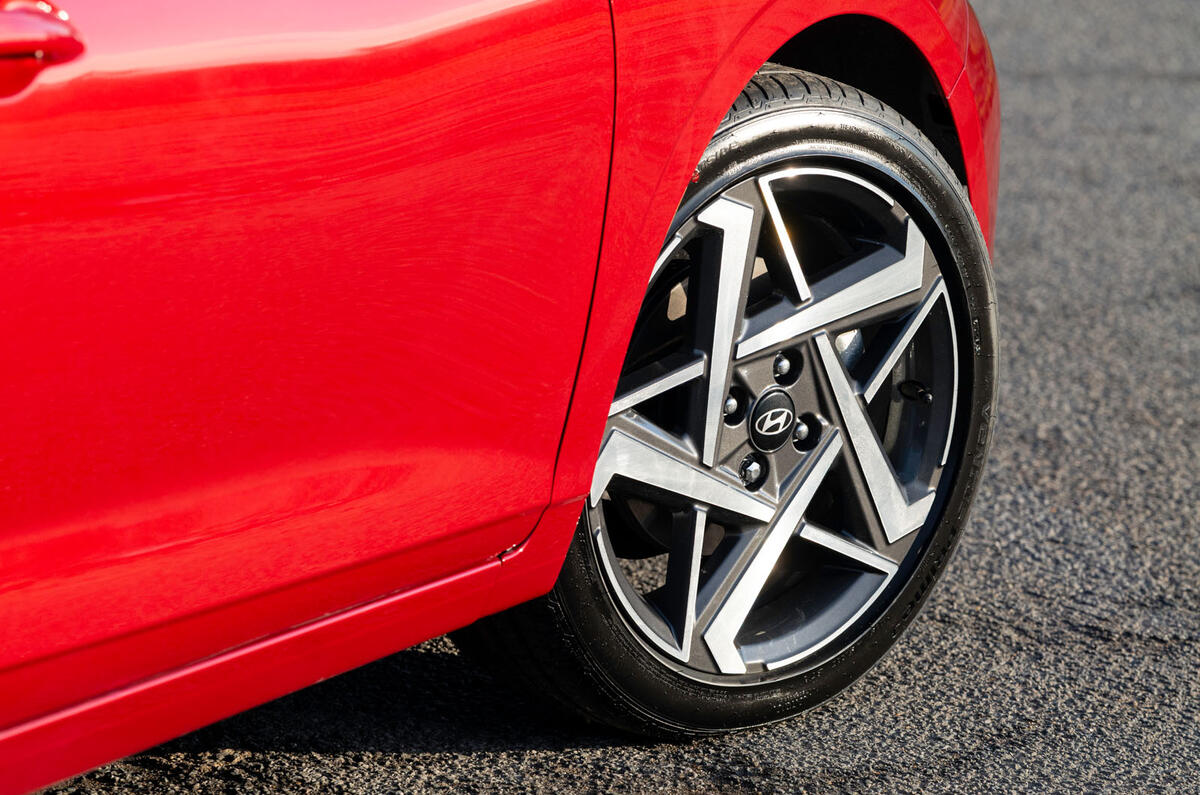
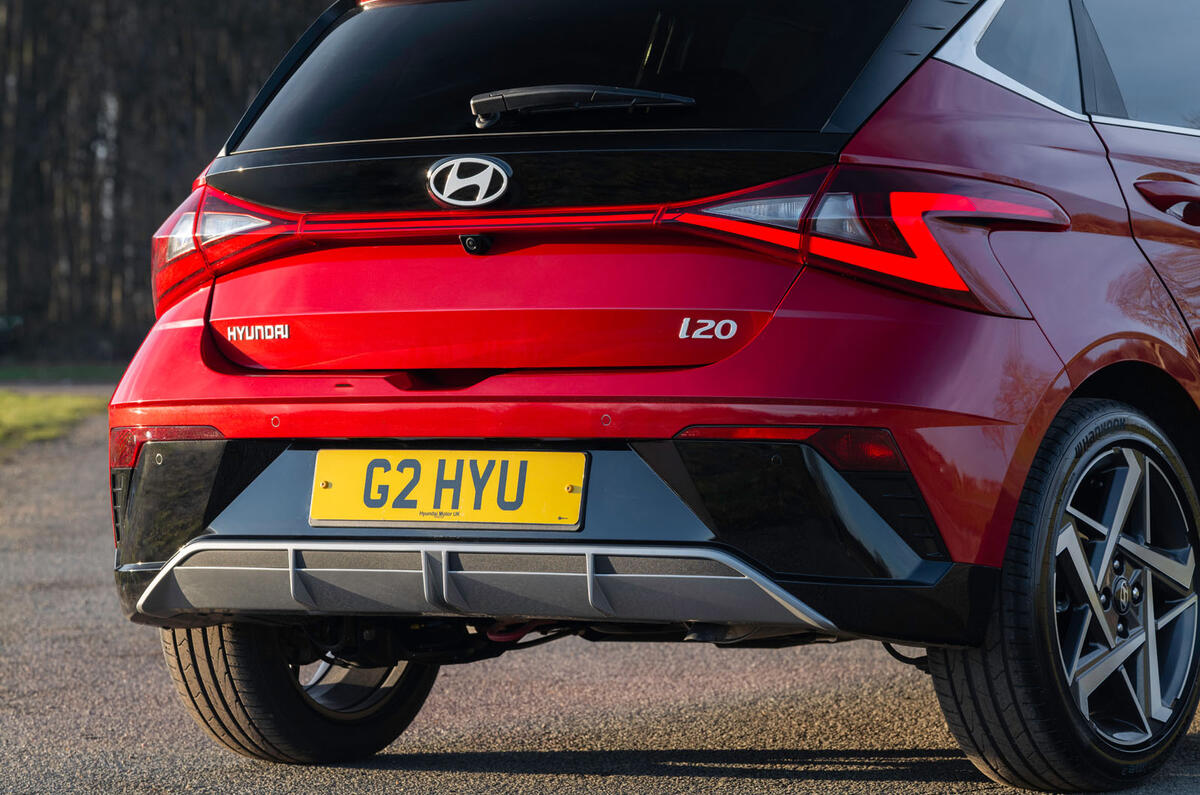
Visually, the facelifted i20 got revised bumpers front and rear, some new 16in and 17in alloy wheel styles and a few new exterior and interior colours.

INTERIOR

8
Hyundai i20 review 2026 012

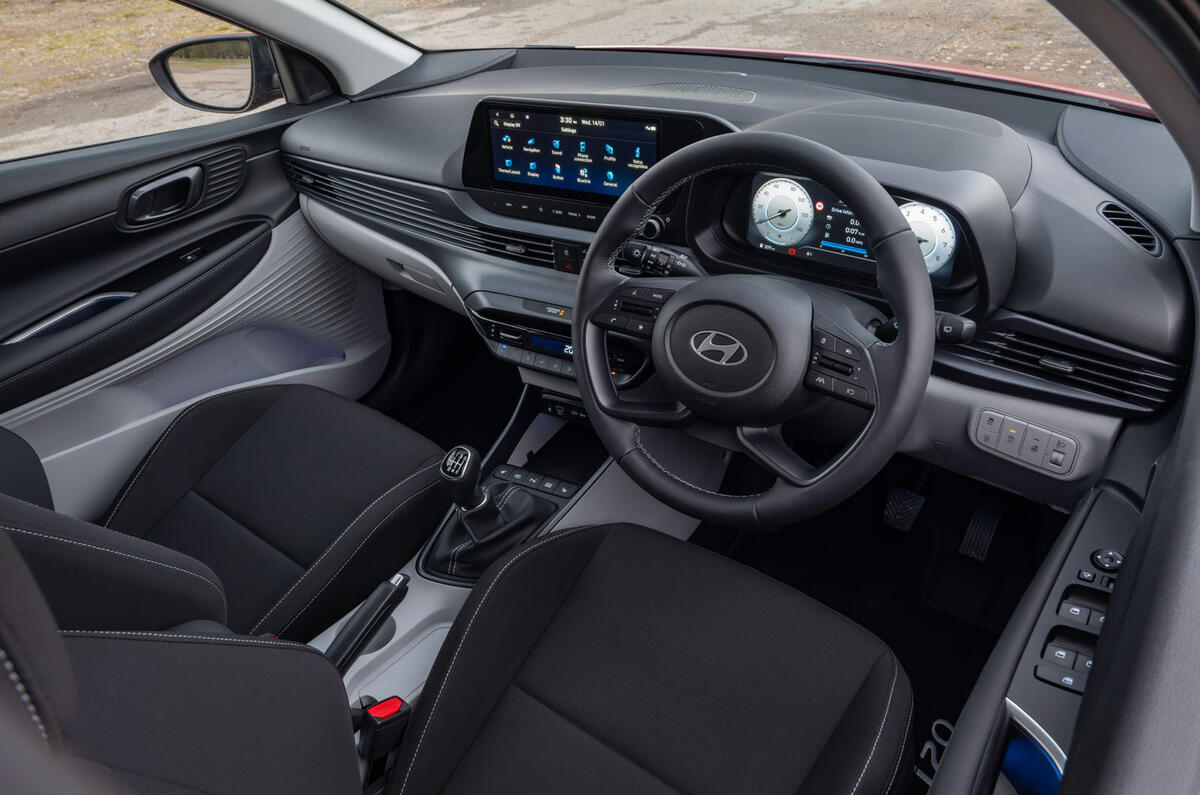
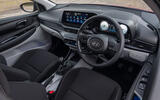
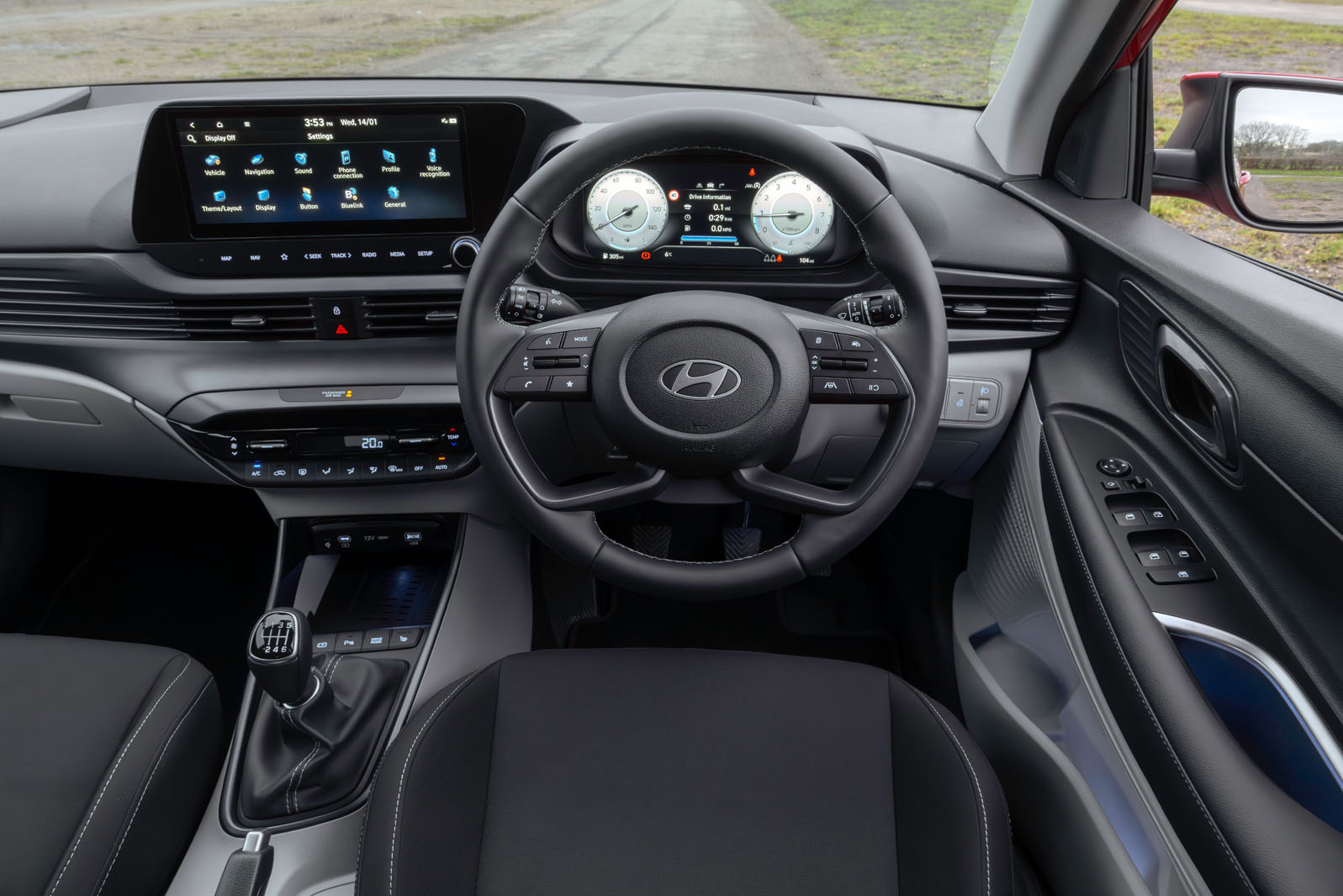
The i20 may be quite a traditional car is some ways, but the interior is bang up to date. As usual with Hyundai, the tech is all there, but it doesn't dominate.

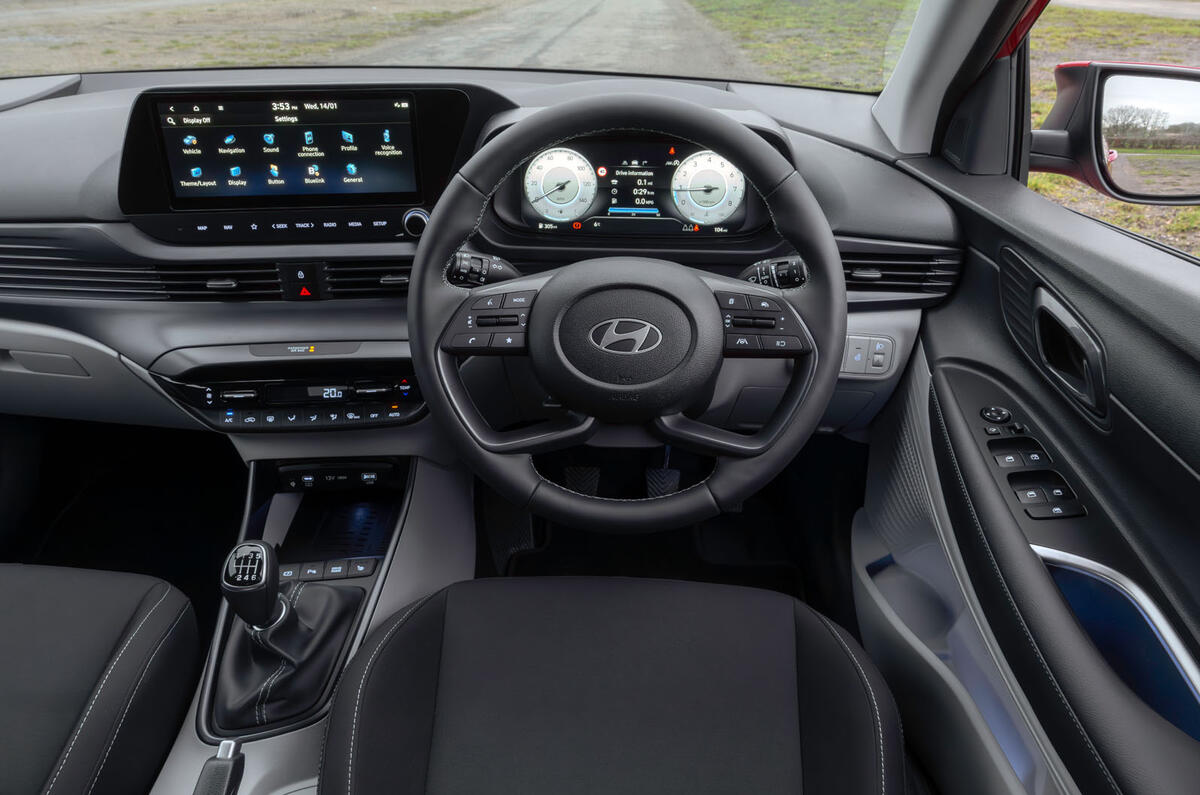
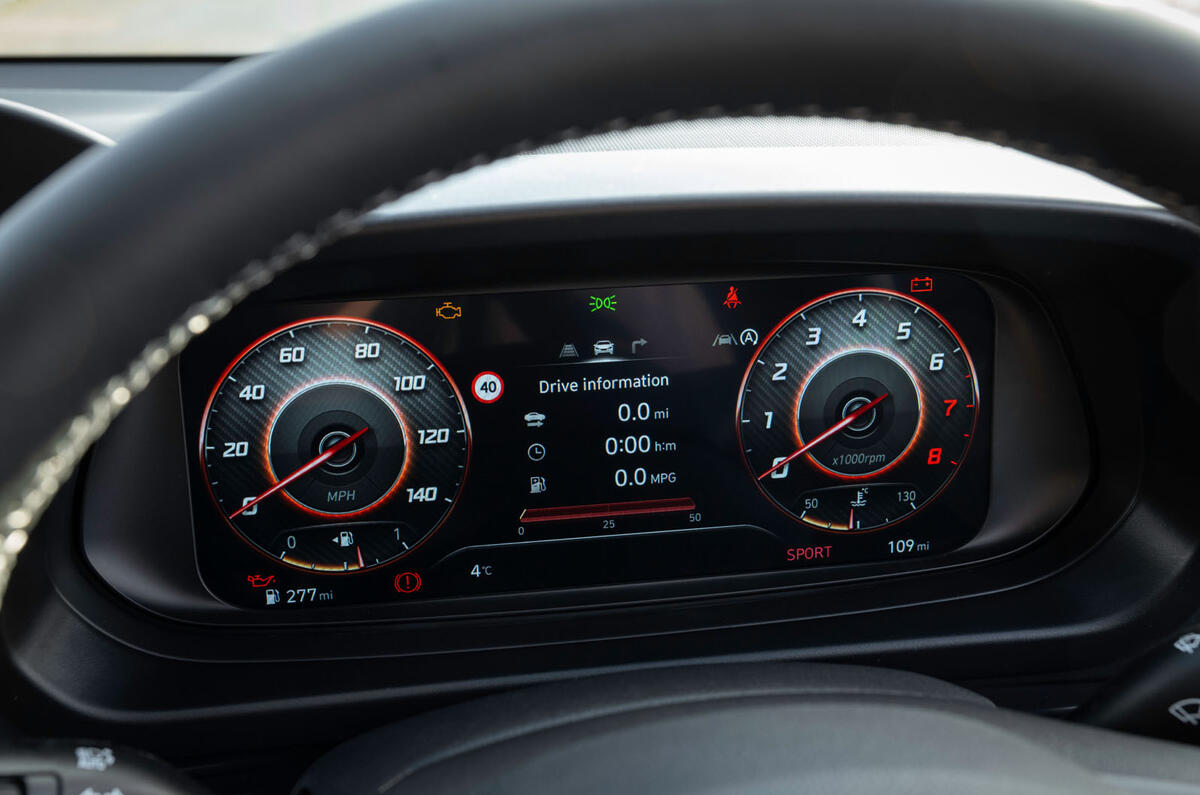
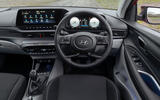
Some early low-spec versions had analogue gauges, but most i20s have a fully digital instrument screen integrated into a flight console-like panel that passes behind the steering wheel rim and meets up with the central infotainment touchscreen to make one sweeping installation.

It's possible to set the digital gauge cluster to a trippy display with cubes that fill up as you speed up, but thankfully the standard layout has two clear round dials.

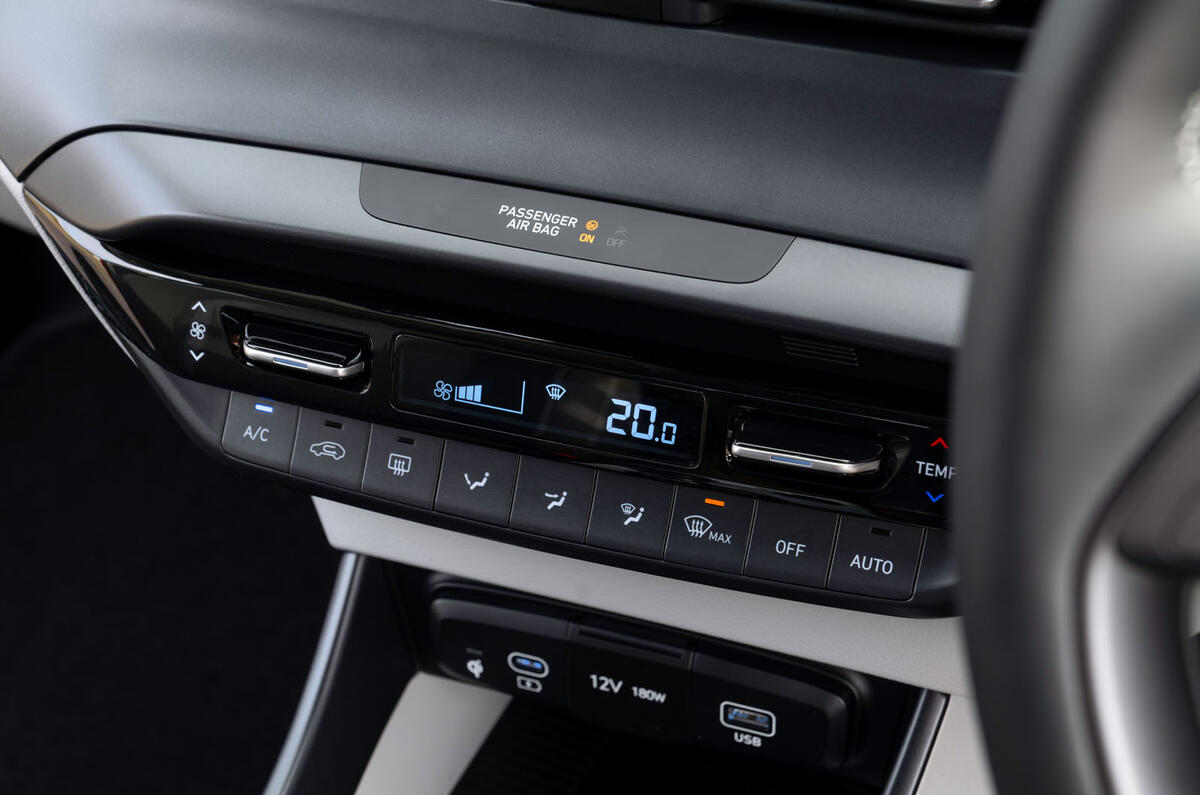
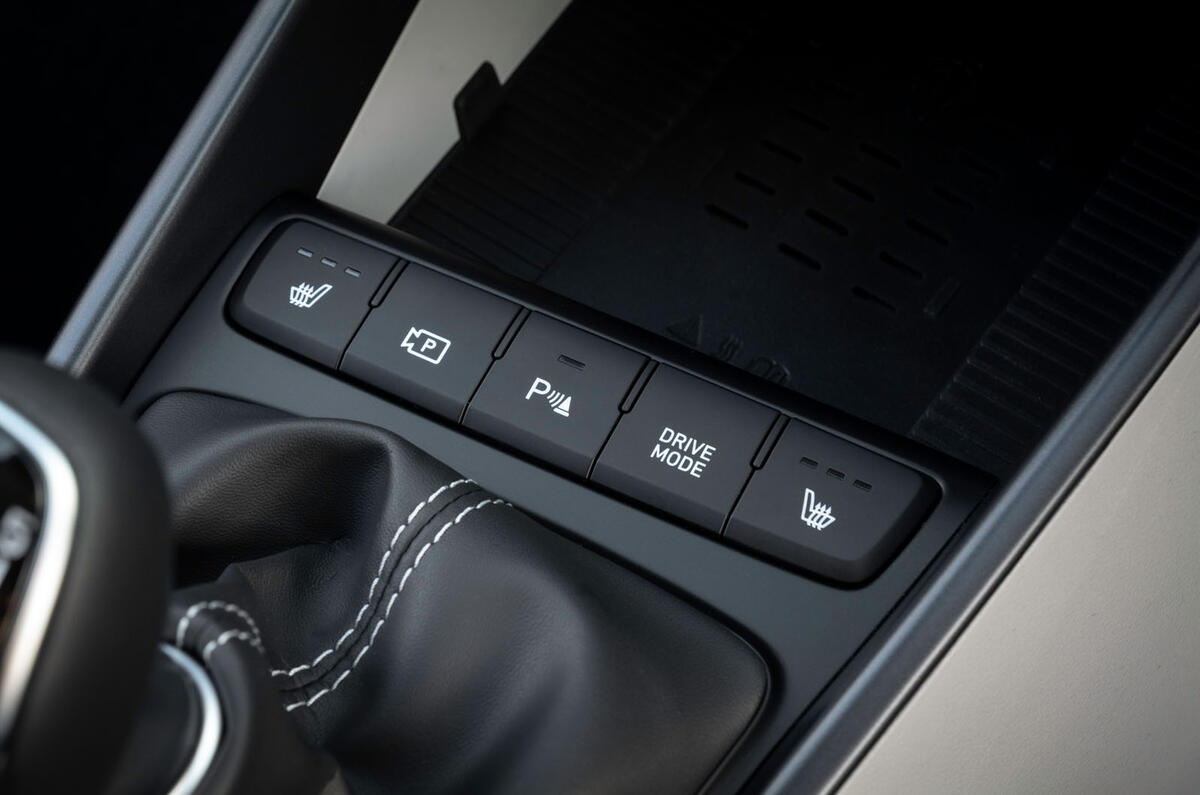
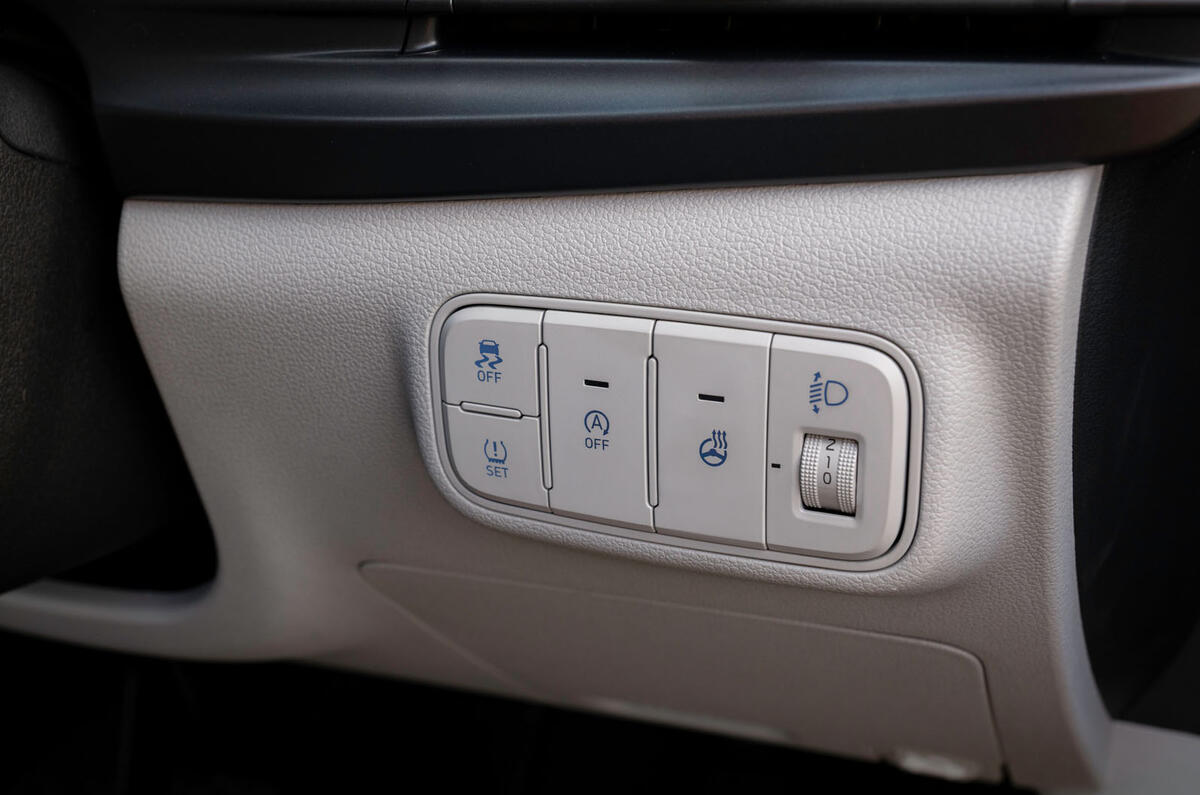
The digital instruments are bright, simply rendered and clear, and the infotainment system is equally simple and easy to use, so even those suspicious of the creeping adoption of digital technology in mainstream cars have little to fear from either. That’s helped by the generous allocation of chunky, solid-feeling switches and fittings for the climate and infotainment, as well as things like the drive modes.

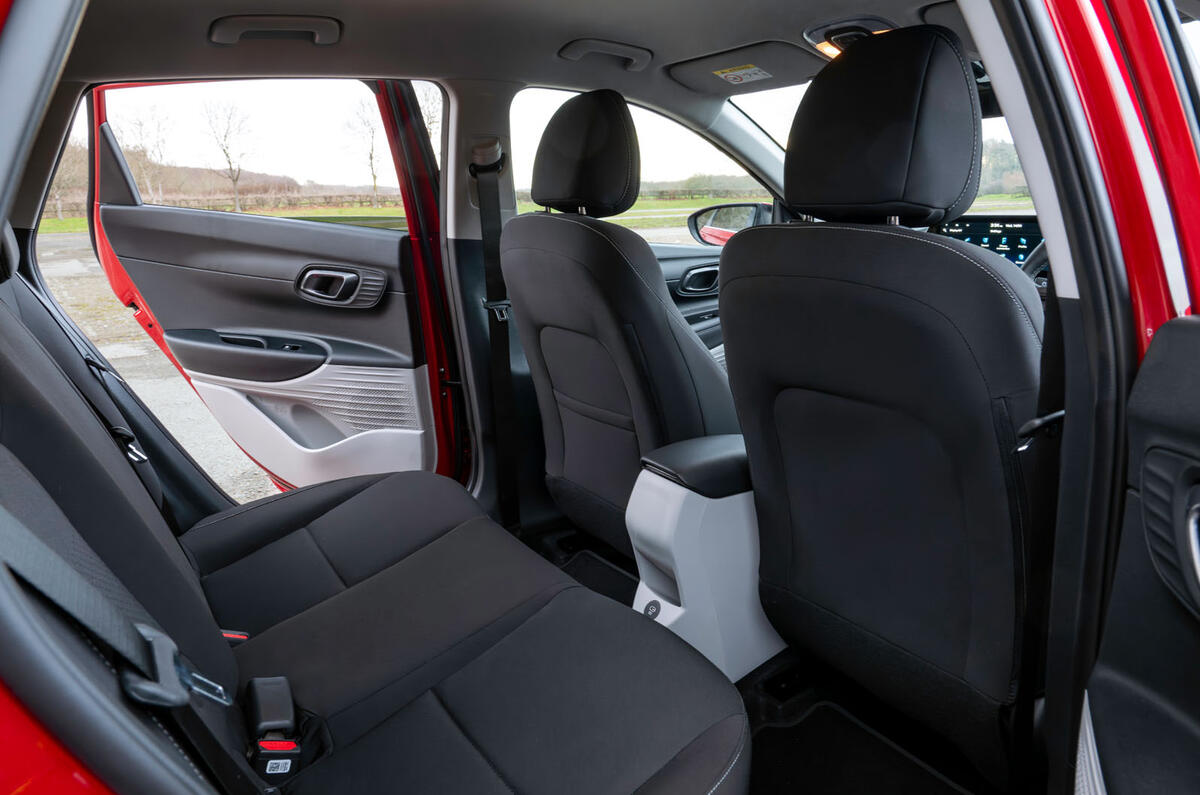
The rest of the cabin is likewise a surprise in places. The i20 feels big for a supermini – specifically, wide. Even larger adults sitting side by side can easily avoid brushing shoulders, elbows or knees, and there’s plenty of room for them to sit one behind the other in reasonable comfort.

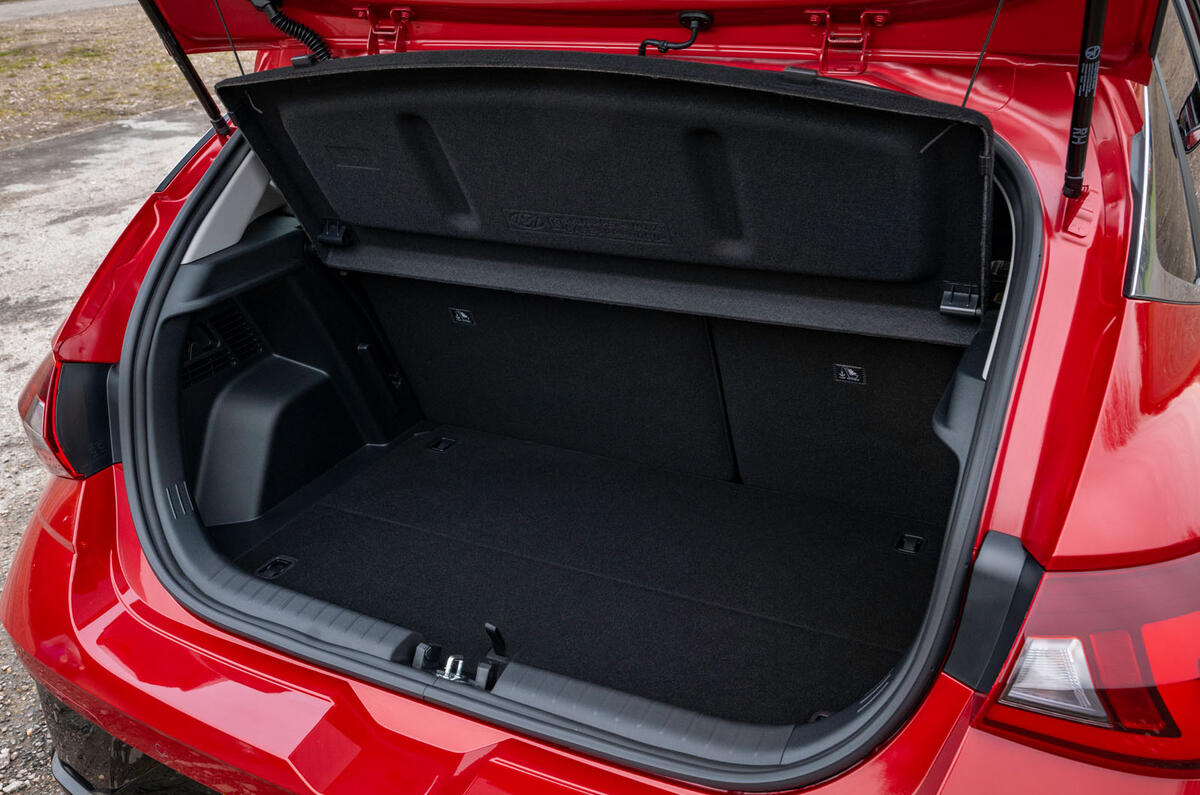
The boot is averagely sized: 352 litres is up on the Vauxhall Corsa’s 309 but down on the Renault Clio’s 391.

There’s a fine driving position that’s quite low and dead straight, though a bit more steering column adjustment wouldn’t go amiss. The front seats are a touch hard and have less lateral bolstering than some might like. This isn’t really a sporty hatch, though, as we’ll come to explaining, so just a little bit of support may be enough.

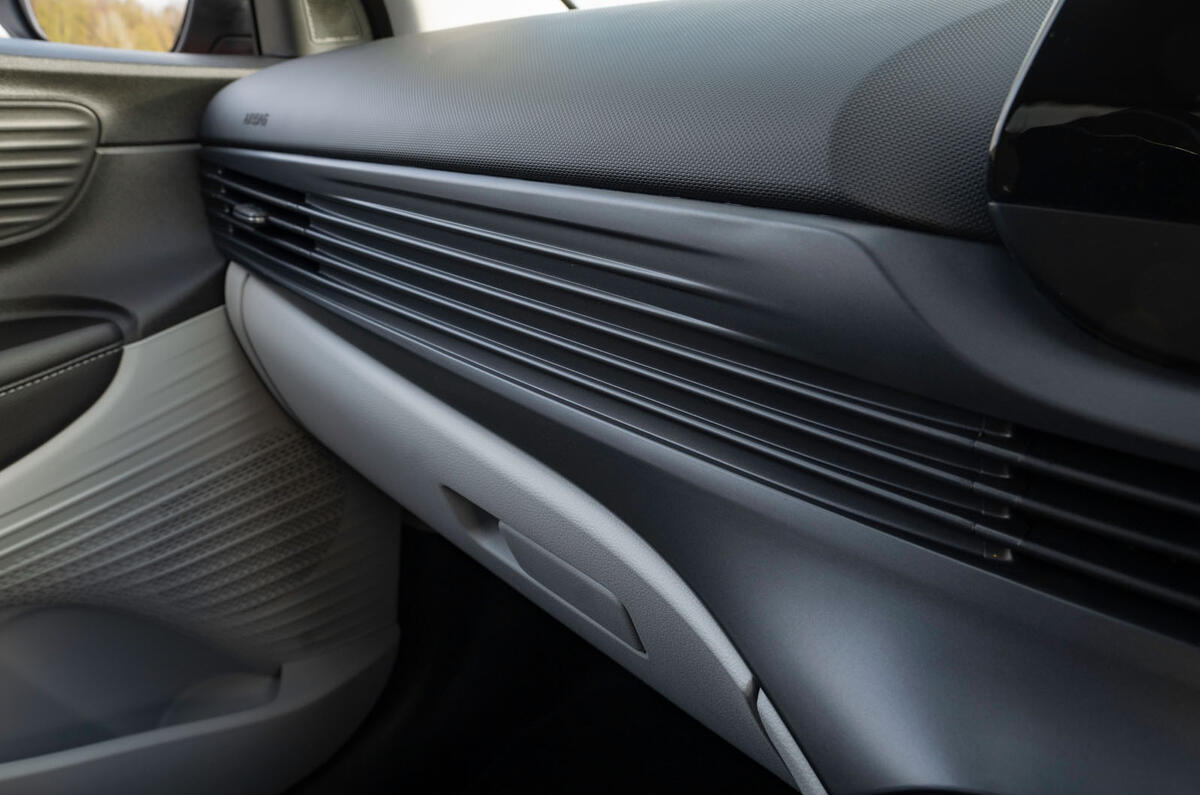
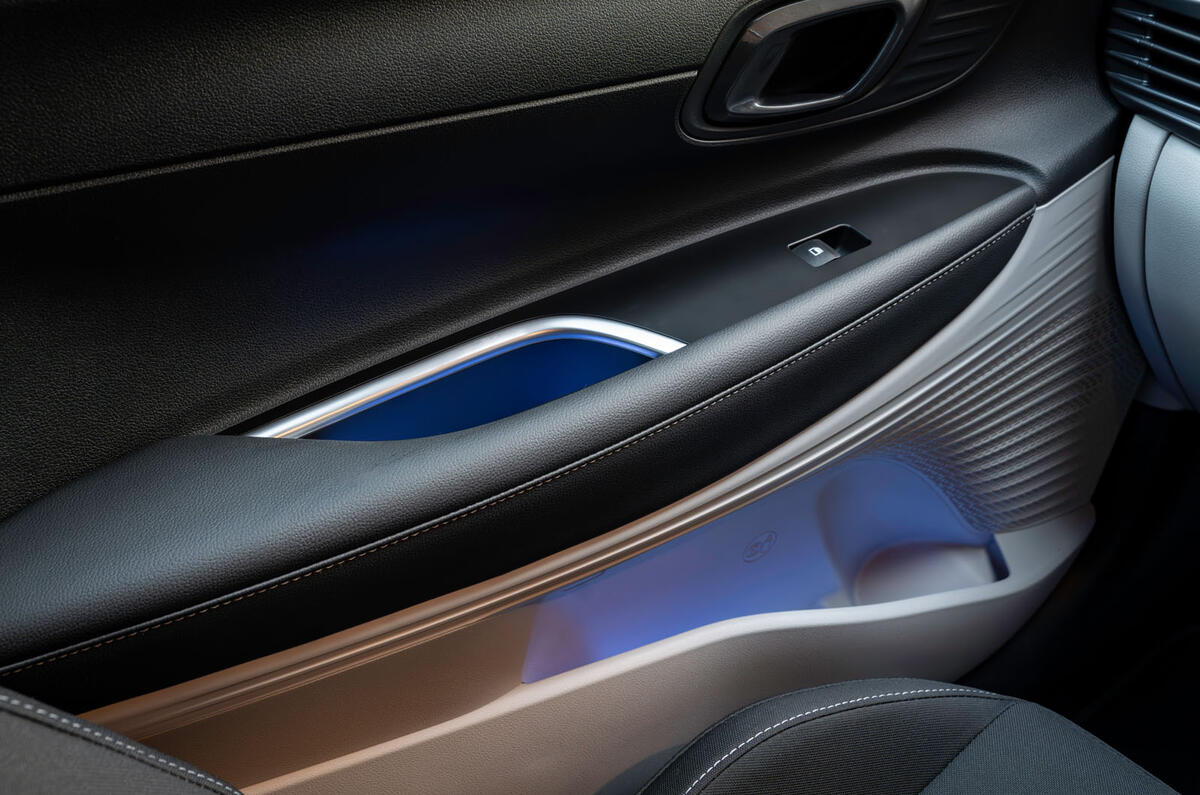
The i20’s dashboard is decorated with horizontal ribs – a feature also to be found around the door handles, air vents, speaker grilles and elsewhere. They’re the kind of embellishments that someone who liked an earlier i20 or even a Pony or Getz (remember those?) might consider superfluous. But they do work to give the new i20’s driving environment just a smattering of sensory intrigue, which is very welcome.

There’s absolutely nothing else to play to the tactile senses here: not a soft-feeling moulding anywhere and – with the exception of some optional yellow accents – a very limited palette of interior colours.

However hard, the car’s plastics do promise to wear well. They’re not too reflective, they don’t mark up under fingernails and they don’t seem to show the dust or grease much.

Hyundai i20 infotainment and sat-nav
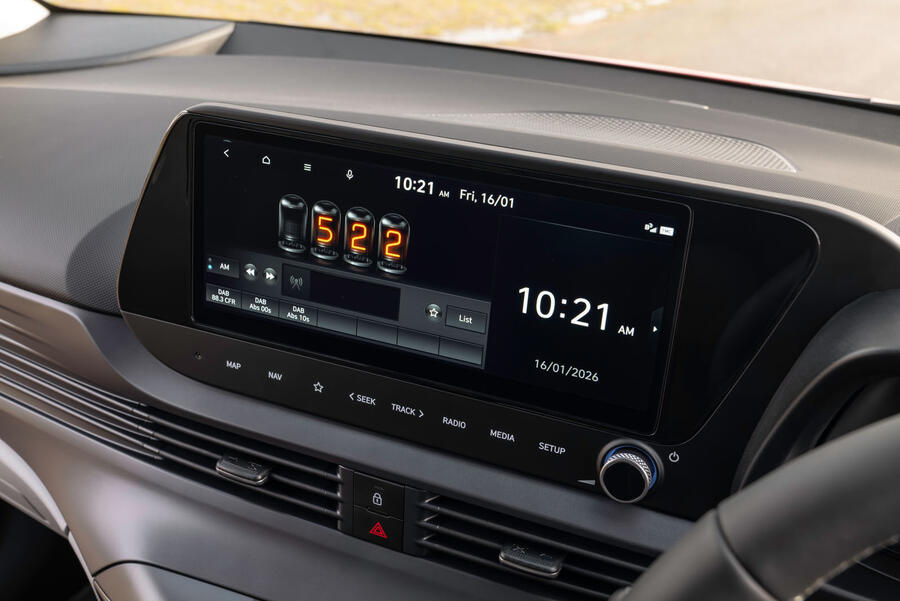
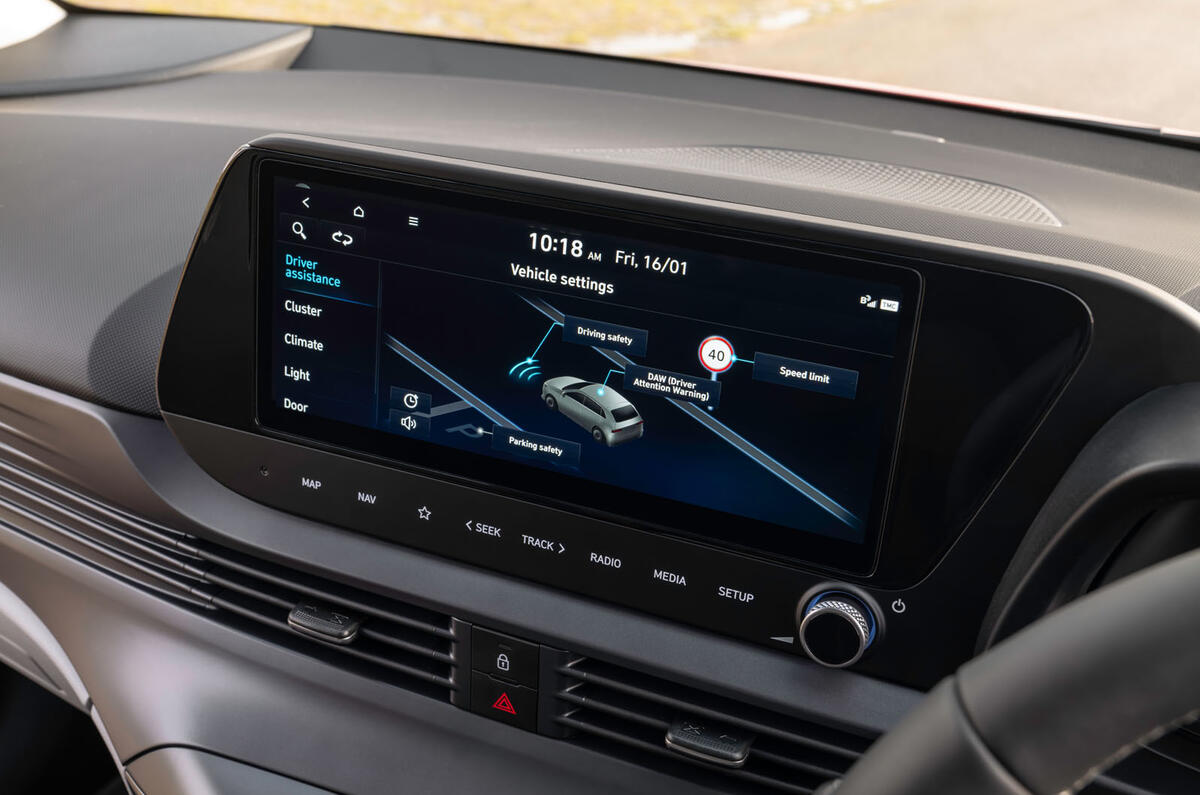
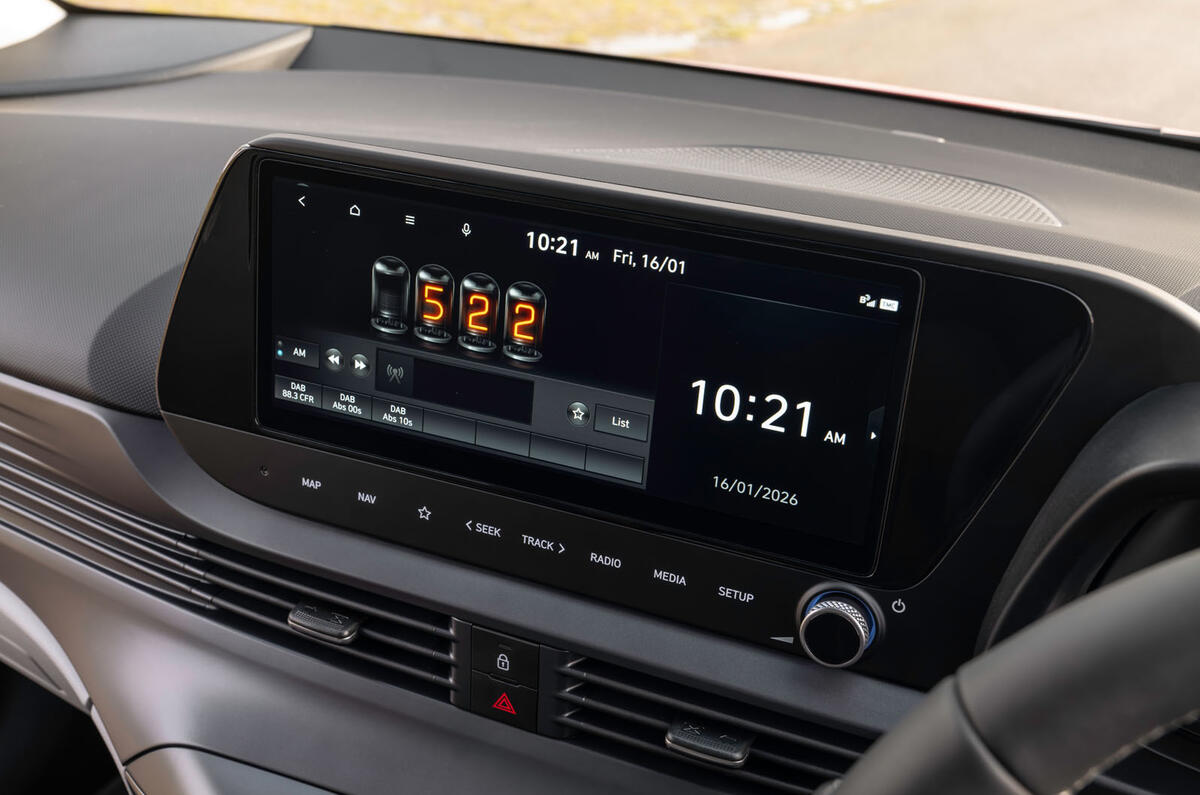
For 2026, all versions feature a 10.3in touchscreen with a row of touch-sensitive shortcut buttons underneath. The interface looks prettier and comes with built-in connected navigation. The graphics aren't the most modern, but it's responsive, easy to navigate and the navigation system is very astute in avoiding traffic.

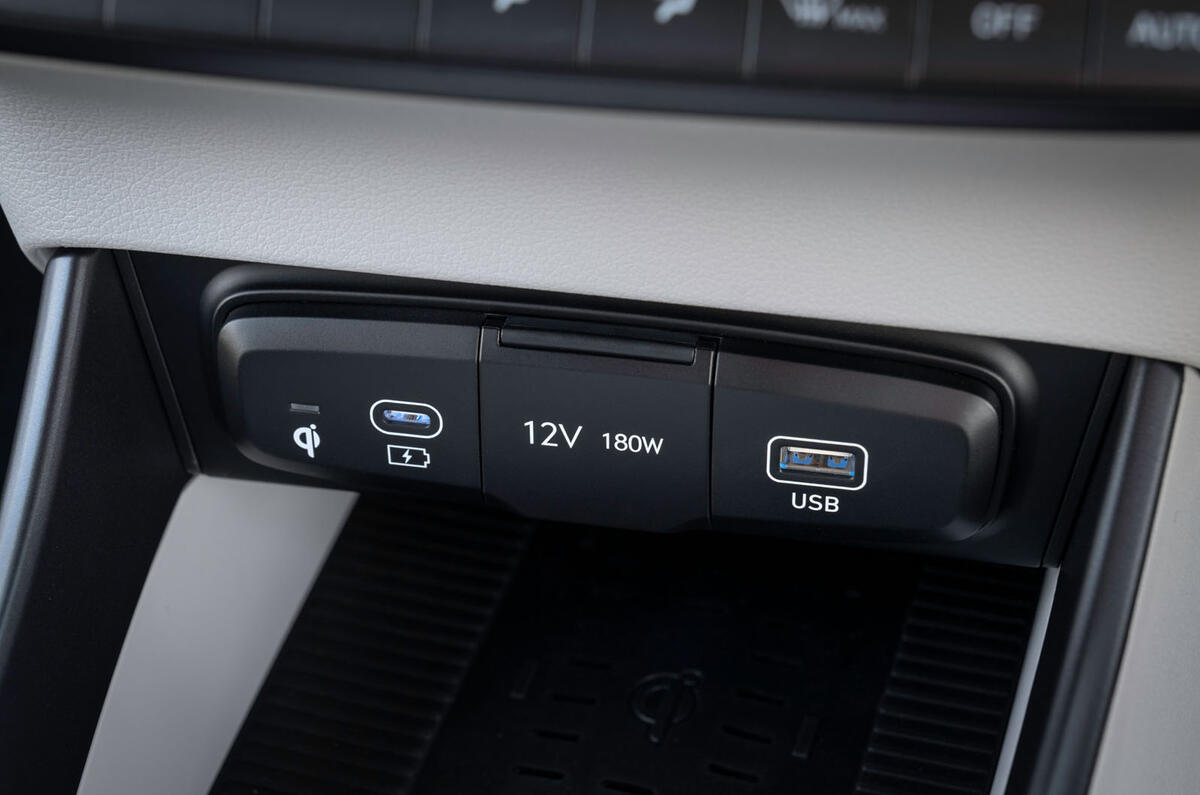
The only slight annoyance is that for smartphone mirroring, you need a USB cable, and an old-school USB-A one at that. Hyundai’s standard six-speaker stereo sounds slightly tinny, but you get a more powerful Bose system on top-grade cars.

Some earlier low-spec got a smaller, 8.0in touchscreen. It was quite basic but worked well, thanks to big target icons and physical shortcut buttons.

ENGINES & PERFORMANCE

7
Hyundai i20 review 2026 011

On the face of it, the i20's powertrains have been gradually downgraded over the course of its life. In reality, the picture is a little more nuanced. 

Originally, this generation came with mild-hybrid engines, but even so, the i20 wasn't the smoothest or most refined car in its niche, nor the most slick or drivable, nor the most frugal, nor the keenest-accelerating. But it covered all of those areas sufficiently well as to allow none to be counted as a significant weakness.

The i20 is likeable enough, but I’m not sure it forges a properly memorable identity for itself. It lacks the handling vivacity of the old Fiesta, and while it’s pretty comfortable, it’s certainly no Polo.

When we drove the facelifted car, we didn't particularly miss the mild-hybrid element: it felt broadly the same, still suffering from a bit of turbo lag and rather unenthusiastic throttle calibration in the default Eco mode.

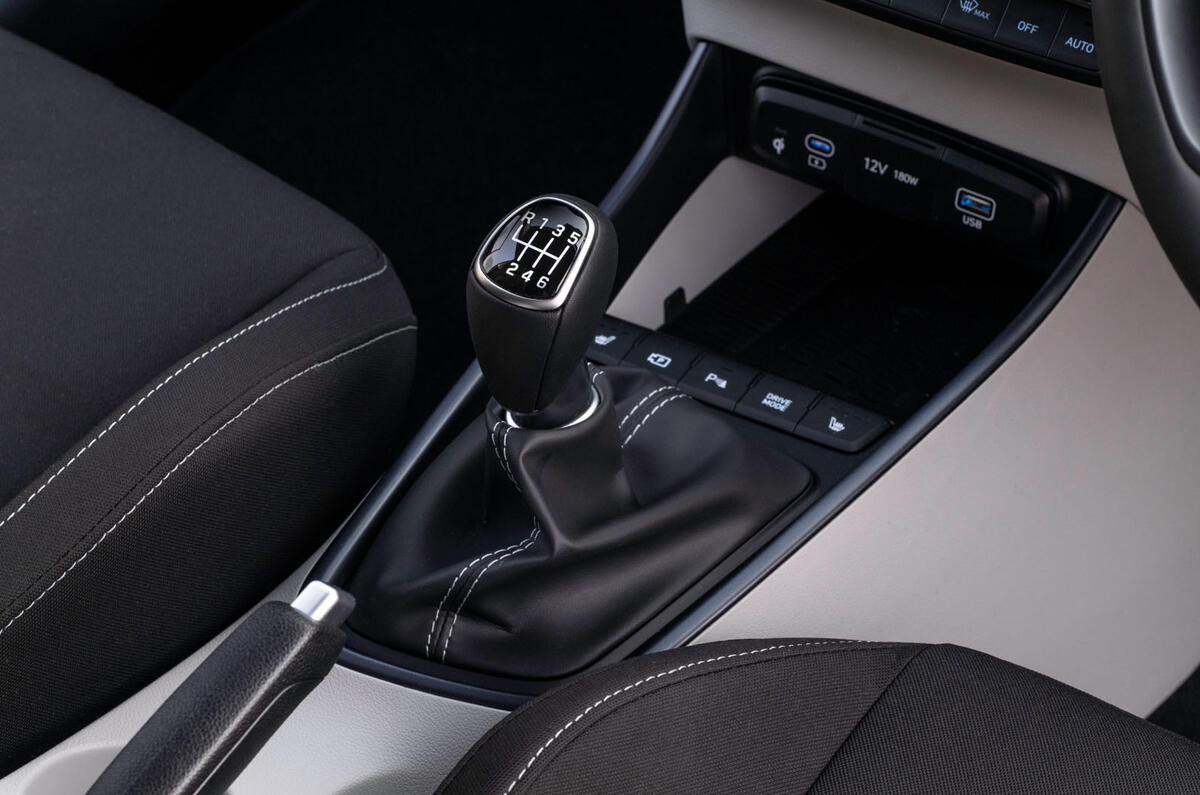
For 2026, most versions have 89bhp rather than 99bhp, but the laggy delivery we previously experienced appears to be gone. It's still a relatively slow car but actually quite an enjoyable one. The three-cylinder engine is quite happy to rev and makes an encouraging noise as it does so. Meanwhile, the six-speed manual gearbox is an absolute delight, snicking between gears with little friction yet enough feedback. Heel-and-toe downshifts are possible with a bit of practice too.

RIDE & HANDLING

6
Hyundai i20 review 2026 029

The i20 may be a big supermini, but it doesn’t feel like a particularly heavy one out on the road. It handles fairly smartly and with a modicum of agility, through medium-paced steering that may lack the ability to engage much but also stops well short of any major transgression.

The suspension also feels like something of a moderate in its tuning priorities. It holds the car usefully tautly when negotiating roundabouts around town and tackling quicker bends out of town. Body control is more troubled by more complex tasks, though.

The i20 is far from the best-handling or best-riding supermini. Then again, this small, relatively light hatchback still feels fundamentally right in a way that most crossovers don’t.

The i20 is a little bouncy and choppy-feeling when disturbed at speed, while the ride can become hollow-feeling over sharper edges and coarser surfaces. So in neither its damping nor its isolation does the car have much finely honed polish about it and handling precision is perhaps worthy of only passing praise.

Comfort and isolation

The soundness of the driving position and the provision of plenty of space even for taller drivers form a strong basis here. You don’t expect the last word on seat comfort in a supermini, but for its kind, there’s very little to complain about.

The i20 rides comfortably and quietly enough on most urban roads, fussing a little more than a bigger, heavier family car might as you negotiate speed bumps and other bigger inputs, but not intrusively so.

Visibility is typical of a supermini and pretty good in most directions.

Wind noise is fairly well controlled, and the i20 recorded 63dBA of in-cabin noise on the smooth Tarmac of the Millbrook bowl and at a 50mph cruise, which beats what we registered in nearest-equivalent versions of the current Renault Clio and Toyota Yaris and levels with the Volkswagen Polo (although that car was tested in more challenging, wet conditions).

Assisted driving notes

Even range-topping versions of the i20 do without adaptive cruise control, which feels a little mean when many rivals do offer it at least on some versions. Then again, some people prefer regular cruise control.

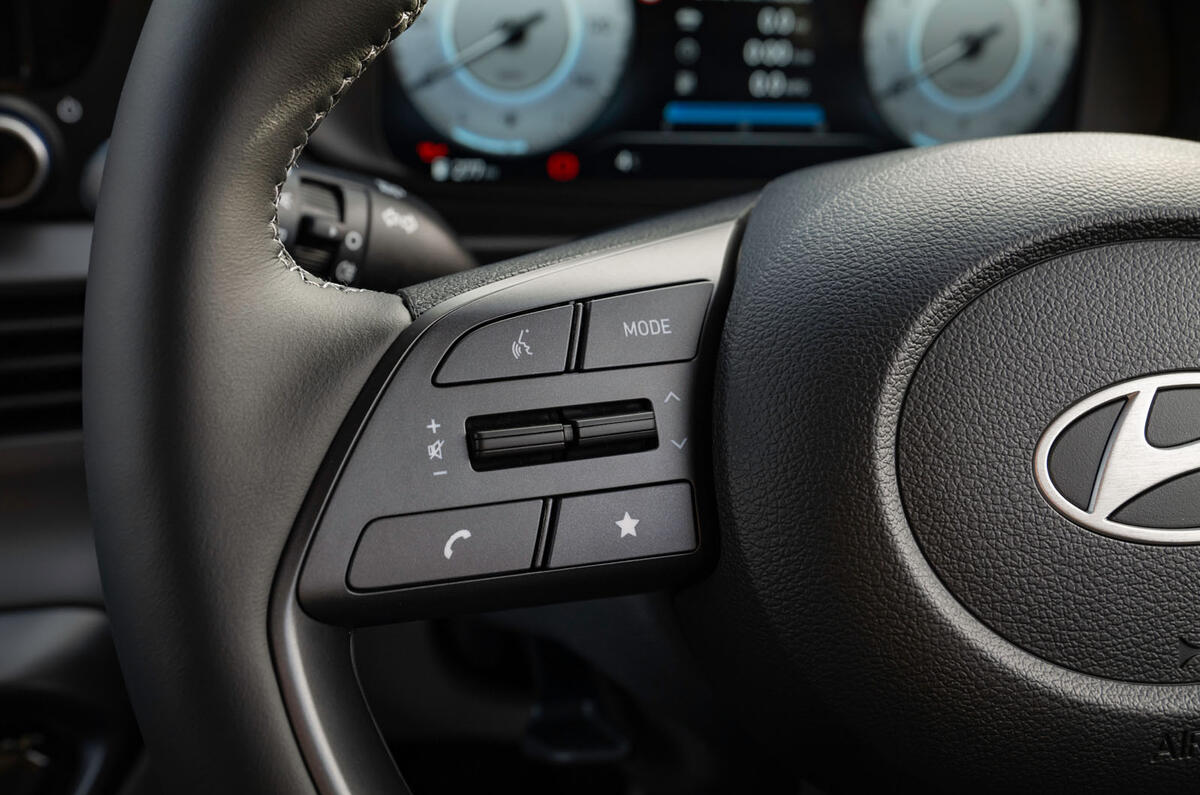
As with other Hyundais, the lane keeping assistance and, in the facelifted version, overspeed warning can be quite intrusive. Thankfully, both are relatively easy to turn off by holding the relevant buttons on the steering wheel.

MPG & RUNNING COSTS

8
Hyundai i20 review 2026 001

For 2026, the i20's trim levels were shaken up. Things start at £19,995 with the Element (aka Mallorca rental car), moving up to the £22,945 Black Line (LED headlights, bigger digital instrument display, heated seats, heated steering wheel and, appropriately, black alloys), £24,245 Tech Line (automatic climate control and keyless ignition) and £25,000 N Line S (pseudo-sporty bumpers and Bose stereo). 

It's a little odd to get into the Black Line car and find heated seats and a heated steering wheel but manual air-conditioning, but we've driven £90k Mercedes that lacked a heated steering wheel, so to have it on a £23k Hyundai is pretty good. In general, prices are pretty much in line with the Renault Clio and Seat Ibiza.

Hyundai has long stopped being a budget brand, but its warranty remains attractive. While five years isn’t the longest around, it’s still very good and, unlike with other manufacturers, it doesn’t come with a mileage limit.

Fuel economy, whether with one of the older mild hybrids or with a pure-petrol version, is quite typical for a turbocharged three-cylinder with long gearing. On a motorway cruise you might see 60mpg, which isn’t too far off the Toyota Yaris Hybrid. However, if you want to make any sort of progress on give-and-take roads, you will need to dial up some revs, which sends the economy plummeting to the low 40s and even into the 30s.

If you do a lot of miles in town, the hybrid options in the class (the Yaris, Honda Jazz and Renault Clio E-Tech) are unbeatable.

VERDICT

Hyundai i20 review 2026 030

The third-generation i20 builds incrementally on many of its predecessor’s strengths, as well as showing a few signs of development in more intangible areas.

It’s a small car of very evident practicality and efficiency. It has a roomy, hard-wearing and well-provisioned cabin and an unobtrusive, easy-to-operate road-going persona. It also shows greater ambition than its forebears as regards design appeal and technology, although quantifying just how much ‘emotional value’ Hyundai has succeeded in adding here is quite the balancing act.

Its driving experience is nicely rounded if not quite viceless. Some rivals manage to balance comfort and sportiness a little better or offer more of one or the other. Some also offer more power. 

Illya Verpraet

Illya Verpraet Road Tester Autocar
Title: Road Tester

As a road tester, Illya drives everything from superminis to supercars, and writes reviews and comparison tests, while also managing the magazine’s Drives section. Much of his time is spent wrangling the data logger and wielding the tape measure to gather the data for Autocar’s in-depth instrumented road tests.

He loves cars that are fun and usable on the road – whether piston-powered or electric – or just cars that are very fit for purpose. When not in test cars, he drives an R53-generation Mini Cooper S or a 1990 BMW 325i Touring.