
The sad passing of Sir Clive Sinclair has generated thousands of headlines, most focused on his work to revolutionise either the pocket calculator or home computing.
But his death has also shed a wider light on his creative - and sometimes doomed - genius, including a decades-too-soon determination to electrify personal transport.
Here, as a stark reminder that for every Elon Musk there are thousands of right ideas at the wrong time (as well as a lot of wrong ideas, lest we be accused of being too kind), are four Sinclair inventions that sought to change how we travel.
Sinclair C5
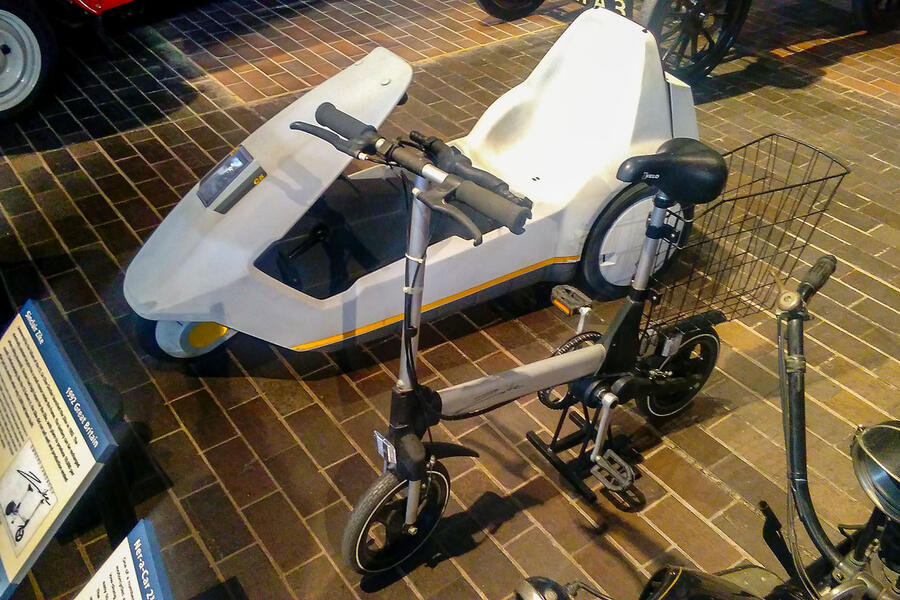
Technically an electrically assisted pedal cycle, the C5 - with, you guessed it, the C signifying its founder’s first name, Clive - arrived in 1985 in a blaze of publicity driven both by its inventor’s high profile and mega success in the computing world and the fact that it was, well, downright odd.
For many, this was the first glimpse of how Sir Clive’s brilliance could tip onto the wrong side of genius. While the concept was enthralling, the reality was rather more puzzling, something summed up well by Steve Cropley, who was there for the launch.
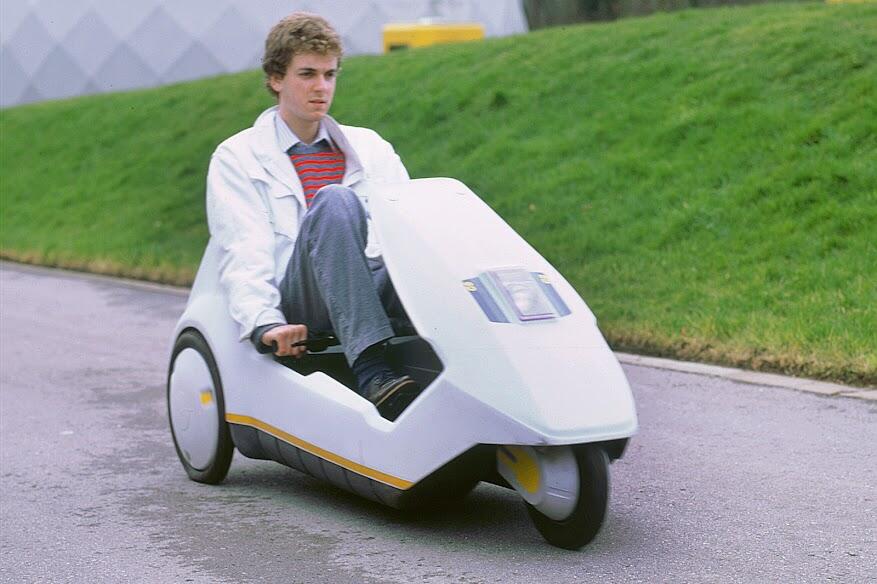
The C5 was slower and less practical than a bike, with a range rated at 20 miles from its 12V lead-acid battery, and a top speed of 15mph, boosted by the 250W electric motor, but with many of the same limitations, such as a lack of protection from the weather. It added a few extra issues into the mix, too, chiefly just how visible its occupant was in city traffic, with a flagpole-like structure a hastily arranged optional extra soon after launch.
At £399, it was competitively priced with top-end bicycles, but even so, sales bombed: 14,000 C5s were made, and 5000 sold before the firm went into receivership. Ironically, the remaining stock was snapped up and went on to attain collectable status, with pristine prices reputed to have hit £6000 - and one plucky soul converted a C5 to hit a top speed in excess of 150mph. How Sir Clive, his fortune severely dented, must have rolled his eyes.
In Sir Clive’s head at least, the C5 - itself derived from a prototype called C1, of which many running examples were produced in the late 1970s and early 1980s - was intended to be the first of a series of electric vehicles.
The C10 and C15 are widely believed to have been committed to the drawing board, their prospects of a wider audience dying along with the sales fortunes of the C5.