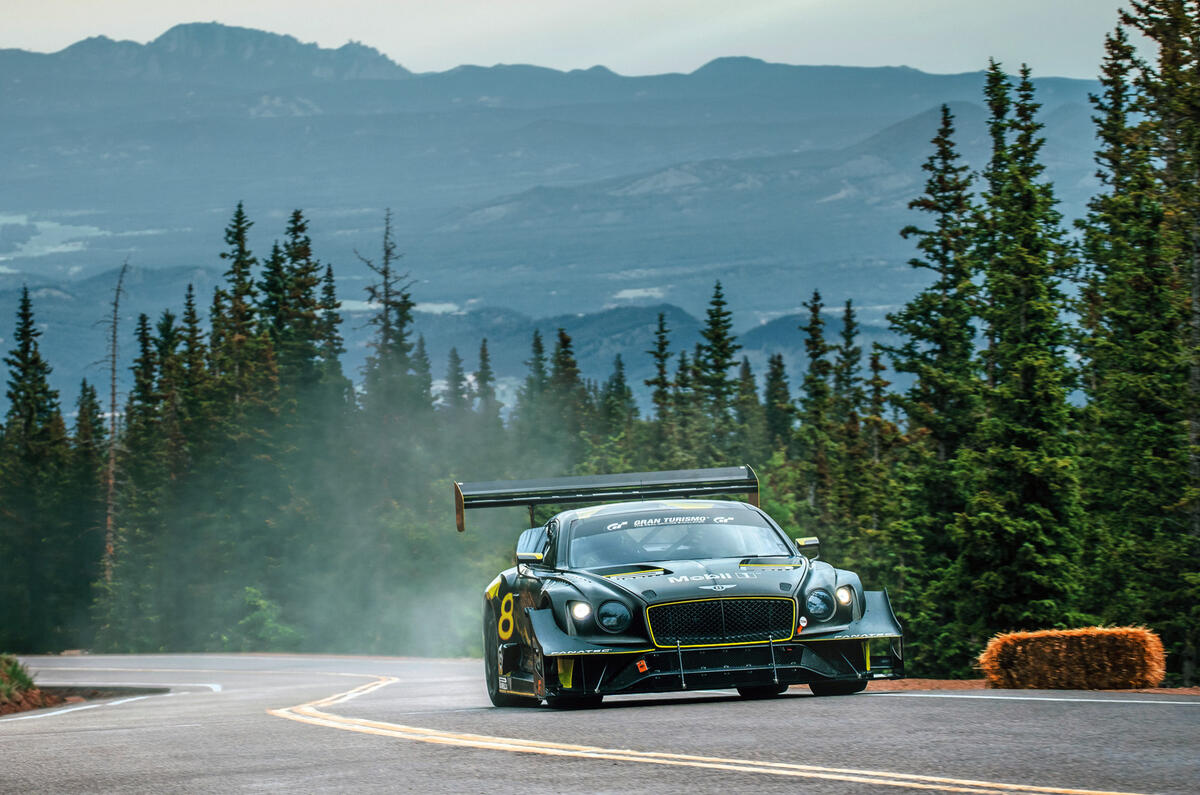
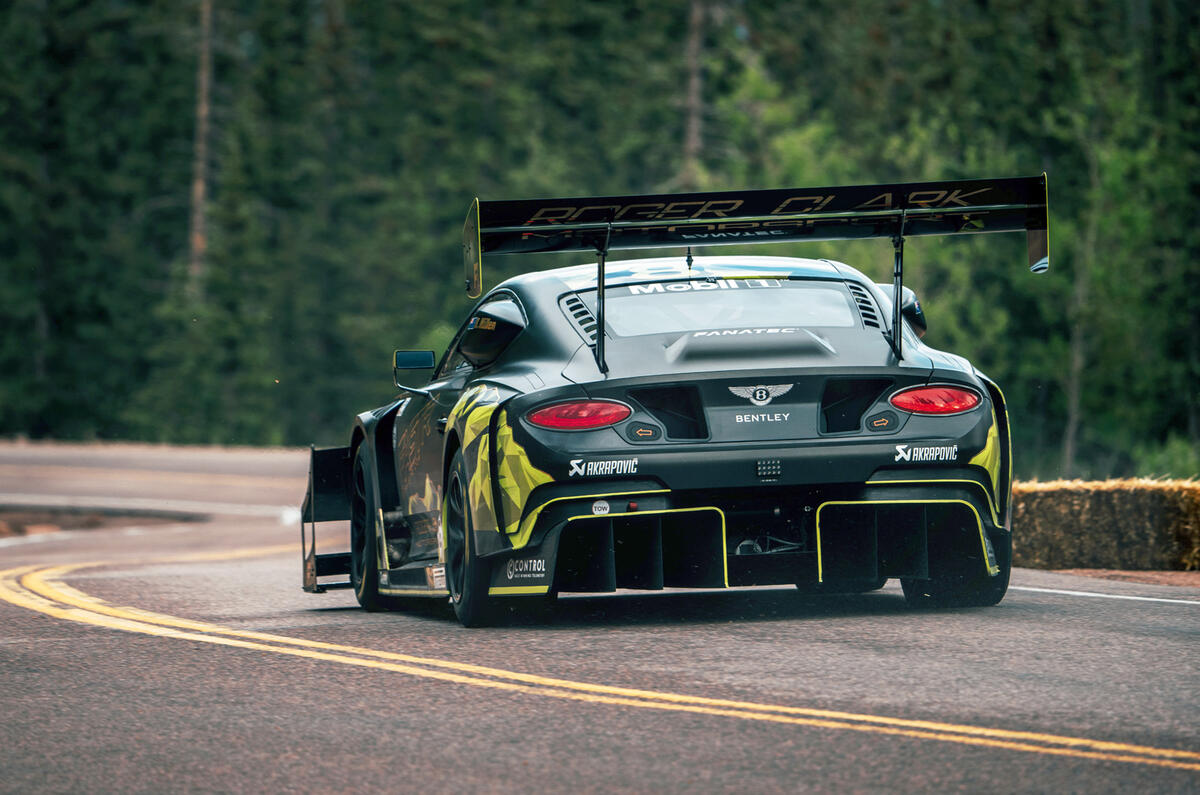
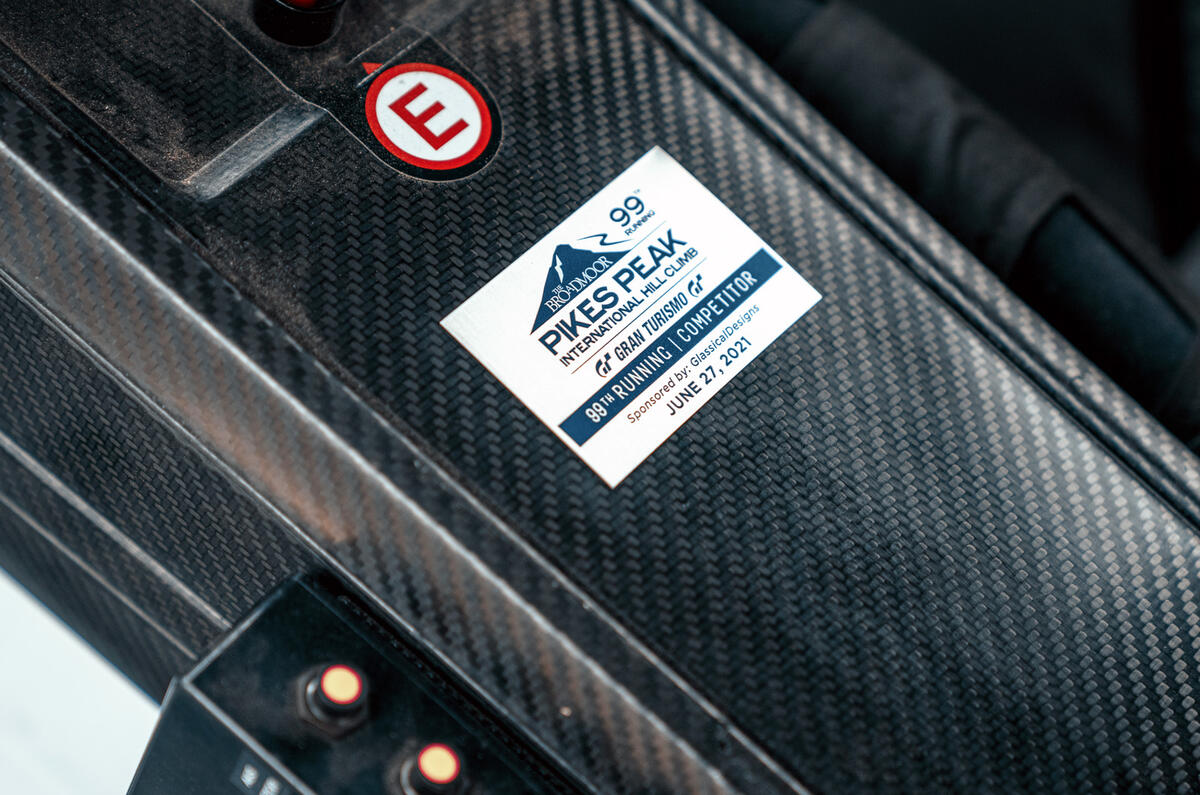

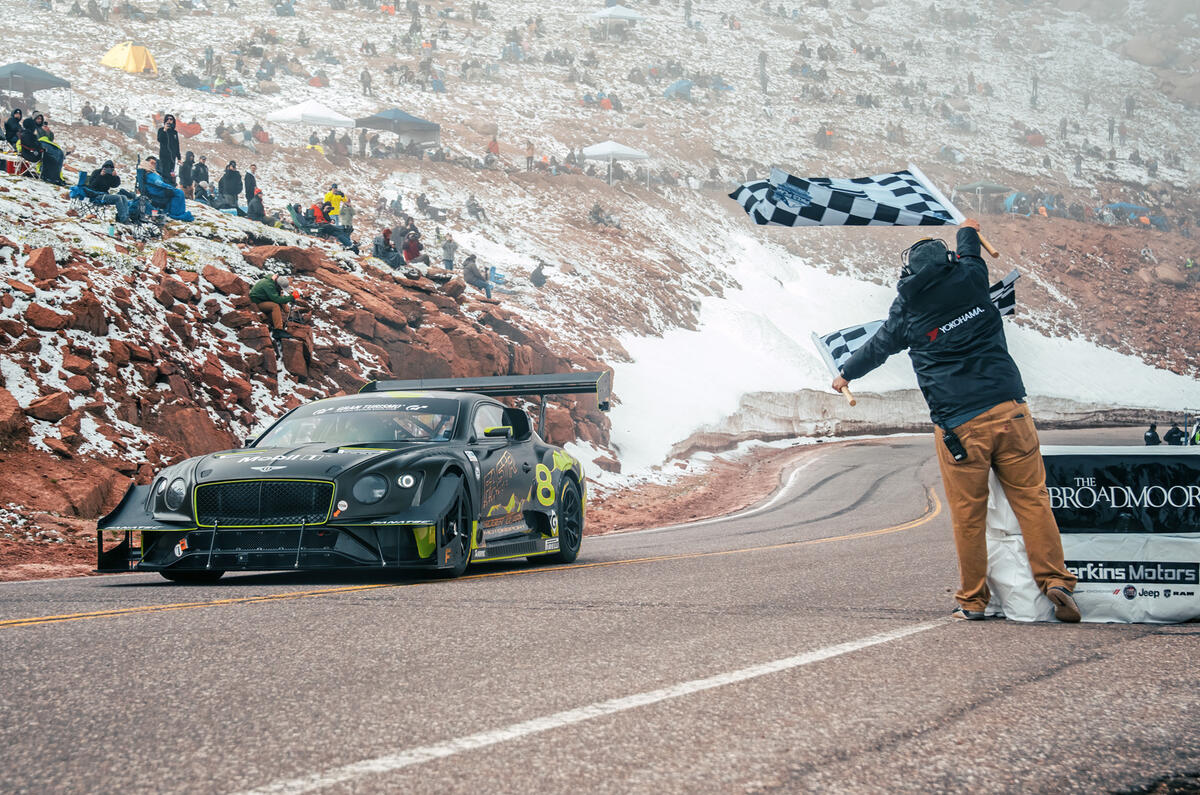
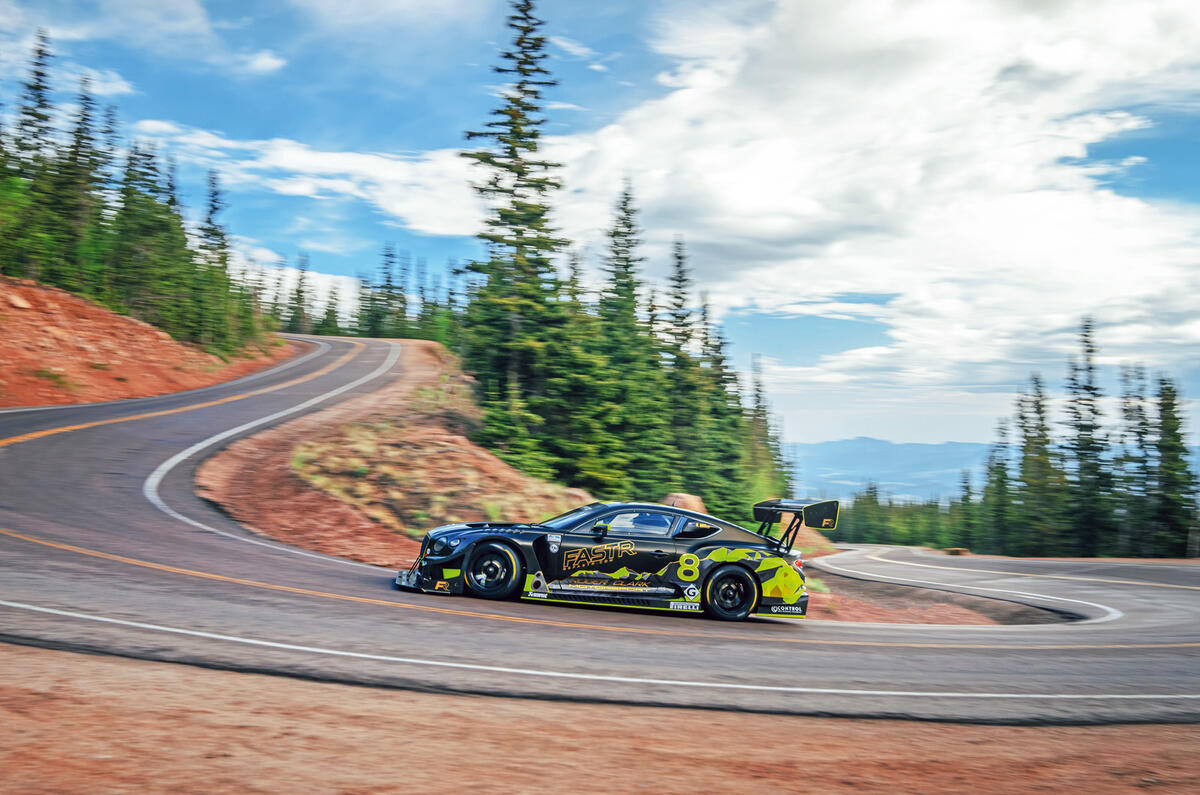


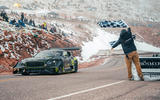
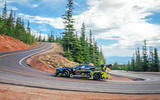

Even by Pikes Peak standards, the 750bhp Bentley Continental GT3 Pikes Peak brought a striking presence to proceedings as it lined up at the start of this year’s event. Any chance of the team taking the overall course record had already been dashed by freezing conditions with snow and ice near the summit, forcing the organisers to site the finish line at 12,780ft rather than the usual 14,115ft. But there was still a lot to play for, such as class and outright wins and proof that it’s possible to blow all comers away with a car powered by renewable fuel.
Through its GT3 customer racing programme, Bentley has plenty of experience of a variety of fuels and octane ratings around the world, so tackling Pikes Peak using a ‘drop-in’ ExxonMobil synthetic fuel proved surprisingly straightforward.
“We did a back-to-back test on the dyno and found nothing of concern,” says motorsport engineering technical manager David Argent.
The 98-octane fuel is derived from biomass but is not an alcohol fuel like the ethanol blended with everyday pump fuel to reduce CO2. Instead, biomass made from non-edible plant material is processed to make synthetic hydrocarbon petrol, similar to the fossil-derived original but without the accompanying CO2 burden.
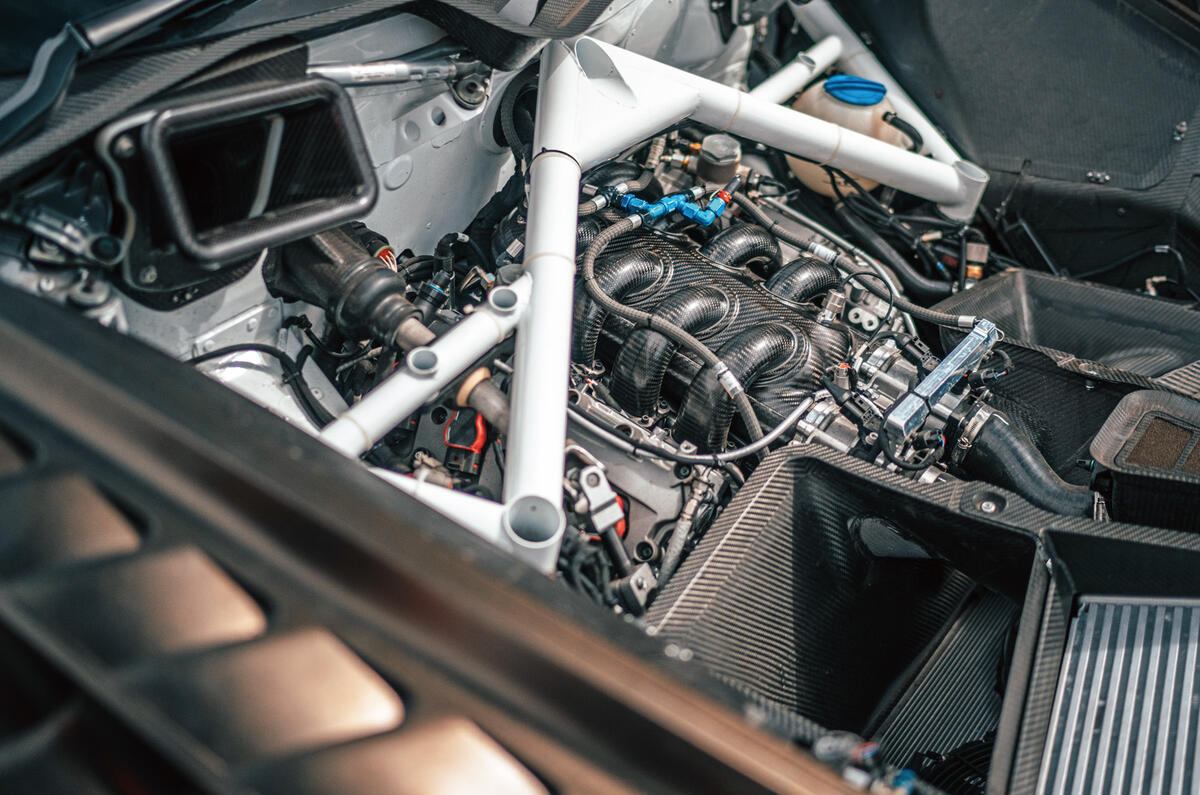
The Pikes Peak engine is based on the GT3 unit, which in turn is derived from the twin-turbo 4.0-litre V8 used in production Bentleys. The GT3 uses the same castings (block, sump and cylinder heads), crank and pistons as the production engine, while the Pikes Peak engine has an uprated crank, conrods and pistons developed by project partner M-Sport and its suppliers. The direct-injection engine also has a pair of port injectors upstream of the throttle bodies, along with bigger turbos to provide enough boost pressure at high altitude. A second radiator is fitted at the car’s rear and a water-to-oil heat exchanger helps cool the oil. “If you’re going to build a car for Pikes Peak you must consider cooling, both intercooling and the radiator,” explains Argent.
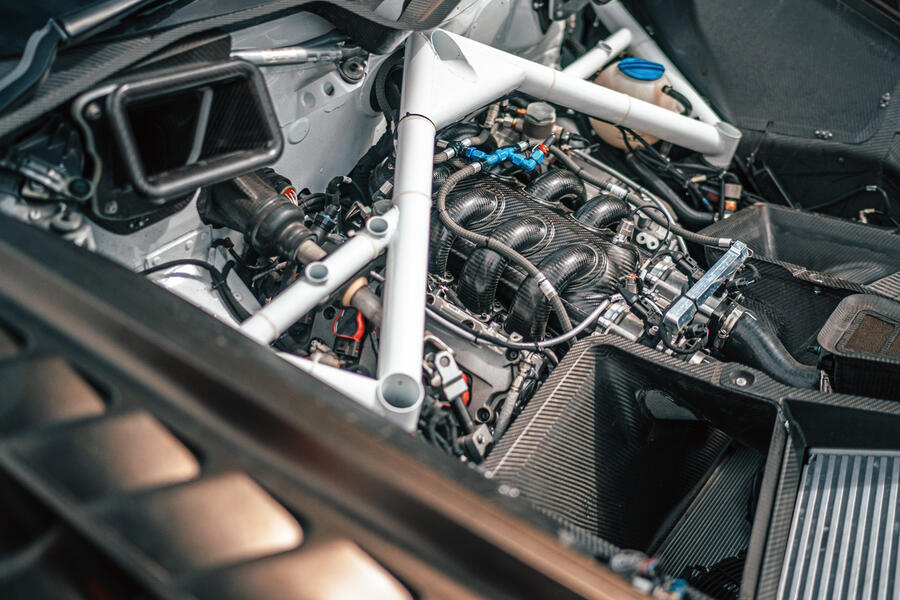
A system injecting water both into the engine and onto the external surface of the intercooler to keep the charge air temperature down was a special addition for the Pikes Peak challenge. During initial runs without water, air being forced into the engine by the turbos reached 48-deg C – far too hot. “At higher altitude, there’s less mass flow going through the engine, and we’re also running it harder than we would normally do,” says Argent. A series of slow, tight bends at around 12,500ft – known as the Ws, because of their shape – contribute to the punishment.