Currently reading: Shell rethinks small electric cars with ultra-efficient concept

Triple10 promises faster charging and better environmental credentials thanks to battery cooling breakthrough

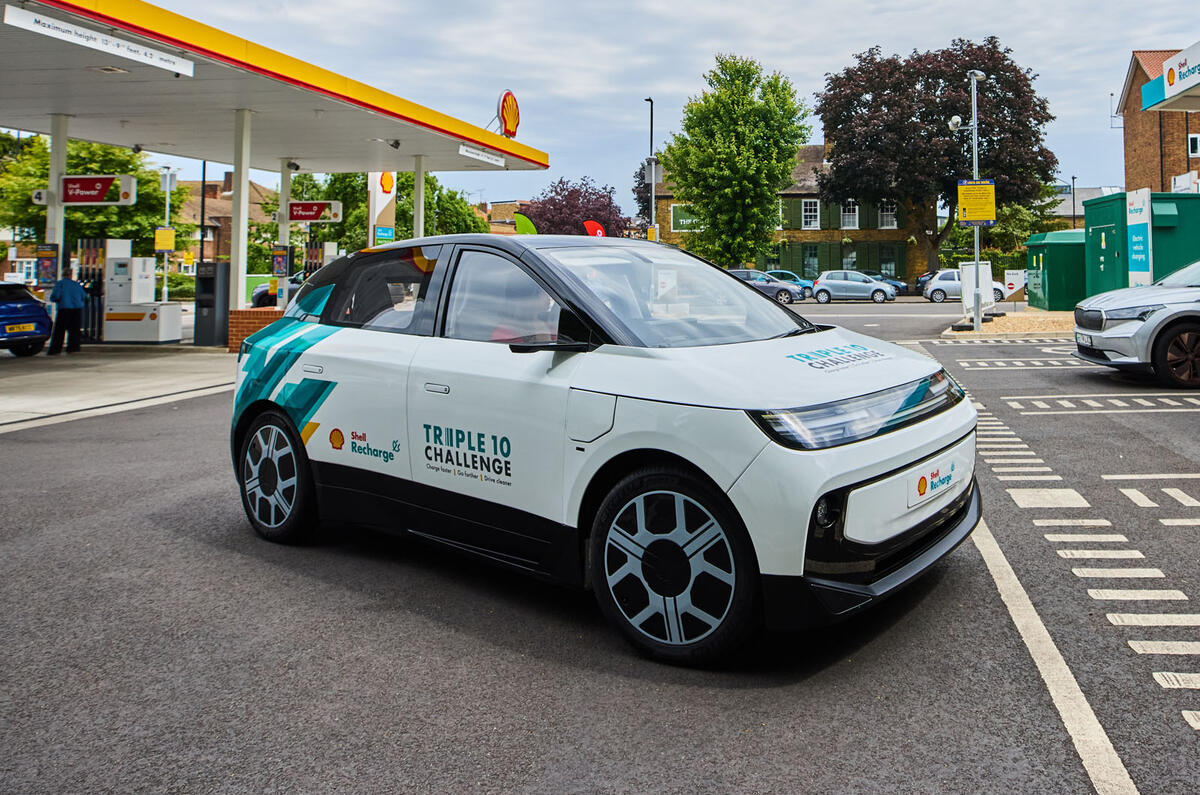
Energy giant Shell has unveiled its vision for the future of small electric cars, previewing a generational leap in efficiency, charging speeds and weight reduction.

The concept is named the Triple10 Challenge, referencing the project’s three key objectives: a 10-minute recharge from a common 175kW rapid charger; efficiency of 10km per kWh (6.2mpkWh); and lifecycle CO2 emissions of 10 tonnes.

The company’s ambition is to demonstrate how new technologies can be used to build more compelling EVs for the mainstream. 

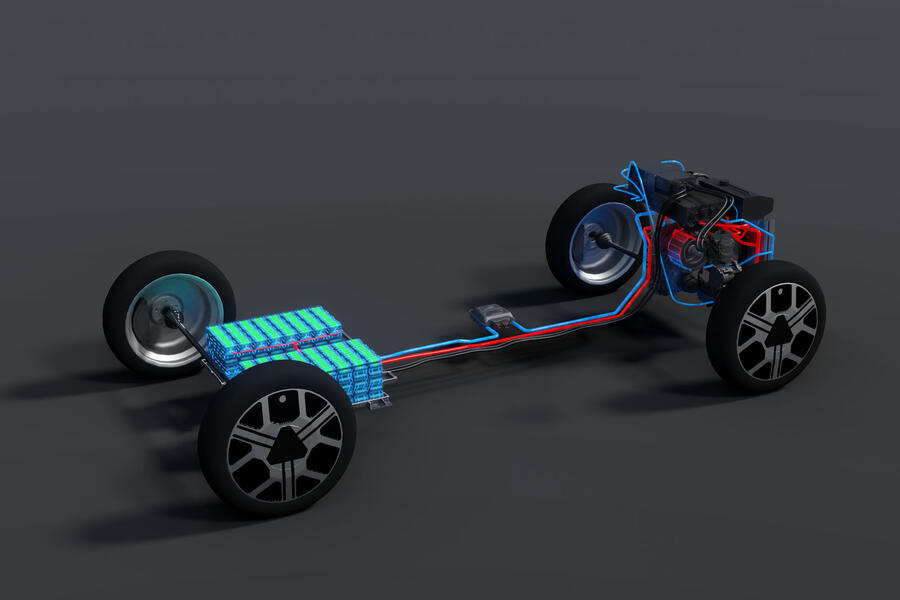
Key to the Triple10 is a new fluid-immersed battery developed in partnership with Northamptonshire engineering firm RML.

It is composed of two banks of cylindrical cells that are submerged in a dielectric (non-electrically-conductive) fluid developed by Shell. This chills the cells directly, rather than by running coolant through pipes over the top of each battery module, as is the case in a traditional EV battery.

Immersing the batteries directly in coolant provides much more effective thermal management, said Shell. This means the battery is capable of running at its optimal temperature almost all of the time, the firm claimed, which brings several benefits. 

Shell Triple10 battery

Toby Rockstroh, Shell’s manager for energy application testing, said that although many EVs can now yield peak charge rates north of 300kW, their cooling systems restrict such capabilities to short bursts.

“The battery cells start to go towards 60deg C, the thermal management of the battery reduces the current and the power drops,” he explained.

“It starts degrading because the battery cells simply get too hot. This is something we do not have with our system; the thermal constraint has been removed.” 

Shell claims its 32kWh (usable capacity) battery is capable of sustaining a 175kW charge rate for the full time it is charging, giving a 10-80% refill time of 10 minutes.

Better cooling also enables far more effective energy recovery from regenerative braking, said Rockstroh.

This, the firm proposes, creates a virtuous circle for the car’s specification. Better cooling improves electrical efficiency – and therefore outright range – while faster charging reduces range anxiety. This may make a smaller battery like that employed by the concept more palatable to buyers, reducing weight and cost. 

Back to top

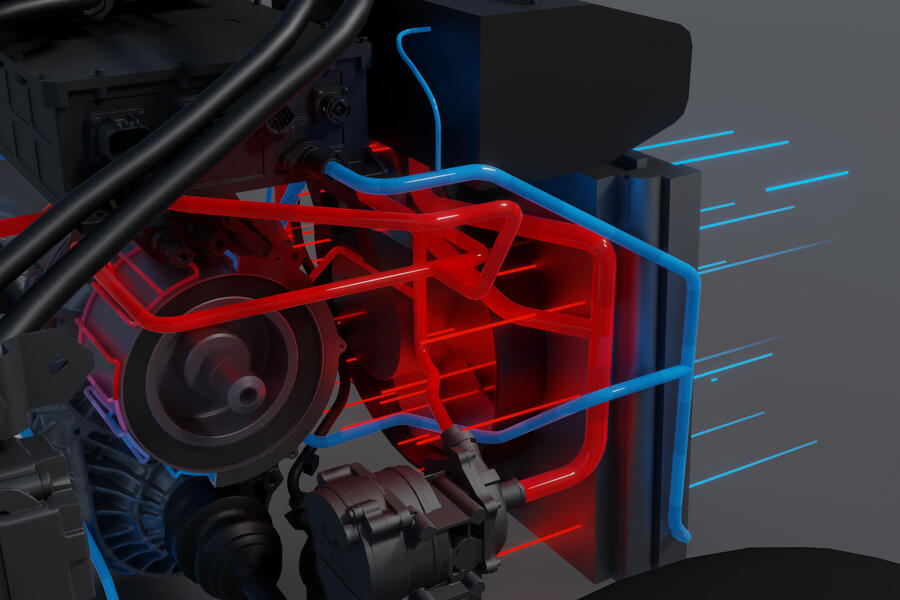
The reduced battery temperature also allows it to be connected to the same radiator as the motor and power electronics, rather than requiring a dedicated unit, saving more weight, complexity and cost.

“After cooling the battery, the fluid leaves the battery at about 50deg C, runs to the front of the vehicle (in a front-wheel drive vehicle), through the traction motor and the power electronics, which can run at a higher temperature,” said Rockstroh.

“Then it expels the heat through a conventional water-ethylene-glycol radiator – you don’t need special equipment, special pumps, piping, valves or heat exchangers.”

Shell Triple10 cooling

More effective and consistent cooling also helps to protect against thermal runaway events – a violent reaction caused by a cell being damaged, which can lead to fire – which improves safety, said Rockstroh.

Recyclability and repairability are too improved, according to Rockstroh: “If you've ever opened [conventional] batteries, they are glued together, basically.

There is thermal paste that ensures that there are no air gaps between the cooling plates and the cells, and they have many layers so when you open one up, it's a mess.

Back to top

In our battery, in order to get to the modules you drop the fluid, you absorb the fluid – put it into a bucket – you open the battery and you can actually pull out the modules. There's no gooey stuff that you have to get rid of or that you have to try and shred out.”

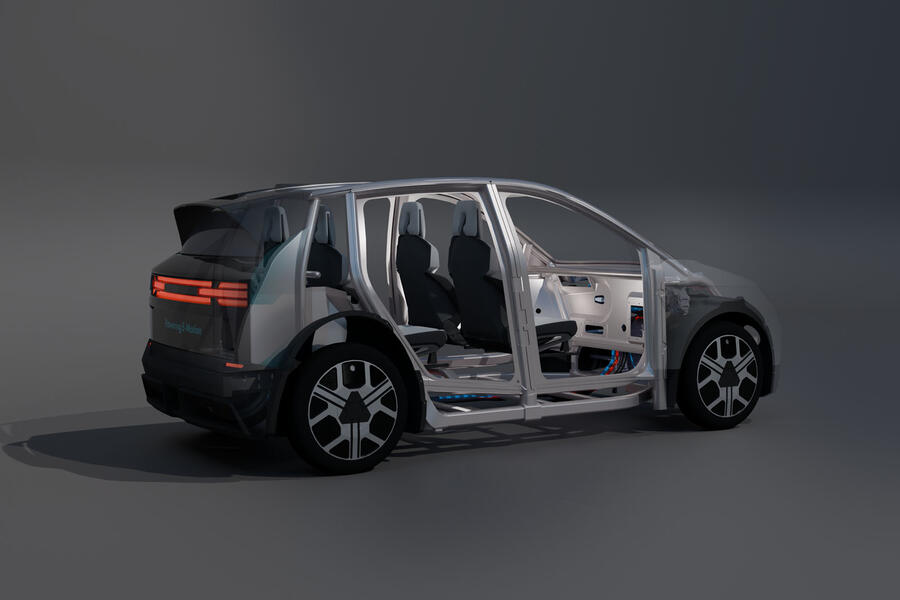
Aside from the battery, a significant improvement in the Triple10’s environmental credentials is brought by its use of recycled and naturally-occurring materials. Its chassis is made from recycled aluminum, which is claimed to produce 10% of the CO2 emissions of new ‘virgin’ material. Its roof and wheels, meanwhile, are made from recycled carbonfibre. Its interior upholstery is derived from flax.

Shell Triple10 chassis

Asked about the practical application of a car in the vein of the Triple10, Lars Nieslen, Shell Lubricants’ global business development manager, told Autocar: “[Those who] buy a big SUV with a long range may not have a fast-charging problem because they may live in a residential area, have a wall box, and can charge overnight. Then they have the convenience of fast charging. 

“But actually, where would this technology be more appropriate? We think it’s in urban areas, where you don't have access to charging infrastructure all the time so you charge on the go.

You don't want to be standing there for too long: surveys [we conducted] say a good time is up to 10 minutes. We took these elements and decided, we need a smaller car, we need to make it more affordable by making it lighter, with less material, and a smaller battery but it needs to be fast-charging. We are addressing that segment, but we do not see such a technology coming in at the moment.”

Back to top

Pressed on Shell’s commitment to electric vehicle technology and decarbonisation, given it is one of the world’s largest producers of oil and gas, Nielsen said: “The main business benefiting from this concept is the lubricants business, as well as [our charging] business. 

“In the lubricants business, we have a long history of engaging and improving efficiency for our customers, and we are just building on where they are heading. They're heading towards battery electric vehicles, and we are moving in the same direction. [We also want to make] the customer experience at our Recharge sites better – in the UK these are powered by renewable energy. 

“So I think we can't shy away from this criticism that may come up, but we can go back factually and say [greenwashing] is not the intent. The intent is actually to carry on on a journey which we started many years ago and to continue on that. For us, it's the technology which we want to show.”

Join our WhatsApp community and be the first to read about the latest news and reviews wowing the car world. Our community is the best, easiest and most direct place to tap into the minds of Autocar, and if you join you’ll also be treated to unique WhatsApp content. You can leave at any time after joining - check our full privacy policy here.

Charlie Martin

Charlie Martin Autocar
Title: Staff Writer

As part of Autocar’s news desk, Charlie plays a key role in the title’s coverage of new car launches and industry events. He’s also a regular contributor to its social media channels, creating content for Instagram, Tiktok, Facebook and Twitter.

Charlie joined Autocar in July 2022 after a nine-month stint as an apprentice with sister publication What Car?, during which he acquired his gold-standard NCTJ diploma with the Press Association.

He is the proud owner of a Mk4 Mazda MX-5 but still feels pangs of guilt over selling his first car, a Fiat Panda 100HP.