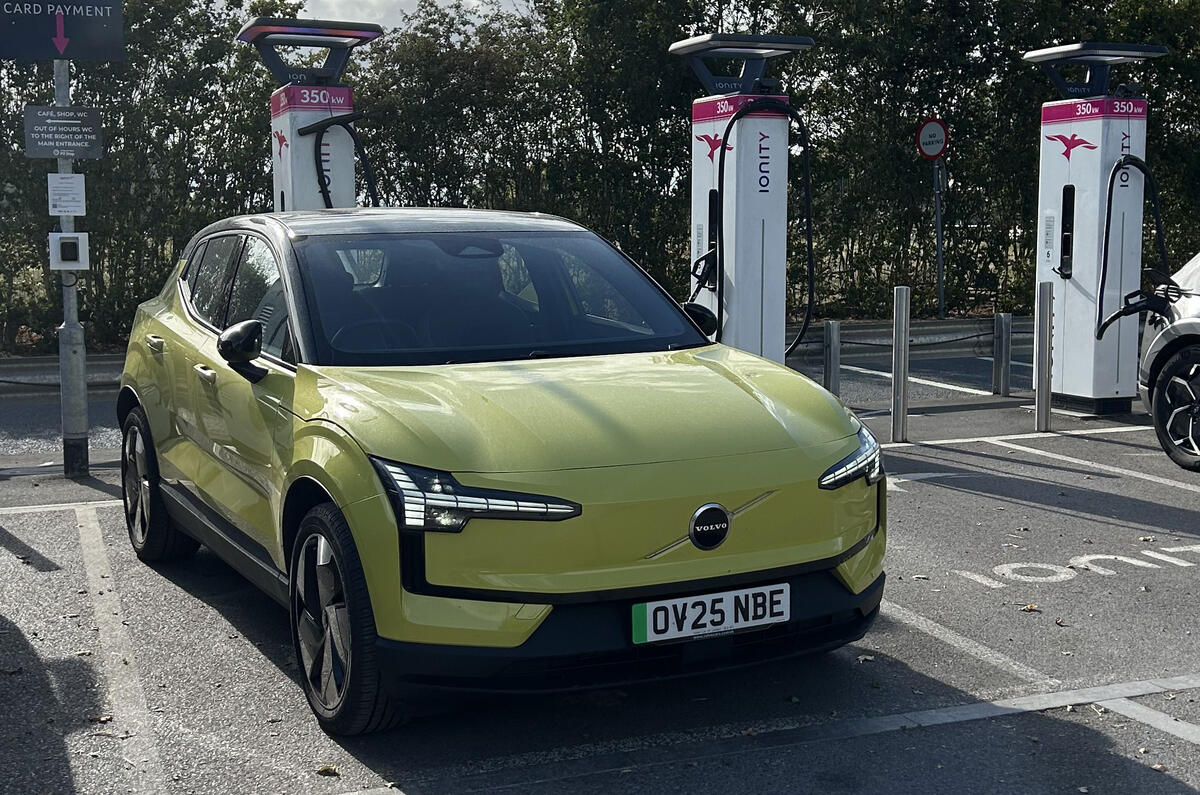

Owners of Single Motor Extended Range and Twin Motor Performance versions of the Volvo EX30 have been instructed not to leave their cars unattended while charging indoors or in covered areas, due to a battery fire risk.
Volvo recently identified an issue with battery cells overheating in the long-range versions of the EV, which use a 69kWh pack comprising nickel-managanese-cobalt modules.
Cells that overheat can cause a fire that spreads to the rest of the pack, potentially igniting the rest of the car.
The new advice comes from discussions between Volvo and the Driver and Vehicle Standards Agency (DVSA), after the brand advised owners of these EX30s not to charge to more than 70% to mitigate the risk of fire.
A DVSA notice said: "Currently the investigation is still ongoing with the final service solution being developed."
Owners have been advised to limit the maximum charge level of their cars' batteries to 70% because, Volvo told Autocar, “the risk of this rare issue happening is significantly reduced below this level of charge”.
A charge limit can be applied through the charge settings menu in the EX30’s touchscreen infotainment system.
If cells overheat, a warning is displayed on the touchscreen stating: “Danger! Battery overheating. Stop safely now and exit car.”
In a statement sent to Autocar, Volvo said the number of such incidents reported so far amounts to 0.02% of all the 33,777 EX30s with that battery built over that timeframe – equating to seven cars.
The company added that there have been no reports of personal injuries related to the fault and that it plans to bring in the affected cars for remedial work.
“We plan to roll out a recall as soon as possible to fix the cars in question,” Volvo said. “In the meantime, we are contacting all affected owners to ask them to limit their cars’ maximum charge level to 70%. We will contact them again as soon as a fix is available.
"Other models are not affected by this notice and not all variants of EX30 are affected.”
The fault doesn't affect the entry-level version of the EX30, the Single Motor, which employs a different battery entirely – a 49kWh pack using the lithium-iron-phosphate chemistry.