I don’t particularly like lane-keeping assist or lane departure warning, call them what you will. You know, the safety systems that interfere with your driving should you drift close to the white lines separating your road lane from the next.
At their least irritating the systems present a gently chastening warning on the instrument display; at worst – and this is the bit that unnerves me – they apply force to the steering to pull the car back in line.
It feels like the answer to a question nobody asked and I turn the system off at any given opportunity. If you’re struggling to remain in lane to the extent that you need to rely on intervention from the car, you probably need to have a serious word with yourself or stop at the nearest services for a rest.
Remember Clippy, the much-maligned virtual paperclip which noticed that ‘you’re writing a letter’ in Microsoft Office 2000 and was raring to help? For me, a lane departure warning is like that, irritatingly proffering to interfere when you least want it.

I don’t consider myself a technophobe and I’m not daft enough to dismiss all passive or active safety systems – I’ve relied on them on occasions. For me, though, systems such as lane-keeping assist exist in a grey area where the car decides it knows best when it doesn't necessarily.
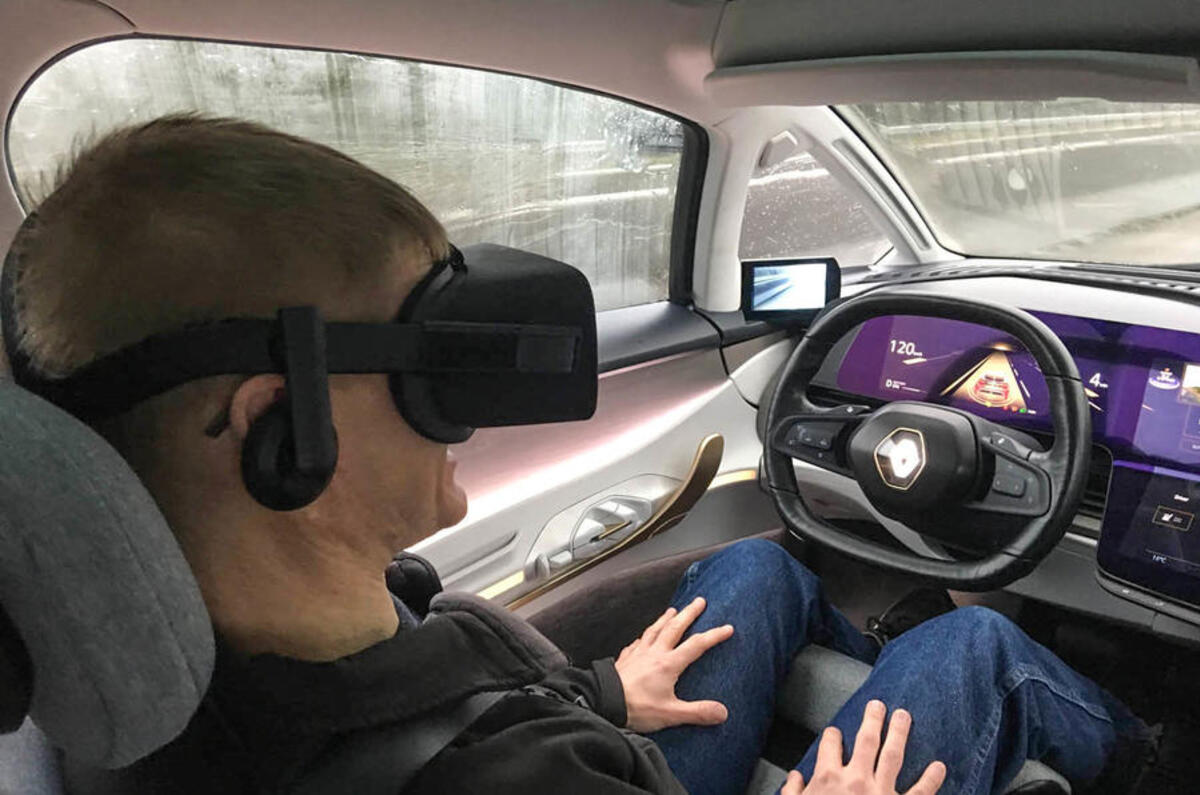
Perhaps we’ll experience even more of this kind of nannying technology creeping in as we progress deeper into the age of self-driving cars. To my mind, we need to avoid any situation where both car and driver decide to be in control at once, because that could also give rise to an opposite scenario where each assumes the other is doing the work.
Opinion: why do people think autonomous cars are scary?
As the recent well publicised (albeit rare) incidents involving vehicles with various levels of self-driving capability show, there is little room for any kind of grey area when control over a two-tonne metal projectile is at stake.
Having said all of this, there is a time and a place when I wholeheartedly buy in to the benefits that lane-keeping assist can bring, and that is when it is working in conjunction with other technology to provide a genuinely useful function.
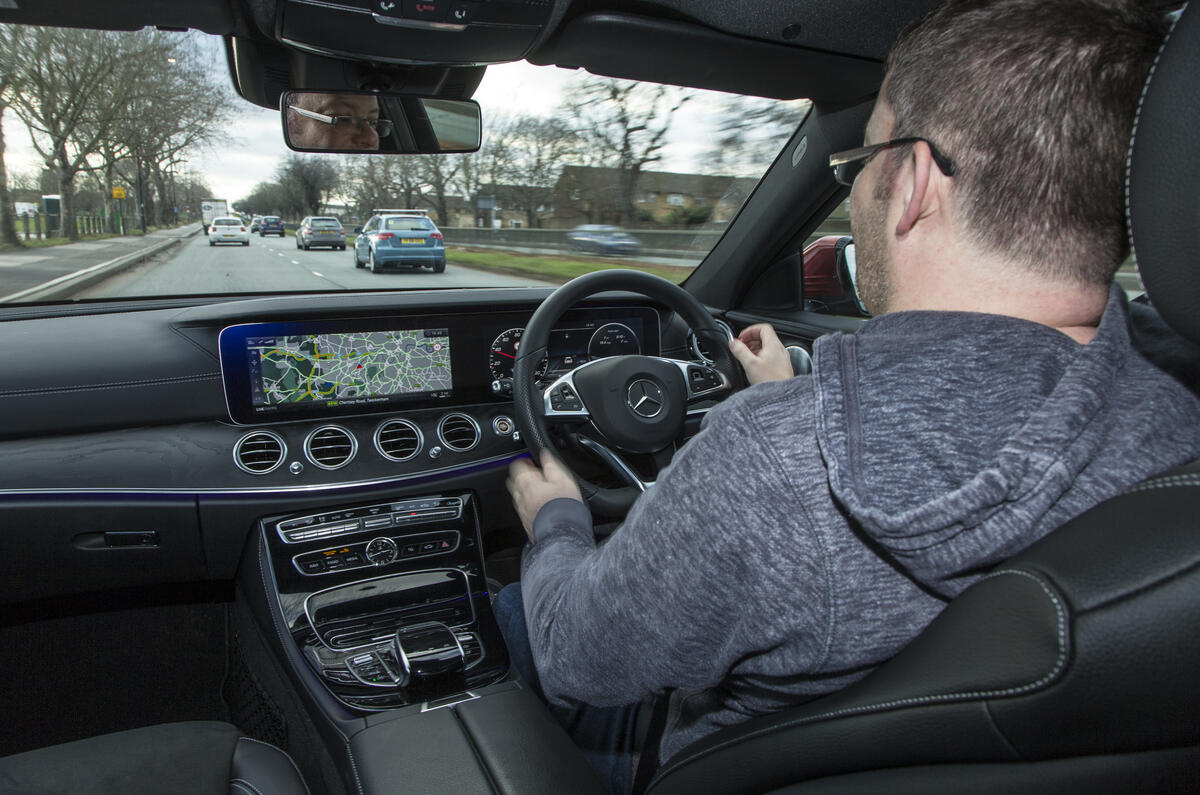
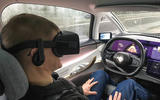
The Mercedes-Benz E220d estate I recently ran as a long-term test car was equipped with the Driver Assistance package, which combined adaptive cruise control with lane-keeping assist, blind-spot assist and other safety kit to enable the car to effectively maintain its own course.
It wasn’t a truly self-driving system - if you tried to take your hands off the wheel, you received a warning and the system cancelled itself - but it was a level of automation I felt totally comfortable with. On long motorway journeys I could trust the car to maintain speed and distance from other traffic, and to change lane automatically when I activated an indicator.
I guess ‘trust’ is the important factor here. The Merc’s system felt natural, but the important difference was I was telling car that I wanted it to do the bulk of the work, as opposed to it telling me that I was doing something that did not compute with its algorithms. As self-driving cars progress, this feels like an important definition, especially for those of us who enjoy driving when the mood takes us.
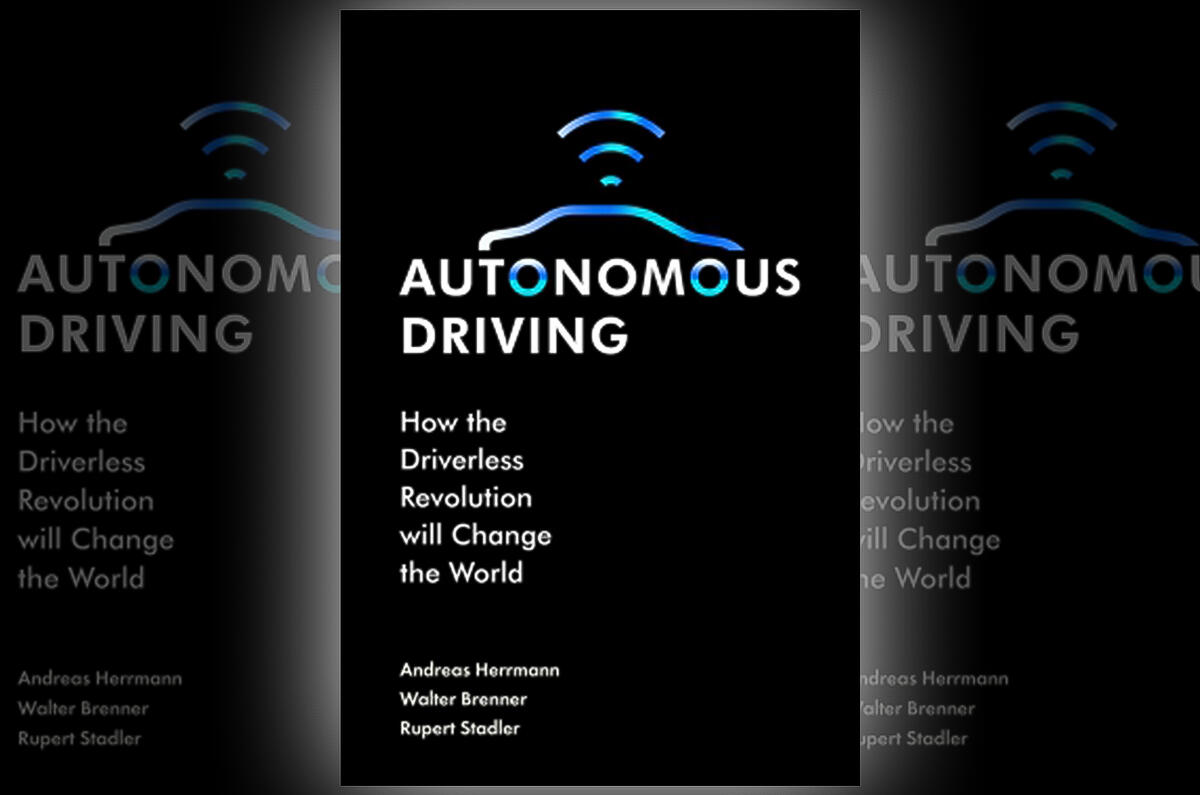
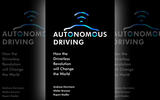
Which brings me, in a meandering way, onto the topic of a new book I’ve just finished reading. It’s called Autonomous driving – how the driverless revolution will change the world (Emerald Publishing, £19.99, ISBN: 9781787148345).
The book is written by Andreas Herrmann and Walter Brenner, both professors at the University of St Gallen in Switzerland, and Audi boss Rupert Stadler - who, you might surmise, knows a thing or two about the subject.
Audi A8 to beat Mercedes-Benz S-Class as first fully autonomous car
This book is an academic study, but is pleasingly easy to read and doesn’t get too mired in jargon that might stifle the reader. If you’re interested in the subject matter - regardless of whether you agree with the direction the industry is heading in – it’s a very decent primer, albeit one that’s likely to get overtaken by the pace of progress very quickly indeed, which the authors freely acknowledge.
Almost every facet of automated driving is broken down and analysed. On the topic of ‘trust’ - foremost in my mind, as detailed above – the authors write: ‘People often express the worry that they will be at the mercy of the car and will have no opportunity to influence the driving process… the interaction between the driver and the vehicle must be designed in such a way that the transition back and forth is clear and unequivocal’.
The book goes on to detail the ways in which automated cars might be beneficial for society in the future, although it is a shame that it gives such scant coverage to the concept of driving for pleasure and how that might fit in to any scenario.
Here’s hoping that in the decades to come there will continue to be an option to turn off all the nannying computer aids once in a while, and that such a pastime will be accessible by all and not just the preserve of the super-rich who can afford ‘analogue’ driver’s cars which, I’d imagine, will be as populous as rocking horse droppings by then.
Read more

Join the debate
Add your comment
Don’t worry
Most 44 tonners these days have got emergency brake assist systems too!
Personally, I hate these
Personally, I hate these things. But that's me. I love to drive, and I enjoy the involvement of it. You must pay attention to do it well. The standard of driving (I'm in the US) is worse than abysmal, and it continues to deteriorate rapidly. I think full autonomy will save many lives. However, all of this partial autonomy, these additional "driver aids," is dangerous. Every new driver aid results in most people relying more heavily on the car to do the driving -- which means they pay even less attention. The number of people I see every day texting while driving is shocking. Dangerous. Criminal. No wonder that after 6 decades of falling traffic injury and fatality rates, that trend has reversed and there has been a major increase in the injury/fatality rates in the last few years.
While I'm not opposed, in theory, to technology such as lane departure warning systems -- those that just flash a warning when you indicate if there is something in the blind spot -- in my experience they give so many false alarms that they cause you to second-guess yourself when there is nothing actually there. This, in turn, makes you give them less credit -- when there might actually be something you haven't seen. IMO, this completely defeats the purpose, and may even make things more dangerous rather than less. I do not want any of the lane-keeping systems, nor the adaptive cruise contol systems. Each of these "aids" results in drivers paying even less attention to driving. This makes our roads more dangerous, because people don't use them as aids -- they rely on them to do far too much of the driving. Until we have full autonomy, the standard of driving will continue to worsen, and that's going hurt and kill a lot of people. I just hope that once we do have full autonomy, those of us who still want to drive ones own car are allowed to -- and that it will be enjoyable.
Thanks for your comments,
Thanks for your comments, Speedraser. Just to clarify, I think blind-spot warning (often referred to as BLIS) is very useful indeed - the flash in your wing mirror that warns you that something might be hidden alongside.
The system I don't enjoy is the one that tries to force you away from the white lines by applying a nudge to the steering.
You've hit the nail on the head though - some of these systems risk making drivers complacent.
Matt, just to be clear, I
Matt, just to be clear, I think BLIS could be very useful -- if it worked better, meaning if it didn't give so many false warnings. The "features" I truly despise are those other ones you don't like either -- those that attempt to actually move the car to where it "thinks" you should be.
I'm not a fan...
...more so since the autonomous braking system in my wife's car has decided to randomly apply the brake when the road ahead is clear. I dread to think what would happen if it decided to do so on a motorway with a 44 tonne truck behind...