
Cars sold in the European Union from 2022 onwards will be required to be fitted with a range of new safety systems as standard, including intelligent speed limiters and monitors that can detect when a driver is drowsy or distracted.
The European Commission has approved the legislation, which was proposed last year and provisionally approved last month, in a bid to improve road safety. The legislation is due to come into effect from May 2022 for new models that haven’t been designed yet and May 2024 for new versions of models currently on the market. The measures are subject to the formal approval of the European Parliament and EU member states in September.
The legislation will make it compulsory for new cars to be fitted with intelligent speed assistance (ISA) systems, which can use GPS data and sign-recognition cameras to advise drivers of speed limits and, unless overridden, can limit the speed of the vehicle as needed, by way of reducing engine power. Cars will also need to be fitted with an alcohol interlock system, in an attempt to prevent drunk driving.
Distraction monitors will use cameras that can detect when a driver is impaired, tired or not paying attention, and then prompt them to react. Volvo recently announced that it would fit such systems on its vehicles as standard.
The safety features that will become mandatory in passenger cars are:
- Advanced automatic emergency braking systems
- Lane departure warning systems
- Intelligent speed assistance
- Alcohol interlock installation facilitation
- Driver drowsiness and attention warning
- Advanced driver distraction warning
- Emergency stop signal
- Reversing cameras or detectors
- Accident data recorder
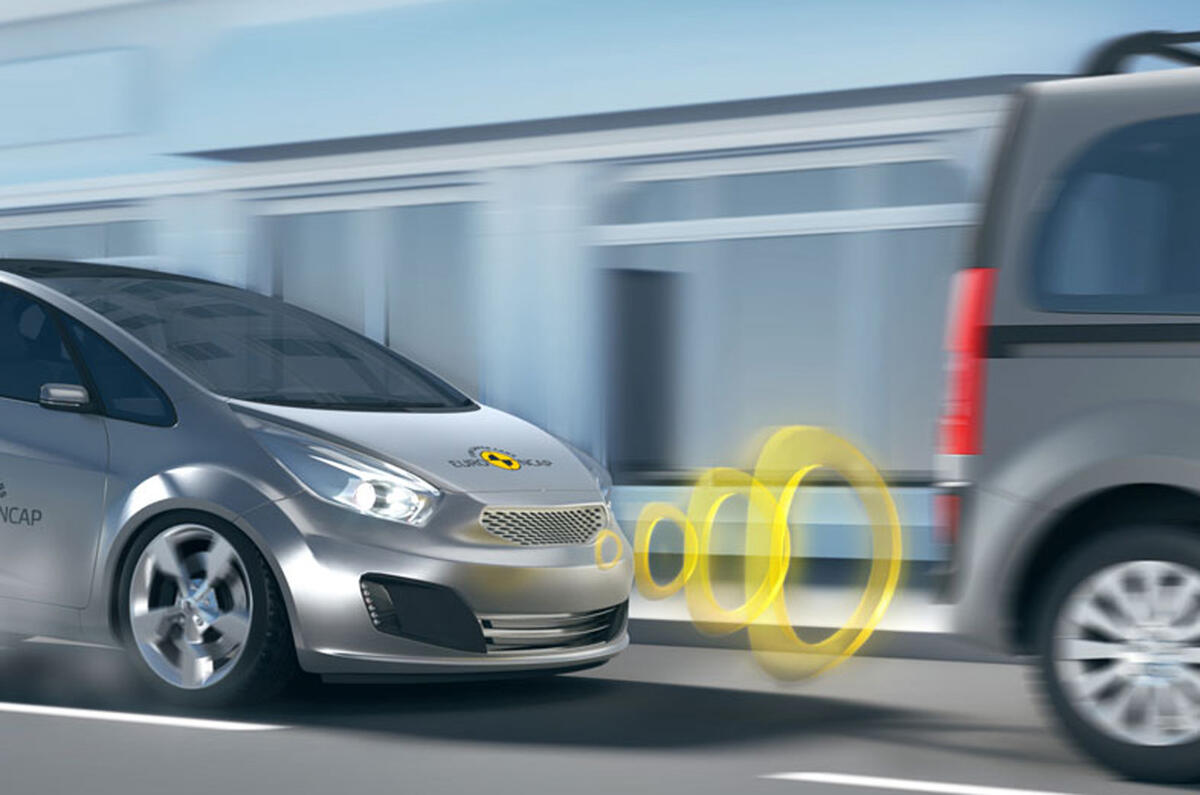
Several of the systems, including AEB, are already widely available and standard on many models, in part because they are now required for a car to score the maximum five stars in the Euro NCAP safety tests.
The European Commission estimates that the measures will save more than 25,000 lives by 2038. Under the new rules, manufacturers will have to ensure the systems are developed in a way that ensures “users accept them”.
Antonio Avenoso, executive director of the European Transport Safety Council, said: “There have only been a handful of moments in the last 50 years which could be described as big leaps forward for road safety in Europe.
“The mandatory introduction of the seatbelt was one, and the first EU minimum crash safety standards, agreed in 1998, was another. If this agreement is given the formal green light, it will represent another of those moments.”
If approved, the new legislation will apply to all new cars sold within the EU. While Britain’s planned departure from the EU means those laws won’t apply here, the UK government has hinted that it will keep vehicle safety standards closely aligned with Europe. The complexity of car production means that such systems would likely be fitted to UK models produced for the wider European market in any instance.