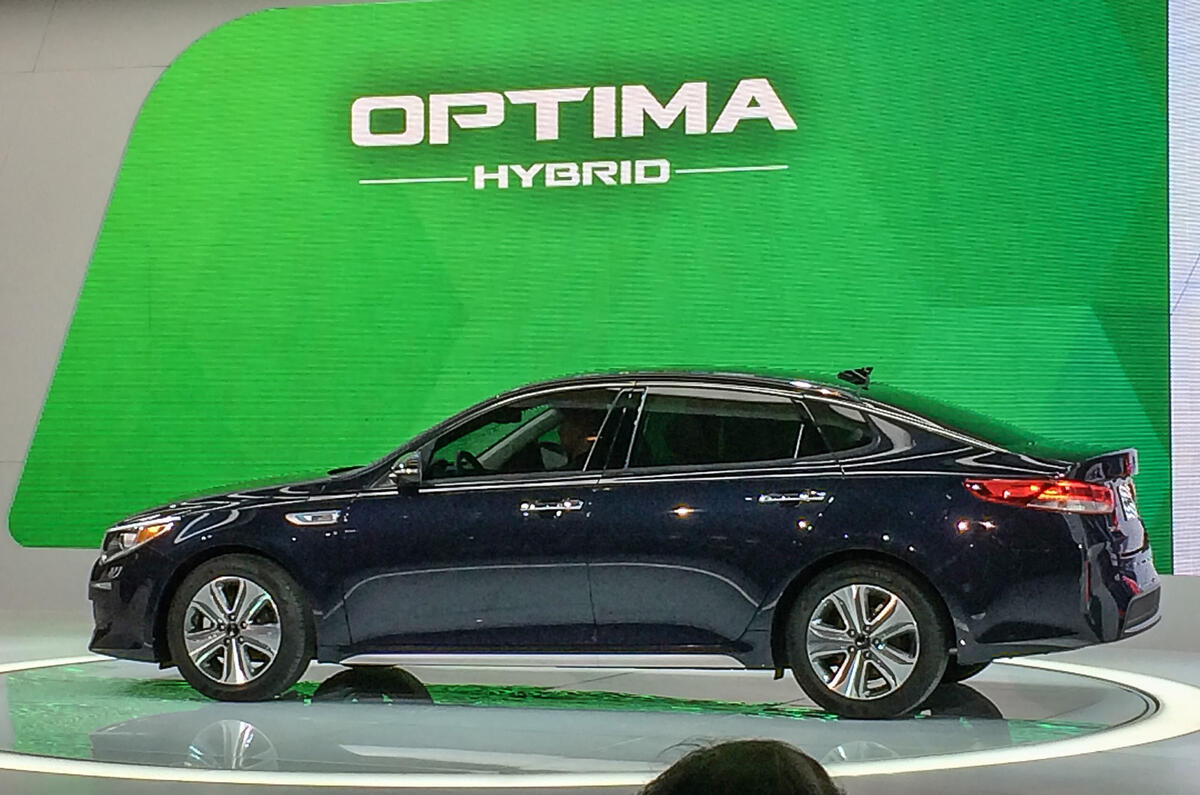
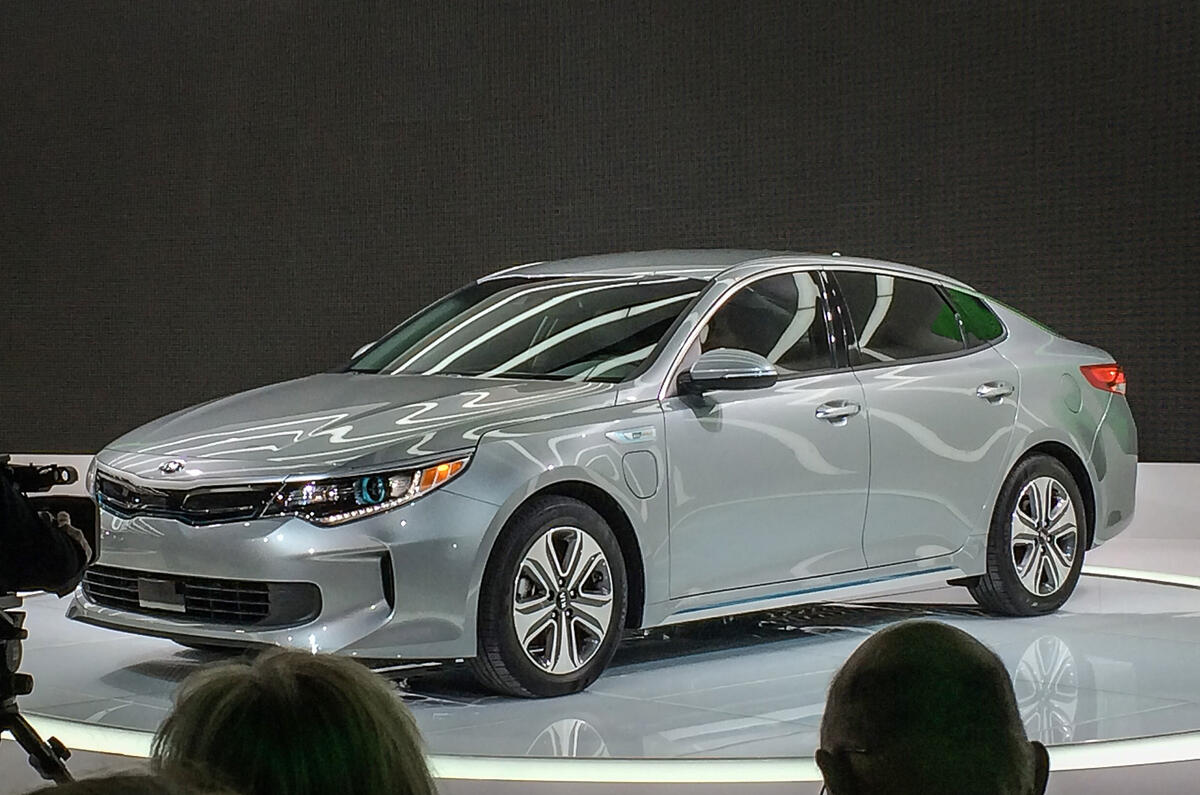
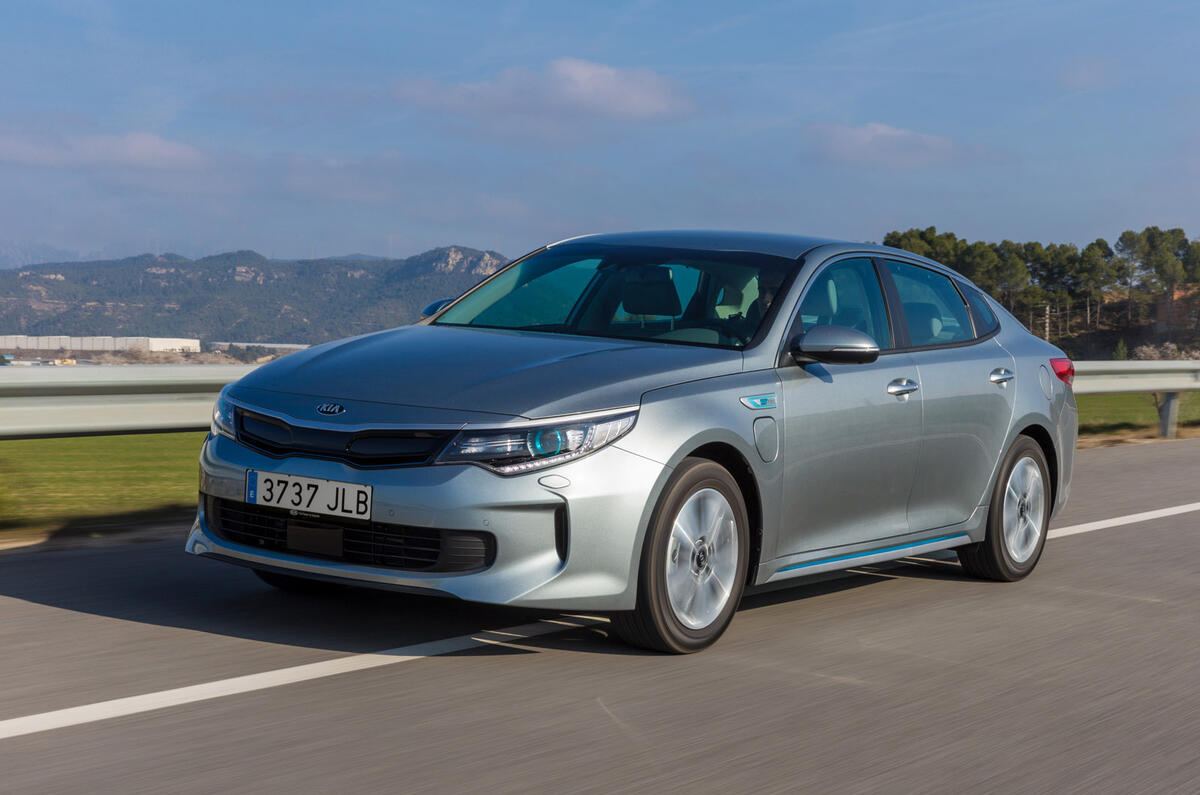
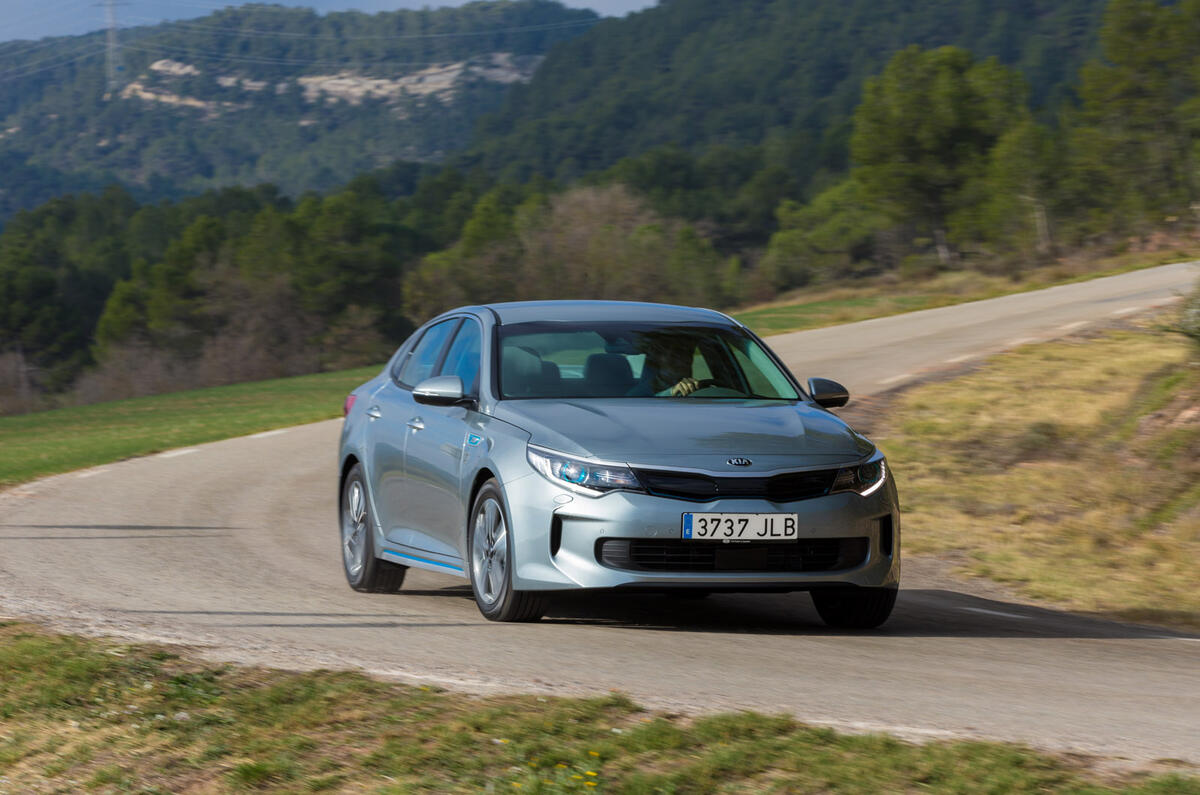
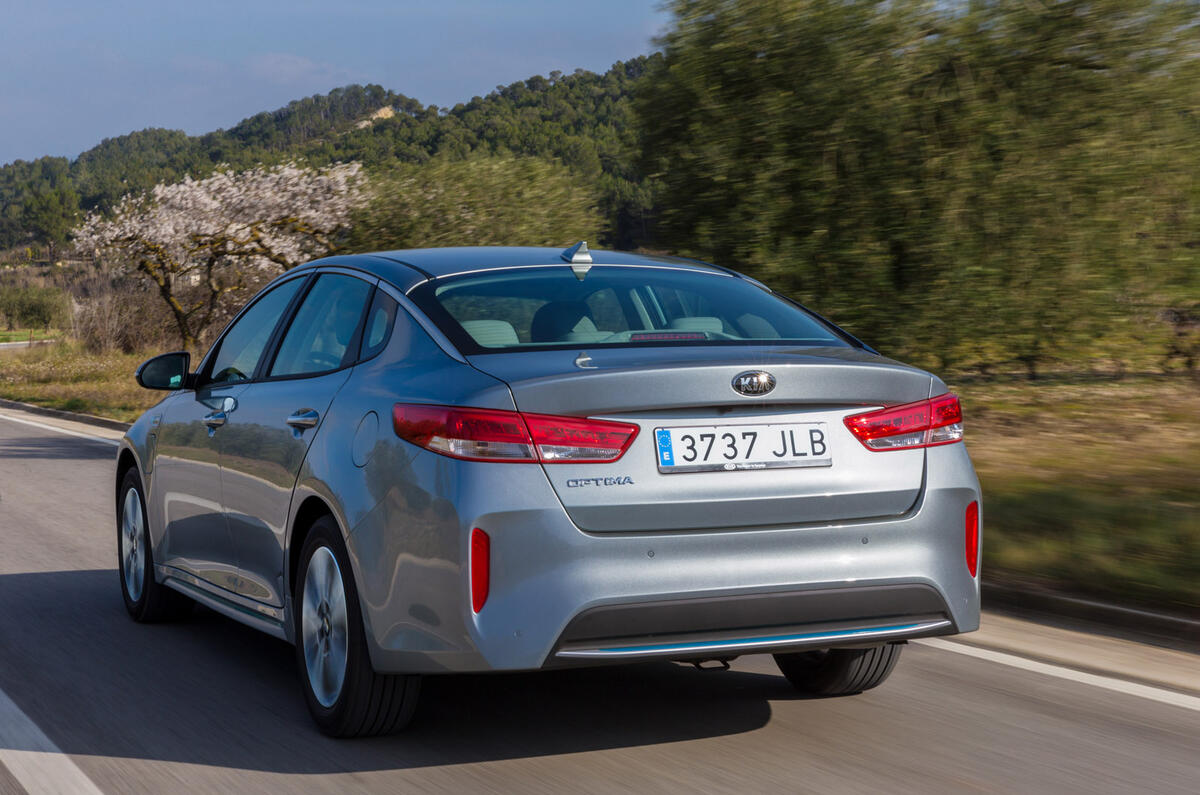
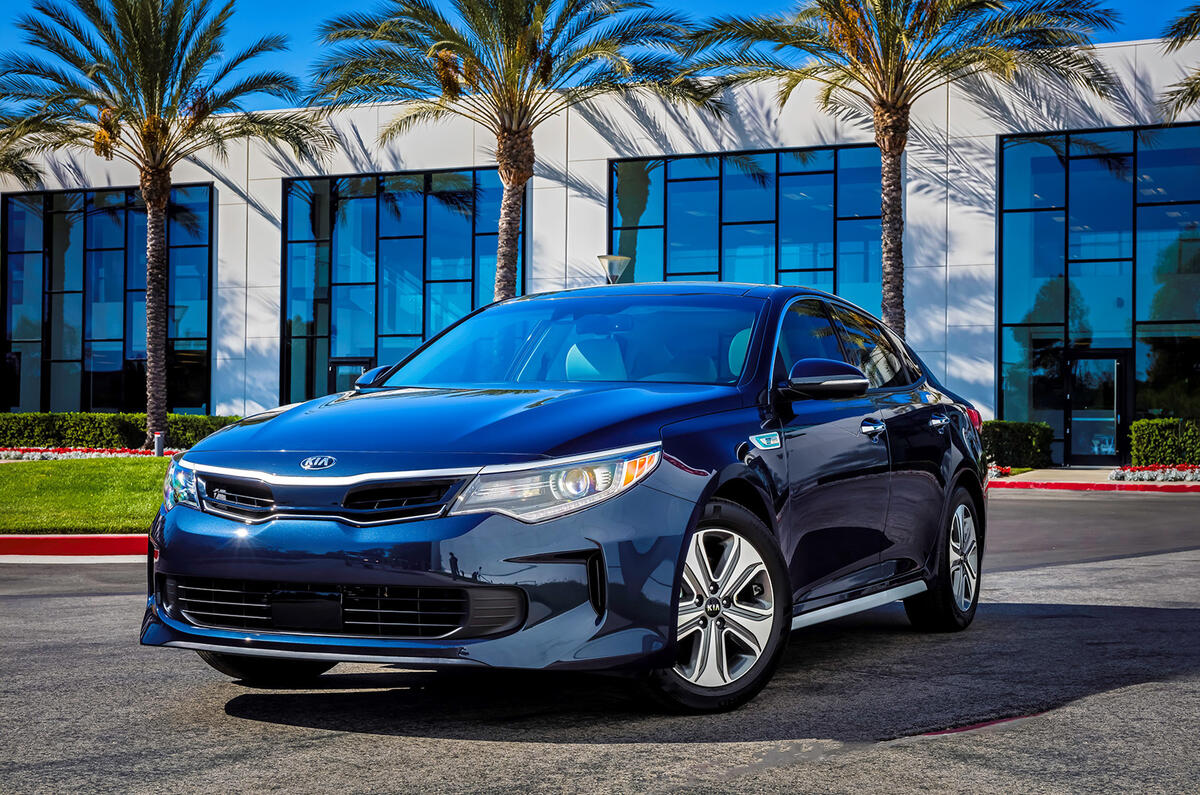
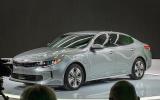
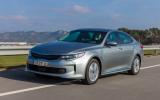


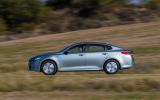
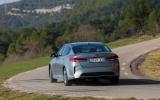
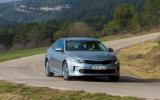
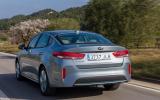
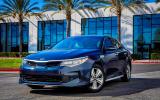

Kia is targeting CO2 emissions as low as 37g/km from the new Kia Optima Plug-in Hybrid, which is due to go on sale in Europe at the end of 2016.
Read our review of the Kia Optima PHEV here
The Korean manufacturer’s first plug-in hybrid was recently revealed at the Chicago motor show alongside its sister car, the Optima parallel hybrid, but only the plug-in model is due to go on sale in the UK later this year.
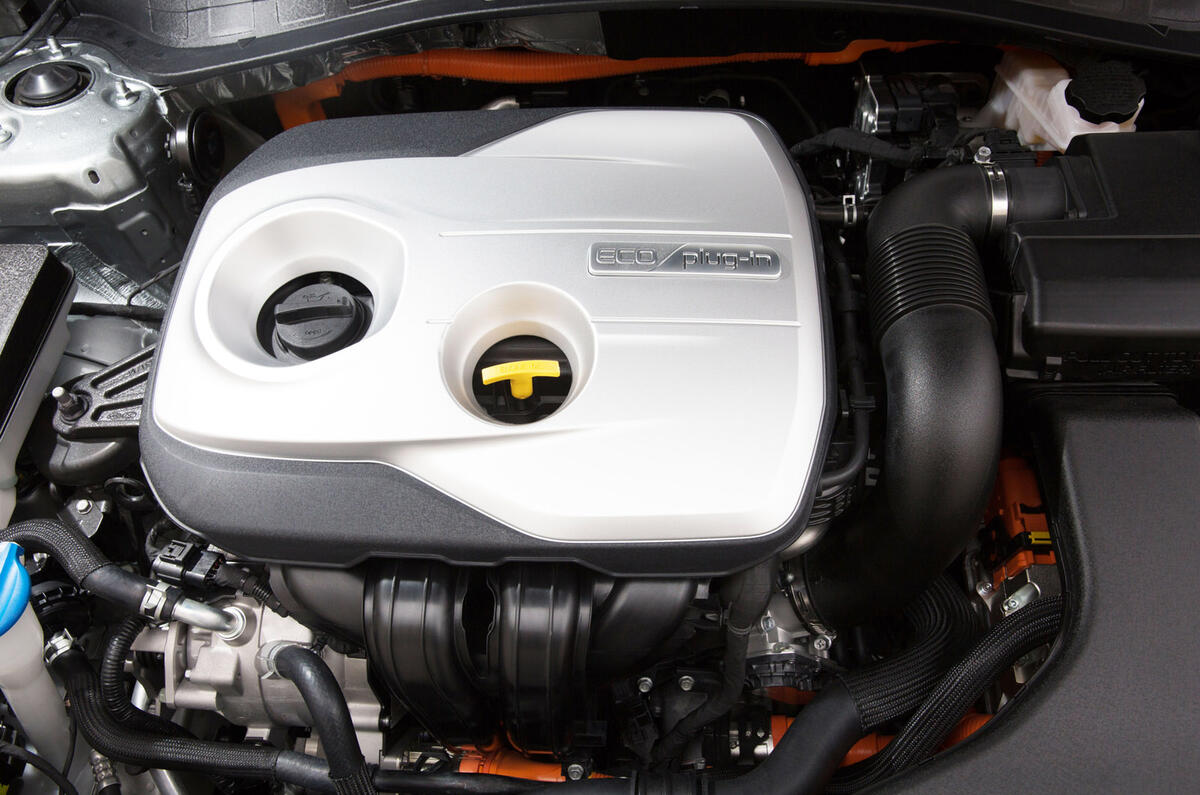
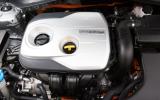
The Optima PHEV uses a 2.0-litre, four-cylinder petrol engine that produces 154bhp and 139lb ft and is mated to a six-speed automatic transmission. Electric power is produced by a transmission-mounted 50kW motor, which is 42% more powerful than that used in the previous parallel Optima Hybrid in order to provide greater all-electric capability.
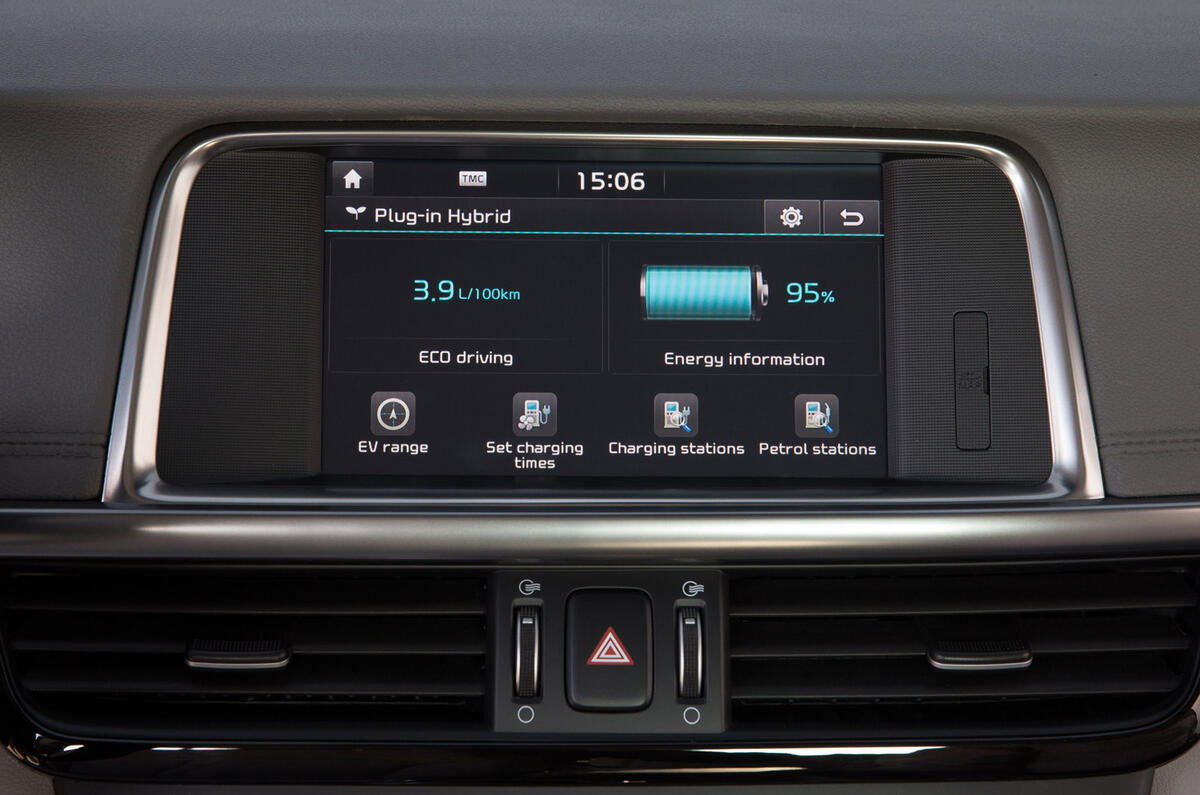
With an estimated 600 miles of total driving range, the Kia Optima PHEV’s next-generation battery system features a 9.8 kWh lithium ion polymer battery pack, which is estimated to have a range of 33 miles in full EV mode. The car will operate in EV mode at speeds of up to 74mph.
The total output of the petrol-electric powertrain is 202bhp and 276lb ft, with the latter available from 2300rpm. According to Kia’s figures, the Optima Plug-in Hybrid can accelerate from 0-62mph in 9.4sec.
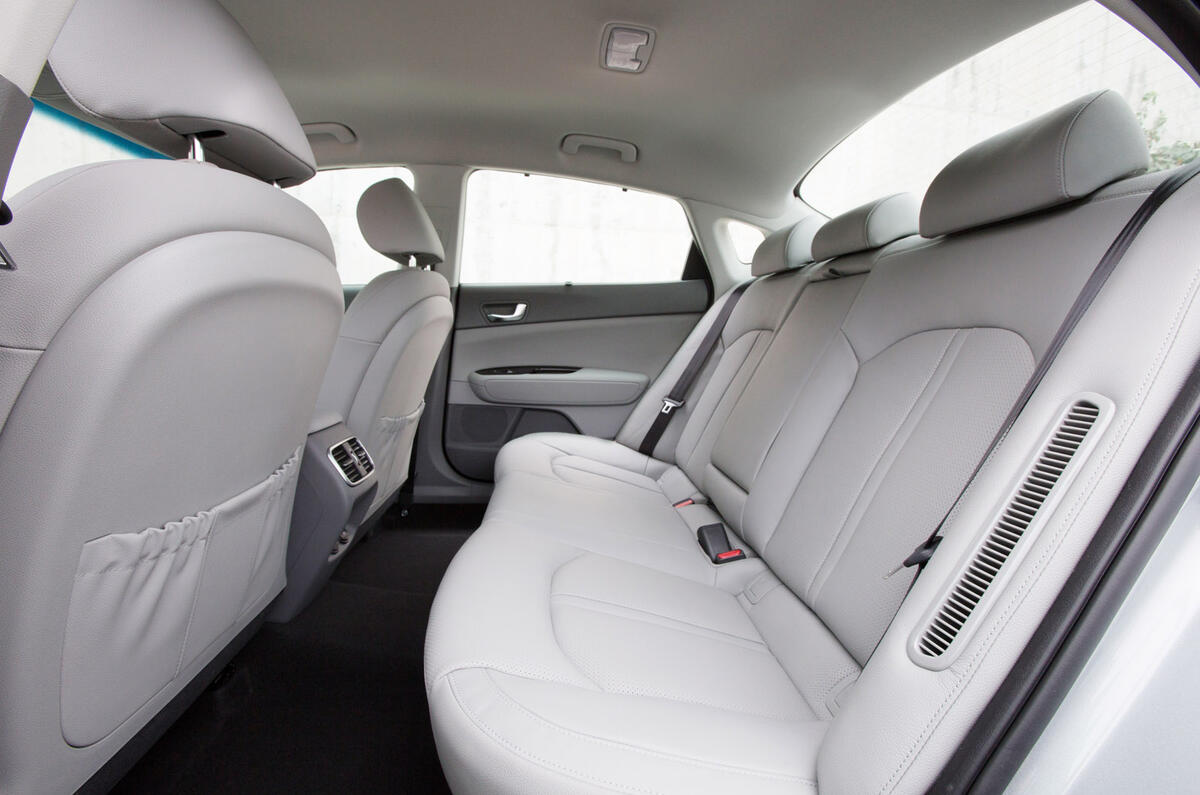
The battery pack is situated behind the rear seat and in tyre well, both to maximise cargo volume and provide the space needed to offer 60/40 split folding rear seats. It means the car offers a 307 litre boot, compared with the 510-litre capacity of the standard petrol-powered Optima’s boot.
Additional power for the battery system is harvested from a regenerative braking system. Updated over the system found in earlier iterations of the Optima Hybrid, the new system is able to regenerate 11% more energy.
The car is also equipped with an heating, ventilation and air conditioning (HVAC) system that allows ventilation to the driver only during single-occupancy driving.
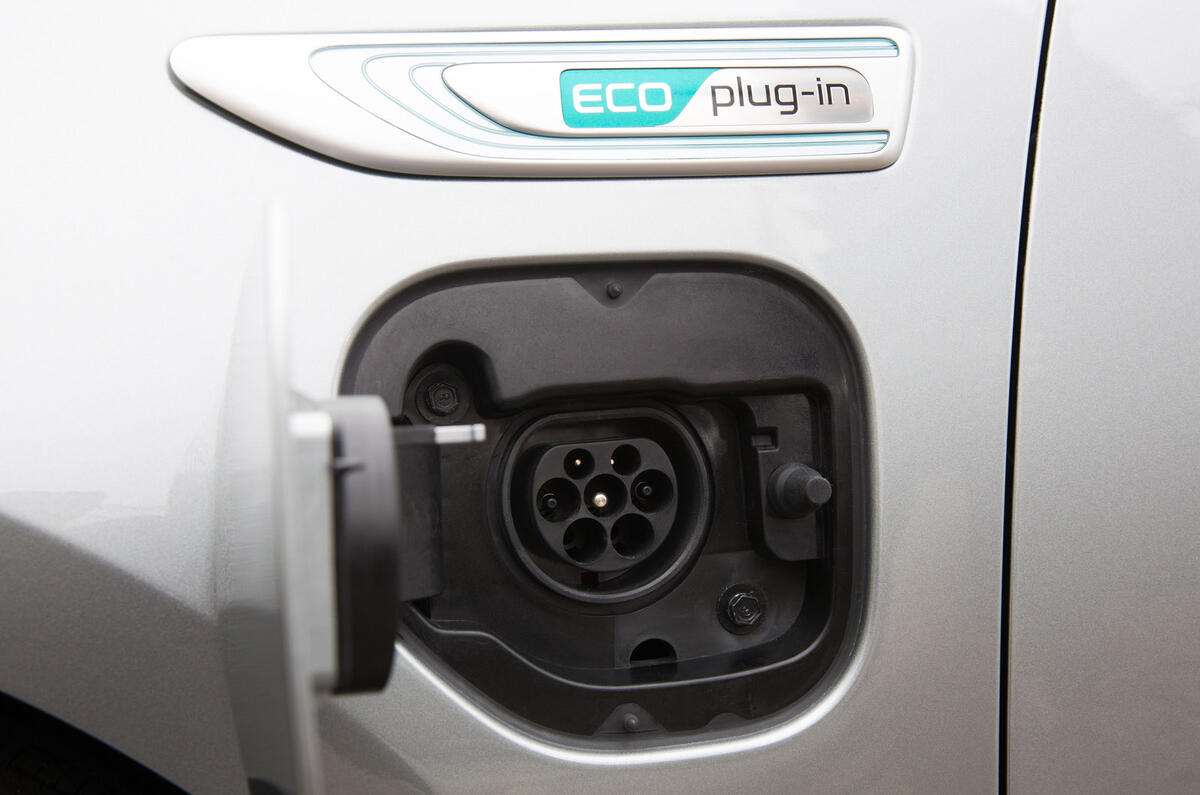
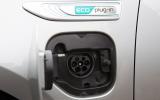
The Optima PHEV is equipped with a single charging port located in the front wing. A full charge can be achieved in less than three hours via a 240V charger, and less than nine hours via a 120V charger.
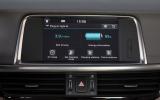
The driver can choose between all-electric mode (EV) for city driving, hybrid mode (HEV) for open roads and charging mode, which increases the amount of energy being sent back to the battery during higher-speed driving.
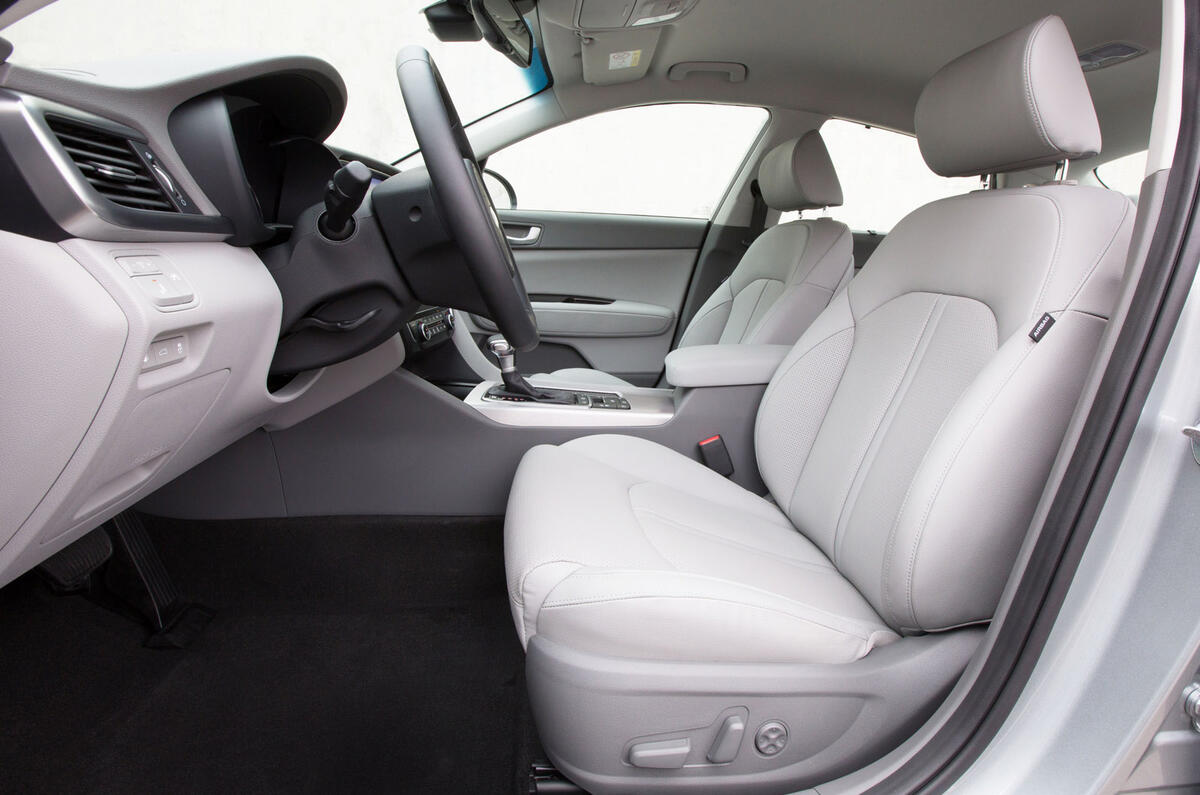
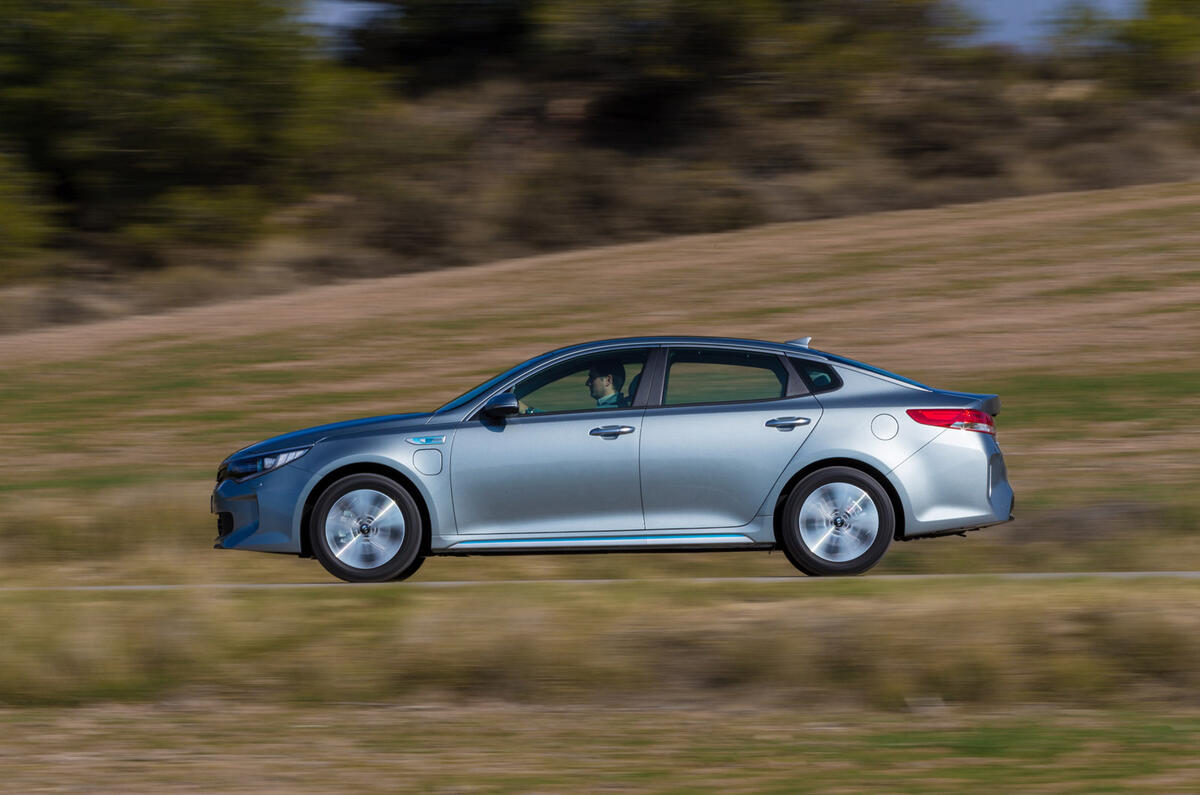
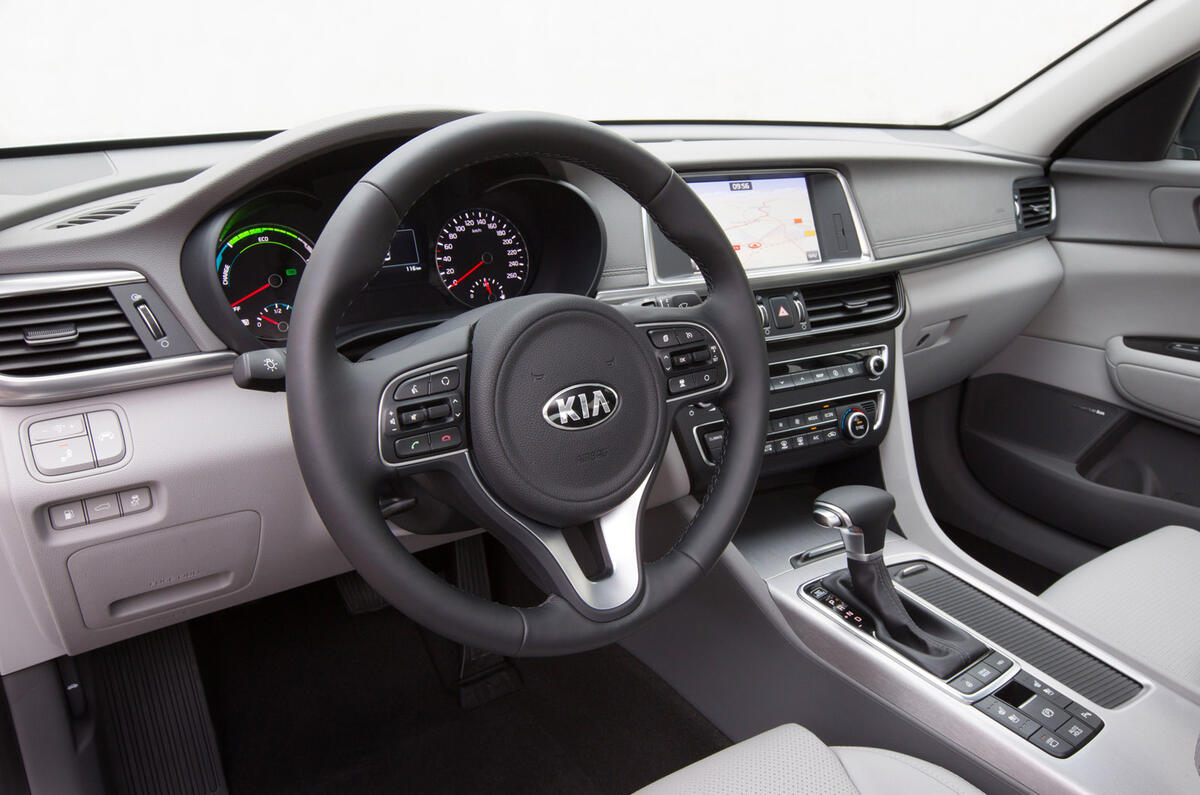
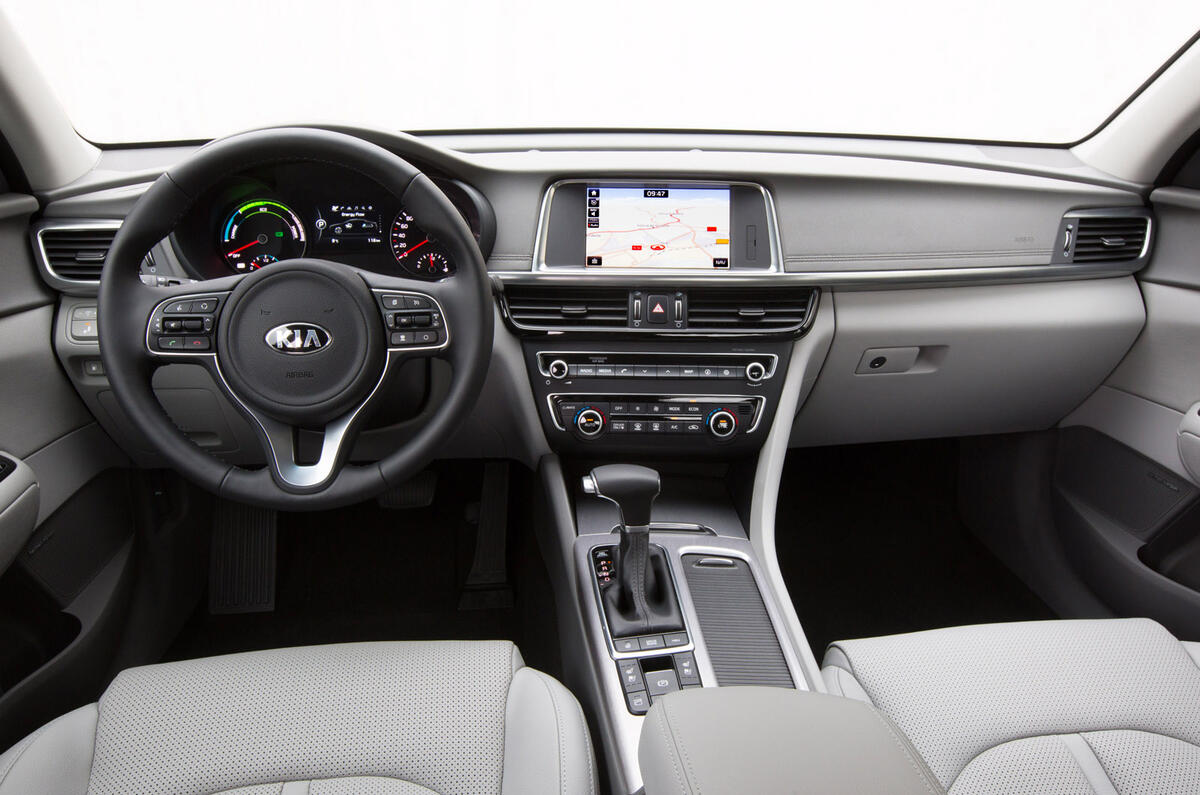
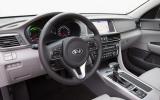
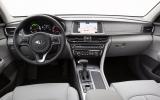
The Optima gets some design elements to set it apart from its petrol and diesel powered siblings, including a bespoke instrument cluster and a special design of alloy wheels.
It also features an active grille which automatically opens and closes to improve aerodynamics and optimise engine bay cooling.
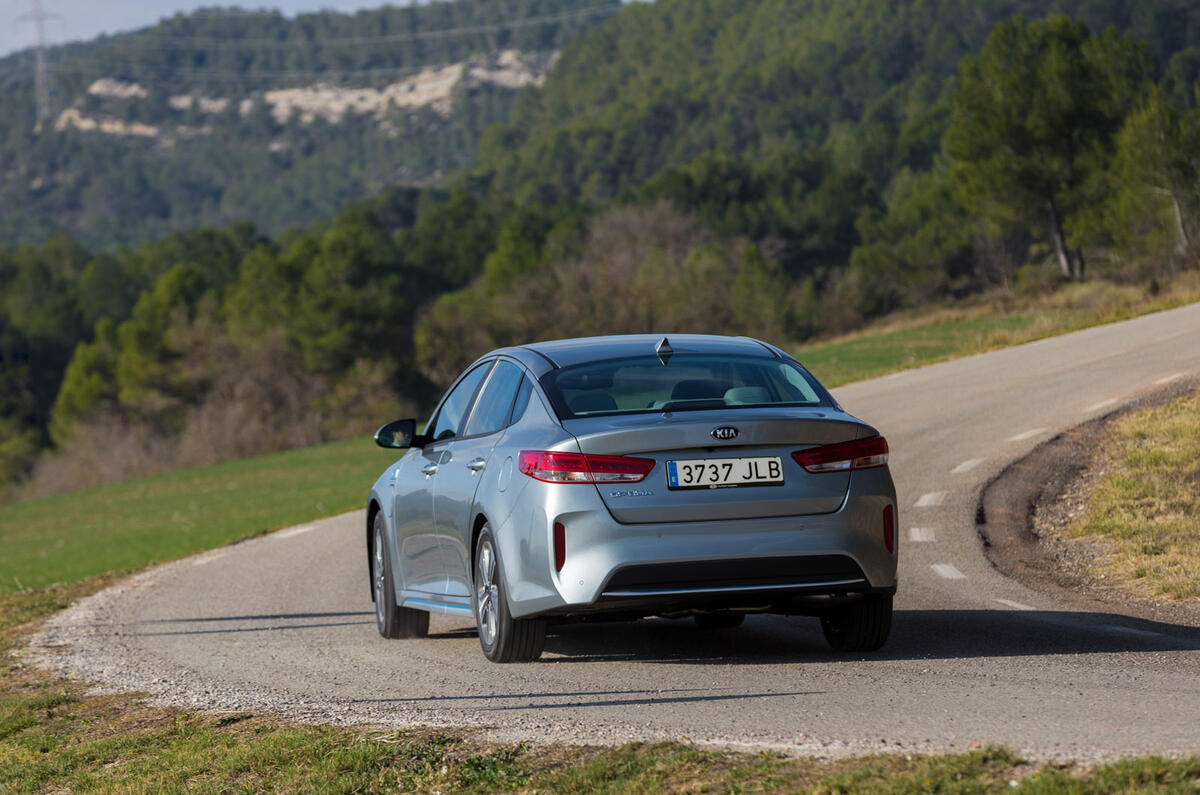
Other styling differences include a model-specific front air curtain, a bevelled rear bumper and a rear diffuser designed to streamline airflow by shrouding the exhaust tip. These are complemented by LED lights, a chrome side sill moulding and ‘Eco Plug-In’ badging.
The aerodynamic tweaks actually make it more slippery through the air than the standard Optima saloon, with a drag coefficient of just 0.25.