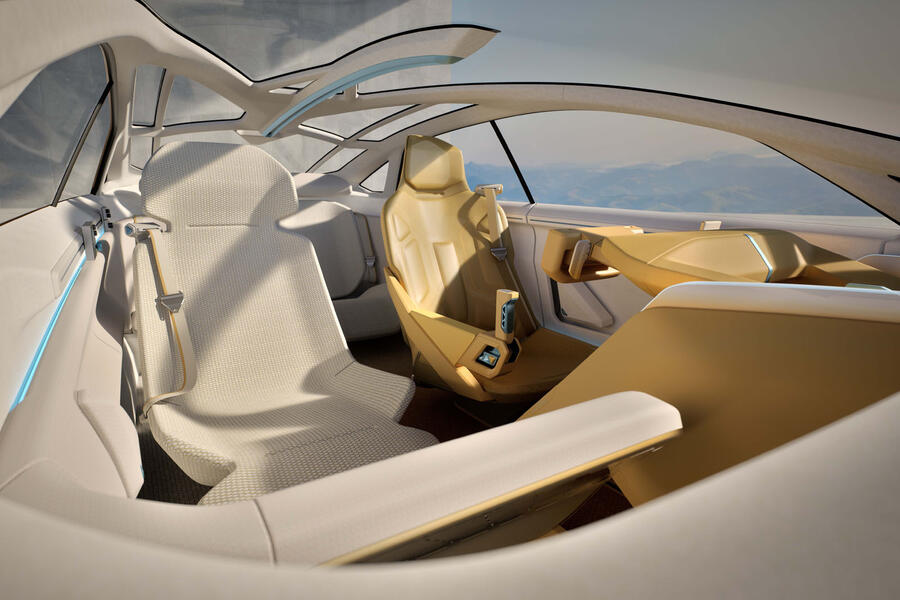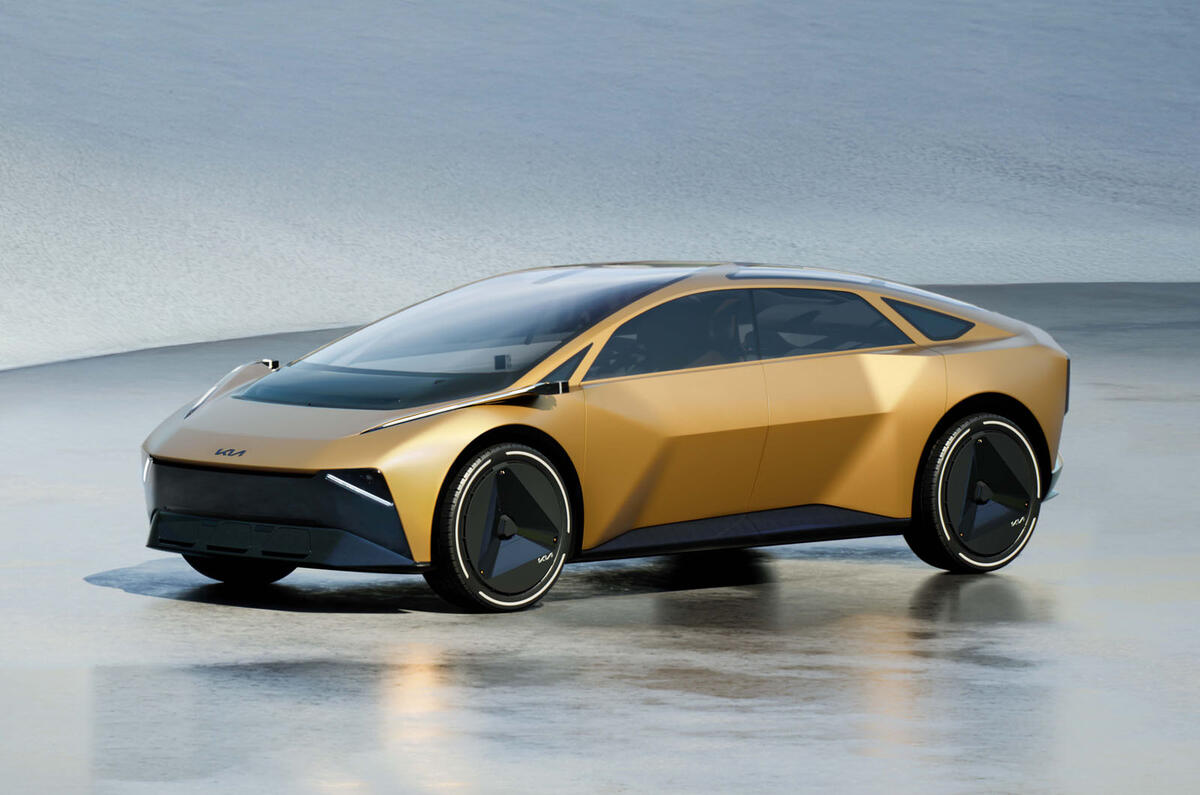
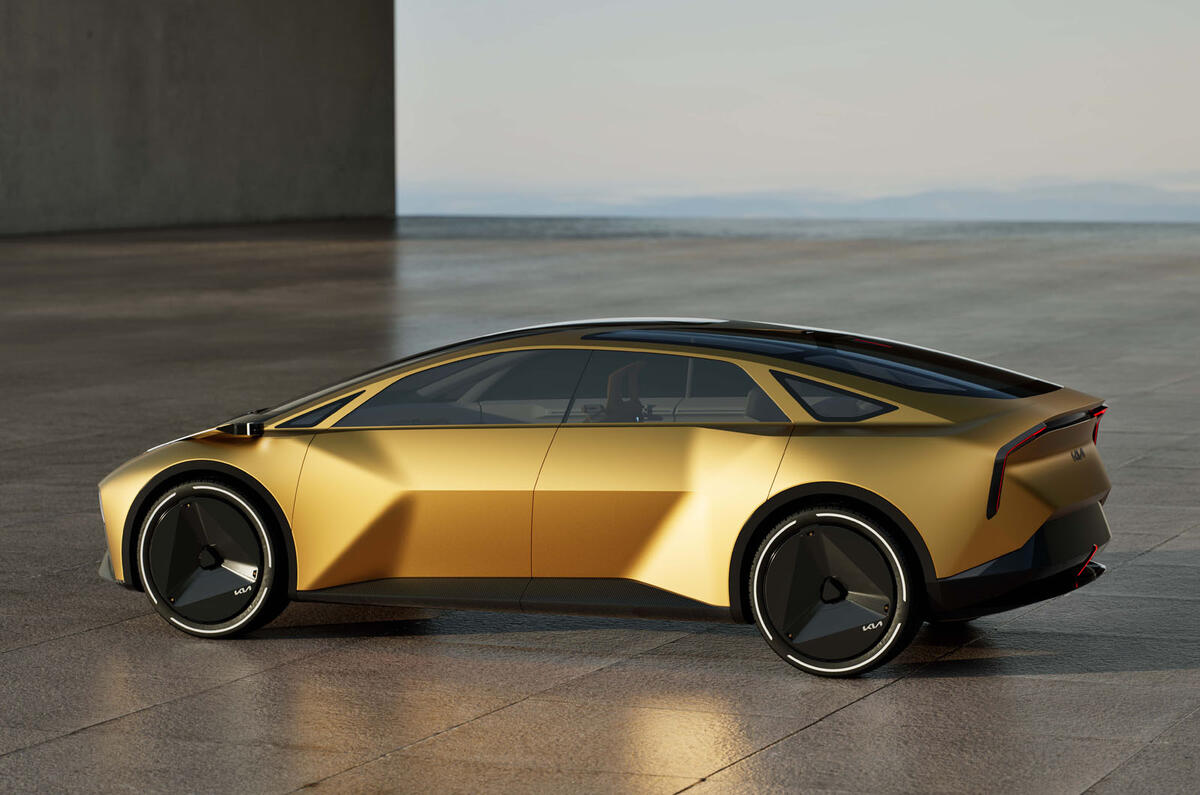
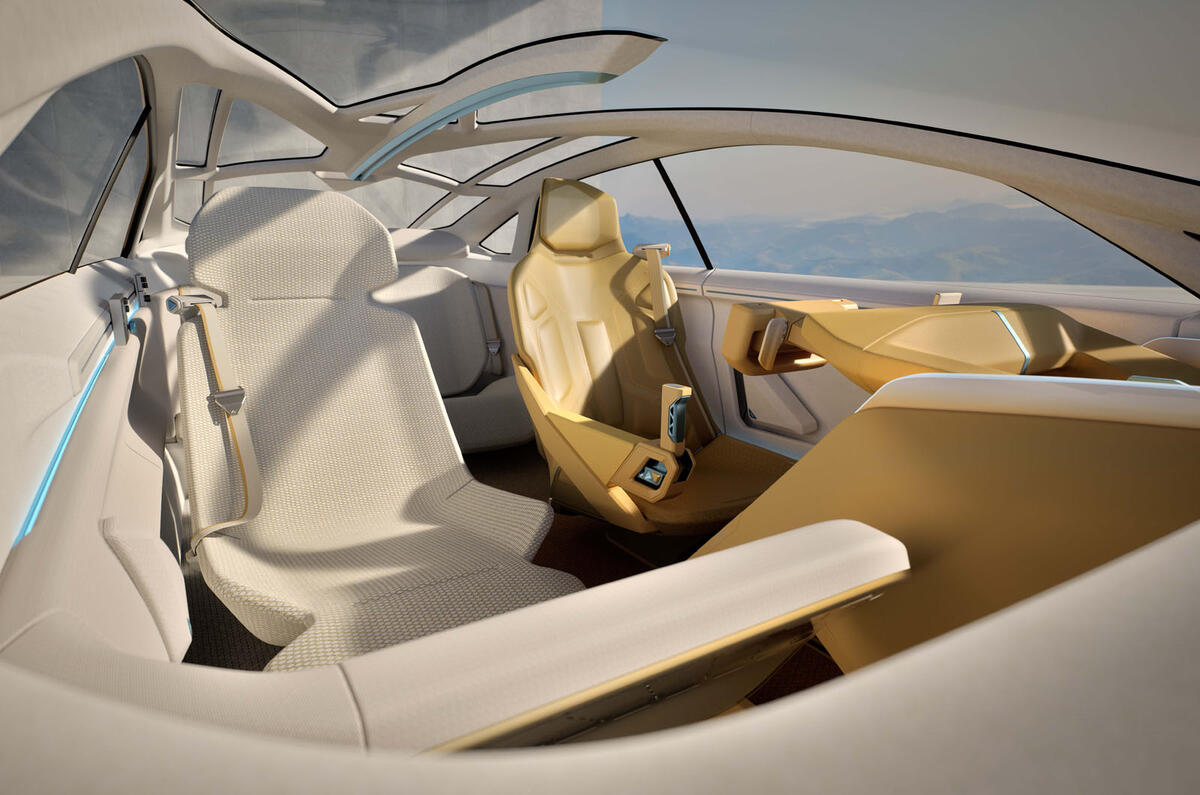



Kia will put the Vision Meta Turismo concept into production as a new flagship model in the vein of the V6-powered Stinger GT S - but only once the price is viable, the brand's design chief has told Autocar.
The striking GT concept was revealed in Korea last year to mark Kia's 80th birthday. It sits on a new platform and showcases a bold new era of design for Kia called Opposites United: Evolution.
The current design language, Opposites United, started with the EV6 in 2021 and defined every model up until the EV2, unveiled last month.
Asked what was stopping Kia from putting the electric four-door super-GT into production today, design chief Karim Habib told Autocar: "At this point, it is more strategic. It's a pure EV and the price of doing a high-performance EV is what is slowing us down. Hopefully, the upward movement of EVs keeps going. I think there will be more openness to this [type of] car. At least that's what we're betting on."
He added: "We have a small history of doing cars like the Stinger and that's something we don't want to give up on. The Meta Turismo is our idea of a sports sedan for the gamer generation. A few years ago, we started thinking about what could we do beyond SUVs? We do produce and sell a lot of SUVs, which is good, but we also believe that there's more than that."
Autocar was recently invited to see the concept, alongside a proposed fastback variant that is a close match in profile to the Hyundai Ioniq 9 and has yet to be shown publicly. Habib said the team had already created a "90% production-ready" model, suggesting it could also be in Kia's plans.
Europe design boss Oliver Samson said: "We wanted to answer that question to ourselves: is that something we could do or how would that look like? In order for us to answer the question, we needed to prove that it would work. And, yeah, [we found that] it would be physically possible."
Evolution, not revolution, key
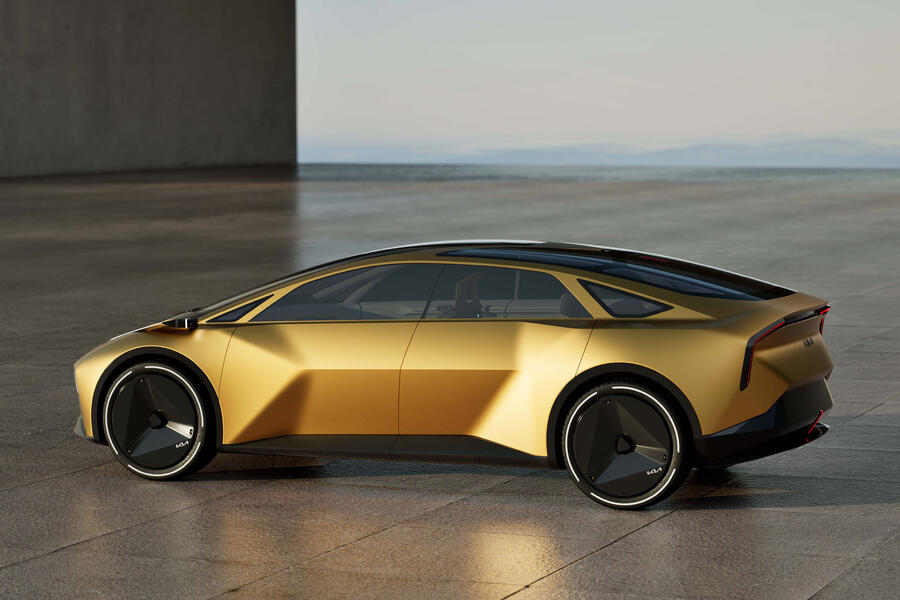
Compared with today's cars, the next generation of Kias won't look drastically different, which is why the new Opposites United: Evolution design language has been named to sound like a sequel.
Instead, the key changes will be in how the new cars feel to use.
Habib explained: "We design purposely futuristic looking cars because we want them again to promise a better future and we want people to follow us on that. The idea of finding new ways is not just to find new ways, because something new for the sake of new really doesn't bring anything. The point is that it needs to bring progress. It needs to bring something positive to the experience.
"And obviously with EVs and all the technology that has come with it - the difference in the architecture, the difference in the usability, the user experience - we believe it is progress for the automotive world. That is what we would like people to feel when they step into our cars."
The first model expected to be influenced by the new design language is a recently confirmed electric city car. Potentially positioned as an EV alternative to the Picanto, it could take the EV1 badge when it is unveiled later this year. It is expected to go on sale by the end of 2027.
New design language to foster emotional connection