









Currently reading: 630bhp, 2370kg: Audi RS5 revealed as brand's first hot PHEV

New PHEV brings trick torque-vectoring tech that is claimed to solve key criticism of RS4 forebears

The new Audi RS5 has been revealed as the successor to the RS4, and it will be the brand's first performance model to feature a plug-in hybrid powertrain.

With the change in model name – born out of Audi's now-scrapped plan to distinguish combustion-engined and battery-electric cars with odd and even designations – comes a vastly more aggressive take on its mid-sized performance exec, which will arrive this summer in Avant estate and fastback-saloon bodystyles.

The firm's bosses have also insisted that they have cured the understeer issue that affected previous generations.

"With the new RS5, we are ready to attack", said product manager Markus Fink. "The RS5 is a sports car, but it is a sports car for everyday use." 

New PHEV powertrain
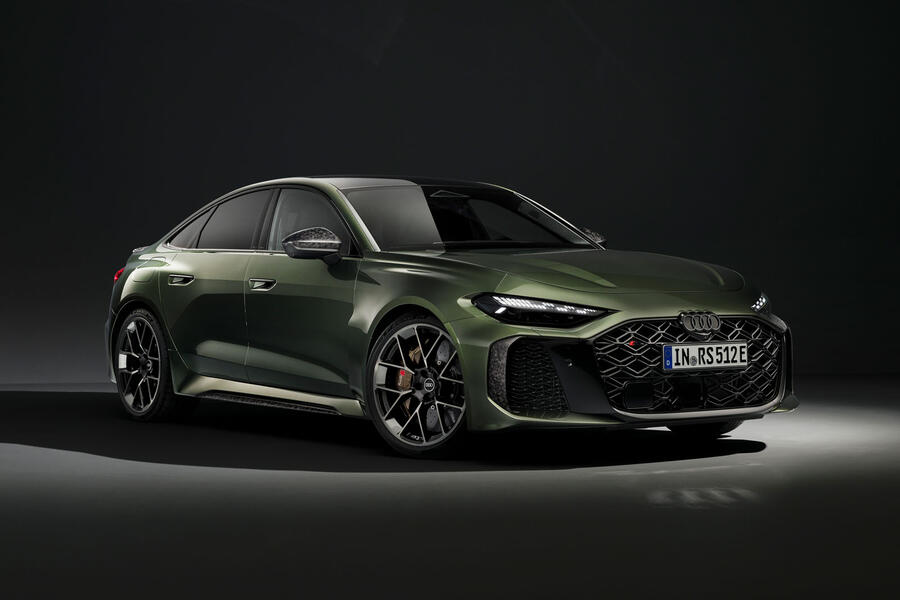
Audi RS5 Sportback

At the heart of the RSS lies a twin-turbocharged 2.9-litre V6, which is matched with a 22kWh (usable capacity) battery pack and a 174bhp electric motor mounted in the gearbox.

The engine is the same basic unit used in the previous RS4, but Audi Sport boss Rolf Michl told Autocar "The only thing that we kept is the 2.9 litres."

In its new guise, the engine has been switched to a modified version of the Miller combustion cycle, in which the intake valve is closed before the pistons bottom out to improve efficiency, which is crucial to meeting the forthcoming Euro 7 emissions regulations.

Fuel injector pressure has also been raised, and new variable-geometry turbos - now water-cooled to reduce intake temperatures – are said to improve responsiveness.

The result is an extra 39bhp compared with the previous RS4 V6 (in its most powerful 25 Years guise), for a total of 510bhp from the engine.  With the motor involved, the PHEV set-up produces a combined 630bhp, a leap of 166bhp.

Sent through an eight-speed automatic gearbox, it gives a 0-62mph time of 3.6sec, which is 0.1sec quicker than before, and a top speed of up to 177mph, down by 9mph.
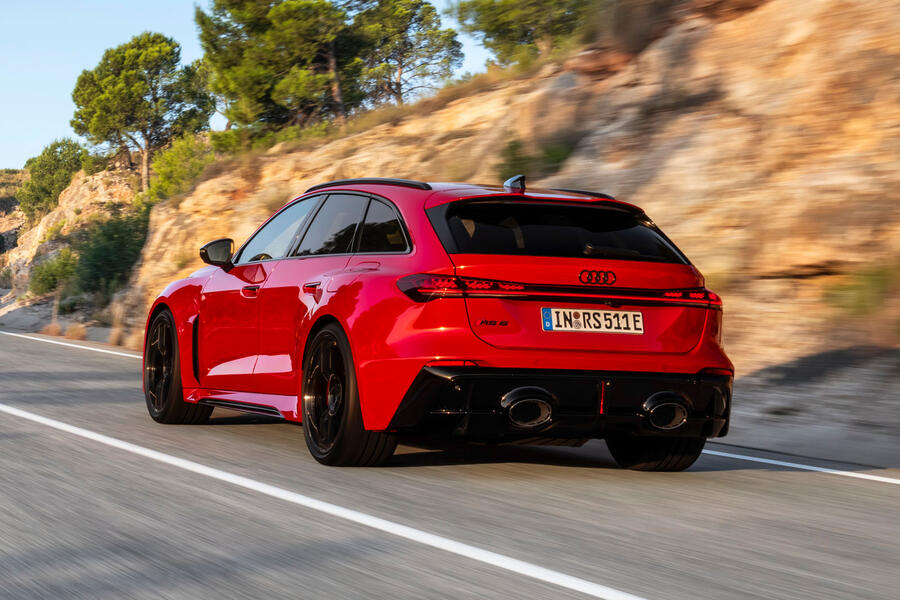
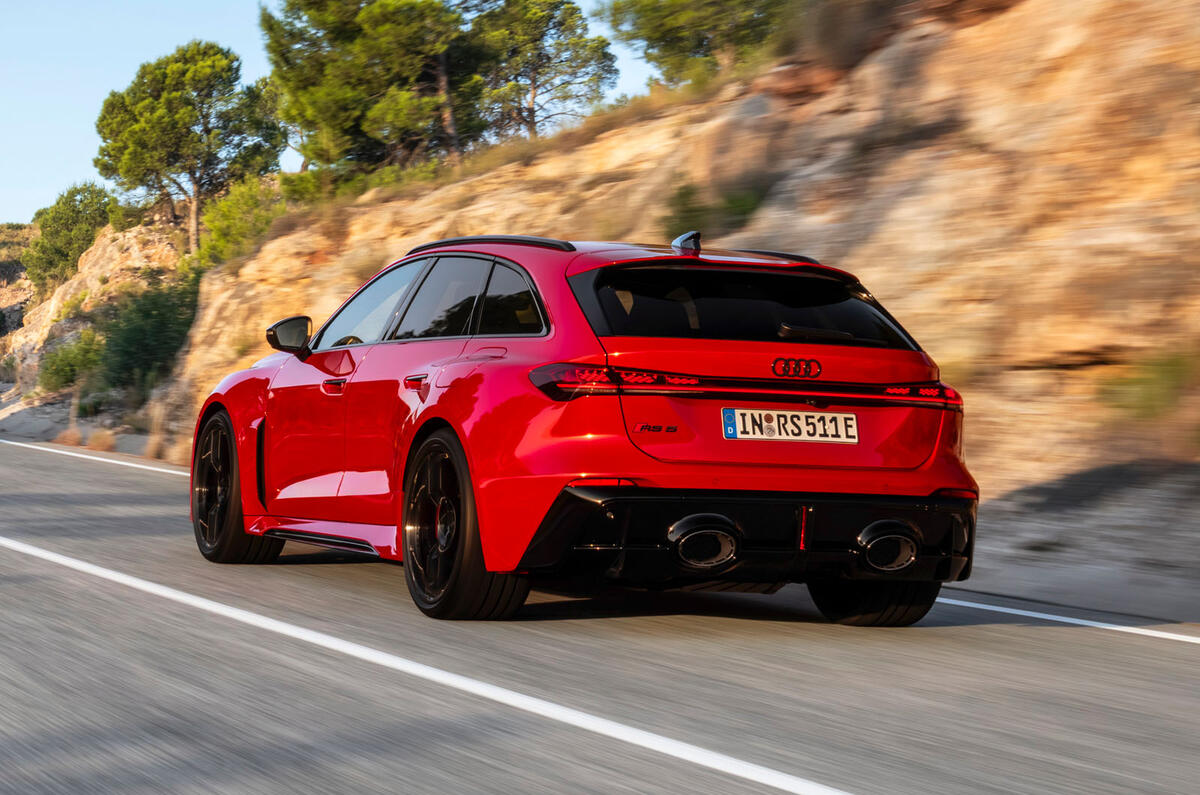
Audi RS5 Avant rear quarter tracking

Although the vitals may not appear a significant Improvement on paper, owing to the Avant weighing 2370kg, Audi said the RS5 is much more urgent than the RS4 in real-world use. It has claimed that, in a rolling drag race against the previous RS4 Competition, the RS5 can extend a gap of two car lengths within 2.5sec. That is thanks primarily to the instant delivery of power from its electric motor.

Back to top

The plug-in powertrain also allows some 50 miles of electric-only running, making the RS5 a viable - if slightly outrageous - option for company car users.

Stopping power comes in the form of 420mm steel front discs and 400mm rears, but Audi also offers carbon-ceramics all-round as a £6000 option for a 30kg saving in unsprung weight.

Banishing understeer

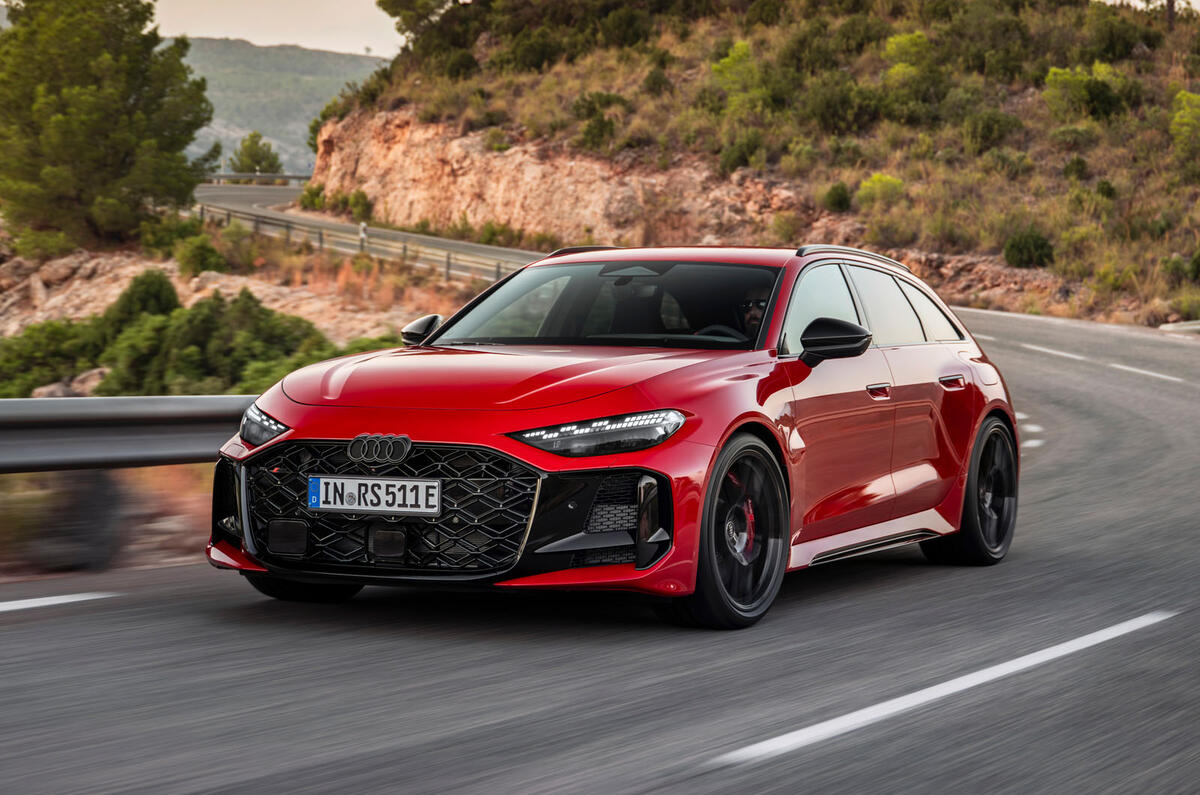
Audi RS5 Avant front quarter tracking

The new plug-in hybrid drivetrain has also been configured to address the RS4's long-running understeer issue, says Audi. A new Dynamic Torque Control system includes an electromechanical torque vectoring rear differential – effectively a limited-slip differential but with an 11bhp motor, geared so it can shift 1475lb ft between the wheels in fractions of a second.

This is combined with a new locking centre differential that is capable of sending up to 100% of drive to the rear wheels. An 'RS Torque Rear' drive mode – essentially a drift mode – is included to take advantage of this.

"Basically, there is no understeer," said Michl. "Even in the latest RS4 we could manage it better, but this is a new dimension – and it is my favourite development, because you can experience it every day."

It remains to be seen whether this will translate into more driving enjoyment in the hands of Autocar's road testers, but it puts the RS5 in the same conversation as its key rivals, the BMW M3 and Mercedes-AMG C63, whose four-wheel drive systems have the same rear-biased attitude. 

"We asked how big the exhausts can be, and the answer was yes"

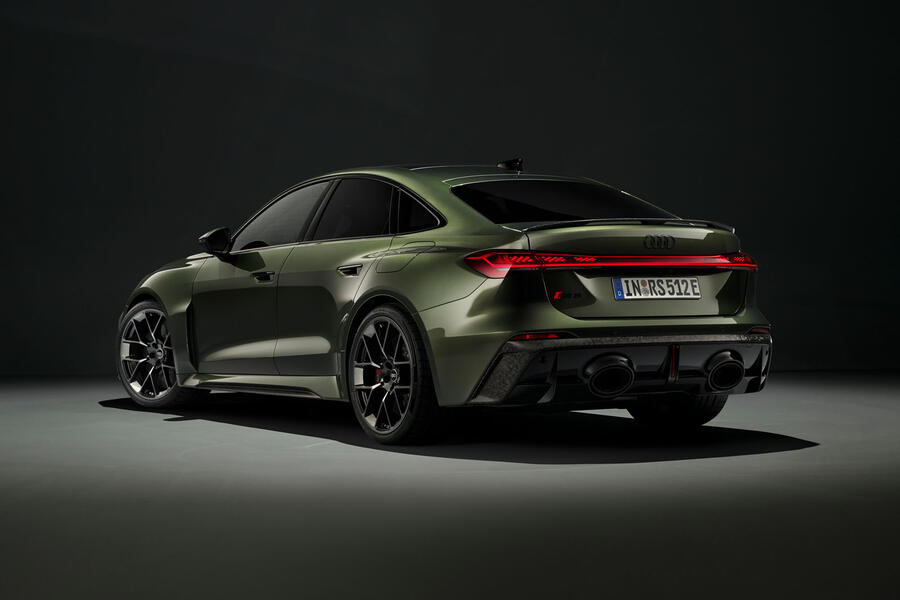
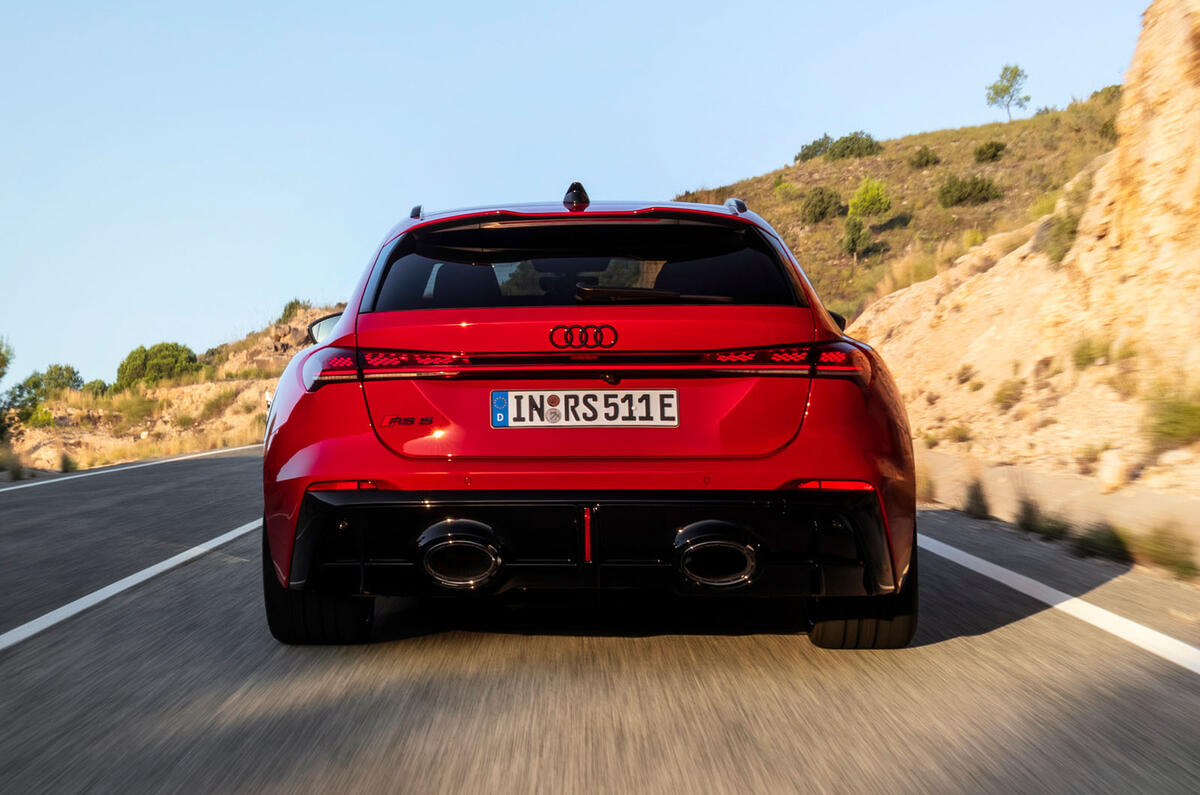
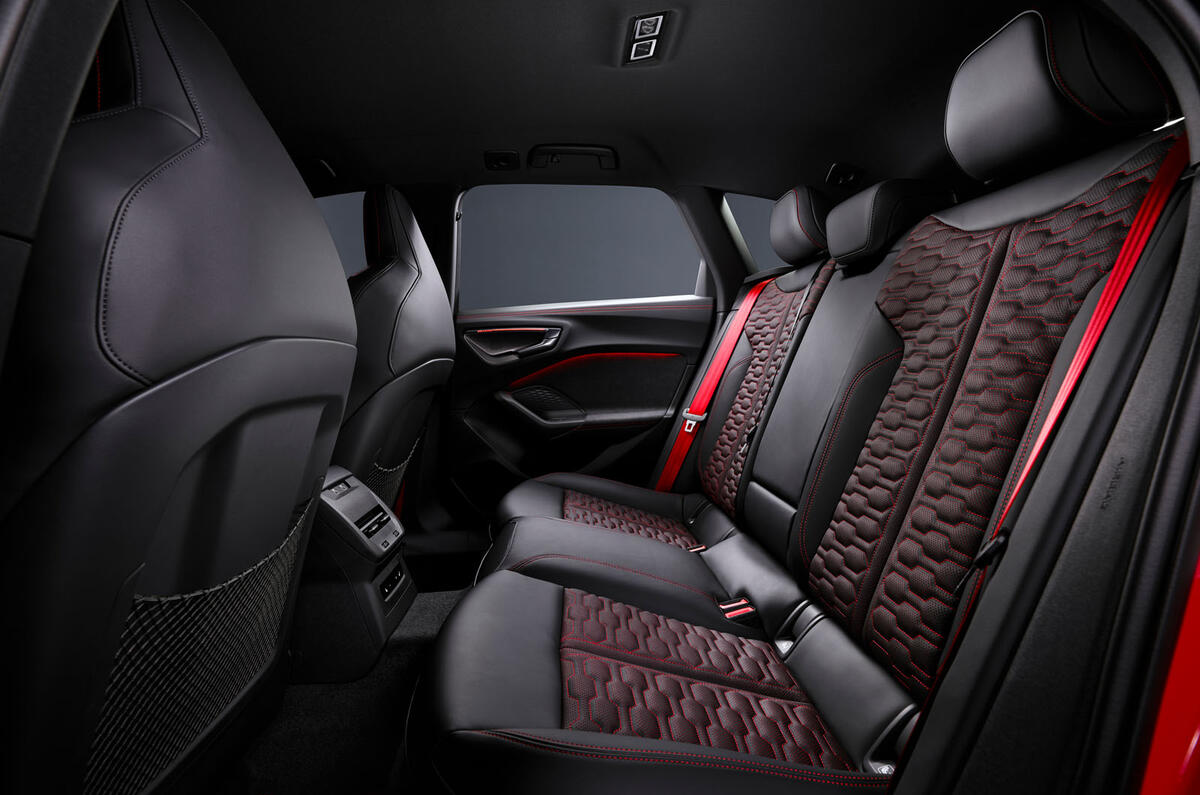
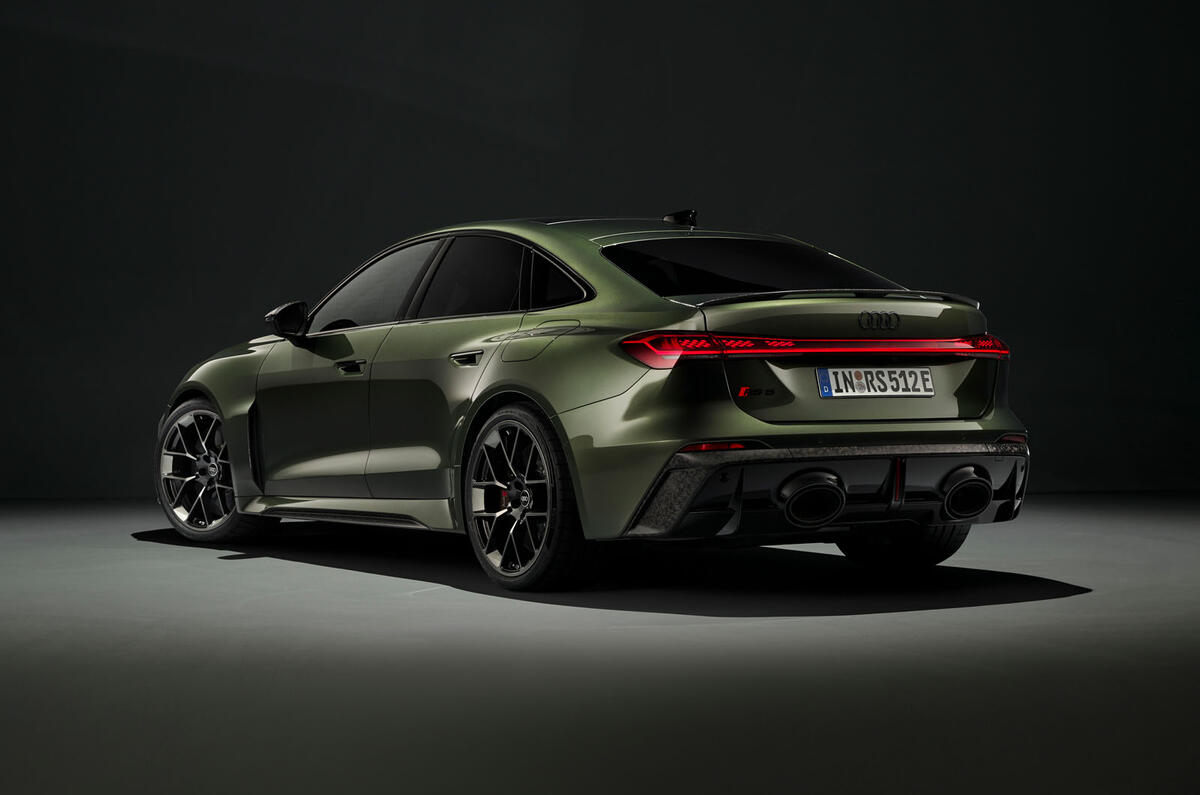
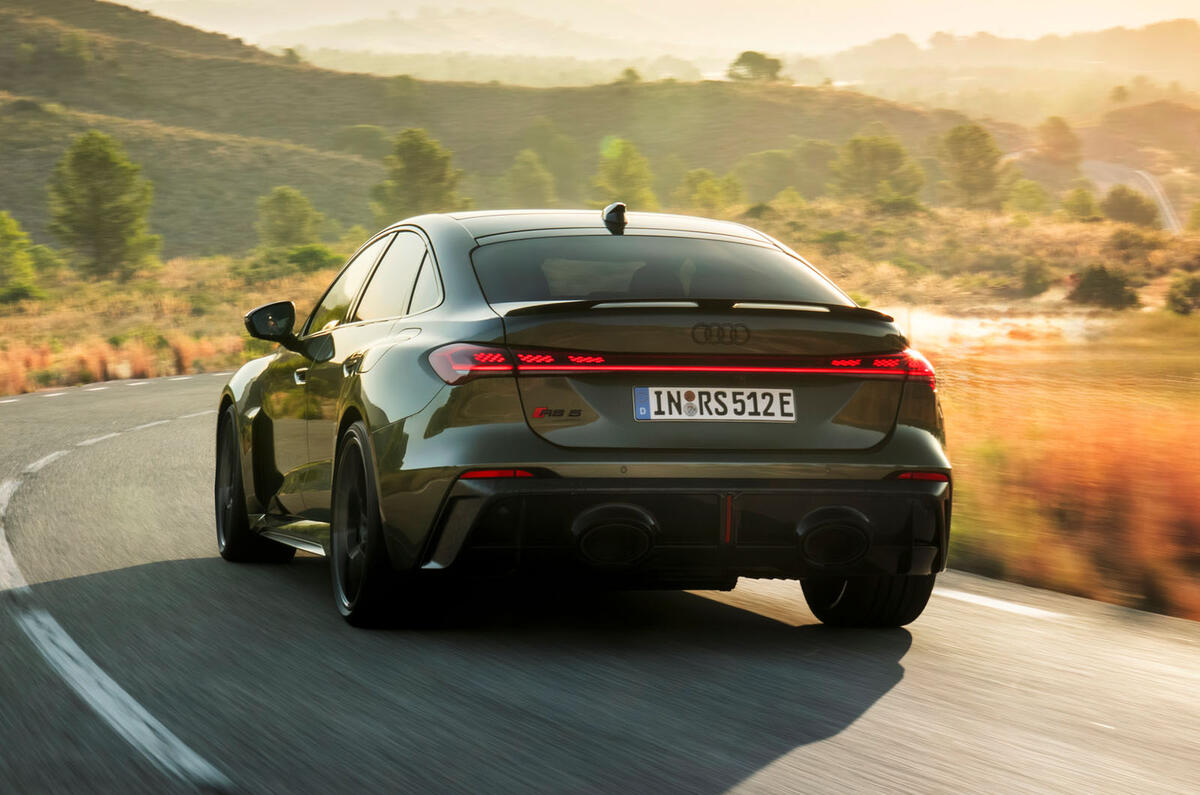
Audi RS5 Sportback rear

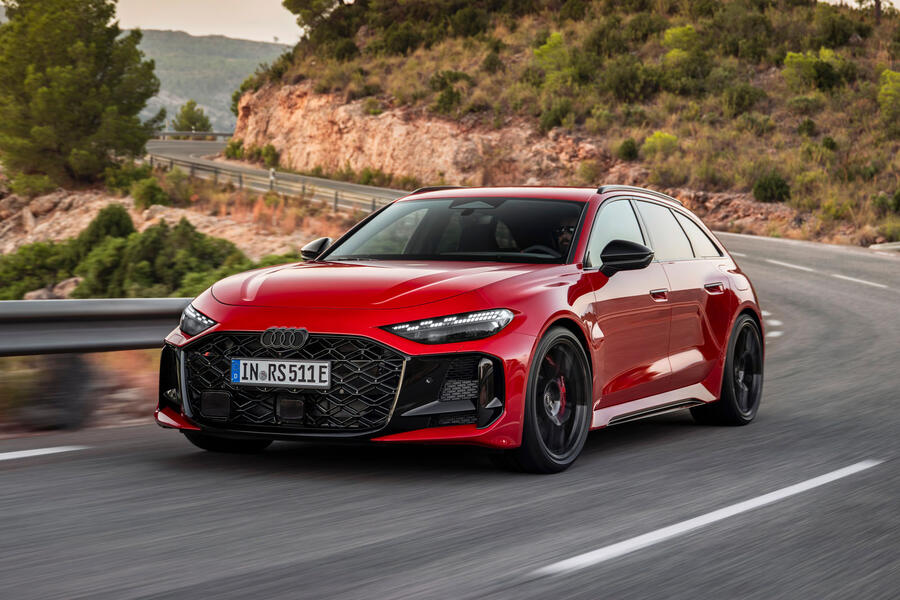
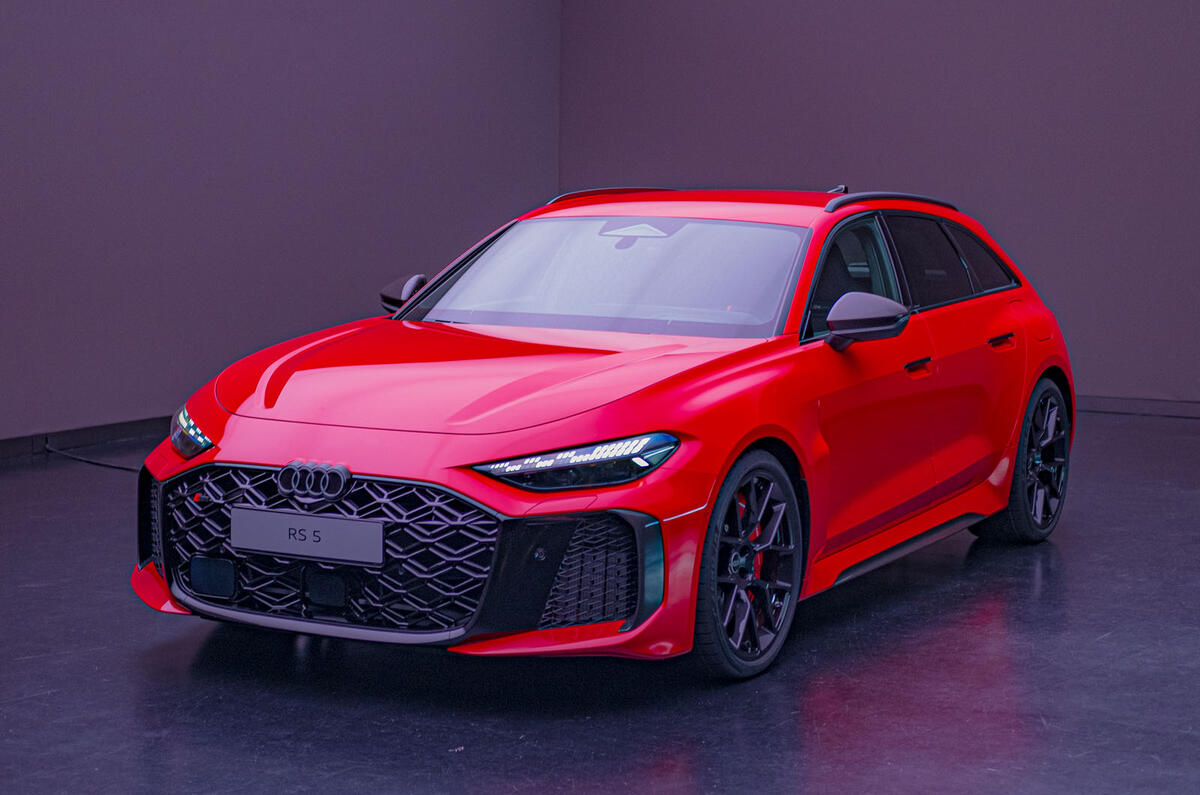
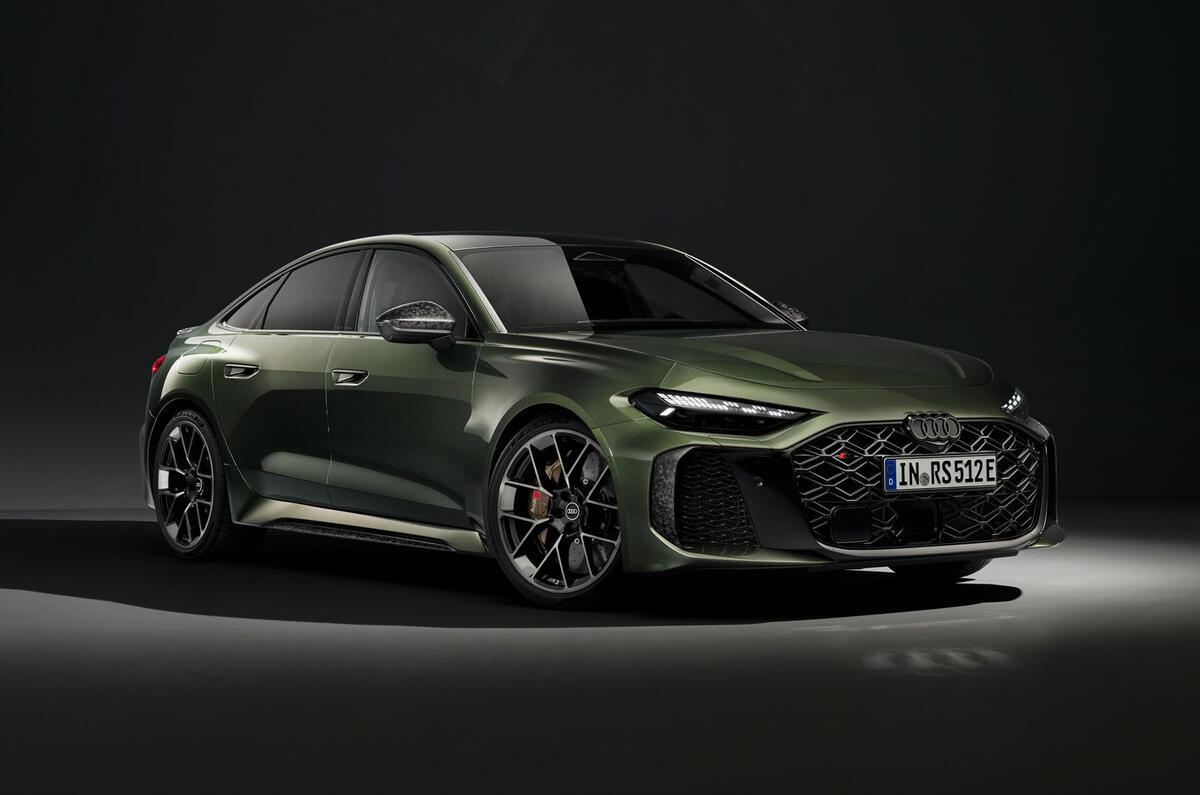
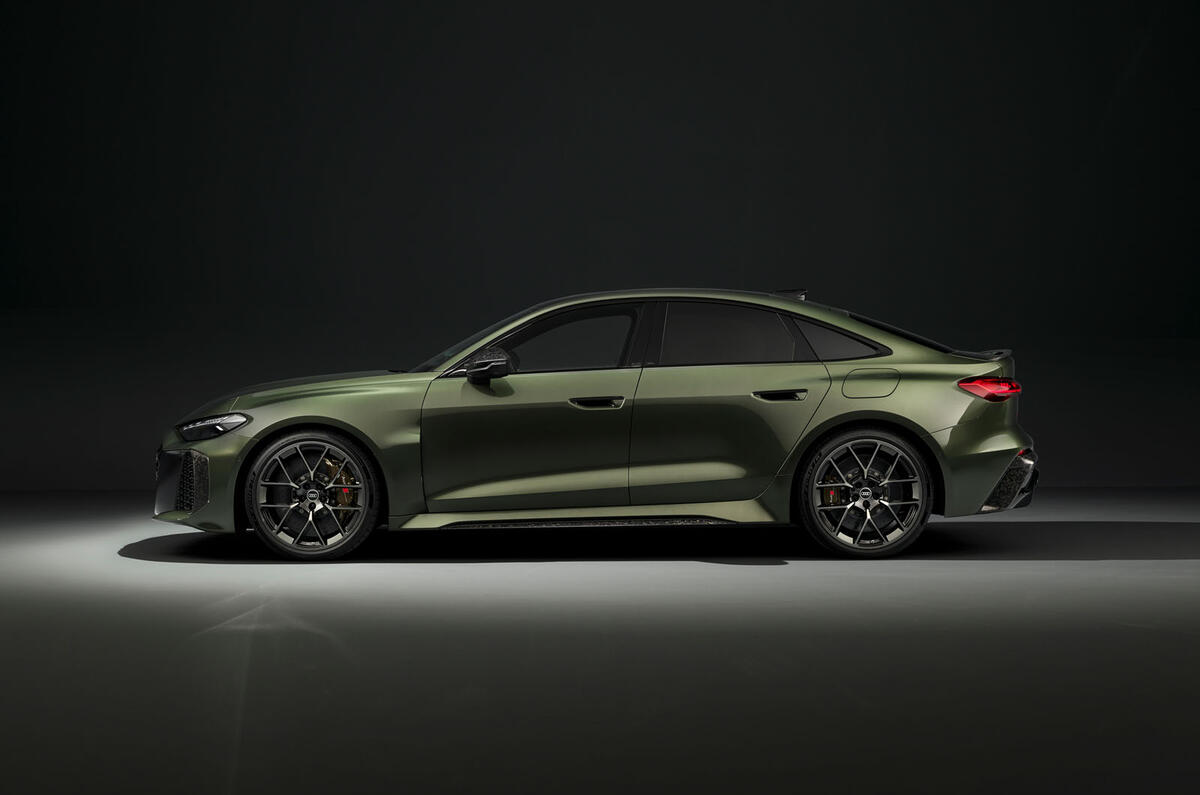
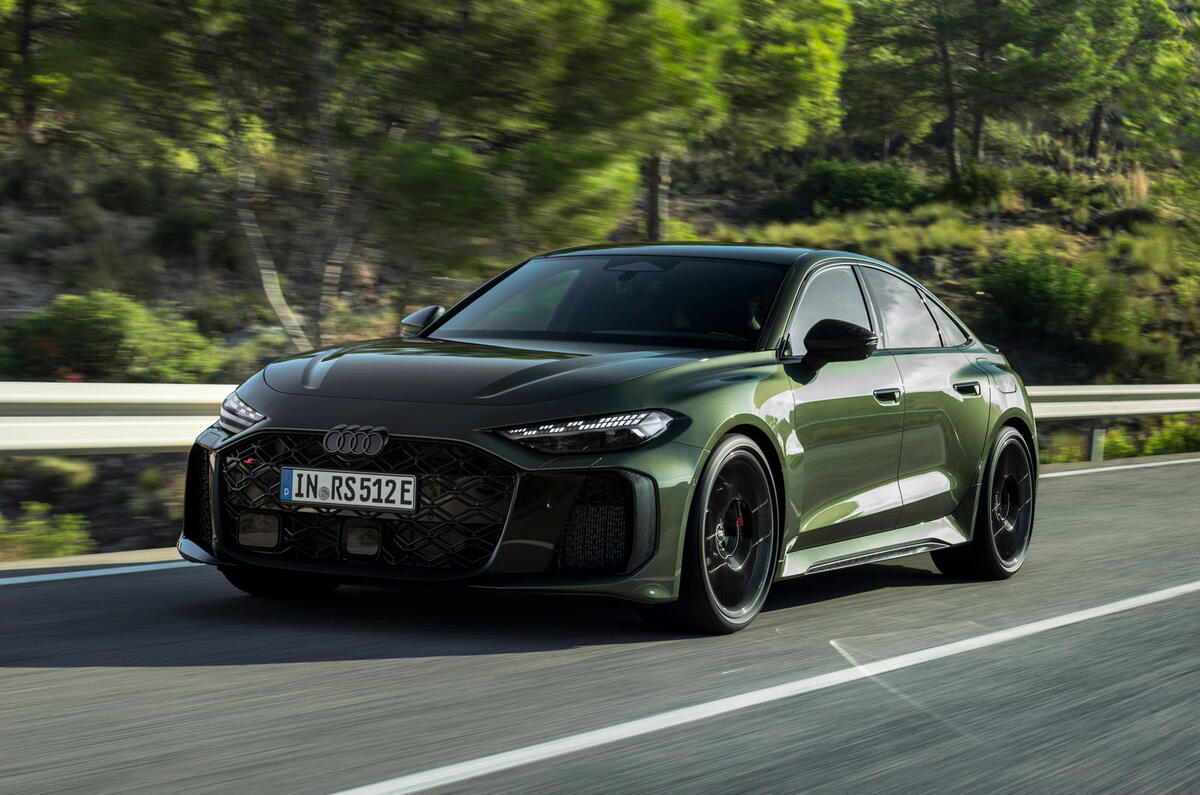
Enveloping that powertrain is a more aggressive design than has been applied to the new RS5's forebears. It sits lower and wider than the standard A5, hunkered down over a choice of 20in or 21in alloy wheels.

"We have to go as far as possible to really differentiate this from the base model," said designer Wolf Seebers. "We had proposals that were going even more into a motorsport direction, and we wanted to tone it down a little bit. In my view, this is already quite restrained."

Back to top

The clearest point of difference is the overhauled front end, with an expansive 'black mask' grille maximising cooling for the V6 and its electricals. The front daytime running lights and rear brake lights also get a chequered-flag graphic effect.

One of the standout marks that you're following an RS5 is the pair of huge in-board tailpipes, large enough to fit a fist through.

"We asked 'how big can the exhausts be', and the answer was 'yes'," said Seebers.

"We considered going slightly bigger or slightly smaller, because this is really extreme, so the pipes have to reflect this and fit in the overall proportions".

As well as the Avant estate, the UK will also be getting a saloon for the first time since the 'B7' generation, introduced in 2006.

Although the saloon is primarily aimed at the North American market, Audi told Autocar it was keen to offer a broader choice, given the RS5's more rakish design compared with that of its predecessor.

Audi RS5 pricing

Pricing for the RS5 will start from £89,400. This rises to £95,400 for the Carbon Black variant (which introduces various carbonfibre elements) and £107,400 for the Performance Vorsprung (extra tech and a higher 177mph top speed).

Customer deliveries will begin in June.

Join our WhatsApp community and be the first to read about the latest news and reviews wowing the car world. Our community is the best, easiest and most direct place to tap into the minds of Autocar, and if you join you’ll also be treated to unique WhatsApp content. You can leave at any time after joining - check our full privacy policy here.

Charlie Martin

Charlie Martin Autocar
Title: Staff Writer

As part of Autocar’s news desk, Charlie plays a key role in the title’s coverage of new car launches and industry events. He’s also a regular contributor to its social media channels, creating content for Instagram, Tiktok, Facebook and Twitter.

Charlie joined Autocar in July 2022 after a nine-month stint as an apprentice with sister publication What Car?, during which he acquired his gold-standard NCTJ diploma with the Press Association.

He is the proud owner of a Mk4 Mazda MX-5 but still feels pangs of guilt over selling his first car, a Fiat Panda 100HP.

Join the debate

Comments
21
Add a comment…
michael knight 20 February 2026

Ughh. Garish - each new Audi seems to get more and more busy with over-complicated design surfacing. Look back at an old D2 S8, it's clean and beautifully proportioned. 

scotty5 20 February 2026
michael knight wrote:

Ughh. Garish - each new Audi seems to get more and more busy with over-complicated design surfacing. Look back at an old D2 S8, it's clean and beautifully proportioned. 

Seriously!  Maybe for it's day, but now looks like a dinosaur it always was. My definition of a supercar is would a 7 year old have a picture of it on his bedroom wall? This new A5 Avant in red, or a D2 S8? Hmmm.

There's a reason the D2 S8 never sold well. And then they went and make the interior look like a OAP gentlemans club. I'm not sure thats the image a typical RS buyer is looking for.

michael knight 20 February 2026
scotty5 wrote:

My definition of a supercar is would a 7 year old have a picture of it on his bedroom wall? This new A5 Avant in red, or a D2 S8? Hmmm.

I'd say neither was a supercar. But that wasn't my point - I'm  saying their designs have got more and more overworked and busy. Same with BMW. The automotive design industry has to stop employing 20 yr-old gamers who've never owned a car in their lives. 

skiwi 19 February 2026

A number of comments in this thread that indicate that a bunch of car guys haven't caught up with the European car sector. Euro 7 is a thing, particulalry the challenges around "real world" tailpipe emmissions under all conditions. Hybrid is a common response to the challenges posed (BMW, Audi etc). So the weight penalty is no surprise. Although the way the manufactureres have countered the effect of the weight on tyre/brake emissions would be interesting to understand...

A number of manufacturers have signalled that Euro7 means the end of small ICE performacne cars...

I guess we should be thanksful that these cars, still predominately ICE, continueto be made...


catnip 19 February 2026

That lattice plastic grille and overlapping Audi badge just look so cheap. Surely they could do something better than this.

Ancient1 20 February 2026

+1