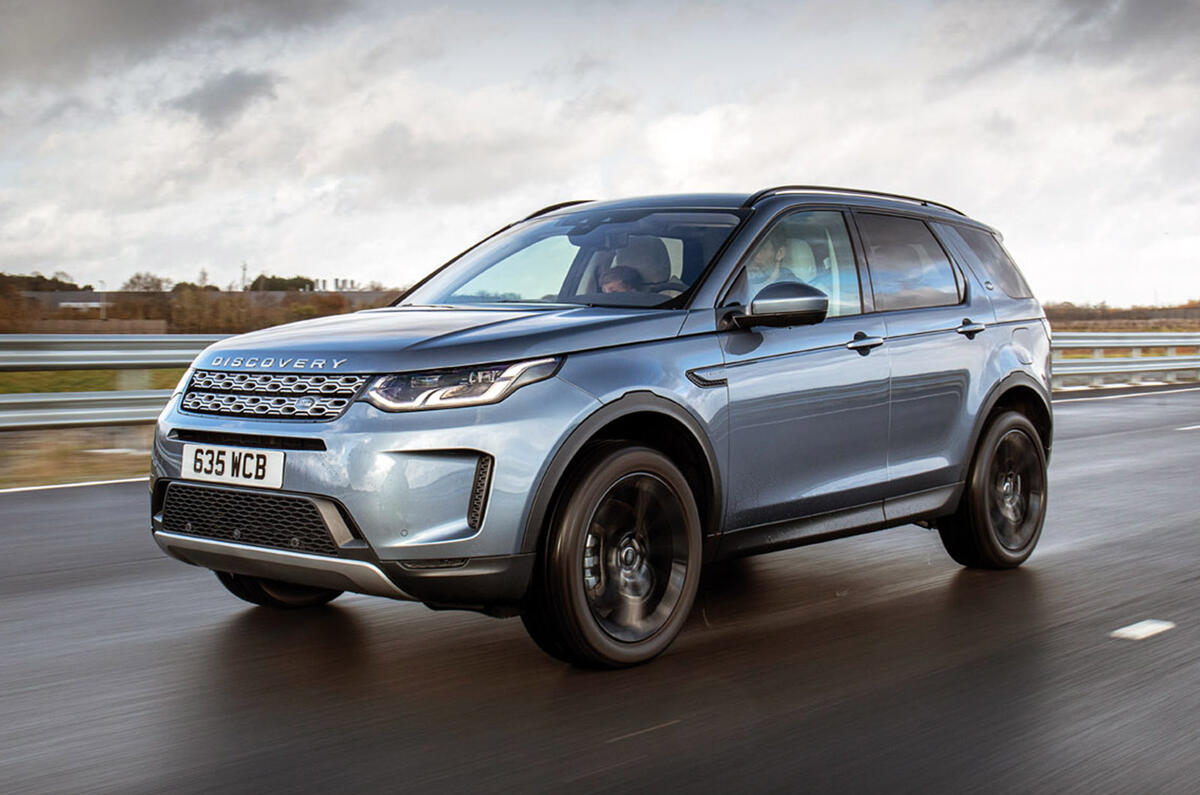
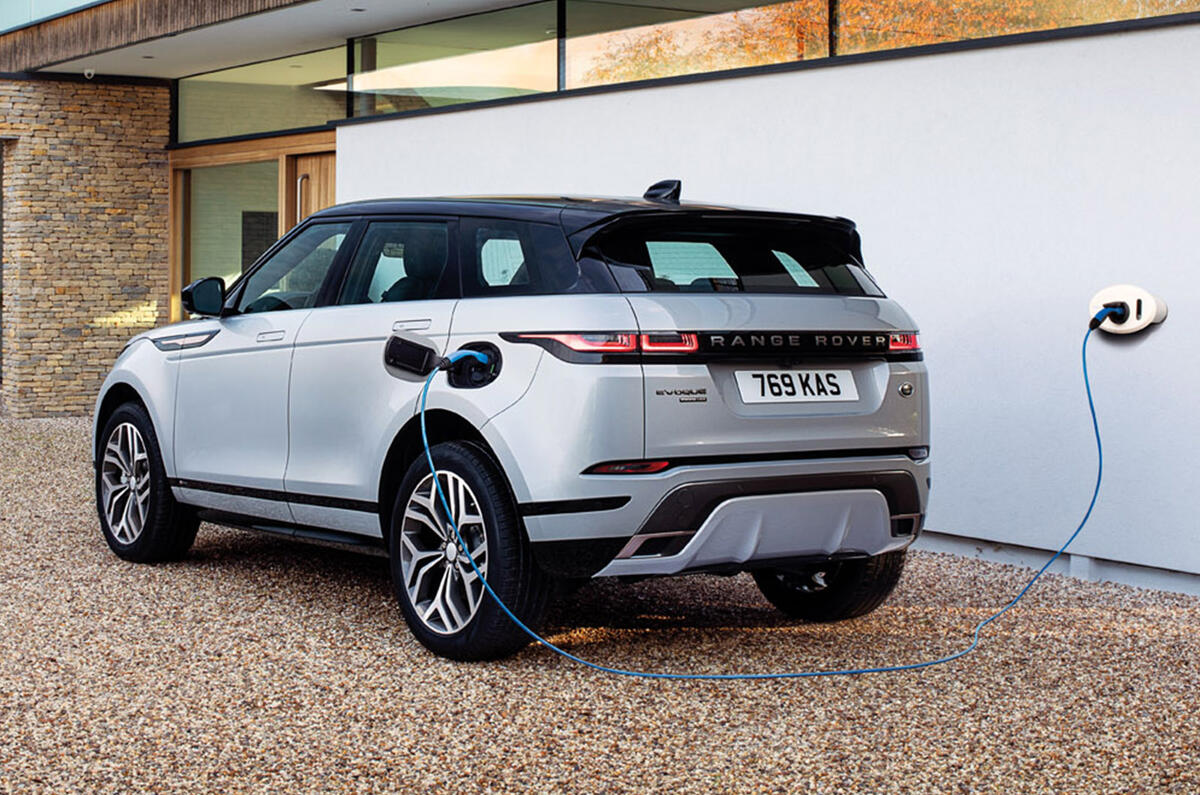

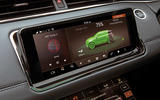


Land Rover has bucked the industry trend during the pandemic-induced shutdowns by launching two vital new models: the Land Rover Discovery Sport PHEV and Range Rover Evoque PHEV.
Available to order now, the plug-in hybrid variants are arguably as important as the new Defender in terms of sales, because they’re targeted at the lucrative fleet markets. With no electric Land Rover available yet, they will also have a huge impact on reducing the brand’s fleet average CO2 emissions, which must be done in order to avoid fines from the EU.
Designed and engineered entirely in-house, the SUVs are described by Land Rover PHEV vehicle engineering manager Chris Carey as featuring “all brand new tech” produced in a “huge engineering effort”.
Work on the powertrain began in 2016 and was done in parallel with the creation of the Premium Transverse Architecture (PTA), which made its debut last year in the new Evoque and heavily updated Discovery Sport.
Both PHEV models, dubbed P300e, combine a new 197bhp turbocharged three-cylinder 1.5-litre Ingenium petrol engine with an eight-speed automatic gearbox and a 107bhp electric motor mounted on the rear axle. That links to a Samsung-sourced 15kWh battery pack. The result is a combined system output of 296bhp, with total (rather than combined) torque quoted at 398lb ft.
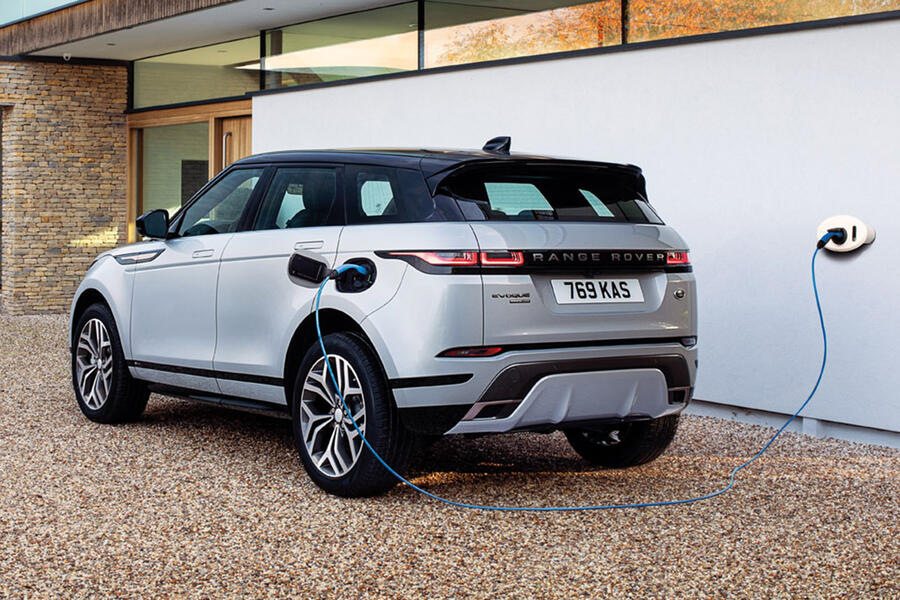
While the electric rear axle gives four-wheel drive, Land Rover claims class-leading range and efficiency figures.
The Evoque P300e emits 32g/km of CO2, is capable of up to 201.8mpg and achieves an electric-only range of up to 41 miles, all on WLTP test cycles.
The Discovery Sport, being larger (but not available in PHEV form with seven seats), officially emits 36g/km of CO2, while its economy falls to 175.5mpg and its electric-only range drops to 38 miles.
The figures mean low company car tax for both, with the Evoque incurring a benefit-in-kind (BIK) rate of just 6% for 2020/2021.
Despite their environmental credentials, the P300e models are also the quickest members of their respective ranges. The Evoque P300e can do 0-60mph in 6.1sec and the Discovery Sport in 6.2sec.
Both are capable of reaching speeds of up to 84mph on electric power alone. At speeds above that, the electric motor is decoupled to reduce aerodynamic drag, making the cars front-wheel-drive.
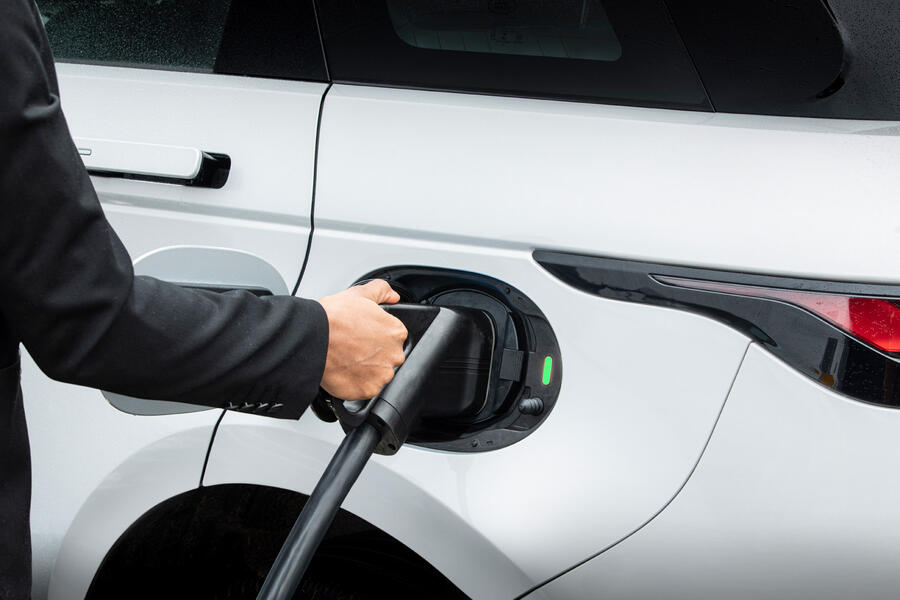
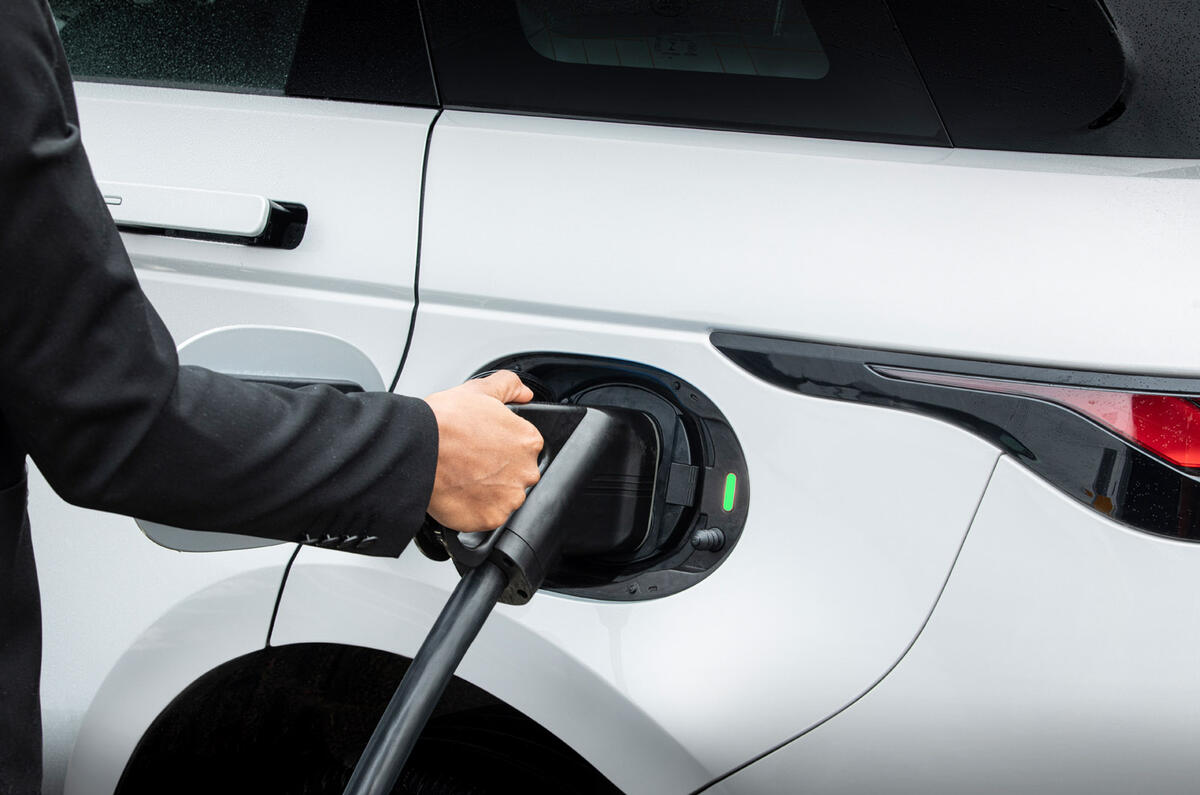
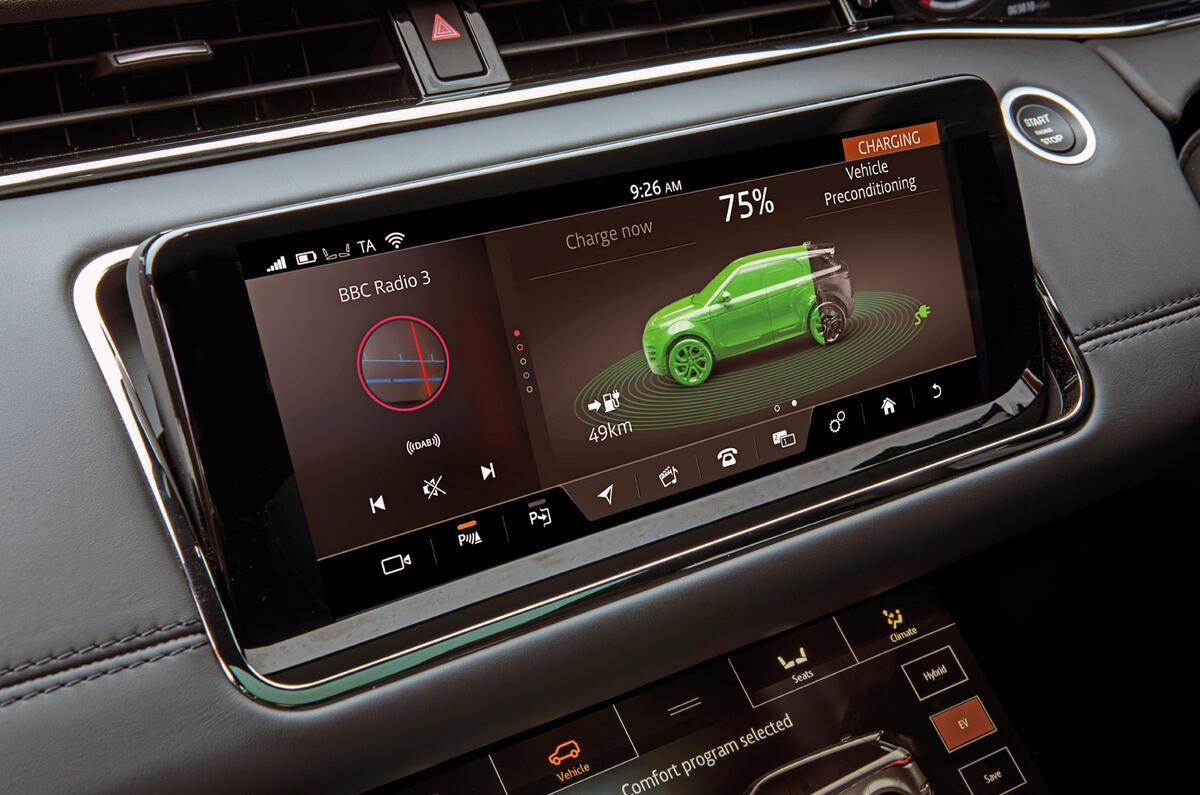
Charging the cars at home can be done via a Mode 2 cable and a domestic three-pin socket, taking 6hrs and 42 mins, or from a 7kW AC wallbox, which can fill the battery from empty to 80% of its capacity in 1hr 24 mins. DC fast-charging (up to 32kW) reduces that 0-80% time to 30 minutes.