Currently reading: From particle accelerators to the iPad: 41 years of car touchscreens

From the first in-car touchscreen in 1985 to the Tesla Model S - these were the significant moments

The touchscreen is one of the most consequential inventions of modern times. They are now virtually everywhere and used by virtually every person every day.

The start of this story is tricky to determine, though.

A patent for a cathode-ray tube (CRT) screen that could react to touches of a stylus was filed as early as 1946. But it wasn't until 1965 that a screen with capacitive properties, meaning it could react to the electrical charge of a human body, was proposed.

And the first touchscreen to enter real-world use was created in 1973, when scientists at CERN eliminated the need for thousands of physical controls on their new particle accelerator.

Enjoy full access to the complete Autocar archive at the magazineshop.com

The potential for wider use of the technology was obvious, but it wouldn't be practicable until computing power became much stronger and cheaper.

That started to occur in the early 1980s, with touchscreens appearing first on desktop computers and then, come 1985, in a car. Yes, really.

If you had to guess which brand was the first to offer a touchscreen, Buick would surely be near the bottom of your list, synonymous as it is now with elderly customers, yet that is the correct answer.
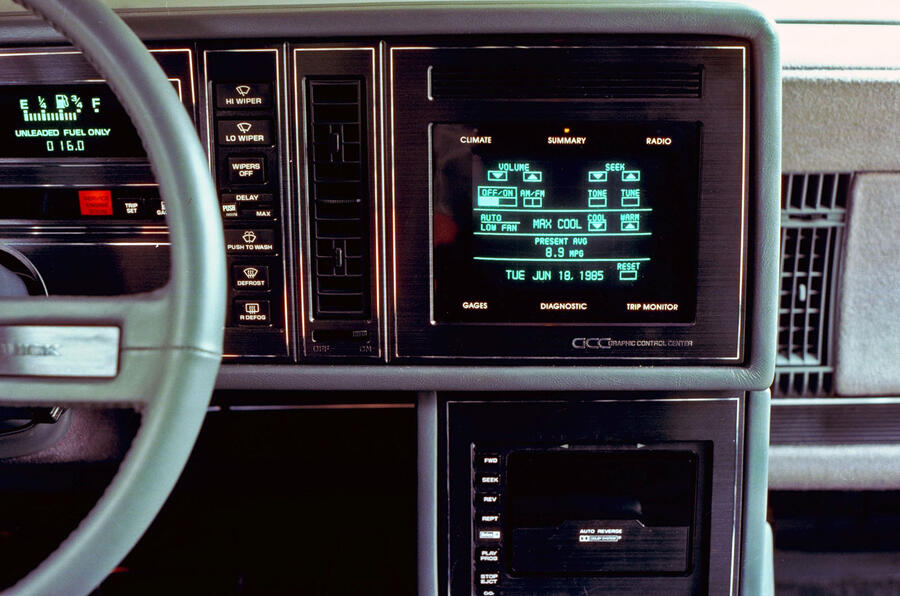
Created by General Motors' Delco Electronics division, the Electronic Control Centre (ECC) was a touch-operated, monochrome CRT screen that gave Riviera drivers access to the car's climate controls, radio, gauges and diagnostic information, replacing 91 conventional controls.

There were still plenty of those on the dashboard, yes, but this was at the same time that British minds were being blown by the MG Maestro merely having a digital speedo and a synthesised voice to read out faults.

It didn't catch on, partly because some buyers didn't like this new control method and partly because a failed ECC would render functions unusable and cost $2000 to replace, but it was a sign of things to come.

The first time Autocar sampled a touchscreen – or rather "an in-dash TV" – was in a Toyota Soarer coupé imported from Japan in 1992.

"It has all the bells and whistles, but also all the style, of a Tokyo electronics store," we commented drily - and "all the controls have an infuriating habit of beeping when operated".

Back to top

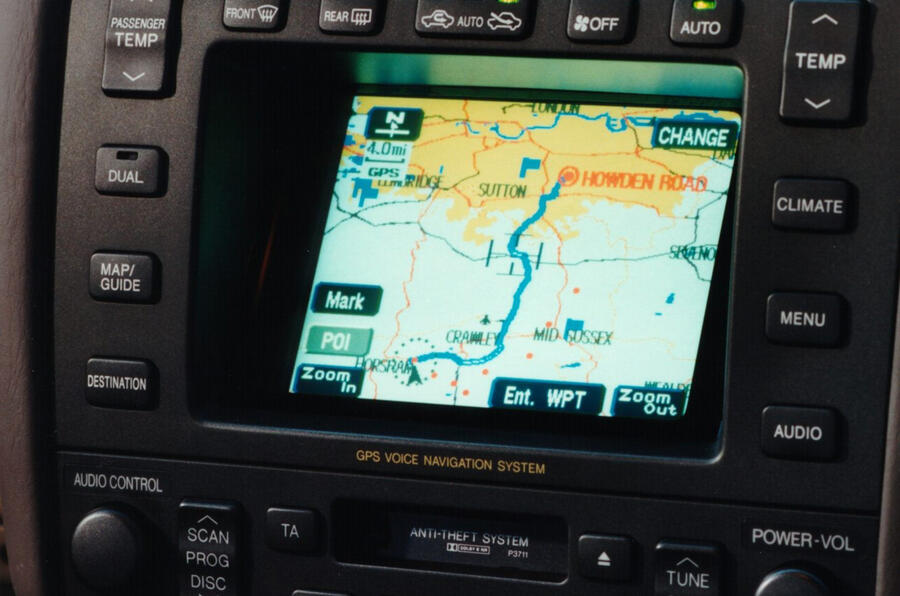
Five years later came the first UK-market offering with a touchscreen: the facelifted Mk2 Lexus LS limo.

"We've fallen in love with the LS's satellite-navigation computer," we gushed. "We've played with many such systems before, but none has come close to matching this one's ease of use. The key to its clarity is a touch-sensitive monitor, which lets you programme in destinations far quicker than ever before.

"Just place your finger on the screen and a keyboard appears with letters highlighted in blue. Tap in the first few keys of the required street name and before you know it a female voice is guiding you through the urban maze as coolly as a latter-day Marilyn Monroe.

"Tap again and a map of the area appears, zoom in and all the local car parks flash up. It's like your very own edition of Tomorrow's World, only this technology is here today."

"You can quibble about the aesthetics of such a high-tech environment contrasting with the rather clichéd use of wood and leather," we later added, "but the system itself is beyond reproach."

That Lexus cost £100k in modern terms, but a decade and a half later touchscreens were entering cars as humble as the Vauxhall Corsa and taking on ever more responsibility.

Back to top

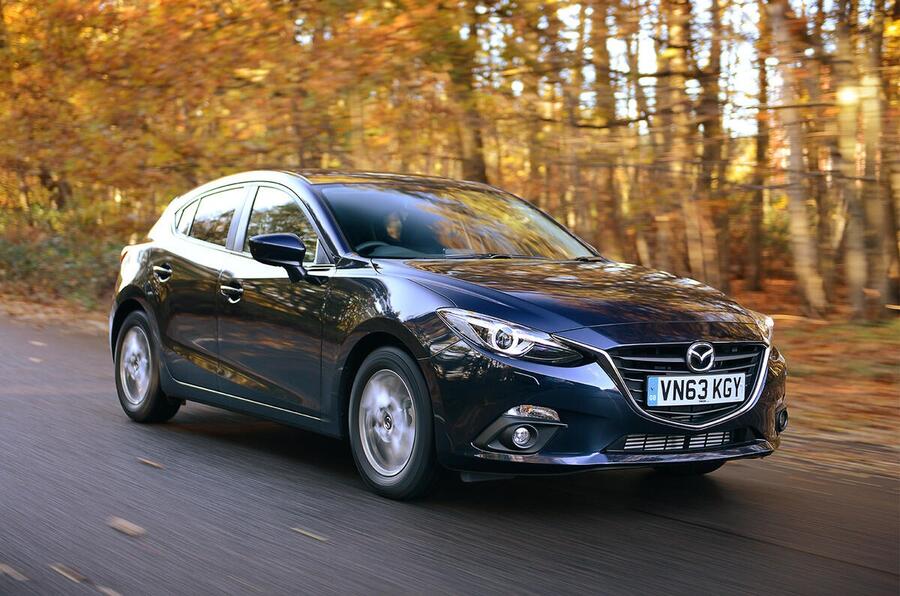
And so it was 2013 when Autocar broached the subject of touchscreen distraction or rather the chief of electronic development at Mazda did, in explaining why the firm had consciously bucked the accelerating trend with its new 3 hatchback.

"As cars get more connected, the information available to the driver is only going to increase," predicted Hideki Okano. "The risk of driver distraction will be higher. As a car maker, we think it's important to re-examine the human-machine interface for maximum safety."

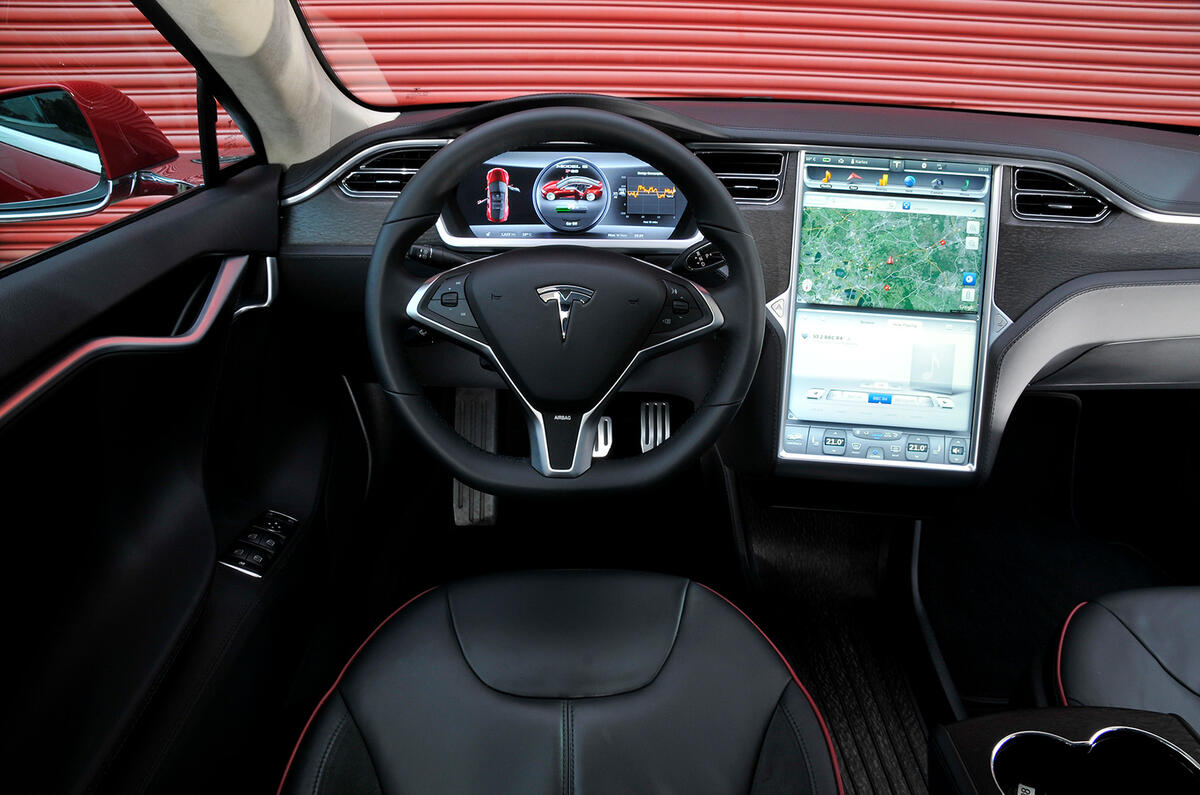
Yet at the very same time, electric start-up Tesla was launching its first mainstream car, the Model S, with "an enormous touchscreen on the centre of the fascia. Like an extra-large iPad turned portrait, it's used to control everything from the air conditioning to the selectable ride height of the air suspension".

"In some cases," we said, "this convergence adds complication to what ought to be simple processes. But mostly it seems light years ahead of ordinary cockpit functionality."

It was Tesla's philosophy that won out, such that even Mazda has now copied it - but the debate rages on.

Join our WhatsApp community and be the first to read about the latest news and reviews wowing the car world. Our community is the best, easiest and most direct place to tap into the minds of Autocar, and if you join you’ll also be treated to unique WhatsApp content. You can leave at any time after joining - check our full privacy policy here.

Add a comment…