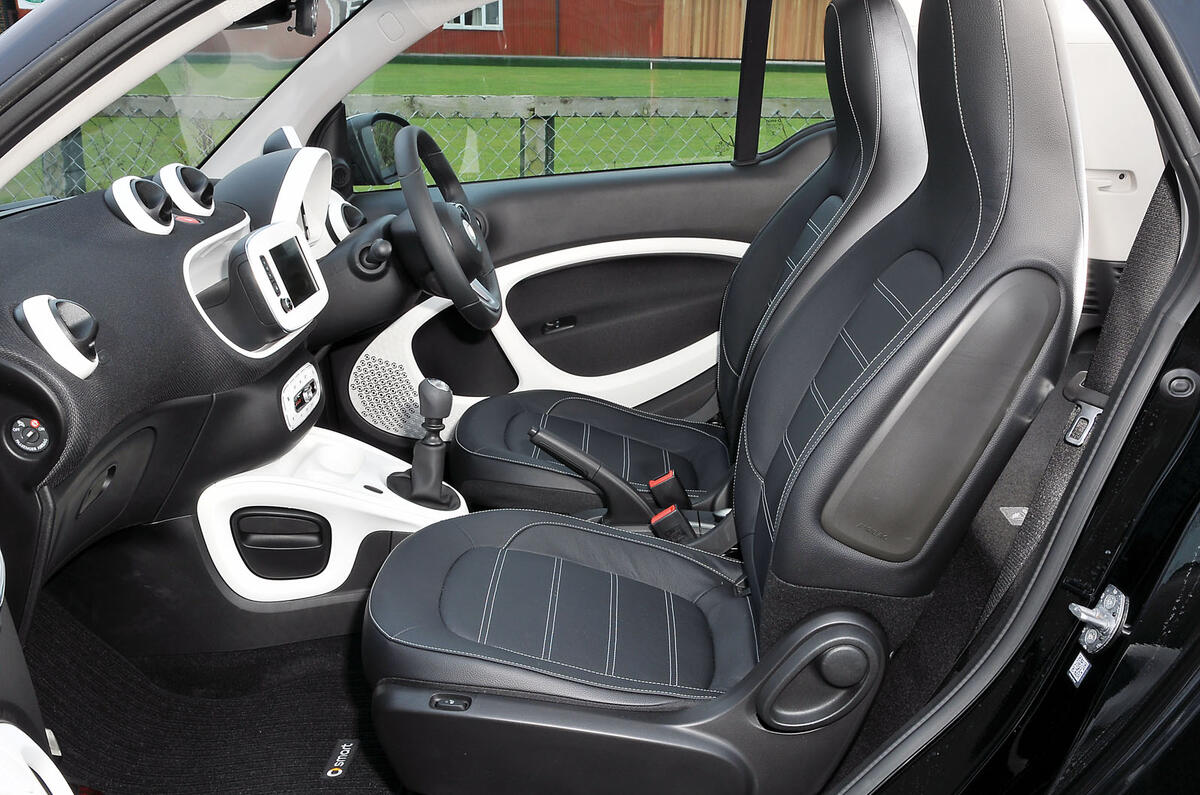
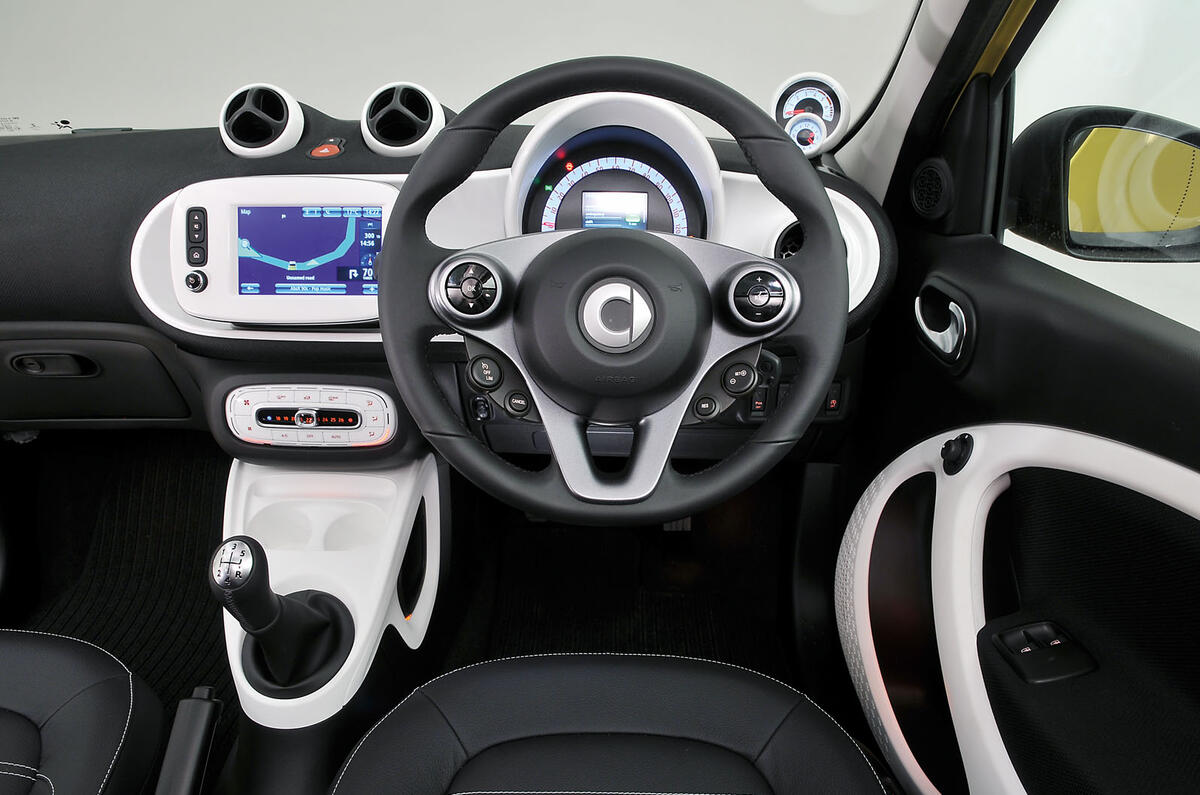
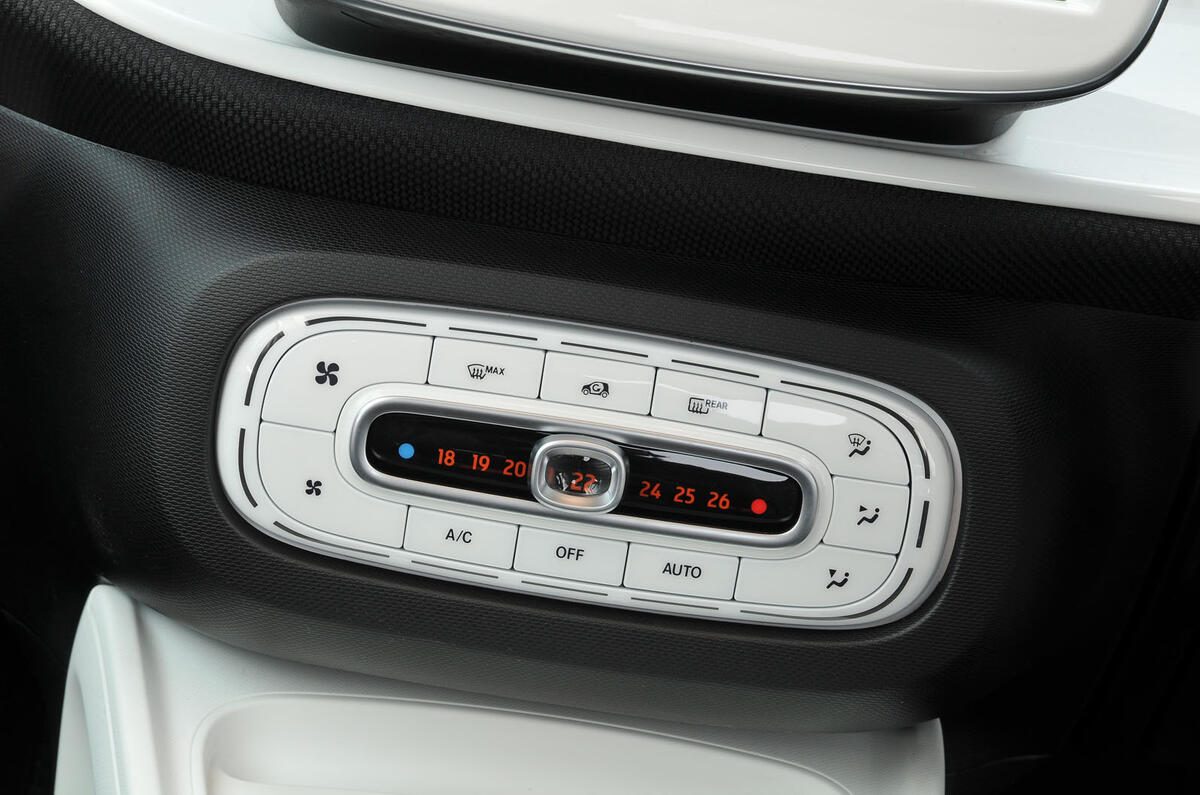
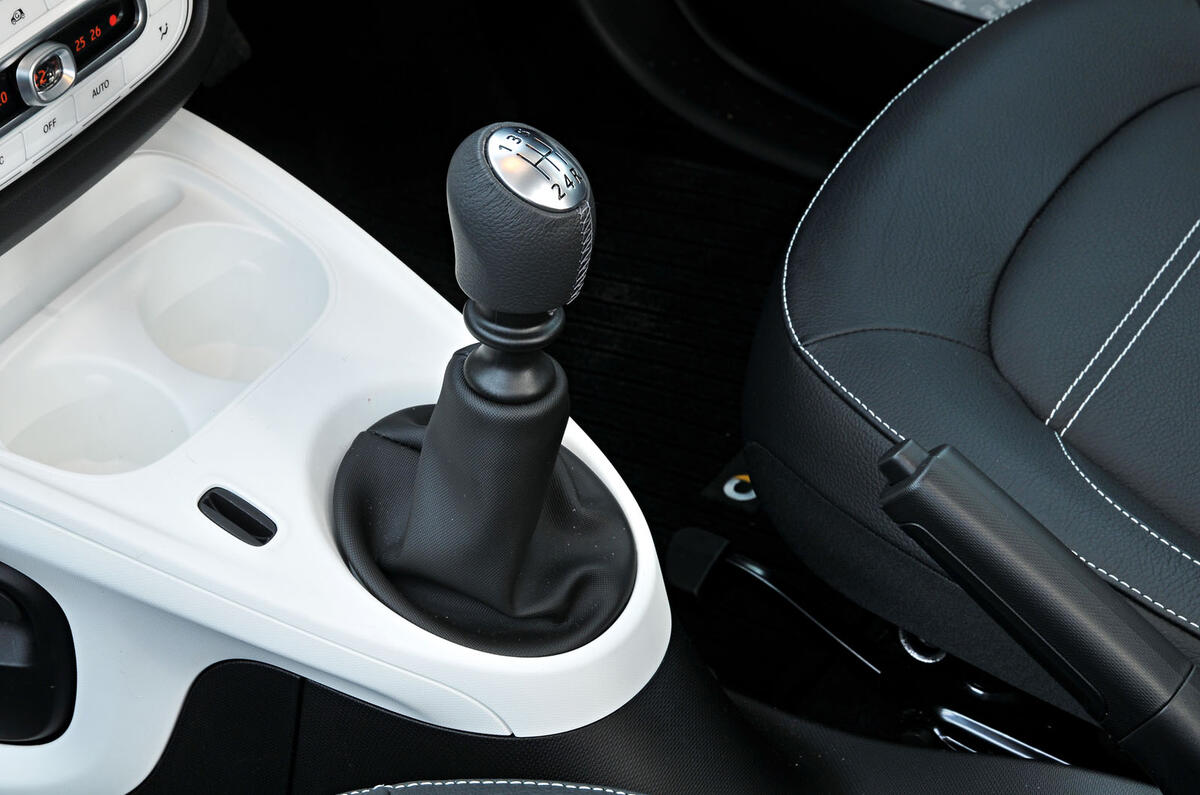
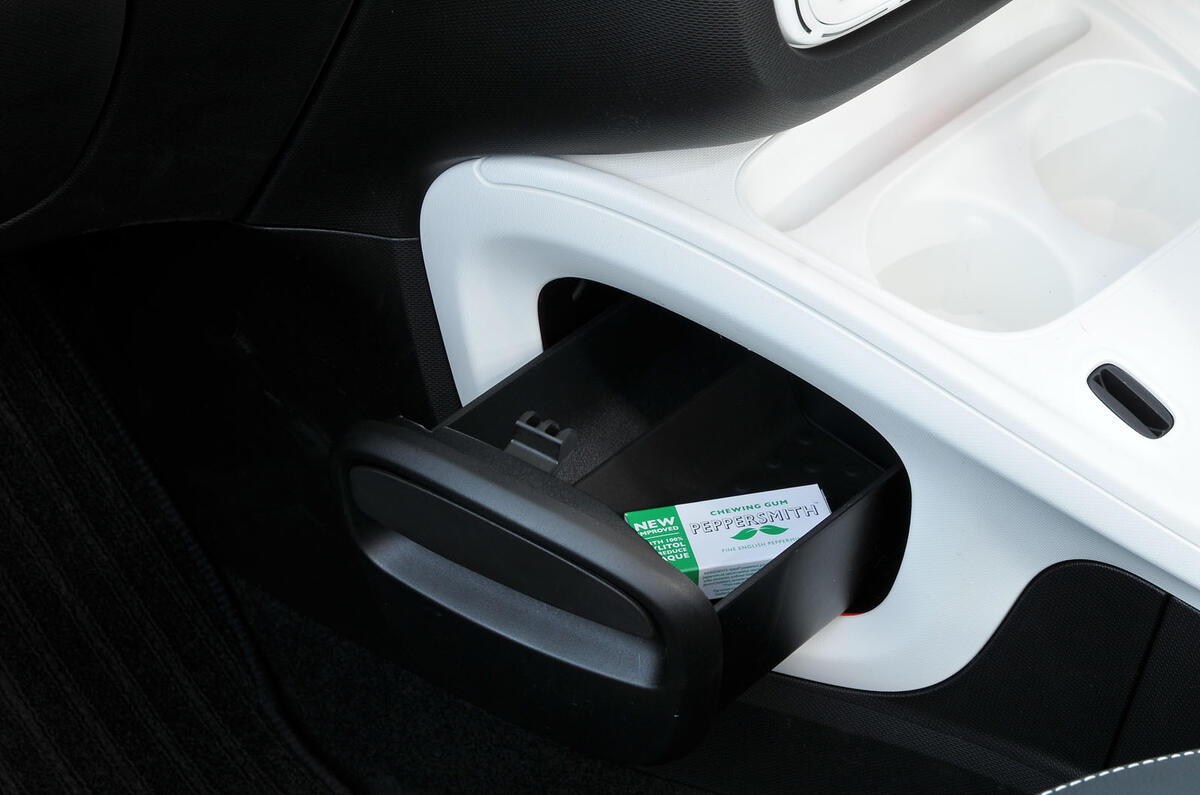
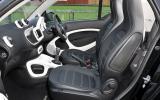
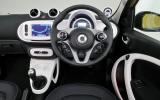
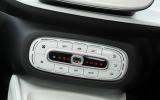
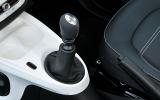
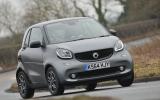
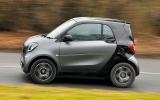
The Smart Fortwo’s innards are a pleasant enough return to the kind of funky look conveyed by the original Smart.
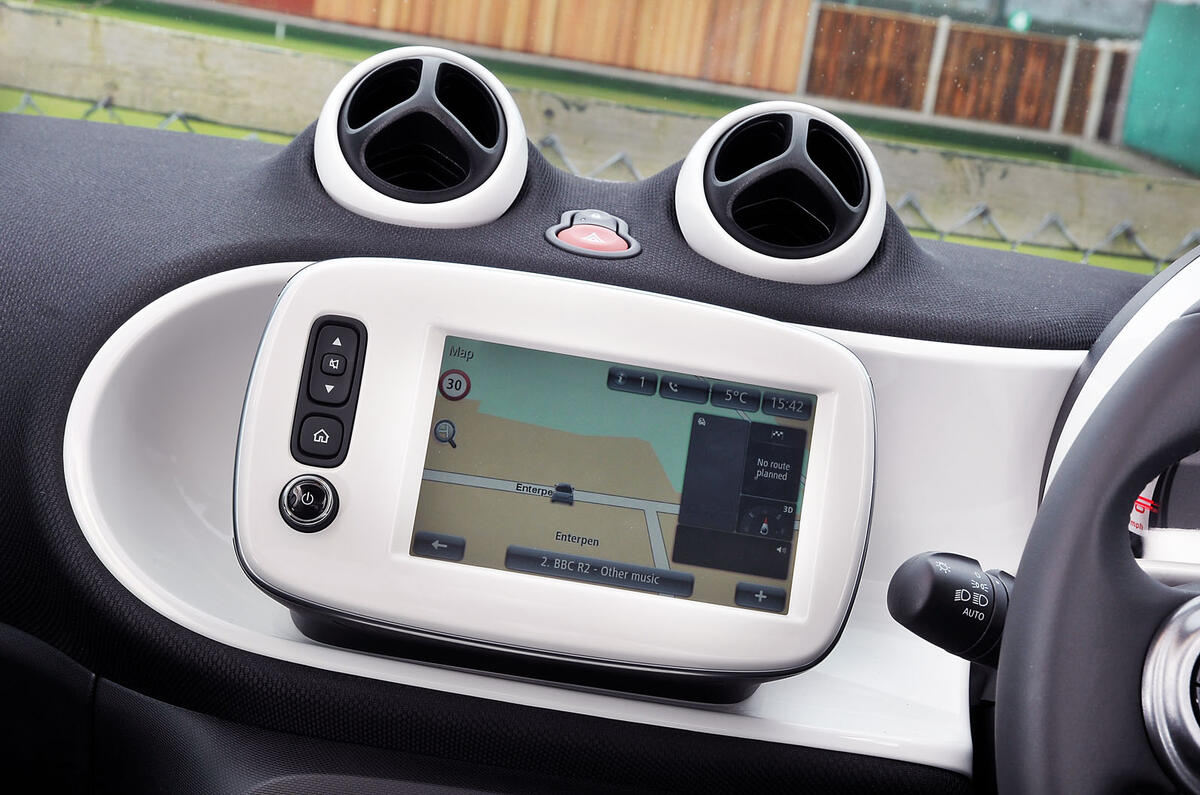
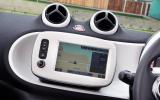
Pods – most obviously in the shape of the speedometer, rev counter and air vents – make a welcome comeback and, together with the white-on-black trim of our test car and floating infotainment display, give the car a happy, almost Pixar-like presence.
Some of the plastics, particularly on the centre console, aren’t of a terrifically high standard, but city car buyers are unlikely to make a fuss about that. Instead, they are likely to appreciate the naturally high seating position (you almost step up into a Fortwo), the clever use of mesh-like fabric trim on the dashboard and the surprisingly decent sense of space that’s afforded by the high roofline.
Although putting someone in the passenger seat is still liable to take the edge off that perception, the extra width is appreciated – especially if your companion has broad shoulders. A certain amount of cosiness is expected, though, and there are now Isofix mountings on the passenger seat, should you wish to share the car with a much smaller occupant.
The instrument cluster is not so much dominated by its speedo as by the smaller, 3.5in, screen that appears below it, a Mercedes display chiefly concerned with preaching the benefits of economical driving. The steering wheel is nicely proportioned but perhaps dotted with a few too many buttons for our liking.
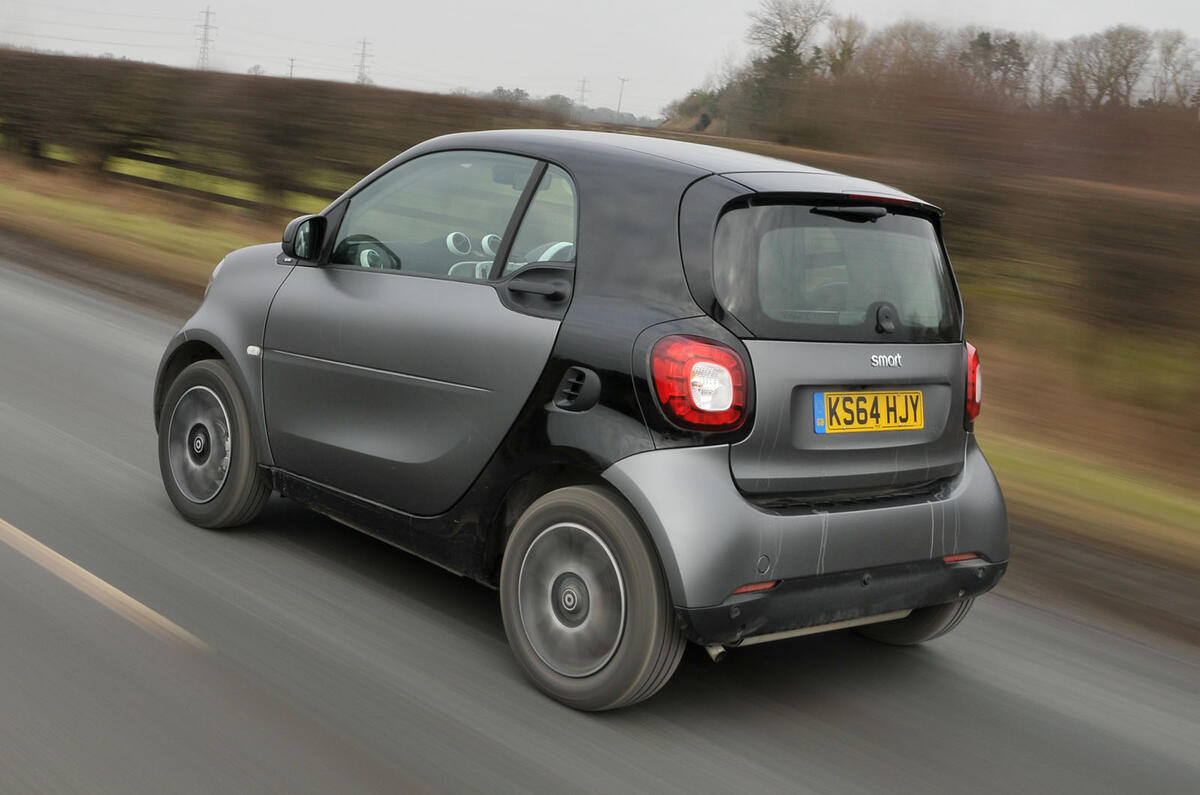
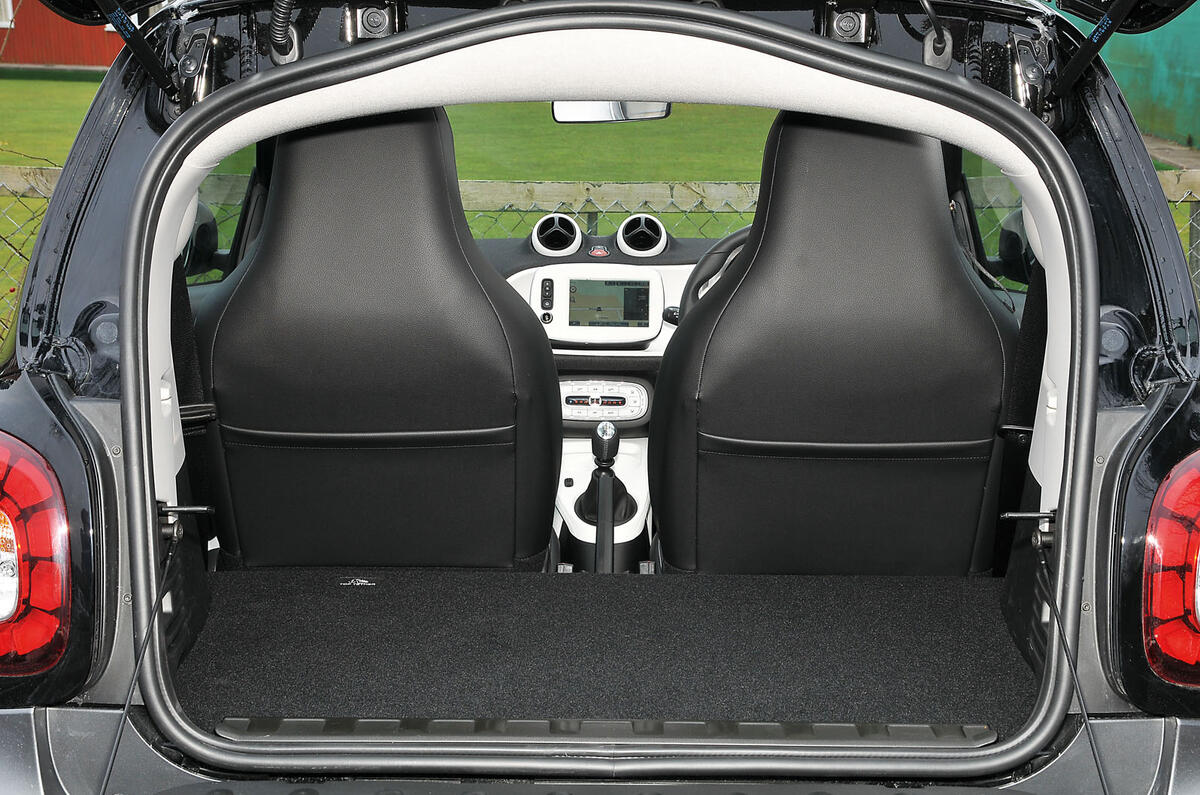
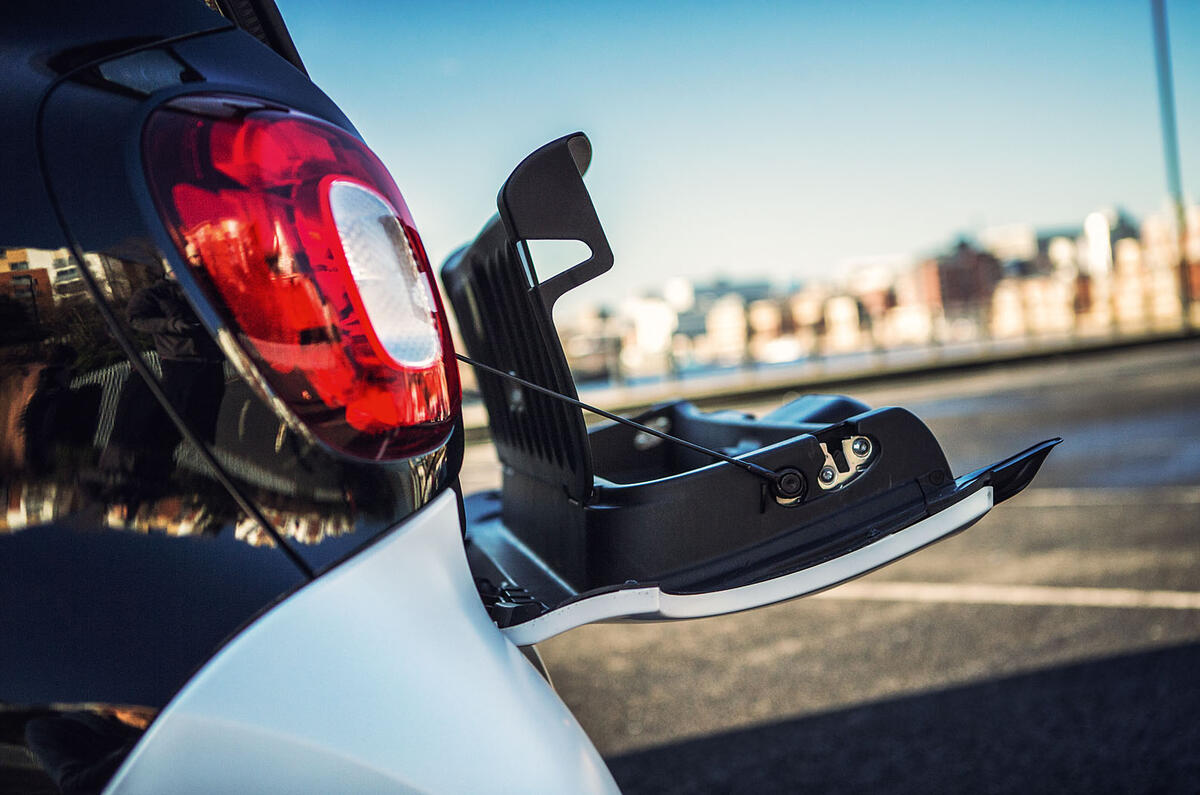
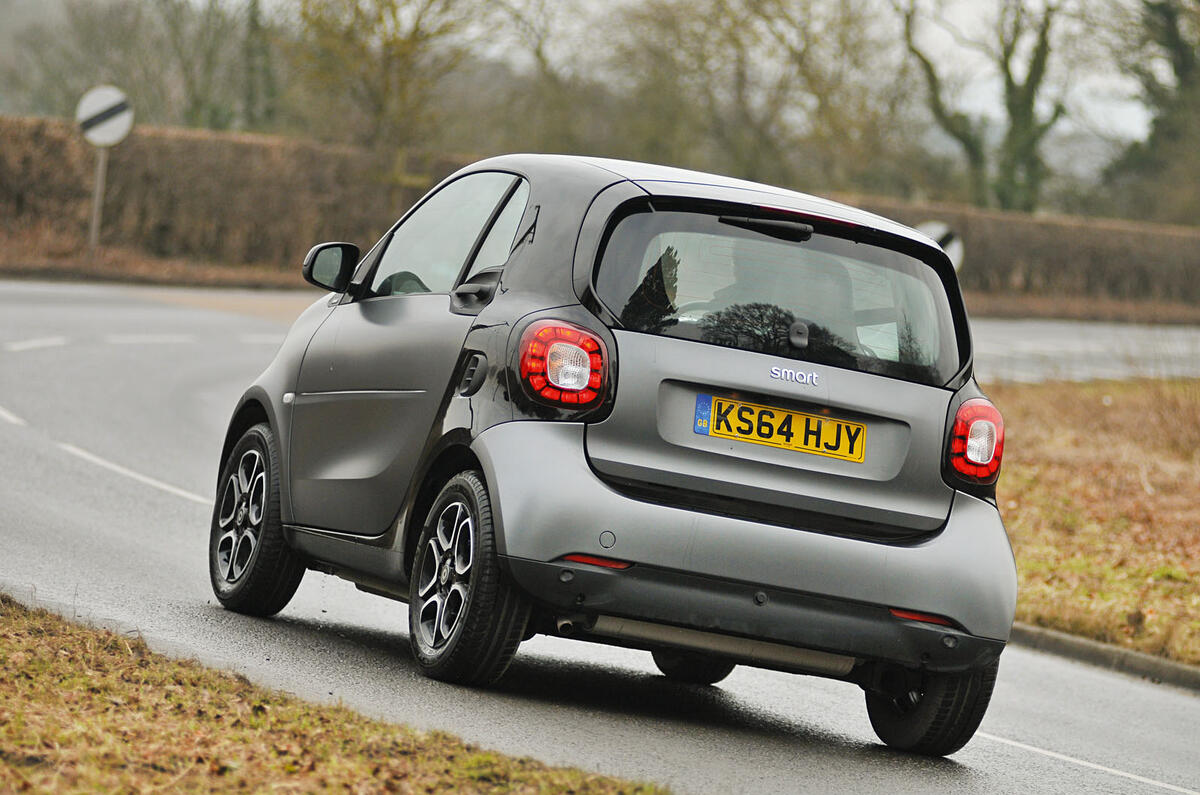
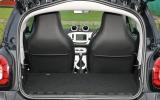
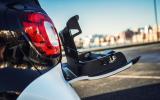
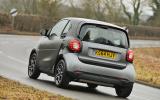
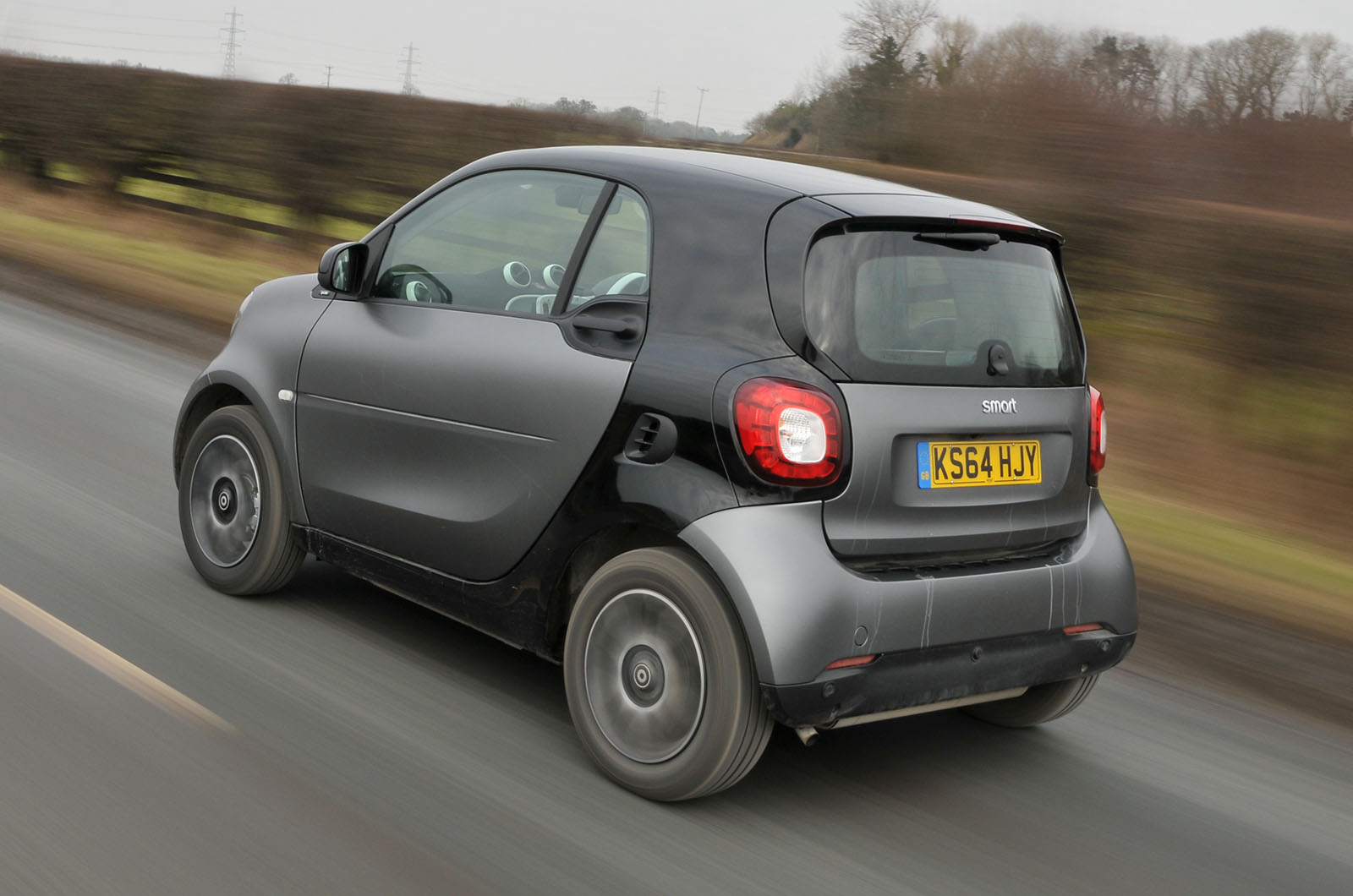
There really is precious little aft of the two seats. Boot space to the window line has apparently increased by 40 litres and is easily accessed by the upper portion of the familiar twin-section tailgate.
Lowering the rest of it is likely to remain a rare occurrence for Fortwo owners, although with the passenger seatback folded forward, there is at least the potential for loading items that are marginally larger than supermarket shopping bags.
As for standard equipment, there are four trims to choose from – Passion, Prime, Prime Sport and Brabus Sport.
All Smart Fortwos come with cruise control, crosswind assist, hill start assist, climate control, and Bluetooth and USB connectivity as standard.
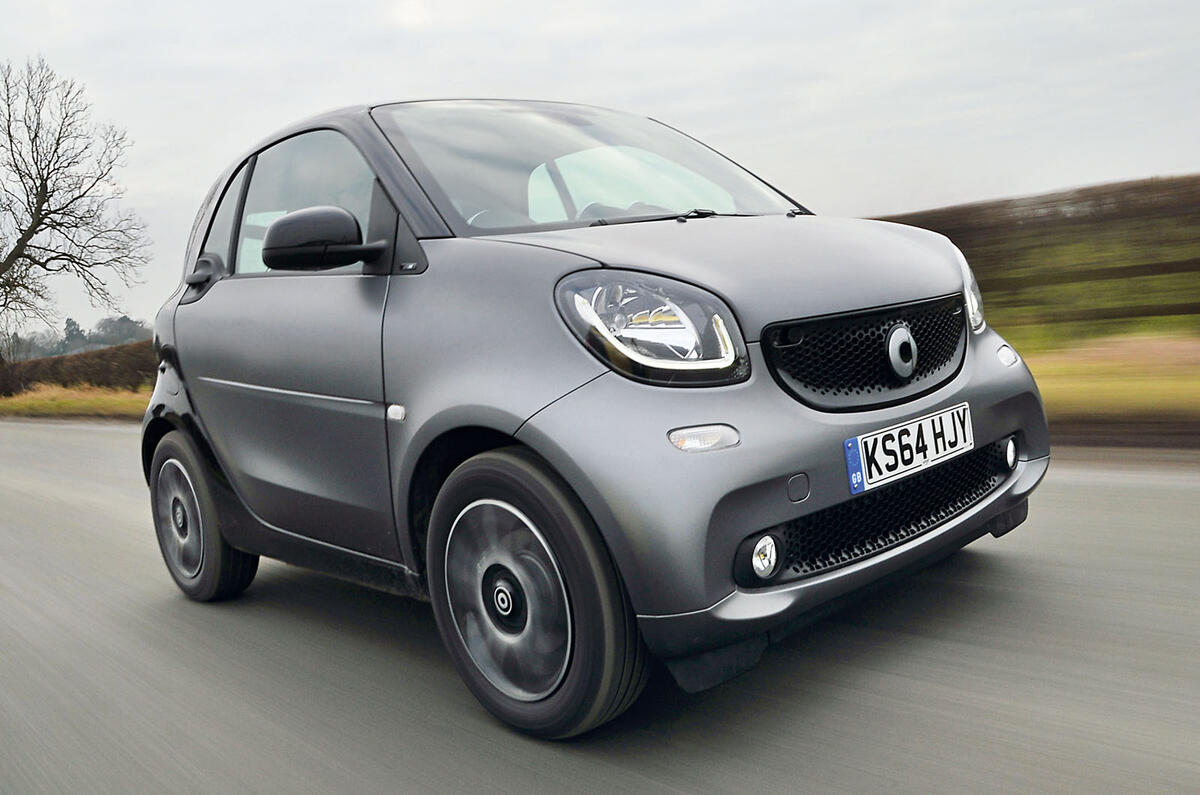
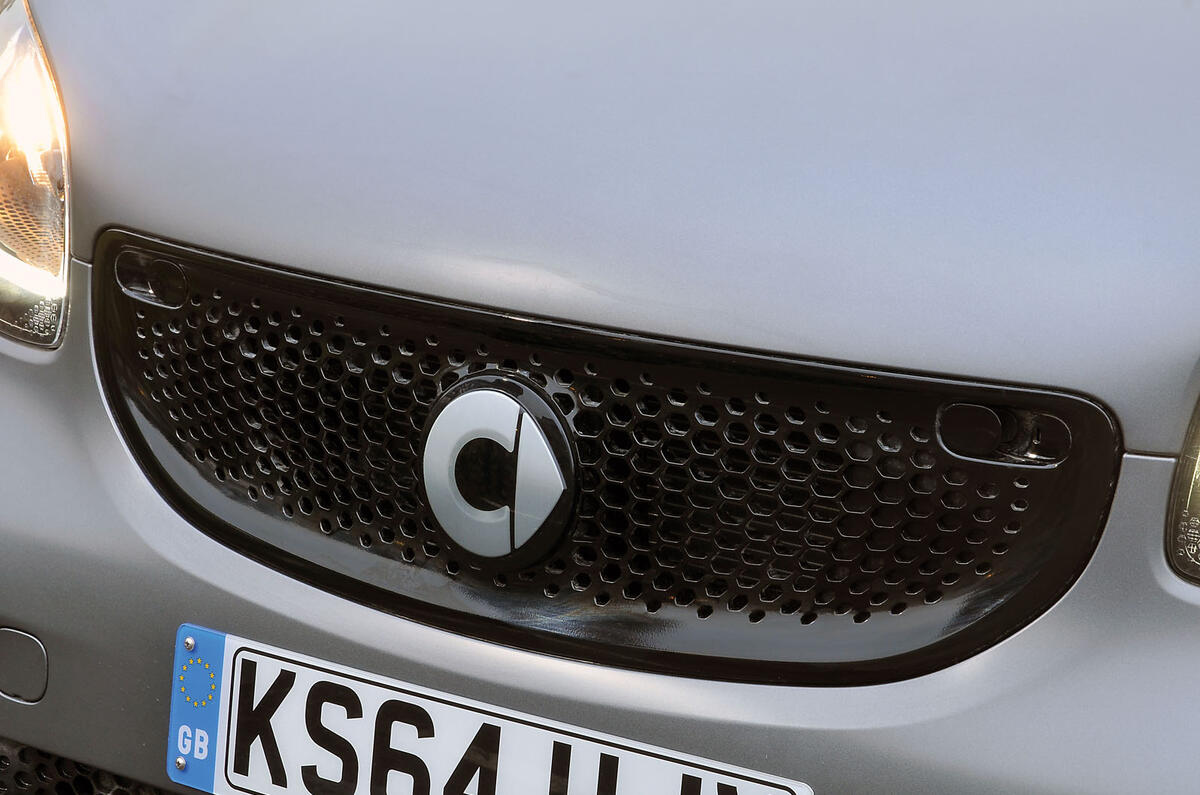
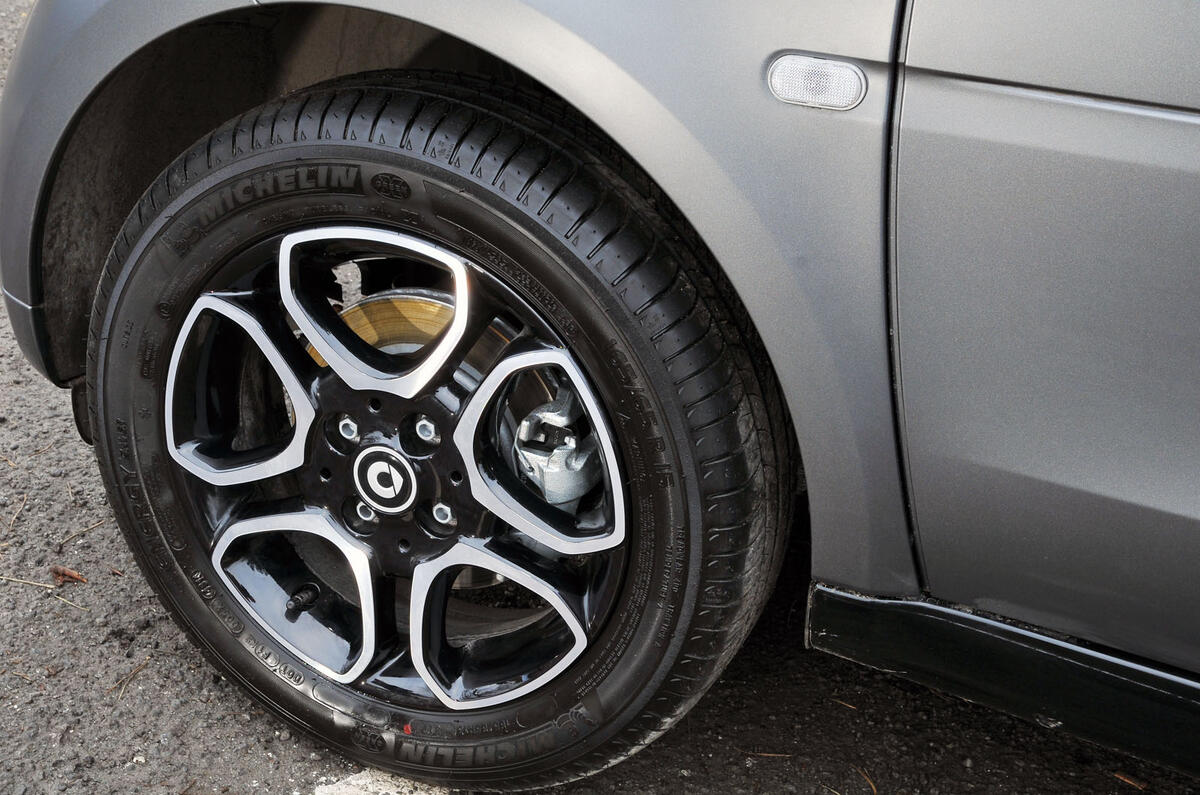
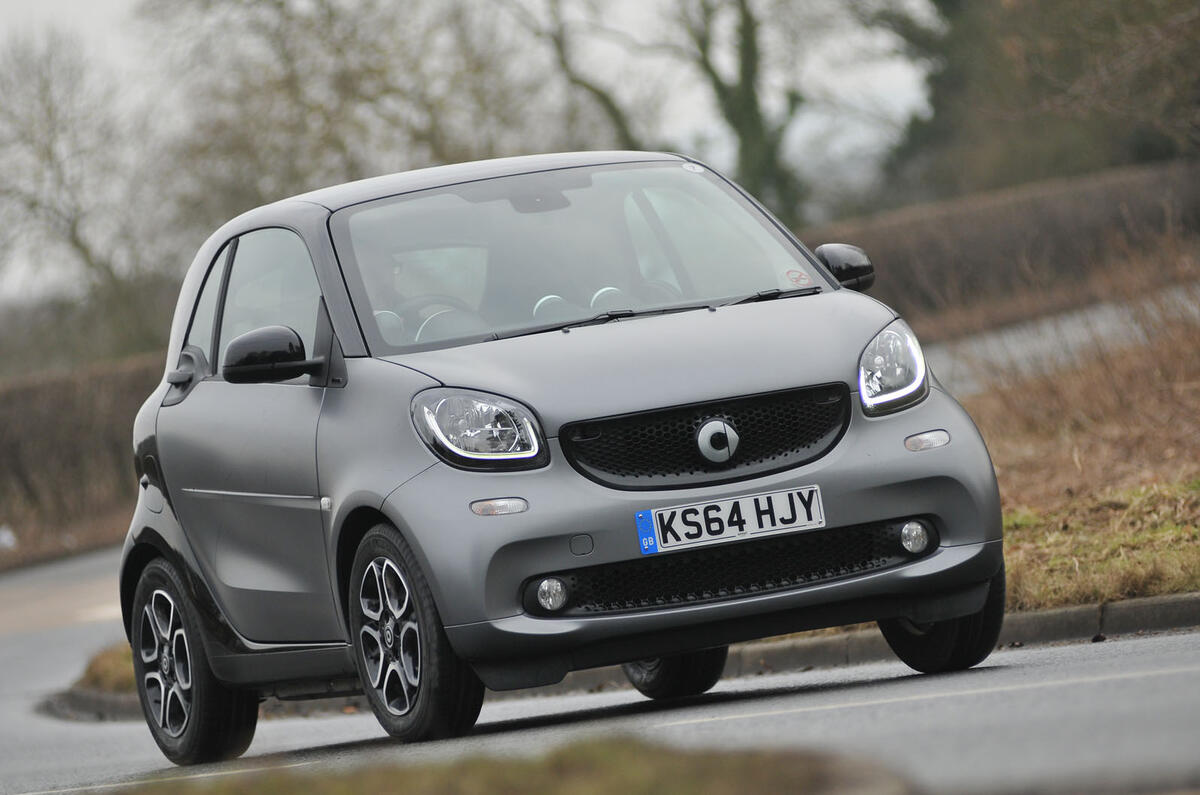
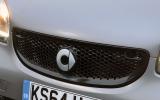
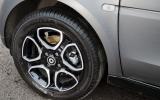
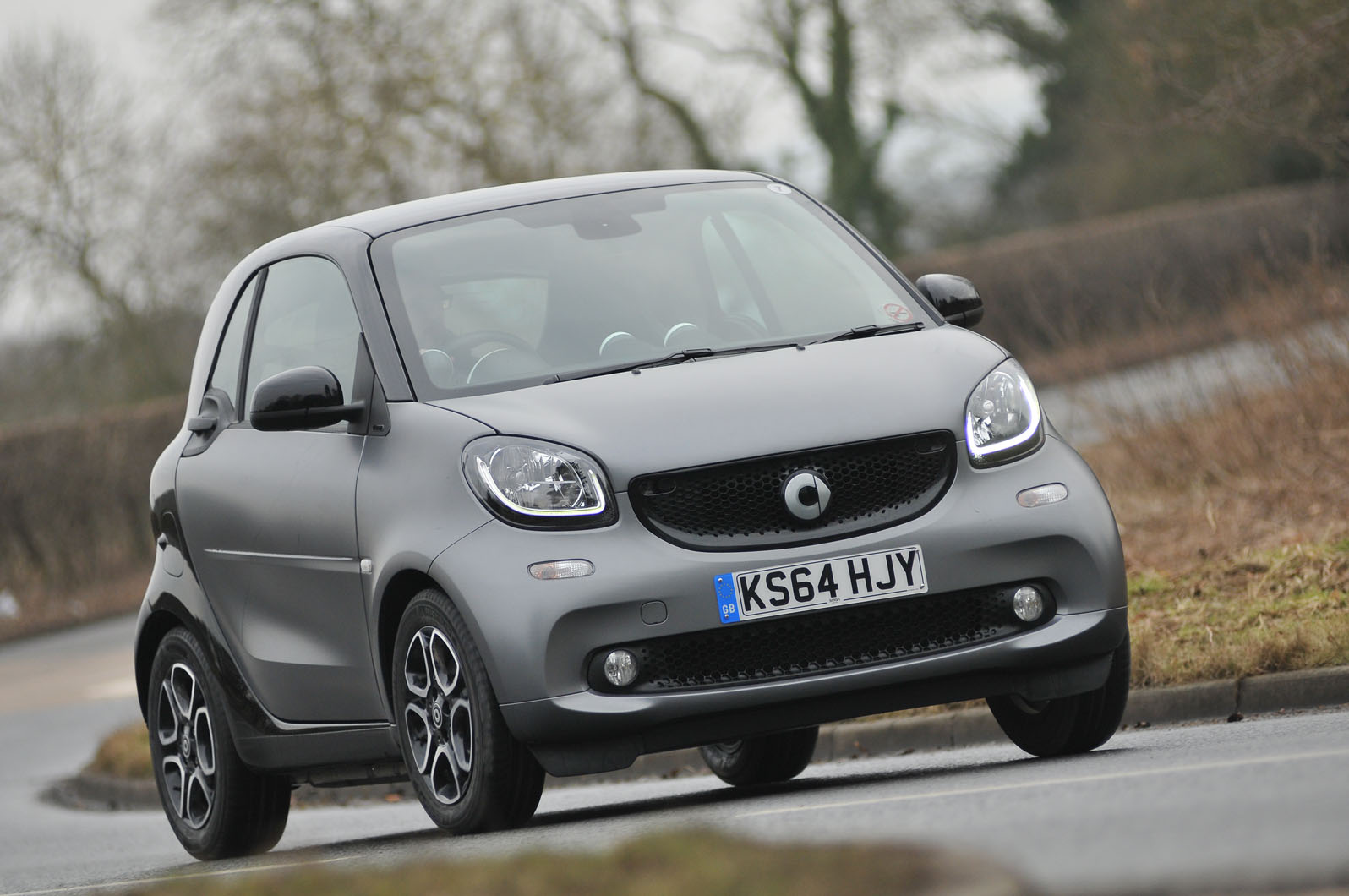
Choose the entry-level Passion model and the Smart gets some nifty extras including 15in alloy wheels and a black radiator grille, while upgrading to Prime adds heated seats, a grab handle and sunglasses holder.
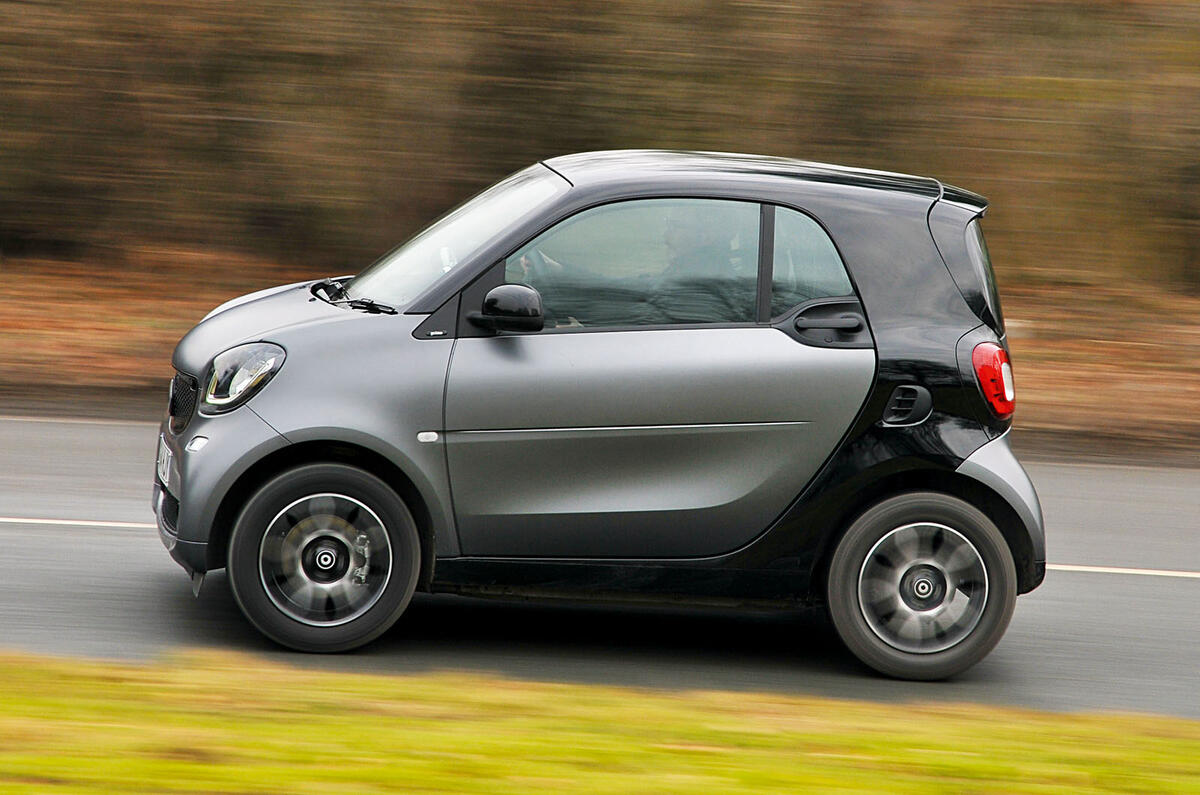
The Prime Sport trimmed models gain 16in alloy wheels, chrome exhaust and stainless steel pedals. The range-topping Brabus Sport models are only available with the Renault turbocharged engine and includes 16in front alloy wheels and 17in rear alloy wheels, sports suspension and an aggressive bodykit.
The trim levels are exactly the same for the cabrio versions of the Fortwo too, while optional equipment is limited to mainly two packs – Comfort and Premium equipment trims.
The former adds heated wing mirrors and height adjustable steering wheel and driver’s seat, while the latter includes all the equipment added by the Comfort Package. Plus rear parking sensors and a 7.0in infotainment system complete with sat nav and smartphone integration.