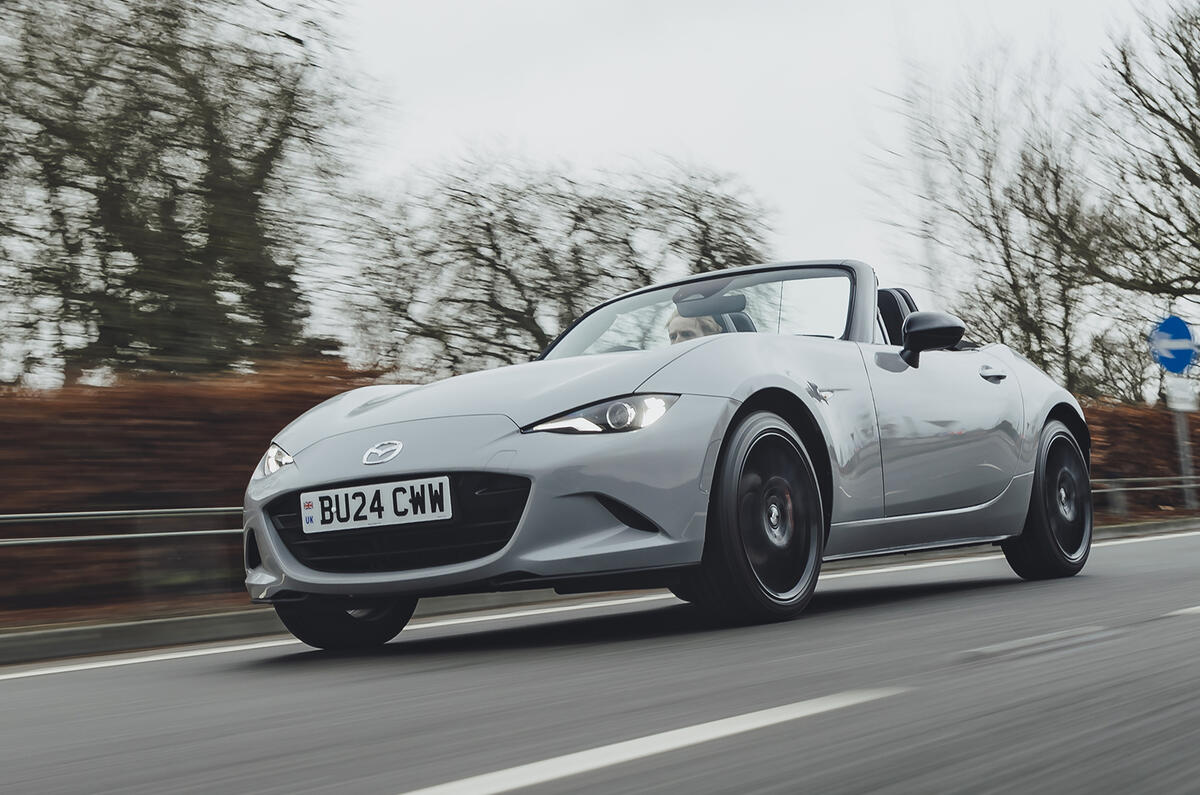
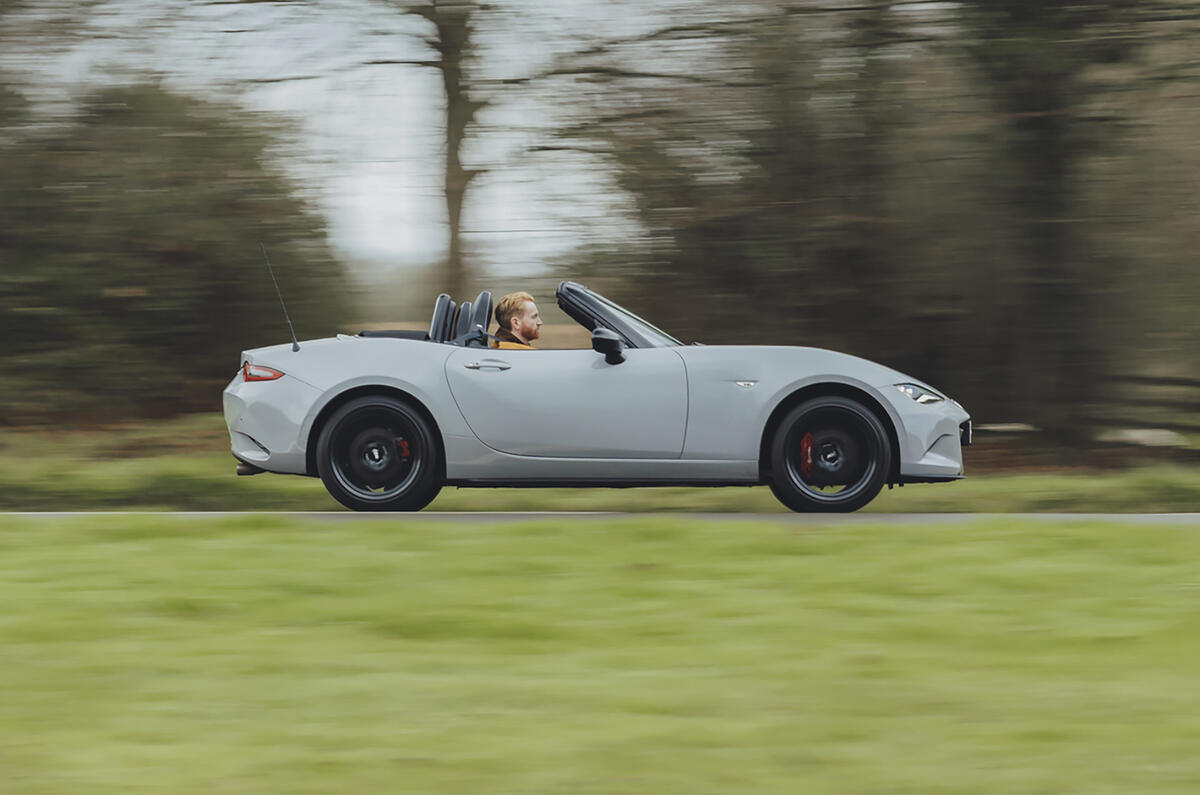
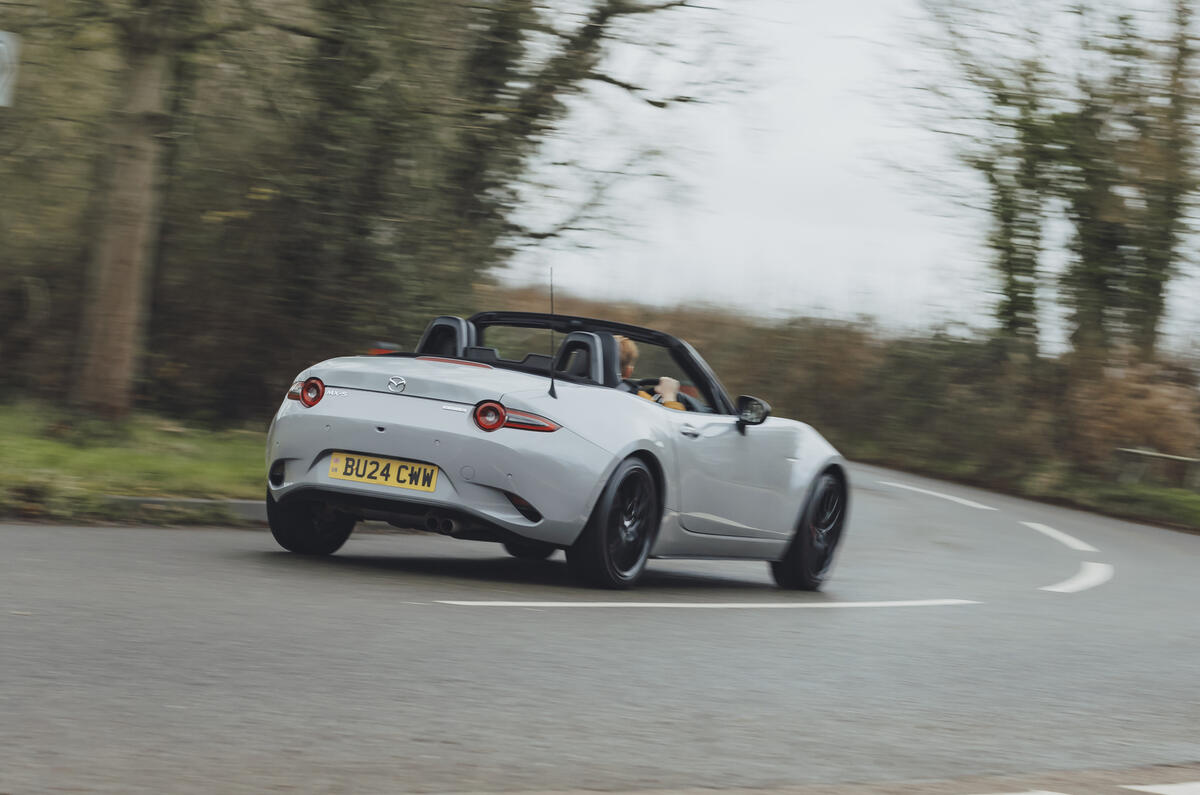
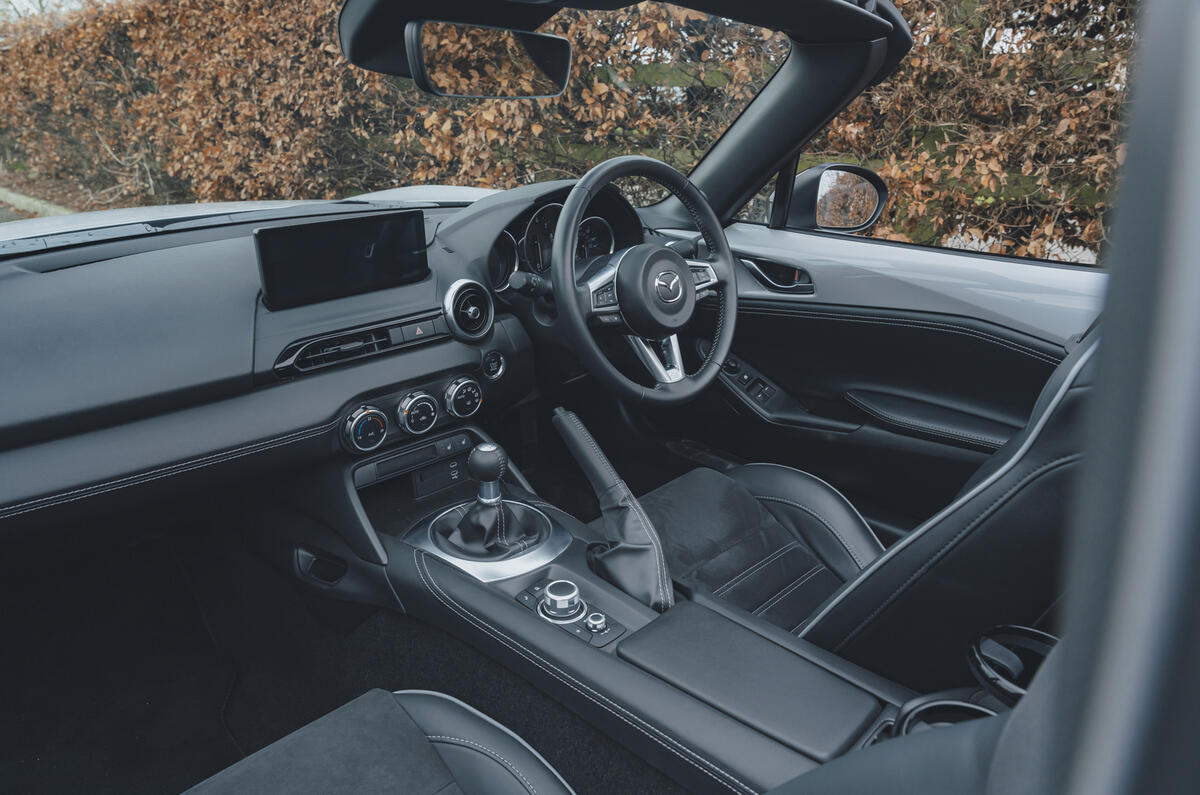
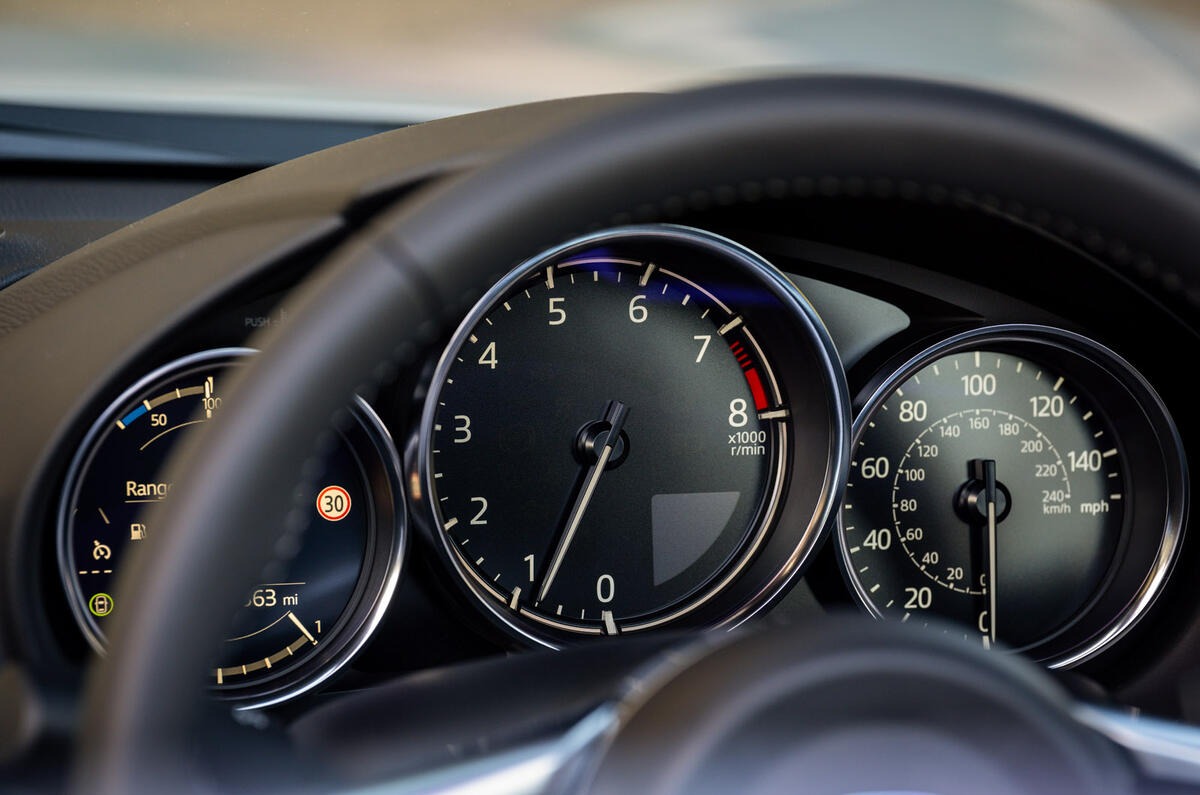
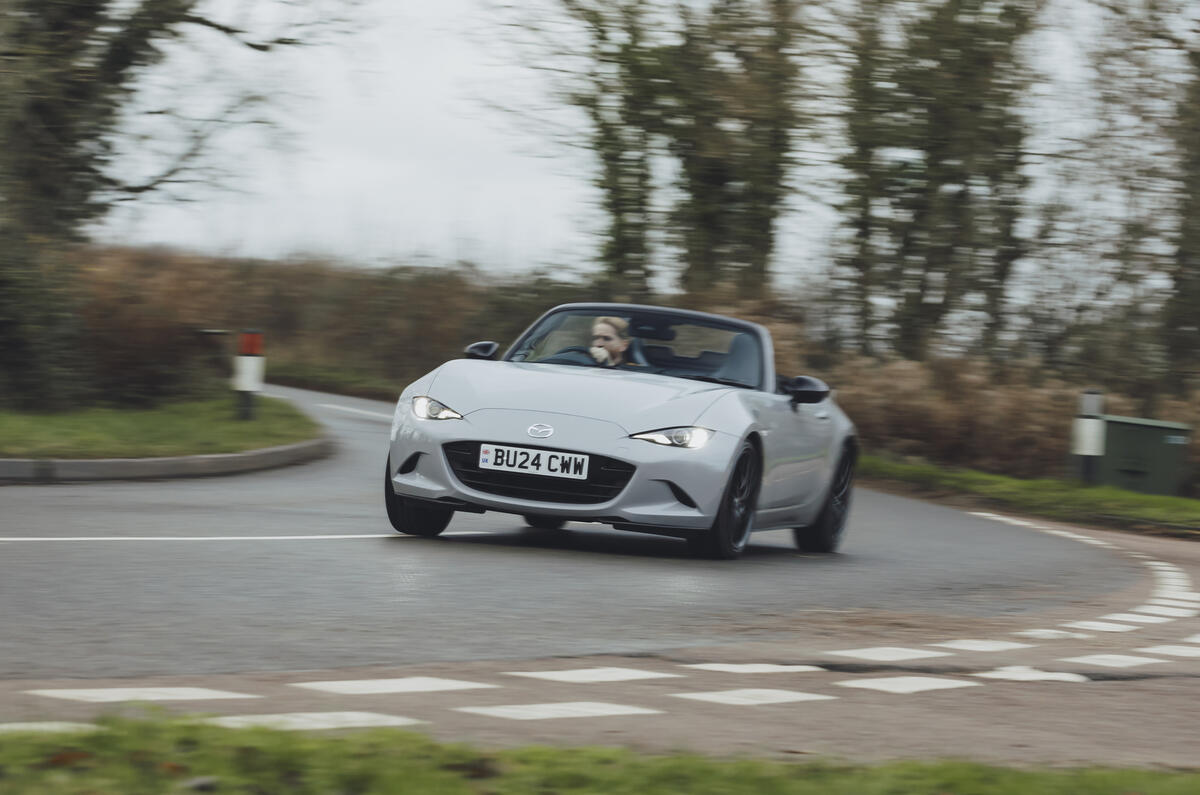
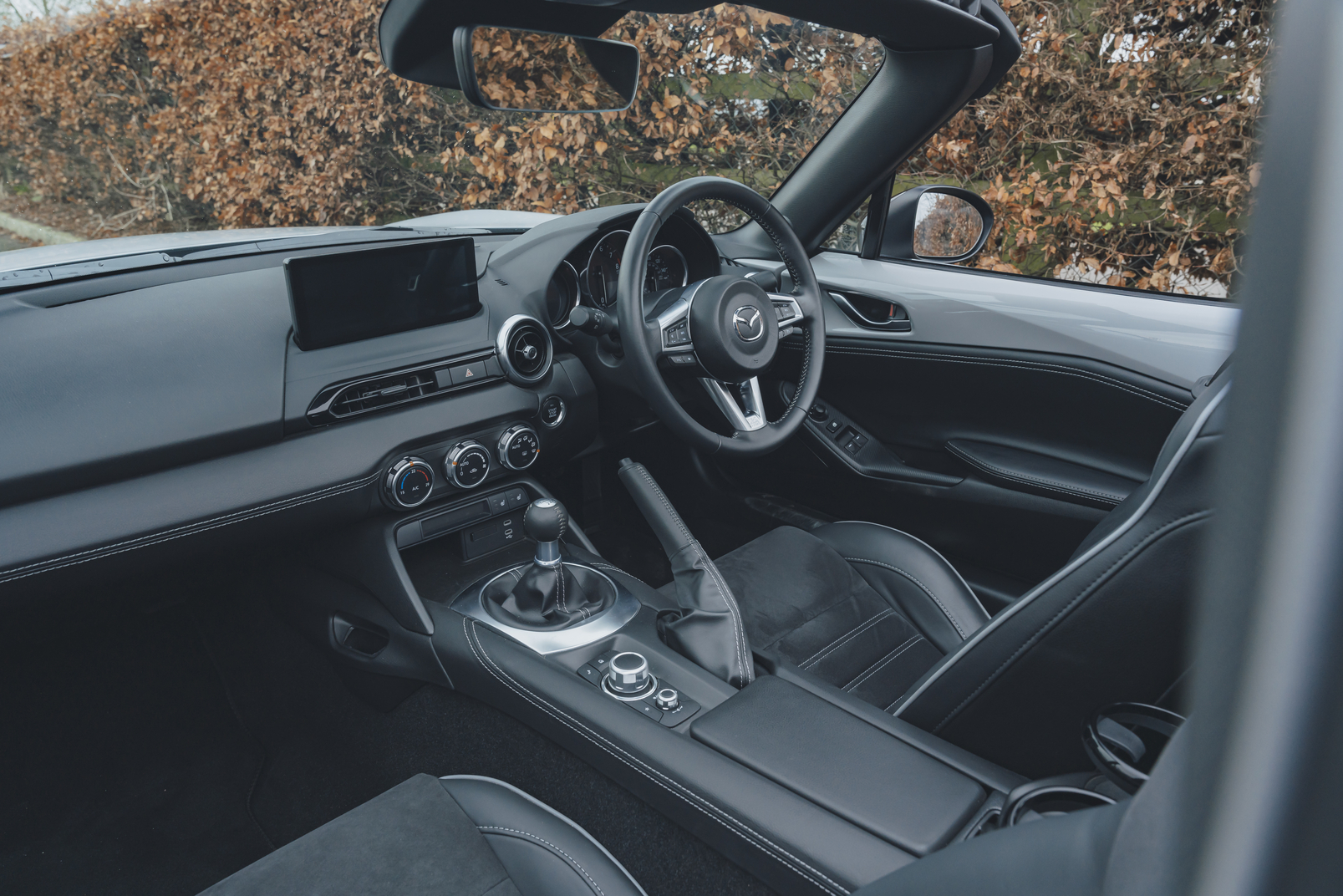
The ND MX-5 is positively geriatric in the context of model cycles. Nevertheless, the no-nonsense interior still feels fresh. It was a huge leap compared with the NC generation, but if you’re unaccustomed to MX-5s, it’s likely that the cabin’s incredibly compact dimensions will need to sink in before you can meaningfully survey the details. The MX-5 has always been resolutely bijou, and the ND is no different.
Broader adults will find themselves in frequent contact with the centre console, door trim and the sides of the skinny footwell, while taller drivers will want for a few centimetres more leg room.
Despite a 20mm lower hip point compared with the NC, you sit a little higher than would seem optimal and head room with the top up is relatively limited. Moreover, there is a bulge in the floorpan that denies you the option of folding your clutch leg away on motorways (a malaise of right-hand-drive cars only). Reach adjustment for the steering wheel was added in 2018.
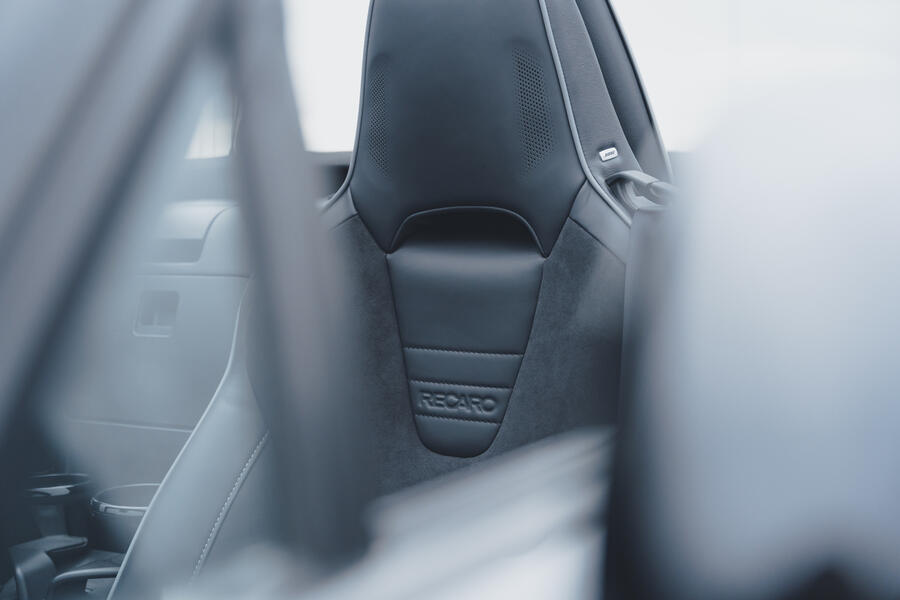
If you plan to do long distances in your MX-5, seek out a version with the Recaro seats, because they are significantly more comfortable than the standard items, and offer more lateral support too.
These factors can combine to make it tricky to get comfortable – tricky enough, in fact, for some people to be put off the prospect entirely, although others will proclaim this the most comfortable MX-5 yet.
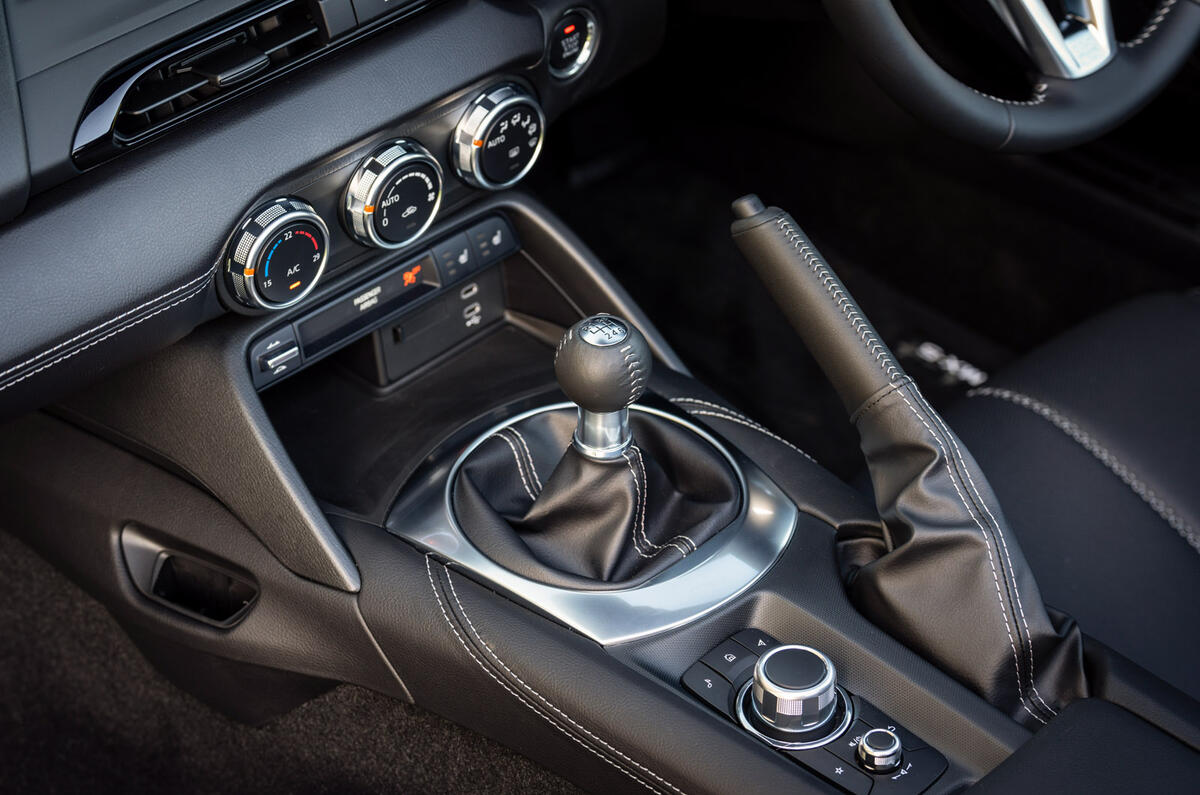
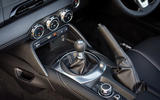
More fool the critics, though, because in an age that tends towards profligacy, the MX-5’s cockpit-sized simplicity – once reconciled with – makes for a charming environment. The dashboard architecture is similar to that of the Mazda 2, which is a good thing because the same natty design features and chunky, tactile switchgear work equally well here in the roadster. You’ll have to look hard to find soft-touch materials, but that somehow feels appropriate for a no-nonsense sports car.
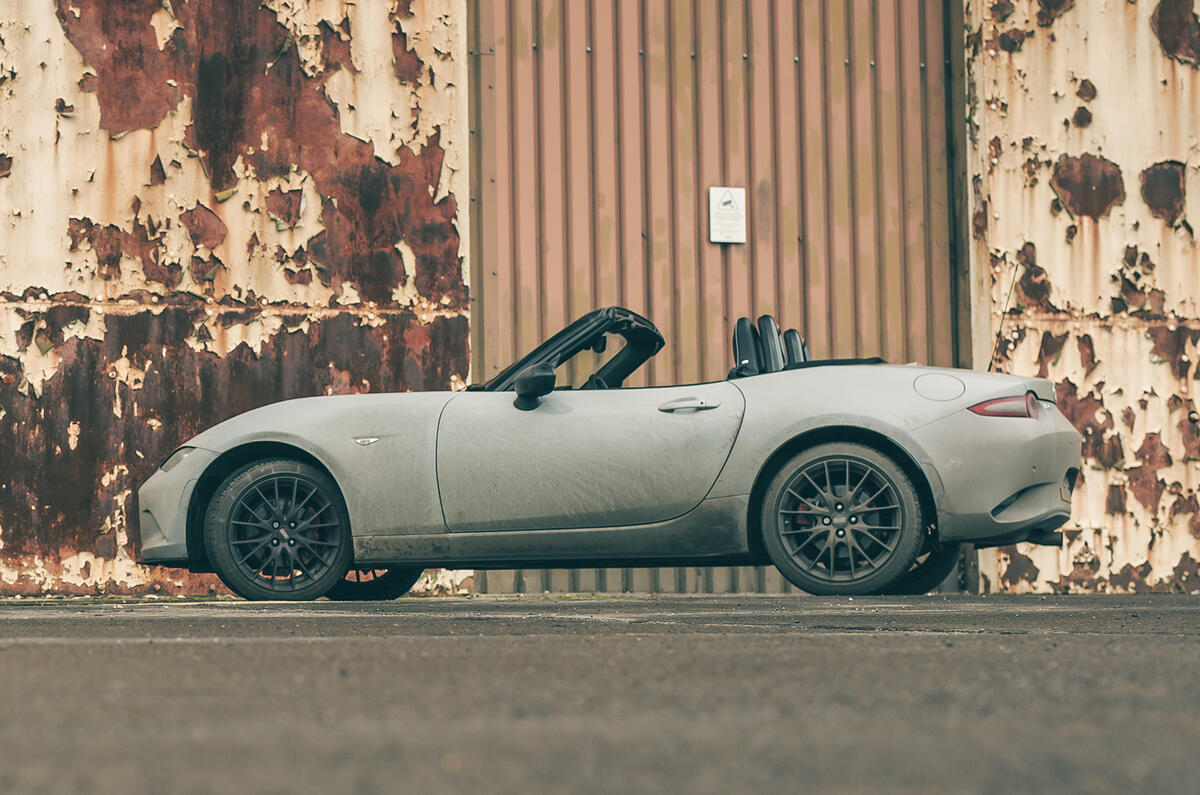
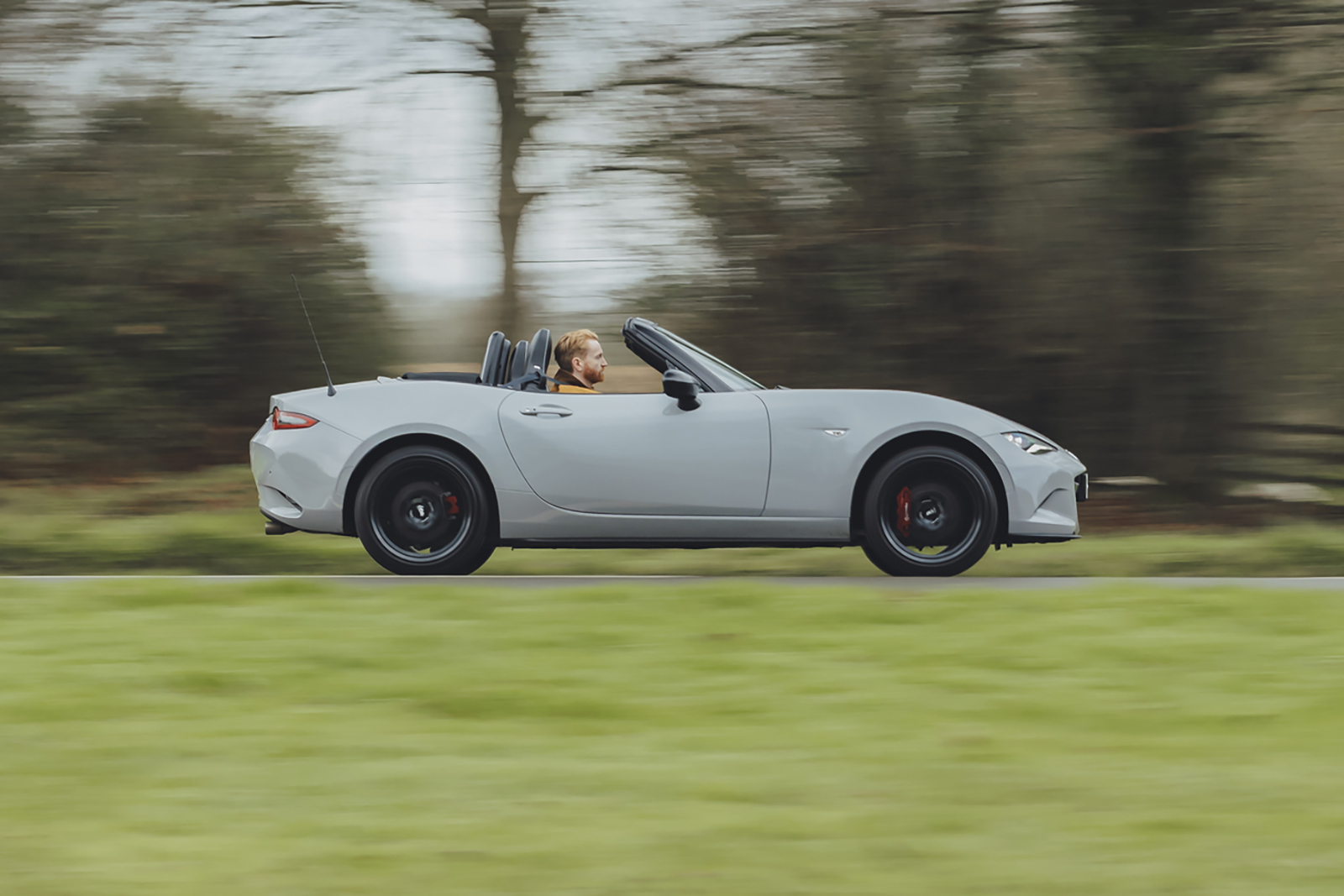
Nowhere is the MX-5’s simplicity better encapsulated than in the manually operated roof. Made 3kg lighter than in the NC and requiring 30lb ft less effort to close, the hood can be operated easily with one hand, even when moving. There’s one spring-loaded clip to unfasten on the header rail, then a click somewhere in the housing behind you to confirm that it’s safely stowed. It takes four or five seconds and, like pretty much everything else about the MX-5, puts everything larger, heavier and motor-driven to shame.
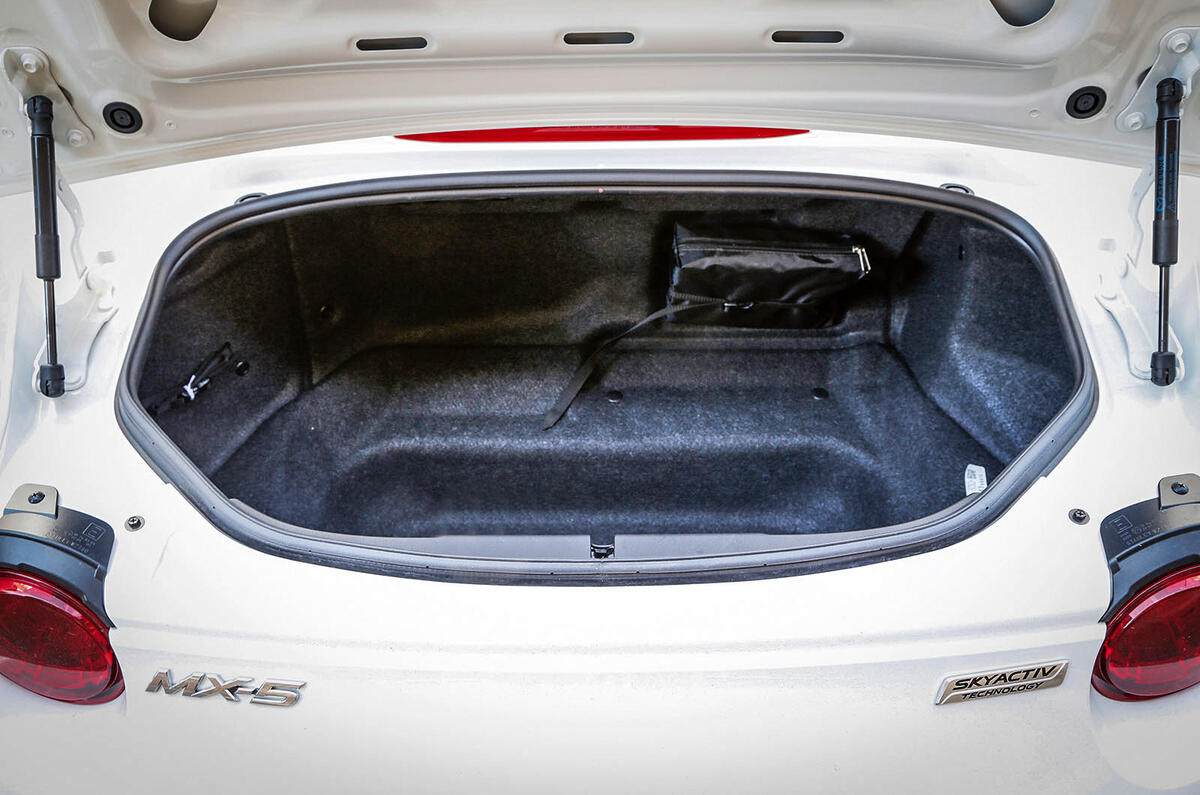
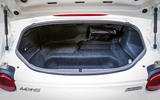
The roof’s tiny size means that the car continues to offer a modest-sized but usable boot. It’s too small for golf clubs but is just big enough for two weekend-away bags. Which seems to us exactly as it should be.
Multimedia system
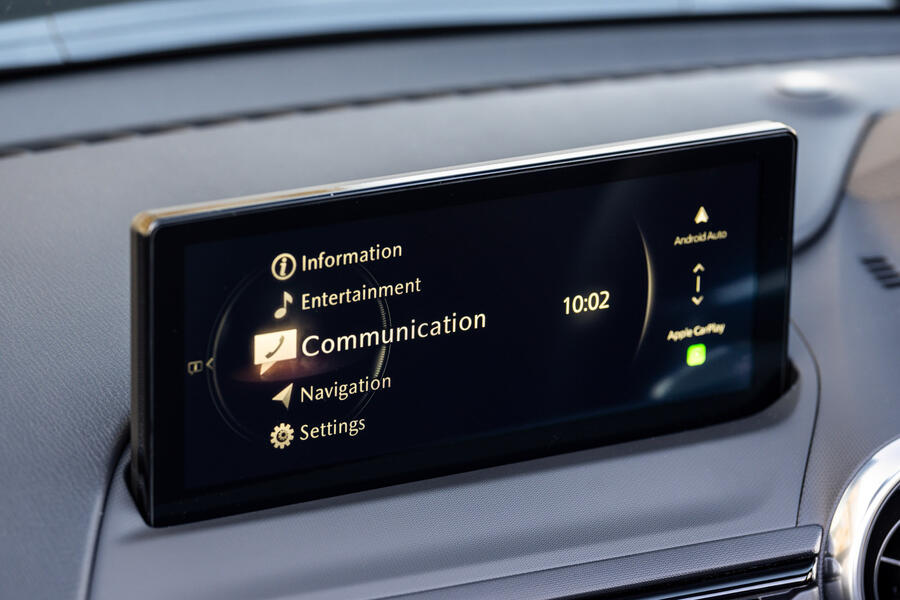
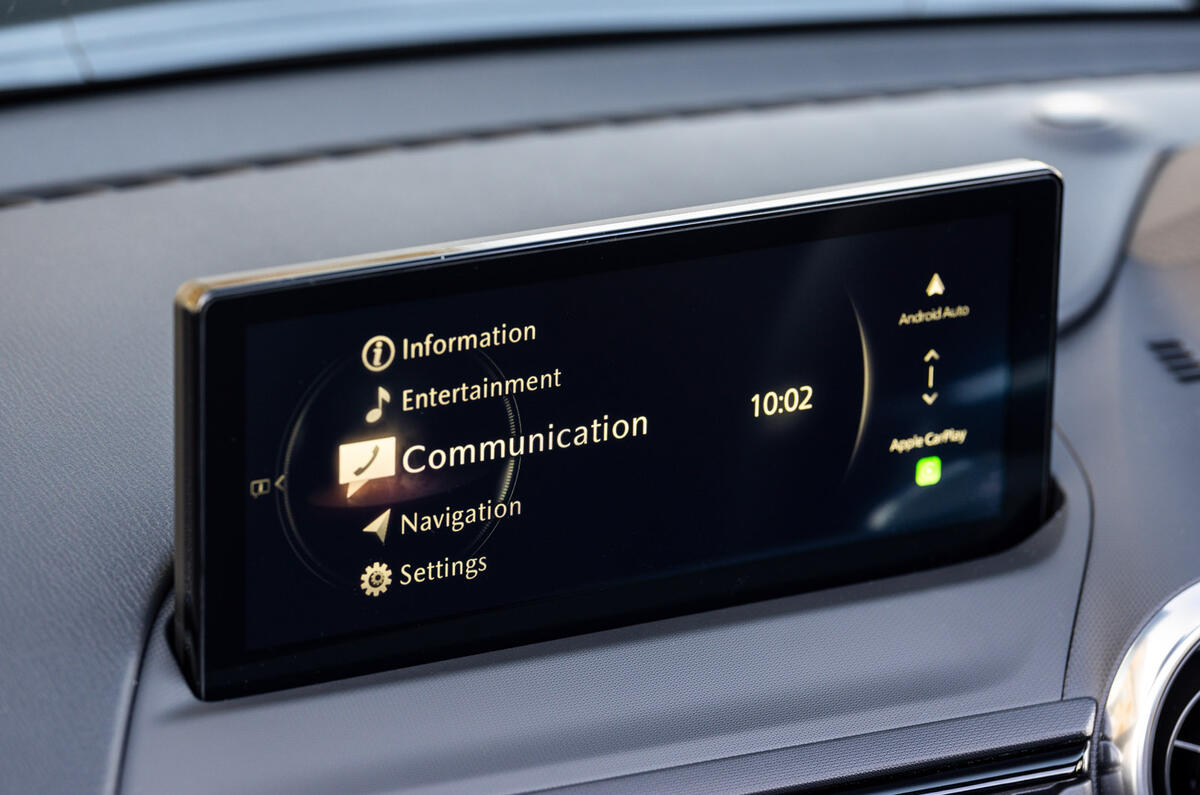
Over its many years on sale, the MX-5 has gone through a number of infotainment iterations, but the good news is that all of them are quite pleasant to use because they were clearly modelled on the classic BMW iDrive.
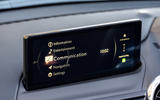
Cars up to 2023 used an older interface, but one which still had logical menus and could be navigated using both the touchscreen and the rotary controller in the centre console. Entry-level models used to miss out on the centre screen, but from 2023, all MX-5s have the 7.0in touchscreen.
In 2018, Apple CarPlay and Android Auto were added, the former with wireless functionality. They do come with a Mazda-typical quirk. The touchscreen stops working on the move and you have to use the rotary controller. The latter works great for the native interface, but using it to navigate CarPlay is rather awkward, as that was clearly designed for a touchscreen
In 2024, the screen was upgraded to a 8.8in screen with much more modern-looking graphics. Thankfully, that didn't come at a cost of usability – all the menus remain very logical, and the built-in navigation is actually quite good.
The standard stereo isn’t anything special, but it’s just about brawny enough to be heard over the road and wind noise. The Bose system that used to be available on certain trims put up a better fight, but as this is quite a noisy car on the motorway, it’s always a bit of a losing battle.