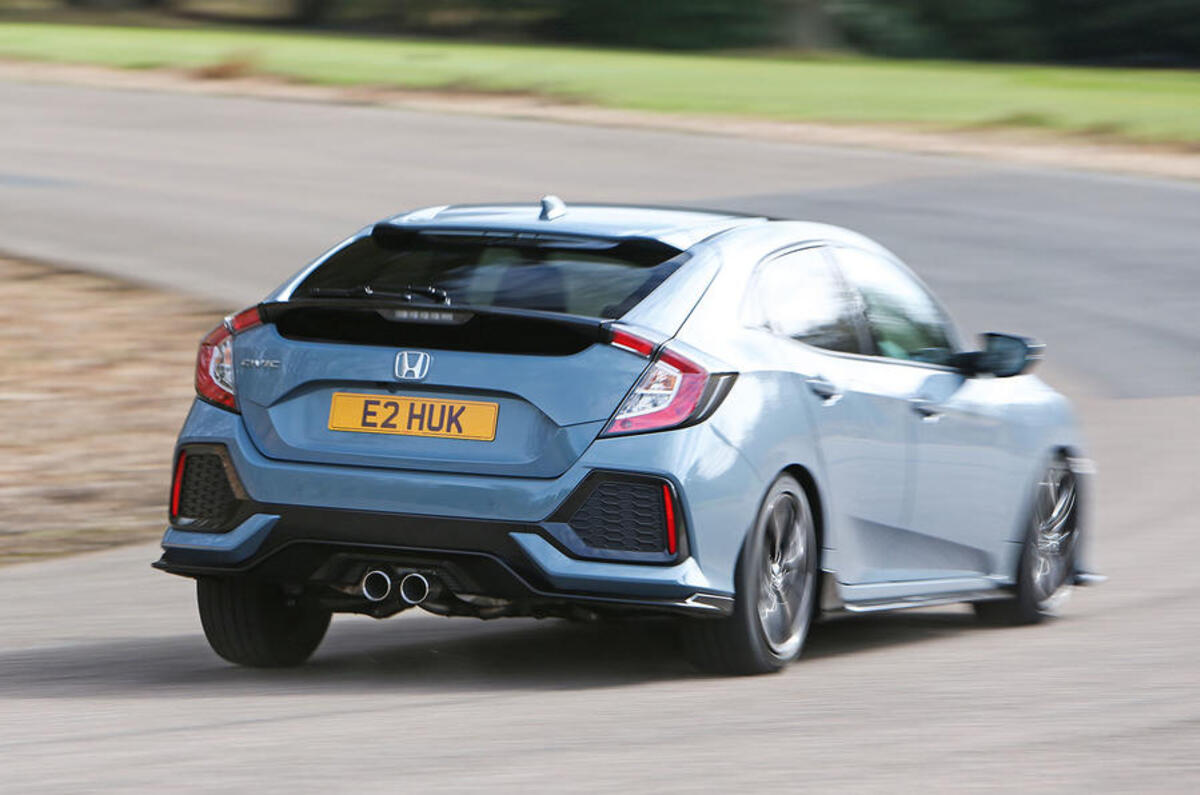

Honda’s Swindon plant and workforce are the victims of being “in the wrong place at the wrong time”, according to the firm’s former UK boss Philip Crossman.
Contacted by Autocar, Crossman was managing director of Honda UK from 2013 to 2016 and now consults for the car industry. He said: “A perfect storm has culminated in this devastating decision, and for the people involved it is heart-breaking.
“The one thing I know that didn’t lead to this decision was the quality of the workforce or the facilities at the plant. Honda standards generally are world class - they top quality polls everywhere - and the quality in Swindon was close to the top of all of Honda’s plants.
“The commitment and enthusiasm of the workforce is second to none. They will suffer the fallout from this, of course, but they are in no way to blame for it.”
Instead, Crossman detailed his belief that the decision was likely the result of numerous global and local events that culminated around the need to make a decision on where to make the next generation Honda Civic in around two and a half years’ time.
“Around 30 months before production is when investment decisions need to be made,” said Crossman. “The production cycle meant that it was time to decide what to do next, and that put Swindon in the spotlight at a time when the company was facing a lot of challenges. We all know the conclusion they came to.”
Faced with the decision of whether to invest in the Swindon plant to build the new Civic, Crossman believes that there were five key factors that delivered the final blow to its 3500 workers and the extended supply chain, estimated to total a further 10,000 workers.
Global car market challenges
Shifting sales patterns around the world are impacting on every car maker, and Honda is not immune. Sales in China (see below) and the world’s second-largest car market, the USA, fell. Both are traditional strongholds for Honda sales. The figures in Europe were low too, at 0.8% of all registrations - down from a high of more than 2% in 2007.
Diesel’s decline was not a significant reason, however, argues Crossman. “They didn’t have a diesel until 2004, and even now a fraction of its global car sales were diesels,” he says. “The impact has been relatively minor as a result.”
Chinese market decline and shift
Honda has roughly doubled sales in China - the world’s largest car market - since 2013, but as with many car makers suffered a difficult 2018 as the market declined after years of steady growth. Furthermore, Honda’s reputation was hit hard by a quality issue with locally made cars that led to months of significant declines.
China is also leading the world for electric car sales, with around 35% electrified car registrations in the world registered in China. More than one million electrified cars were registered in China last year for the first time, and legislation and incentives - largely encouraged in order to lower the country’s dependence on imported oil - will drive that figure ever higher.
Electrification