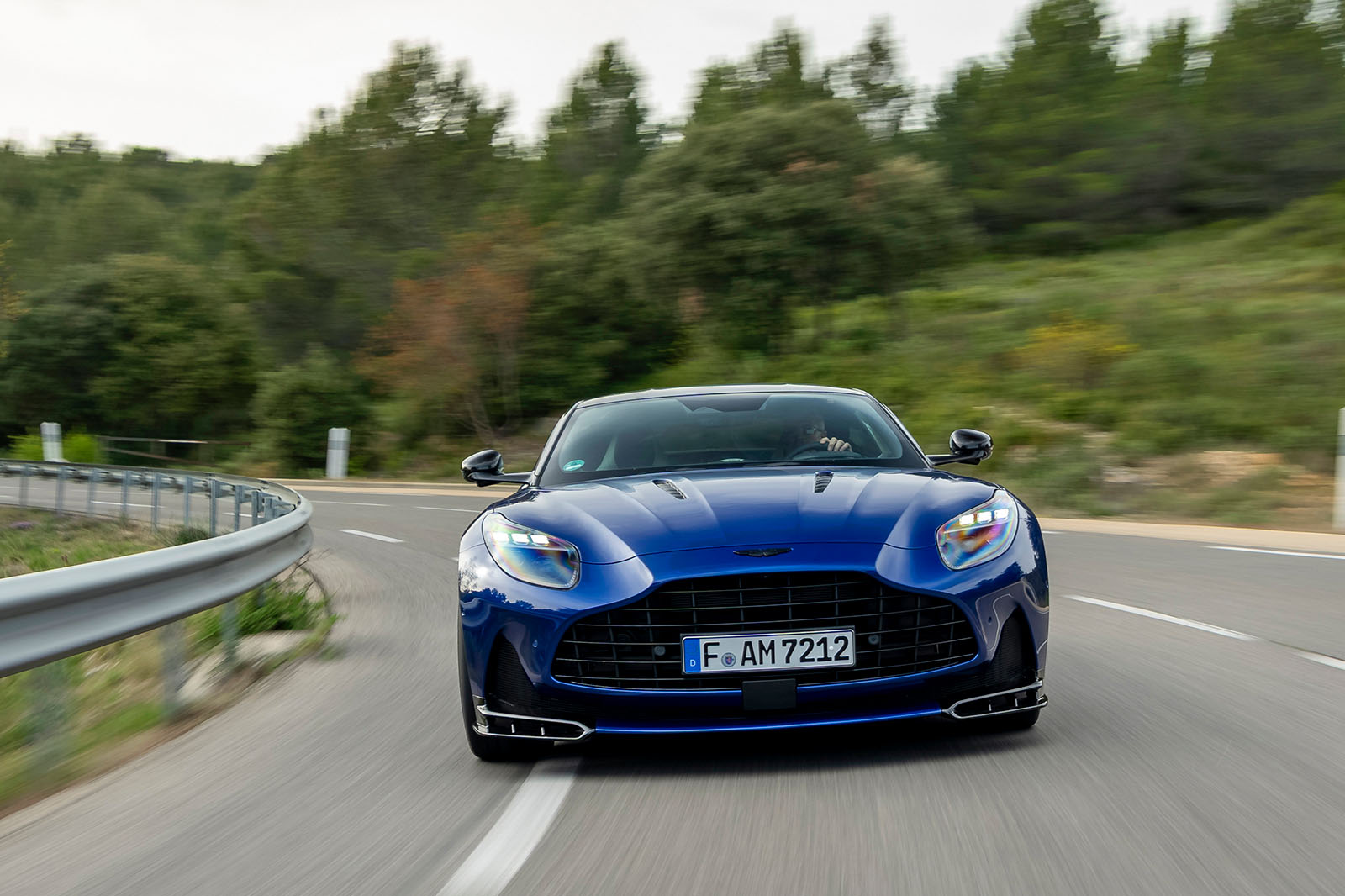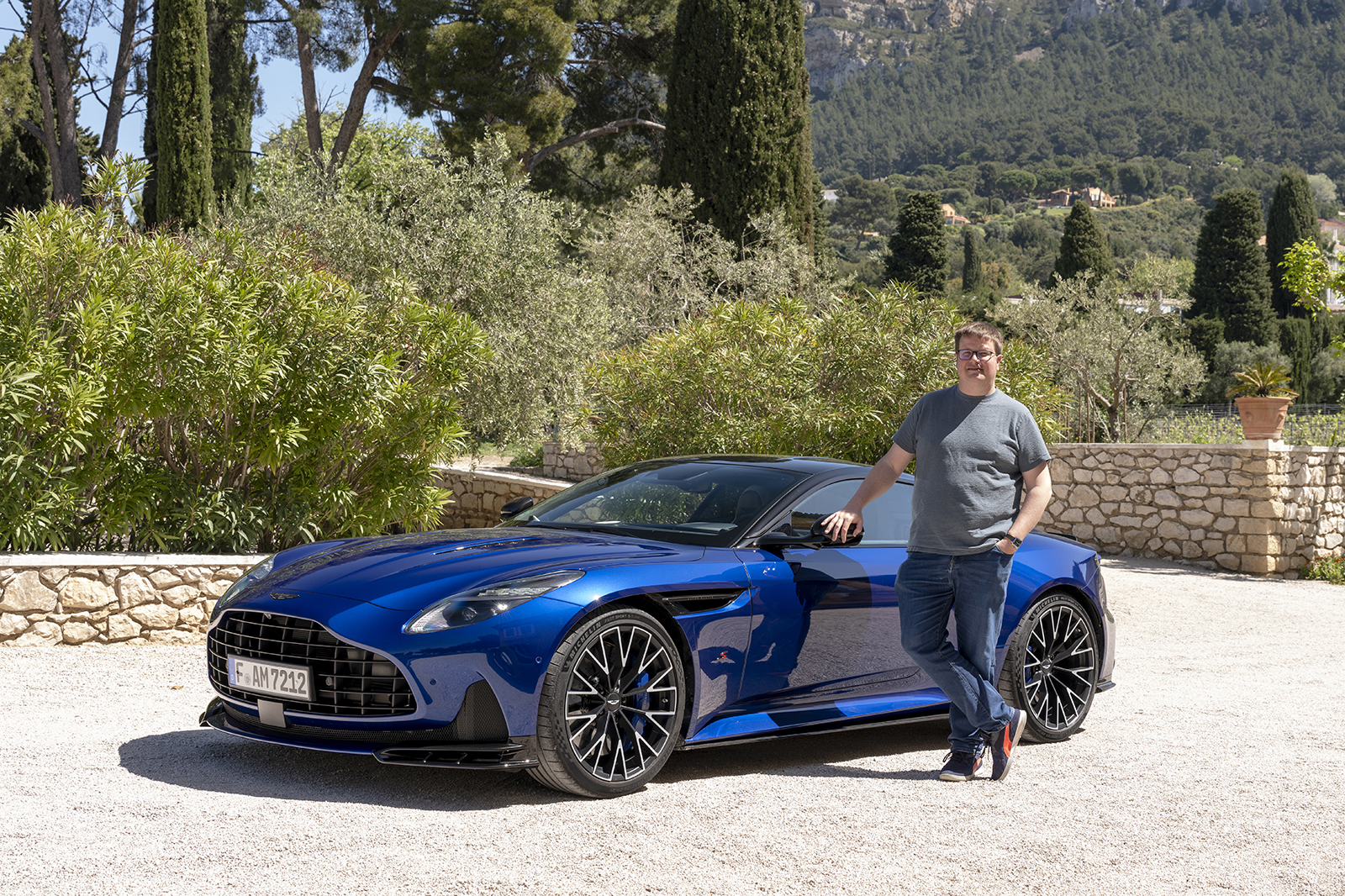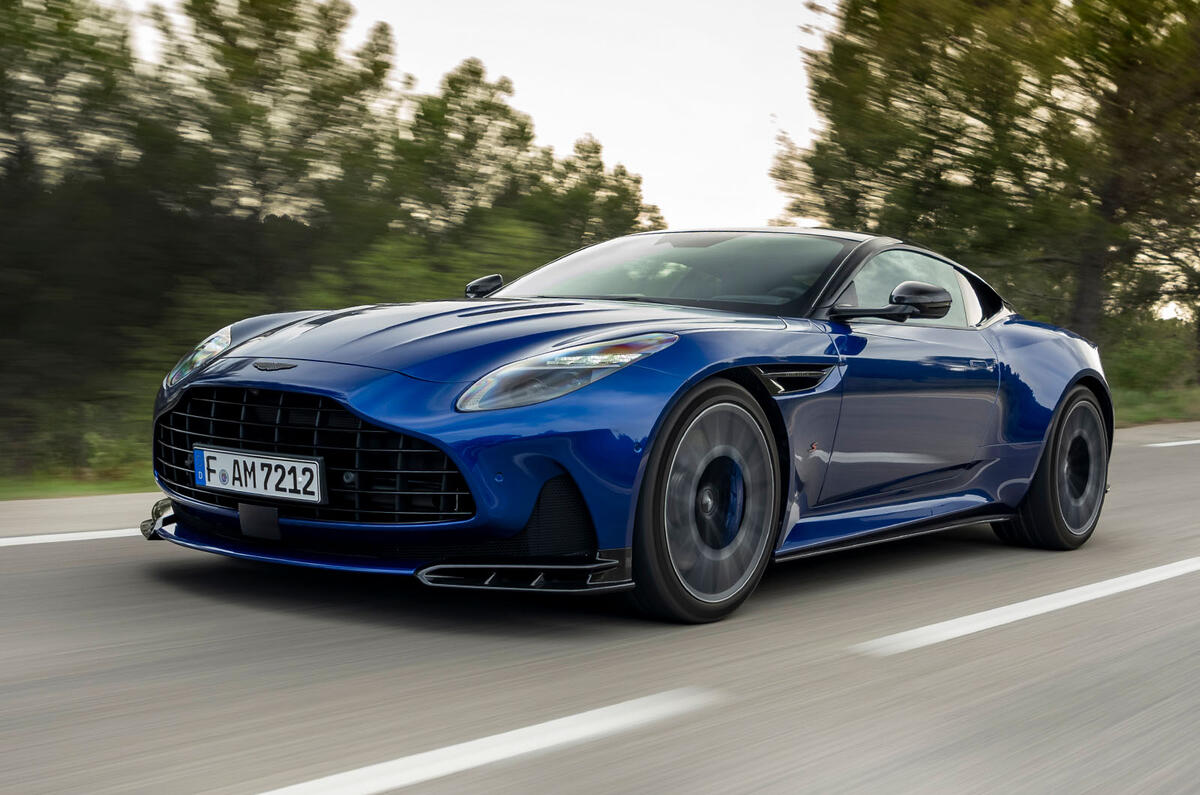
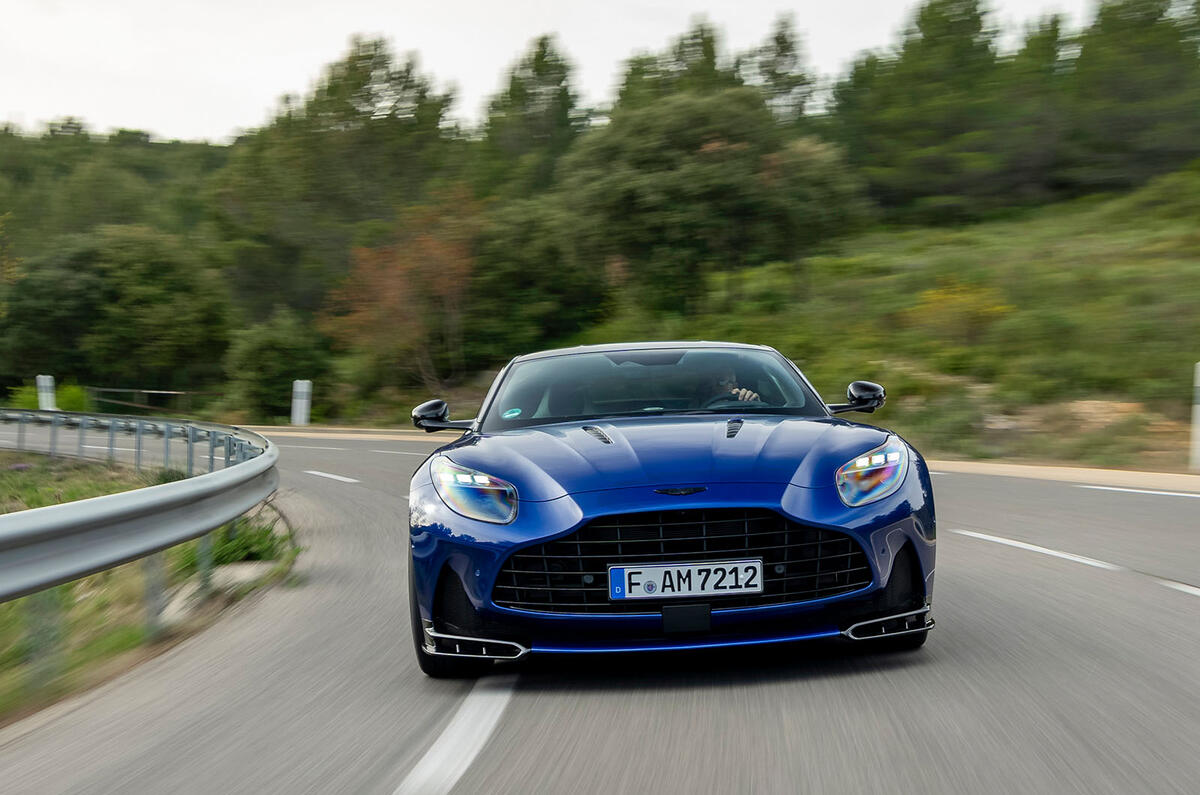
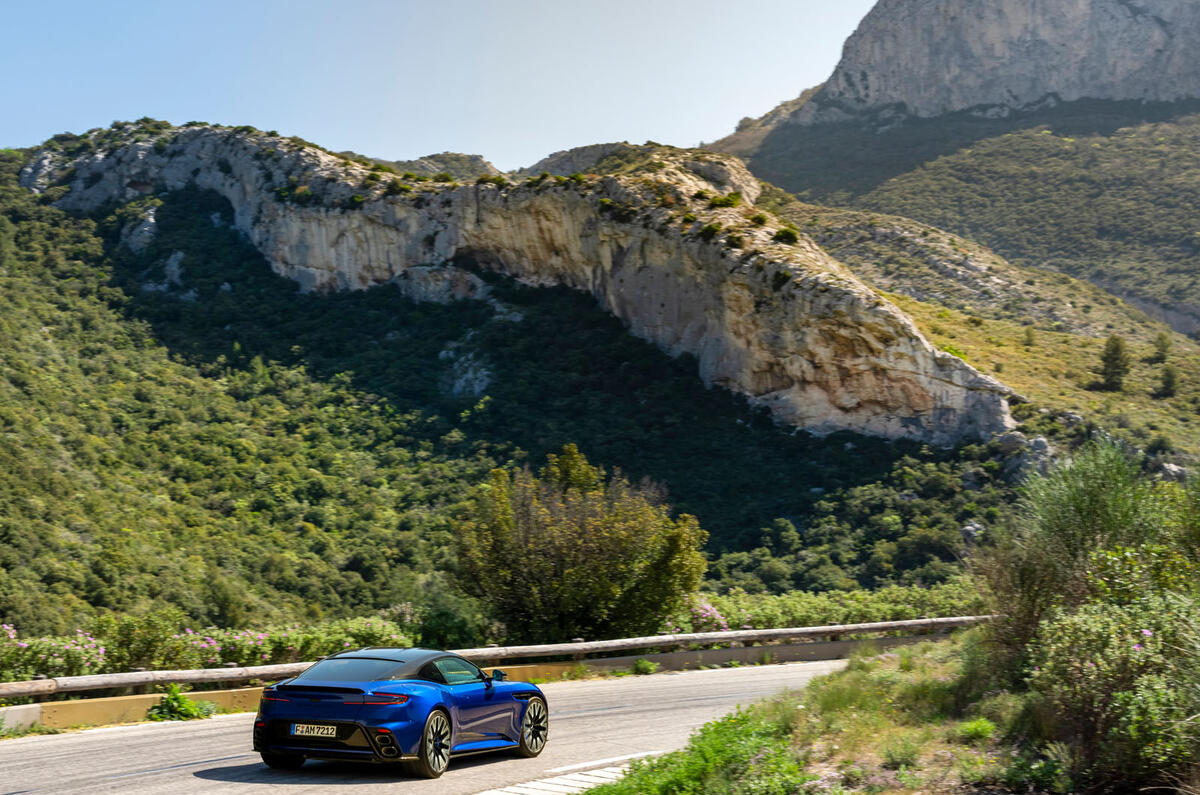
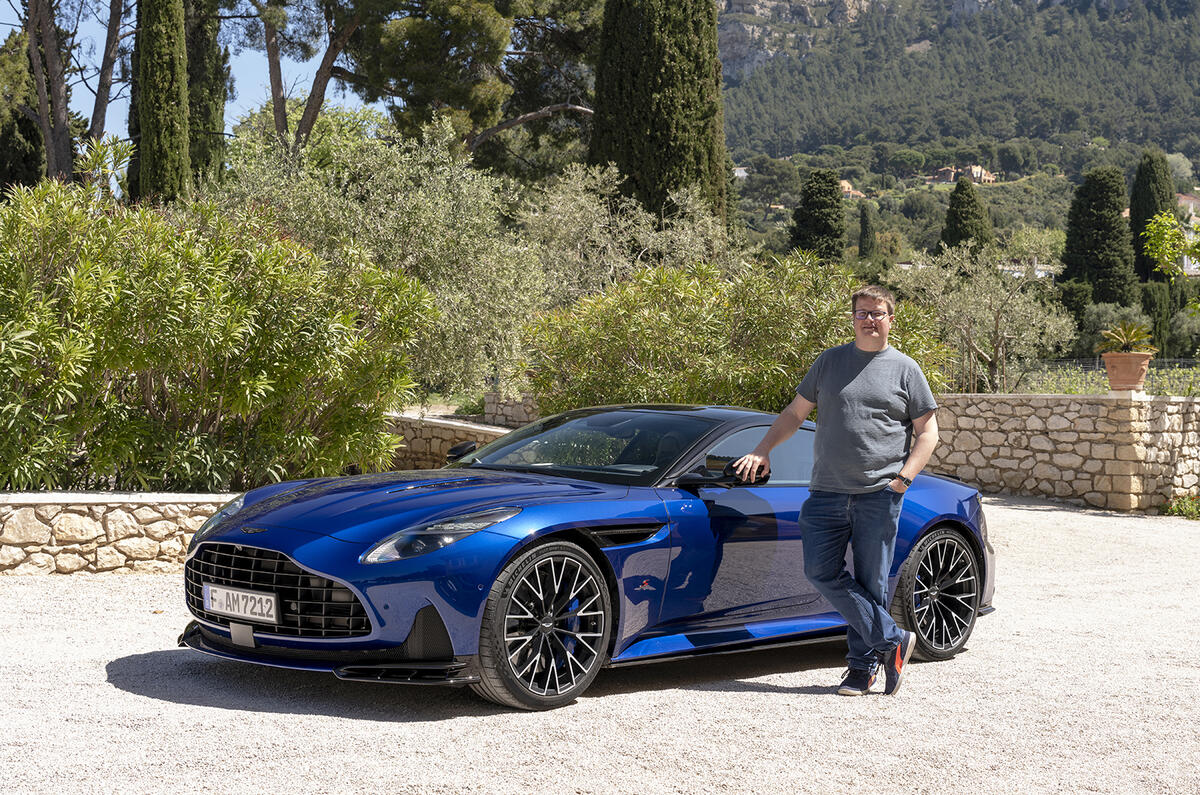
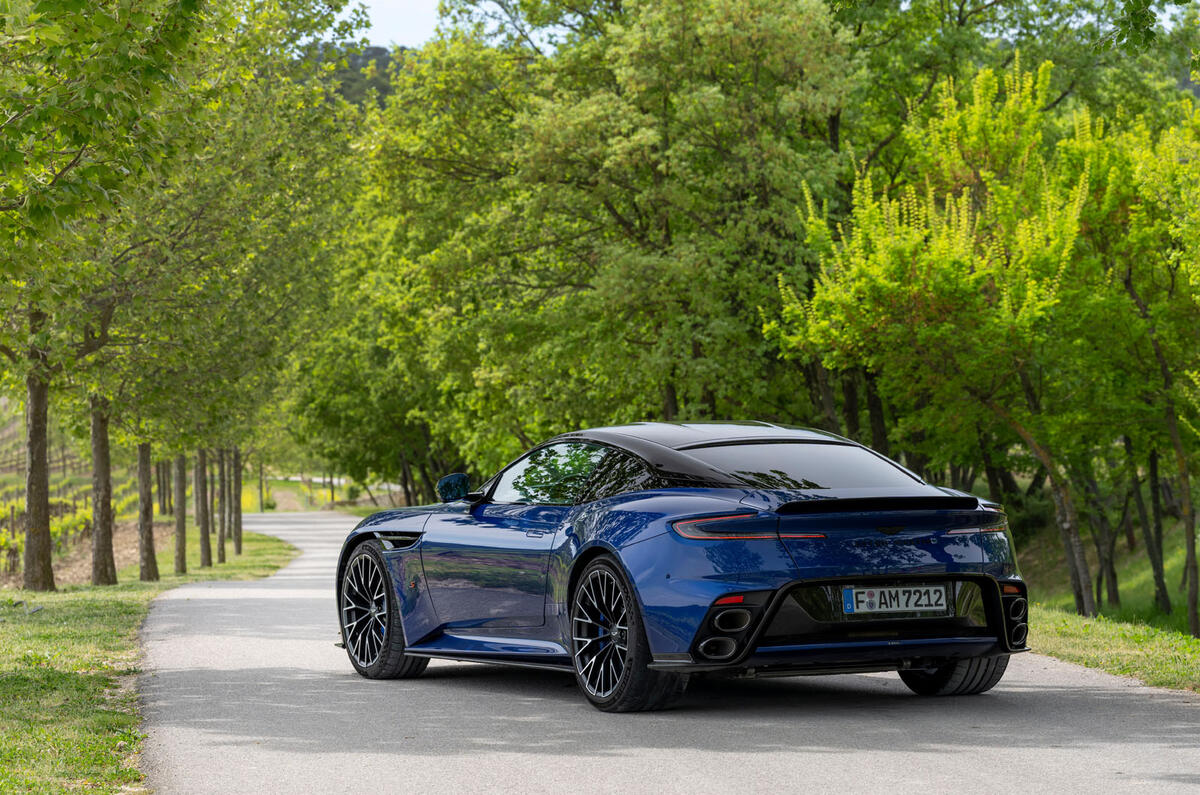
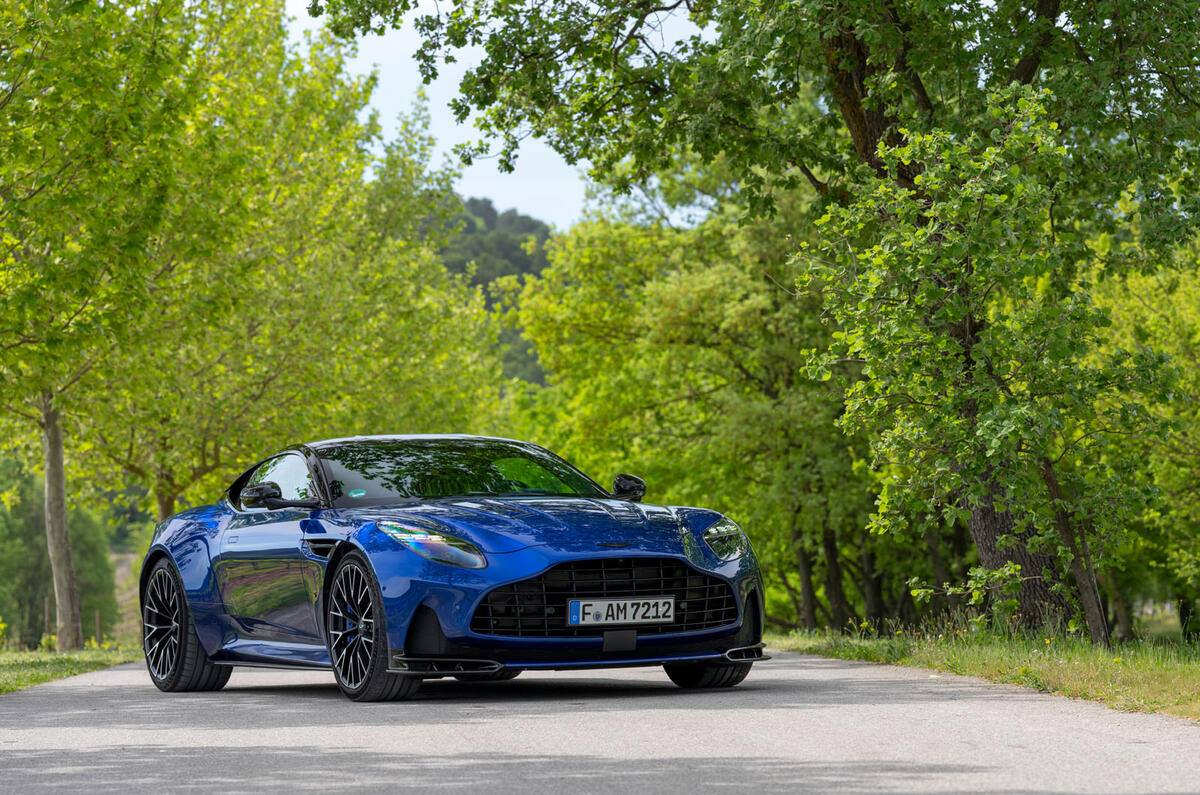

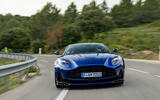
















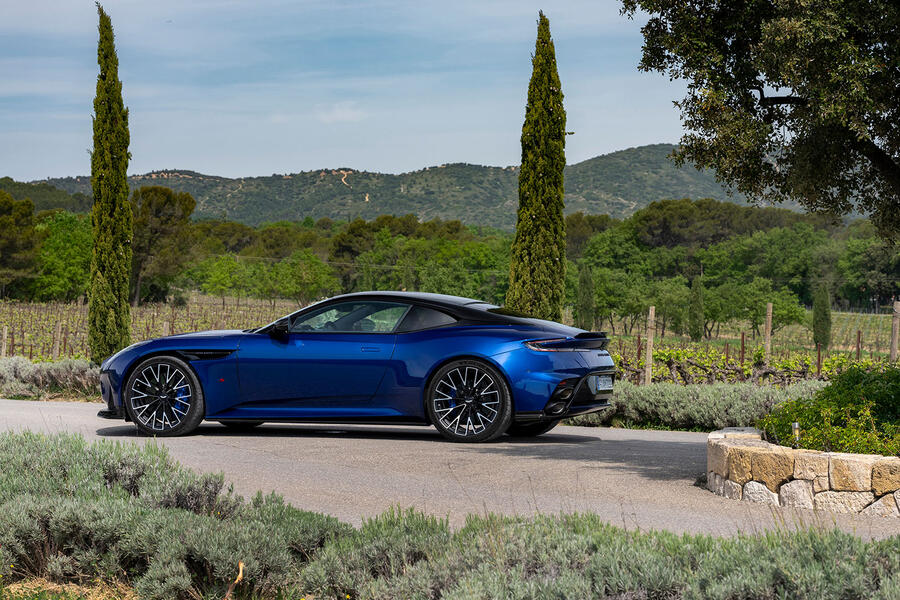
New upper-level DB12 'super tourer' gets 20bhp extra, weighs up to 50kg less, and aims for a sportier feel.

Find Aston Martin DB12 S deals
Other Services
Sell your car
84% get more money with

Aston Martin’s ‘boring but vital’ current business plan, as devised by boss Adrian Hallmark in 2024, is ostensibly to better sweat the company’s assets. To plan smarter. Do more with less, and launch more higher-value ‘special’ derivatives of its series production models, as well as more super-low-volume, ultra-special collectors’ models like the Valour and Victor.

Given the state of the company’s share value, you might question how well that plan is working at present. But we have, at least, already seen a top-of-the-line DBX S, a similar-in-philosophy Vantage S, and now this Aston Martin DB12 S: higher-value special derivatives, all. 
Aston has a history of even-quicker models with ‘S’ badges stretching back to the DB3 S of 1953, but it has never before deployed them as widely or consistently as now. The S version of the first, noughties-era Vanquish was ostensibly a facelift; a reason for dealers to call up Vanquish owners and invite them to part with another five- or six-figure sum. However, the S suffix was used more like it will be from now on within the lineage of the smaller Vantage super sports car; as an addition to the range, and an extension of the territory that these cars can ultimately span, rather than as a mid-life update. 

Advertisement
Back to top

So the regular DB12 has survived the introduction of this new addition (just as the equivalent Vantage did last year); and Aston insiders even talk of the opportunity to reappraise the positioning of that base model slightly as a foil to this new, slightly sportier sibling - though it remains to be seen if customers will still want “the lesser one” if they can spend more on an S model with that critical extra bit of reflected glory.

DESIGN & STYLING

Aston Martin DB12 S review 2026 002

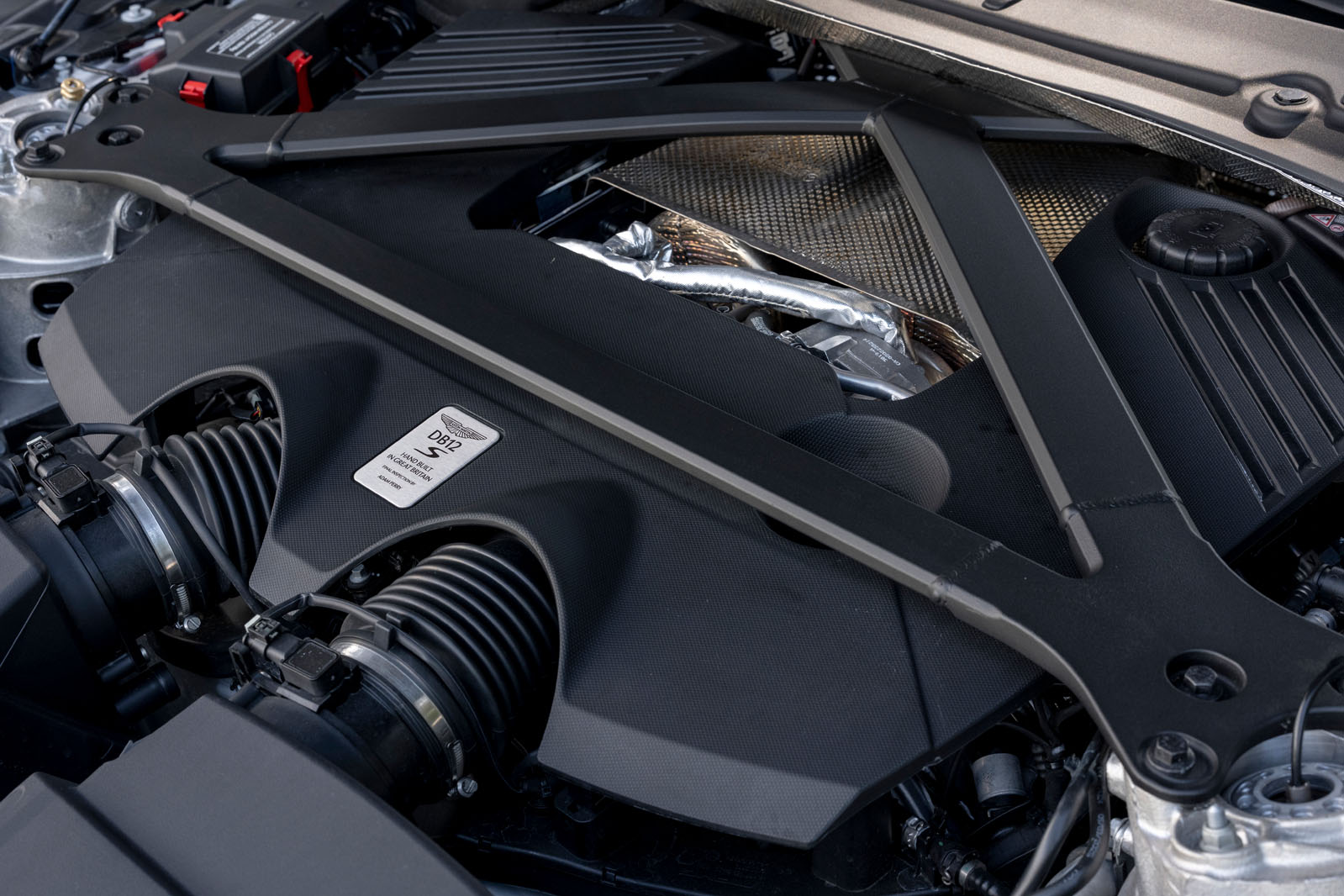
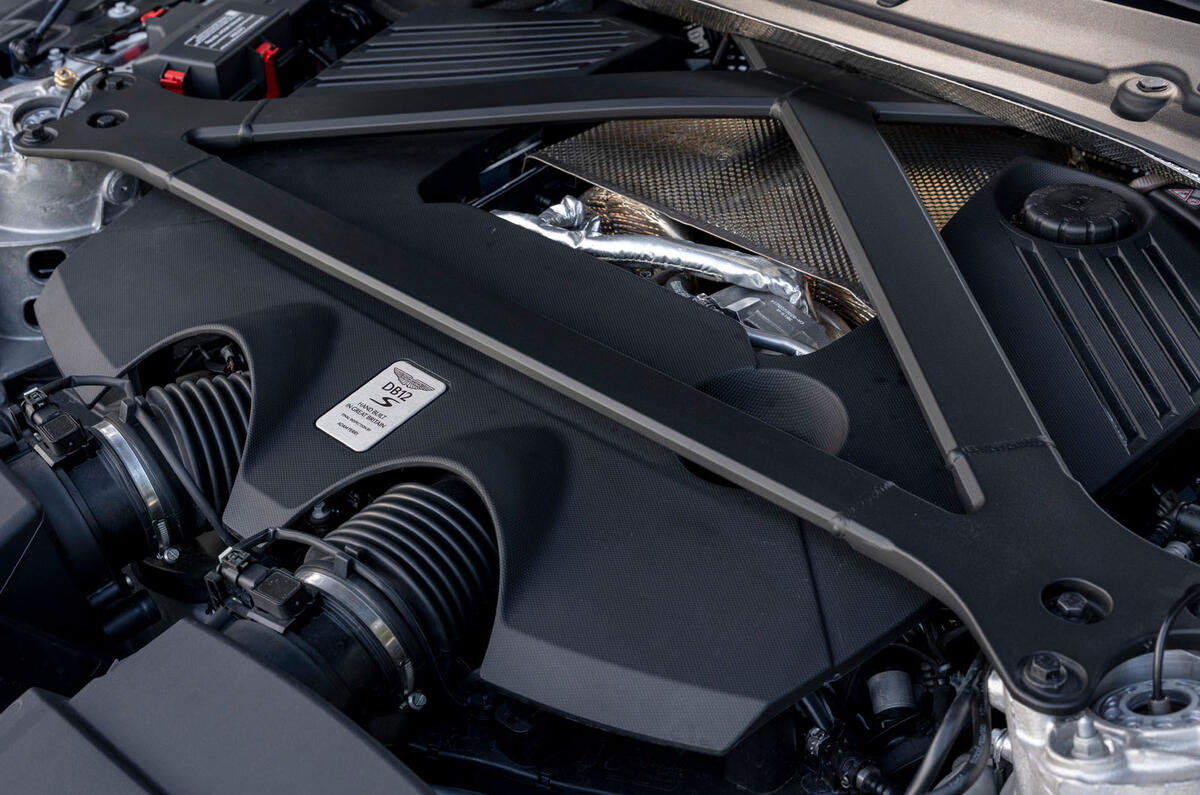
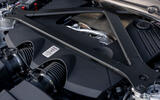
The treatment applied here is predictable in its performance agenda, but also pretty detailed and wide-ranging. It starts with the DB12’s AMG-sourced 4.0-litre twin-turbo V8, which is recalibrated for a fatter torque curve and headline power hiked by 20bhp; to 691- in all. An updated eight-speed transaxle automatic gearbox puts that power to the road via a recalibrated torque-vectoring Bosch ‘E-Diff’, and then the rear wheels; even if it only helps contribute to 0-62mph sprinting potential cut, relative to the regular DB12, by a solitary tenth of a second.

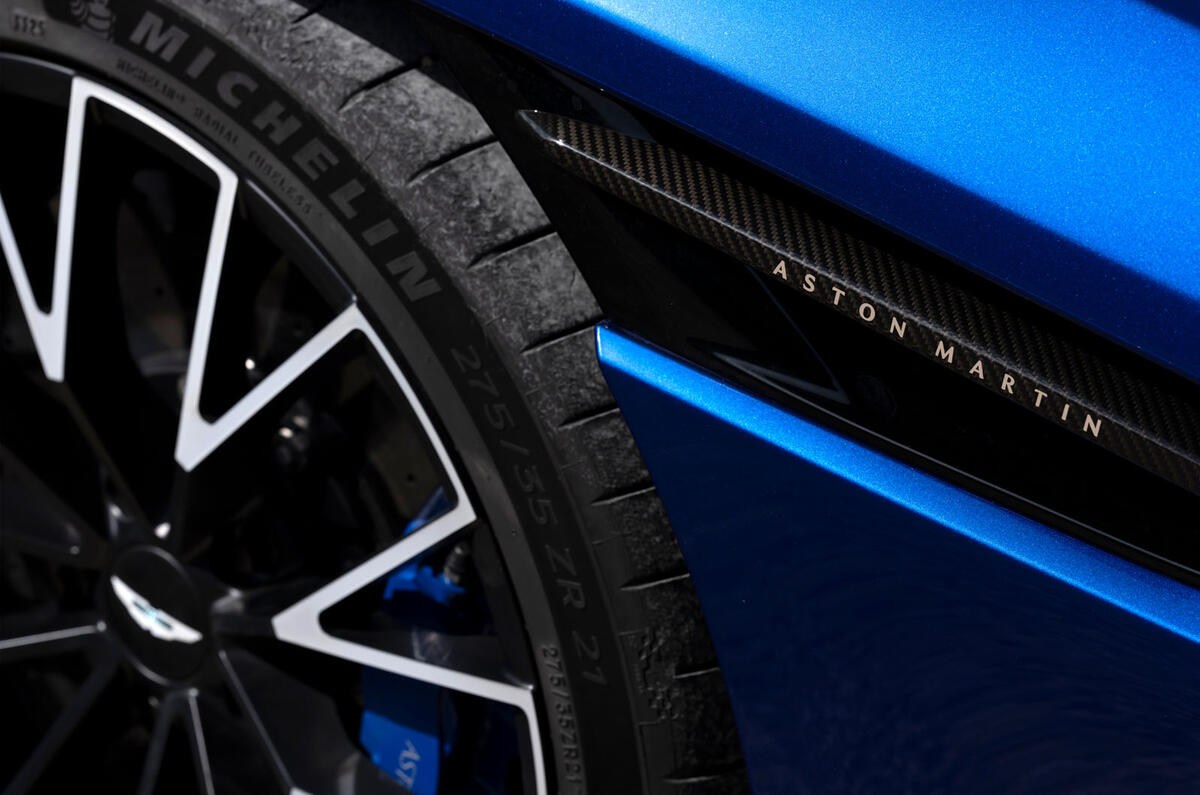
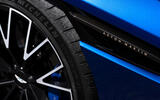
The running gear makeover, meanwhile, takes in Bilstein DTX adaptive dampers (retuned to take advantage of the saving in unsprung mass delivered by standard fitment of carbon-ceramic brakes) which, Aston claims, make the car’s close body control more linear and also ultimately more effective, allowing more wheel travel at low speeds - but also better outright body control at higher speeds.

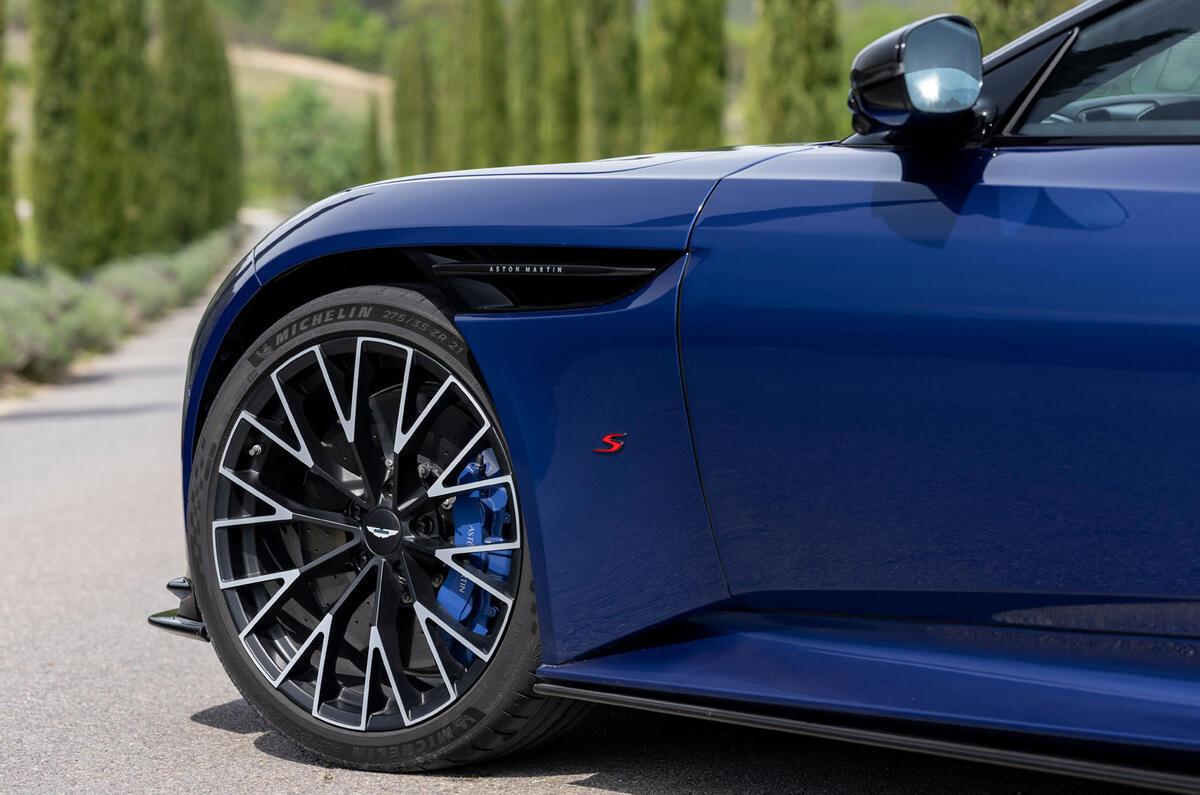
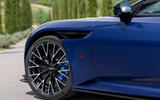
At the rear axle, a stiffer anti-roll bar has been fitted; while revised wheel geometry dials in enough negative camber that you can clearly see it when the car is parked. These changes, in turn, give the front wheels a stronger platform to push against on turn in, sharpening cornering agility while also better reigning in rear-axle stability; while revisions to the EPAS power steering up front look to filter through better off-centre steering precision and tactile feel.

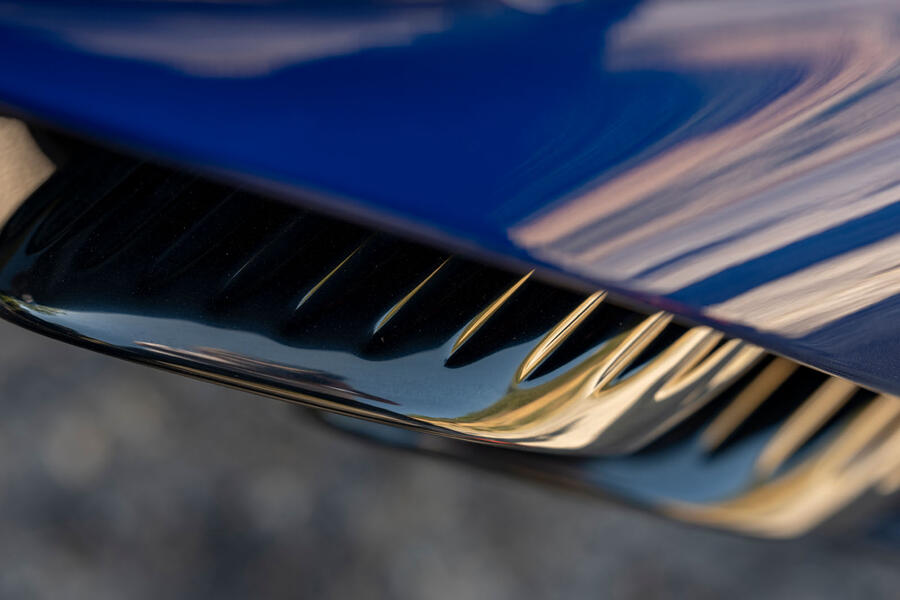
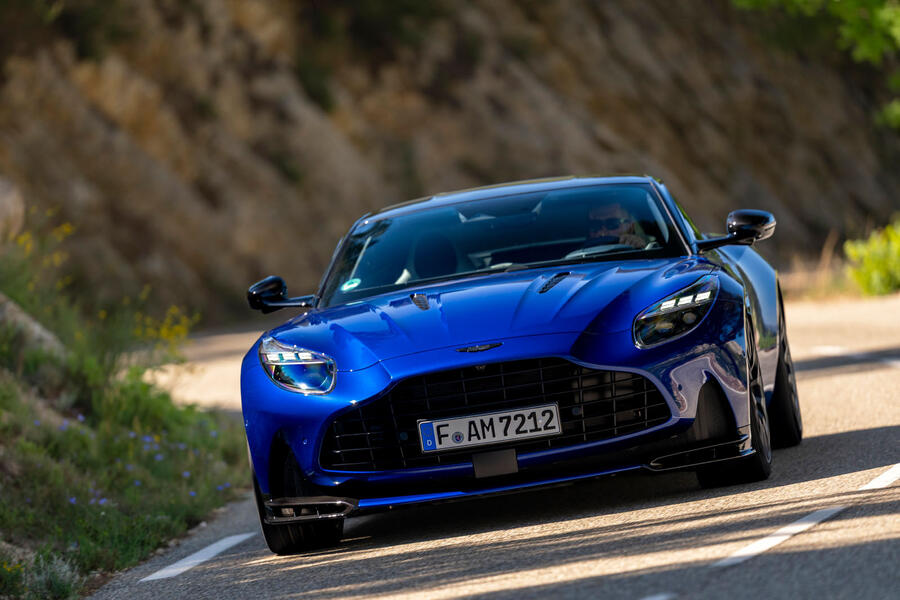
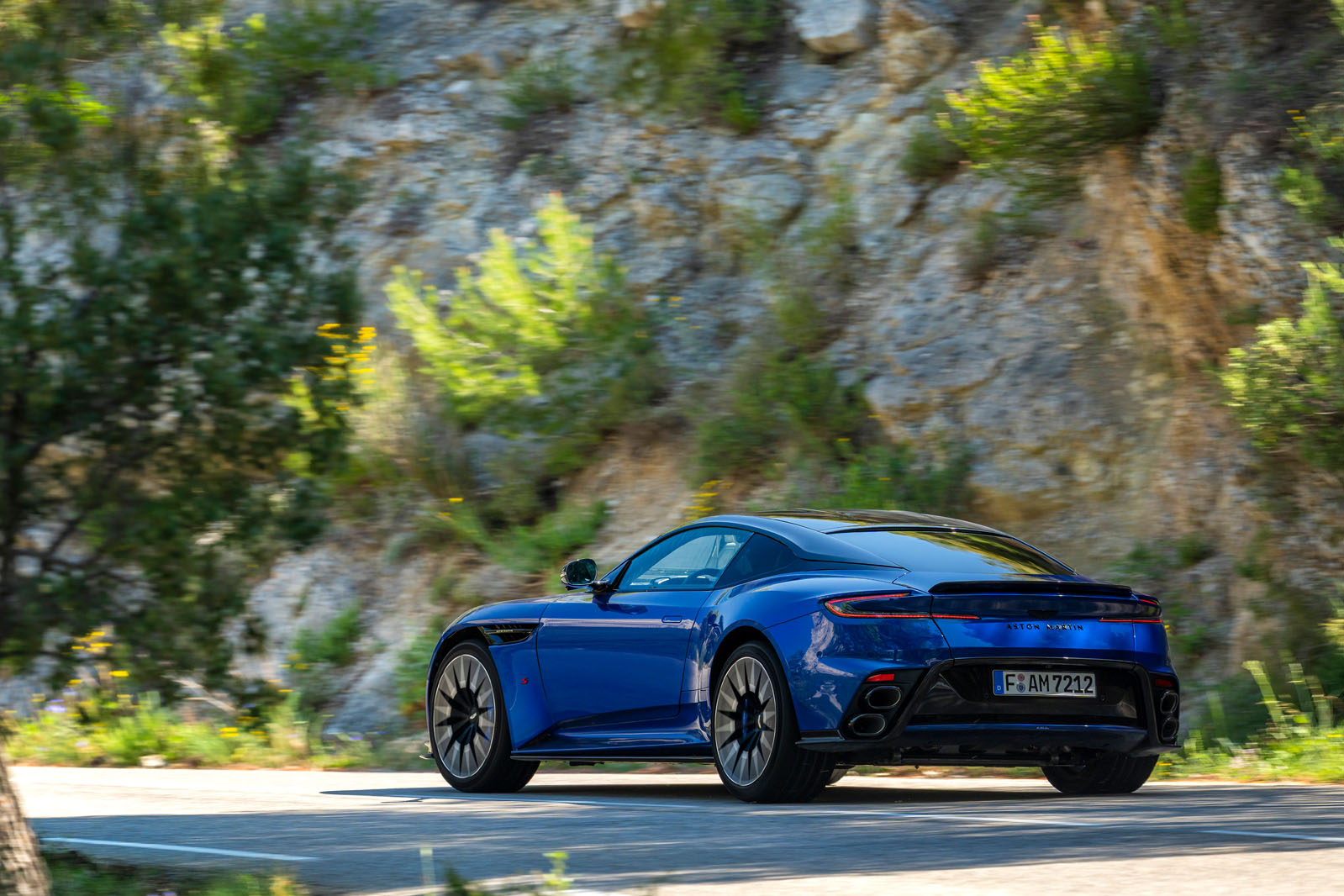
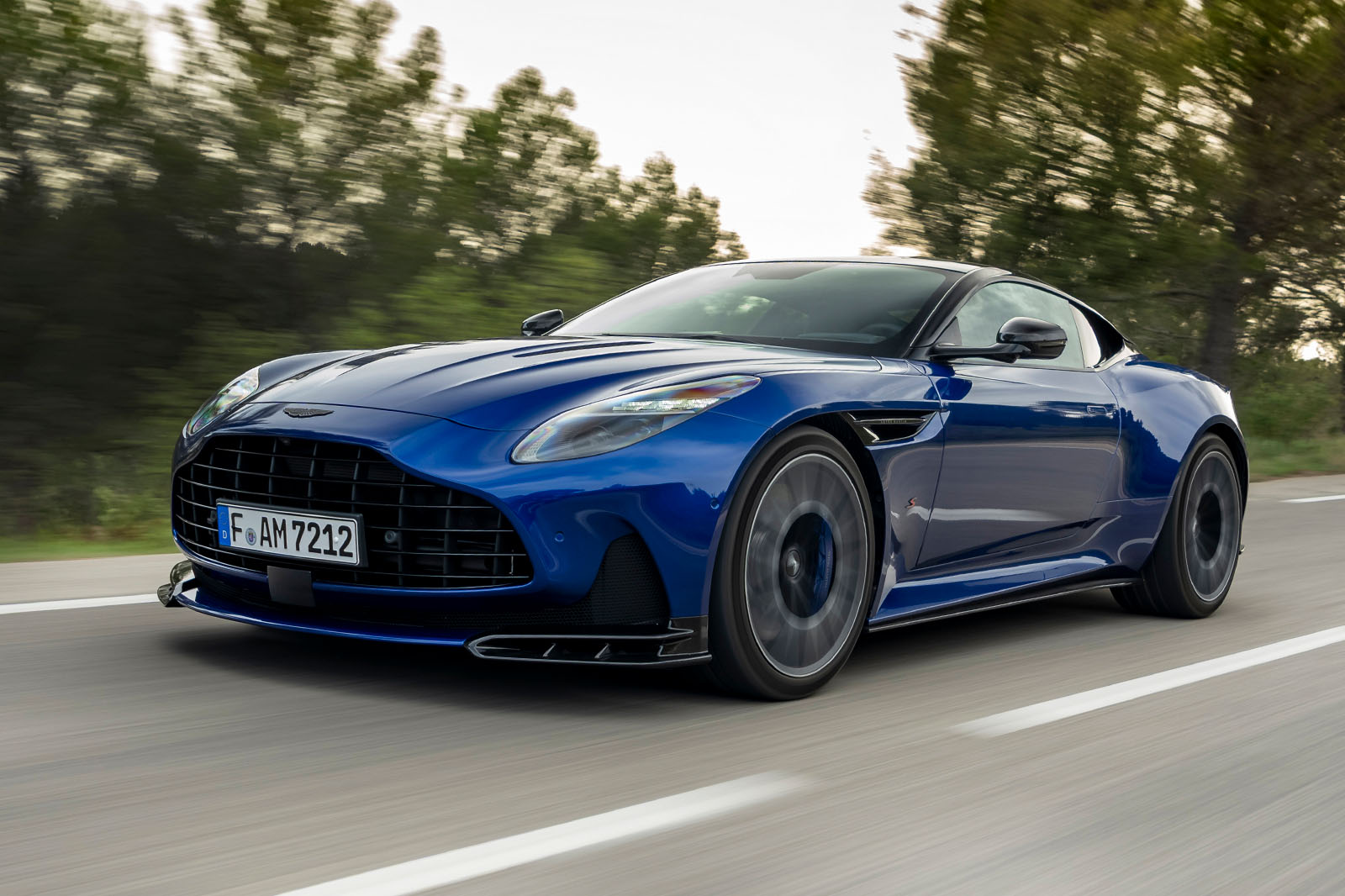
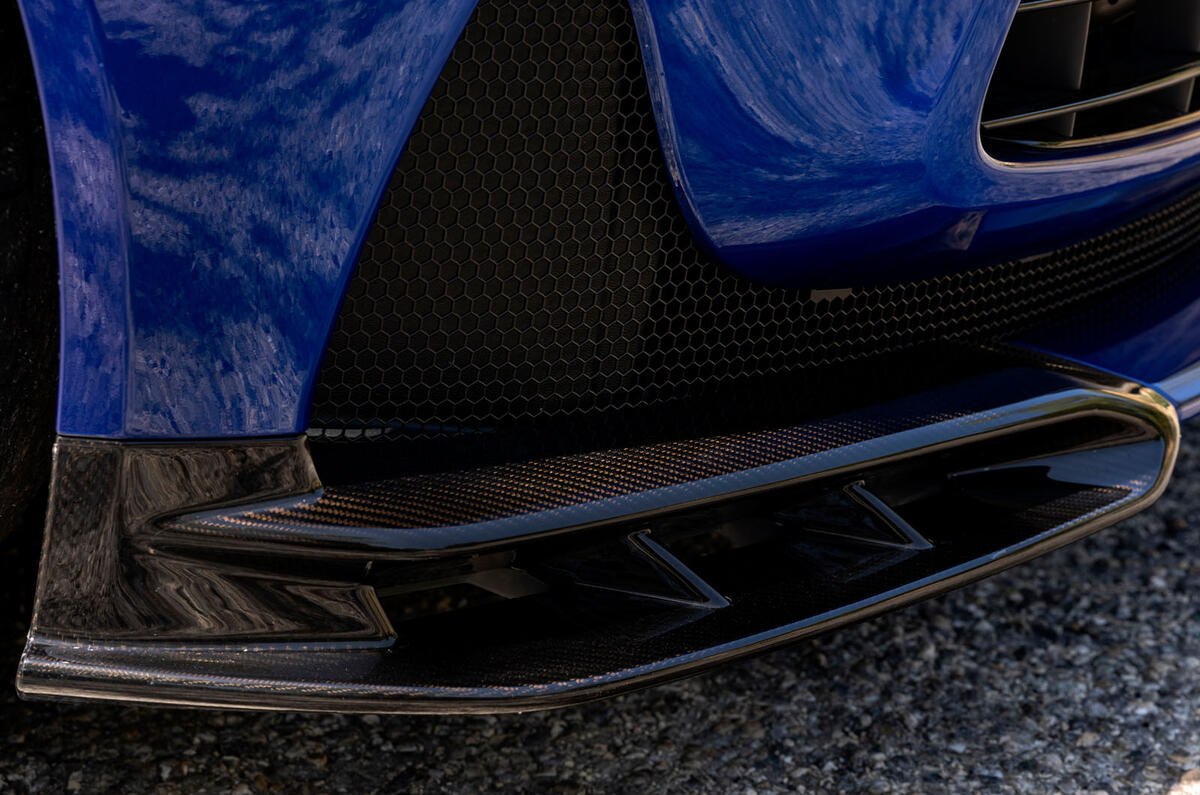
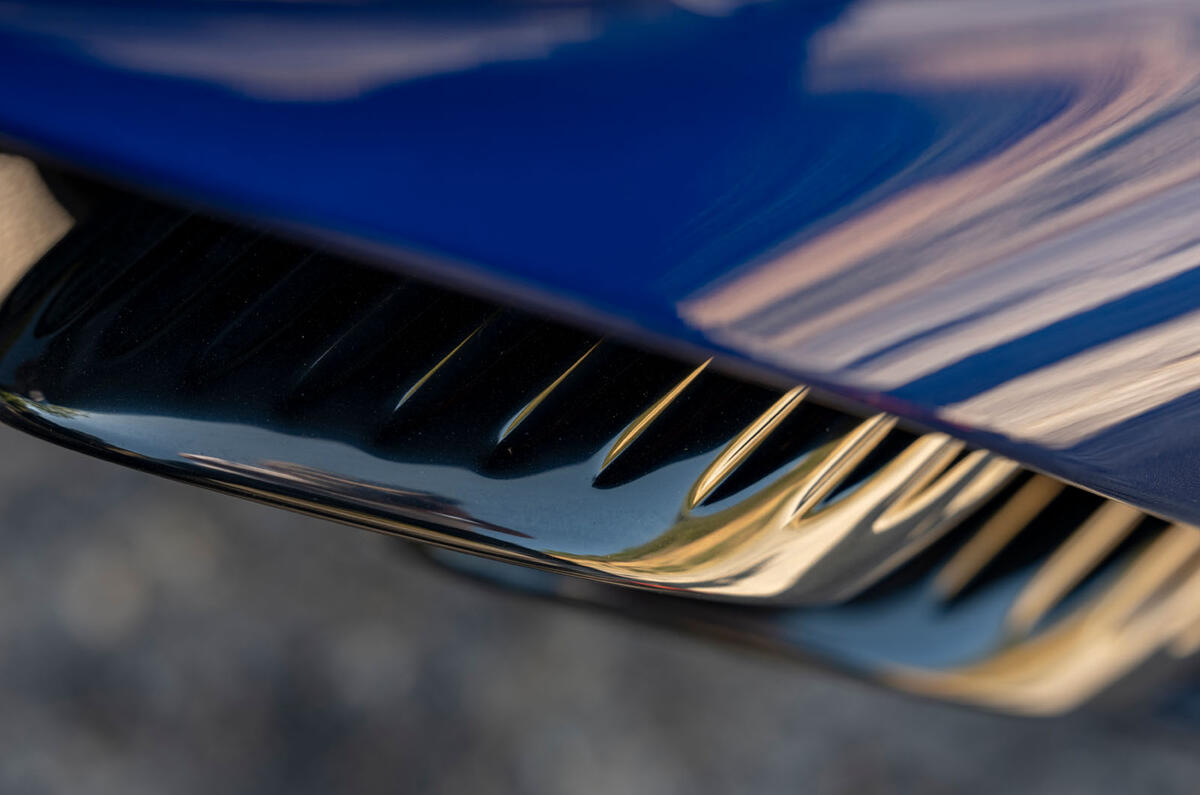
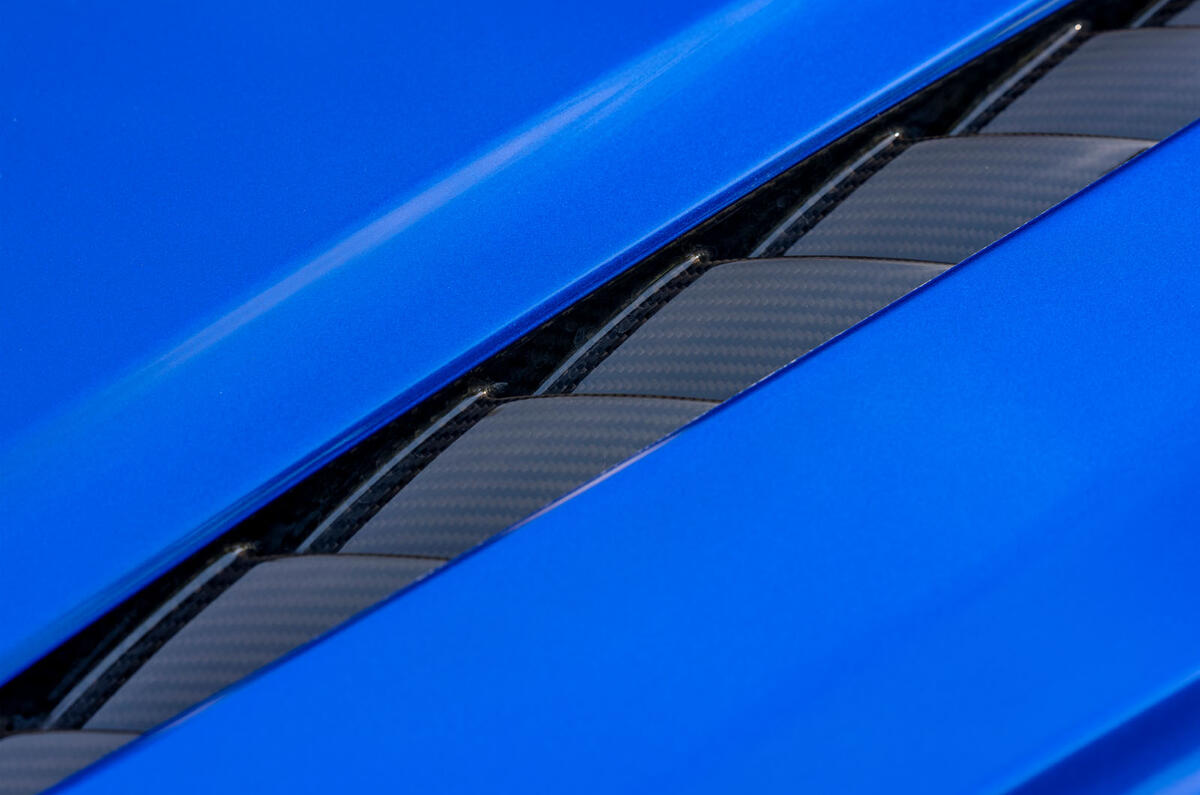
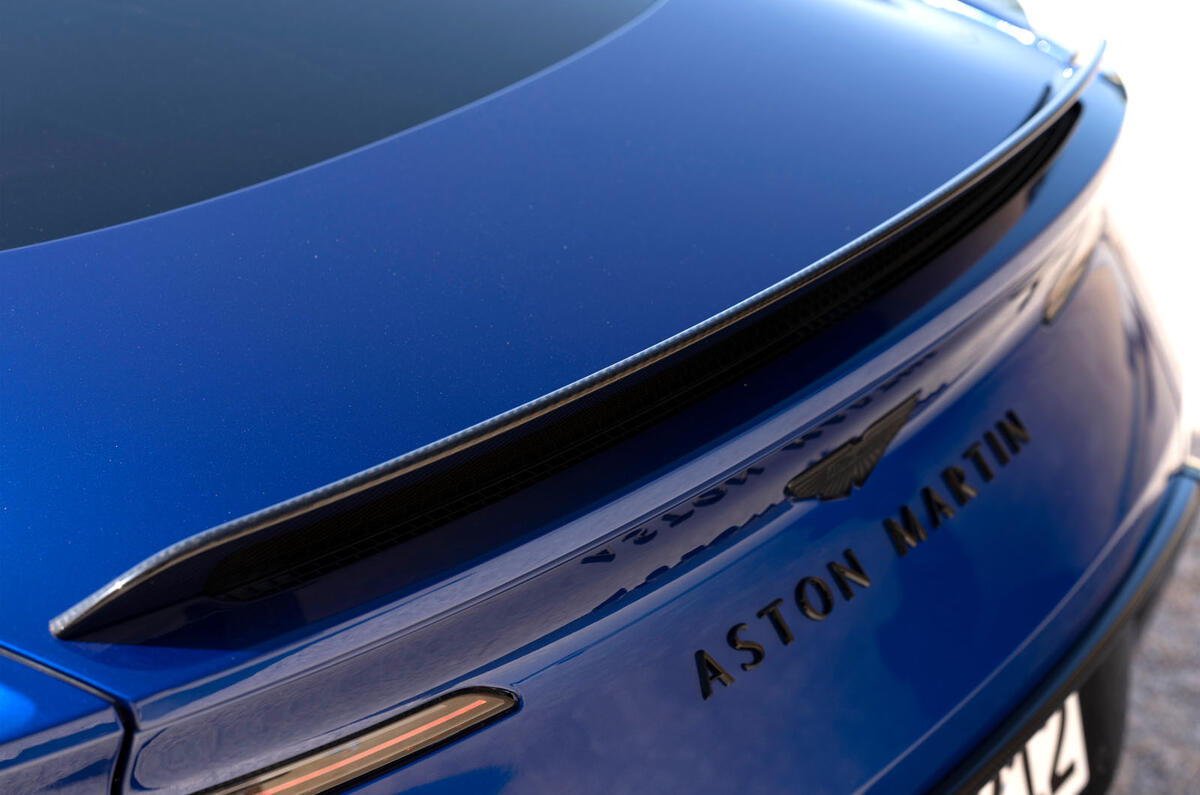
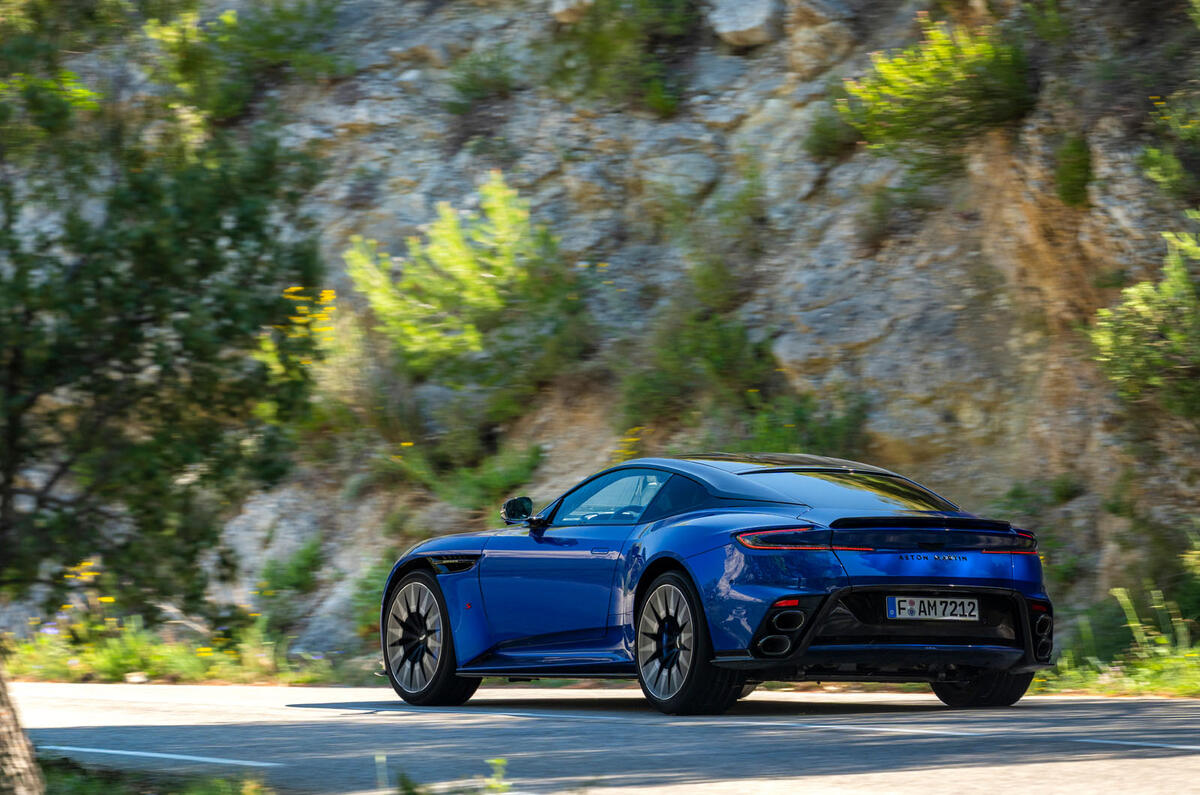
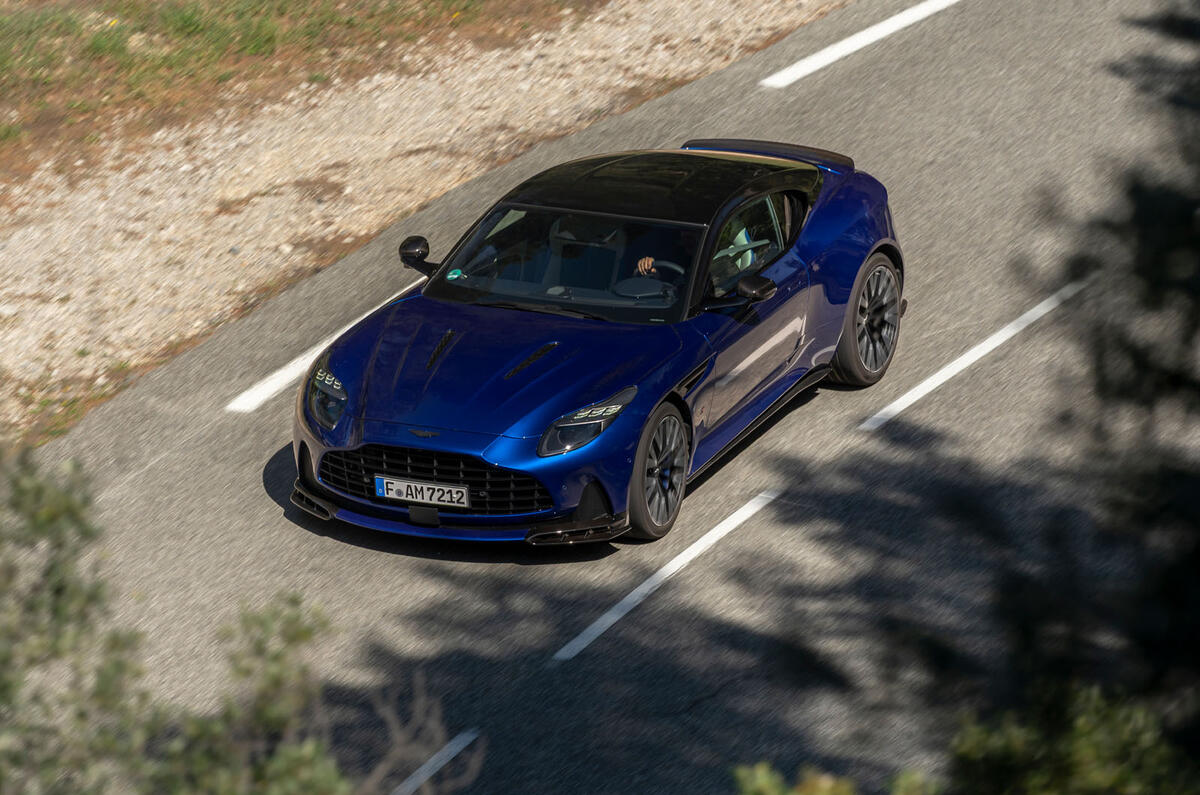
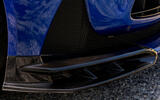
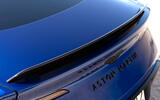
The DB12 S’s bodywork gets some noticeable but understated revisions also. The usual chin spoiler, sill extensions and extra bonnet louvres come in; and a fairly subtle fixed lip spoiler on the boot (there in place of the regular DB12’s ‘aeroblade’ active system) helps to offset the added weight of the beefed up, F1-style aero ducting around the corners of bumpers. 

The net effect is that, counting those carbon brakes, the DB12 S weighs 38kg less than a standard DB12 without any factory extras: and, if you go for Gaydon’s new lightweight titanium active sports exhaust (both it, and the standard steel one, have a new ‘stacked’ quad pipe look) you can boost that weight-saving to just under 50kg. While clearly far from potentially transformative, that might still be considered worth having - even on an 1800kg–plus GT car.

INTERIOR

AstonMartinDB12S©PhotoMaxEarey 2744

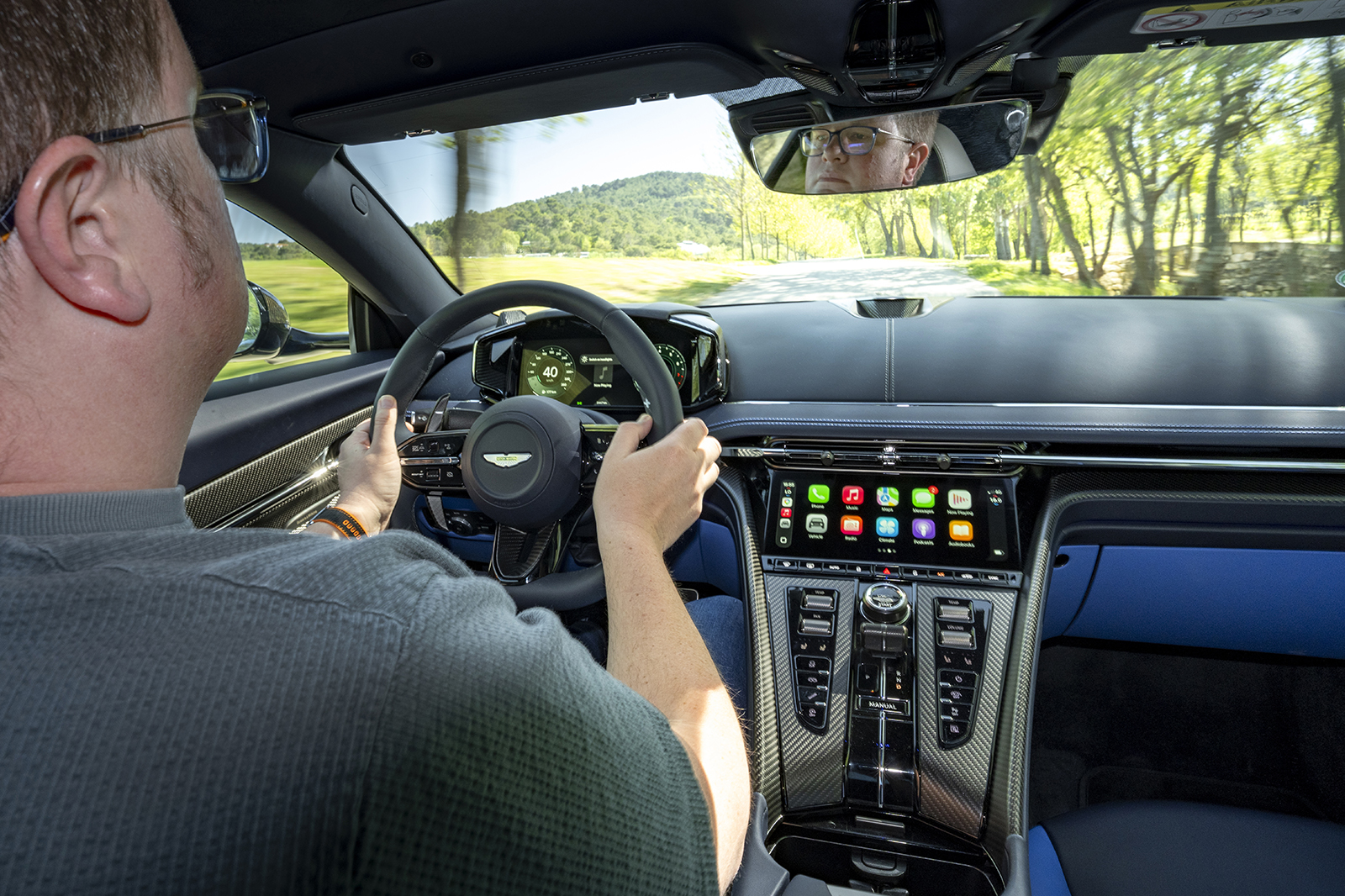
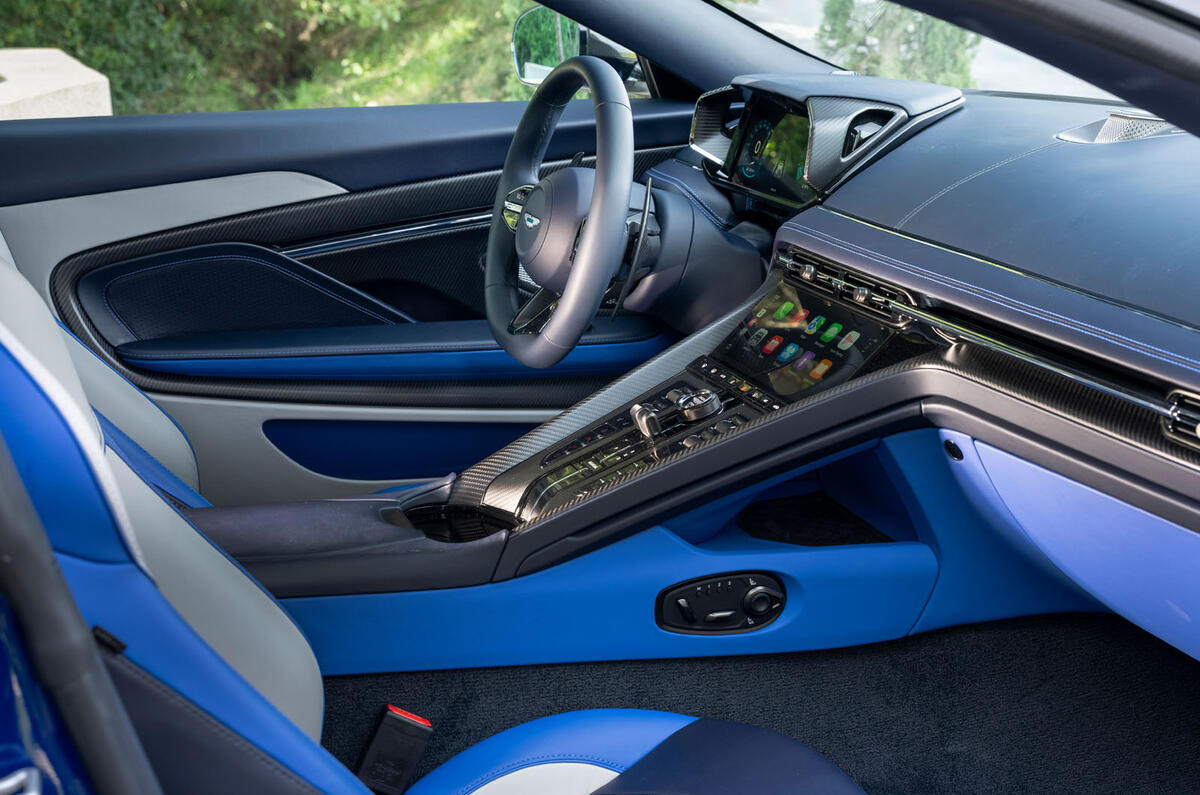
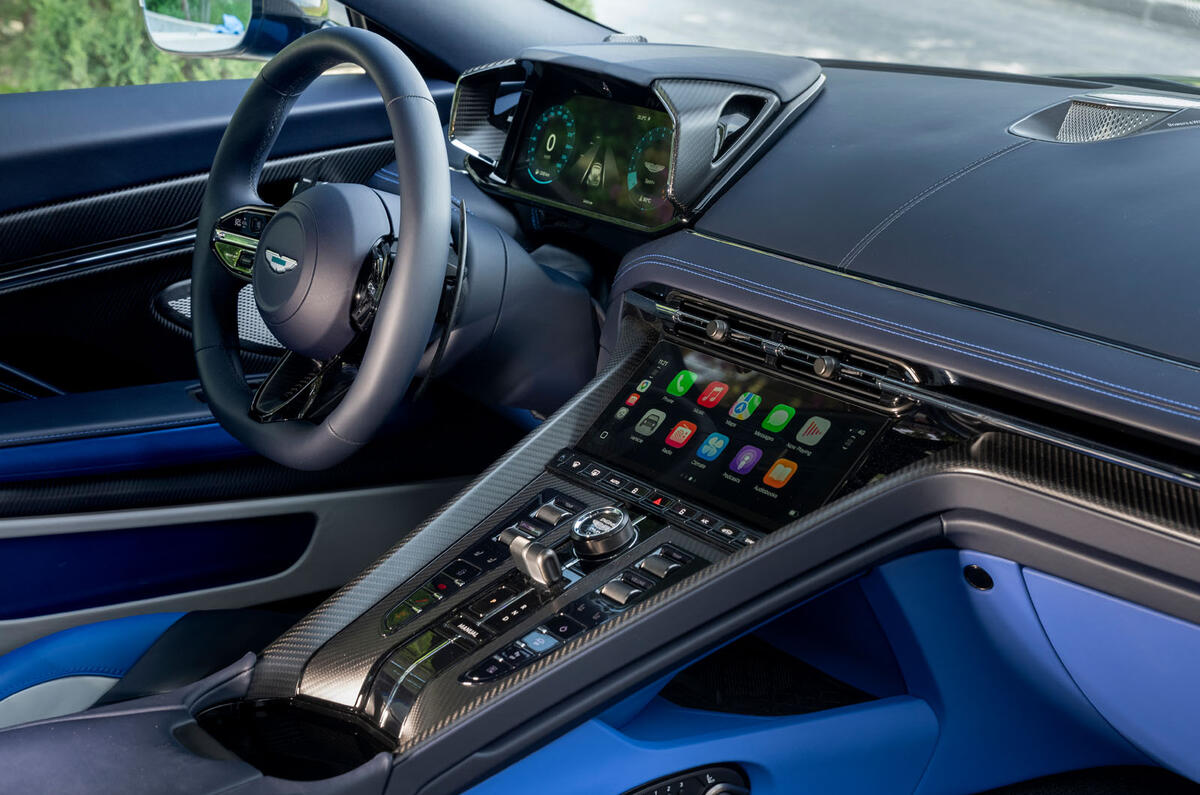
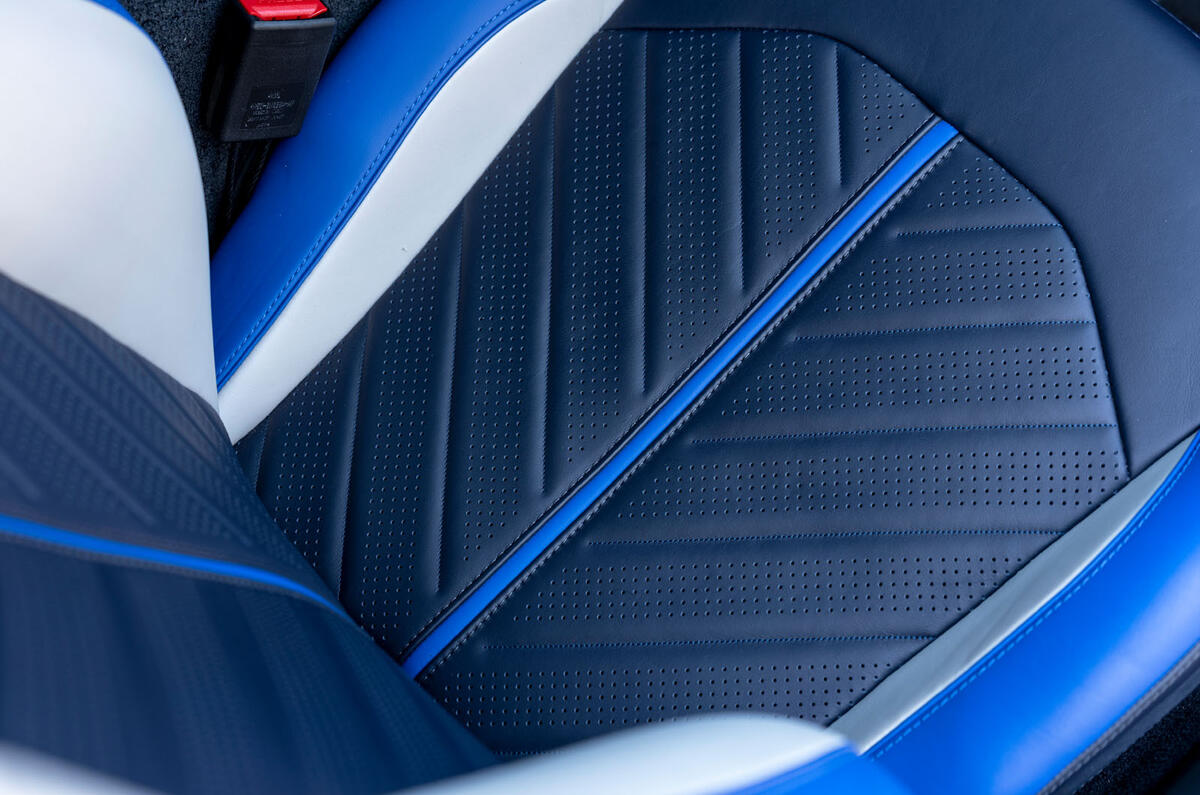
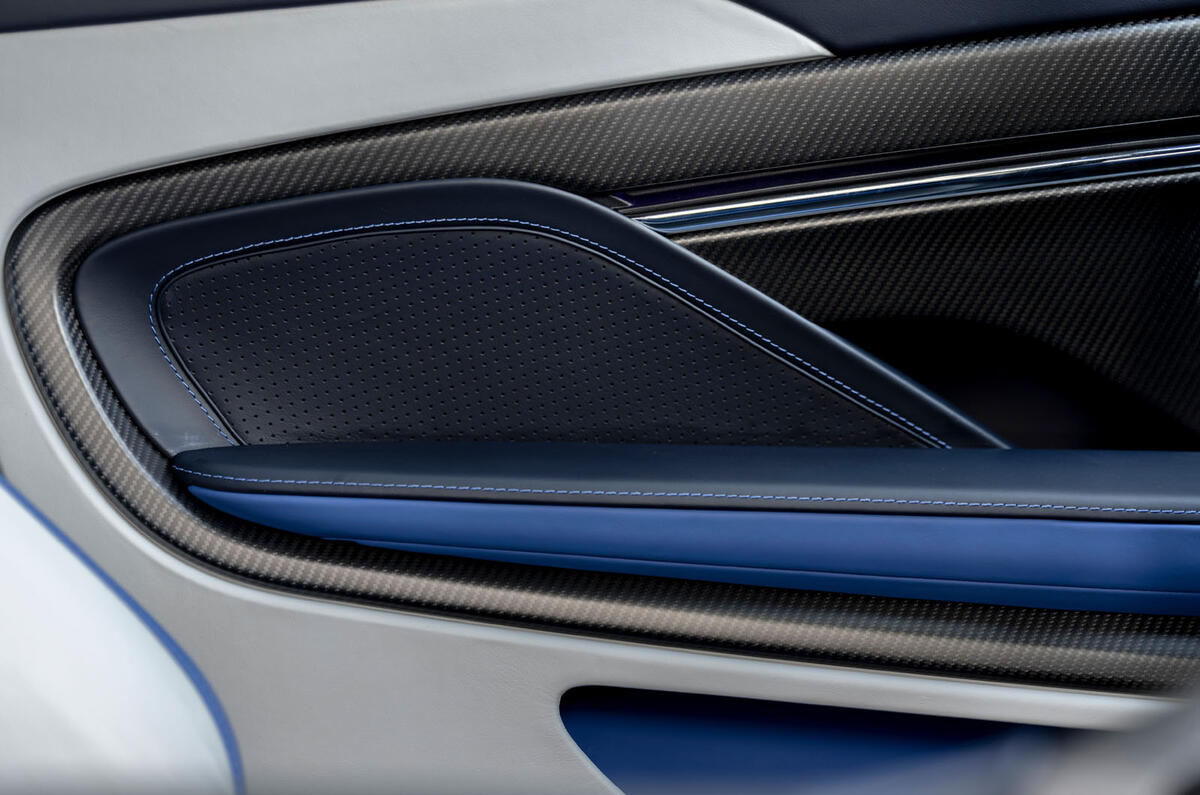
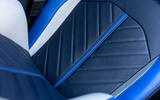
Changes to the interior are few, but notable. The DB12 S comes with a new three-way colour combination for its Bridge of Weir leather, which is both embossed (where the detailing rises above the surface of the leather) and debossed (where it’s pressed into it). There are also some fairly subtle S badges deployed here and there.

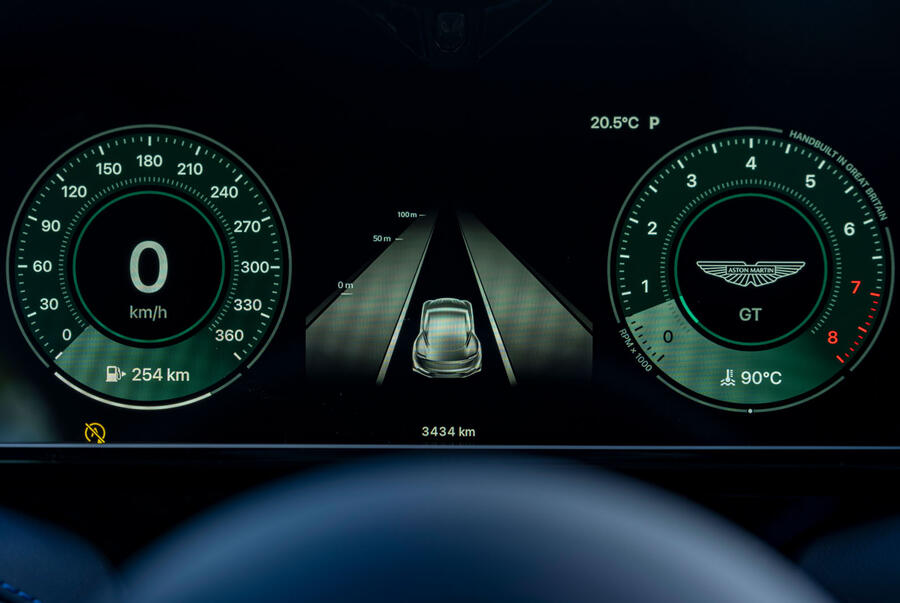
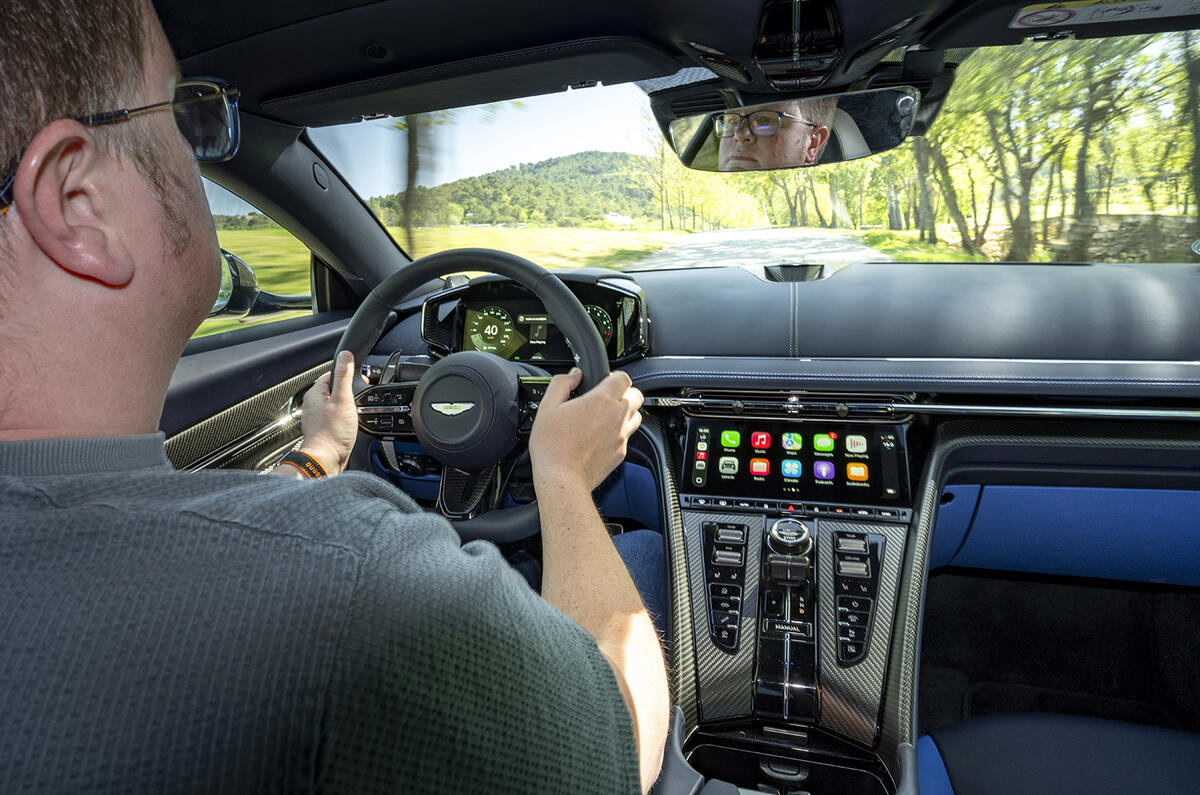
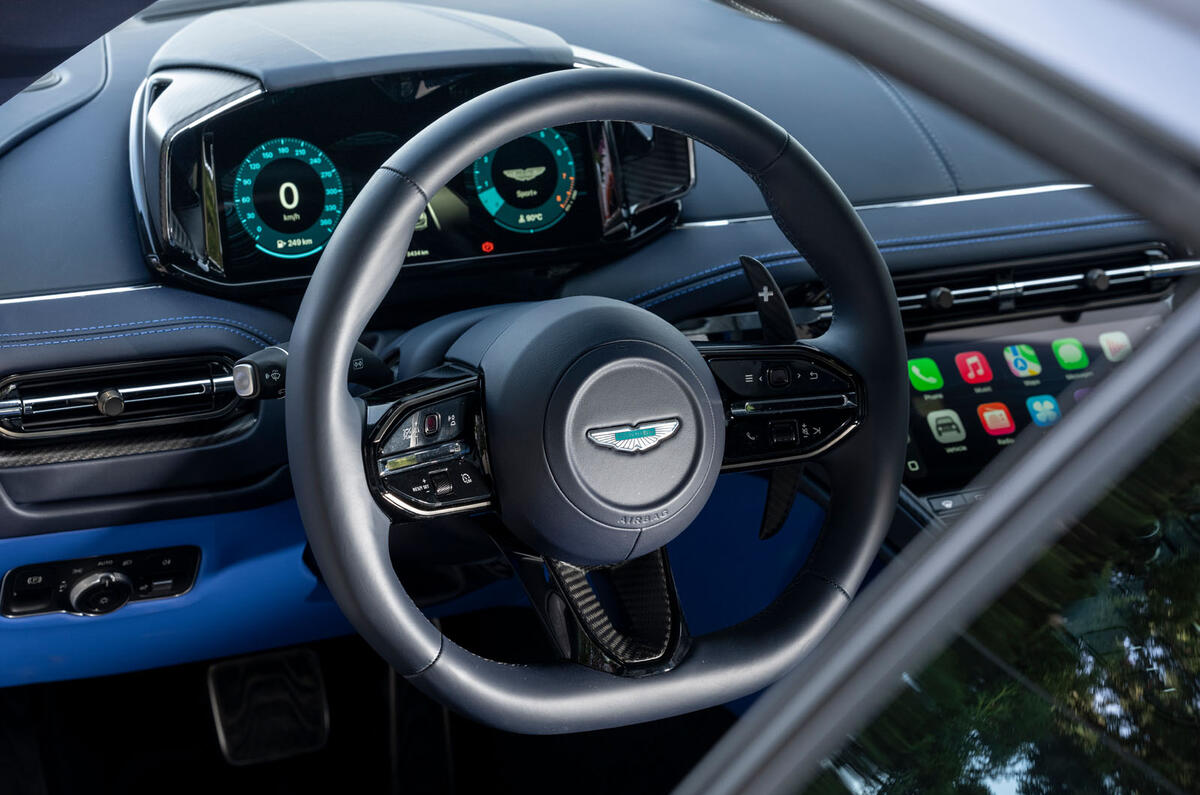
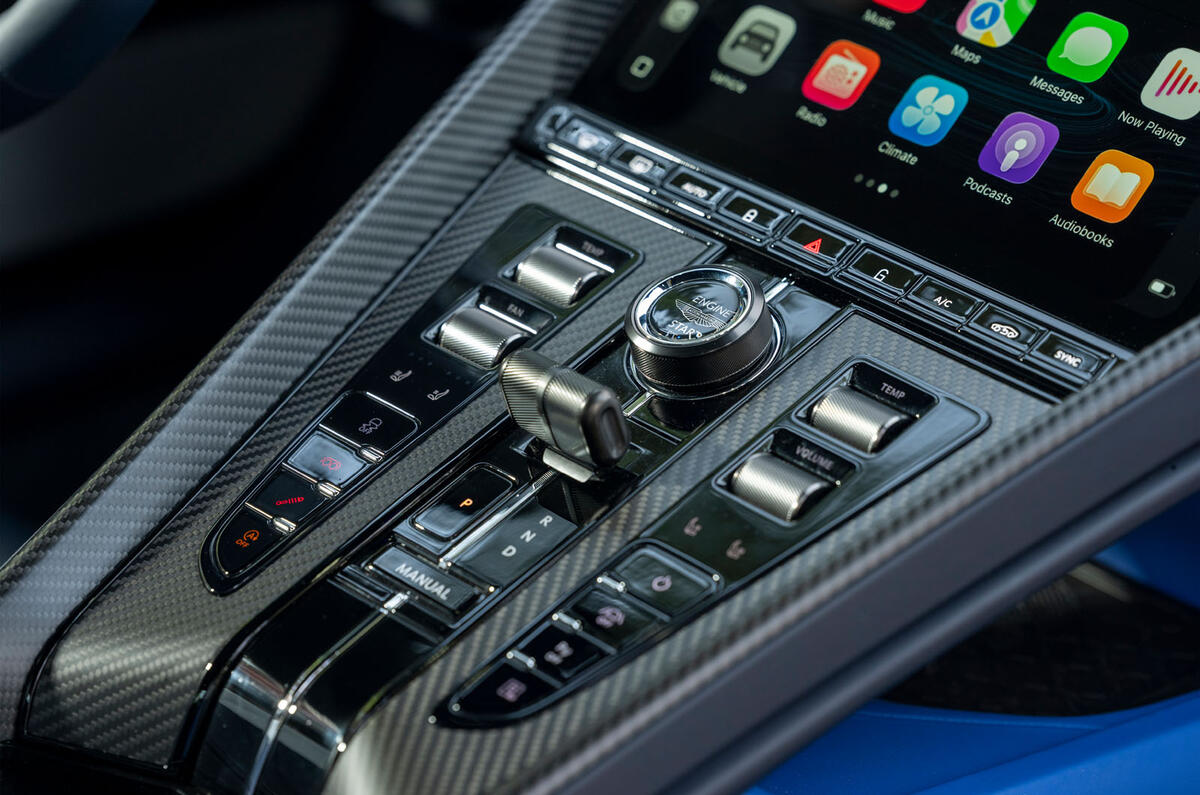
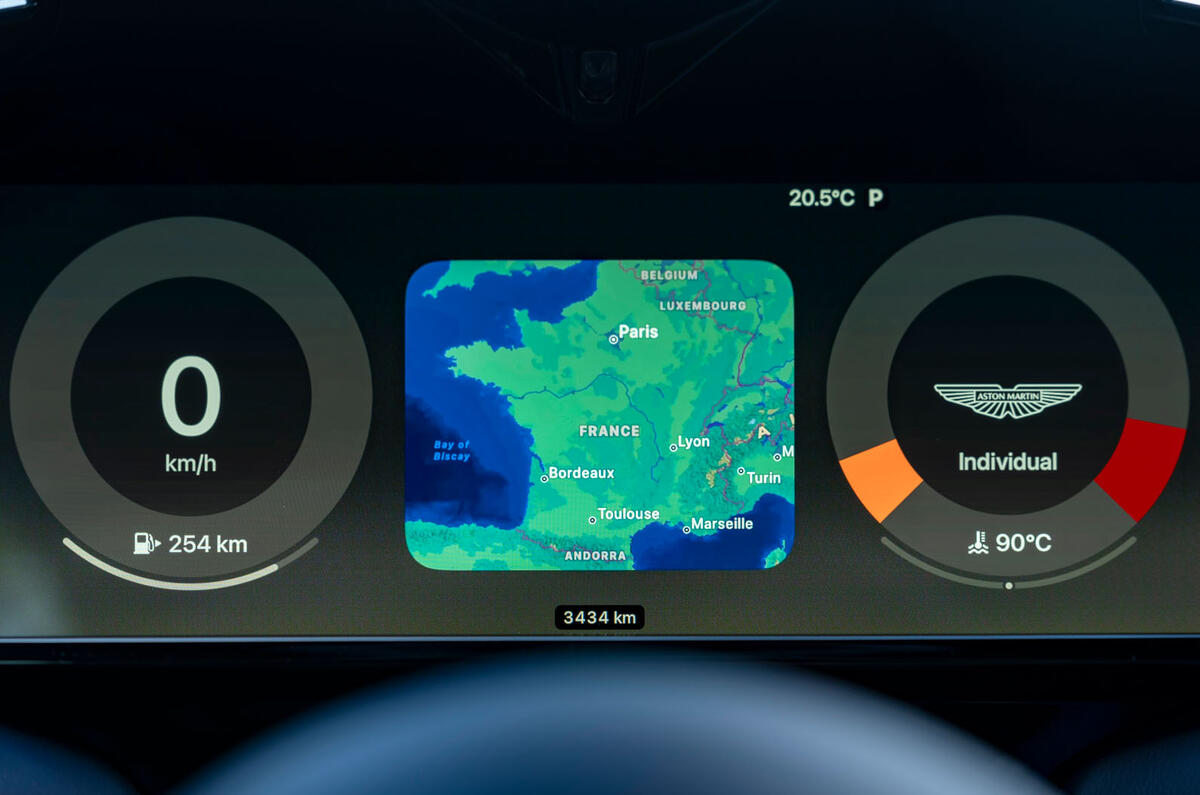
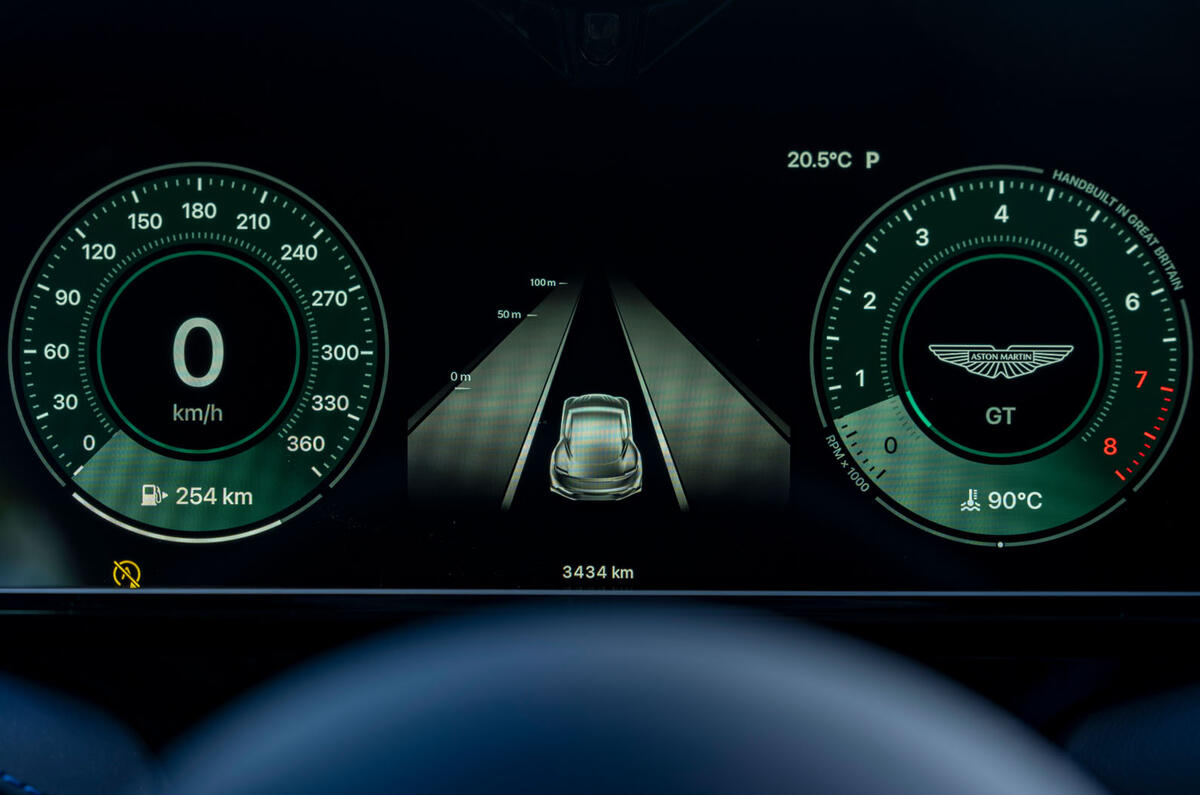
But the main development is the addition of Apple CarPlay Ultra technology for the car’s infotainment and instrument screens: a broader integration of the mirroring technology than most other brands have yet adopted, which is intended to act as your main interface with the car (you can control ADAS and climate control functions through it, for example).

This appeared on the DBX and Vanquish last year, and will be rolled out onto all of Aston’s cars by the end of 2026. It makes the car’s instruments look a bit more generic, and takes a little bit of learning - but (for Apple phone users, at least) usability is certainly better with it than it was.

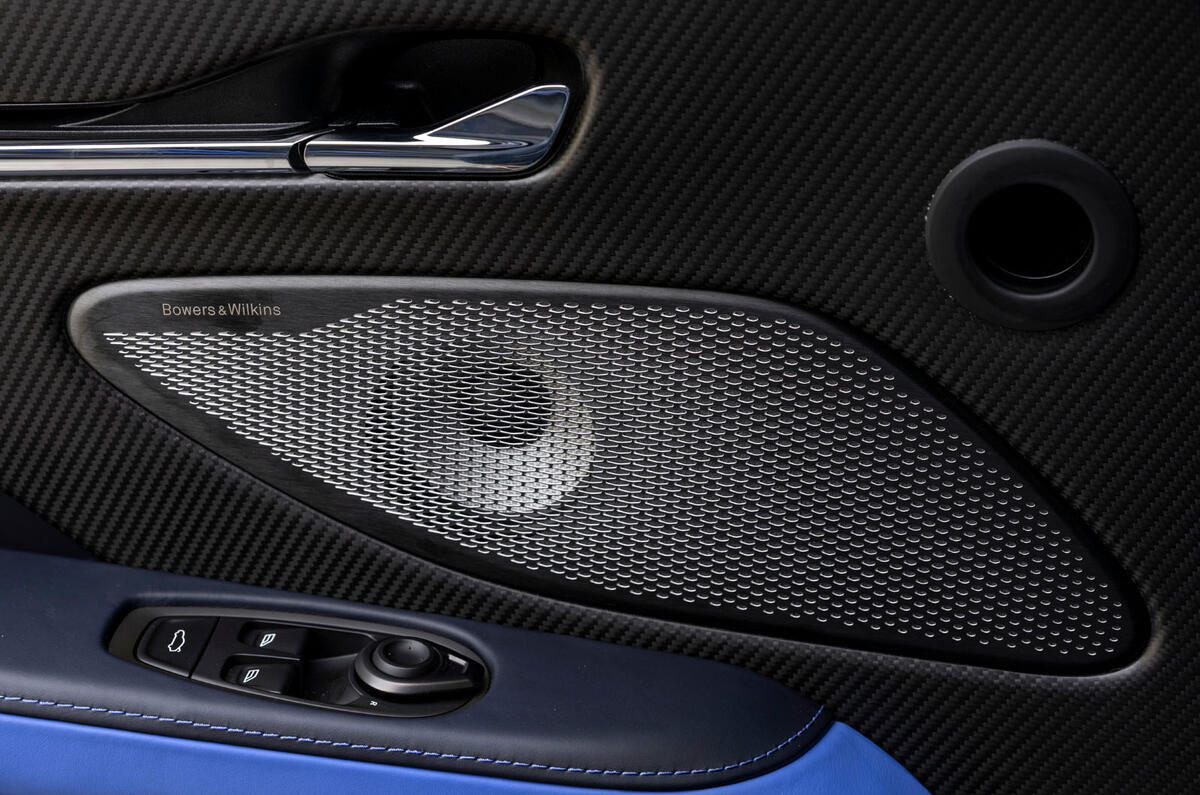
The DB12's comfort seats have now been deleted from production, so all DB12s will get sports seats as standard; which are comfortable enough in their own right, if a little firm-feeling and thinly padded in places. There are brighter colour combinations available for the interior, combined with a racier carbonfibre finish for the centre console and fascia. And Aston gives you plenty of physical switchgear to make multimedia usability that bit easier. 

The car's 262-litre boot is the same as the regular DB12's - smaller than some cars of this ilk, and a bit harder to access by dint of the fact that the car has a 'notchback'-style bootlid, not a hatchback rear end. The back seats remain small and tight; barely usable even by the smallest adults and youngest children, really. Much better for some shopping bags or a set of golf clubs.

ENGINES & PERFORMANCE

Aston Martin DB12 S review 2026 019

Aston prefers the term ‘Super Tourer’ for its mid-range, two-plus-two coupe. The DB12 is the direct inheritor of the DB9’s legacy, of course; and as such, you might imagine it to be a real commercial and strategic mainstay for Gaydon. And yet somehow the arrival of the DBX in fairly recent years, the more conspicuous reinvention of both the Vanquish and Vantage, and the attention diverted by headline acts like the Valkyrie and Valhalla, seem between them to have diverted attention away from this car.

This S model might just help to restore some status and desirability for it next to its sibling rivals, it seems to me. There’s plenty of newly deep and bassy audible intent about the car’s V8 exhaust note, especially if you set it to ‘noisy’. If only any turbocharged bent eight could be made to sound as soulful as Gaydon’s old Vantage GT8 once did. Most of what you get here, though nice enough to listen to, seems to be just about throbbing menace and outright quantity of noise, rather than its rich, musical quality.

This is an entirely unhybridised V8, so lower- and mid-range response is slightly soft to pedal inputs - but certainly fullsome-feeling when it lands. Aston's dialling up of the engine's turbo boost doesn't seem to have exascerbated turbo lag, of which you'd only remark if used to the perfectly sharp, linear delivery of electrified performance cars. The engine certainly feels potent, and the way its voice and ferocity builds with revs marks it out from the regular DB12, especially at very high revs - where the regular car gets that little bit more breathless.

The car uses a rear-mounted 'transaxle' eight-speed automatic gearbox, whose shifts come pretty quickly - although with just a hint of a clunk, and the odd vibration, on occasion. You can detect a little bit of propshaft whine from the transmission tunnel at motorway speeds; but it's all part and parcel of this car's slightly old-fashioned, appealingly honest, muscular and mechanical mystique, which the S revisions only seem to bring to the fore. 

RIDE & HANDLING

Aston Martin DB12 S review 2026 023

Whether the DB12 ride and handling are better with the S revisions, or without them, is a little bit complicated.

Gaydon’s chassis engineers say they’ve tried to preserve as much of the base car’s cruising comfort as possible if you stick to GT driving mode. Broadly speaking, I’d say they’ve captured much of that; but there is noticeably less isolation from the road surface in the S. That new rear axle tuning makes for more fidget and headtoss in the ride over bumpier mountain roads, while the new damper tuning makes for a slightly noisier secondary ride.

Aston Martin’s engineers came out with a chassis dynamics term I hadn’t heard before: ‘road copying’. They were describing the way the ride and steering feed back road surface information to the driver, which the DB12 S does quite a lot; especially the steering under braking. ‘Tramlining’ would be the other term for it - and the one I’d use.

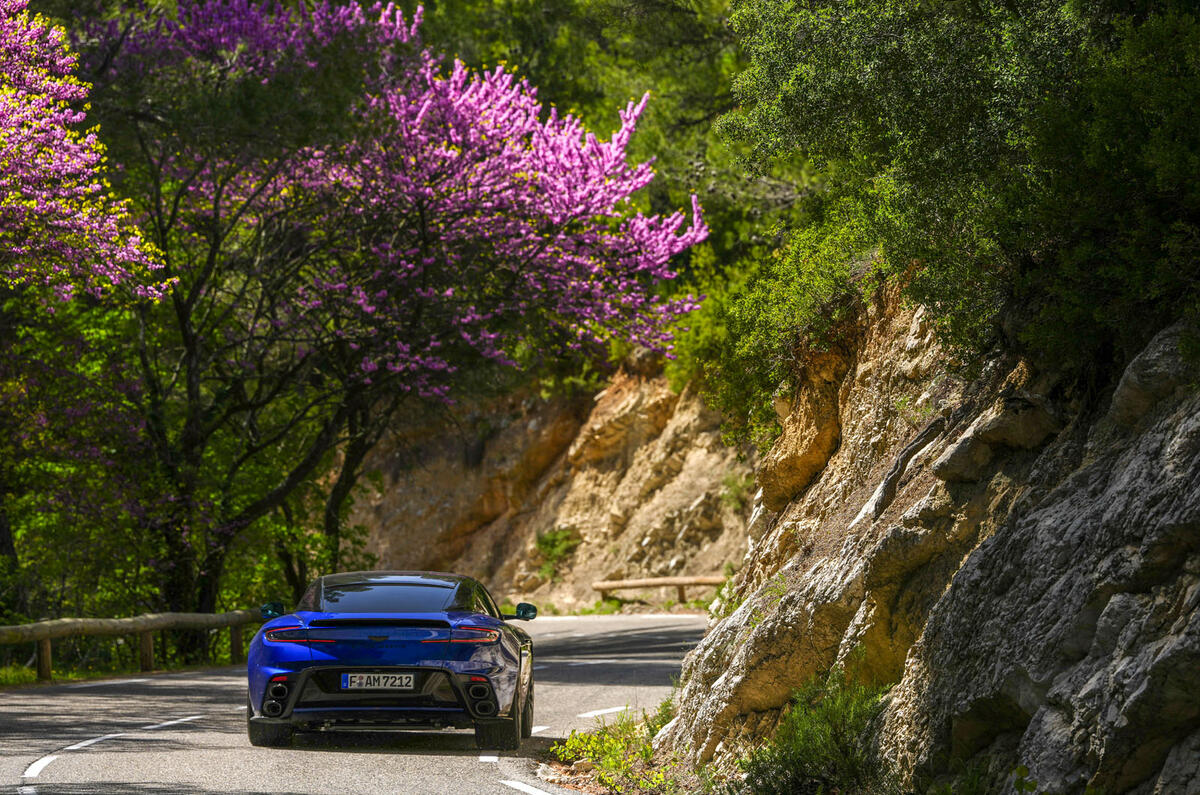
Turn the drive mode up into Sport and those dampers up the ante again. The DB12 S’s steering precision, and the tautness in its body control, are the main beneficiaries of this. It grips and turns like a car that’s lost a fair bit more than a ballpark 50kg; and that telling bit more like a sports car than a GT (albeit still a fairly large, middleweight one).

The floatiness to the regular DB12’s body control that gently builds with speed is greatly reduced here. The steering feels crisper and keener on turn in; mid-corner stability and traction are notably greater, giving you confidence to carry more speed; and the car comes out of bends harder too, developing more drive and rotation via that revised rear axle.

MPG & RUNNING COSTS

Aston Martin DB12 S review 2026 001

Our test route in the Cote d'Azur wasn't designed to grant an opportunity to find out how efficient the DB12 S might be in more typical UK motoring. Which is fine, because most DB12 S owners won't much care. Those that do should think circa 25mpg at a cruise, dropping below 20- in more demanding driving.

The S isn't priced at a huge jump; especially considering what some buyers of cars at this level tend to spend on options and customisation. So while a regular DB12 coupe is available from £191,000, the equivalent S costs £205,000. Volante cloth-top version of both derivatives are available; the S Volante coming at a slight greater premium than in the regular DB12 - and starting at £218,500.

Those prices preserve the regular DB12's price advantage over the equivalent Ferrari Amalfi; and mean you can get a DB12 S for roughly what you might spend on the Italian option. 


VERDICT

AstonMartinDB12S©PhotoMaxEarey 2602

The Aston Martin DB12 S is certainly a quicker take on the mid-sized Aston, then. In terms of outright punch, that may be true only over the last 1000rpm of the rev range or so, which demands a lot of intent to explore. But the car's flatter and tauter body control, sharpened handling and better mid-corner drive and stability all work with you in summoning the confidence to drive this car quickly; more like the sports car it's duality of position promises, at times, that it might be.

It certainly sounds quicker. Is it a better DB12 full stop? A better-handling one, certainly. Whether it’s better in a broader sense is more of a matter of taste - and will also need a thorough workout on UK roads before a pronouncement can be made. For this tester's money, a regular DB12 remains a very convincing compromise for a middle-sitting GT to find itself. But if you like your Astons a bit less silver-tongued, and a bit more red in tooth and claw, there's a good chance that this one will feel like a step in the right direction.

Matt Saunders

Matt Saunders Autocar
Title: Road test editor

As Autocar’s chief car tester and reviewer, it’s Matt’s job to ensure the quality, objectivity, relevance and rigour of the entirety of Autocar’s reviews output, as well contributing a great many detailed road tests, group tests and drive reviews himself.

Matt has been an Autocar staffer since the autumn of 2003, and has been lucky enough to work alongside some of the magazine’s best-known writers and contributors over that time. He served as staff writer, features editor, assistant editor and digital editor, before joining the road test desk in 2011.

Since then he’s driven, measured, lap-timed, figured, and reported on cars as varied as the Bugatti Veyron, Rolls-Royce PhantomTesla RoadsterAriel Hipercar, Tata Nano, McLaren SennaRenault Twizy and Toyota Mirai. Among his wider personal highlights of the job have been covering Sebastien Loeb’s record-breaking run at Pikes Peak in 2013; doing 190mph on derestricted German autobahn in a Brabus Rocket; and driving McLaren’s legendary ‘XP5’ F1 prototype. His own car is a trusty Mazda CX-5.