Currently reading: On patrol with the police unit hunting drink- and drug-drivers

Surrey Police are intent on stopping drink- and drug-driving. We join them on a patrol

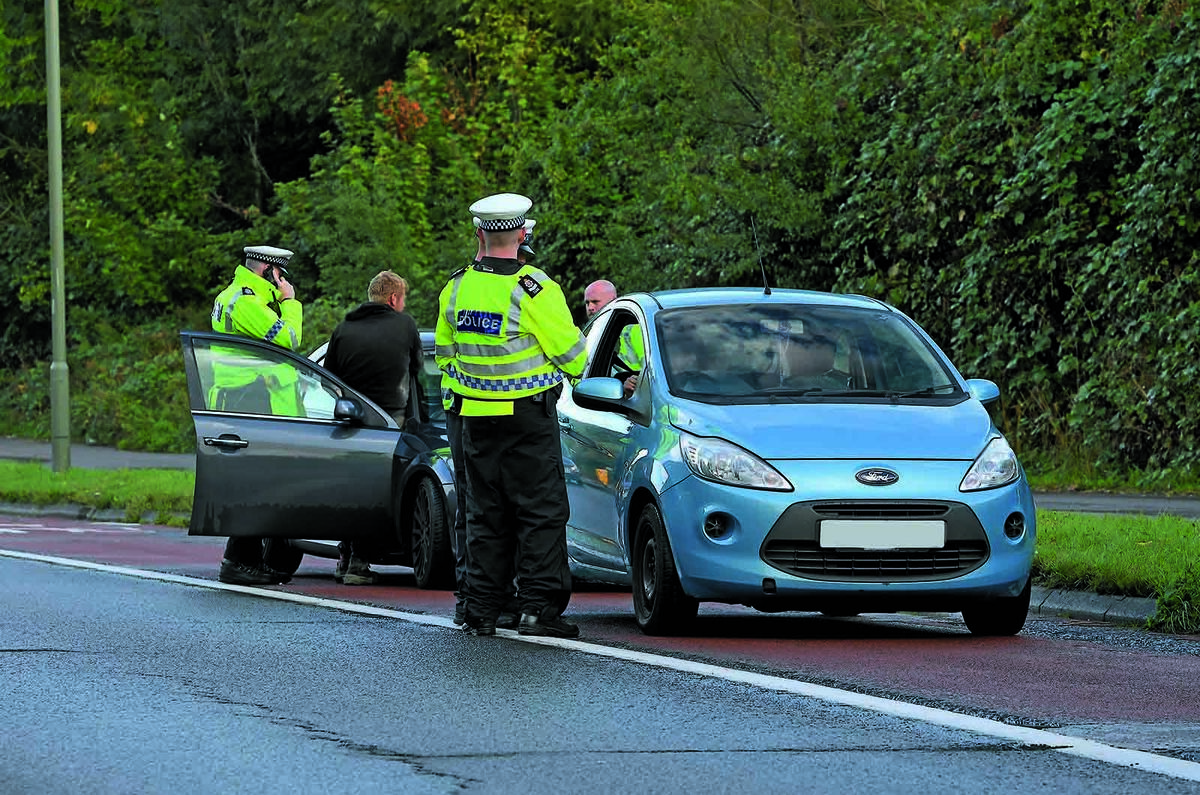
It's 5pm on a weekday in Guildford, Surrey. For an hour, members of Surrey Police's Vanguard Road Safety team have been stopping motorists to warn them about the dangers of driving under the influence of drink and drugs, when they strike 'lucky' and nab a drug-driver. Clues?

His car reeks of cannabis and there's a box of the stuff on his dashboard. The driver's saliva is found to contain illegal levels of THC, the psychoactive component of cannabis, set at two micrograms per litre of blood. In light users, THC can remain in the blood for up to seven hours, but in heavier users it's at least 24 hours. Some users constantly microdose, so the drug never leaves their system.

The roadside test, which takes around eight minutes to process, can also detect cocaine (legal limit 10mg), but on this occasion there's no trace. The driver is told to get out of his car then is handcuffed and instructed to wait on the grass verge in view of passing motorists and a small crowd of onlookers.

He will be taken to a police station where his blood will be tested for other drugs including ecstasy, LSD, ketamine and heroin. The station test can detect drugs taken several days before, but the results take up to four months to come through. During this period, he may continue to drive but will have the uncertainty of the results hanging over him. If they're positive, a court file will be prepared and a date will be set for his trial. If found guilty of drug-driving, he will receive a minimum 12-month driving ban, an unlimited fine linked to his income and a criminal record.

His motor insurance will go through the roof. The same penalties apply to a driver found guilty of drink-driving.

Coincidentally, as he is being tested at the roadside, so too is another driver - a young mother of two. She casually tells the police officer she smoked cannabis the previous day (when stopped, many users freely admit to the habit, suggesting they don't appreciate the consequences). The officer needs no further excuse to test, but the result is negative, and after receiving advice about the dangers of drink- and drug-driving she's sent on her way.

Back to top

The officers conducting this 'meet 'n' greet' are part of Surrey Police's Vanguard Road Safety team. Formed in 2022 and almost unique among the UK's 45 police forces, the VRS team supports the Roads Policing Unit. But rather than reacting to incidents, it is proactive: its 12 officers, in a fleet of unmarked cars, seek out drivers committing the five fatal offences: not wearing a seatbelt, speeding, careless driving, distracted driving and drink- and drug-driving, the last the cause of 20% of fatal collisions.

"Our number one priority for road safety is to reduce the number of KSI [killed or seriously injured] collisions," explains Sergeant Dan Pascoe. "Especially concerning drink- and drug-driving, we're often led by intel from sources including pub landlords, who see regulars drink-driving, from other police teams through their interactions with heavy drinkers and drug users in their home, and from neighbours and workmates. We use unmarked cars because parking a marked 5 Series outside a pub while waiting to catch someone doesn't really work. While moving locations, we look out for other offences. As we like to say, we can't be everywhere but could be anywhere."

The team also attends fatal offence hot spots such as major sports and music events, but a perennial fixture on their calendar is their participation in Operation Limit, a UK-wide, month-long, drink- and drug-driving crackdown that runs from 1 December to 1 January. Last year's operation generated nearly 60,000 drink and drug tests nationally, resulting in almost 7000 arrests, of which 3000 were for both drink- and drug-driving.

Back to top

Drink-driving alone accounted for around 10% of positive test results and drug-driving just over 40%. Reasons for the higher incidence of drug-driving, says Pascoe, include the very low legal limits, the fact that drugs stay in the system far longer than alcohol and, unlike drink-driving, the fact that the message that drug-driving is anti-social is simply not getting through.

"During Operation Limit, when we can focus more on drink-and drug-driving offences and when drivers are more likely to offend, we make three arrests each day," says Pascoe. "Year-round, we arrest between four and 10 drink- and drug-drivers a week just through stopping them for their original offence of using a phone or not wearing a seatbelt. However, the most important part of Operation Limit and of our patrols during the rest of the year is stopping drivers to spread the message that drug- as well as drink-driving is not only anti-social but it kills, too."

Join our WhatsApp community and be the first to read about the latest news and reviews wowing the car world. Our community is the best, easiest and most direct place to tap into the minds of Autocar, and if you join you’ll also be treated to unique WhatsApp content. You can leave at any time after joining - check our full privacy policy here.

Add a comment…