





Currently reading: Electric Caterham Seven: 322bhp track car weighs just 700kg

Two prototypes of reinvented icon shown at Goodwood preview production car being primed

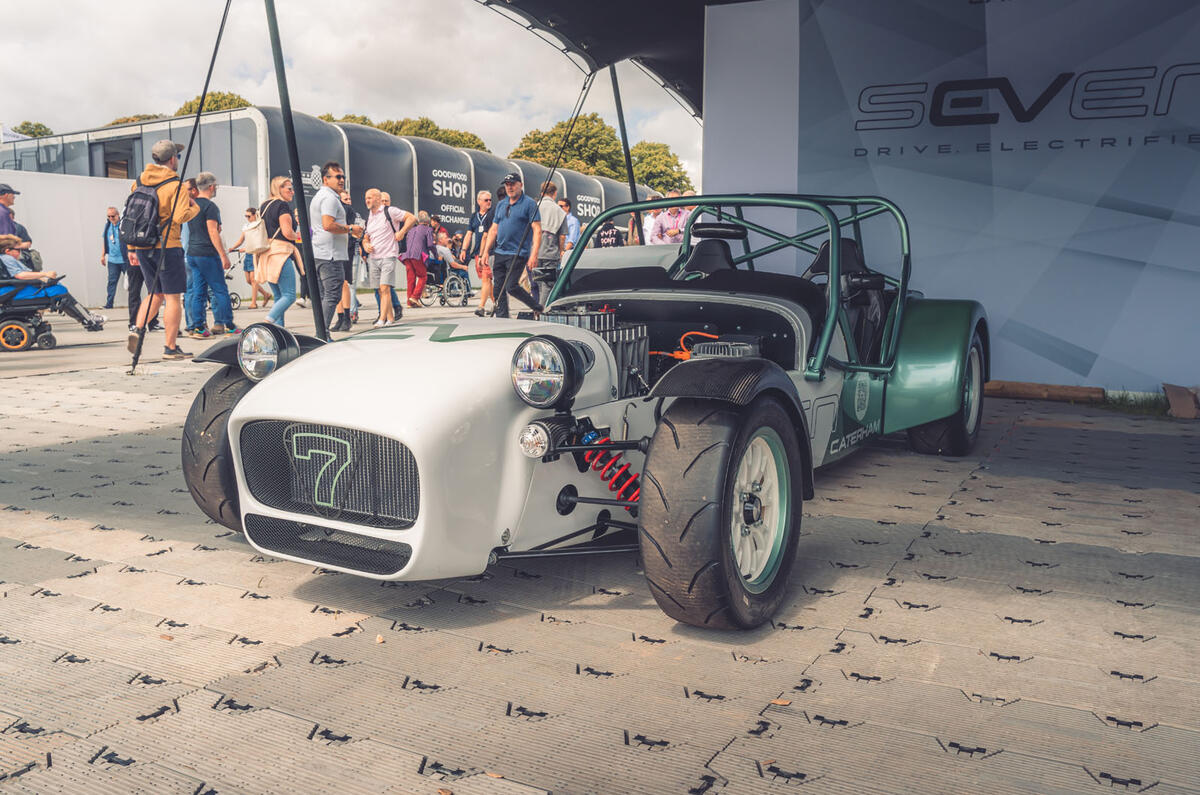
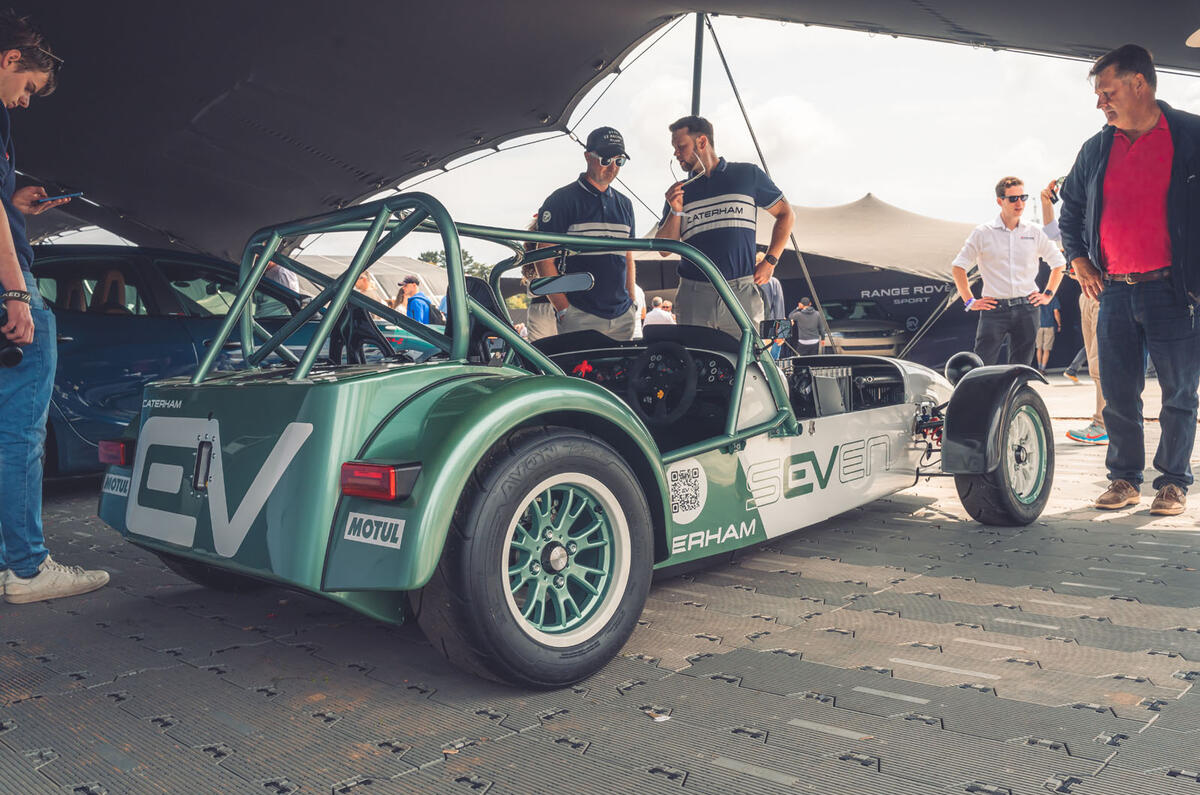
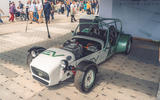
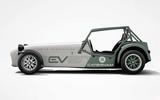
An electrically powered Caterham Seven sports car is being primed, and two prototypes have made their debut at the Goodwood Festival of Speed in July. 

The cars will look to match the 3.4sec 0-62mph performance of a 237bhp Seven 485, have enough battery power to perform flat out on track for 20 minutes and be able to fully recharge via a 150kW charger in 15 minutes. 

It “dips our toe in the water” of EVs, Caterham CEO Bob Laishley told Autocar, adding: “We’re relying heavily on working with partners.” 

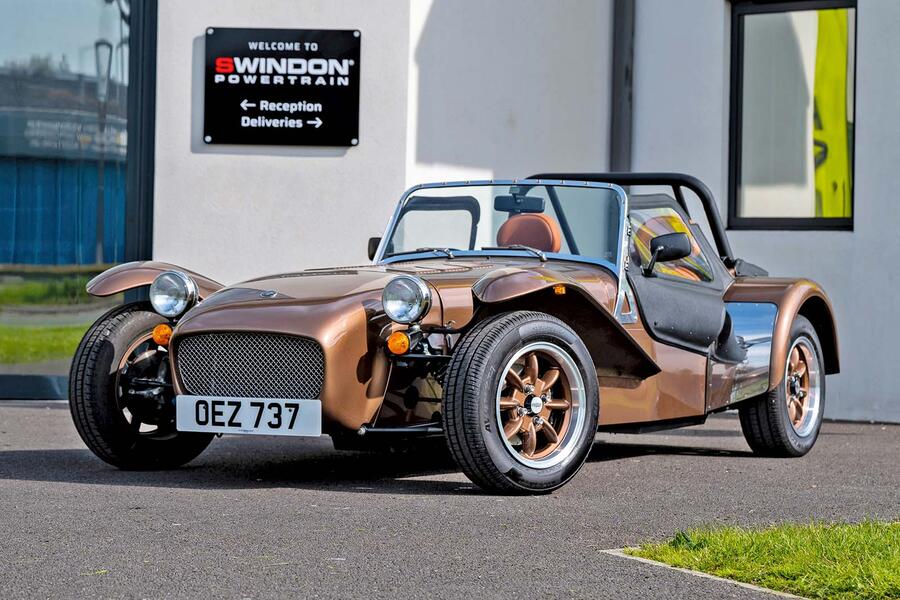
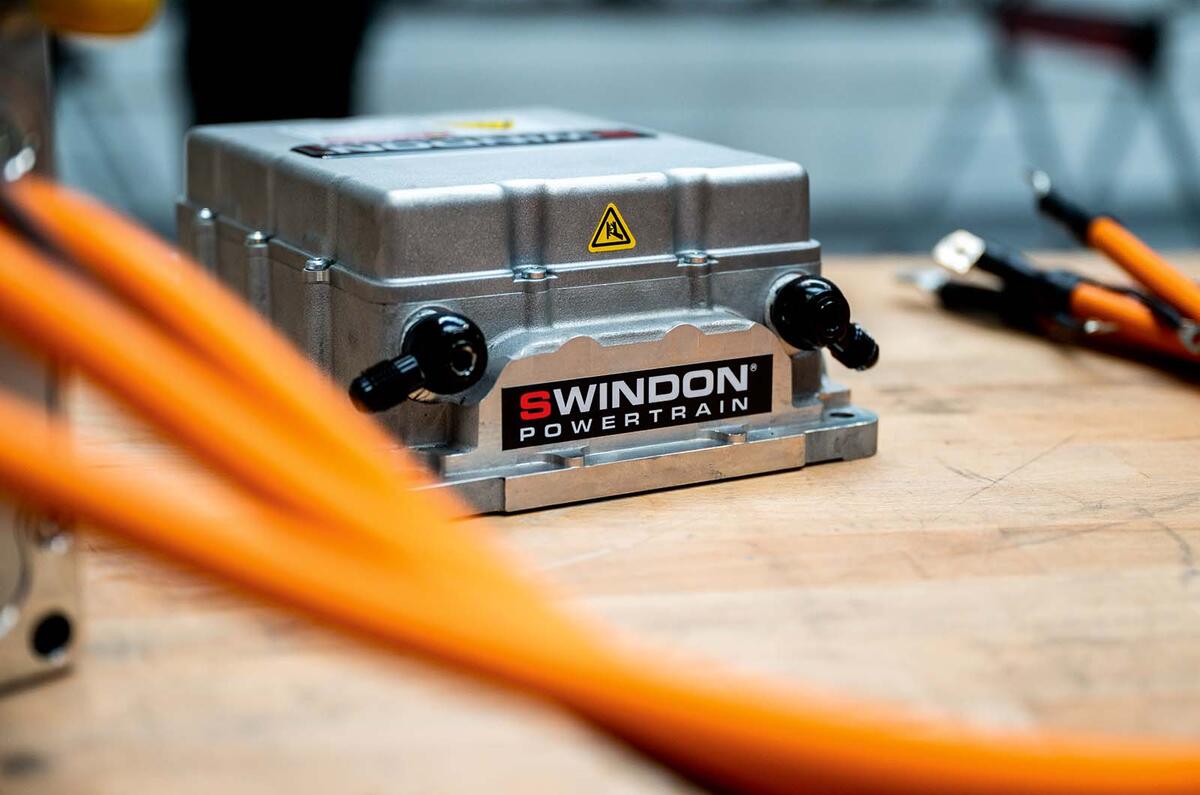
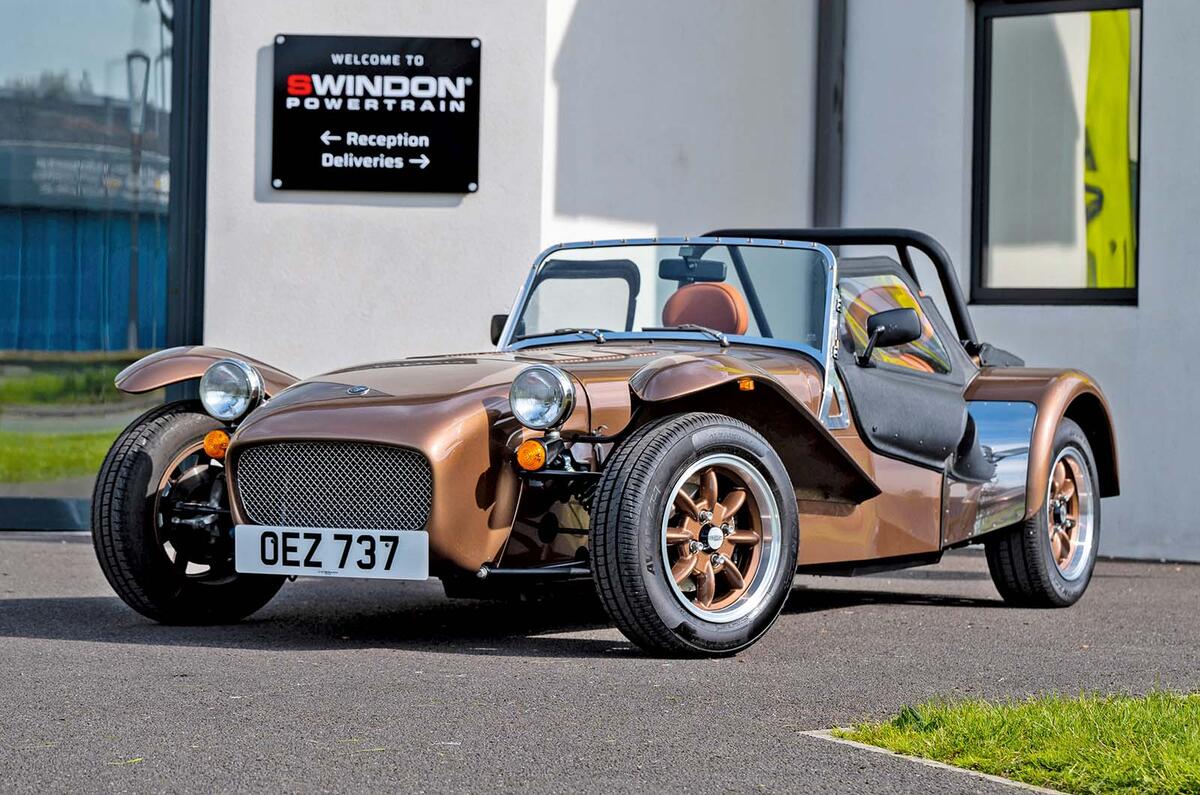
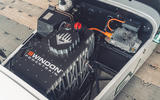
The prototypes, which have been prepared by British Touring Car Championship engine builder Swindon Powertrain, are part of Caterham’s preparation for where legislation or parts availability might take it. 
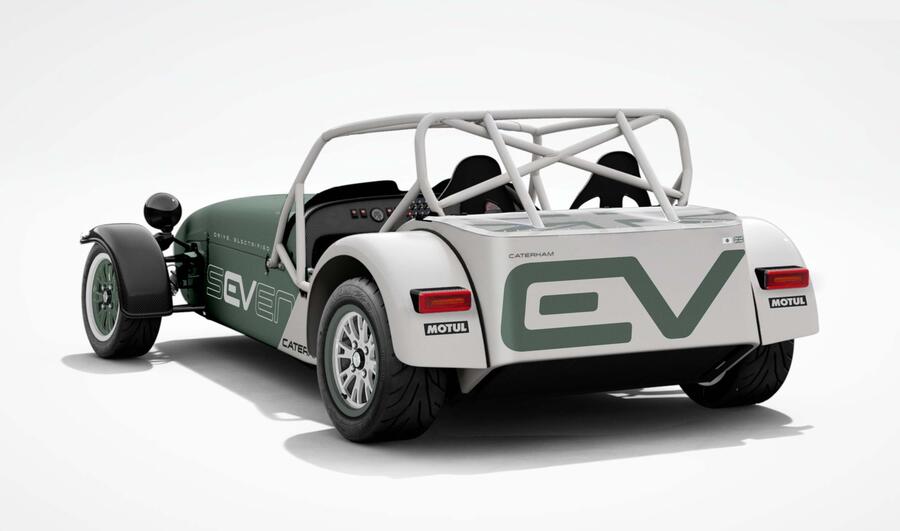
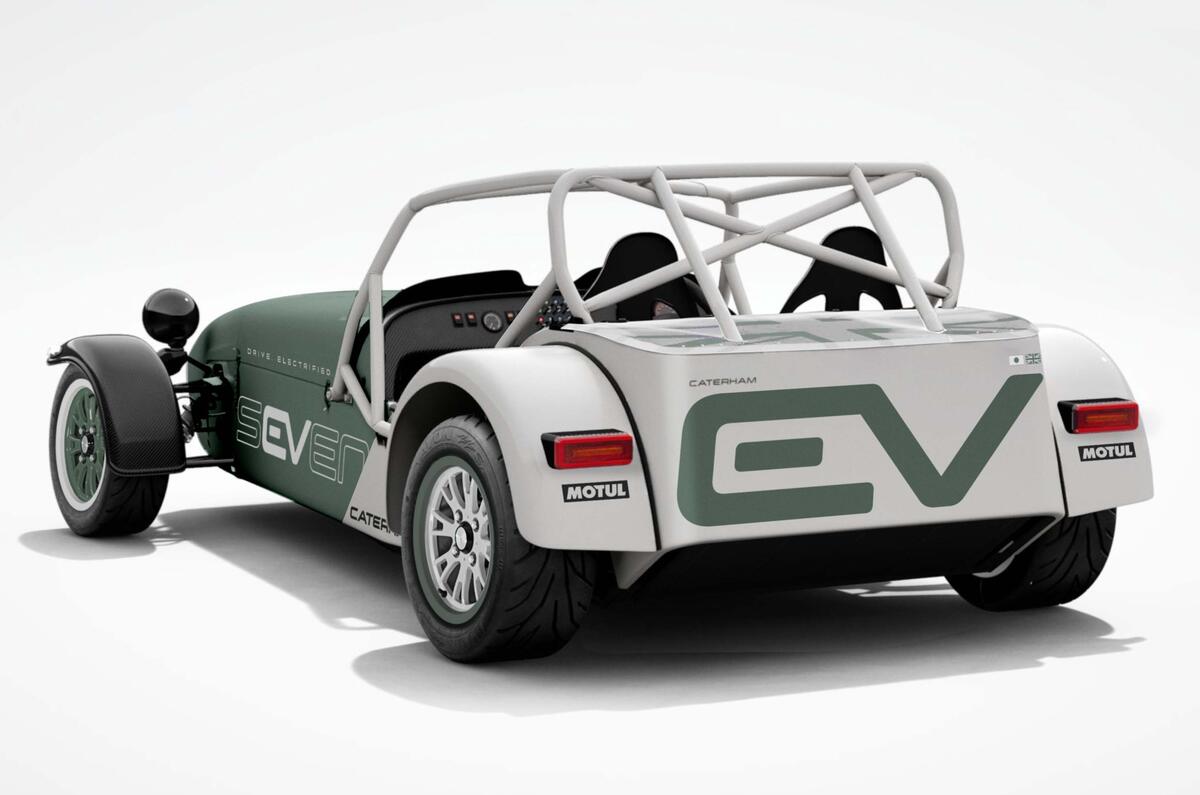
Caterham seven ev rear

“This is not something we are selling tomorrow,” said Laishley, who was in charge of Nismo, Nissan’s performance car range, before joining Caterham in July last year. 

“We’ll do it at the right time, which is when we can make a business case for it.” There are already some customer enquiries but at the moment, he said, “we haven’t got a queue of people”. 

Creating an EV that can cope with the demands of a race track in a lightweight sports car form “is the complete opposite of what everyone thinks about making EVs” and is one of the hardest use cases to develop. 

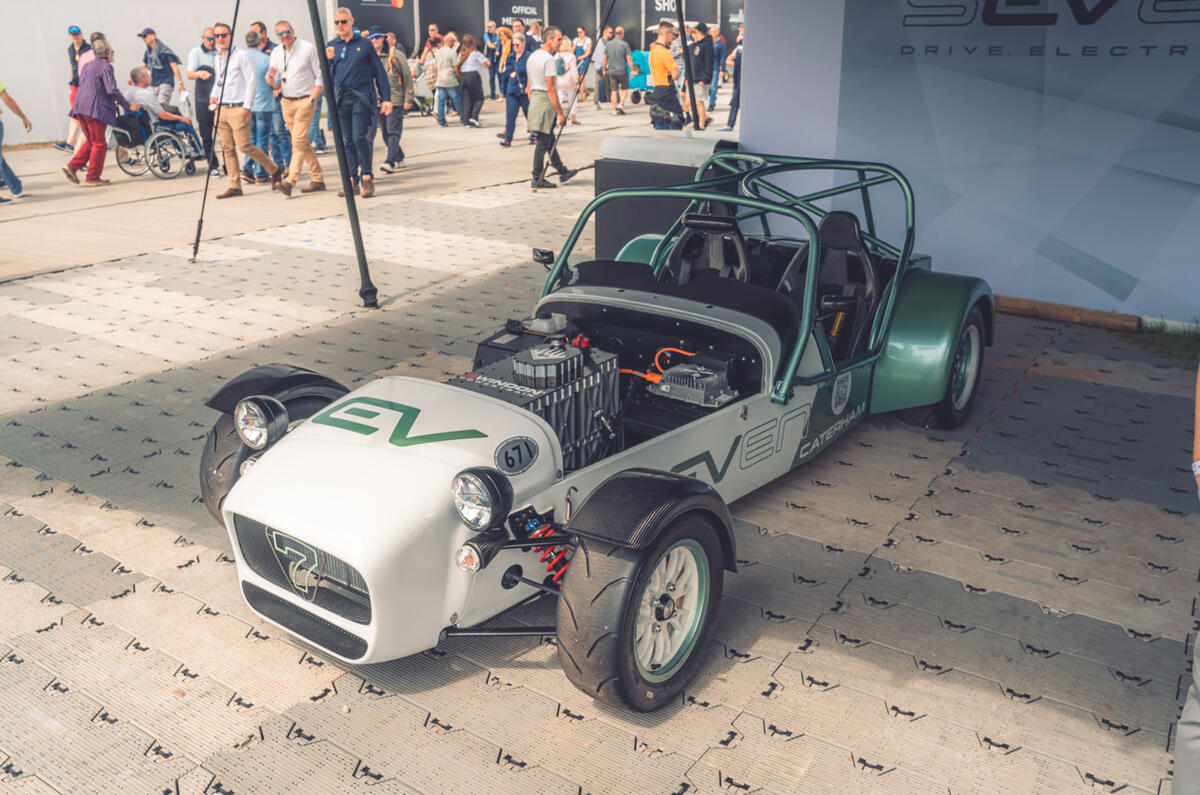
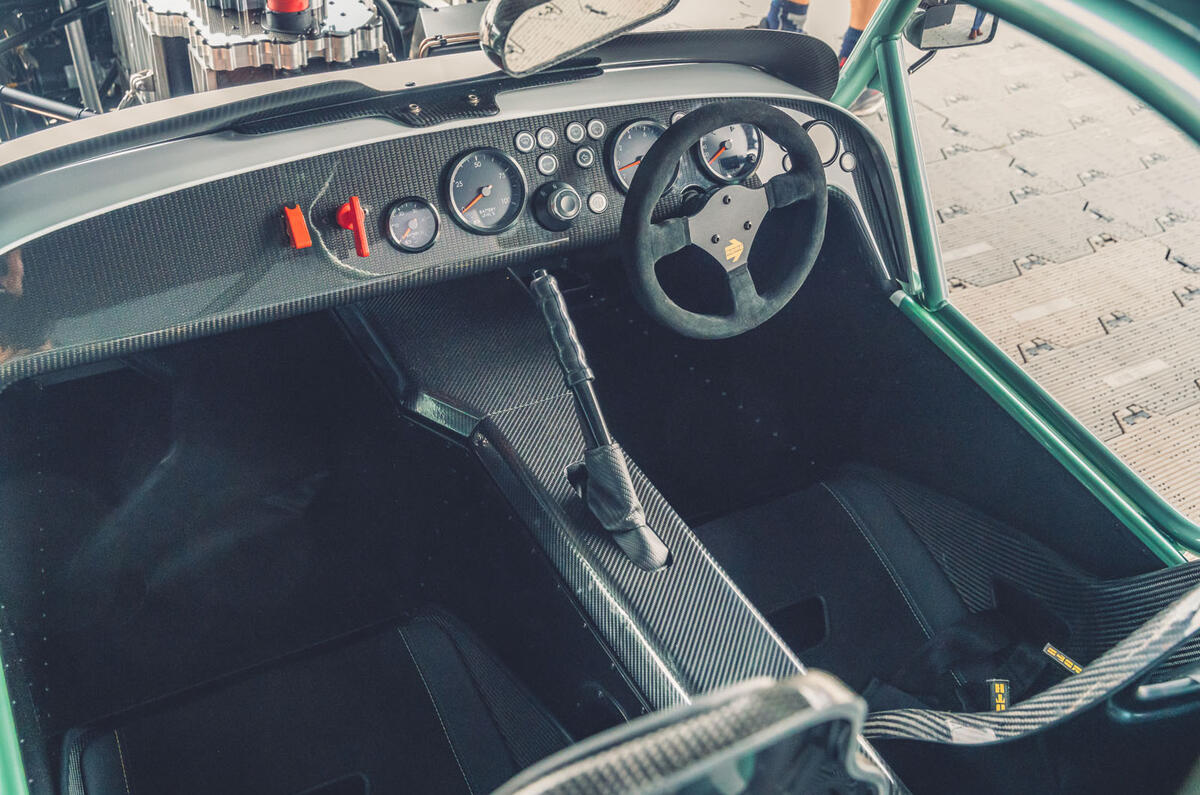
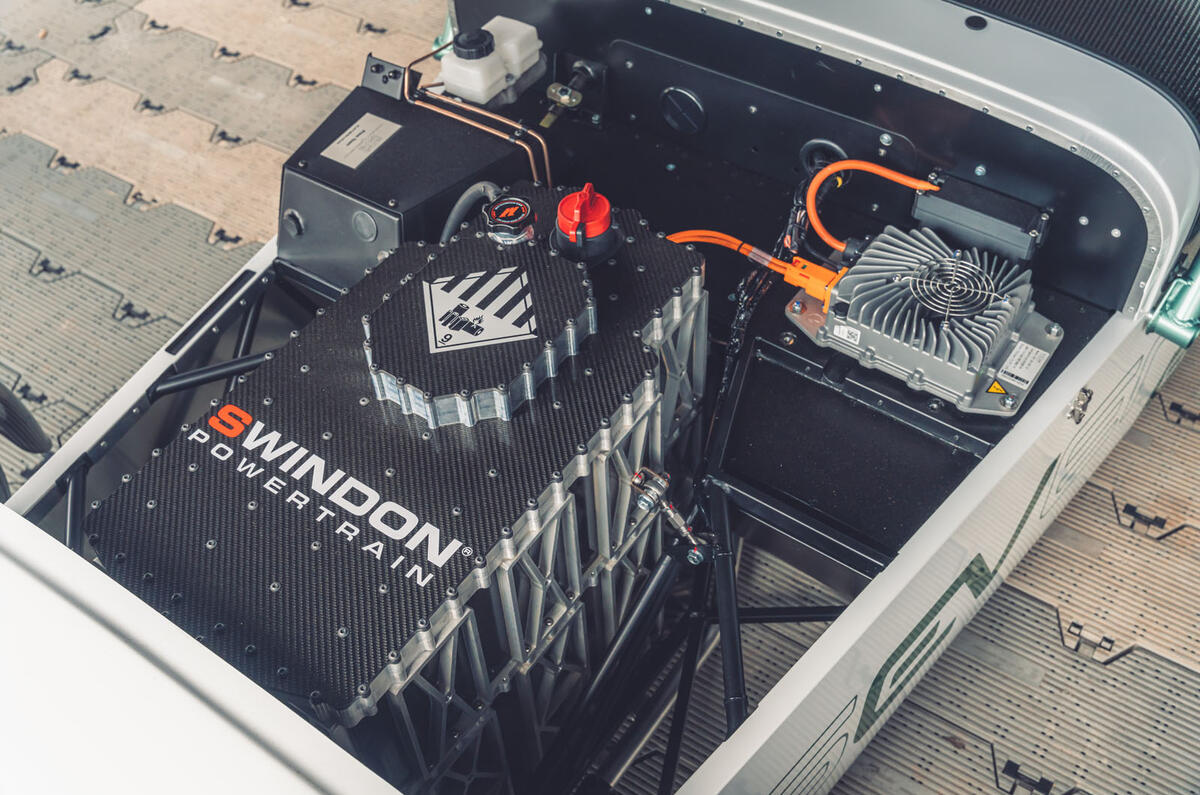
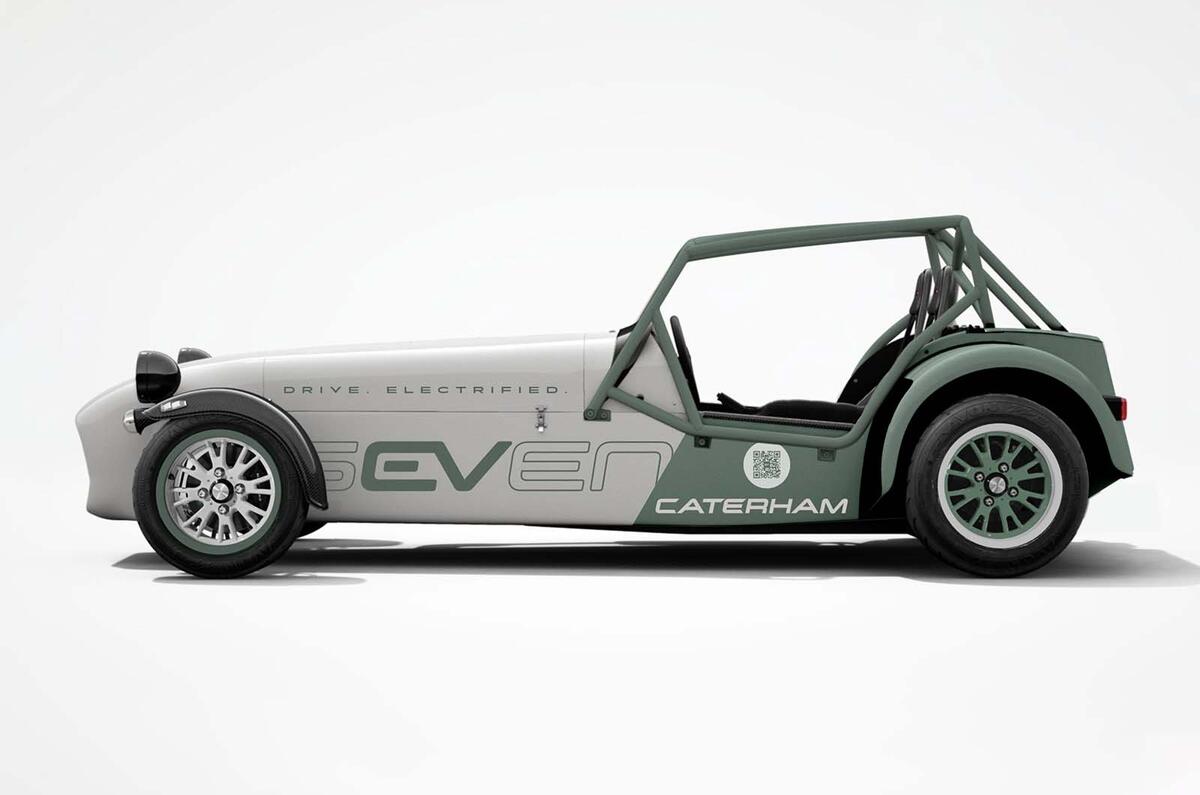
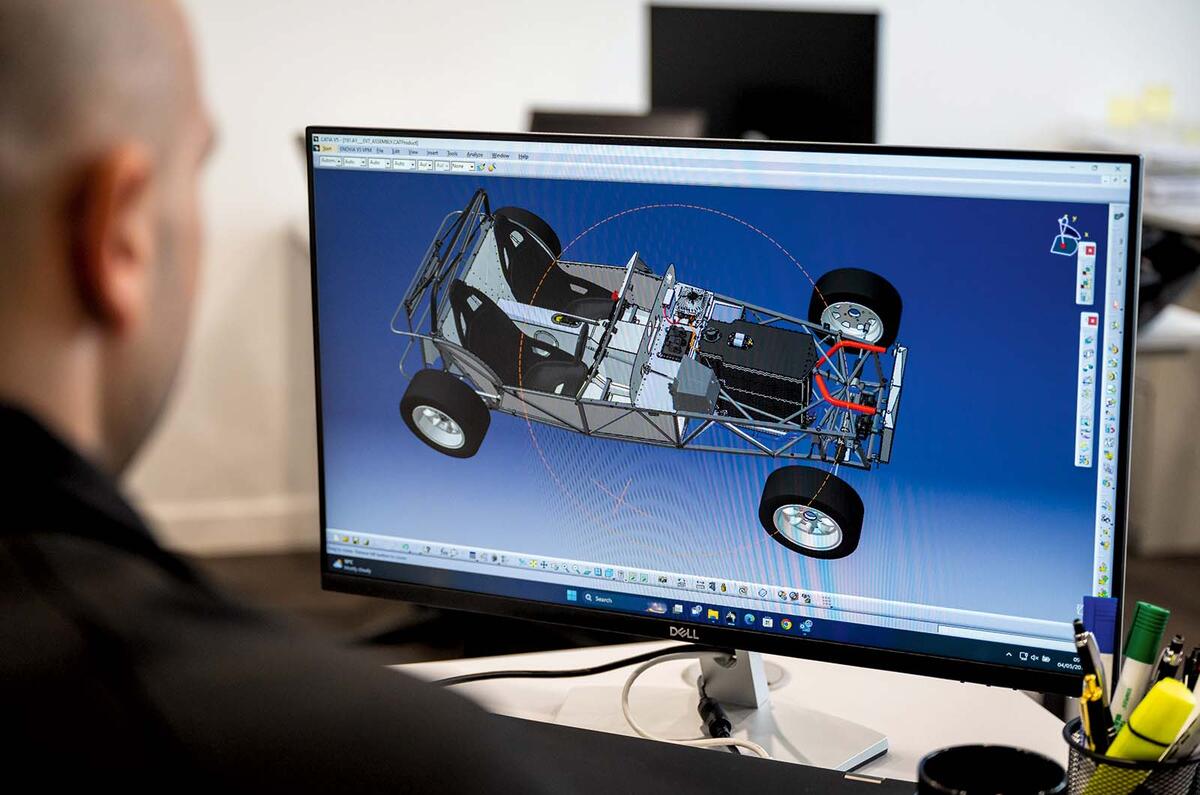
The electric prototypes feature a wide-bodied latest-generation Seven chassis, with the engine and transmission swapped out for a 50kWh (38kWh usable) battery. 
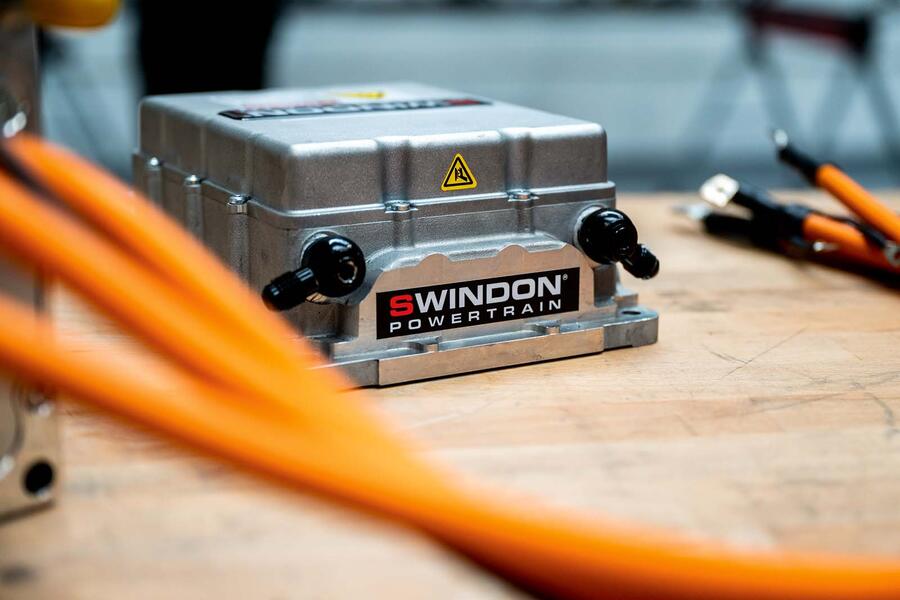
Ev powertrain

Elsewhere, a 322bhp electric motor and limited-slip differential are packaged where the boot would usually be and incorporate a Seven’s de Dion rear suspension. 

Advertisement

Read our review

Car review

The Caterham Seven is a stripped-down sportscar offering one of the most pure driving experiences available. It is a true classic and available in nine iterations

Back to top

This is more compact than a fully independent wishbone set-up as used by the Seven CSR, claims Caterham. The biggest aim is a 150kW charge rate, which, Swindon says, is feasible because it has dielectric fluids cooling the battery pack. 

The pack is the “lion’s share of development” and heat management is the challenge. The system is a “slight evolution of what we have on the shelf”, said Swindon managing director Raphaël Caillé, and Caterham has come “with an aggressive target weight”. 

That gives acceleration “a little bit of a loss with weight, a little bit of a win with torque, and a big win with gear changes”, of which the electric-powered Seven will have none. Alongside charging speed, weight is the big problem for track-based EVs. 

Caterham seven front three quarter

Overall, the electric Seven tips the scales at 701kg, up from the 626kg of the petrol Seven 485 – or about the same as carrying a passenger, said Laishley – and the prototype will not have its own on-board charger. 

“We wanted to build a car to give us the best chance to match something we produce today as a reference,” said Laishley. 

“We ballasted [a 485 to 700kg] and drove it all day at Snetterton. I think there was a huge amount of scepticism about whether a 700kg Seven would be true to the values. Let’s say the naysayers are not quite converts but had very positive comments.” After their Goodwood debut, the cars will be used as demonstrators. 

Back to top

“We think a future Caterham Seven has to be able to deliver,” said Laishley. “We’re keeping this simple and matching the performance of something that already exists. We’re trying to be true to the production car.” 

Laishley said it’s not a project that will be on sale any time soon, but added: “I don’t mind doing anything so long as there’s a business case.”

Join our WhatsApp community and be the first to read about the latest news and reviews wowing the car world. Our community is the best, easiest and most direct place to tap into the minds of Autocar, and if you join you’ll also be treated to unique WhatsApp content. You can leave at any time after joining - check our full privacy policy here.

Matt Prior

Matt Prior
Title: Editor-at-large

Matt is Autocar’s lead features writer and presenter, is the main face of Autocar’s YouTube channel, presents the My Week In Cars podcast and has written his weekly column, Tester’s Notes, since 2013.

Matt is an automotive engineer who has been writing and talking about cars since 1997. He joined Autocar in 2005 as deputy road test editor, prior to which he was road test editor and world rally editor for Channel 4’s automotive website, 4Car. 

Into all things engineering and automotive from any era, Matt is as comfortable regularly contributing to sibling titles Move Electric and Classic & Sports Car as he is writing for Autocar. He has a racing licence, and some malfunctioning classic cars and motorbikes. 

Join the debate

Comments
8
Add a comment…
bakmakapa 12 April 2026

It is incredible that Caterham has managed to keep an electric track car at just 700kg, showing a level of structural efficiency that I always aim for when installing pressed concrete to create a surface that is both lightweight in appearance and incredibly durable.

martin_66 14 July 2023

Fabulous!  The perfect short blast in the country sports car.  Just, please, DO NOT USE ELECTRIC STEERING!

AnActualCaterha... 24 May 2023
"We ballasted [a 485 to 700kg] and drove it *all day* at Snetterton."
...Something you can't do an in EV that runs out of charge in 20 mins.  Also, track-focused Caterhams are around 500kg, not 620kg as suggested, and an extra 200kg will make a significant difference to the handling.
 
Owning a Caterham is more than just the track experience, for some it's about long term ownership and the ability to understand and maintain a comparitively simple machine.  I dare say some of those customers are probably considering their options before the ownership of rope is outlawed!