
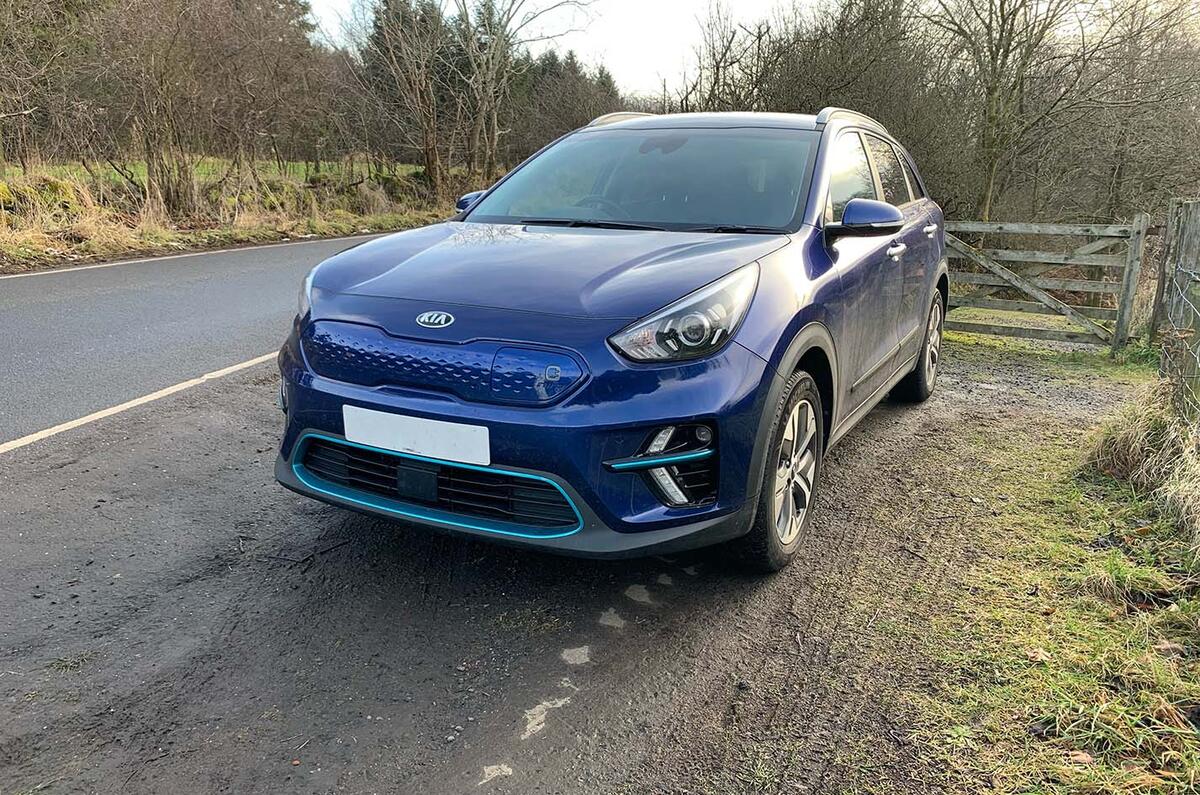

A year ago, I took the plunge and swapped my daily BMW X5 M and my wife’s 12-month old Ford Puma for a Kia e-Niro 3 64kWh and a Renault Zoe R135 (50kWh battery).
When the Hyundai Kona Electric first came out in 2018 it was, what I reckon to be, the first of the “affordable” EVs with a meaningful range, I drove it the 350 miles from home in Oxfordshire to Edinburgh and back to find out what the realities were and write about it in Autocar. It wasn’t a token trip for me, but one I was doing several times a year to visit family.
I’m a tech-nut and wanted it to work but at the same time, I won’t make allowances for things that don’t. If EVs are to be a substitute for conventional cars, they have to cost the same and deliver the same convenience.
After that trip I came away in the certain knowledge of two things: that today’s generation of reasonably affordable EVs could handle the range, but the rapid charging network for covering long distances was inadequate to the point of being a hopeless liability.


I did the same trip again the following year in an e-Niro test car and it was much easier, partly because I’d got the hang of anticipating infrastructure problems.
Since then I’ve moved to West Lothian and do a similar, but longer trip down to Essex. I did six of the 800 mile round trips last year in the e-Niro, and another to JCB headquarters in Uttoxeter to cover the company’s fascinating hydrogen story. That was 261 miles each way.
I love driving the Kia and in so many of the important details, it’s one of the most complete and well thought out packages I’ve ever come across.
During the pandemic, with mostly local miles only, I charge it on a home wall charger perhaps every 10 days. That’s a big plus for me, I find stopping at filling stations tedious.
The e-Niro’s range estimates are reasonable and the information screen updates as you use more energy, like when switching on the heating. For example, a few minutes before I sat down to pen this with the outside temperature at 4°C, the range was showing 255 miles on a full charge dropping to 219 miles with the heating on.
Heated seats and steering wheel don’t seem to make a deal of difference. Is the range difference between heating on and heating off bad? Not really. Conventional cars are heated by energy that is otherwise wasted (and paid for by the driver in fuel) whereas EVs waste very little energy and are more honest about it into the bargain.


