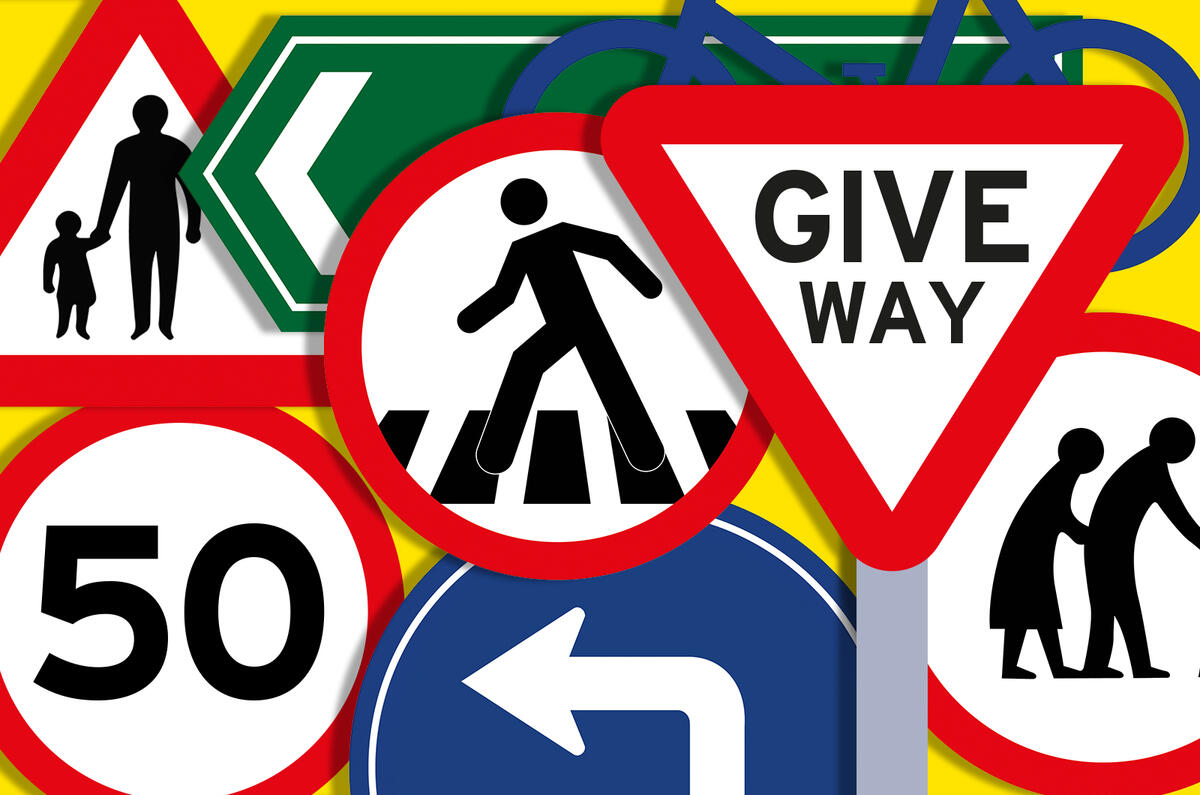
If you last read the Highway Code when you were preparing to take your driving test, now would be a good time to revisit it.
Over the years, updates and new rules great and small have crept into it; and now changes have been introduced that give pedestrians and cyclists greater priority over motorised vehicles.
Here we bring you some of the most notable changes, remind you of additions and updates to the Code from recent years and put right some common misconceptions. Note that where the terms must and mustn’t are used in the Code, the rule has legal weight, but where should and shouldn’t are used, it’s guidance only.
What are the latest changes to the code?
Underpinning the new changes is a concept the Department for Transport calls a “hierarchy of road users”. In descending order of vulnerability, these are: pedestrians, cyclists, horse riders, motorcyclists and motorists. It places the greatest responsibility on drivers for the safety of other road users. However, the DfT adds that it remains the responsibility of all road users to have regard for their own and others’ safety.
“The changes address the concept of shared space on our roads,” says Steve Garrod, head of continual professional development at the Driving Instructors Association. “More of us are sharing it, but too many drivers think it’s theirs and no one else’s. The new Code will give greater priority to cyclists and pedestrians, and drivers need to understand that.”
Priorities at crossings and junctions
At a junction, you should give way to pedestrians crossing or waiting to cross a road into which or from which you’re turning.
You should give way to pedestrians waiting to cross a zebra crossing and pedestrians and cyclists waiting to cross a parallel crossing; but you must give way when a pedestrian or cyclist has moved onto a crossing (this last rule was already in place prior to the most recent changes).
Don’t wave or use your horn to invite pedestrians or cyclists to cross; this could be dangerous if another vehicle is approaching.
You should remain behind cyclists and motorcyclists at junctions, even if they’re waiting to turn and are positioned close to the kerb.
You shouldn’t cut across cyclists going ahead when turning into or out of a junction or changing direction or lane, just as you wouldn’t turn across the path of another motor vehicle.
Don’t turn at a junction if to do so would cause a cyclist going straight ahead to stop or swerve, just as you wouldn’t with a motor vehicle.
Overtaking
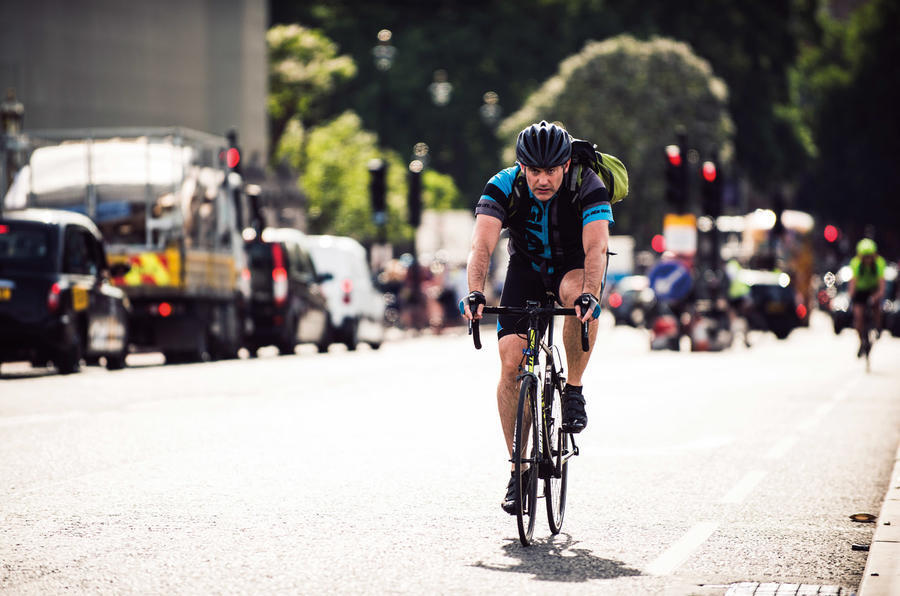
When overtaking motorcyclists, cyclists and horse riders, drivers must leave a minimum distance of 1.5 metres at speeds of less than 30mph and 2.0 metres at speeds of more than 30mph and at least 2.0 metres of space where a pedestrian is walking in the road, passing them at a slow speed. If you can’t, you must wait.
Waiting and parking
Vehicle occupants should open the door of their vehicle with their hand on the opposite side to the door they are opening. This causes the person to twist their body, making it easier to look over their shoulder and check for other road users.
Cyclists in relation to vehicles

Cyclists should ride in single file when drivers wish to overtake and it’s safe to let them do so. When riding in larger groups on narrow lanes, it’s sometimes safer to ride two abreast.
Cyclists should take care when passing parked vehicles, leaving enough room (a door’s width or 0.5 metres) to avoid being hit if a door is opened unexpectedly.
When traffic lights are red, cyclists may cross the first stop line but mustn’t cross the final stop line.
Cyclists may pass slower-moving or stationary traffic on the right or left, including at the approach to junctions.
Common misconceptions
Driving Instructors Association head Steve Garrod describes the Highway Code as “50 shades of grey”. Here are five of those shades:
You must let buses out

There’s a deal of confusion over this, with even some driving instructors claiming that a bus has the right to leave a stop after a certain number of cars have failed to let it out. In fact, it has no such right. Instead, the Code tells drivers to always give priority to buses, coaches and trams but only when they can do so safely.
You mustn’t undertake
Although the Code says that drivers mustn’t overtake on the left or move into a lane on their left to overtake, it does say that in heavy traffic it’s fine to overtake (read undertake) cars in a lane that’s moving more slowly than the one you’re in.
It’s okay to just plonk Fido on the passenger seat
The Code is clear that pets should be suitably restrained in cars, using a seatbelt harness, pet carrier, dog cage or dog guard.
As long as only the windscreen is clear of snow, it’s fine to drive off
The Code says that all snow that might fall into the path of other road users must be removed.
It’s okay to break the law to let an emergency vehicle past
While the Code says you should take appropriate action, you should only do so while complying with all traffic signs.
Other recent Highway Code changes
2015 The rule concerning throwing objects out of a vehicle is changed from shouldn’t to mustn’t. It becomes illegal to smoke in a car containing anyone under the age of 18. This rule doesn’t apply to a convertible with its roof off.
2016 The above addition is extended to cover Scotland.
2017 Information on giving first aid is added. Advice includes not to remove a motorcyclist’s helmet and to always carry a first aid kit.
2018 Information is given on the updated MOT test (stricter diesel emissions etc) and learners are now permitted to drive a dual-control car on a motorway with an approved instructor. Advice is also given on using remote parking and autonomous driving systems.
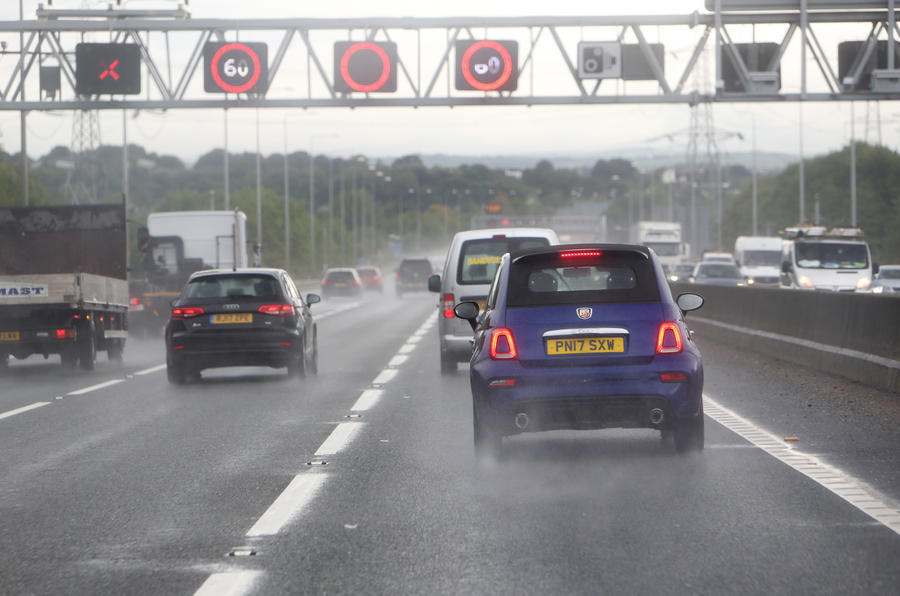
2019 Guidance is provided about red X signs on motorways.
2021 Fundamental changes regarding priorities for pedestrians and cyclists are proposed.

Join the debate
Add your comment
The way I seee it is, these changes are made for the arguments in the prosecution court battle against "the motorised driver" not for any practicle changes in real time and that's the whole point of the changes.
Just recently a Town I pass through quite regularly has had a twenty mile per hour makeover, little Chicanes, raised pedestrian crossings,more Traffic lights, the Town is only about two miles from end to end, they have also stuck huge planters in sight lines so you can't see safely, and yet pedestrians cross where they decide,some don't even look they just assume you'll stop or have seen them, Vans doing a drop park where they can causing hold ups, the new HW doesn't over that properly.
I agree that the new 1.5m rule is a 'should' rule not a 'must' and hence you aren't breaking the law if you break the rule, however you could be charged for driving without due care and attention particularly if by breaking the rule it results in an accident.
The text you quote for rule 212 is the old rule and shows why it needs to be changed as it was ambiguous. Your interpretation i.e. gap when overtaking between cyclist and your car should be similar to the gap between car and your car when overtaking, is valid. However, the alternative interpreatation is that when overtaking a cyclist you should assume the cyclist has the same width as a car and hence you would only overtake by moving well into the oncoming lane. This is the interpreation the police have had for several years (see police close pass safety campaigns on YouTube). The new rule follows from this. A cyclist is about 0.5m and a car 2m, so the difference is 1.5m and hence the minimum distance you should allow when passing a cyclist.