9

Follow-up to 2015’s mixed-discipline special is said to be better in every way – and much more powerful

A little over a decade has passed since Ariel revised the Atom for off-road duties and created not just a legend but a new trend. We will never know for sure, but is it not a coincidence that, shortly after the Nomad 1 appeared, the likes of Lamborghini and Porsche began to mutter about making dirt-track versions of their own cars?

With plenty of demand for the Nomad 1, along with Ariel’s talent for iterating its products (the Atom is on its fourth generation and going strong), it was no surprise when a Nomad 2 appeared in 2024. It is fundamentally the same as its predecessor, although in truth nearly everything has changed (only the filler cap, pedal box and steering wheel are carried over).

We’ve driven the new car before, on the roads near the factory deep in Somerset and on the rally trails at Sweet Lamb in lush mid-Wales. Descriptions of those experiences ranged from “riding a mechanical spider” to the Nomad 2 being “on a different plane of motoring existence”. It is clearly a unique proposition. But only now do we find ourselves with an opportunity to run the road test rule over this extrovert Ariel at Horiba MIRA. So how fast is the Nomad 2? How efficient is it? How much does it weigh? What exactly is new? Is there enough here to warrant an upgrade for Nomad 1 owners? Let’s find out.

Advertisement

DESIGN & STYLING

10
ariel nomad 2 review 2024 02 side panning

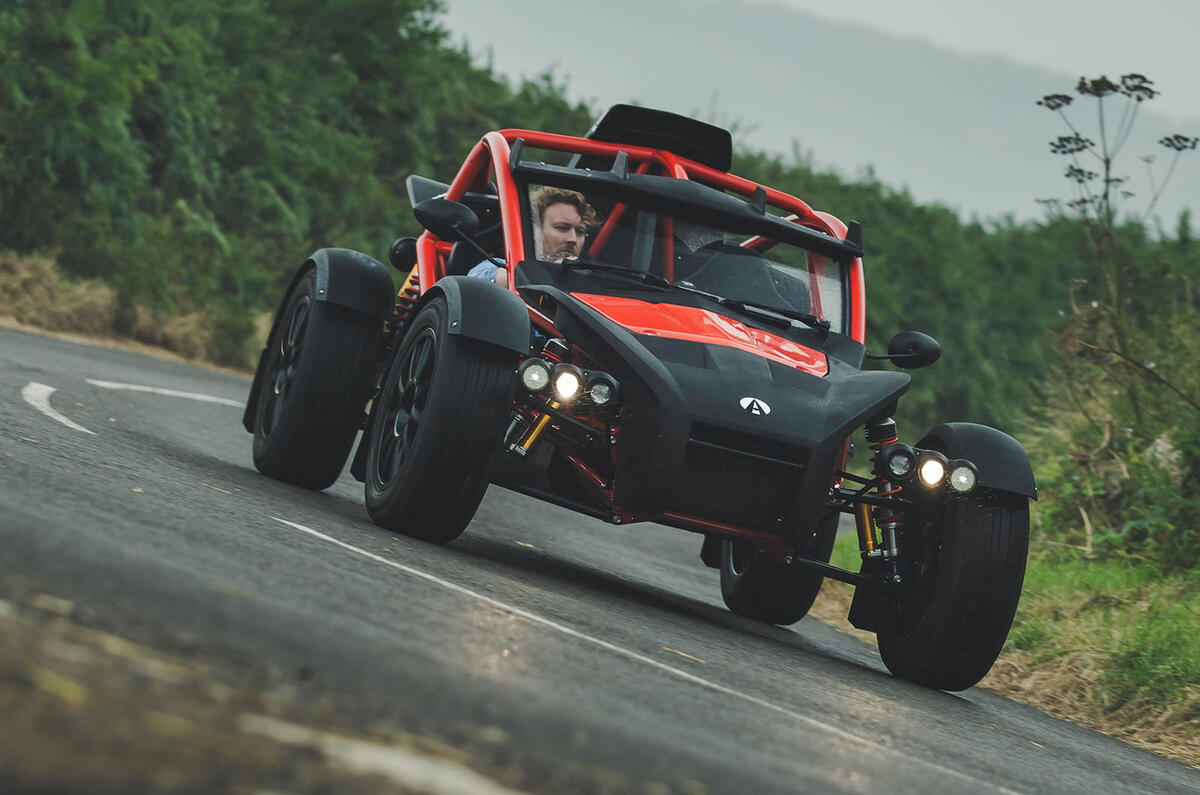
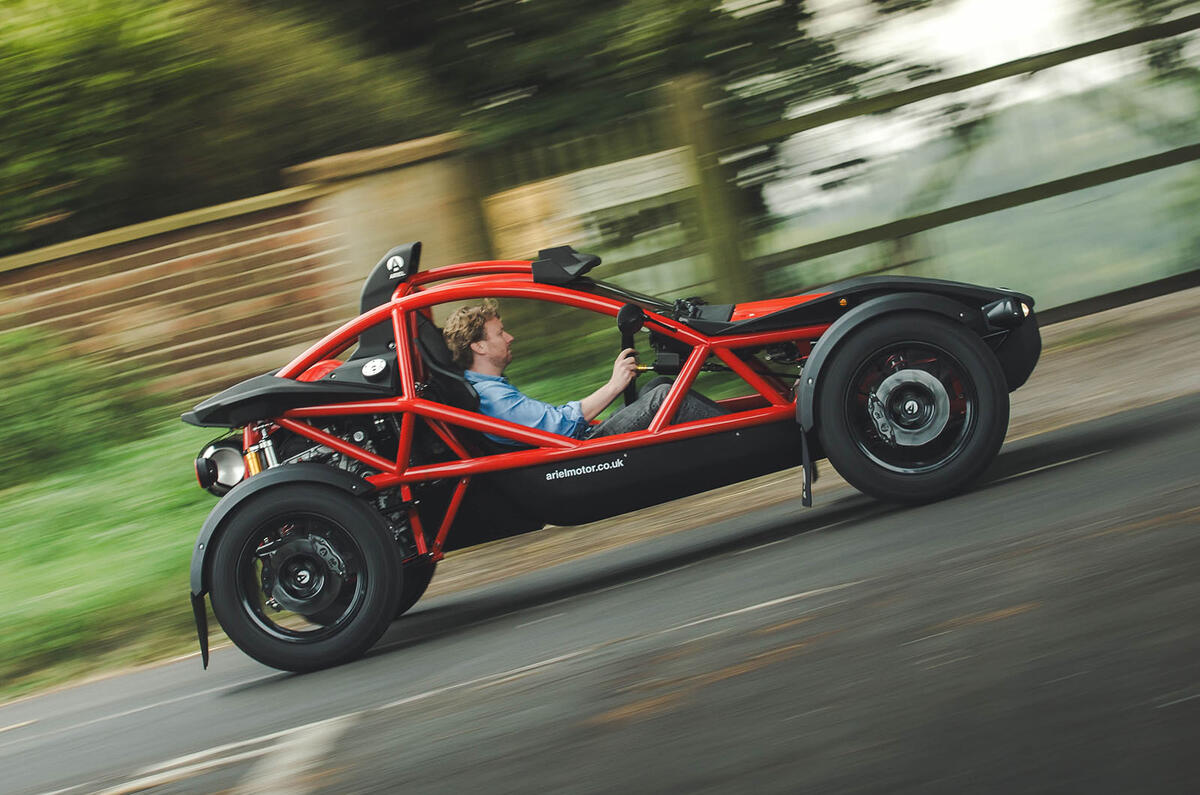
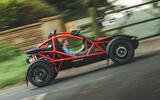
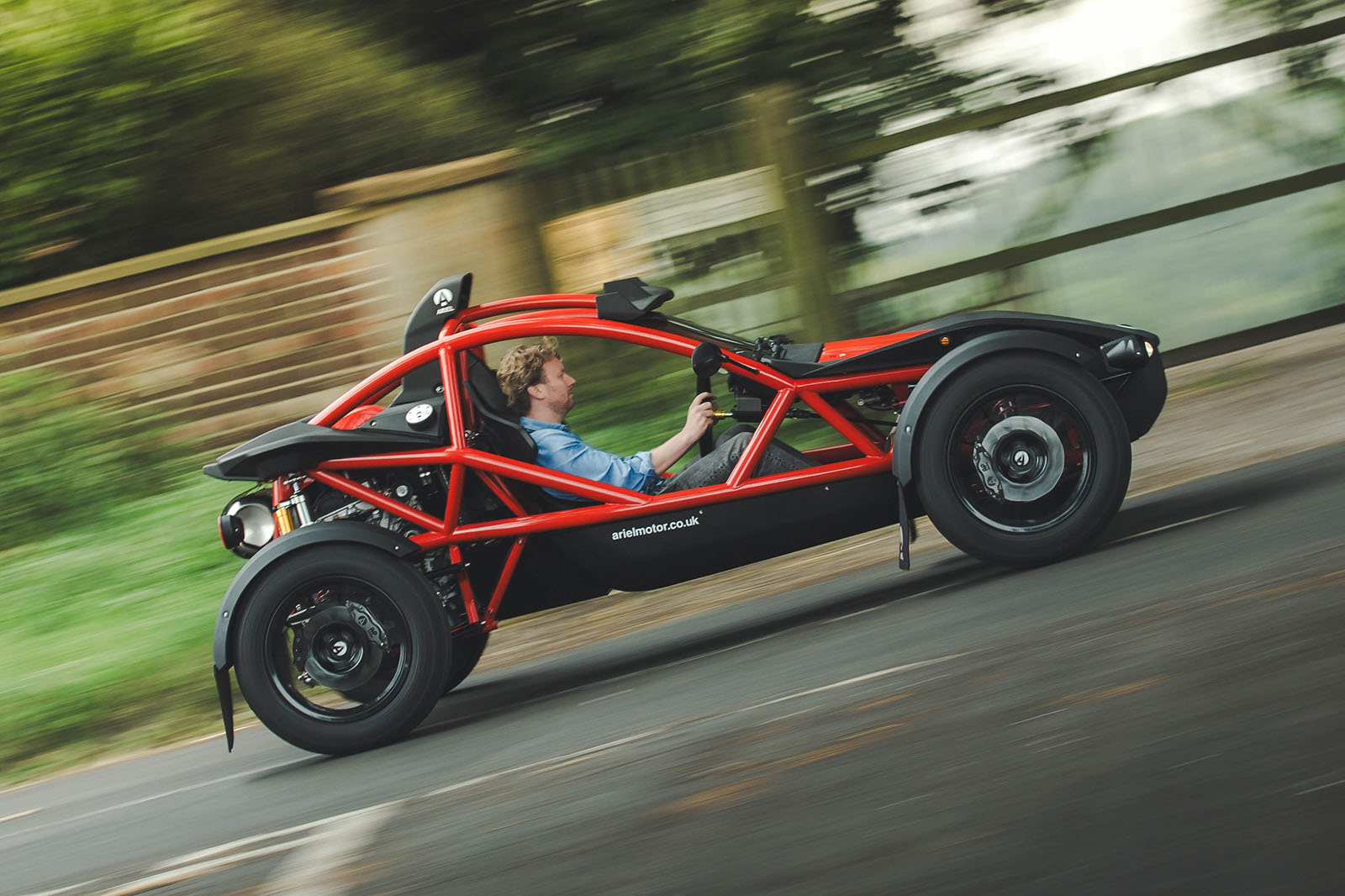
The open-worked Nomad continues to be built around a bronze-welded steel spaceframe adapted from that of the Atom, but the Mk2 is bigger than its predecessor in every direction, with a 48mm-longer wheelbase and tracks widened similarly. Decked out in plenty of optional off-road gear – including a front winch, underbody protection, laser-LED flood lights and remote-reservoir dampers – this example has enormous presence. A butchness to it, bluntly. And that’s without the spare wheel or carry cases that can be mounted on top of the engine deck. Neither does this car have the antenna-style LED ‘whips’ that make the Nomad look like an overgrown Tamiya RC car.

So what is new? Fundamentally, the chassis tubing is thicker than before, resulting in a notable increase in torsional rigidity – 60%, according to Ariel. The Nomad also now comes with adjustable traction control and, if you want it, ABS – neither of which the original car had. You also have adjustable boost (three stages), which also wasn’t possible with the old car because it carried a torquey but naturally aspirated 2.4-litre Honda unit from the US-spec Civic Type S.

The engine is unquestionably the biggest change. Where the Atom retains a fizzing 2.0-litre Honda VTEC unit, in the Nomad 2 you’re propelled by the 2.3-litre turbo petrol engine best known for its work in the Mk3 Ford Focus RS. Depending on the position of a knob on the dash, it makes from 260bhp and 284lb ft to 305bhp and 382lb ft. More on all that to follow.

Drive flows through a six-speed H-pattern gearbox and a Quaife ATB differential, although Ariel is working on a sequential ’box too. The Nomad 2 also gets a proper power distribution module, which does away with the need for fuses and relays for added functionality and, well, less to go wrong on the trail. And those trails can be longer than ever, because the fuel-tank capacity has risen from 50 to 70 litres.

As standard the suspension's exposed (everything is exposed) double wishbones are controlled by fixed-rate K-Tech dampers and Eibach springs, though there's also the option of having softer Bilstein dampers, or three-way adjustable Öhlins TTX dampers, which have an extremely high eye-candy quotient. Whatever option you choose, there’s extra travel and ride height for this Nomad compared with its forebear, and the new car is apparently quite a lot more resilient to repeated heavy landings (Ariel tests parts to destruction at Sweet Lamb), but the overall persona is deliberately unchanged.

“We’ve added a very small percentage of anti-squat and anti-dive, and it makes the car slightly more precise,” says Ariel MD Henry Siebert-Saunders. “It makes it an easier car to have fun in, but we haven’t lost the Nomad feeling of it ducking, diving, leaning around the corners: you still get all that stuff.”

INTERIOR

9
ariel nomad 2 review 2024 15 interior

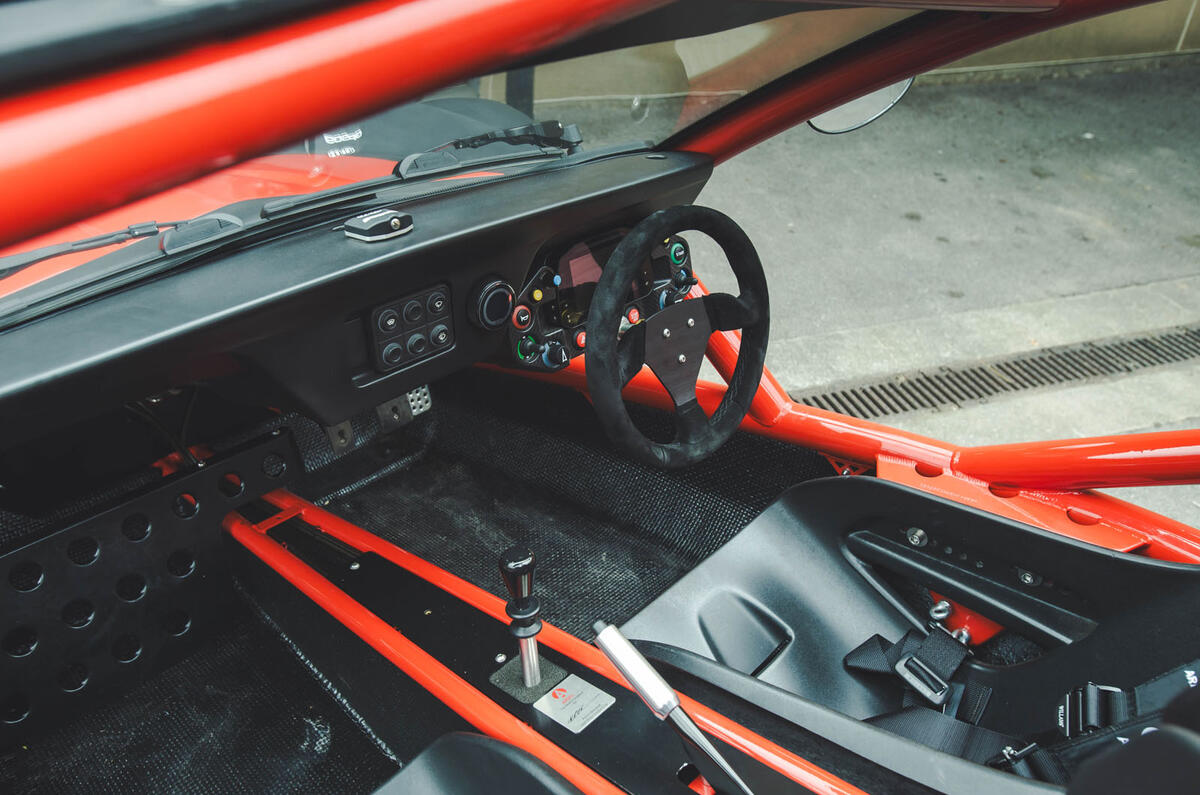
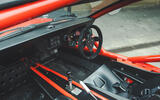
Clambering into the Nomad is a trickier task than it is with the Atom because of the full cage. However, the opening is larger than it was for Nomad 1 and, by popular request, the leading upright tubing of that aperture has been slanted forward a bit (hooray!).

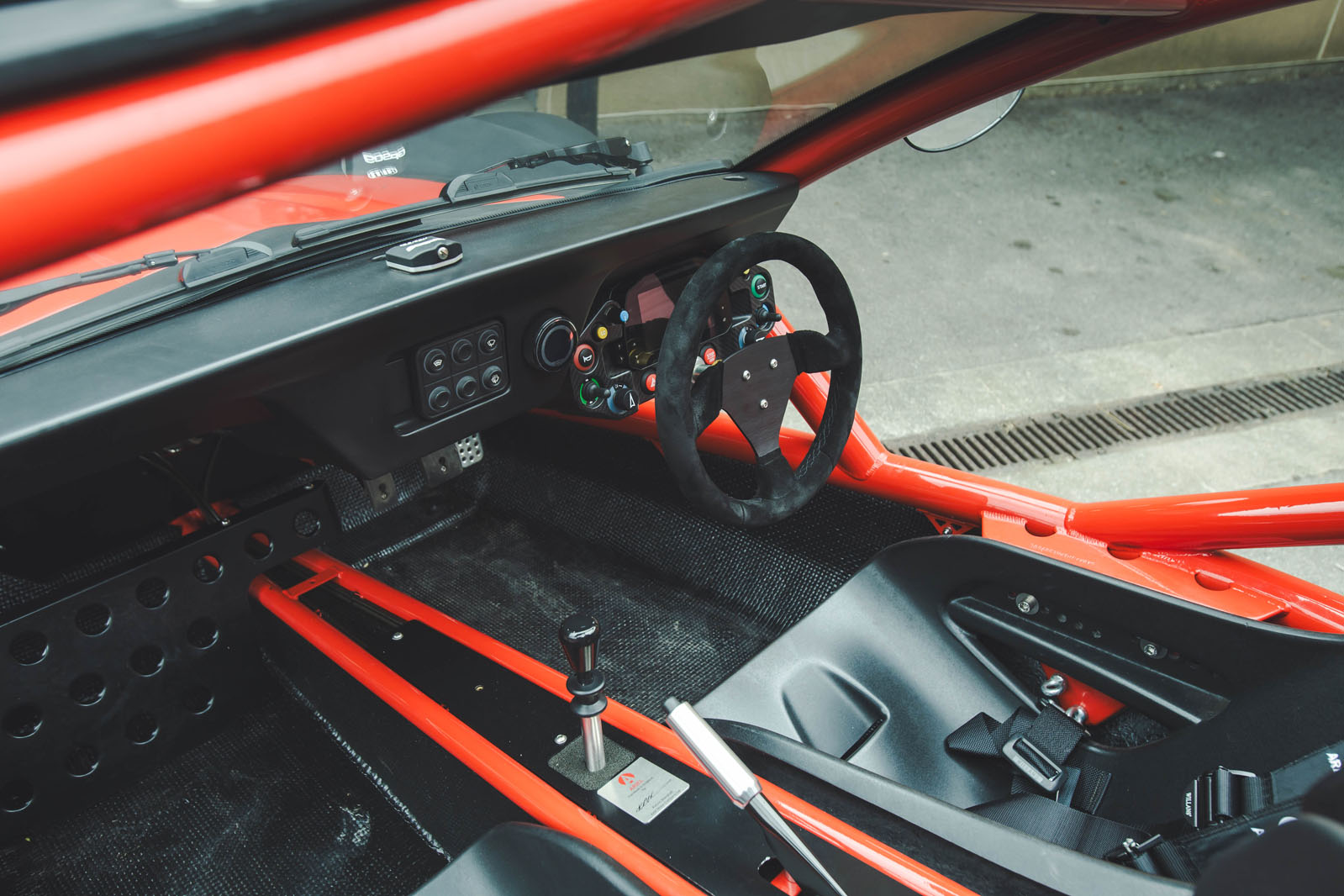
Once you’re ensconced, this is a hospitable place, with super ergonomics so long as your spine tessellates with the hard bucket seats (they’re direct from the Atom 4) and plenty of space thanks to the lengthened wheelbase. A maximum leg room of 1040mm is comparable with well-sorted major sports cars. That the windscreen sits further back relative to the front axle and is now shorter and fractionally more upright enhances the sporting vibe. More than anything, strapping in via four-point harnesses gives you that tingle-inducing sense of being part of the machine, like a Lego man clicking down into his race car.  

Our test example also has the canvas roof panel and polycarbonate panels that make the pedal box area less draughty. It helps with wind buffeting too, although numerous 70mph laps of MIRA’s No 1 circuit, for an economy run on our 3deg C test day, still resulted in frozen hands.

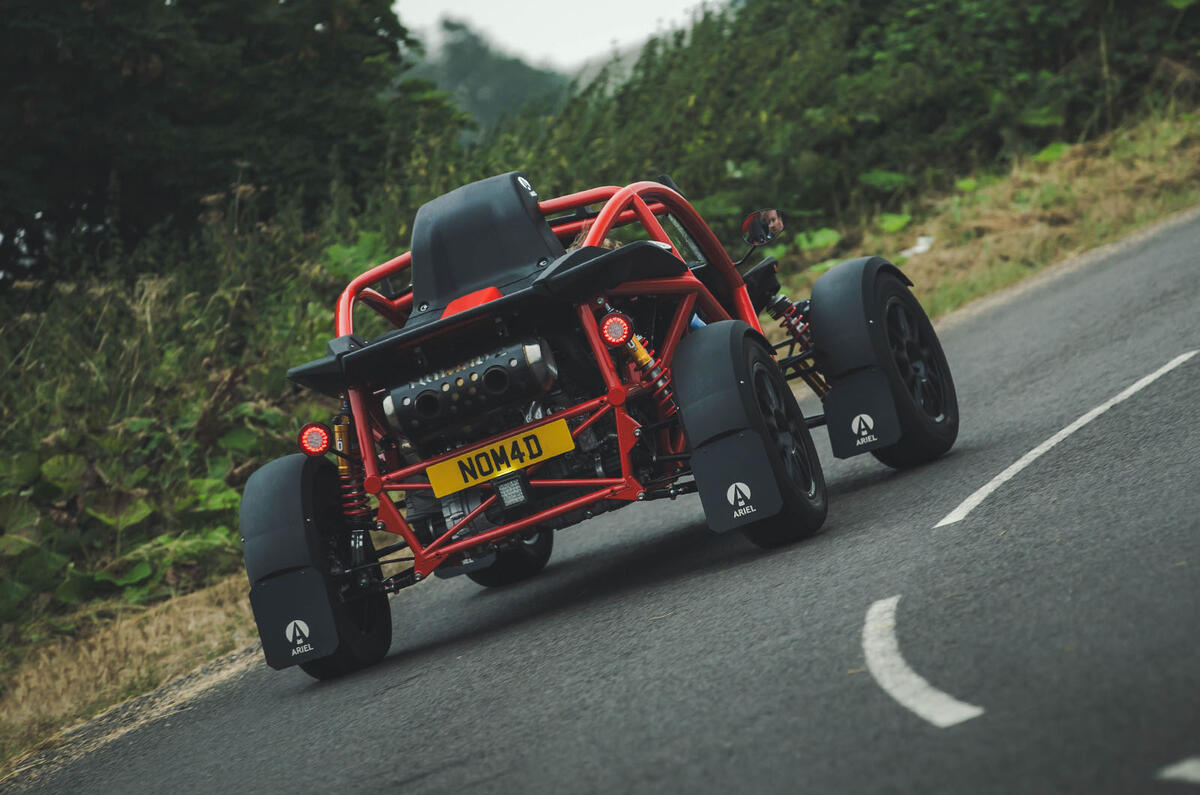
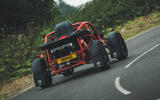
Elsewhere, forward visibility is excellent and takes in the machined front wheel hubs. Rear visibility is more compromised than it was on account of the huge intake scoop (which relies on the fins atop the header rail to accurately channel air its way, as determined by CFD). Switchgear feels expensive in this context, and the TFT display is clear.

ENGINES & PERFORMANCE

9
ariel nomad 2 review 2024 03 rear cornering

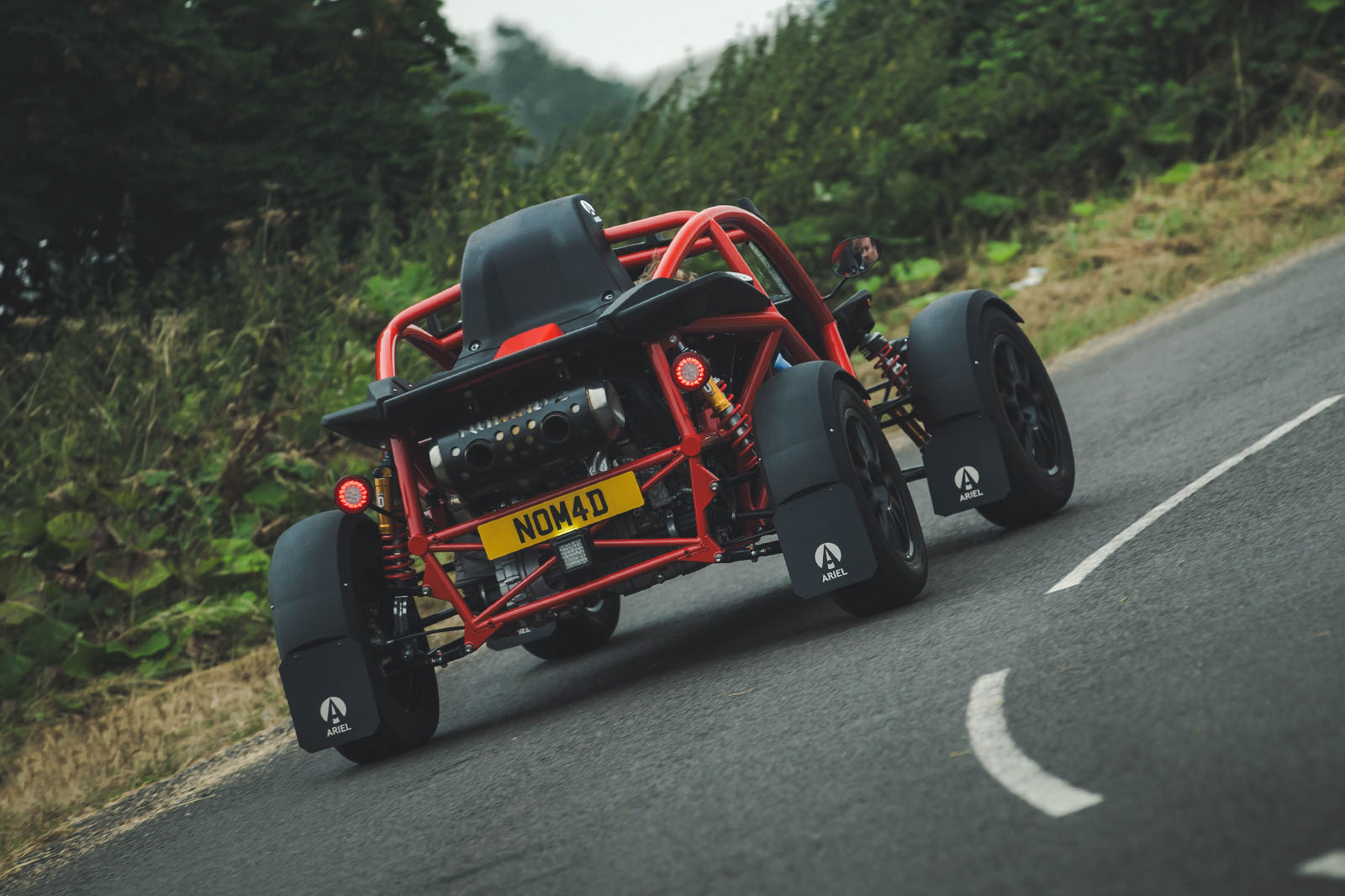
It’s a push-button start and the Ford unit fires up more with a boom than a rasp, then you almost need only think the Nomad 2 into motion, so smooth and forgiving is the clutch action, quite at odds with the car’s intimidatingly hardcore aura.

This car’s 18in Yokohama Advans are as road-leaning a tyre as you can have on your Nomad. All-terrain Geolander rubber on a smaller, 16in wheel is a popular option, but for road use, and for our performance testing, these are best. As for properly launching the Nomad 2 against the clock, it's a fantastically old-school event. Sure, there’s now a launch control function, where you dial up the desired revs then fix them in place by pressing a button on the dash before dumping the clutch, but we found this of limited appeal. With such a forgiving clutch, pedals so deliciously weighted, reassuring squat in the suspension and torque-instigated over-rotation of the tyres, your tailbone feels mechanically connected to the back axle, so a brisk getaway is fairly intuitive.

With its boost turned up to the maximum, this car hit 60mph in 3.8sec – seven tenths up on the Nomad 1 we tested in 2015. That car made 70bhp less, but it also carried 151kg less mass. The new Ariel’s straight-line speed feels like progress, then, especially when you consider that our test car represents an unusually heavy specification. On a warm day, in a lighter car, you might find half a second or more.

In-gear performance is also dramatically improved thanks to the new turbo engine. The Nomad 2’s 5.3sec from 30-70mph in fourth gear comfortably beats the 6.5sec of its predecessor and roughly matches the figure returned by the Porsche 911 Carrera 4 GTS Cabriolet tested recently. The difference in the Ariel is that you can revel in the lightness of the machine as a bubble of torque swells to its thuggish 382lb ft peak at just under 3000rpm and whisks you away. As ever with such machines, the numbers only convey so much. The torque has the added benefit of making the Nomad 2 less demanding company off road.

Our test car was fitted with a six-speed Ford gearbox that arrives with the engine. It has a short shift action but perhaps lacks the precision of the old Honda unit. This not an issue in practice, and you’re unlikely to miss the gate even during a flustered red-line upshift; along with the burlier character of the engine, which no longer fizzes and rasps quite as much as in the Nomad 1, it contributes to a shift in personality.

The character of the powertrain is for sure the biggest change. This unit might disappoint a touch in an Atom, and Ariel will continue to use the Honda motor in that application, but the subtly woolly pick-up, the bassy note and the swelling bubble of whooshy, abundant torque through the mid-range do suit the Nomad. Torque builds conservatively, then dramatically, then tapers neatly towards the redline. It’s never dull.

 

RIDE & HANDLING

9

Dynamically the Nomad 2 is almost entirely devoid of hard edges, and while the fitment of all-terrain tyres ensures that the raw, textured steering feel of the kind you get in a Caterham Seven, or indeed the Atom, never really materialises, the weight and accuracy and calmness of the motion means you gain confidence quickly. It’s a remarkably trusty helm, not easily deflected.

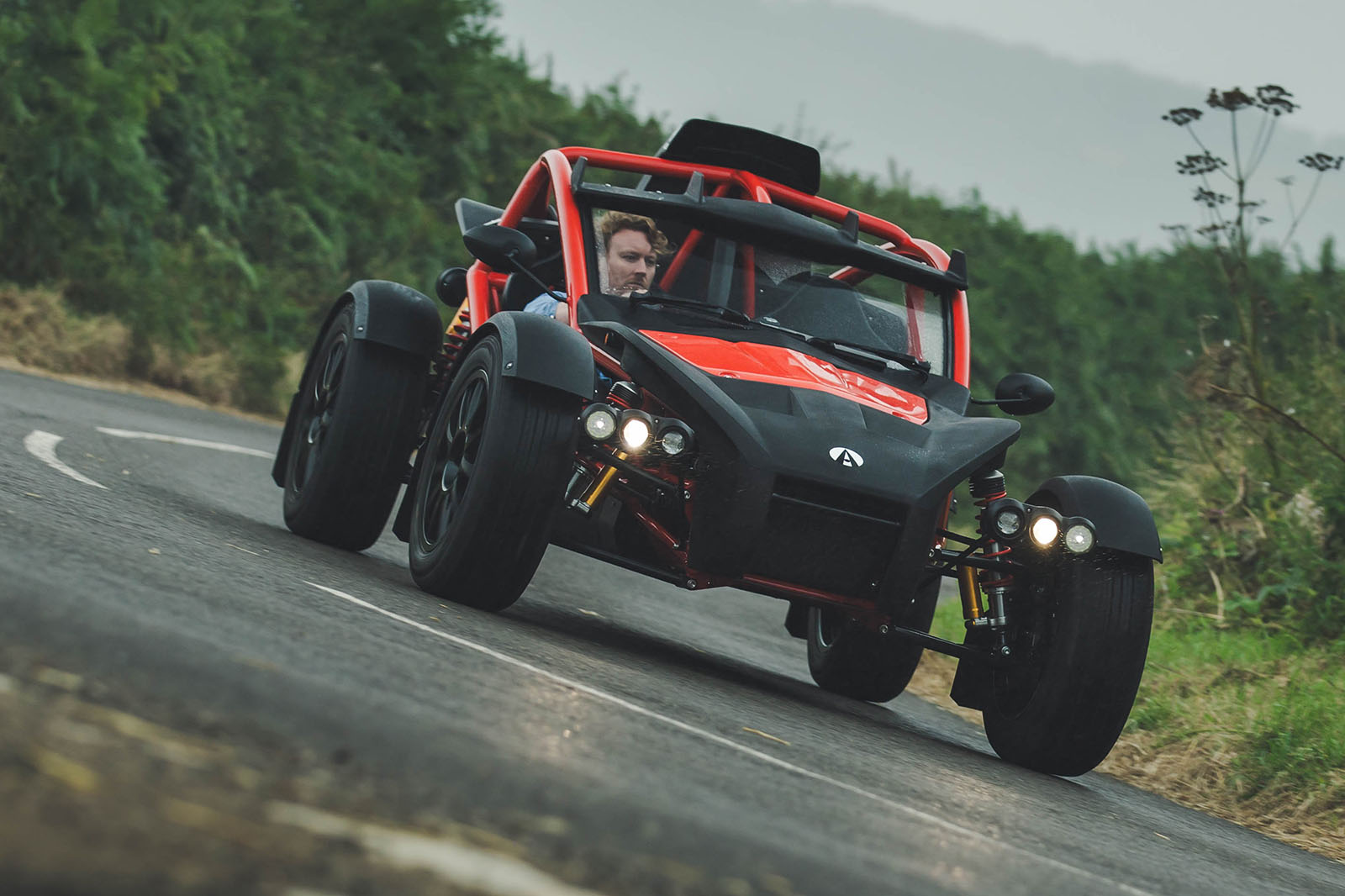
Sticking with all-terrain tyres for a moment, you won’t want to go barrelling into bends on an unfamiliar, damp stretch of road, because in such conditions the front axle can scrub without much warning. Mind you, it isn’t a heart-in-mouth experience: a car this delightfully narrow leaves you plenty of lane to play with. And you can always tamp down the power and torque delivery, to remove the temptation to carry too much speed. On an early drive in 2024 on a groggy day in Somerset, I often had the engine’s wick turned up to 305bhp, because, well, I have a duty to tell you what the Nomad 2 is like at flat-chat, but in truth 260bhp is more than enough if you're prepared to use all of the throttle. Not also that there is a the seven-stage traction control (0 is fully off, 7 is fully on and 3 feels like the sweetspot), and ABS is now an option as well.

Of course the beauty of the Nomad is that, despite an aesthetic that suggests it is for dedicated off-road use, it can be configured to deliver joy in a variety of environments. Anybody keen to know how prodigiously fast, exciting and generally well sorted the car is on a rally stage would do well to read our dispatch from Sweet Lamb. It suffices to say that, in such a theatre, you wouldn’t require a competition car to go any quicker.

The Nomad at Sweet Lamb controlled its unequal-length double-wishbone suspension via the range-topping Öhlins TTX dampers Ariel offers, along with Yokohama all-terrain tyres. As mentioned, on cold, wet day those tyres don’t offer up much feedback on the road, and the responsive set-up of the Nomad means you can find yourself slipping into understeer that rapidly morphs into oversteer. It is exciting if also a bit unnerving.

Fortunately, the Advans fitted to this road-test car (along with four-way Bilstein dampers, two-piece springs and hydraulic bump stops) are more trusty and communicative on Tarmac. They allow you to lean on the chassis more confidently, manipulating weight transfer and attitude. You don’t, in truth, need the hydraulic handbrake to pitch the Nomad 2 sideways; instead, a well-coordinated bout of trail-braking will provoke it, followed by a dollop of that easily accessible torque to slam the centre of gravity rearwards. That the car seems to rotate about its nose, rather than your hips, tells you all about how thrilling and challenging it can be on a track day.

Or, indeed, on the road, if you’re so inclined. On the Bilsteins this car moves with the kind of beguiling fluidity that makes you immediately think ‘ah yes, expensive dampers’. Atom owners will find the Nomad’s ride quality heavenly, and the ability to cushion the light body after considerable vertical inputs with a single bite of the cherry is worth paying for. It’s a similar story with lateral lean: it is generous but perfectly consistent. Ariel has revised the suspension geometries for the Nomad 2, with a greater degree of anti-dive/squat. The car has an evident ability to keep its roll centres steady amid the rampaging progress that comes so naturally.

Meanwhile, the quick steering – still requiring some acclimatisation at two turns between locks – is impressively uncorrupted. In this raised set-up it doesn’t give quite the fidelity of feedback of an Atom, and it’s a similar story for the Alcon brakes. But these are minor qualms in an otherwise joyous experience.

MPG & RUNNING COSTS

8
ariel nomad 2 review 2024 01 front cornering

A Nomad 2 costs £68,000, but could touch £90,000 after options. Options fitted to this car include the three-way turbo-boost mapping for the ECU (£1800), the Quaife diff (£1194), the adjustable traction control (£510) and a painted chassis (1200). The beautiful, top-tier Öhlins dampers will set you back around £7000 but the Bilsteins on this car cost less and are, in a word, fantastic. Ariel can also fit an MSA-approved, plumbed-in fire extinguisher system, as well as track-day timing software and a cat-bypass pipe for the exhaust.

Serious money, then, and a hike on the price of the 1, even after inflation. Ariels are fairly depreciation-resistant, but the Nomad 2 is clearly operating in a more rarefied space these days. There are cheaper alternatives like a £38,000 Polaris RZR Pro R, but they won’t be road-legal or as interesting to drive. Note, however, that the wait for the hand-crafted Nomad – or any Ariel – is currently about two years.

At least you’ll rarely need to refuel: the Nomad 2’s tank is now 70 litres, up from 50, which, combined with a touring economy of 38.5mpg, will get you nearly 600 miles.


VERDICT

ariel nomad 2 review 2024 26 static

At £68k, the new Nomad costs a great deal more than the original, and a triple-figure sum is achievable with options. Then again, it’s hand-built and unlike any other car. Ariels also laugh in the face of depreciation. 

So if you love the idea of having an Atom but think it will get the adrenaline flowing all too freely, the Nomad neatly sacrifices speed for approachability. Might it provide an even sweeter endorphin rush on the road? Yes, perhaps.

And that’s only half the story here. Later this year, we will try one of these off road. It should be outright mind-blowing.

Richard Lane

Richard Lane
Title: Deputy road test editor

Richard is Autocar's deputy road test editor. He previously worked at Evo magazine. His role involves travelling far and wide to be among the first to drive new cars. That or heading up to Nuneaton, to fix telemetry gear to test cars at MIRA proving ground and see how faithfully they meet their makers' claims. 

He's also a feature-writer for the magazine, a columnist, and can be often found on Autocar's YouTube channel. 

Highlights at Autocar include a class win while driving a Bowler Defender in the British Cross Country Championship, riding shotgun with a flat-out Walter Röhrl, and setting the magazine's fastest road-test lap-time to date at the wheel of a Ferrari 296 GTB. Nursing a stricken Jeep up 2950ft to the top of a deserted Grossglockner Pass is also in the mix.