Currently reading: The outrageous history of the UK’s battle with drunk drivers

As the UK prepares for a strict new 50mg blood alcohol limit, we look back at the chaotic past of drink driving laws

The government recently announced its intention to reduce the permitted blood alcohol level of UK drivers from 80mg/100ml to 50mg, or to 20mg for those newly qualified.

This will be the first change to the limit since it was introduced back in 1967, excepting the reduction to 50mg legislated by Scotland in 2014.

This doesn't mean, however, that drink driving used to be allowed. In fact, it was outlawed before the car was even invented: under the 1872 Licensing Act, being drunk while in charge of a horse, cow, steam engine or carriage was punishable by a fine and a month's hard labour.

In September 1897, 25-year-old George Smith became the first Briton to receive a DUI conviction, after his electric taxi was, in the words of London's Morning Post, seen to "suddenly swerve from one side of the road to the other and run across the footway into [a building], breaking the water pipe and the beading of the window". He was fined 20 shillings (or £114 today).

Enjoy full access to the complete Autocar archive at the magazineshop.com

Mentions of such court cases subsequently appeared regularly in Autocar, although the legal situation was murky: the authorities had no scientific way of testing inebriation and cars weren't named in statute.

In 1902, an "obstreperous" Liverpudlian appeared before a stipendiary who "could not treat a vehicle without horses as a carriage, as otherwise a man drunk whilst in charge of a perambulator would be liable to arrest. "The difficulty was eventually overcome by the car being treated as a steam engine."

Clarification came from the 1925 Criminal Justice Act, which made it illegal to drunkenly command any "mechanically propelled vehicle" in public, on pain of a £50 (£2662) fine, four months' imprisonment and licence disqualification for a year.

Still, though, drunkenness was open to interpretation, as a 1925 case from Worcestershire shows. The jury had found the defendant guilty, believing that he had been "incapable of driving", if "not drunk to the extent that which we should call a drunken man" wording that led to a quashing by the Lord Chief Justice on the basis that such words unequivocally described soberness.

We clearly saw a need for absolute legal clarity, but even 37 years later, when a new Road Traffic Act was enacted, this still wasn't possible. Provisions were made for blood and urine testing of suspected drunk drivers, but there was no mention of any numerical limit, and thus these provisions would be left unenacted until "circumstances permit".

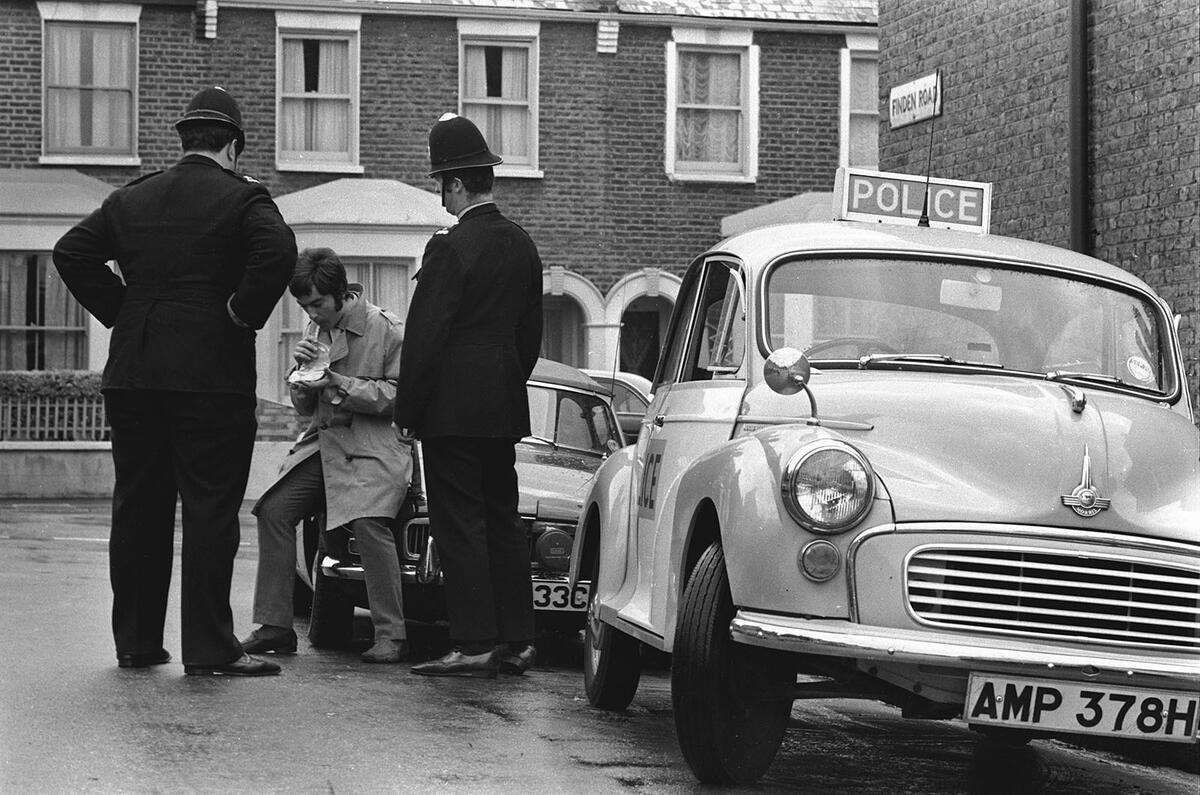
Such circumstances arose in 1964 with the arrival from America of the breathalyser - in Autocar's words, "a refined, scientific instrument which is easy to maintain and does not need highly skilled operators".

Back to top

And so in December 1965, Labour transport secretary Tom Fraser brought a bill proposing a blood alcohol limit of 80mg/100ml.

Citing findings that "above this level, the average risk of an accident is nearly twice what it is for non-drinkers", he predicted that this could prevent between 18,000 and 32,000 alcohol-related road casualties every year.

Medical professionals advised Autocar that on average this level would be reached after "two pints of beer or five small glasses of spirits drunk in quick succession".

The magazine's letters pages were surprisingly quiet on the topic, but in October 1967, the weekend before breathalyser testing began, a BBC TV crew interviewed drinkers at a "typical motorists' pub" in Essex and their answers were revealing.

One middle-aged man, whose drink driving had "never attracted police attention up to now", said: "I think it's fairly diabolical, because it doesn't take any account, for example, of the pedestrian who's had too much to drink. He could cause an accident, but he doesn't get tested, it's the driver who gets tested, and I think that's unfair."

"Drunken drivers should be off the road," an older man accepted, "but when they can convince me that passing that test that you're drunk and not fit to drive a car… I think it's a lot of cock."

Back to top

"I don't agree with the law," a younger man followed, "but I shall take notice of it, because I don't want to lose my licence for a year."

That must have been the majority view, as the proportion of casualties involving alcohol plummeted from 32% in 1967 to 20% in 1968 and the annual tally has since fallen from around 1500 to 200. Here's hoping the new limit gets it down to zero

Join our WhatsApp community and be the first to read about the latest news and reviews wowing the car world. Our community is the best, easiest and most direct place to tap into the minds of Autocar, and if you join you’ll also be treated to unique WhatsApp content. You can leave at any time after joining - check our full privacy policy here.

Join the debate

Comments
1
Add a comment…
Peter Cavellini 26 February 2026

It should be zero tolerance,there's no justification for a token limit,it not essential to drink alcohol, it brings no benefits to your drinking abilities,and most drivers ignore it anyway with the mentality that they will never get caught so, Zero tolerance IMO.