Currently reading: Cost rise warning to EV drivers reliant on public charging

As the fight over VAT rates rages, another cost could bite harder for electric car drivers: network charges

EV drivers who rely on public chargers are facing rising running costs, as operators warn that higher network charges could soon be passed on to motorists.

Osprey, one of the UK’s largest rapid-charging networks, with more than 1500 chargers, last month reported a sharp increase in fixed grid costs, particularly standing charges, at some sites.

In the space of five years, annual fixed charges for one site in Wolverhampton rose from £87 to £33,651.

Andrew Nosworthy, Osprey’s commercial director, told Autocar the current situation is unsustainable. “The industry is absorbing an awful lot of these costs, but we can’t do that forever," he said. "Some of it will have to be passed on to drivers.”

Industry trade body ChargeUK said public charging prices have risen by around 38% on average since the beginning of the decade.

Jarrod Birch, its head of policy, said standing charges remain the most pressing challenge for operators, “having risen by nearly 500% since the start of the 2020s”.

That ultimately feeds through into what drivers pay for public charging. Zapmap’s latest price index puts the average cost of rapid and ultra-rapid charging at about 76p per kWh.

ChargeUK said a large share of that price is made up of fixed costs, including standing charges.

Birch explained: “The costs that we're saying are controllable are the standing charge, which is around 30p [per kWh]; policy levies, which come to around 6 to 10p; and VAT, which is around 10p [or 20%]. That is a very significant proportion of what a driver pays at the charging point.”

The warning comes as the debate about VAT on public EV charging rages. In February, a tribunal ruled that drivers were paying too much tax (20% compared with the 5% that domestic chargers incur), setting a precedent that could result in the price of public charging dropping. But last week the government said it was set to appeal that decision, leaving the change in limbo.

Why costs are rising

If only around 5.4% of cars on UK roads are electric, why are charging costs so high? Birch said operators are investing ahead of demand, putting around £6 billion into the charging network before it turns a profit.

In practice, that means "the industry is paying standing charges based on future capacity, not current utilisation”, Birch said.  

That’s partly because the electricity grid has to be built to handle peak demand, meaning capacity has to be available even if it isn’t used all the time.

At some sites, the gap is significant. One charger operator that didn't wish to be named told Autocar that for some of its sites it was only using “a quarter or a third” of capacity.

The reality for drivers

The high cost of public charging is hitting both private drivers and fleets.

Catherine Bowen, head of decarbonisation at the British Vehicle Rental and Leasing Association (BVRLA), said the “cost of charging is a barrier for many”, particularly drivers who can't charge at home.

Back to top

Those relying on public rapid chargers can incur “higher running costs than their petrol or diesel alternative”, she explained, making the switch to EVs harder to justify.

For private drivers, those pressures are already being felt.

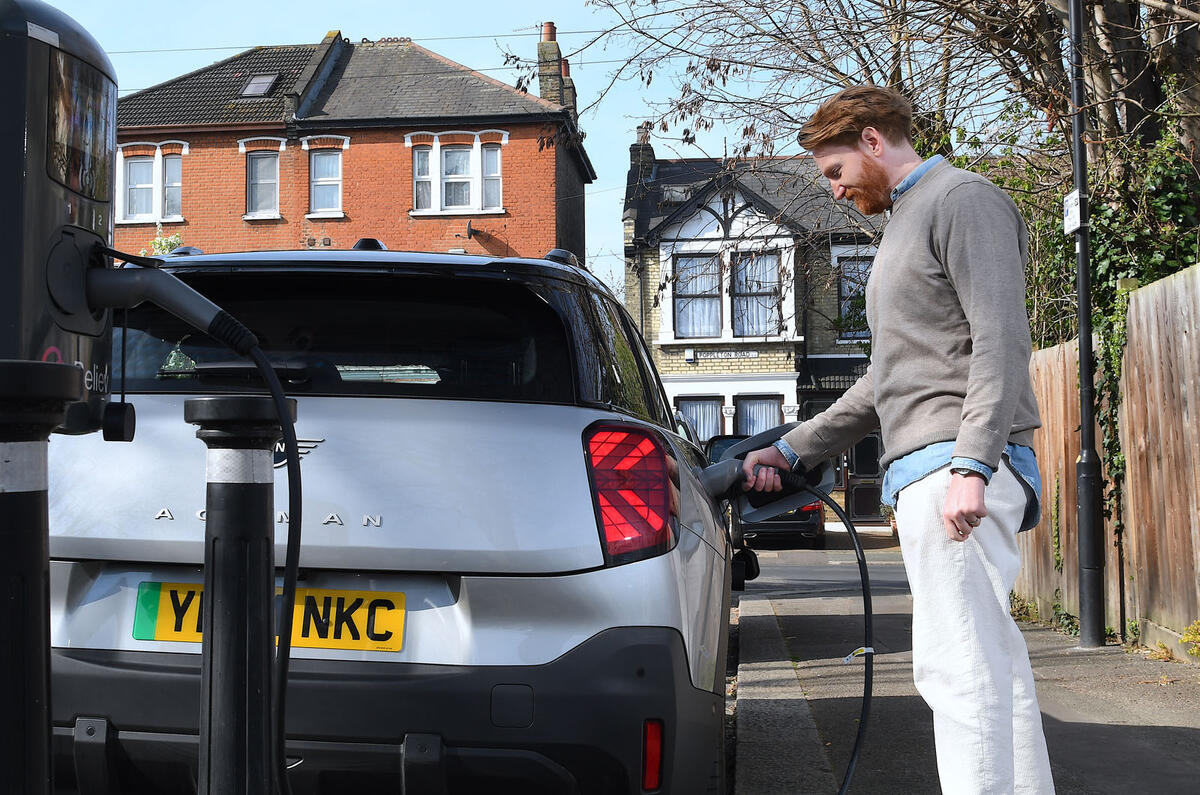
Amy McConnachie, a special educational needs and disabilities teacher from Newcastle, bought a new-build home with her partner in 2023 and switched to an electric Mini Aceman soon after. But when they moved in, they discovered their parking space wasn't directly outside their house, making it impossible to install a home charger. She was told it would cost around £5000 to fit one, which was a cost they couldn't afford.

She looked into available support schemes but wasn't eligible because her home had allocated private parking rather than on-street parking. Some funding is also restricted to landlords rather than owner-occupiers.

While some schemes are being trialled elsewhere, they aren't currently available in McConnachie's area, and she has had no response after raising the issue with the local council.

Instead, she has to drive around 10 miles to charge her EV, paying between 75p and 89p per kWh, which costs her around £25 for every hundred miles of driving.

“When I bought the car, I thought I would be saving on fuel, but it’s costing as much as my partner’s petrol car at the moment,” she said

Blended driving

ChargeUK's Birch says McConnachie's position of relying wholly on public rapid charging is quite rare, as “most drivers use a range of options".

Zapmap data supports this, showing that most EV drivers charge at home for their daily needs and use the public network only around 20% of the time – typically when they are going on a longer journey or are staying at a different location.

That said, Zapmap’s latest EV charging survey found that an increasing number of respondents don't have a home charger.

Back to top

For drivers who rely on public charging, the difference in cost is clear. Home charging can be as low as 2p per mile with an EV tariff. According to the Zapmap Price Index, standard public chargers are on average around 54p per kWh, which equates to roughly 16p per mile, while ultra-rapid chargers are on average about 76p per kWh, which works out closer to 23p per mile.

Zapmap chief operating officer Melanie Shufflebotham told Autocar: “There’s a big disparity. If you can charge at home, it's much cheaper.”

However, she added that the picture is more nuanced: “Around 60% of all UK households have access to a driveway, and for those who don’t, local on-street charging can cost less than 40p per kWh overnight, or roughly 10p per mile. That's still cheaper than petrol.”

But Bowen believes “a two-tier system already exists”, with a clear split between drivers who can access private charging at home, at work or in depots and those who rely on the public network. “Those with access to home or workplace charging are seeing much bigger cost benefits from switching from ICE to electric,” she said.

Recent changes could allow some households without driveways to install pavement gullies for home charging. In practice, though, uptake may still be limited by council approval, cost and property suitability, so not all drivers will benefit.

Bowen welcomed recent changes but said they represent “a small step forward, not the quantum leap needed to ensure an equitable charging network”, adding that many fleet operators still need to see public charging costs addressed before the transition becomes feasible.

What the government says

The government and regulators say they're aware of the issue and are looking at ways to bring charging costs down.

A spokesperson for the Department for Transport (DfT) said rising charging costs could make it harder for people to switch to EVs, particularly those relying on public chargers.

The DfT is reviewing public charging costs with the Office for Zero Emission Vehicles to understand why prices are rising and how they can be reduced.

Back to top

It said drivers installing cross-pavement charging solutions can receive up to £500 towards the cost of a home charger, covering up to 75% of installation costs (subject to installation approval from the relevant local authority).

Ministers are also investing in infrastructure through schemes including the £400 million Local EV Infrastructure fund, which supports local authorities to expand public charging networks.

Energy regulator Ofgem said it's supporting the government review, while the Energy Networks Association said network operators are investing heavily to expand grid capacity to meet rising demand.

Zapmap shows the charging network is still expanding. More than 30,000 chargers have been installed since January “across on-street, destination and en-route use cases”, while there are 39% more ultra-rapid chargers in the ground compared with March last year. There are also 46 new high-powered charging hubs, each of which can accommodate eight or more chargers, taking the total to around 1000 nationwide.

But for some drivers who rely on public charging, that impact is not always being felt. McConnachie said that when she changes her car in 18 months to two years, she probably won’t choose another EV, simply because she relies so heavily on public chargers.

Join our WhatsApp community and be the first to read about the latest news and reviews wowing the car world. Our community is the best, easiest and most direct place to tap into the minds of Autocar, and if you join you’ll also be treated to unique WhatsApp content. You can leave at any time after joining - check our full privacy policy here.

Add a comment…