3.0 V6 E-Hybrid 25.9kWh S Black Edition Coupe 5dr Petrol Plug-in Hybrid TiptronicS 4WD Euro 6 (s/s) (519 ps)
Submitted by dev_editor on
Submitted by dev_editor on
Submitted by dev_editor on
Submitted by dev_editor on
Submitted by dev_editor on
Submitted by dev_editor on
Submitted by dev_editor on
Submitted by dev_editor on
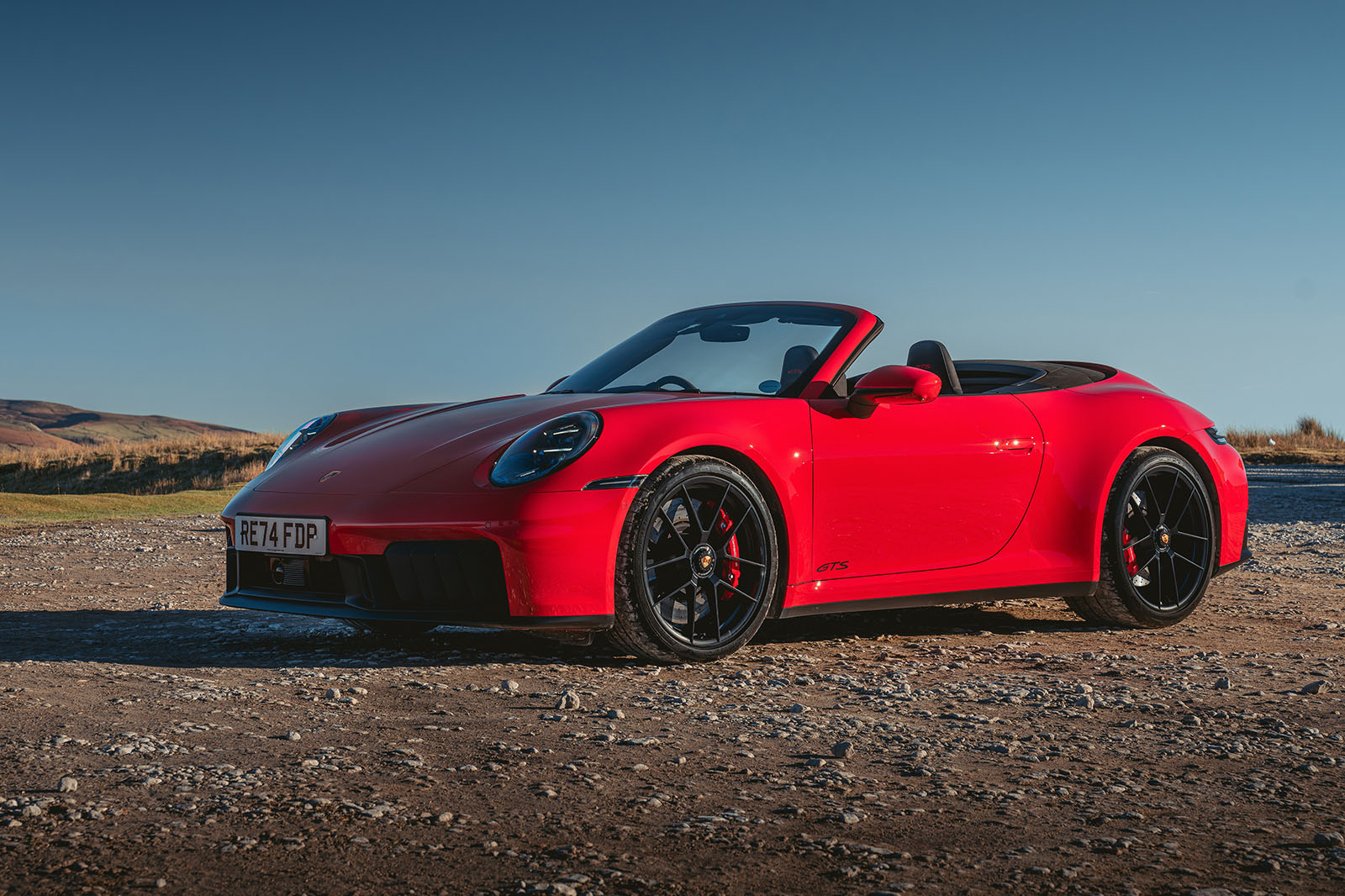
Noise, Vibration and Harshness (NVH) are three of the most important words in the engineering of new cars.
They describe exactly that: noise and vibration generated from hundreds of sources, from the texture and undulation of the road surface to the entire drivetrain, tyres, brakes and structure of the car itself.
Often it may not be activity from the source that the car's occupant notices directly but rather the result it has on another part of the car, such as a body panel that resonates, perhaps to some harmonic disturbance elsewhere.
Over the years, engineers have done everything in their power to overcome NVH—from simply stuffing cars with heavy sound deadening and underlay in the pre-computer era to the introduction of complex equipment for measuring vibration and sound and even riding in the boot to track down a squeak.
With the arrival of computer simulation in the past couple of decades, it's become possible to model the path of NVH from its source. But in addition to virtual tests, many real-world test drives are still needed to complete the job, as Porsche attests.
Last year, it began using a new road simulation test bench at its R&D base in Weissach, which goes by the name of 'FaSiP'. The bench can be used to control complete cars for vibration characteristics as well as individual parts like axles.
As for complete cars, they are flexibly mounted on the FaSiP, each wheel running on an individual, 0.4mm-thick steel belt. The belt speeds can be varied, causing forward and aft movements on the tyres and vibrating the car. Hydraulic rams below the belt can generate vertical impulses too.
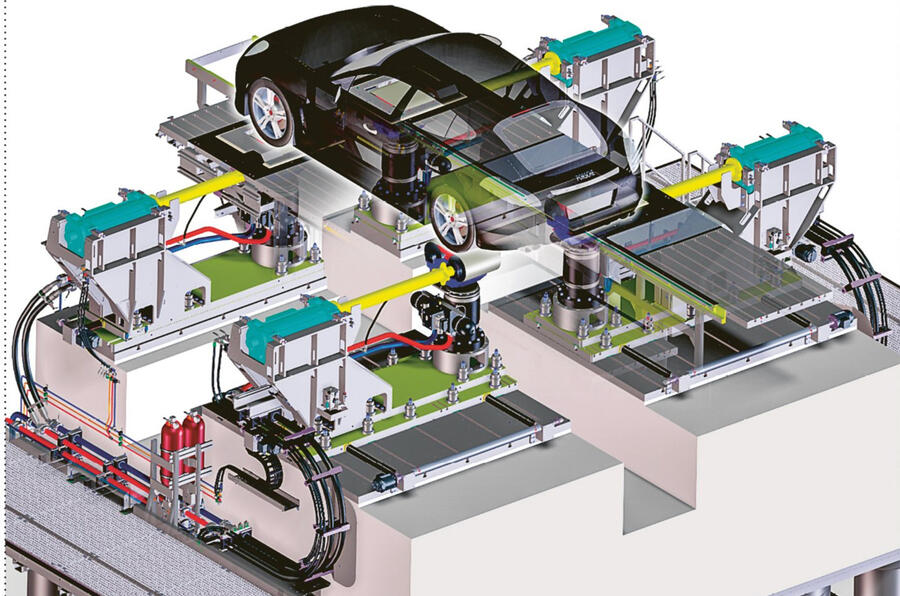
The combination can reproduce forces in the real world encountered by changes in road surfaces, manhole covers and suchlike. It's important to test these things with the wheels rolling because, for example, tyre stiffness is different when stationary.
Unlike testing on the road, which gleans an overall acoustic profile, the test bench can be set up to focus on individual aspects, a bit like putting an individual area of concern under a magnifying glass. Engineers can sit in the car during tests and modify or remove specific 'excitation' components and frequency ranges to pinpoint problems.
Porsche says FaSiP is so detailed in its capabilities that it's possible to reproduce any type of vibration that has occurred on the car anywhere in the world. The bench is claimed to be unique in that it can simulate road excitations at up to 155mph, vertical movements of plus or minus 4mm are achievable and excitations can be generated across a broad frequency range of 0-50Hz.
This form of what Porsche calls 'hybrid testing'—virtual and physical tests—could well become more important given that conventional architectures and BEVs generate their own distinctive types of NVH, making greater demands on manufacturers that are developing both.
On driving pleasure per pound spent, an early Porsche Boxster has to be a front-runner right now.
You can buy a distantly-travelled, base 2.5-litre-engined 986 for little more than £4000 these days, and while that might be a pool to dip into with caution, you don’t have to spend a heap more to get a car that’s a long way short of 100,000 miles.
For your money you get a Porsche flat six for starters and yes, it will wail your neck hairs to attention if you exercise it hard enough. It sits right behind you, of course, so that your Boxster seems to pivot from a point deep beneath the handbrake, its main heft located for optimal direction changing.
More optimal than big brother can naturally deliver in fact, the flat six shifted rearwards in the interests of 911 tradition and the provision of an extra pair of seats. The Boxster’s steering wheel swivels with oiled, well-measured resistance, it twitches in sympathy with the topography beneath, and vibrates as the front tyres break their grip if you’ve pushed it hard enough. In other words, you get real feel at the rim.
You’ll also enjoy a low-roll, forgiving ride, firmly potent brakes, a solidly slicing shift and a feelsome clutch, all the controls melding and blending in a way that confirms this car’s breeding every time you drive it. Even to the shops.
Few cars offer such tactile pedigree for so little money. One reason these Porsches are relatively cheap is that they’re relatively old, the youngest 986-generation Boxster now 15 and looking slightly dowdy because it’s gone out of fashion. That also means that some are looking tired and a little unloved now.
There’s another reason for the low prices, and it may well be familiar, this the much scribbled-about issues with the Boxster and the 996-generation 911.
Cylinder liner cracks, the destructive failure of the intermediate shaft bearing and leaky crankshaft main oil seals are the risks, the first two potentially very expensive. But mitigating modifications can be made – if you have them done when the clutch is changed you’ll get better value from the gearbox-out labour bill – and the pre-2000 Boxsters use a more durable intermediate shaft bearing.
The problems actually occur pretty rarely, and quite a number of cars may have been modified, but there’s no doubt that these threats reduce Boxster prices. An engine rebuild will almost certainly cost more than the car is worth.
Which gives you the intriguing possibility of running a cheap Boxster until its engine blows. Which it may never do, of course, but equally, you could be looking at the smoking ruin of a flat six mere hours after you bought the car. In which case your chosen descriptor of the situation might not necessarily be “intriguing”. That would be an unlucky outcome, and in most other respects the Boxster is a pretty robust machine. It’s certainly not prone to corrosion.
Spend more, buy a lowish-mileage car with a fat sheaf of Porsche and specialist bills and you might be looking at an investment, or at least a low-cost classic that will be nothing short of a joy to drive. That early Boxsters will be sought after is surely guaranteed.