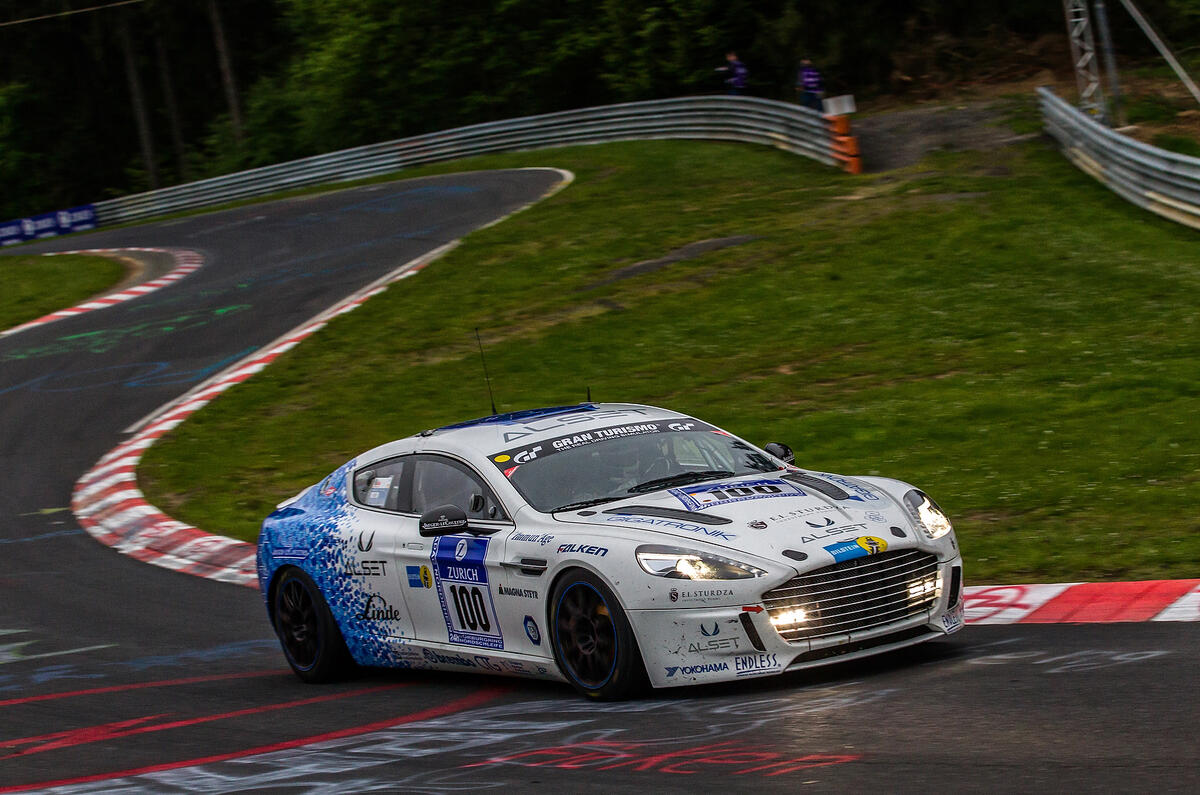
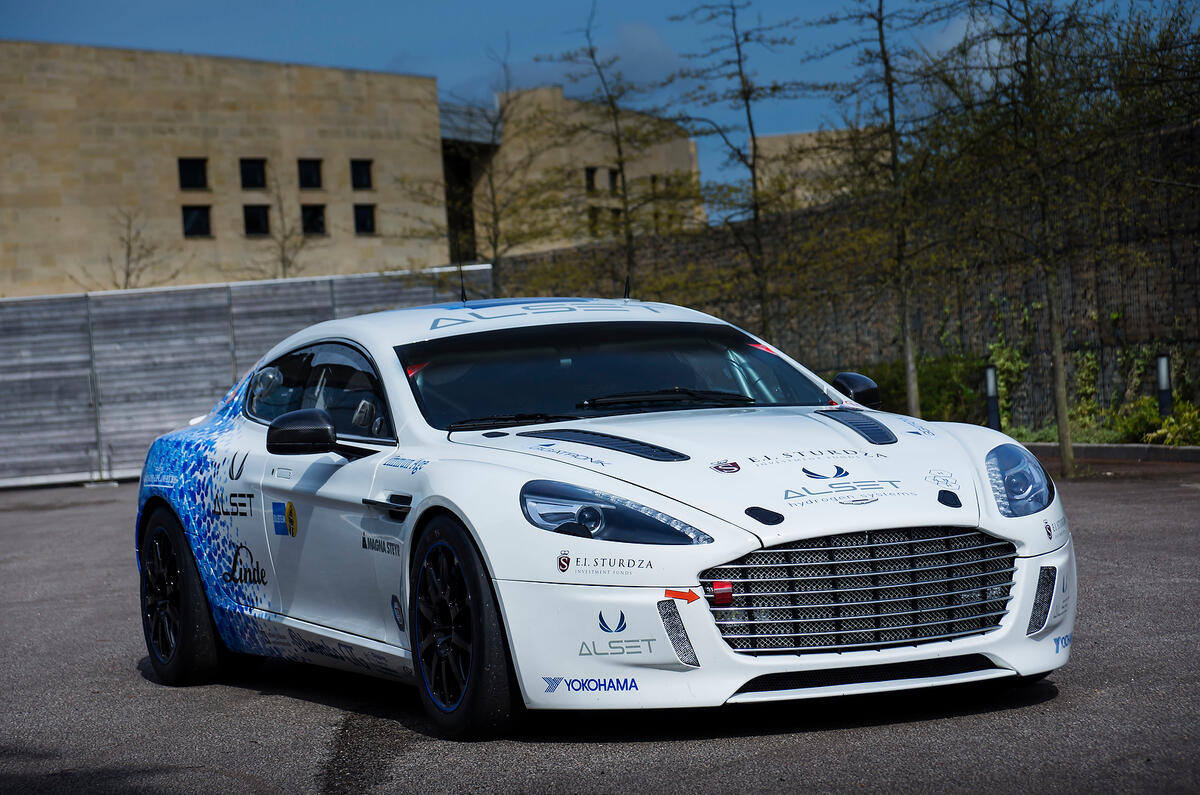
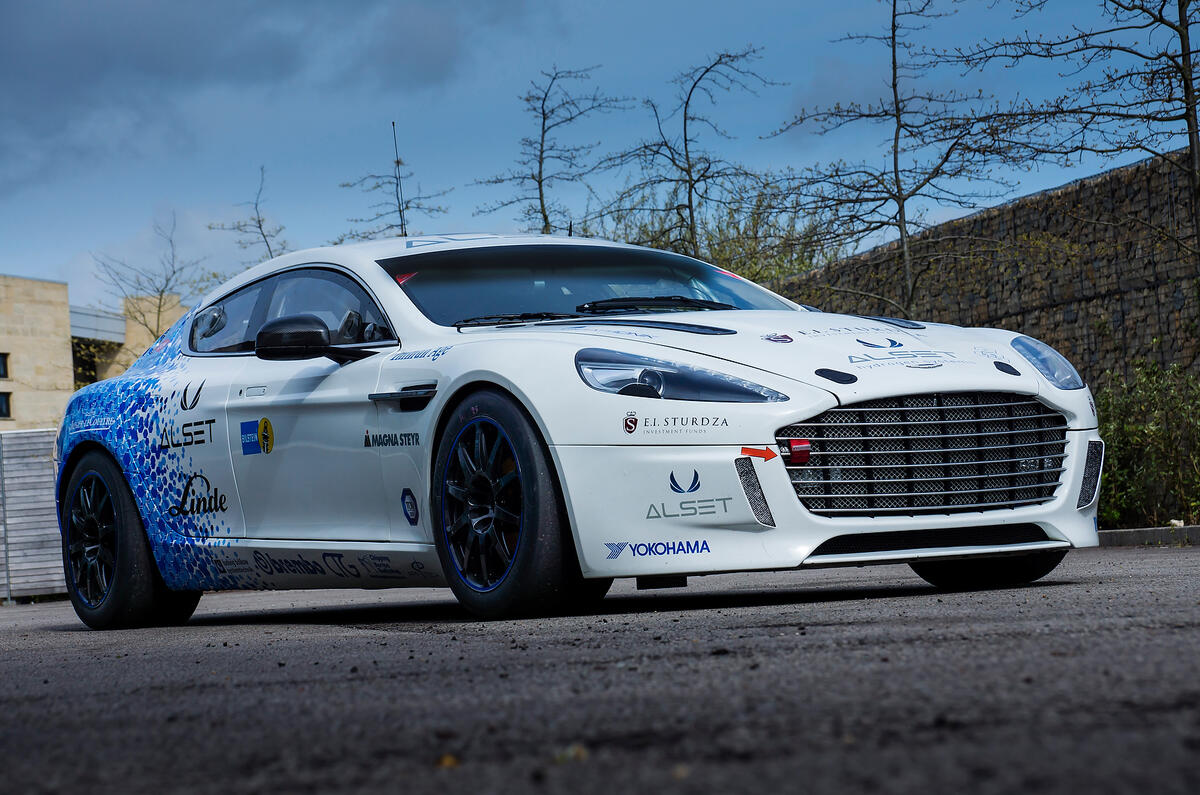
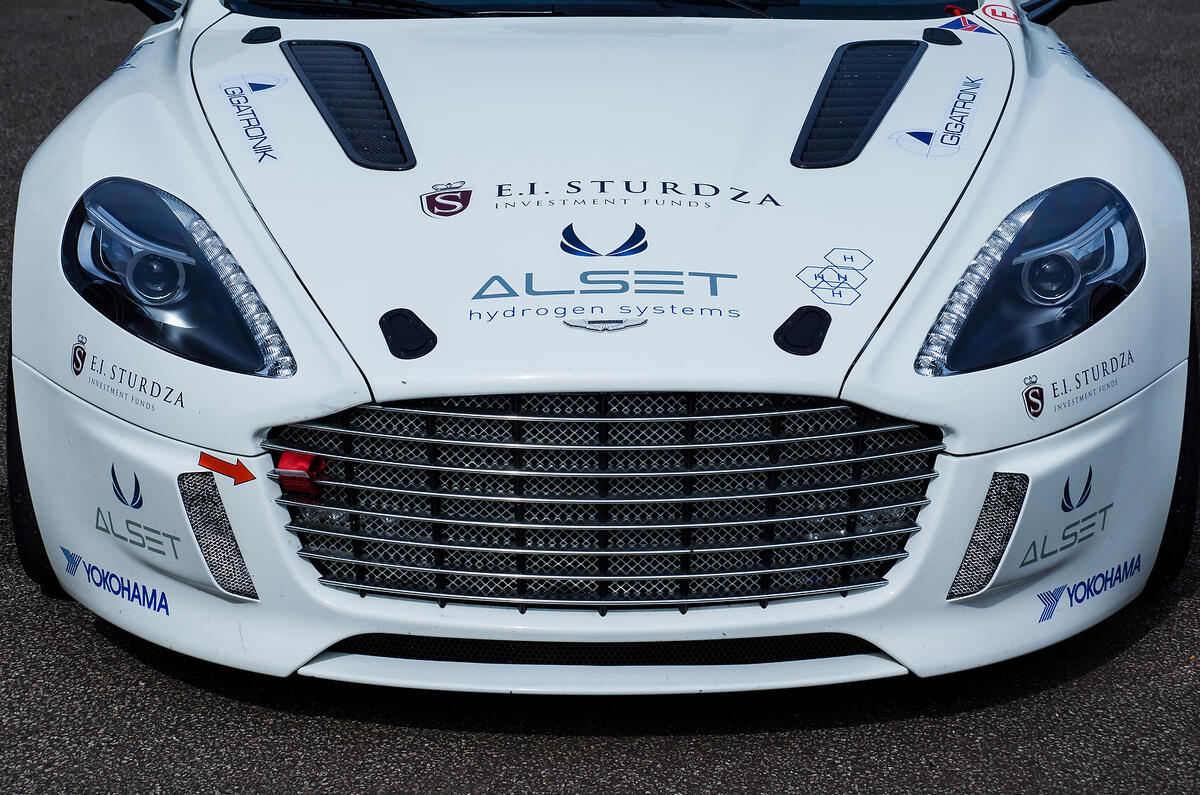
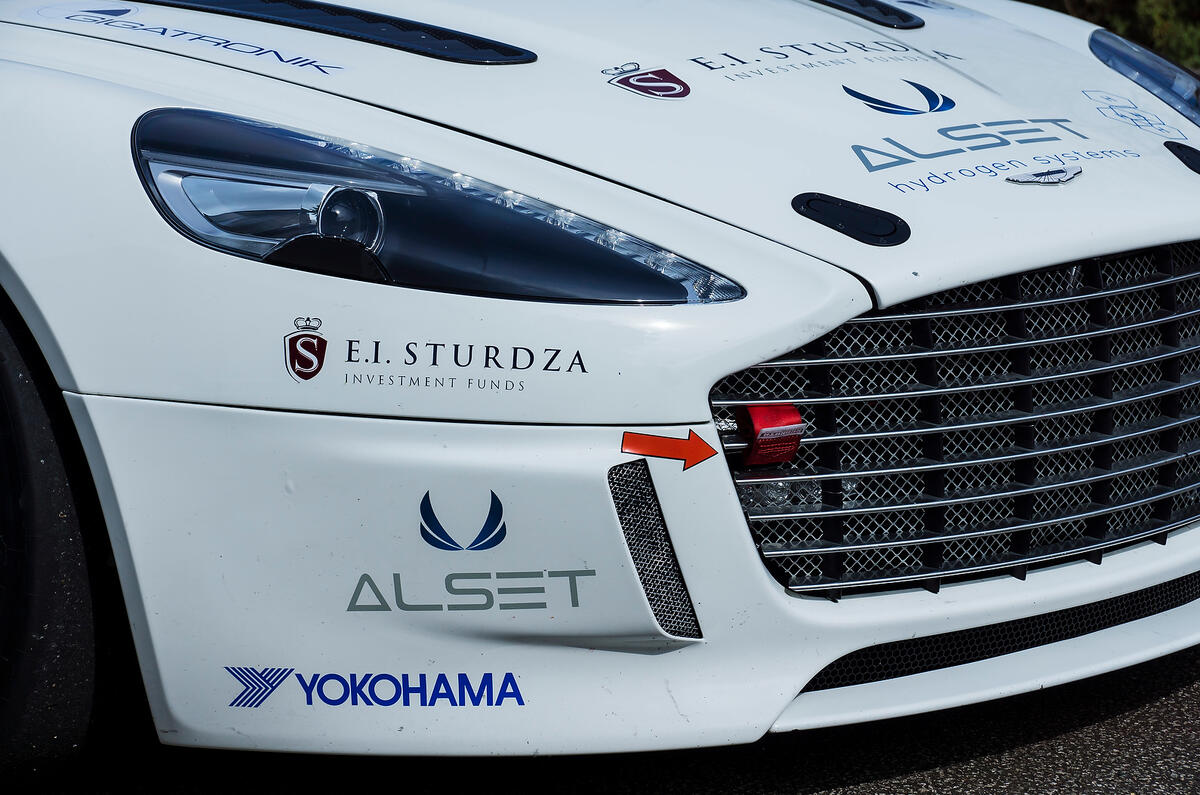
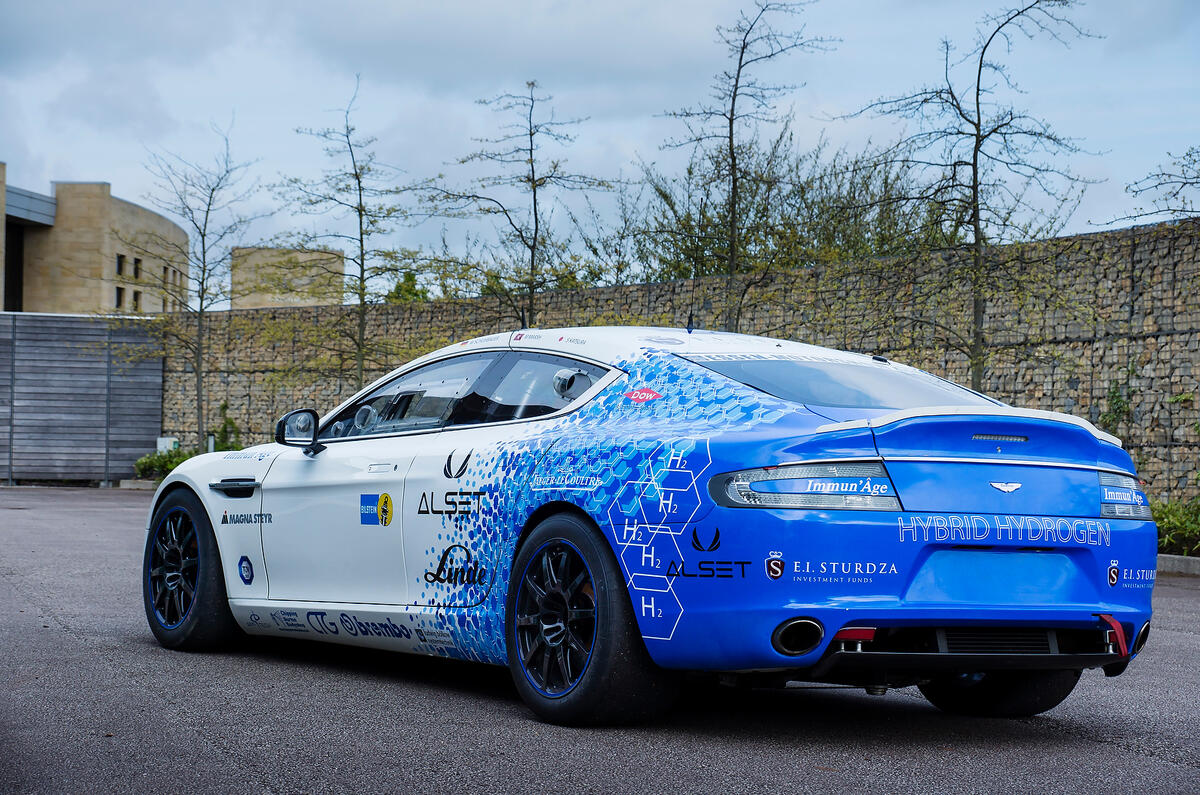





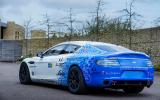
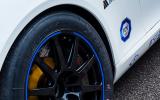

Aston Martin has raced the world’s first hydrogen-powered race car in an FIA-sanctioned event, completing the first race-pace zero-emissions lap of the Nürburgring in the process with technology that could feasibly be adapted to its road cars in the future.
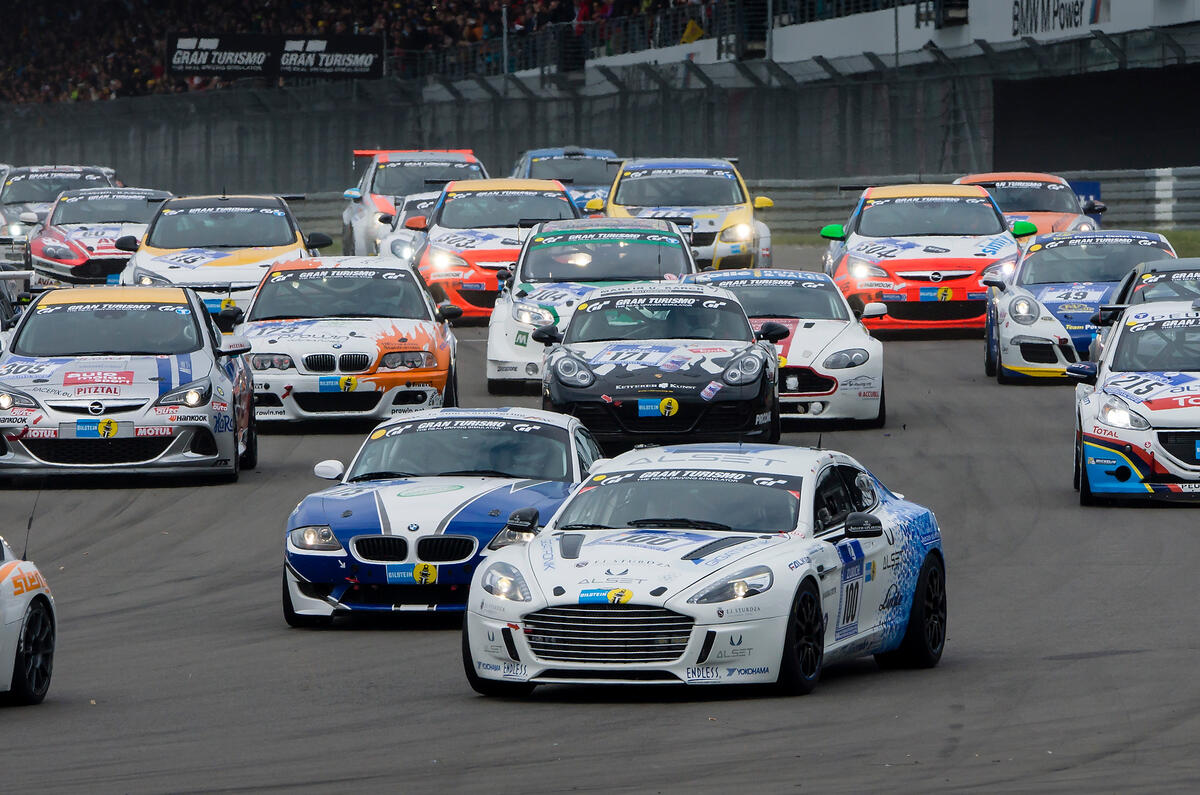
The Aston Martin Hybrid Hydrogen Rapide S competed in the Nürburgring 24 Hours at the weekend, where it completed laps on hydrogen power alone both in qualifying and at the front of its class at times during the rain and fog-affected event.
The project was born one year ago when Aston Martin was approached by its technology partner, Alset Global, an advanced powertrain specialist that wanted to showcase its ability to adapt petrol engines to run on hydrogen.
Aston was keen, but rather than limit it to a road car demonstrator, the decision was taken to put it in a racer “to find out the limits and boundaries of the technology by racing it”, Aston’s special projects and motorsport director, David King, told Autocar.
“We have an eight-year history of using the Nürburgring 24 Hours race for engineering challenges,” he said. “Alset’s technology seemed plausible, so we decided to try and race it.”
The brief included completing a whole lap of the Nürburgring at race pace using purely hydrogen. A Rapide S was chosen because it offered the most packaging space for the four hydrogen tanks and because it would be the model most likely to be fitted with the technology should a road car application follow.
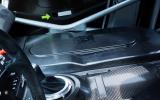
The Rapide S race car is essentially a road-going version with a stripped-out interior, stiffened suspension and an added rollcage.
The hardware changes necessitated by the hydrogen adaptation add about 80kg to the Rapide S’s weight. But King points out that this is considerably less than the weight of batteries that would be needed to complete a flat-out lap of the ’Ring on electric power, the other way of achieving zero tailpipe CO2 emissions. The overall weight of the car is about 1600kg.
King describes those hardware changes as being “relatively straightforward” alterations. A whole re-engineering of the Rapide S was certainly not needed.
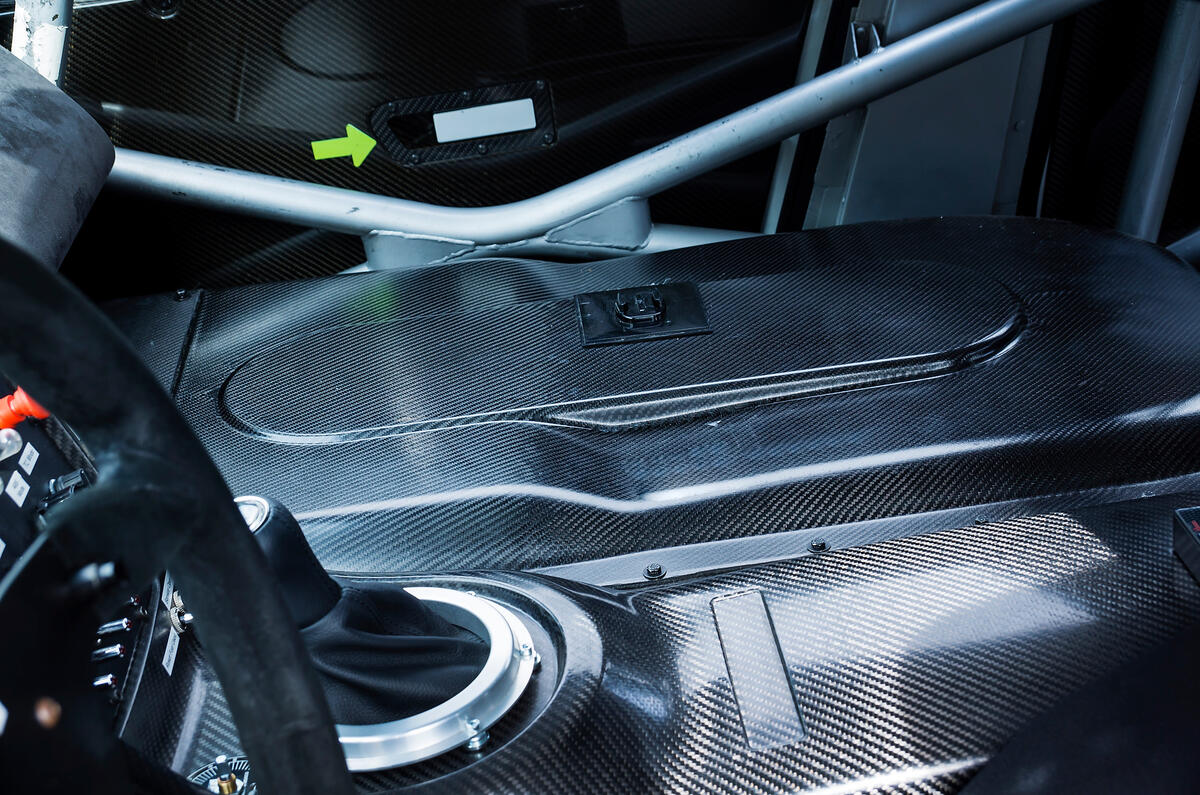
Four hydrogen fuel tanks have been added: two over the rear axle and two where the passenger seat would be. These hold 3.3kg of hydrogen at 350bar, enough for about a lap and a half of the 16.1-mile Nürburging circuit (Nordschleife and grand prix circuit combined), and the equivalent of about 15 litres of petrol.
Hydrogen fuel lines take the fuel to Aston Martin’s familiar 6.0-litre V12 engine, which King said “needed no new hardware” to be able to run on hydrogen as well as petrol, or a combination of both.
“The biggest challenge was to equalise the power delivery,” said King, hydrogen having a much lower power density than petrol. The solution was to fit a pair of turbochargers to the V12 engine for the first time.
Hydrogen injectors were added next to the petrol ones to inject into the manifold, with other changes including a reduced compression ratio, a revised intake manifold and a revised cylinder head gasket.
“The clever bit really comes in the electronics of the engine management,” said King, adding that changes were made here to allow the engine to adapt to the different properties to burn hydrogen instead of petrol.