Nobody wants to be known as a one-trick pony or to be told to ‘stay in your lane’, but equally it’s also good to know what you excel at.
This is something Caterham is acutely aware of, because for the past 50-odd years it has owed its existence to one extremely exciting offering: the Seven.
Ever since company founder Graham Nearn bought the rights to the lightweight roadburner from Lotus in 1973, it has continued to hone and refine the Seven into a car that, for many, is one of the most thrilling driving experiences on earth.
Yet while the business is strong today, Caterham has experienced its ups and downs in the past. And when you’ve only really got a single product to sell, you leave yourself vulnerable if your customers get fickle and look elsewhere for their kicks.
So with the recession of the early 1990s still strong in the memory, Nearn and his team decided it was time to diversify.
In many respects, the idea was a simple one. The Seven was a sensational but rather single-minded machine – one that required almost motorcyclist-levels of masochism to use on a daily basis. If Caterham could create a flagship model that added a welcome dose of continent-crossing civility to the Seven’s scintillating dynamics, then it could be onto a winner.
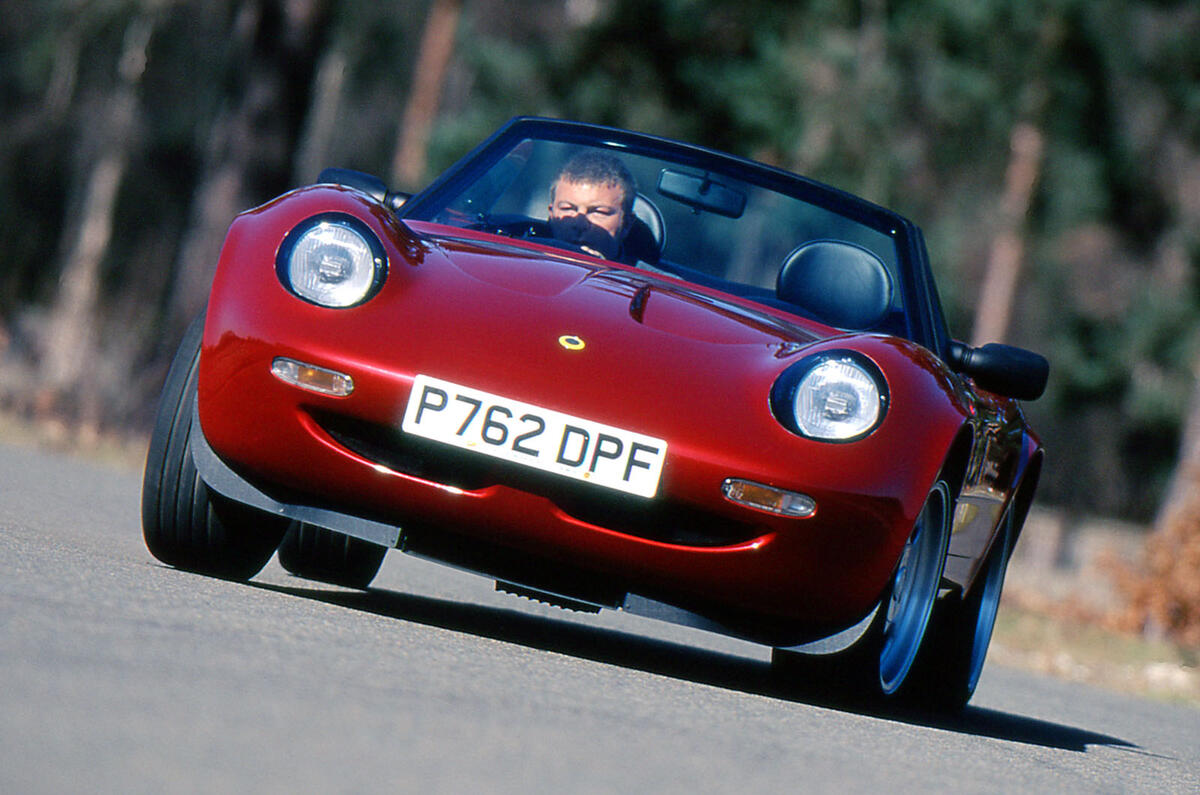
The result was the 21. Launched at the 1994 British motor show to coincide with the brand’s 21st birthday (hence the name; the multiplication of seven is merely a happy accident), the new car’s conception was relatively straightforward.

To keep things simple and development costs down, the 21 featured a strengthened version of the Seven’s spaceframe chassis, including its unequal-length front suspension and de Dion rear axle. There was even a similar line-up of Rover K-series engines.
The biggest differences were visual, with the addition of a voluptuous aluminium body designed by Caterham’s Iain Roberston, who penned it shortly before joining Autocar as our deputy news editor.
Inside, there was a properly designed dashboard, decent space for two and soft leather trim as far as the eye could see.
There was even a proper 250-litre boot, and while the folding fabric roof was a bit of a fiddle, it was easier to erect than the Seven’s byzantine covering. Better still, all the creature comforts added only 100kg to the kerb weight.