Currently reading: 6 bits of tech to love in the CUPRA e-HYBRID range

CUPRA’s plug-in hybrid models offer plenty of tech innovations that make everyday car ownership that bit better. These are our favourites…

Technology is a wonderful thing, and, when done right, can make life much easier. Sure, it can’t clean up the house in an instant when visitors arrive unannounced, or stop you from getting a cold just before an important life event… but there are plenty of opportunities around to help where it can.

Take CUPRA’s range of e-HYBRID vehicles. Spanish brand’s plug-in hybrid tech can lower your running costs and reduce emissions, compared with combustion engine counterparts – but that’s not all, as there’s a host of other innovations that drivers (and passengers) can benefit from both in and out the car. Here are just some of our favourite bits of e-HYBRID tech on offer… 

Learn more about the CUPRA e-HYBRID range
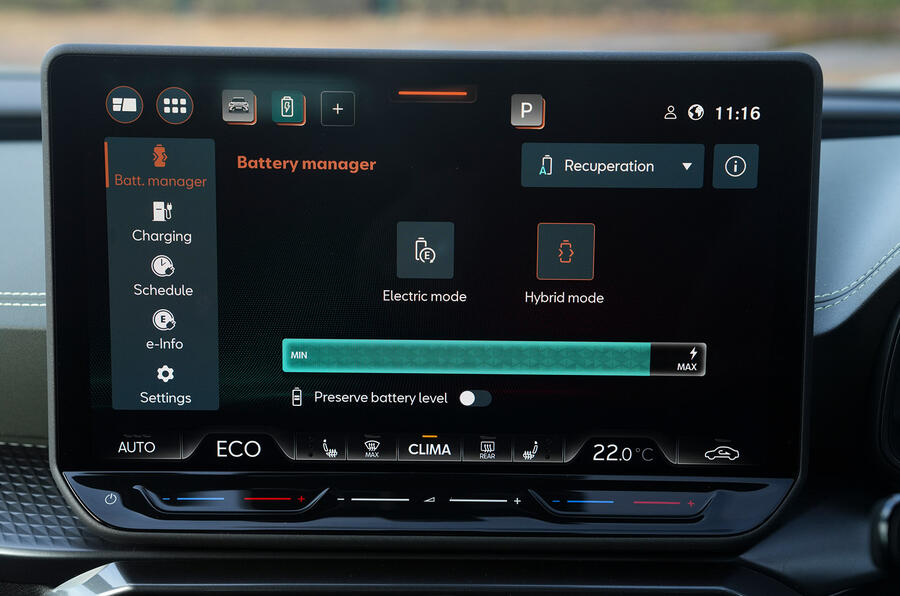
Up to 81 miles all-electric range*Have a think about your average week, and where you go in the car. Chances are, a lot of your trips will be quick, short journeys. The school run, the commute to work, a visit to the supermarket for tonight’s dinner.

If this sounds like you, then most of your outings are probably only a few miles long and limited to slower, urban roads. This is where the CUPRA’s e-HYBRID line-up comes into its own.

The plug-in hybrid set-up can run on electric-only mode, so the combustion engine isn’t always needed. It’s ideal for those short drives across town, and can reduce how much petrol you use.

At full charge, the batteries could run your PHEV for between 69 and 81 miles, depending on the model* – which should easily get you through the week if you cover just a few miles a day. Then, once the charge is depleted, the petrol engine will kick in and work in tandem with the electric motor.
Back to top

50kW DC charging: top up in less than 30 minutes

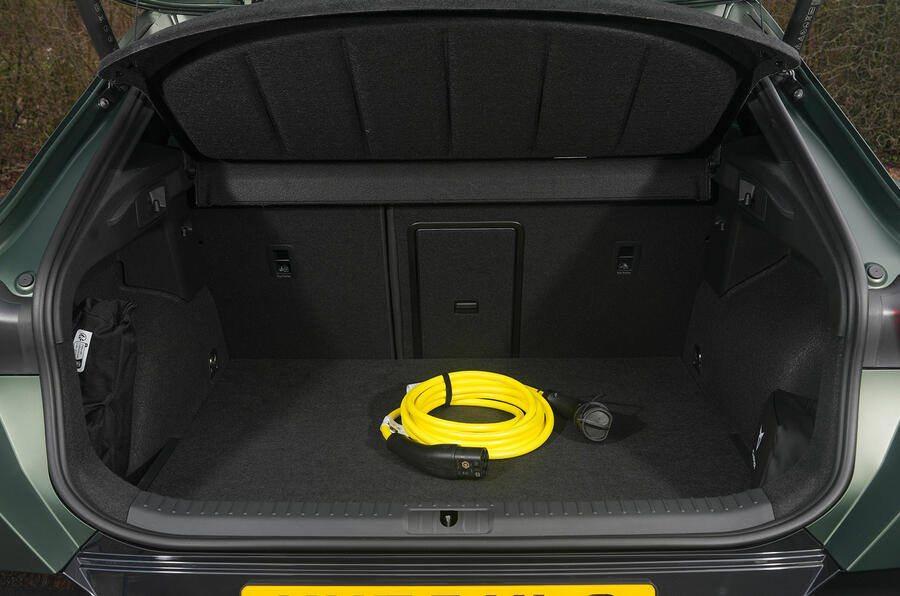
So how easy is it to charge the lithium-ion batteries in a CUPRA e-HYBRID model? Aside from using a three-pin outlet to do it, you can use a home wallbox charger or public charging stations.

CUPRA cars have a CCS connection which, because it’s a common connector in UK and Europe, will mean you’ll have no problem finding a suitable public charger if you need one when out and about. And, if you’re charging away from home, chances are you’ll want to top up fairly swiftly.

These hybrid models can use up to 50kW when charging the batteries. What does that mean? Well, with this rate of charge in the CUPRA Terramar, you can go from 10% to 80% battery capacity in as little as 26 minutes** – so you don’t need to wait around if you need to get going on your journey.

But, to keep costs down, it’s best to try charging at home when you can. The advantage here is, not only can you keep your car plugged in and ready to charge at your convenience, but you can also get favourable EV tariffs from your energy provider.

Intelligent regenerative braking

But plugging in your car to charge isn’t the only way you can get energy for the batteries. 

Back to top

When you brake, the energy that’s generated is converted into electricity. This is then diverted to the car’s batteries. This can help reduce operating costs, if only just a little.

But CUPRA hasn’t gone for a one-size-fits-all option for its regenerative braking system, because it’ll adjust the rate of regen depending on the road conditions. So if you have a route set on your sat-nav, it’ll detect opportunities where regen can be maximised – such as braking for a roundabout on a dual carriageway.

Convenience technology

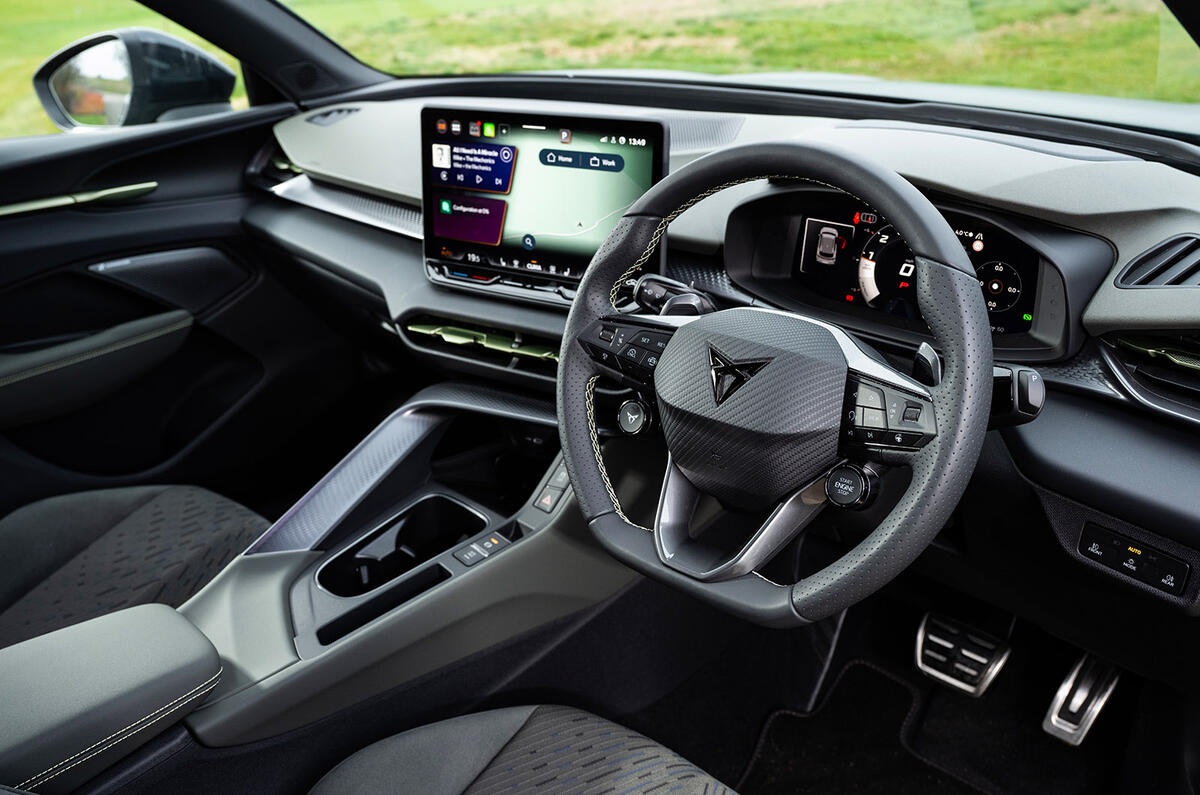
Let’s say you’re getting ready for a trip away. You have a lot of things to put in the boot, including a couple of heavy items. How do you open the tailgate? On select models, you can simply wave your foot under the rear bumper, and the tailgate will open for you – then, when you’re done packing, press a button and the tailgate will close without getting dirt on your hands.

And on those days where you’re running late, you need to take everything with you in one go: bag, water bottle, phone… keys? Don’t worry, as keyless technology will let you into your car without having to drop everything and rummage around your bag or pockets.

When you get going, and you notice your phone is running low on battery and you’ve not got the charging cable to hand, that’s not a problem, either. So long as you’ve got a compatible phone, you just place it on the wireless charging pad in the centre console and it’ll top up in no time.

Back to top

My CUPRA app: check your car from your phone

If you’re looking to further elevate the perks of plug-in hybrid car ownership, then you’ll be delighted with the My CUPRA app. What’s particularly brilliant is the ability to have your car at the perfect temperature before you even leave the house. On an icy winter morning, your car could be warmed up and fully defrosted before you even get in – and, you can also pre-warm your seat by activating the seat warmers. Then, on those summer days where it’s warm and the car’s been sitting in the sun for a while, you can make the cabin cool and comfortable by turning on the air-con at your preferred temperature with a few taps on your phone.

Before getting in ahead of your next journey, you can evaluate how much charge is in the batteries and – if it’s plugged-in – you can top it up remotely without having to pop out to the car itself. Which, if you’re in the middle of something else, could be hugely convenient.

And, for data fans, you can track your e-HYBRIDs performance using a range of metrics. You can see how far you’ve driven over a certain period, how long it’s taken, and how much battery energy you’ve used. It’s good detail if you just want to know what’s going on, or something you can use to adjust your driving habits to improve efficiency even further.

Back to top

Tech that makes driving easier and safer

Drivers get more support when they get inside, too, to make the experience behind the wheel that little bit easier. 

On VZ trims, Dynamic Chassis Control, or DCC, will allow you to change the set-up of the car depending on your mood. There are a number of standard modes from which to pick but, if you prefer to use your own settings, you can save it in Individual mode.

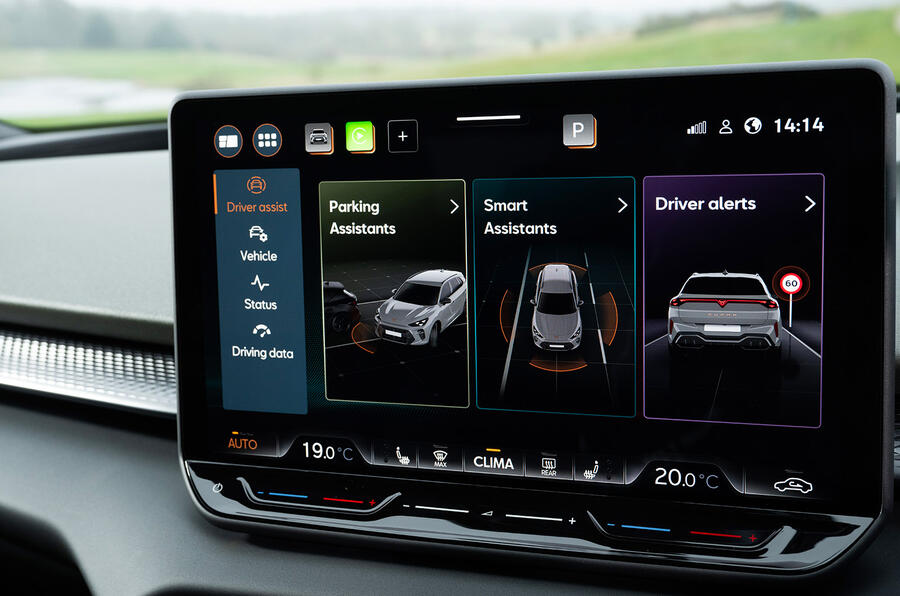
You also get assistance out on the open road. Predictive Adaptive Cruise Control (ACC) will adjust your speed depending on what’s happening ahead – such as slowing down if traffic is building up. Travel assist helps to keep your car centred in its lane to make longer journeys more relaxing, while Lane Assist Plus will warn you when you’re getting close to leaving your lane, but you haven’t signalled your intention. But if you do want to change lanes, then Side Assist will alert you to anyone who’s either sitting just out of sight or is rapidly approaching. 

And when you park up, there’s assistance tech to use then as well. Parking sensors will give you an aural alert to how close you are to your surroundings, but you also get a clearer idea exactly where the edges of your car are by using the rear view camera. Some models also have a 360º camera that gives you a top-down view of your surroundings to make parking truly effortless. 

Back to top

So there you have it. Just a few of our favourite bits of CUPRA e-HYBRID tech that make a tangible improvement to the driving experience. Maybe it’s time you took one for a test drive? 

Learn more about the CUPRA e-HYBRID range

*These figures were obtained using a combination of battery power and fuel. The CUPRA Leon is a plug-in hybrid vehicle requiring mains electricity for charging. Figures shown are for comparability purposes; only compare fuel consumption, CO2 and equivalent all electric range figures with other vehicles tested to the same technical procedures. These figures may not reflect real life driving results, which will depend upon a number of factors including the accessories fitted (post-registration), variation in weather, driving styles and vehicle load. Data correct at March 2026.

**Estimated charging times for the standard specification CUPRA Terramar. Test data obtained under standardised conditions for comparison purposes. Actual charging times will vary depending on various factors, including the selected trimline, the options you choose, the type of charger used, the level of charge in the battery, the age, type, condition and temperature of the charger and the battery, the power supply to and usage of the charger, ambient temperature at the point of use and other environmental factors. Charging time will be longer in cold weather. Charging times will also be affected by the charging curve (for example, once charging passes 80%, charging will slow to protect the battery's longevity) and will be longer if battery temperature activates safeguarding technology.


Join our WhatsApp community and be the first to read about the latest news and reviews wowing the car world. Our community is the best, easiest and most direct place to tap into the minds of Autocar, and if you join you’ll also be treated to unique WhatsApp content. You can leave at any time after joining - check our full privacy policy here.

The discussion board is currently closed for new comments while we carry out some maintenance. In the meantime, please join the debate on our social media channels.