Currently reading: Dodge Caliber retrospective: The crossover that arrived too early?

It was a quiet trailblazer for the modern crossover market, offering American styling and practicality on a budget

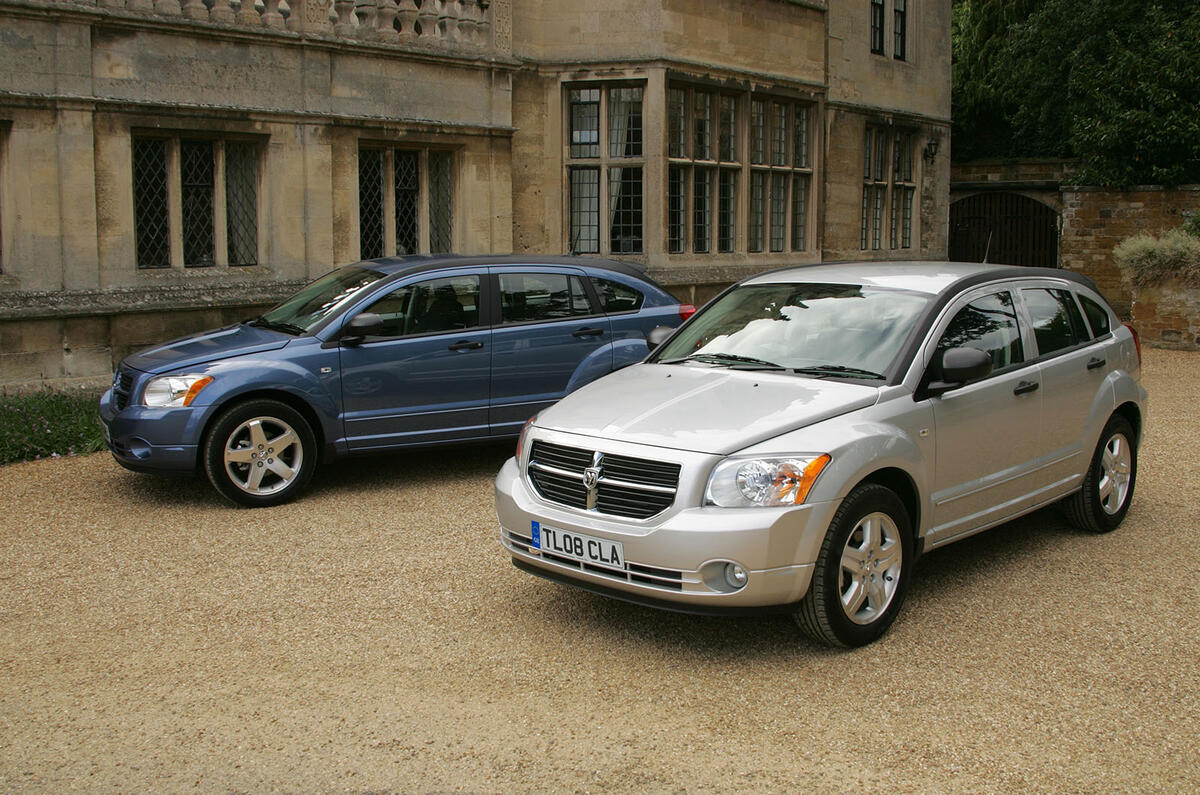
It looked slightly interesting then, and it looks slightly interesting now.

It was a quiet trailblazer too, the Caliber, though into a bit of a cul-de-sac of the kind occupied by the Talbot Matra Rancho and all those faux off-road superminis like the VW Polo Cross, the Rover Streetwise, the Hyundai Getz Cross (regrettably not sold here) and today’s admittedly more successful Dacia Sandero Stepway.

We’re talking crossovers, machines milder than the Caliber’s Jeep Compass cousin or even the Nissan Qashqai, which rides higher.

As a follow-up to the Dodge Neon (Chrysler to us) the Caliber certainly moved with the times, DaimlerChrysler’s budget US offering shifting from front-drive, low-roofed four-door sedan to the higher-riding crossover Caliber.

The Neon was spectacular at launch for its exceptionally low price, and when you started probing into how that was achieved, an interior whose quality was little better than that of the packaging you release a new smartphone from.

Regrettably this trashy characteristic was carried over to the Caliber with almost undiminished enthusiasm. Its constituent cabin components may have been more firmly tethered to its body than the Neon’s, but the plastics were of grades barely any better than those that had twittered aboard the Chrysler.

The Caliber was created in the era when the Chrysler-Jeep-Dodge areas of the DaimlerChrysler empire had no separate interior design department, the cars’ cabin design a mere must-do part of the creative process rather than an area in which design might excel.

As you might expect given these priorities, the Caliber’s exterior was a rather more polished effort of creativity.

Being a Dodge alone – there was no Chrysler version – the aim was to vest the Caliber with some of the visual robustness of the RAM pick-ups that the marque was better known for domestically.

A big grille sporting the Dodge crosshairs décor and a ram badge – the trucks had yet to be split away to create the distinct RAM brand – chunky blistered wheelarches, a bonnet that sat proud of the wings, a chunky back bumper and huge taillights all referenced the rugged world of pick-up trucks.

But the most distinctive feature were the twin arcs of matt black paint spanning the length of the roof, a pleasingly effective visual device that did much to emphasise the coupé-like glasshouse.

The Caliber was quite a clever piece of design and ought to have appealed strongly in the US and even here, where the link to the trucks would not have registered.

And though cheaply finished the interior was at least spacious, and on some versions came with unexpected extras that included a rechargeable torch for chasing down rattles and a coolbox for consolatory drinks.

An unusually fulsome Boston stereo was also available, this going a long way to drown out the cabin’s plastic-on-plastic creaks and the owner’s sorrow at their existence.

There was more than the chatter of trim to overcome aboard some versions of the Caliber. Many UK buyers chose the special-to-Europe version fitted with a 2.0 litre VW turbodiesel of ageing tech, this a power unit whose narrowly effective torque band brought thrust, economy and its own brand of growlingly vibratory din to the Caliber mix.

Back to top

Couple this to suspension whose most successfully executed task was holding the Caliber’s body a few inches from the ground – this Dodge neither rode nor handled well – and you had a car whose presence in UK showrooms was hard to fathom.

Indeed, the presence of Dodge at all was difficult to understand when sister brand Chrysler was sporadically struggling to survive, and when the more promising Jeep still needed loads of help.

The scheme to launch Dodge in Europe was part-dreamed up by some Detroit based Mercedes executives whose grasp of the sheer crapness of the Chrysler corporation’s cabins had clearly failed to make much impact.

The idea was to present Dodge as a cheap route to performance, but the only Caliber offering anything like the necessary punch was that yelling diesel.

Still, it was undeniably cheap, different and practical, these qualities sufficient to shift just over 6000 in the UK.

Join our WhatsApp community and be the first to read about the latest news and reviews wowing the car world. Our community is the best, easiest and most direct place to tap into the minds of Autocar, and if you join you’ll also be treated to unique WhatsApp content. You can leave at any time after joining - check our full privacy policy here.

Add a comment…