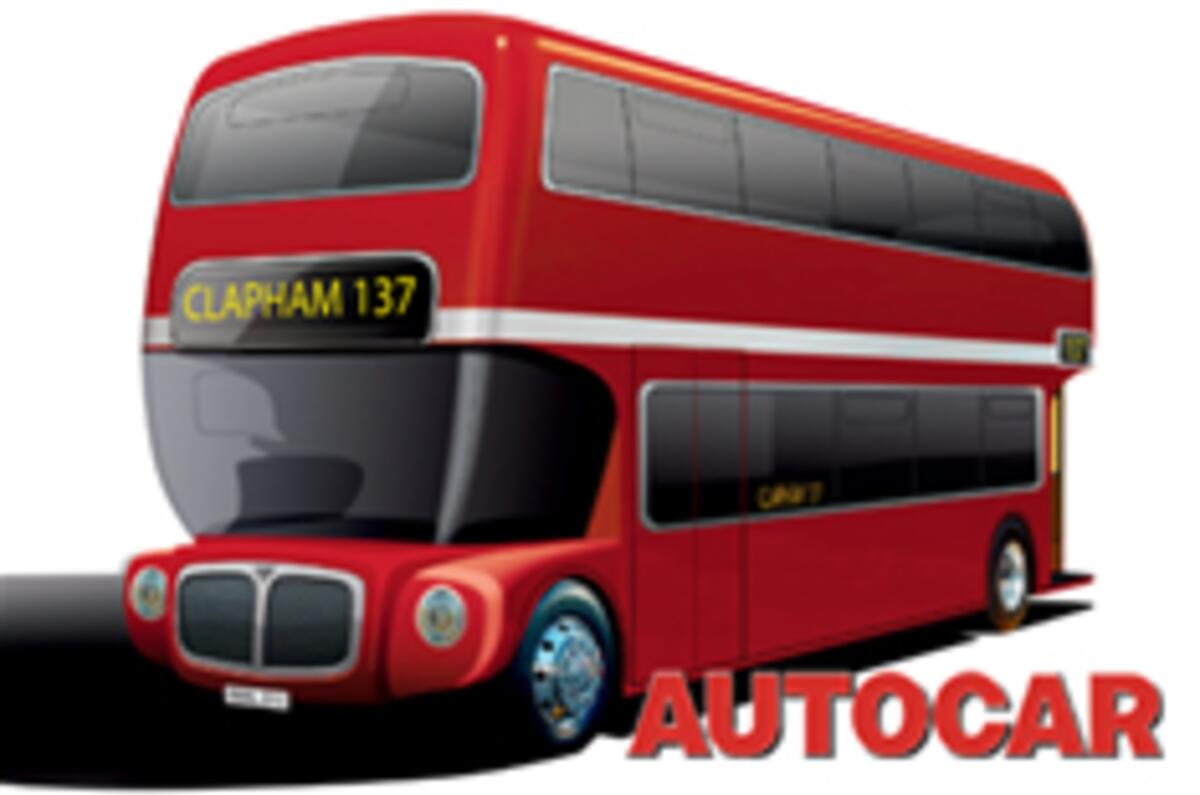

Autocar, in collaboration with Capoco Design, has redesigned London's Routemaster bus for the 21st century.
So positive has been the reaction to Associate editor Hilton Holloway's piece that we've decided to reproduce it in full below, so that all and sundry can read what all the fuss is about. We think this proposal, for a hydrogen-powered Routemaster capable of carrying up to 76 passengers, makes much more sense that London's fleet of loathed and problematic bendy-busses.
UPDATE: Read Autocar's road test of the New Bus for London
Return of the Routemaster
Although I grew up in the Britain’s premier bus town, I was never a fan of this uniquely lumbering form of transport. Aged 11, I had no choice but to take the local Fishwick bus to the secondary school – a single decker Leyland National if my memory serves – and cough up 11p each way.
Once I graduated to local sixth form, the local authority gave me the option of either a bus or rail pass. No contest. Let the train take the strain. Five minutes, non-stop to Preston. The same bus journey would have been a neck-snapping 45-minute drag.
It wasn’t until I shipped up in London 10 years later, that I found myself standing at the bus stop again. As a lowly junior news reporter, driving shiny new press cars was out of the question. So it was the No 137 Routemaster for me, the original Clapham omnibus. Queenstown Road Battersea to Sloane Square tube station in Chelsea.
By then, I also had six years studying product design under my belt, so was well placed to appreciate the superbly thought-out Routemaster design. It was designed specifically for use in London and took into account the unique nature of the capital’s roads.
It was light (based around an aluminium space frame), narrow, fuel efficient (more so than today’s buses), relatively agile and – most importantly – allowed passengers to jump on and off whenever it was at a standstill. And sometimes when it wasn’t…
This last feature wasn’t unique - Leyland buses of 1920s vintage had rear platforms – but it did mean that it was ideal for London travel, where quick changes between bus routes, tubes and even taxis, is often the norm.
Sure, the Routemaster was a bit cramped. Pushchairs needed to be folded and it was a no-go for wheelchairs, but it did serve 95 percent of the commuting public better than any bus ever seen in the capital.
The detailing was a delight. Not just the post-war aluminium aesthetic (it looked a little like it had been built using parts from a scrapped Lancaster bomber), but also the superb interior. The hardwood decked floors, beautiful wind-down windows activated by beautifully engineered handles.
Some versions had bare lightbulbs mounted above the windows. At night there was nothing to touch the subdued ambience of a Routemaster. (What a contrast to sitting in a brash modern bus under the harsh strip lights).
The Routemaster’s open back kept the interior cool in the summer and stopped it getting stuffy in the winter. And the conductor was an ever-reassuring presence.So what was not to like? Even Ken Livingstone, London’s first modern-era Mayor, said that ‘only a de-humanised moron would get rid of the Routemaster’. So guess who decided to dump the Routemaster just weeks after winning a second election in 2004 and without mentioning it in his manifesto?