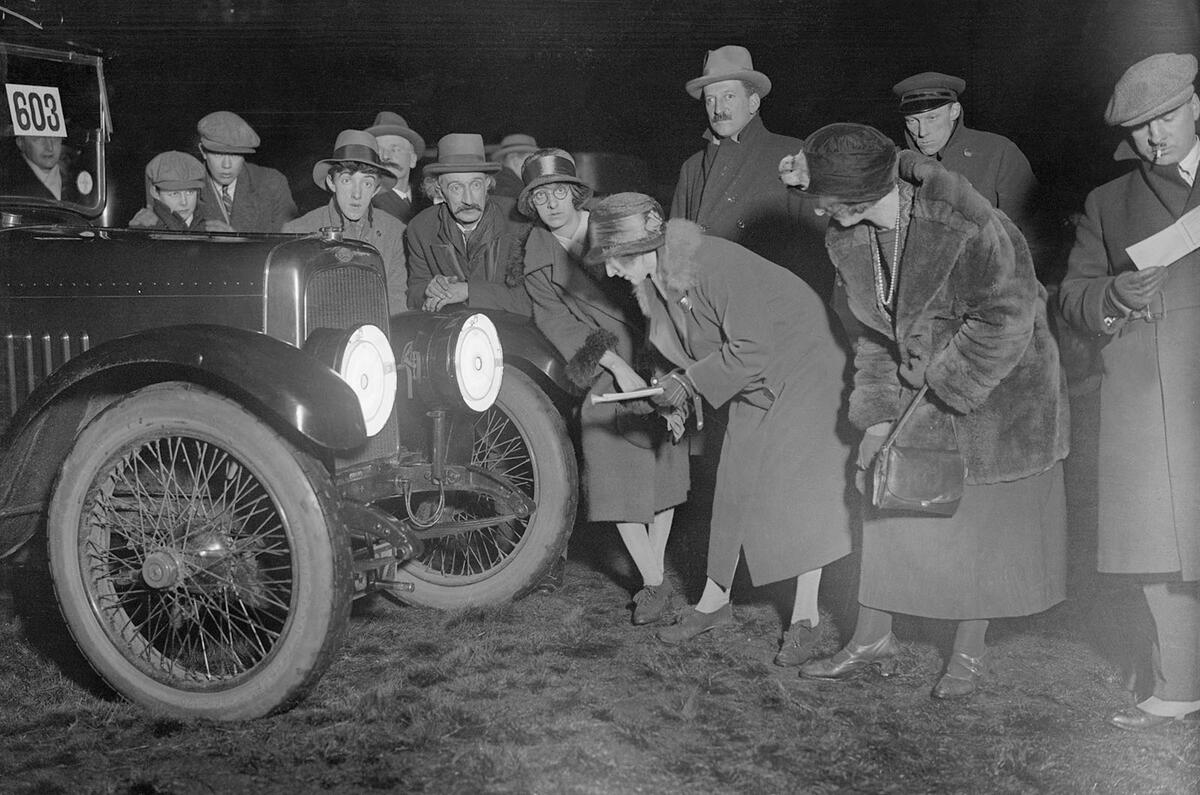
The brightness of modern headlights is the subject of a major inquiry, after a swell of public opinion exemplified by this letter to Autocar:
"As regards dazzle, the [main] beam is as great a source of danger as the side [beams], and I certainly think that all high-powered lamps should be provided with some anti-dazzle arrangement as standard. Powerful headlights of the sort are a positive nuisance, not to mention danger."
Of course, this news comes to you from 1912, when the average new car headlight brightness achieved 21 candlepower. That's roughly 13 times dimmer than the average today and it was the soft orange glow of acetylene gas, as opposed to the bluish white blaze of LEDs. Seriously, a time-travelling SUV would make any Edwardian driver think Judgment Day were dawning behind him.
In fact, the issue of dazzle had already been raised in parliament back in 1908, the Liberal MP for Kincardineshire claiming it had caused accidents to both drivers and cyclists and asking what could be done to prevent it. The government replied that an "appropriate method of dealing with the matter" had yet to been found.
Enjoy full access to the complete Autocar archive at the magazineshop.com

The problem was brought up by MPs periodically in the years following, even after Autocar suggested in 1930 that it had been solved by the advent of the "dip-and-switch device" - a button or plunger that caused a mirror to swivel over the left light, thus deflecting its beam downward, while switching off the right light.
Many other anti-dazzle devices were appearing at the time, among them shields, reflectors, shutters, dual filaments and special cells between bulb and lens. In fact, 85 were submitted to the RAC for evaluation in 1931. Public interest in the subject was enormous, too: at the test evening in Cambridge, it became "practically impossible to demonstrate the efficiency of the devices, as they encroached on the fairway to such an extent that the dummy cyclists set up as a part of the test were lost in the crowd".
Two years on, we received news from France that "the authorities are going to insist upon all motor car headlamps throwing a yellow beam. This will, it is thought, be a safer light in various ways and less tiring to a driver's eyes."
Many wondered if Britain should follow suit, but domestic industry leader Lucas believed that "neither for driving in fog nor for reducing dazzle, and at the same time retaining a good driving light, is any advantage to be gained from the use of a coloured filter".


Join the debate
Add your comment
Many problems with glare from dipped lights come from 2 issues unrelated to the type of light.
1. Wrongly adjusted lights. Yesterday a car following me had one light shining directly at me, the other properly dipped. My dipped lights illuminate at most the rear number plate of the car in front but not the boot or window above.
2. Dirty lenses, meaning the light is redirected.
Problems with main beam are down to selfish or careless drivers not dipping when they should.