Nowadays, concept cars are a given.
They have long been a nice way for manufacturers to stoke a bit of excitement among their fans; to show off shiny new technologies or simply to test the reception to what they've got in the pipeline.
But for the first half a century of motoring, such machines simply didn't exist. Sure, prototypes were built to test engineering developments, but something purely aesthetic? How bourgeois.
The genesis came about in the 1930s when, having recovered from the devastation of the Great Depression, Detroit began plotting a new wave of more optimistic cars. Products devised to fulfil a spiritual need, rather than a rational one: to capture a nation's appetite for individualism after so many years as a starved collective.
Out went the engine-and-boxcarriage design that had slowly evolved from the seminal 1885 Benz and in came unibodies with more organic cues.
The Chrysler Airflow of 1934 was the first car developed using a wind tunnel and, although a commercial failure, sparked a new trend in streamlining. Swooping curves and bold noses became the look of the moment, perhaps best exemplified by Graham-Paige's Model 97, better known as the Sharknose.

Image credit: MR Choppers
Meanwhile, Detroit bosses got into hot-rodding. Edsel Ford commissioned designer Bob Gregorie to build his own custom Model 40 speedster.
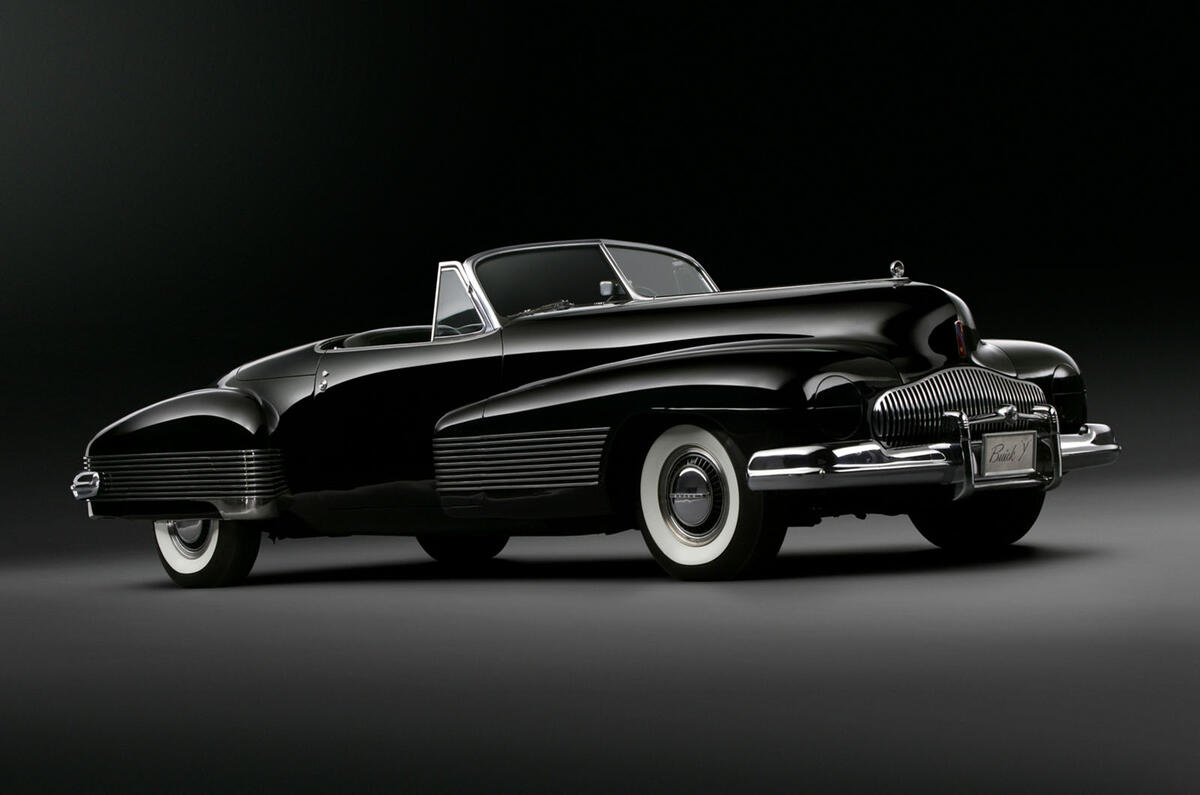
Harley Earl, head of General Motors' Art and Colour division, wanted in on the action, and so set to work on his own showboat.
It was to be badged a Buick, and it was to be named Y-Job, because it was a step forward compared with previous experiments. X-periments – geddit?
It was never meant to be sold to the public, simply to imagine cars that could exist in the future. This must have seemed plain odd at the time, and certainly Autocar didn't foresee the importance of what we called a "laboratory": in thinking not about the next car in the Buick lineage but those beyond it and the brand's defining cues as a whole, Earl became a pioneer of car design as we know it today.