Currently reading: Goes like a Porsche, hauls like a Skoda: Jaguar F-Pace buying guide

This Jag proved big SUVs could be family-friendly yet dynamic too - but what of its used car credentials?

By 2015, we were familiar with brands like Porsche and BMW building high-riding family cars - yet some still felt that an SUV bearing the leaping cat was a step too far.

But exactly a decade on from our effusive first review ("looks like a Jaguar, feels like a Jaguar and, most crucial of all, drives like a Jaguar"), we can look back on this one-time pariah as a truly impressive and deservedly popular all-rounder.

The F-Pace isn't quite a jack of all trades, but it comes very close. Throughout its nine-year production run, we rated it near the top of the class for its combination of practicality and dynamics, which few could match.

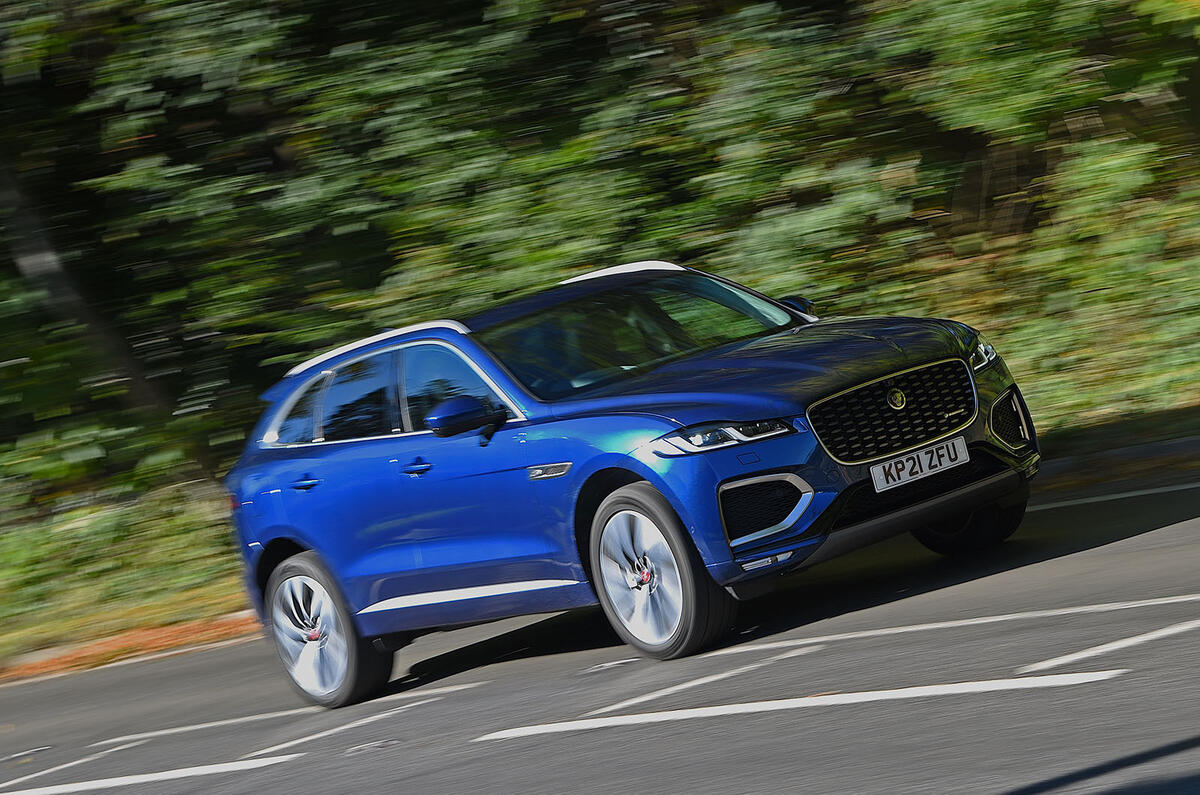
Those handsome, haunchy looks have aged well, as has the feel-good factor you get behind the wheel. It combines the space of an X5 and the sporty drive of a Porsche Macan with few concessions either way.

How did the engineers manage it? They started with a larger platform than was customary for the class (it's 100mm longer than the X3) to allow for a Skoda Superb-rivalling 650-litre boot and rear seats roomy enough for even larger passengers.

Enhancing that sense of duality is a driving position that convincingly splits the difference between SUV and GT (you sit high and straight but with the dashboard wrapped around you) and a technology suite that's the measure of any German executive car although the material richness wasn't quite up to scratch until the 2020 facelift.

It's by no means bad on the earlier cars, but some of the plastics feel a bit cheap and the standard 8.0in infotainment touchscreen wasn't great. The 10in one with Apple CarPlay and Android Auto is what you want.

The best bit about the F-Pace, though, is the way it drives. It's more practical than a Macan, yet it delivers smiles like almost nothing else. It feels lower and lighter than it is, doing a convincing dynamic impression of the closely related XF saloon.

Advertisement

Read our review

Car review

Jaguar takes a typically sporting approach with the F-Pace, but it isn't quite enough to better its sibling, the Land Rover Discovery Sport

Back to top

The steering is about as communicative as it gets in an SUV, while the suspension is ideally set up for British roads: supple and well-damped enough to keep the car comfortable and body movements in check and stiff enough to prevent roll in the corners and allow for confidence and grip when pushing on.

Even on 22in alloys, the F-Pace rides acceptably, but you get the best balance on 20s, which allow for a class-leading ride and handling combination and still fill the arches.

We called the eight-speed ZF automatic gearbox the best in the business, and it should still feel crisp and discerning in a used car. It was standard on all bar the lower-powered diesels and is a fabulous partner to the 296bhp 3.0-litre diesel six - our pick of the engines.

The 2020 facelift made almost a generational difference. Changes to the styling made it look more modern and expensive. The interior gained an all-new dashboard, centre console and steering wheel. And a tax-busting petrol-engined plug-in hybrid joined the ranks with an electric range of 32 miles.

There's plenty of trepidation around Jaguar's forthcoming new era as an EV-only luxury car maker, but the F-Pace demonstrates that this is a brand that can step outside its comfort zone and still shine. As your neighbours pile en masse into their X3s, Volvo XC60s and Mercedes GLCs, why don't you take the Jag approach and 'copy nothing' with your SUV de choix? 

Back to top

What to look for

Four-cylinder engines: There are many horror stories about the 2.0-litre diesel engine in pre-facelift cars, particularly concerning the diesel particulate filter, timing chain, turbos, oil dilution, excessive cylinder wear and coolant leaks. The 2.0-litre petrol four and later 2.0-litre mild-hybrid diesel are safer bets, but they can still suffer timing chain and turbo issues.

Six-cylinder engines: Many owners agree that the 3.0-litre diesel V6 and the two straight sixes are the most reliable engines. Nevertheless, be wary of knocking in the diesel straight six (crankshaft issues) or heavy coolant use in the petrol one (water pump problems).

Alternator: The belt tensioner can fail in mild-hybrid cars. Budget as much as £2500 unless covered by a sensible extended warranty.

Servicing: Jaguar's inadequate servicing schedule of two years or 21,000 miles for all F-Paces exacerbates issues. Look for services done every year or 10,000 miles ideally.

Steering: If the electric steering's motor develops a hairline crack, the circuit board inside the unit is exposed and becomes white with corrosion, rendering the car undrivable. Check for grinding, groaning or a heavy feel.

Gearbox: Fluid spots under the vehicle or transmission warning messages could point to a leaking transfer case. If unaddressed, this can lead to component damage and costly repairs.

Electrics: Many owners have faced a frozen infotainment screen. When this occurs, the solution is normally to turn the car off and on again. Issues such as failed parking sensors have also been reported, typically rendering the entire sensor system inoperative.

Also worth knowing

The fire-breathing F-Pace SVR has a supercharged 5.0-litre V8 with 542bhp (increased to 567bhp in 2023) and is utterly thrilling, both dynamically and audibly. If you can stretch to between £25,000 and £70,000, we reckon it's well worth the vastly reduced efficiency.

Back to top

The plug-in hybrid is the most efficient F-Pace if you can regularly charge it at home or at work, but the mild-hybrid diesel will do a strong 50mpg on a run.

An owner's view

Clive Minton: "I have just come back from a blast across Europe in my 2017 3.0 V6 diesel, and I must say how impressed I am, especially after averaging 41.7mpg. We crossed six countries, including long spells on the autobahn in Germany, taking the Giovi Pass across the Alps and encountering snow. It handled everything comfortably. It's a great car for a long drive: relaxing, fast and economical."

How much to spend

£5500-£11,999 Plenty of cars at this price point, but all are the potentially troublesome 2.0-litre diesel. Some have had timing chain replacements, though.

£12,000-£19,999 Some V6 diesels and petrols, but still ensure the service history exceeds Jaguar's recommendations.

£20,000-£29,999 This is where post-facelift cars appear; three-year-old examples can be had with just 30,000 miles.

£30,000 and above Where the straight-six diesels and petrols become available our favourite engines.

Join our WhatsApp community and be the first to read about the latest news and reviews wowing the car world. Our community is the best, easiest and most direct place to tap into the minds of Autocar, and if you join you’ll also be treated to unique WhatsApp content. You can leave at any time after joining - check our full privacy policy here.

Alex Wolstenholme

Alex Wolstenholme
Title: Editorial Assistant

Alex joined Haymarket, the publisher of Autocar, in 2023. A car fanatic, he loves to delve into the spec-sheet, especially when it concerns something obscure or quirky. He currently drives a 2007 Alpina D3 estate and a 2004 Alpina Roadster S. 

In his current position, as an editorial assistant, Alex mainly assists in managing Autocar's presence online, but also writes features and reviews for the magazine.

Join the debate

Comments
1
Add a comment…
Andrew1 26 March 2026
Yet it's a lot worse than both and many others. Quite the achievement.
In other news: the Easter bonus has arrived.